The best places to buy flagstone for a patio are local stone yards, masonry suppliers, and landscape supply companies. They sell by the ton, let you see the stone in person, and usually offer delivery. Home Depot and Lowe's are decent backup options if you need a small quantity fast or want a consistent pre-packaged pallet. Online stone importers and distributors work well for larger projects or specialty stone, but you need to plan for longer lead times and higher freight costs.
Where to Buy Flagstone for a Patio: Local and Online Guide
Nolan Ellison
18 Jun 2026
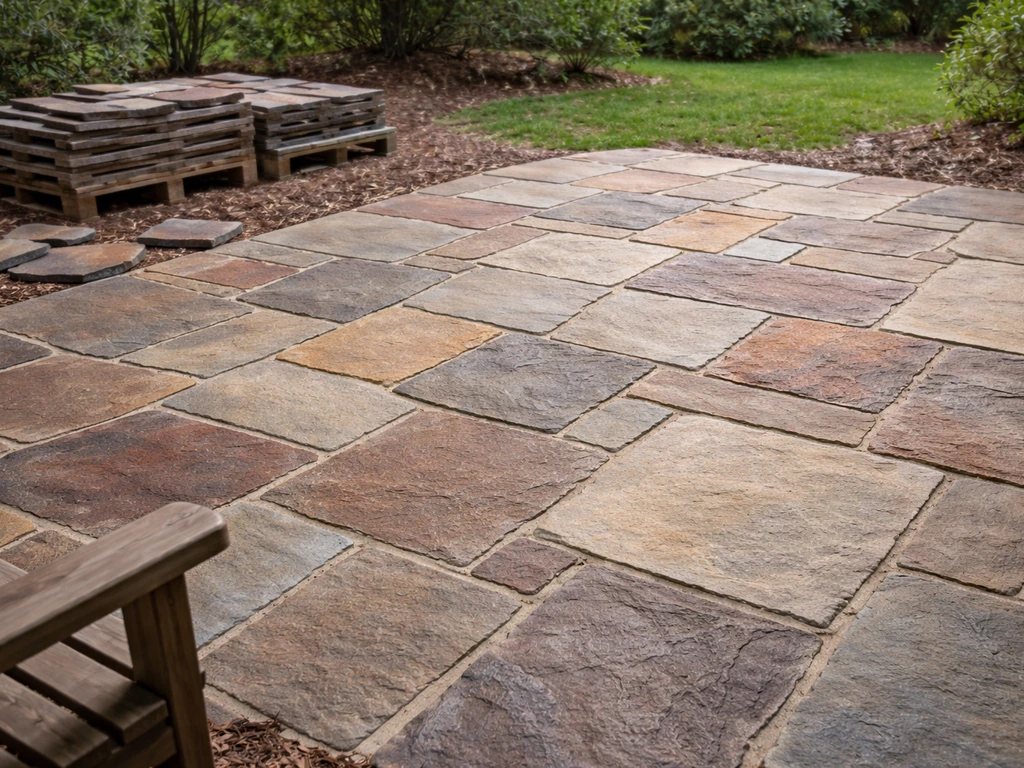
Best places to buy flagstone locally
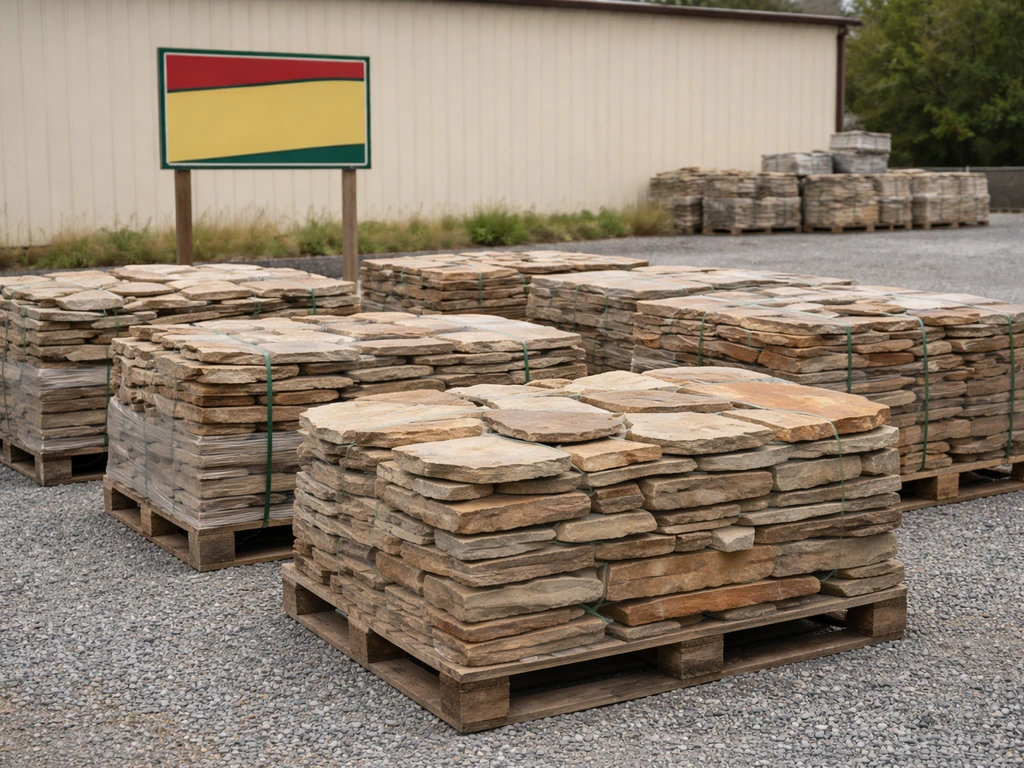
A dedicated stone yard or masonry supplier is almost always your best first call. These businesses sell flagstone by the ton and often by the piece, which means you only pay for what you need. Staff at a real stone yard can tell you the absorption rate, typical thickness range, and which stone performs well in freeze-thaw climates. You can walk the lot, compare colors under natural light, and pull a piece off the pile to check actual thickness. That hands-on step alone saves a lot of grief later.
Landscape supply companies are a close second. Many of them stock a rotating selection of flagstone alongside base gravel, bedding sand, and polymeric jointing sand, which is genuinely useful because you can source everything in one trip. Then choose the right joint filler, since the sand or polymer you use between stones affects weed growth, drainage, and long-term stability. Coverage estimates like 90 to 180 square feet per ton vary quite a bit by stone species and thickness, so ask the yard to give you a specific number for the exact product you are buying, not a generic range.
Local masonry contractors and hardscape installers sometimes sell stone directly or can refer you to their wholesale supplier. Even if you are doing a DIY install, it is worth asking a local contractor where they buy. They often have access to trade pricing or can point you to a yard that carries better-quality stone than what you would find at a big-box store.
- Stone yards and quarry distributors: best selection, sold by the ton, staff with real product knowledge
- Landscape supply companies: convenient one-stop sourcing for stone plus base and bedding materials
- Masonry suppliers: often carry thicker slabs and specialty flagstone suitable for structural applications
- Local hardscape contractors: can refer you to wholesale sources or sometimes sell excess material
Big-box stores: when they make sense and when they don't
Home Depot sells flagstone in pre-packaged pallet units, with coverage labeled right on the product listing. An example SKU like Titanium White Natural Flagstone (16 in. x 12 in. x 2 in.) covers 120 square feet per package, which makes quantity math easy. Lowe's works similarly. The advantage is in-store availability, predictable sizing, and a return window, though Lowe's requires you to initiate returns within 48 hours of delivery or pickup, so inspect everything immediately. blank" rel="noopener noreferrer">Home Depot's return policy for natural stone should be confirmed directly, as conditions for large special orders can differ.
The trade-off is price per square foot, aesthetic variety, and stone quality. Big-box stone is often thinner, more uniform, and processed differently than what you get from a stone yard. For a small, informal patio where you want consistent shapes and an easy buying experience, they work fine. For a large irregular-pattern patio where character and thickness matter, a stone yard will serve you better.
Online sources vs. local pickup: delivery, lead times, and returns
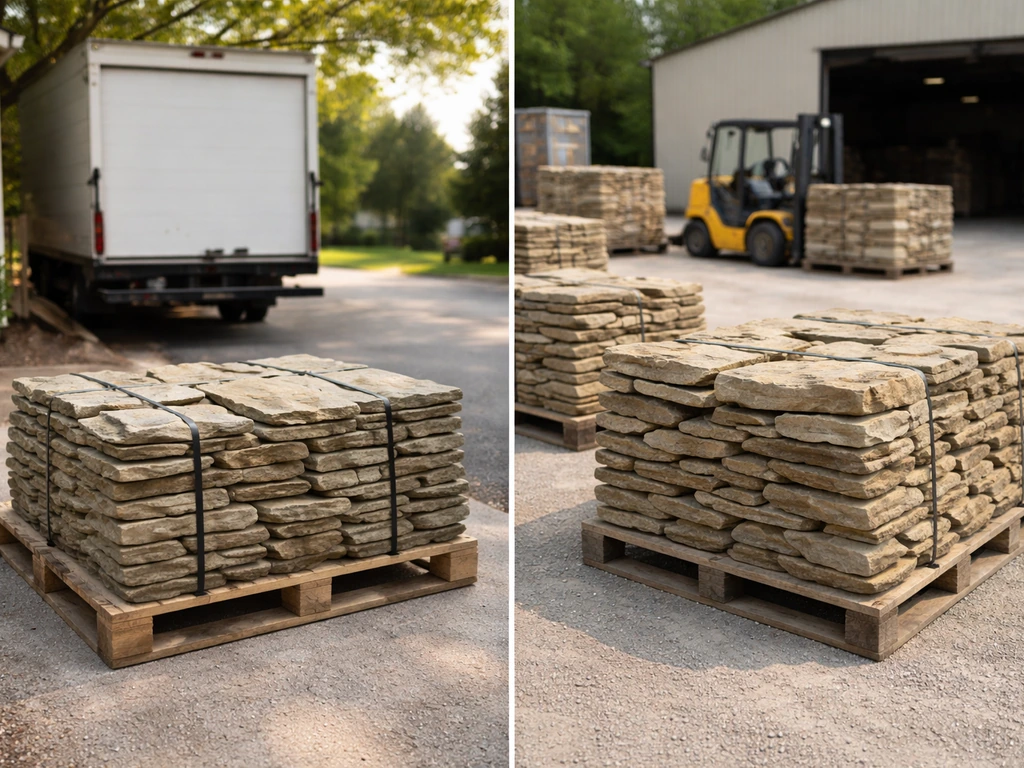
Buying flagstone online from stone importers or national distributors gives you access to a much wider range of stone species, including harder-to-find options like quartzite, soapstone, and imported slate. The practical challenge is freight. Natural stone is heavy, and LTL (less-than-truckload) freight adds meaningful cost to an already expensive material. Expect delivery lead times of one to three weeks for special orders, sometimes longer for imported stone.
Many online stone retailers have restrictive return policies on natural stone because color, texture, and surface variation are inherent to the material. Some sellers explicitly note that natural stone returns are limited or non-refundable once delivered. Before placing a large online order, confirm the return and damage policy in writing, ask for actual photos of the specific lot you are buying (not just product photos), and request a sample piece if the retailer offers that option. A sample shipment usually costs around $20 to $40 and can save you from a costly mismatch.
Local pickup is almost always cheaper and safer for flagstone. You see the stone, you control loading, and you avoid freight damage. Some aggregate distributors have minimum delivery quantities, often stated as one full yard or one ton minimum, which matters if you are building a smaller patio and do not need a full pallet. Call ahead and confirm the minimum before driving over.
| Source Type | Price Point | Selection | Lead Time | Return Flexibility |
|---|---|---|---|---|
| Local stone yard | Moderate to competitive | Wide, varies by region | Same day to 1 week | Usually flexible on uncut stone |
| Landscape supply co. | Moderate | Limited but practical | Same day to 3 days | Varies by supplier |
| Big-box (Home Depot/Lowe's) | Moderate to high per sq. ft. | Limited SKUs | In-stock or 1–2 weeks special order | 48-hour window at Lowe's; verify at HD |
| Online stone importer | Variable, often higher with freight | Very wide | 1–3 weeks or more | Often restricted for natural stone |
| Local masonry supplier | Competitive | Specialty and structural stone | Same day to 1 week | Ask per supplier |
How to choose the right flagstone for your patio
Thickness
For a dry-set (sand-set) patio, you want flagstone that is at least 1.5 inches thick, and thicker for larger individual pieces. Smaller pieces can sometimes work at around 1.25 inches, but anything under that is a cracking risk when foot traffic or furniture loads are applied. For a mortar-set installation, thinner stone (around 1 inch) is more acceptable because the mortar bed provides solid support. Thickness also directly affects cost since flagstone is sold by weight. A stone that is 2 inches thick will cost roughly twice as much per square foot as a 1-inch stone of the same species, because you are buying twice the mass.
Finish and slip resistance
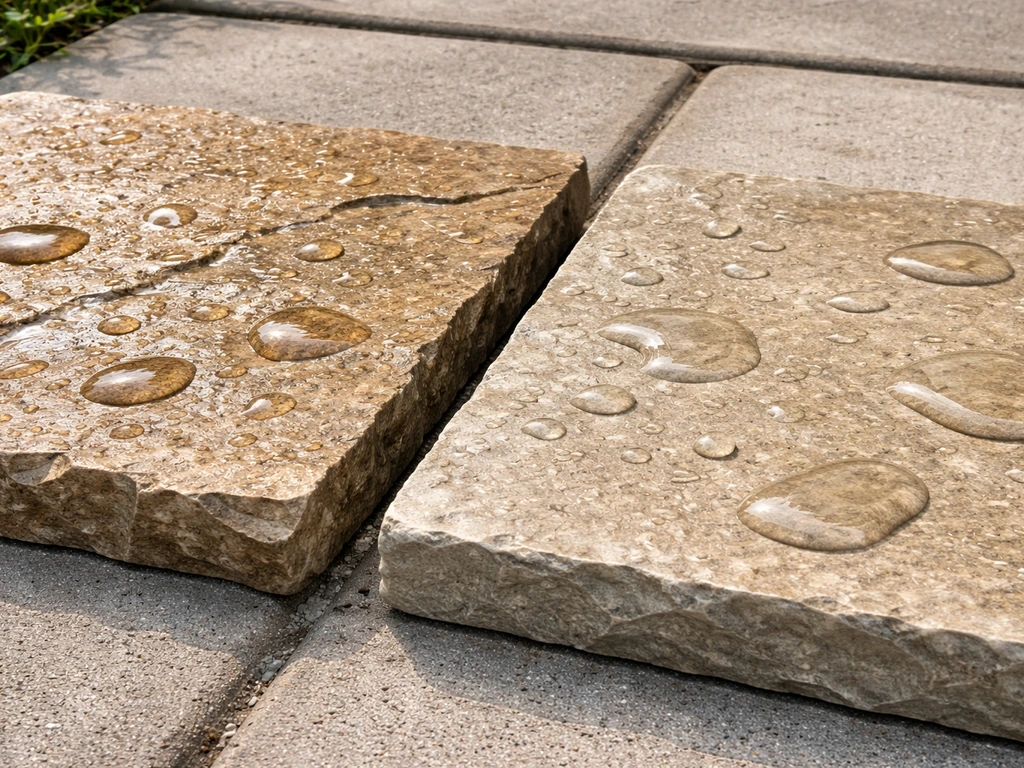
Natural cleft is the standard finish for outdoor flagstone patios and the best choice for slip resistance. Choosing the right grout for a flagstone patio depends on whether you need a sand-set joint, polymeric grout, or something designed to handle freeze-thaw best grout for flagstone patio. The split surface creates natural texture that gives traction even when wet. Thermal or brushed finishes add texture artificially but are less common in residential DIY projects. Avoid honed or polished flagstone for outdoor use; the smooth surface becomes dangerously slippery when wet, especially near pools or in rainy climates.
Climate and absorption
If you are in a climate with hard freezes, absorption rate is one of the most important specs to check. Stone with a high absorption rate absorbs water, which then expands when it freezes and can fracture or spall the surface over a few winters. Ask your supplier for the absorption rate of any stone you are considering. Denser stones like quartzite and bluestone perform well in freeze-thaw climates. Softer sandstones and some limestones are better suited to mild or dry climates. Low absorption rate information is sometimes listed directly on product pages at stone suppliers, so it is worth asking specifically.
Color and lot consistency
Natural stone varies from piece to piece and from quarry lot to quarry lot. If you are ordering flagstone in multiple stages or expect to come back for more later, buy all your stone from the same lot in one purchase. Matching color and texture across different quarry pulls is very difficult. Ask the yard whether your order will come from a single lot and whether they can hold stone for you if you need to order in phases.
How much flagstone you actually need
Start with your patio's square footage and then add a 10 to 15 percent overage for cuts, irregular edges, and breakage during installation. A more complex pattern or a patio with curved edges warrants the full 15 percent overage. Coverage per ton varies significantly by stone species and thickness. A county schedule of values table includes per-area flagstone patio base rates by quality tier, which can be useful as a public-sector benchmark when estimating costs. As a working reference: 1.5-inch thick flagstone typically covers around 100 square feet per ton, while thinner 1-inch minus stone can cover 160 to 180 square feet per ton. Denser stone naturally covers less area per ton.
Here is a practical example: a 200-square-foot patio with 15 percent overage means you need stone to cover 230 square feet. At 100 square feet per ton for 1.5-inch flagstone, that is 2.3 tons. Round up to 2.5 tons to be safe. Always ask your specific supplier for the coverage estimate for the exact stone you are buying, not a generic figure.
Do not forget the materials that go under and around the stone. A proper base typically requires 4 to 6 inches of compacted gravel, and freeze-thaw climates often need deeper bases to prevent heave. On top of that goes a 1-inch bedding sand layer. You will also need polymeric jointing sand for filling gaps. A 50-pound bag of polymeric sand typically covers 75 to 100 square feet depending on joint width. These materials are worth estimating and pricing at the same time as your stone, since bundling the order with one supplier can save on delivery fees. The base and bedding materials are covered in more detail in the guide on the best base for a flagstone patio.
Questions to ask vendors and how to check quality before paying
Walking into a stone yard or calling a supplier without a list of questions is a good way to end up with the wrong stone. Here is what to ask before placing any order:
- What is the exact stone species and where is it quarried? (This matters for absorption and durability.)
- What is the thickness range for this product? (Nominal thickness and actual range can differ by half an inch.)
- What is the approximate coverage per ton for this specific product at this thickness?
- Is this order coming from a single quarry lot? Can you hold it for me if I need to order in phases?
- What is the absorption rate? Is this stone suitable for freeze-thaw climates?
- What is the minimum delivery quantity, and what is the delivery fee to my zip code?
- What is your return or exchange policy for natural stone? What happens if pieces arrive broken?
- Can I see a sample piece, or can I come to the yard to pick a specific pile?
- Do you carry base gravel, bedding sand, and polymeric jointing sand, and can it all be delivered together?
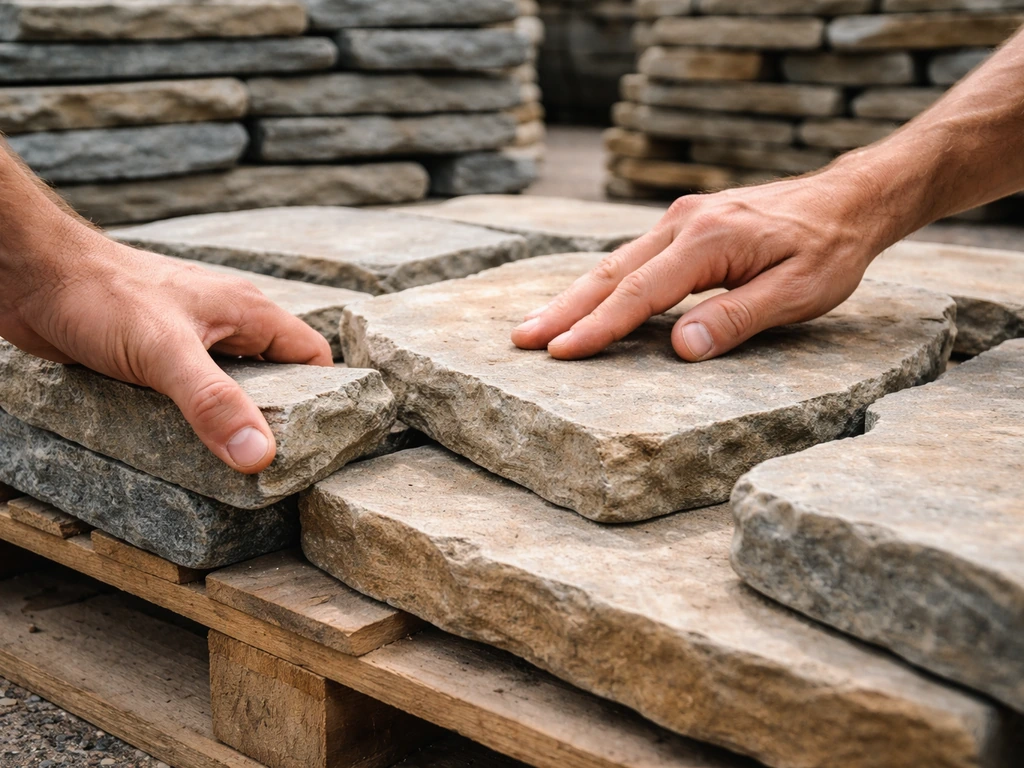
For in-person quality checks, look at actual thickness variation across multiple pieces in the pile, not just the top layer. Flip a few pieces over and check for cracks, thin spots, or delamination. Pieces that feel gritty or sandy on the split face and have a consistent density are generally good signs. If buying online or from photos, ask for images of the specific pallet or pile with a tape measure visible for scale.
Cost checklist: stone, delivery, and bundled materials
Flagstone typically runs from about $10 to $15 per square foot for common types like Pennsylvania bluestone or Tennessee crab orchard, with thicker or rarer varieties going higher. That is the stone alone. When you add base gravel, bedding sand, polymeric sand, and delivery, the total material cost for a DIY patio comes out noticeably higher. What you use to fill the joints also affects stability and weed control, so it is worth choosing the right filler for a flagstone patio filler for flagstone patio. Here is a checklist of every cost line to confirm before you finalize your order:
- Flagstone: price per ton (or per square foot if buying pallet-packaged from big-box)
- Number of tons or pallets needed including your overage allowance
- Base gravel (price per ton or per cubic yard, and how many inches of depth you need)
- Bedding sand (price per ton; plan for a 1-inch layer across your full patio area)
- Polymeric jointing sand (number of 50-pound bags based on your square footage and joint width)
- Delivery fee to your address, and whether it covers all materials or just the stone
- Any minimum order surcharges
- Sealer if you plan to apply one after installation
- Equipment rental: plate compactor, masonry saw (if cutting irregular shapes)
One practical tip: get at least two quotes from local suppliers, and compare them on a per-square-foot-of-coverage basis rather than just per ton. A slightly cheaper ton price on stone with lower coverage (heavier, denser stone) can end up costing more overall. Delivery fees vary widely, and bundling all your materials with one supplier is usually cheaper than splitting the order.
A note on thickness and cost that comes up regularly: because flagstone is sold by weight, doubling the thickness roughly doubles the cost for the same area. A 1-inch stone covering 180 square feet per ton is a very different cost equation than a 2-inch stone covering 80 to 90 square feet per ton. Make sure you are comparing apples to apples when vendors quote different thicknesses.
Your quick plan for buying flagstone today
If you want to move fast, here is a realistic action plan that gets you from research to ordered stone within a week:
- Measure your patio area in square feet and add 15 percent for overage. Write this number down before you make any calls.
- Search for stone yards, masonry suppliers, and landscape supply companies within 20 to 30 miles. Call two or three and ask for their flagstone product list, coverage per ton, and delivery fee.
- Visit at least one local yard in person to see the stone before committing. Bring your square footage number and ask them to walk you through coverage estimates for the specific product.
- Get itemized quotes that include the stone, delivery, and any base/bedding materials you want to bundle. Ask each vendor to specify stone species, thickness range, and lot consistency.
- Compare quotes on a total-delivered-cost-per-square-foot basis, not just the stone price alone.
- Confirm the return/damage policy in writing or via email before placing the order.
- Place your order with enough lead time for your project start date. Local yards with in-stock stone can often deliver within two to three business days. Special orders from online retailers may need two to three weeks.
- When stone arrives, inspect every pallet immediately. Note any damage before the driver leaves and photograph it. Contact the supplier the same day if anything is wrong.
Once your stone is ordered and on the way, you can start thinking about installation specifics: the base layer, mortar vs. sand-set, joint filler type, and sealing. Those details are covered in the related guides on the best base for a flagstone patio, best mortar for flagstone, and best joint filler options, all of which will affect how long your finished patio actually holds up. If you are still deciding whether flagstone is the right choice, it helps to understand what a flagstone patio is and what to expect from the material best mortar for flagstone.
FAQ
Is it better to buy flagstone by the ton or by the piece for a patio project?
For most patios, ton pricing is usually simpler because you can calculate coverage by thickness, but piece pricing can help if you need consistent sizes for borders, steps, or a tight pattern. Ask the supplier to quote both ways (ton and piece) and confirm the expected coverage for the exact thickness and finish you want.
What should I do if my patio needs multiple delivery dates and I cannot buy all the stone at once?
Request the stone be allocated to a single quarry lot, then ask whether they can hold the remainder under that same lot number or for a specific pull date. If they cannot, plan to shift your layout to minimize visual mismatch and consider blending stone by color family rather than expecting exact continuity.
How can I tell if the flagstone I’m buying will handle my local freeze-thaw conditions?
Don’t rely only on the stone type name. Ask for the absorption rate (or a comparable spec) and confirm it meets your climate, then check that the seller can provide documentation for that lot. Also verify the recommended installation method (base depth and jointing) matches freeze-thaw best practices.
Can I use flagstone from a big-box store if I’m building an irregular, character-style patio?
You can, but manage expectations: big-box pallets are often more uniform and thinner, which limits dramatic variation in pattern and can reduce long-term durability if the thickness is marginal for your installation. If you go this route, prioritize thicker pieces, inspect thickness variation across the pallet, and confirm the finish is appropriate for outdoor slip resistance.
How do I avoid getting an incorrect quantity when vendors quote coverage?
Require coverage estimates tied to the exact product (species, thickness, and finish), then compare those numbers against your design overage. If a vendor only gives a generic square-foot-per-ton range, ask for the specific figure for your selected SKU or thickness and request it in writing.
What’s the biggest mistake people make when ordering online flagstone?
Ordering without confirming return eligibility for natural stone and without seeing lot-specific photos with scale. Before paying, ask for images of the exact pallet or lot, confirm the damage-and-return process, and request a sample piece if the retailer offers it, especially if color matching matters for your layout.
Should I buy polymeric jointing sand and base materials from the same place as the flagstone?
It often helps to bundle with one supplier to reduce delivery fees and ensure compatibility, but it is not required. If you split orders, verify the jointing sand product is intended for flagstone (joint width range, weed control claims, and freeze-thaw suitability) and make sure the base gravel size meets your compaction plan.
What thickness of flagstone is safe for a sand-set patio versus a mortar-set patio?
Use thickness as a risk filter, not a guess. For sand-set work, thicker is safer (around 1.5 inches minimum is commonly used), while mortar-set can sometimes accommodate thinner pieces because the mortar bed provides structural support. If your patio will carry heavy loads (hot tubs, large planters, frequent furniture rolling), request a recommendation based on that load.
Do I need sealing for outdoor flagstone, and does it affect what products I should buy?
It depends on the stone’s porosity and your local wetness. If sealing is part of your plan, choose the sealer after installation and confirm it is compatible with the joint filler you used (some systems require curing time and can limit reapplication schedules). Ask your supplier whether sealing is recommended for the specific stone species and absorption behavior.
How do I compare quotes from different stores if they quote per ton, per square foot, and different thicknesses?
Normalize everything to square feet using the vendor’s stated coverage for your exact thickness, then include delivery and any mandatory material add-ons. Also compare stone weight and thickness, because a quote that looks cheaper per ton can cost more when your coverage per ton is lower.