Slate is one of the best-looking natural stone options for a patio, and in the right conditions it holds up for decades. But it chips more easily than granite or bluestone, demands a solid base and proper sealing, and costs more than most alternatives. Whether it's the right call depends heavily on your climate, how much foot traffic the patio sees, and how hands-on you're willing to be with maintenance. Here's everything you need to make that call with confidence.
Slate Patio Pros and Cons: Pros, Cons, and Fit Guide
Nolan Ellison
2 Jul 2026
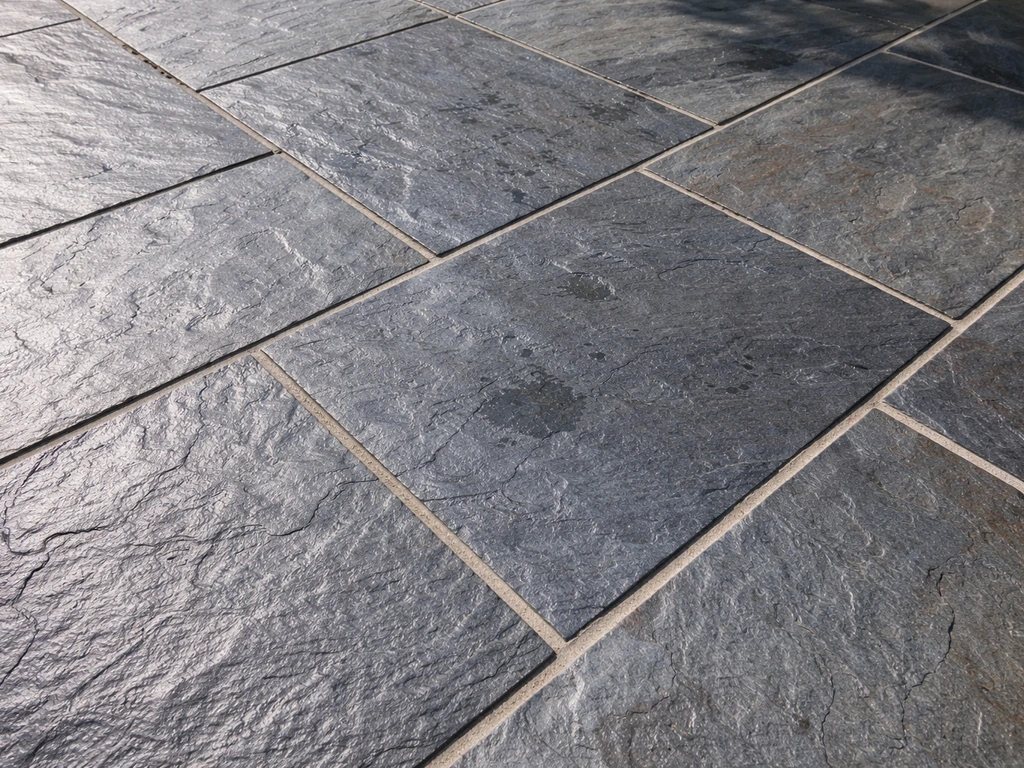
What slate patios actually look like
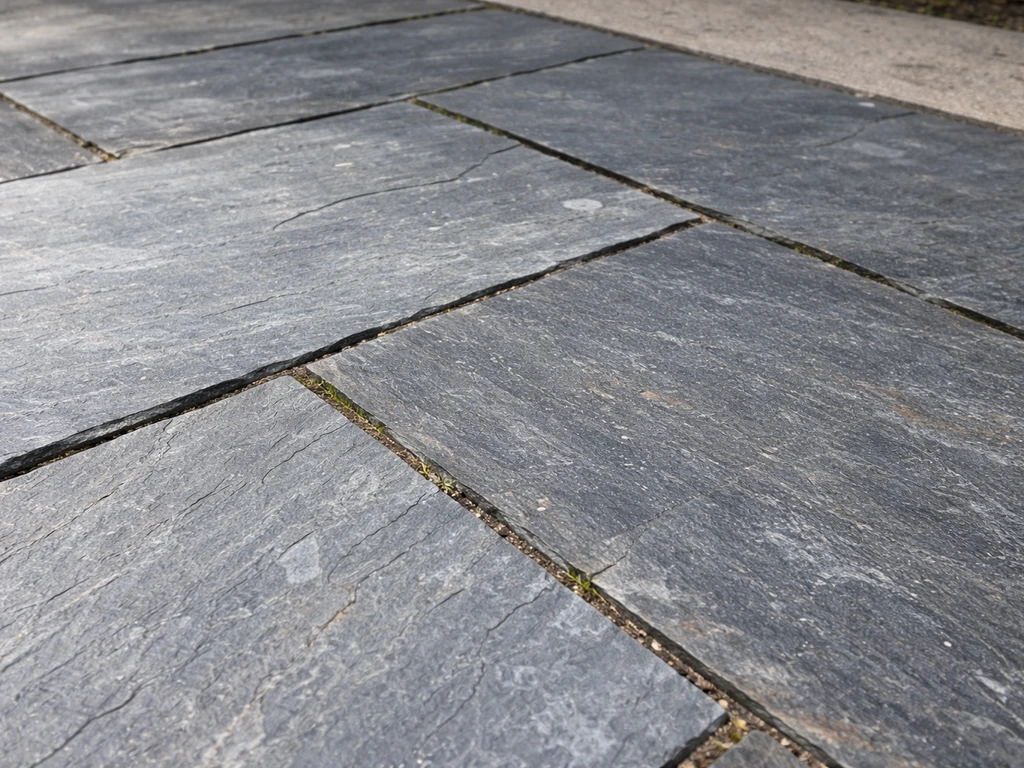
Slate is a fine-grained metamorphic rock that splits naturally along flat planes, which is what gives it that distinctive layered, textured look. Most slate you'll find for exterior patio use comes in one of two surface finishes. Natural cleft (also called riven or split-face) is the classic look: the surface is left as-is from the splitting process, so it has slight ridges, texture, and natural variation. Honed slate has been ground to a satin-smooth surface with no sheen. Outdoors, natural cleft is by far the more common choice because the texture helps with traction and the surface variation hides wear better over time.
Thickness varies more than most homeowners expect. Retail slate tiles (the kind you'd find at a home improvement store) typically run 3/8 inch to 5/8 inch thick with a sawn back and sawn sides for consistent sizing. Thicker slate pavers or flagging slabs can run 30 mm (about 1.2 inches) or more. That thickness difference matters a lot for installation method and how the material handles foot traffic and freeze-thaw stress. The thinner tiles are fine for covered patios or mild climates; for exposed outdoor use in colder regions, thicker slabs are a much safer bet.
Color-wise, slate ranges from deep charcoal and blue-gray to rusty reds, greens, and purples depending on the quarry. Brazilian and Chinese slate tend to run more colorful (reds, greens, multi-tones), while Welsh, Vermont, and Pennsylvania slate lean toward darker grays and blue-blacks. That color variation is part of the appeal, but it's worth ordering extra material because matching later can be difficult.
The real pros of a slate patio
Durability where it counts
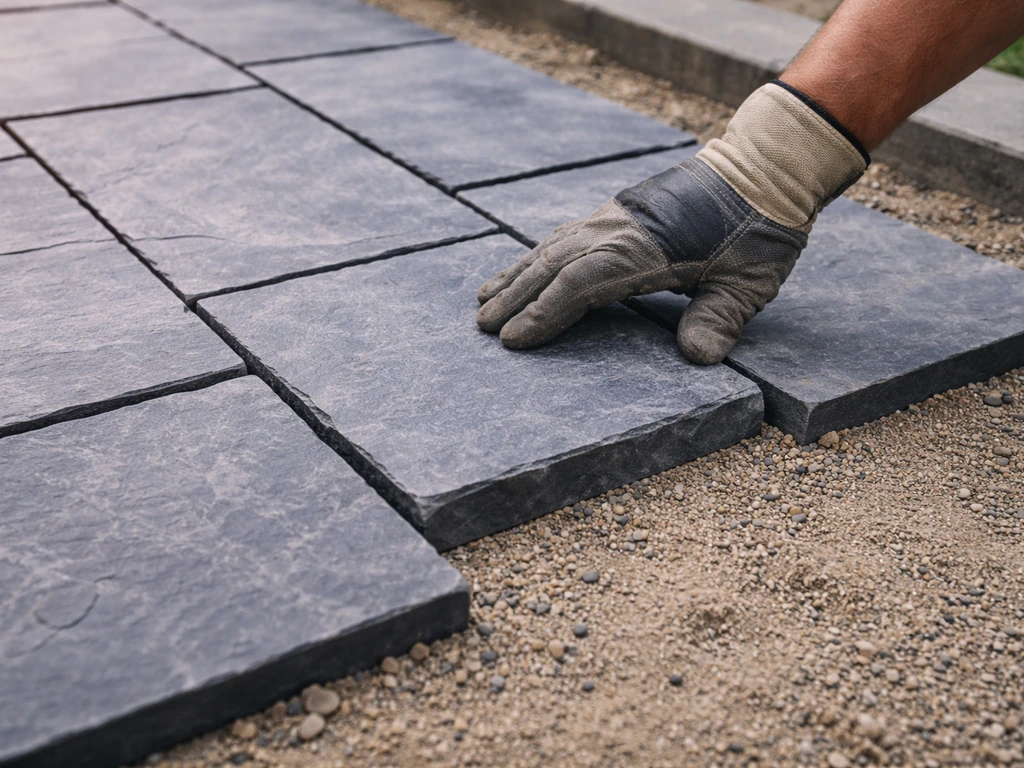
Good-quality slate, properly installed on a stable base, is genuinely long-lasting. High-grade slate from established quarries (Vermont, Pennsylvania, Welsh) has been used on roofs and floors for well over a century, and exterior patio applications follow the same principle: the material itself doesn't degrade from moisture exposure the way softer sedimentary stones like sandstone or limestone can. As long as you're not dealing with severe freeze-thaw cycling and the slabs are thick enough, the stone holds its structure for 25 to 50 years or more without major surface degradation.
Appearance and design flexibility
Few materials match slate for natural character. The variation in tone and texture across a slate patio surface gives it a richness that porcelain tile or concrete pavers simply can't replicate. It works well in formal settings laid in tight, uniform patterns and equally well in a random irregular flagstone layout. Wet slate deepens in color dramatically, which a lot of people love around pools or water features. If visual warmth and a natural aesthetic are high on your list, slate delivers.
Slip resistance
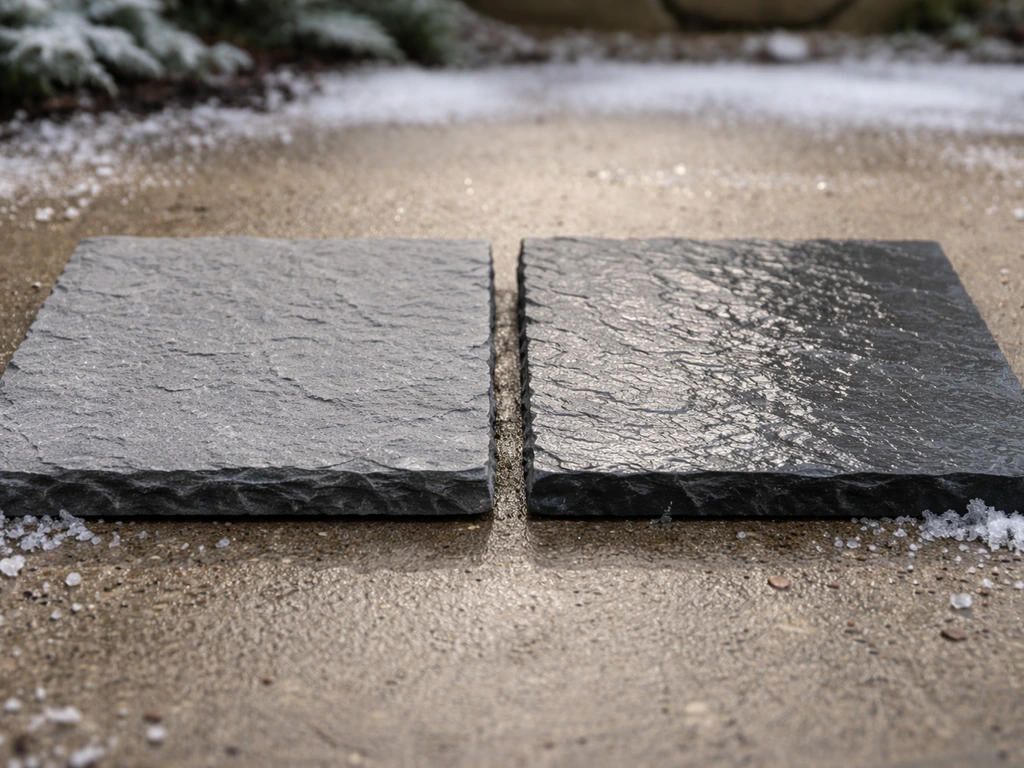
Natural cleft slate has an inherently textured surface that provides good traction even when wet. This makes it a reasonable choice around pools or in climates with frequent rain, especially compared to honed or polished stone. If you're using thinner honed slate tiles outdoors, traction becomes less reliable when wet, so natural cleft is strongly preferred for any exterior application where puddles or rain are regular factors.
Heat and temperature behavior
Slate doesn't get as searingly hot underfoot as concrete or light-colored porcelain on a sunny day, though darker slate will still absorb heat in full sun. In shaded patios or areas with morning sun only, it stays comfortable to walk on barefoot. It also doesn't expand and contract as dramatically as concrete, which reduces (but doesn't eliminate) the risk of cracking from thermal movement.
The real cons of a slate patio
Cost
Slate is not a budget material. Depending on origin and thickness, slate pavers run roughly $5 to $15 per square foot for material alone. Installed costs including base prep, mortar, and labor typically land between $15 and $30 per square foot, and premium or imported varieties push higher. That puts it in a similar price range to bluestone and above brick, concrete pavers, gravel, or decomposed granite. If budget is the primary driver, slate is hard to justify over those alternatives. A pea gravel patio can be a more budget-friendly option than slate, with easier leveling but different maintenance and drainage trade-offs.
Chipping and brittleness
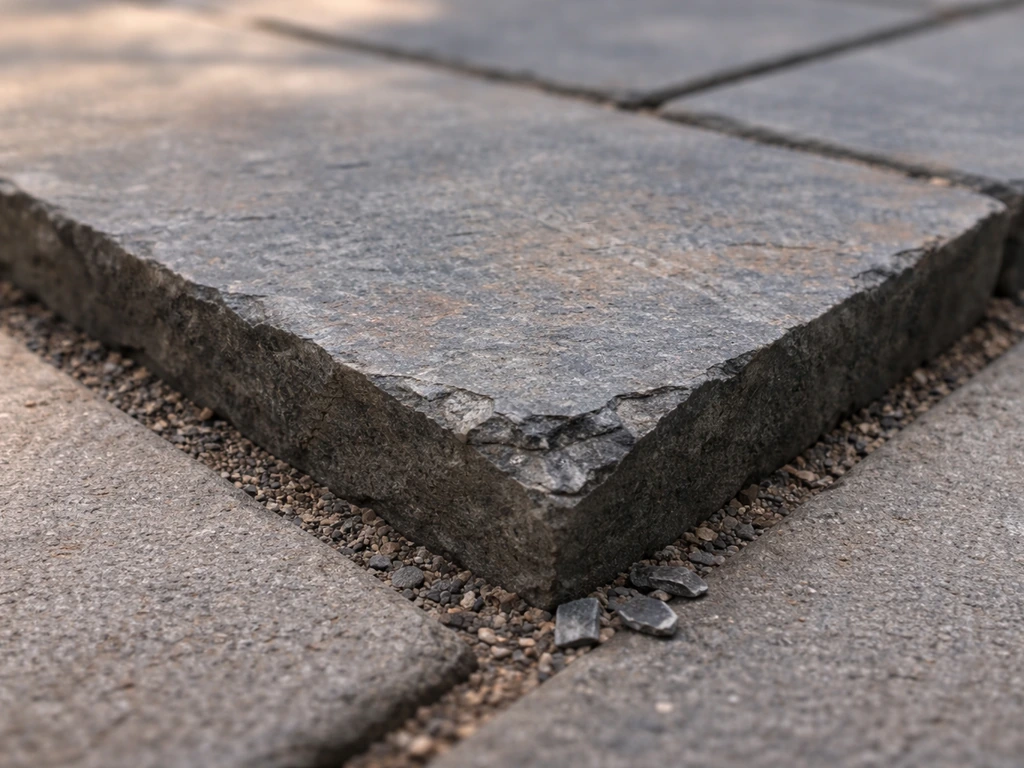
This is probably the most common complaint homeowners have about slate after installation. Because slate splits along natural cleavage planes, the edges and corners are vulnerable to chipping under impact or point loads. Dropping something heavy on a corner, a furniture leg dragged across a surface, or even heavy foot traffic at the edge of a slab can cause flaking or small chips. Thinner tiles (under 20 mm) are particularly susceptible. This doesn't mean slate crumbles, but it does mean you'll see some edge wear over the years, especially on high-traffic paths. If you are troubleshooting decomposed granite patio problems, the same focus on a stable base and drainage will help prevent surface deterioration.
Thickness variation and weight
Natural cleft slate has inherent thickness variation even within a single slab. A nominal +/- 2 mm tolerance is typical for cut-to-size products, but irregular quarried slabs can vary more. That variation makes leveling during installation genuinely tricky and slow. Weight is also significant: thicker slate pavers can weigh 15 to 25 pounds per square foot, which makes solo installation of large slabs impractical and adds to delivery and handling costs.
Sealing requirements and freeze-thaw vulnerability
Slate has a relatively low water absorption rate compared to sandstone or limestone, but it's not impervious. In freeze-thaw climates (anywhere that regularly dips below 32°F), unsealed slate can absorb enough water that repeated freeze-thaw cycles cause spalling or surface delamination over time. Sealing is not optional in those climates. Even in milder areas, sealing protects against oil stains, moss growth, and efflorescence. That means a maintenance commitment, not a one-and-done installation.
Installation: what you actually need to get right
Base preparation
A failed slate patio almost always comes back to a weak base. For foot-traffic areas, a compacted crushed stone or road base layer of 50 to 80 mm (2 to 3 inches) is the standard starting point, adjusted upward for softer or more reactive subsoils. The base needs to be dead-flat and fully compacted before anything goes on top. Any soft spots will show up as rocking or cracked slabs within a couple of seasons.
Mortar versus dry-lay
Thinner slate tiles (under 30 mm) should be set on a full mortar bed rather than dry-laid. The tile is too thin to bridge minor voids in a dry aggregate base, and hollow spots under thin tiles lead directly to cracking under foot traffic. Thicker slate slabs of 40 mm or more can be dry-laid on compacted gravel in some applications, but for a long-lasting formal patio, a mortar bed is still the more reliable method.
If you are considering a pea gravel epoxy patio for a smoother, more sealed surface, weigh the installation and maintenance requirements against slate. Use a cement-based tile adhesive or a traditional sand-cement mix; the key is full, even contact across the back of each slab.
Layout and cutting
Dry-lay the entire area before committing to mortar. This step is especially important with natural cleft slate because thickness varies from piece to piece, and you want to plan your leveling approach before the clock starts ticking. Slate cuts cleanly with a wet-saw diamond blade, but the edges are prone to micro-chipping, so cut with slow, steady passes. Avoid using an angle grinder for straight cuts if you can help it; the finish is rougher and the risk of cracking the slab mid-cut is higher.
Grouting and drainage
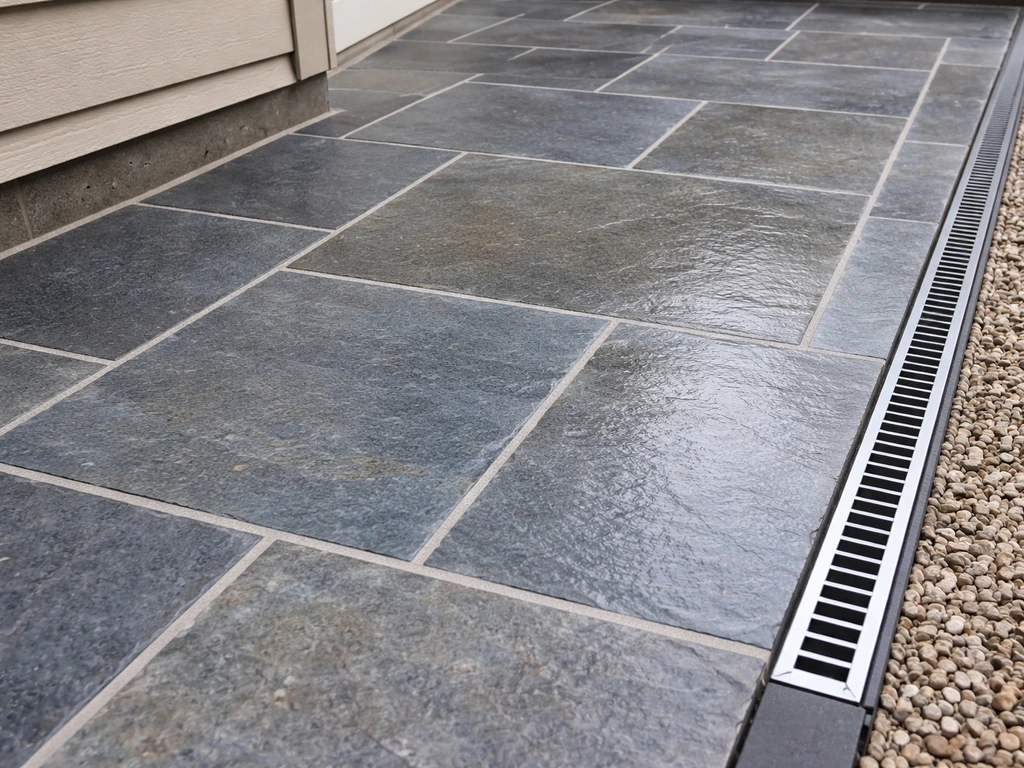
Outdoor slate patios need proper drainage built into the layout: a minimum 1/8-inch-per-foot slope away from the house or toward a drain. Don't rely on wide grout joints to handle drainage; they clog. For grout itself, use a sanded, polymer-modified grout rated for exterior use. Unsanded grout joints will crack in outdoor conditions. Joint width should be at least 3/8 inch for irregular natural cleft slabs to accommodate thickness variation. After grouting, clean the surface thoroughly before the grout haze sets.
Keeping a slate patio looking good long-term
Cleaning
Regular sweeping and occasional rinsing handle most routine maintenance. For deeper cleaning, use a pH-neutral stone cleaner, not vinegar or citrus-based products, which can etch the surface and degrade sealer over time. A stiff-bristle brush works well on the textured cleft surface. Avoid pressure washing at high settings directly on grout joints; the force erodes the joint filler faster than normal weathering would.
Sealing
Apply a penetrating (impregnating) sealer rather than a topical/film sealer. Topical sealers sit on the surface, can peel in outdoor conditions, and make the natural texture feel artificial. A penetrating sealer soaks into the pores and protects from within without changing the look significantly. In freeze-thaw climates, seal before the first winter and reseal every two to three years. In mild climates, every three to five years is usually sufficient. Always apply sealer to a clean, dry surface.
Efflorescence and stain management
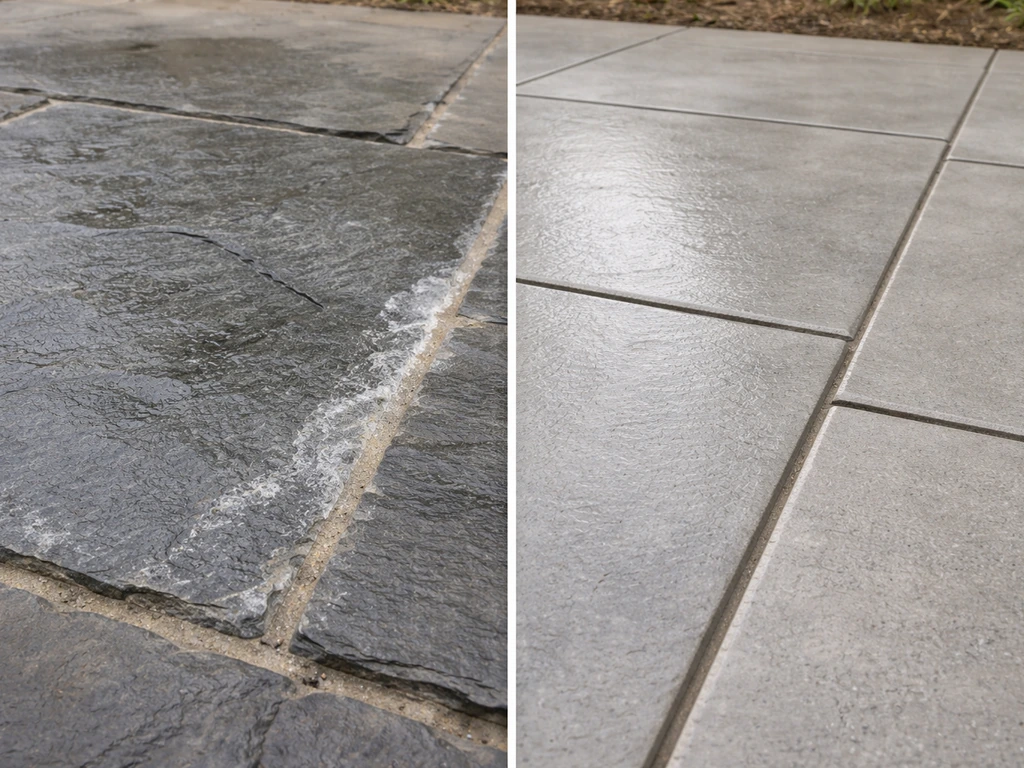
Efflorescence, the white powdery salt deposits that migrate to the surface through moisture movement, is a common issue on new slate installations. It's not a defect in the stone itself; it comes from soluble salts in the mortar or substrate. Light efflorescence brushes off dry; heavier deposits require a diluted efflorescence remover designed for natural stone. Don't let it go untreated for months, as it can eventually bond to the surface and become harder to remove. For oil or organic stains, a poultice made with an absorbent powder and a stone-safe solvent works well applied to the stained area and left for 24 to 48 hours.
Is slate the right patio material for your situation?
Slate works best in specific combinations of climate, use, and budget. Here's how it stacks up honestly against the most common alternatives. If you are weighing a flagstone patio instead, it helps to look at the flagstone patio pros and cons for your climate and installation plan stacks up honestly.
| Material | Cost (installed, per sq ft) | Freeze-thaw performance | Slip resistance | Maintenance level | Best for |
|---|---|---|---|---|---|
| Slate | $15–$30 | Moderate (seal required) | Good (natural cleft) | Medium-high | Mild to moderate climates, formal/natural aesthetic |
| Flagstone | $15–$30 | Good (varies by stone type) | Good | Medium | Irregular/natural look, similar budget |
| Porcelain tile | $12–$25 | Excellent (non-porous) | Good (textured options) | Low | Cold climates, low-maintenance preference |
| Brick | $10–$20 | Good | Moderate | Low-medium | Traditional look, moderate budgets |
| Concrete pavers | $8–$18 | Good | Moderate | Low | Budget-conscious, DIY-friendly |
| Pea gravel | $5–$12 | Excellent | Moderate | Low | Informal areas, low budgets |
Choose slate if:
- You're in a mild to moderate climate (USDA zones 7 and above, or you're committed to sealing in colder zones)
- The patio is for moderate foot traffic, entertaining, and dining rather than heavy daily utility use
- Natural aesthetic and unique color variation matter more to you than uniformity
- You're comfortable with periodic resealing every two to three years
- Budget allows for $15 to $30 per square foot installed
Look at other options if:
- You're in a harsh freeze-thaw climate and want truly worry-free maintenance (porcelain tile is the better call there)
- Budget is tight (concrete pavers or gravel deliver far more value per dollar)
- You want a completely irregular, rustic flagstone look (a flagstone patio using sandstone or bluestone may offer more design flexibility at a similar price point)
- The patio will see very heavy daily traffic, dragged furniture, or wheeled equipment regularly
One thing worth noting: the comparisons above assume proper installation in all cases. Slate installed on a weak base or without sealing in a cold climate will underperform any of the alternatives. The material's reputation for being difficult comes almost entirely from installations that skipped base prep or used it too thin for the conditions. Get those fundamentals right, and slate genuinely earns its place as one of the most attractive and durable natural stone options available. If you're still weighing your choices, reviewing patio materials pros and cons for common alternatives can help you compare durability, slip resistance, and maintenance side by side.
Your next steps
- Check your climate zone: if you're in a region with hard winters and regular freeze-thaw cycles, budget for premium thick-slab slate (40 mm+) and commit to sealing before first winter.
- Get samples before ordering: slate color and texture vary significantly by quarry source. Order physical samples and view them wet and dry in your actual outdoor lighting before committing.
- Price the full job, not just materials: get quotes that include base prep, mortar, labor, and sealing. The material cost is only part of the picture.
- Choose thickness based on use: for a formal patio with mortar installation, 20 to 30 mm is workable; for dry-lay or high-traffic areas, go 40 mm or thicker.
- Plan your maintenance schedule: seal the surface within the first month after installation and add a resealing reminder every two to three years to your calendar.
FAQ
How do I choose between natural cleft and honed slate for a patio in rainy or pool-side areas?
For any area that gets puddles, splash zones, or regular rain, natural cleft is the safer choice because its surface texture holds traction when wet. Honed slate is smoother and can feel more “premium” visually, but it tends to get slick outdoors, especially on thinner tiles.
What’s the biggest mistake that causes slate patios to crack or feel hollow?
The most common cause is an underbuilt or uneven base plus incomplete bedding. Thin tiles set over dry aggregate that has voids, or slabs laid without full mortar contact, can rock or crack because point loads concentrate where there is no support.
Do I really need to seal slate if I live in a mild climate?
Yes, you typically still should seal in mild climates, though resealing intervals are longer. Sealing helps prevent oil staining, moss, and efflorescence, and it protects grout and reduces how much the stone absorbs contaminants, even when freeze-thaw is not a frequent risk.
When should I seal a new slate patio to avoid efflorescence or staining?
Wait until mortar and grout have fully cured and the surface is clean and dry, then apply an impregnating sealer before the first cold season (or before the patio sees heavy moisture exposure). If you seal too early or over damp substrate, you can trap moisture and make efflorescence more noticeable.
How can I tell whether slate is failing from the stone itself or from the installation?
If you see rocking slabs, cracking along edges, or chips at corners where tiles land, it points to base issues, weak bedding, or impact stress. True stone deterioration is far less common, especially with properly sealed, correctly thick slate in climates where freeze-thaw is managed.
What tile thickness is safer for exposed patios where temperatures drop below freezing?
In freeze-thaw areas, thicker slate slabs are a safer bet than thin retail tiles because they are less prone to spalling when they absorb and release water. If you are staying under about 20 mm, you should assume higher risk at edges and plan for a rigorous sealing and base prep approach.
How do I manage chipped corners so the patio still looks good over time?
Plan for edge wear on high-traffic borders by using thicker units where possible and keeping the patio footprint away from direct furniture sliding. For small chips, replacement of individual pieces is often cleaner than trying to patch, and it prevents spreading under continued foot or wheel impacts.
Can I install slate over existing concrete or pavers?
It’s usually not recommended unless the existing surface is fully stable, dead flat, and designed for additional thickness and drainage. Any movement in the substrate can transmit through the slate, causing grout failure or cracked slabs, so most installs call for removing down to a proper base.
What grout width should I use for natural cleft slate?
Use wider joints than you might with uniform tile, because natural cleft pieces vary in thickness. A minimum of about 3/8 inch is a practical starting point for irregular slabs, and wider gaps help reduce the chance of edge pressure that leads to chipping.
Will vinegar, bleach, or pressure washing damage slate patio surfaces?
Vinegar and other acidic cleaners can etch the stone and interfere with sealer performance. High-pressure washing can erode grout and joint filler faster than normal weathering, so if you clean with a washer, use low pressure and avoid concentrated blasting directly at joints.
How often should I reseal, and what’s the easiest way to check if sealing is wearing off?
In freeze-thaw climates, reseal roughly every 2 to 3 years, and in milder areas about every 3 to 5 years. A practical check is to sprinkle water on the surface, if it darkens and does not bead or resist absorption, the sealer is likely thinning and the patio benefits from reapplication.
What’s the fastest way to handle efflorescence on slate after installation?
Brush off light, powdery deposits while they are dry, then address the source by cleaning promptly. For heavier white buildup, use a stone-safe efflorescence remover at a diluted strength made for natural stone, because letting it sit longer can bond and become much harder to remove.
Is slate a good choice for driveways or areas with rolling loads like carts or lawn tractors?
Slate can work for foot traffic and light patio use, but rolling loads and point impacts raise the risk of edge chipping. If you expect carts, wheelbarrows, or frequent equipment traffic, consider thicker slabs, a mortar bed with excellent base compaction, and a layout that avoids repeated passes over the same vulnerable edges.
How should I plan deliveries for heavy slate slabs so I do not damage them or my property?
Slate can be extremely heavy per square foot, so solo handling is impractical for large units and increases breakage risk. Plan for offloading with adequate labor, protect edges during transport, and ensure access routes are wide and level to avoid dropping or dragging pieces.