Most decomposed granite patio problems trace back to one of four root causes: a poorly compacted base, inadequate drainage, missing or failed edging, or the wrong stabilization approach. George Hardscaping also flags a common failure point: spreading DG too thick can prevent the compactor from densifying the material at the bottom of the lift. The DG itself rarely fails on its own. Once you figure out which of those four is actually happening on your patio, the fix becomes pretty straightforward. This guide walks you through diagnosing what went wrong, repairing it the right way, and building it back better so it holds up this time.
Decomposed Granite Patio Problems: Fixes and Prevention Guide
Nolan Ellison
13 May 2026
Why DG Patios Fail in the First Place
Decomposed granite is a naturally granular material made up of small crushed rock particles and fine silts. It compacts well and drains reasonably well when installed correctly, but those same properties make it sensitive to shortcuts during installation. Here are the most common reasons a DG patio starts falling apart.
- Inadequate subgrade compaction: If the soil beneath the DG isn't properly compacted before you lay anything, the whole surface will shift and settle unevenly over time. This is the single most overlooked step.
- Spreading DG too thick in one lift: DG should be installed in 2-inch lifts maximum. Spreading it thicker than that means the compactor never reaches the material at the bottom, leaving loose fines that shift underfoot.
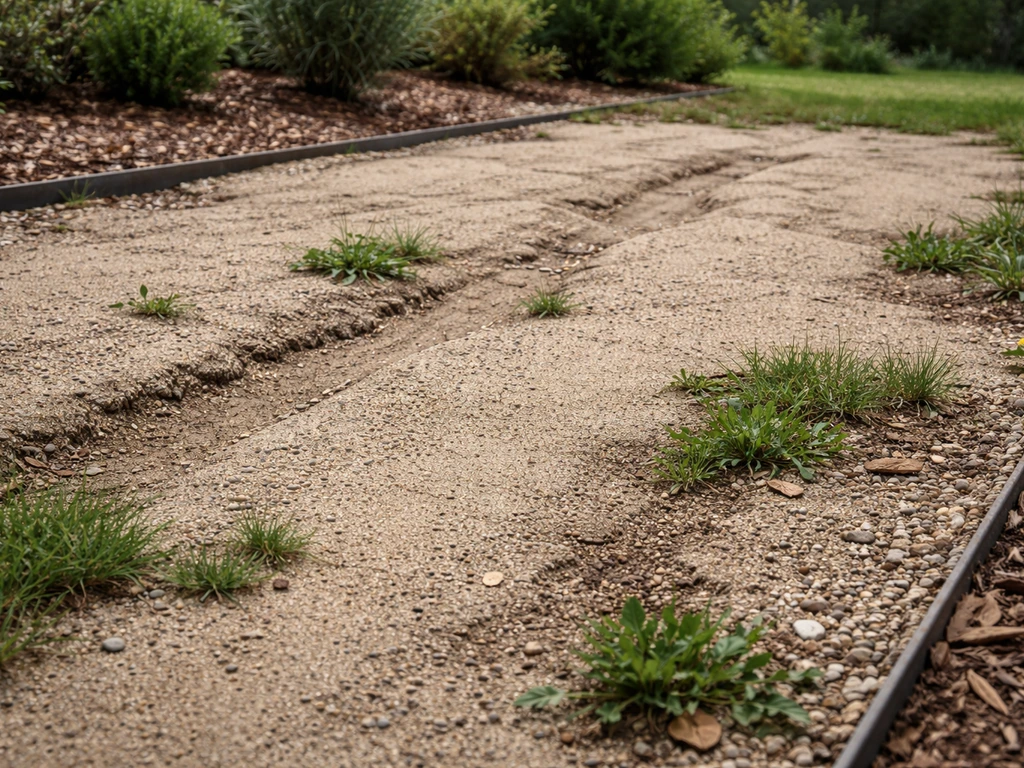
- Poor drainage planning: Water that sits or pools on or around DG softens the fine particles and then carries them away. Without at least a 2 percent cross-slope or crown, you'll get erosion and rutting every time it rains.
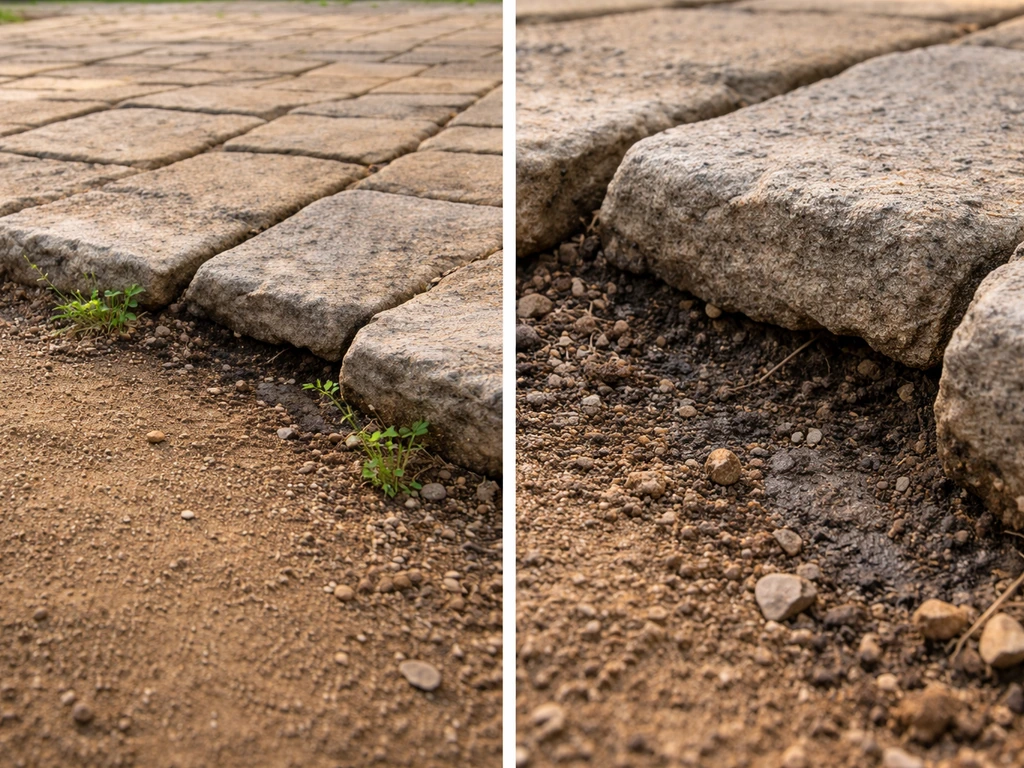
- No edging or failed edging: Without solid containment (typically steel edging staked flush with the top of the DG surface), material migrates outward at the edges and the whole patio gradually shrinks.
- Missing or improperly placed geotextile fabric: A geotextile under the DG prevents fine particles from migrating downward and stops subsurface material from working upward into the DG layer, which causes soft spots.
- Weed and ant invasion: Organic fines in DG create a perfect seedbed. Without a barrier or stabilizer, weeds establish quickly and root systems break up the surface. Ant colonies can do the same.
- Wrong DG product for the application: Not all DG is the same. Material with too few fines won't compact at all; material with too many fines compacts well initially but becomes dusty or muddy when dry or wet.
I've seen patios installed by experienced landscapers fail within a single rainy season simply because the excavation was only 2 inches deep instead of the proper 4 to 6 inches. The DG looked fine the day it was installed. Three months later it was rutted, weedy, and washing onto the adjacent lawn.
Diagnosing the Exact Problem on Your Patio
Before you buy a bag of stabilizer or rent a plate compactor, spend 15 minutes actually diagnosing what's happening. Different failure modes need different fixes, and the wrong fix wastes money and time.
Signs to Look for and Quick Tests
| Symptom | What It Likely Means | Quick On-Site Check |
|---|---|---|
| Ruts and low spots that return after grading | Soft or uncompacted subgrade beneath DG layer | Press a screwdriver into the rut area. If it sinks more than 1 inch easily, the subgrade is soft. |
| DG washing away after rain | Poor drainage slope or no geotextile separation layer | Watch water flow during or right after rain. Is it running across the surface or channeling through it? |
| Dusty, powdery surface in dry weather | Fines have lost cohesion, often from UV breakdown or no stabilizer | Run your hand across the dry surface. If you pick up a visible cloud of dust, fines are loose. |
| Standing water or soggy spots | Inadequate cross-slope, drainage buried under DG, or hardpan soil beneath | Check slope with a 4-foot level. You need at least 1/4 inch drop per foot minimum. |
| Weeds pushing through regularly | No weed barrier, gaps at edges, or weeds germinating in DG fines themselves | Pull a weed and examine the root. If it's shallow in the DG layer, seeds are germinating in the surface, not coming from below. |
| Edges crumbling and DG spreading outward | Edging failure or no edging at all | Look for loose, unlocked, or missing edging stakes along the perimeter. |
| Surface soft and mushy after rain but crusty when dry | Too many clay fines in the DG mix, or the DG is holding water instead of draining | Grab a handful of wet DG and squeeze. If it holds a shape like modeling clay, the fines content is too high. |
In most cases, your patio will show more than one symptom, but there's usually a primary cause driving all of them. Fix the root cause first. Treating symptoms (like regrading without fixing drainage) just delays the next failure.
Fixing Stability Problems: Ruts, Washouts, and Weed Invasion
Repairing Ruts and Compaction Failures
- Scrape out the rutted area down to undisturbed DG or base material. Don't just fill over the top.
- If the rut goes deeper than the DG layer and into the subgrade, excavate to firm native soil and compact the subgrade with a plate compactor or hand tamper. Aim for zero give when you step on it.
- If the subgrade is consistently soft (clay, organic soil), add a 4-inch compacted base of 3/4-inch crushed aggregate before relaying DG.
- Replace DG in 2-inch lifts maximum. Compact each lift before adding the next. For a 4-inch finish depth, that means two separate passes.
- Mist the DG lightly before compacting to help the fines bond. Don't soak it.
- Allow 6 to 24 hours for the material to firm before allowing foot traffic or furniture back on it.
Stopping Washouts
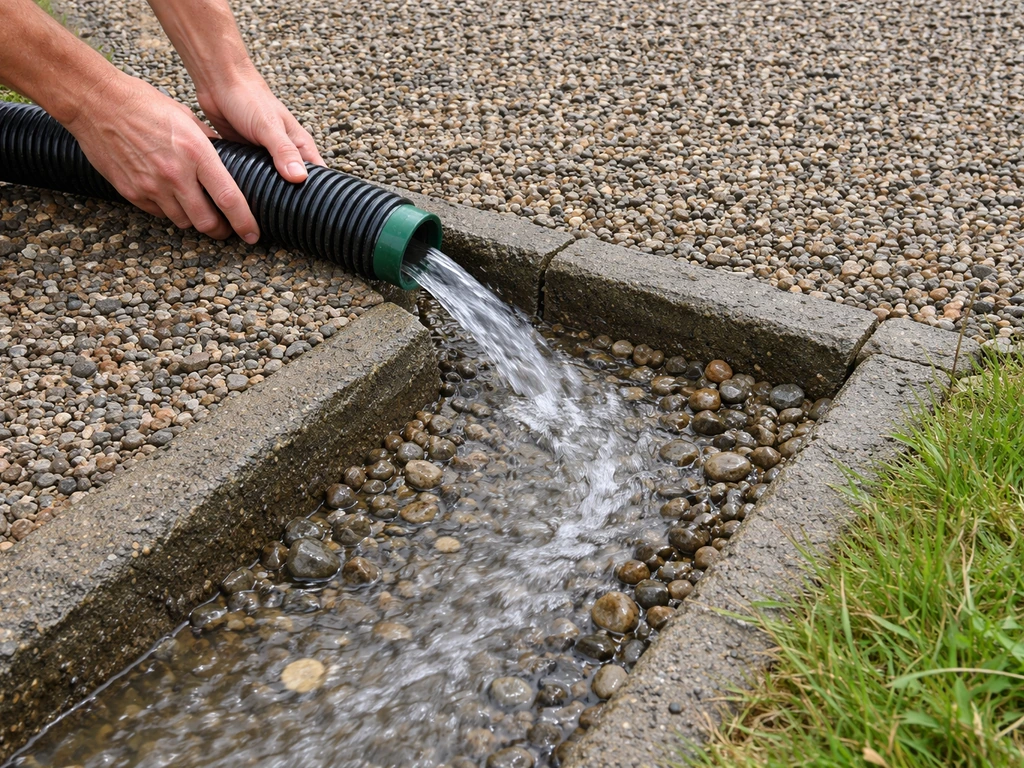
Washouts mean water is moving across or through your DG fast enough to carry material with it. The fix is almost always about changing where the water goes, not about the DG itself. Regrade the patio surface to a minimum 2 percent slope (roughly 1/4 inch per foot) away from structures. If water is entering from adjacent lawn or garden beds, install a French drain or surface swale upslope to intercept it before it reaches the patio. If the DG base is eroding underneath, you need to add a geotextile separation fabric between the subgrade and the DG layer when you rebuild. This fabric won't stop surface erosion, but it stops base material from migrating into DG and destabilizing it from below.
Getting Rid of Weeds for Good
Weeds in DG are almost always a combination of seeds germinating in the surface fines and roots coming up through gaps at the edges. A weed barrier directly under the DG helps, but it's not foolproof because seeds land on top of the DG and germinate there. Here's what actually works:
- If you're rebuilding, install a commercial-grade woven geotextile fabric (3 oz minimum weight) on the compacted subgrade before any DG goes down. Overlap seams by at least 6 inches and keep all edges buried under edging so nothing is exposed.
- For existing patios, apply a pre-emergent herbicide in early spring and early fall. This prevents seeds from germinating without harming established plants nearby.
- Spot-treat any existing weeds with a contact herbicide or by hand-pulling before they set seed.
- Consider a polymer-stabilized DG for the top 1 to 2 inches. The denser, more cohesive surface gives seeds fewer places to establish.
- Seal the edges: most weed intrusion happens at the perimeter where edging has gaps. Repack DG tightly against the edging and verify stakes are still driven fully.
Solving Surface Erosion, Dust, and Drainage Problems
Dust and Loose Surface Fines
A dusty DG surface means the fine particles that hold everything together have lost cohesion. This happens when the material dries out completely, when it was never properly compacted, or when the original DG had too low a fines content to begin with. The fastest short-term fix is misting the surface lightly with water and compacting it again. This will buy you a season. For a more permanent fix, apply a liquid polymer stabilizer (more on that in the stabilizer section below) or top-dress with a fresh inch of properly blended DG (roughly 70 percent coarse aggregate and 30 percent fines) and compact it in. If you're considering pea gravel, or you want the look with a bonded surface, reviewing pea gravel epoxy patio pros and cons can help you choose the right approach for your site.
Drainage and Pooling Fixes
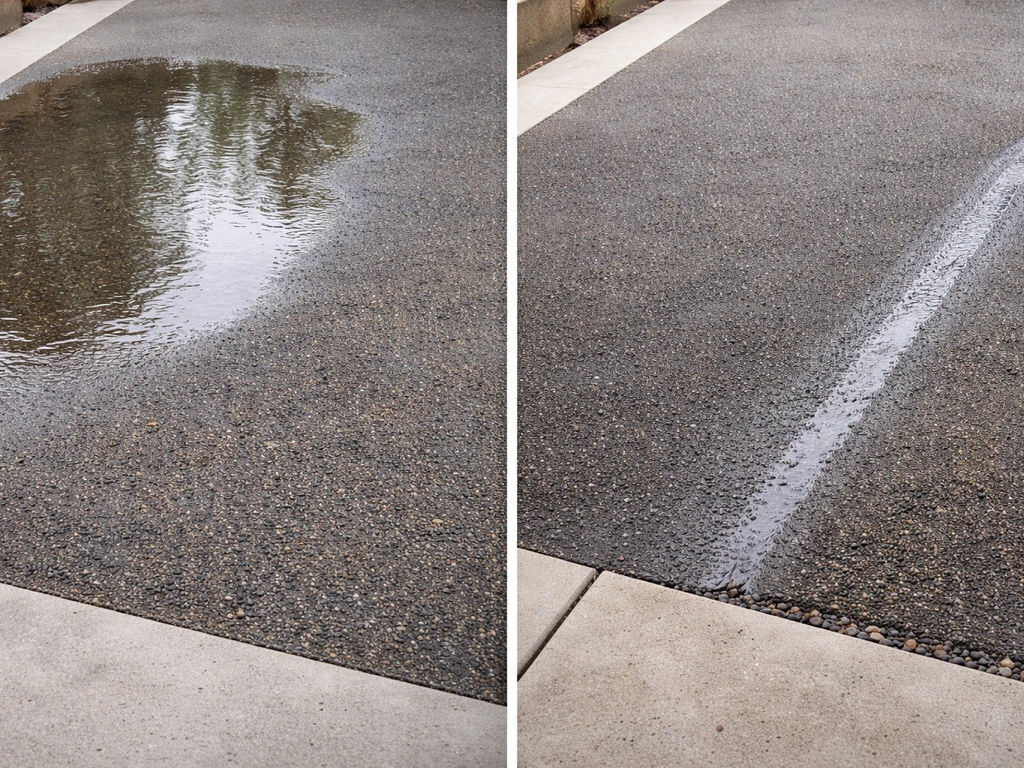
Standing water on a DG patio usually means two things: the surface has no slope, and the subgrade below is either compacted so hard it's impermeable, or it's made of clay that drains poorly. Start by checking your cross-slope. If you have less than 1/4 inch of drop per foot of run, you need to regrade. Scrape the high edge, add material to the low edge, and re-compact. If regrading alone doesn't fix it, you likely have a subgrade drainage issue. Installing a perforated drain pipe in a gravel-filled trench at the low end of the patio gives water somewhere to go. Alternatively, a French drain running along the upslope edge intercepts water before it ever reaches the patio surface. Don't try to solve a drainage problem with stabilizer. Stabilizers make DG more cohesive, but they don't change where the water flows.
Getting the Base Right: What to Do Differently Next Time
If you're rebuilding a failed DG patio or building a new one, the base is where you spend your time and money. Everything above it is secondary.
- Excavate to at least 4 to 6 inches below finished grade. In freeze-thaw climates, go deeper (6 to 8 inches) to allow for adequate base depth.
- Compact the native subgrade with a plate compactor until there's no visible give. If the soil is soft or organic, dig deeper and bring in compactable fill.
- Install a 3-oz or heavier woven geotextile fabric over the compacted subgrade. This separates base aggregate from native soil and prevents fine migration in both directions.
- Add a 3 to 4-inch layer of compacted Class II road base (also called crushed aggregate base) on top of the fabric. This is your structural layer. Compact it to a firm, unyielding surface.
- Check and set your slope at the base layer stage, before DG goes down. It's much easier to adjust aggregate than it is to regrade finished DG.
- Install steel edging now, staked flush with where the finished DG surface will be. Edging should be continuous with no gaps at corners or transitions.
- Apply DG in maximum 2-inch lifts. Mist lightly and compact each lift. For a 4-inch DG layer, that's two compaction passes.
- Verify finished surface has no more than 1/4-inch variation from your target grade across the patio surface.
The most common place I've seen homeowners cut corners is the base aggregate layer. Skipping the road base and just laying DG over compacted native soil might work for a year, but roots, freeze-thaw cycles, and heavy rain will expose that shortcut eventually. The extra 30 to 50 dollars in materials for a proper base is almost always cheaper than repairing failures later.
Binders, Stabilizers, and Stabilization Products
Stabilizers can genuinely solve some DG problems, but they're often marketed as a cure-all when they're really just one tool. Understanding what they actually do (and don't do) will save you money and frustration.
Types of DG Stabilizers
| Product Type | How It Works | Best For | Limitations |
|---|---|---|---|
| Polymer powder (pre-mixed into DG) | Fines bond to aggregate particles when compacted and moistened | New installs; consistent cohesion throughout the layer | Requires proper compaction to activate; won't fix a bad base |
| Liquid acrylic or polymer stabilizer | Sprayed on surface, penetrates and binds fines together | Dust control on existing DG; surface hardening without full rebuild | Surface application only; doesn't fix subsurface issues; can seal surface and create runoff |
| Resin-based stabilizer (e.g., SOIL~SEMENT) | Penetrating liquid that binds fines and resists erosion | Erosion and dust control on paths and patios with adequate surface prep | Requires clean, properly prepared surface to work; performance degrades without maintenance reapplication |
| Portland cement or lime stabilization | Mixed into base or DG layer to create a semi-rigid slab | High-traffic areas needing semi-permanent surface | Hard to remove or re-work; overkill for most residential patios; can crack |
When Stabilizers Help vs. When They Create Problems
Stabilizers work best on a properly prepared, freshly compacted surface. If you spray a liquid stabilizer onto a rutted, eroded, or weed-infested patio, you're locking the problem in place, not solving it. The SOIL~SEMENT case history approach is instructive: the process starts with preparing surfaces correctly before any stabilizer is applied. That means grading, compacting, and clearing weeds first. Stabilizers also tend to reduce the natural permeability of DG, which is one of its best features. If drainage is already a concern on your patio, a surface-sealing stabilizer can make pooling worse. For a patio that just needs dust control and a slightly firmer surface, a polymer-stabilized DG product applied during a rebuild is the cleanest solution. For an existing patio with surface fines issues but a solid base, a liquid stabilizer applied to a freshly graded and compacted surface is reasonable maintenance.
Maintenance Plan and Long-Term Prevention
DG is a low-maintenance surface but not a no-maintenance surface. A simple annual routine will keep it looking good and prevent small issues from becoming expensive repairs.
Annual and Seasonal Maintenance Checklist
- Spring: Walk the entire patio and look for ruts, soft spots, and edge failures. Probe soft spots with a screwdriver. Catch any of these early and they take 30 minutes to fix instead of a weekend.
- Spring: Apply pre-emergent herbicide before weed season if weeds were a problem the previous year.
- After any heavy rain event: Check for erosion patterns and pooling. Address slope or drainage issues before they become ruts.
- Every 1 to 3 years: Top-dress the patio with a 1/2 to 1-inch layer of fresh matching DG, rake level, and compact. This restores surface cohesion and replaces fines lost to erosion or foot traffic.
- Every 1 to 3 years (or when dusty): If using a liquid stabilizer, reapply per manufacturer instructions on a dry, well-prepared surface.
- Annually: Check edging stakes and re-drive any that have heaved or shifted. Repack DG against edging anywhere gaps have formed.
- Fall in freeze-thaw climates: Clear leaves and organic debris off the surface before winter. Decomposing organic matter feeds weed seeds and accelerates fines breakdown.
Is Sealing Worth It?
Whether sealing makes sense depends on your climate and what look you're going for. In hot, dry climates with minimal rain, a liquid acrylic or polymer sealer applied every 2 to 3 years does a great job of controlling dust and keeping the surface firm. In wet climates, be careful: sealing reduces permeability and can turn a naturally draining surface into one that sheds water and creates runoff. If drainage is already marginal on your patio, skip sealing and focus instead on keeping the slope correct and the surface well-compacted with fresh DG top-dressing. If you're comparing this to harder patio materials like flagstone or porcelain tile, DG's maintenance cycle is honestly comparable in time but different in nature. You're not sealing grout or re-leveling slabs, but you are doing periodic regrading and top-dressing that those surfaces don't need. For many homeowners, that trade-off is worth the lower upfront cost and more natural look.
When to Consider Replacing DG Entirely
If you've had repeated failures despite correct base preparation and maintenance, it's worth asking whether DG is the right material for your specific site. High-traffic areas, patios in very wet climates, and spaces where pets run and kids play can genuinely exceed what DG handles well. Pea gravel, stabilized gravel, or a solid surface like flagstone or concrete pavers may be a better long-term answer for those conditions. Considering the slate patio pros and cons can help you decide whether switching materials is worth it when DG keeps failing on your site. If you're weighing flagstone patio pros and cons, compare how it handles drainage, maintenance, and freeze-thaw cycles for your site. In many cases, homeowners weigh the pros and cons of a pea gravel patio based on drainage, stability, and how much maintenance they’re willing to do pros and cons of pea gravel patio. A DG patio that needs rebuilding every two years isn't saving you money compared to a harder surface that lasts 20 years with minimal upkeep.
FAQ
If my decomposed granite patio has soft spots and ponding, should I start by regrading or by adding a drain?
Use the 2 percent rule for cleanup, if you must patch quickly. For DG, you want enough slope that water does not pond, aim for about 1/4 inch per foot away from the house, then recompact the patched area, not just top-dress. Ponding spots usually point to cross-slope first, then to subgrade drainage if slope is already correct.
Can missing or failed edging cause decomposed granite patio problems even when the base seems solid?
Yes, edging failures often look like a “DG washing out” problem, but the cause is usually lateral movement. Check whether the DG is spilling over the sides after rain, then rebuild the edge with a rigid border (or properly installed steel/plastic edging) anchored into the base course. Without that containment, even a good base and slope can still migrate.
Will installing weed barrier under decomposed granite permanently solve weeds?
Don’t. Weed barrier under DG helps mainly with seeds from below and roots from the subgrade, but it does not stop seed fall from landing on top and germinating. If you already have weeds, remove them and recompact, then consider a thin top-dress of freshly blended DG so you are restoring the fine fraction that locks the surface together.
I have a dusty, loose DG patio, is misting and compacting enough or do I need stabilizer?
It usually will not, especially if the DG is dry and dusty. Light misting plus compaction can stabilize the surface temporarily, but if the base is under-compacted or if fines content is too low, the dust will return after cycles of drying and rain. The decision point is whether water is washing material away (drainage) or whether the surface has lost cohesion (fines and compaction).
Where exactly does geotextile help with decomposed granite patio problems, and where should it not be used?
If you see water moving through the base (ruts, washouts, or muddy transfer to adjacent lawn), a geotextile separation layer is more about stopping base migration than stopping surface runoff. Place it between properly prepared subgrade and the DG layer when you rebuild. If the geotextile is laid on top of a failed base, it can trap debris and make drainage worse.
Can polymer stabilizer make a standing-water problem worse?
If you apply polymer stabilizer, only do it after grading and compaction are corrected, and ideally after weeds are removed. Stabilizer can reduce DG permeability, so on patios that already have marginal drainage, it can increase pooling and runoff. A good check is whether water still ponds after you fix the slope, if it does, prioritize drainage changes before sealing or stabilizing.
How can I tell whether standing water is from slope or from the soil under the decomposed granite?
Test permeability on-site: pour a small amount of water in different locations and watch how fast it infiltrates and where it exits. If water stays on top even after slope corrections, suspect an impermeable subgrade or heavy clay. In that case, adding a perforated drain trench at the low end or intercept drains upslope is usually more effective than adding more DG or stabilizer.
If I have to rebuild my DG patio every couple of years, should I keep troubleshooting or switch materials?
Most “failed” DG patios are actually base and drainage failures, not a DG product failure. If you are repeatedly rebuilding within a short period, consider switching materials in high-traffic, very wet, or freeze-thaw exposed areas. A durable alternative often depends on what is failing, for example, pavers or flagstone for freeze-thaw and traction, or stabilized gravel if you still want a similar granular look.
Should I seal to prevent dust if my patio is in a rainy climate?
A common mistake is thinking sealing is the solution for dust only. Sealing mainly controls dust and firms the surface, but it can also reduce the patio’s ability to drain. In wet climates or where runoff already struggles, skip sealing, keep slope correct, and use periodic top-dressing with properly blended DG plus compaction.