Flagstone patios are one of the most beautiful and durable patio options available, but they cost more than most alternatives, demand serious subbase work to perform well, and require ongoing joint and surface maintenance. If you have the budget, the right site conditions, and realistic expectations about upkeep, flagstone is hard to beat. If you're on a tight budget, have poor drainage, or live somewhere with brutal freeze/thaw cycles and can't invest in deep base prep, a different material will serve you better.
Flagstone Patio Pros and Cons: What to Know Before You Build
Nolan Ellison
16 Jun 2026
What flagstone actually is (and what you're choosing between)
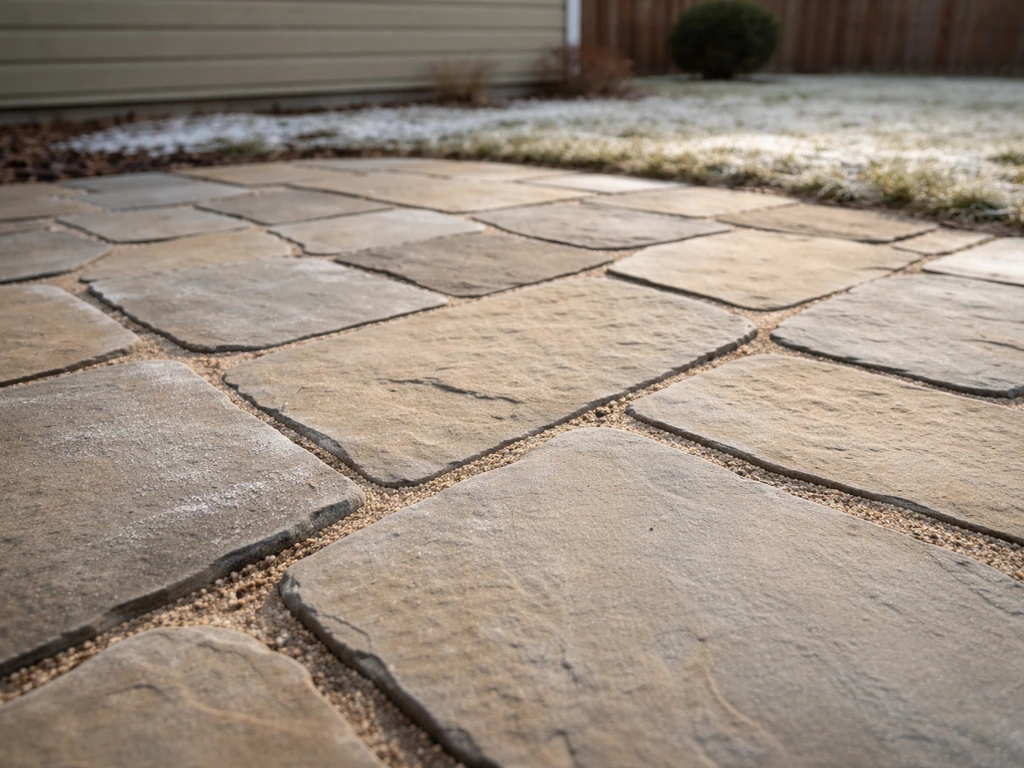
Flagstone is a broad term for flat, irregular natural stone slabs used for paving. The most common types you'll encounter are bluestone, limestone, sandstone, quartzite, and slate. Each has different hardness, porosity, and slip characteristics. Quartzite sits around 7 on the Mohs hardness scale and is extremely durable. Sandstone is softer and more porous but gives excellent natural grip underfoot. Limestone, including Indiana limestone, is beautiful but calcareous, meaning it can develop efflorescence and staining from water and alkali exposure. Bluestone is a popular mid-range pick that balances durability and looks. Slate is dense and attractive but tends to flake in severe freeze/thaw if it's lower-grade material.
When it comes to how a flagstone patio is actually built, you have two main approaches. Dry-laid flagstone is set on a compacted gravel base with a sand or stone-dust bedding layer on top, with sand or polymeric sand swept into the joints. Mortar-set flagstone is either set on a prepared concrete subbase with mortar, or full-depth mortared over a new concrete slab. Dry-laid is more flexible (literally and practically), allows stones to be lifted and re-leveled, and drains naturally. Mortar-set is more permanent, looks more refined, and holds up better to heavy foot traffic and sloped sites, but cracks are harder to repair.
The real pros of a flagstone patio
Durability that outlasts most alternatives
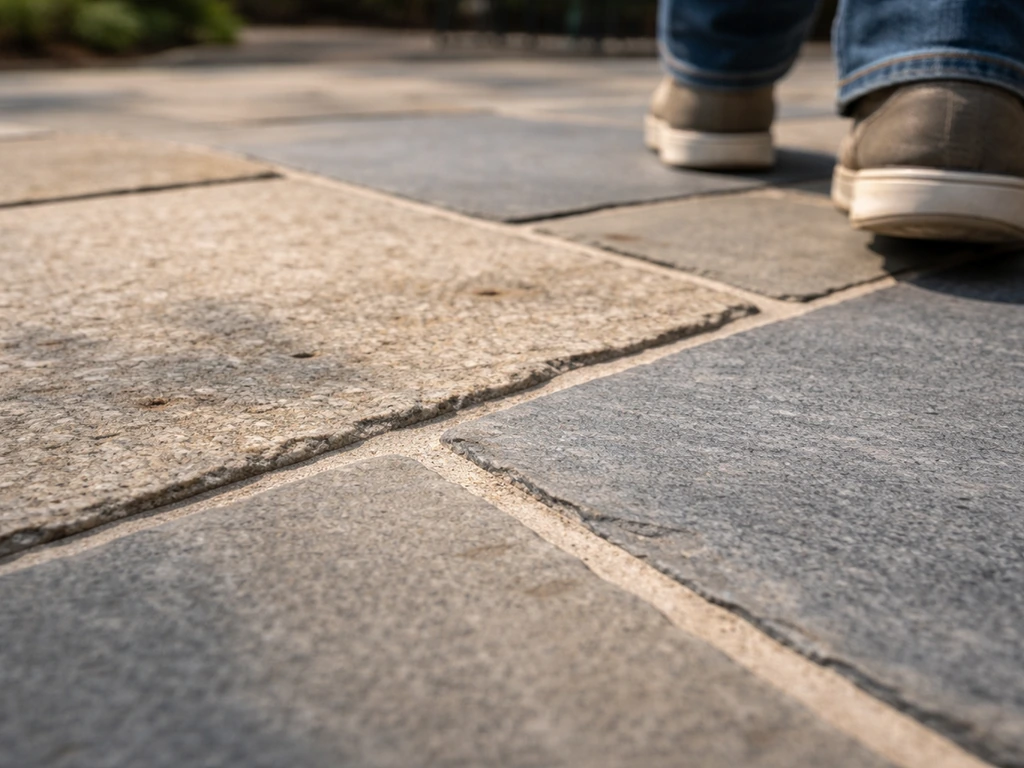
Well-installed flagstone, especially harder varieties like quartzite and bluestone, is genuinely long-lasting under foot traffic. The ASTM C241 abrasion resistance test is the standard benchmark here, and quality flagstone grades well. A dry-laid flagstone patio built on a proper base can last 30 to 50 years or more. Because each stone is a discrete unit, damage is isolated. If one piece cracks or shifts, you lift it out and replace it rather than tearing out a whole slab.
The look is genuinely hard to replicate
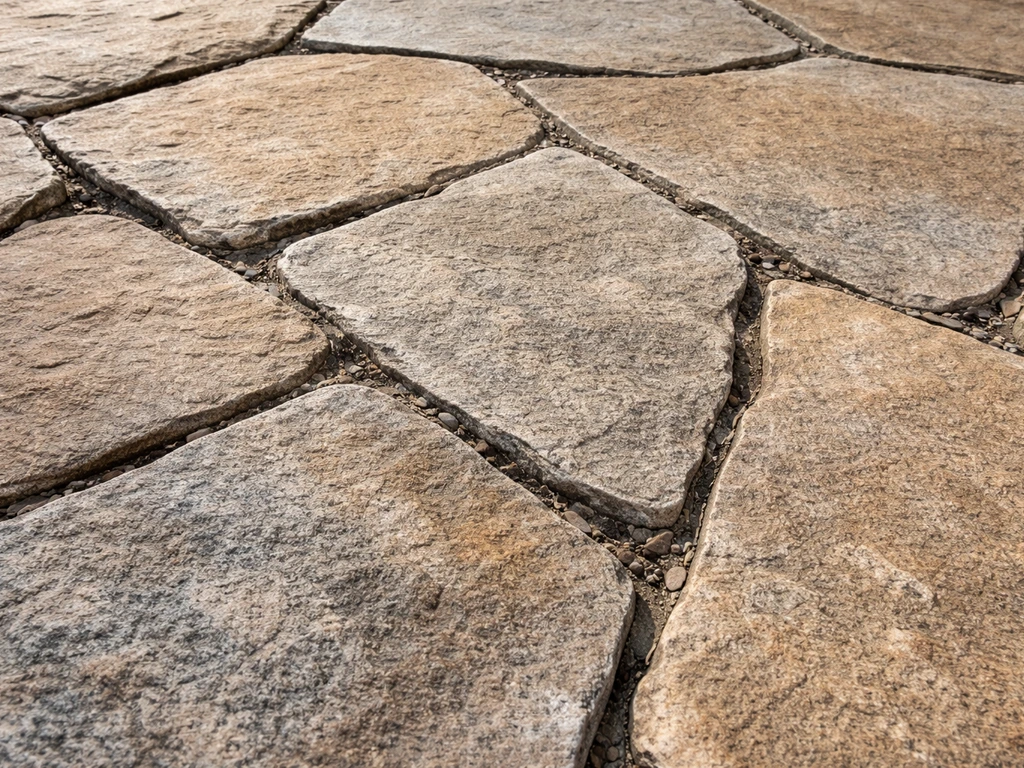
Flagstone has a natural, textured appearance that concrete pavers, porcelain, and composite materials haven't fully replicated, even with modern printing technology. The irregular shapes, color variation, and organic texture make every flagstone patio unique. If curb appeal and outdoor aesthetic matter to you, flagstone tends to add more perceived value than most alternatives.
Natural slip resistance (with the right stone)
This depends heavily on stone type and surface finish. Sandstone and textured bluestone offer excellent natural grip even when wet. Sawn or honed limestone and granite can be genuinely slippery in rain, so finish selection matters as much as stone type. For around a pool or in a rainy climate, a naturally rough or hand-split surface is the safer pick.
Customization and design flexibility
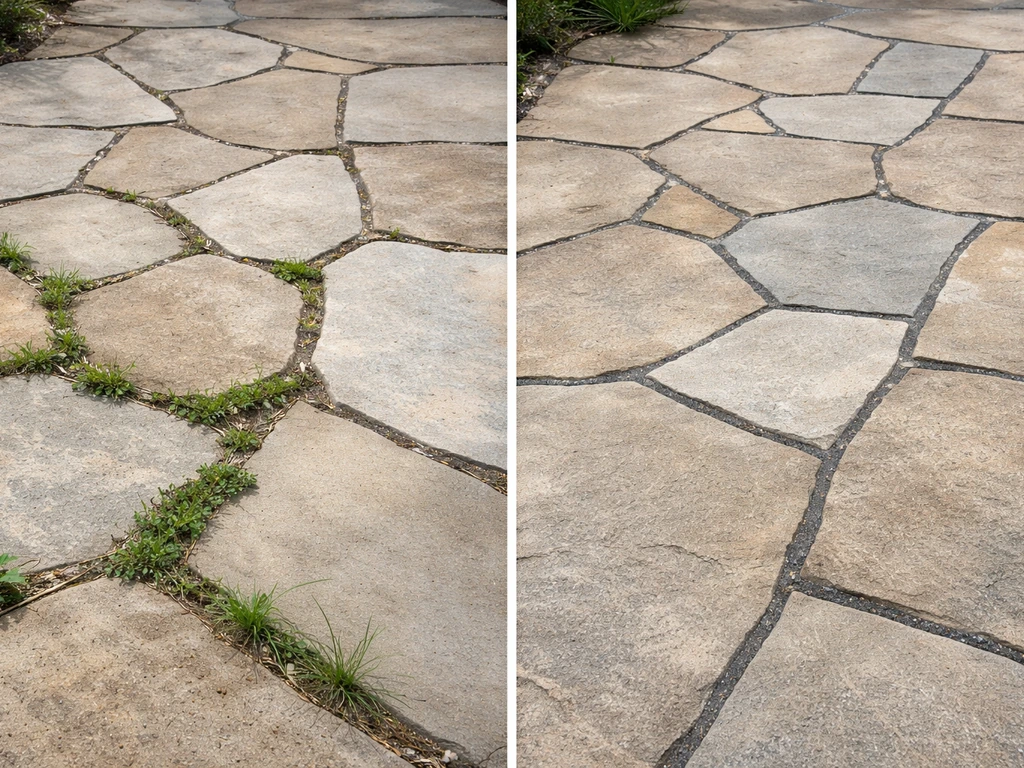
Flagstone comes in irregular random shapes, cut rectangular patterns, and everything in between. You can use wide planted joints for a garden-style look, tight mortared joints for a more formal finish, or mix in groundcovers like creeping thyme between stones. The joint style, stone color, and pattern are all variables you control. That design flexibility is a real advantage over uniform materials like porcelain tile or manufactured pavers.
Permeable drainage options
Dry-laid flagstone with open sand joints allows some water infiltration, which is useful in yards with drainage challenges or local stormwater regulations. It's not as permeable as gravel, but it's far better than a poured concrete slab.
The real cons you need to plan for
Cost is higher than most other patio materials
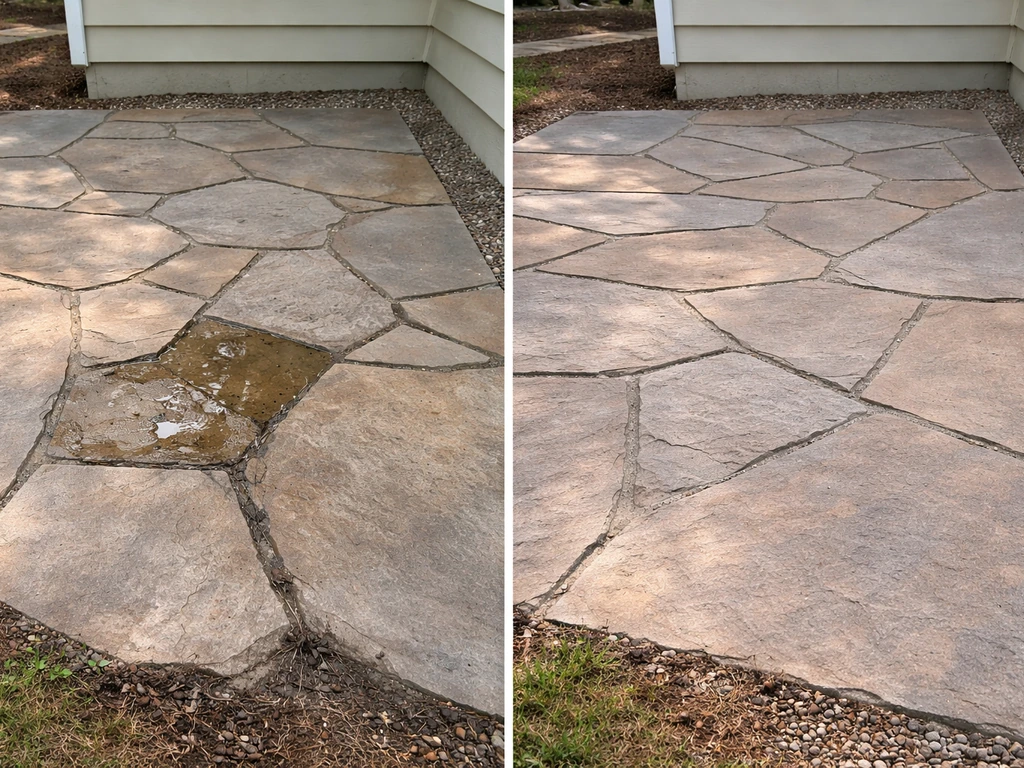
Material alone runs roughly $6 to $15 per square foot depending on stone type and your region. Installed, a dry-laid flagstone patio typically runs $15 to $32 per square foot, with mortar-set or more complex installs pushing higher. A 300 sq ft patio can easily cost $5,000 to $10,000 or more fully installed. Compare that to manufactured concrete pavers or pea gravel patios, which come in considerably lower, and the price difference is significant. Before you commit, it helps to weigh the pros and cons of a pea gravel patio, especially how it compares on cost, maintenance, and drainage pea gravel patios. The cost is real, and it's the number one reason people walk away from flagstone.
Installation is labor-intensive and unforgiving
Flagstone is heavy, and the irregular shapes require time and skill to fit together well. A 2-inch thick flagstone slab can weigh 50 to 100 pounds or more. The subbase has to be built correctly before a single stone goes down; problems with base compaction show up as rocking, settling, and cracking within a year or two. This is not a casual weekend DIY project unless you have real experience with excavation, compaction, and leveling. Even experienced masons say laying irregular flagstone takes significantly longer per square foot than setting uniform pavers.
Joints require ongoing attention
Sand joints erode. Weeds grow. In a dry-laid patio, joint maintenance is an ongoing reality, not a one-time fix. Polymeric sand helps significantly, with properly installed product reducing weed growth for roughly 3 to 5 years, but it needs to be reapplied eventually. One thing to watch: standard narrow-joint polymeric sand doesn't work well with irregular flagstone because the joint widths vary so much. You need a wide-joint rated polymeric product for flagstone specifically.
Certain stones stain, effloresce, and mark easily
Limestone and other calcareous stones are particularly prone to efflorescence, a white chalky haze caused by water carrying salts to the surface. Indiana limestone guidance specifically flags this as a known limitation. Some mortars are also chemically incompatible with limestone and can cause irreversible staining, so material compatibility matters at installation. Porous stones also absorb oil, leaf tannins, and rust stains if not sealed.
Uneven surface can be a trip hazard
Irregular flagstone creates an inherently uneven walking surface. This is part of the charm in a garden setting, but it's a practical concern for households with elderly family members, young children, or mobility challenges. Over time, differential settling between stones can make some edges proud (sticking up), which becomes a tripping risk if not addressed. A mortared installation over a solid slab minimizes this but doesn't eliminate it entirely.
Does your site actually work for flagstone?
Site conditions are where a lot of flagstone patios succeed or fail, and they don't get nearly enough attention upfront. Here's what to evaluate before you commit.
Freeze/thaw climates
Freeze/thaw is the biggest performance driver in cold climates. Water infiltrates joints and the base, freezes, expands, and pushes stones up and out of level. This is called frost heave. In a freeze/thaw climate, you absolutely need a deep compacted base, typically 6 inches or more of properly graded crushed stone (not rounded pea gravel or river rock, which don't compact correctly). Drainage slope into the patio and away from the house is essential. Softer, more porous stones like lower-grade slate or certain sandstones can actually spall (flake) in severe freeze/thaw because water trapped in pores expands. If you're in Zone 5 or colder, stone selection and base depth are non-negotiable.
Drainage and slope
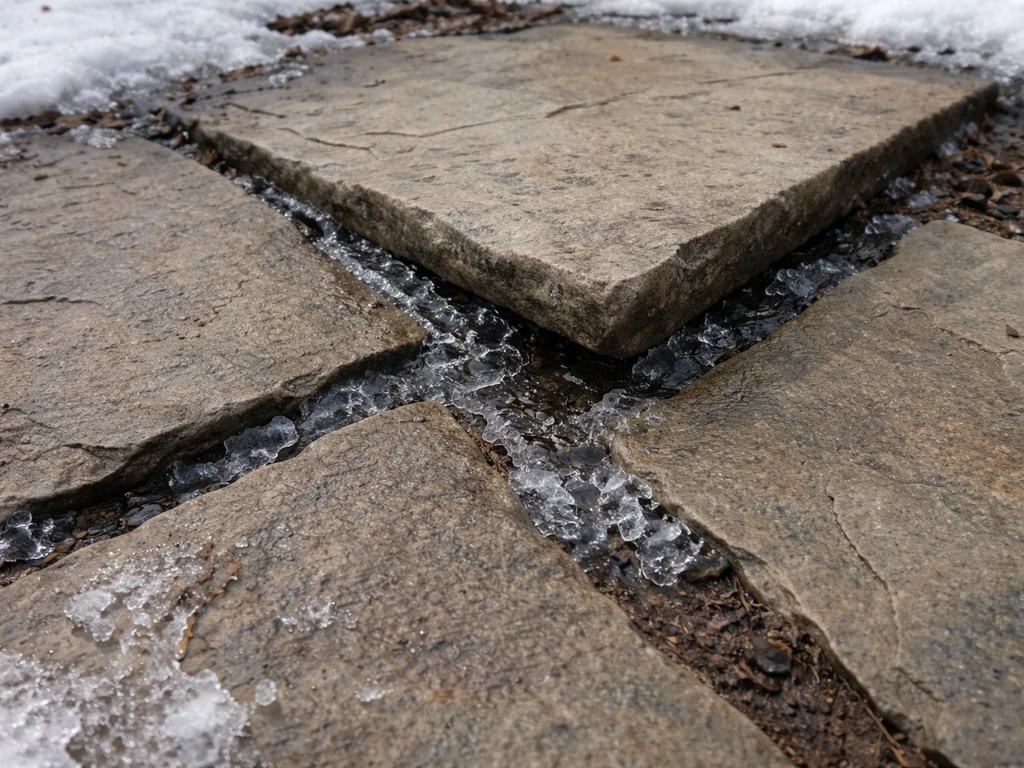
Flagstone patios need to drain. A minimum slope of about 1/8 to 1/4 inch per foot away from the house is standard, and the base itself should slope in the same direction. Standing water on or under a flagstone patio causes staining, base erosion, and accelerated freeze/thaw damage. If your yard is flat or slopes toward the house, you need to engineer drainage into the build, which adds cost and complexity.
Soil type and subgrade stability
Expansive clay soils move seasonally, and flagstone over clay subgrade without adequate base depth will shift. Sandy or loamy soils drain better and are generally more stable for dry-laid installs. If you have clay, plan for deeper base preparation and consider a geotextile fabric layer to prevent base material from migrating into the subgrade.
Slope and grade
Dry-laid flagstone on a significant slope is risky because individual stones can migrate downhill over time without proper lateral restraint. Mortared flagstone over a concrete slab handles sloped sites better. For a steeply sloped yard, consider whether a retaining wall, tiered design, or a different material altogether makes more sense.
Sun and shade
Dark stones absorb more heat and can become uncomfortably hot in full sun in warm climates. Lighter-colored flagstone like limestone or light sandstone stays cooler underfoot. In shaded areas, algae and moss growth on porous stones is a maintenance reality, especially in humid regions.
Installation best practices that prevent the biggest problems
I've seen beautiful flagstone patios fail within two years because the subbase was cut short. The base is everything. Here's what a proper install looks like.
- Excavate deep enough. For pedestrian patios in mild climates, 4 to 6 inches of compacted base plus the stone thickness is a minimum. In freeze/thaw climates, 6 to 8 inches of compacted base is more appropriate. Factor in stone thickness (often 1.5 to 2.5 inches for flagstone) when calculating total excavation depth.
- Use properly graded crushed stone for the base, not rounded river rock or pea gravel. Angular crushed stone compacts and interlocks; rounded aggregate doesn't hold compaction and creates a shifting base.
- Compact in lifts, not all at once. Compact every 3 to 4 inches of base material with a plate compactor for consistent density throughout.
- Add a 1-inch bedding layer of coarse sand or stone dust on top of the compacted base. Screed it level and sloped for drainage. Do not use this bedding layer to compensate for an uneven base: fix the base first.
- Set stones on the screeded bedding layer, fitting them together. Wiggle each stone into full contact with the bedding material rather than leaving voids underneath.
- For joints, use a wide-joint rated polymeric sand on irregular flagstone. Standard narrow-joint polymeric sand won't fill the variable-width gaps properly. Follow the manufacturer's dryness requirements exactly: both the stones and the jointing material need to be fully dry before activation.
- If rain is expected before you finish, cover the work area. Saturated joint sand before polymeric sand activation leads to poor curing and failed joints.
- For mortared installs over a slab, verify slab condition and height before starting. A common mistake is not accounting for mortar bed thickness plus stone thickness, which can create a finished surface that's higher than anticipated relative to doors, steps, or adjacent surfaces.
- Build in drainage slope from day one. A consistent 1/4-inch-per-foot slope away from the house across the entire base and finished surface is the target.
Maintenance, sealing, and long-term care
Cleaning
Regular sweeping and occasional rinsing handles most routine maintenance. For organic staining (algae, moss, leaf tannins), a diluted pH-neutral stone cleaner works well. Avoid acidic cleaners like vinegar on limestone or any calcareous stone because they etch the surface. Power washing is fine at low to moderate pressure but can erode joint sand if you aim directly into the joints.
Joint maintenance
Expect to re-sand or re-treat joints every few years. Polymeric sand performance degrades over time, with effective weed resistance typically lasting 3 to 5 years under normal conditions. When joints start showing significant erosion or weed infiltration, sweep out the old material, clean the joints, and reapply. This is a manageable task but it's an ongoing one.
Sealing: do you need it and what kind
Sealing is not mandatory for all flagstone, but it's genuinely useful for porous stones like limestone, sandstone, and some slates. The key distinction is penetrating sealer versus topical sealer. Penetrating sealers soak into the stone and protect from within without changing the surface appearance or traction characteristics. Topical sealers sit on the surface, can create a wet-look or gloss finish, and can actually reduce slip resistance when wet because they form a smooth film.
Topical sealers also peel and wear faster. For outdoor flagstone in a climate with weather variation, [a penetrating, matte-finish sealer is almost always the better choice](https://www. landscapingnetwork. com/flagstone/maintenance.
html). Resealing timing depends on the product and exposure, but a general framework is to test the surface with water annually: if water no longer beads and is absorbed quickly, it's time to reseal.
Leveling and stone replacement
One of dry-laid flagstone's genuine advantages is repairability. If a stone settles, rocks, or cracks, you can lift it, re-level the bedding underneath, and reset it. This is straightforward for a handy homeowner. Mortared flagstone repairs are more involved and sometimes require cutting out and regrouting, but isolated stones can still be replaced.
How flagstone compares to other patio materials
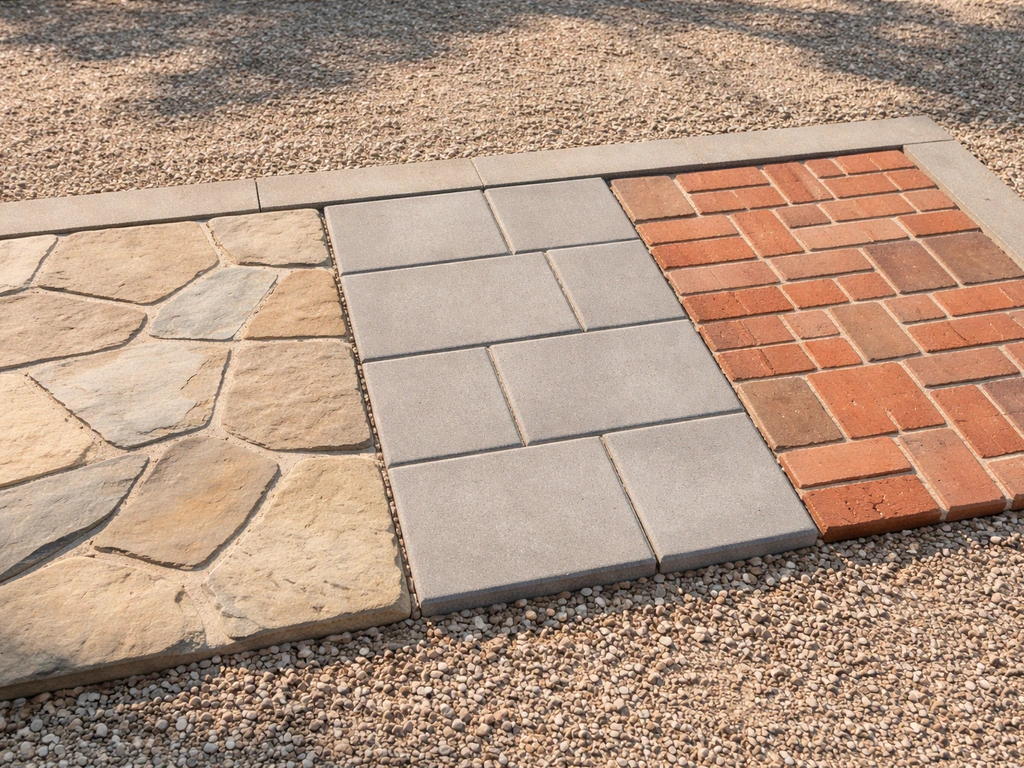
The right material depends on your priorities. Here's how flagstone stacks up against the alternatives covered across this site, from loose materials like pea gravel to manufactured options like porcelain and brick. Considering patio materials pros and cons can help you choose the right option for your budget, climate, and maintenance comfort level. For homeowners comparing finishes, pea gravel epoxy patio pros and cons also come down to bonding, surface prep, and ongoing maintenance needs.
| Material | Installed Cost (per sq ft) | Durability | Maintenance | Slip Resistance | Best For |
|---|---|---|---|---|---|
| Flagstone (dry-laid) | $15–$32 | Excellent (30–50+ yrs) | Moderate (joints, sealing) | Good to excellent (depends on stone/finish) | Gardens, high-end aesthetics, natural look |
| Flagstone (mortar-set) | $25–$40+ | Excellent | Lower ongoing, harder repairs | Good to excellent | Formal patios, slopes, heavy use |
| Porcelain pavers | $15–$30 | Excellent | Low (no sealing needed) | Moderate (frost-rated required for cold climates) | Modern look, low maintenance priority |
| Brick | $10–$25 | Very good (freeze/thaw resistant grades) | Low to moderate | Good (rough face) | Classic look, moderate budgets |
| Concrete pavers | $8–$20 | Good to very good | Low | Good | Budget-conscious, DIY-friendly |
| Pea gravel | $1–$4 | Good (no cracking) | Moderate (raking, top-up) | Variable (can shift underfoot) | Informal spaces, drainage areas, low cost |
| Decomposed granite | $1–$4 | Moderate (compacts, erodes) | Moderate (resurfacing) | Good when compact | Pathways, xeriscape, low budget |
Porcelain pavers are the closest competitor in the premium patio space. They don't need sealing, have consistent thickness (which makes installation easier and more uniform), and are nearly impervious to staining.
What they lack is the natural character and variation of real stone. If low maintenance is your top priority and you don't mind a more manufactured look, porcelain is worth serious consideration. Slate patios offer a similar natural-stone aesthetic to flagstone but with different performance trade-offs, particularly around freeze/thaw durability in lower grades. Slate patios offer a similar natural-stone aesthetic to flagstone but with different performance trade-offs, particularly around freeze/thaw durability in lower grades.
Pea gravel and decomposed granite patios come in at a fraction of the cost but require different management entirely, including raking, topping up, and dealing with material migration. Decomposed granite patio problems often come down to drainage, compaction, and keeping the material from migrating out of place decomposed granite patios.
Buying, estimating, and your next steps
Estimating materials and cost
Start with your square footage and add 10 to 15 percent for cuts and waste. For a 300 sq ft patio using mid-range bluestone at $10 per sq ft, you're looking at roughly $3,000 to $3,300 in stone alone. Add base materials (crushed stone, bedding sand, polymeric sand) and you might add another $500 to $1,000 for a basic install. Labor is often where the cost jumps: expect $10 to $20 per sq ft in labor depending on your region, stone complexity, and site conditions. Get at least three quotes and ask each contractor to break out material, base prep, and labor separately so you can compare apples to apples.
What to inspect before you commit
- Check your soil: dig a test hole 12 inches deep. Clay soil that holds its shape when compressed signals potential drainage and heave issues that need to be addressed in base design.
- Confirm drainage direction: observe where water flows after a heavy rain. The patio area should drain away from the house naturally, or you need to plan for drainage infrastructure.
- Measure the grade: a significant slope (more than 2 to 3 percent across the patio area) affects whether dry-laid or mortared installation is more appropriate.
- Look at existing adjacent surfaces: note the height of door thresholds, steps, and lawn edges so the finished patio surface matches correctly.
- Source stone locally if possible: flagstone is heavy, and shipping costs add up fast. Local quarries or stone yards also let you hand-select slabs for color consistency and thickness.
Questions to ask a contractor before hiring
- What base depth and base material are you planning to use, and why? (Expect a specific answer, not a vague 'standard prep.')
- Are you using wide-joint polymeric sand rated for irregular flagstone, or standard paver polymeric sand?
- What's your drainage plan, and what slope will the finished surface have?
- For limestone or other porous stones: which sealer type do you recommend and what's your rationale (penetrating vs topical)?
- What mortar or bedding products are you using, and are they compatible with my chosen stone type? (This matters especially for limestone.)
- How do you handle warranty or callback for stones that rock or settle within the first year?
- Can you show me a comparable completed project I can visit or at least photos from a similar site?
Mitigating the biggest disadvantages
Cost is the hardest to get around, but you can reduce it by choosing a locally available stone, simplifying the layout (fewer cuts, larger stones), and doing your own site excavation before the contractor arrives. Joint maintenance burden decreases significantly with a good polymeric sand installation done correctly the first time. For freeze/thaw climates, investing in proper base depth upfront is the single best thing you can do to avoid expensive repairs later. And if uneven surface or trip hazard risk is a concern, consider cut (rather than natural-cleft) flagstone edges and a tighter jointing pattern to reduce surface variation.
Flagstone rewards doing it right the first time more than almost any other patio material. The prep work is unglamorous and the cost is real, but a well-built flagstone patio is genuinely one of the better long-term investments you can make in an outdoor space. Know your site, choose the right stone for your climate and use case, insist on proper base construction, and you'll have something that lasts for decades.
FAQ
Is a flagstone patio worth it if I want low maintenance?
It can be worth it, but it is not truly “set it and forget it.” Expect periodic joint work (re-sanding or reapplying polymeric sand every few years) and occasional cleaning for algae or tannin stains. If low maintenance is your top priority, porcelain pavers are usually the easier long-term choice because they avoid joint erosion and sealing decisions.
Can I install flagstone over an existing concrete slab?
Often yes for a dry-laid concept, but only if you prevent water from getting trapped between layers and you create enough slope away from the house. A true mortar-set approach over concrete is more permanent, but it requires the right mortar and surface prep to avoid bond failure or staining. If drainage is poor, installing over concrete can accelerate problems by trapping moisture near the base.
What’s the biggest mistake homeowners make with flagstone patios?
Under-building the subbase or using the wrong base material. Compactability matters, rounded river rock or poorly graded fill can compact poorly, leading to rocking stones and settling within a year or two. The other common error is using narrow-joint polymeric sand products that do not fit the wider, variable joints that flagstone typically needs.
Does flagstone need sealing?
Not always, but porous stones usually benefit. Limestone, sandstone, and some slates are more likely to absorb oil, tannins, and rust, which can become hard to remove later. If you seal, choose a penetrating, matte-finish product to maintain traction, and test annually with a water droplet to decide when resealing is needed.
How do I choose between dry-laid and mortar-set for my yard conditions?
Dry-laid is usually better for drainage-friendly sites and repairability, since individual stones can be reset. Mortar-set is often the safer option on sloped sites because lateral movement is less likely, and it presents a tighter, more refined surface. If you have freeze/thaw, either method can work, but the base depth and proper drainage are still the deciding factors.
Will flagstone be slippery when wet?
It depends on the stone and finish. Sandstone and naturally textured bluestone typically grip well under wet conditions. Sawn, honed, or smoother finishes on limestone or granite can feel slick in rain, so in pool areas or rainy climates, prioritize naturally rough or hand-split textures and verify traction before committing.
How do I prevent weeds in the joints?
Start with the correct joint width and the correct polymeric sand for irregular flagstone. In practice, you may still get some weed intrusion as joints erode over time, so plan for re-sanding or re-treating. Also, avoid “washing out” joint material with high-pressure rinses aimed directly into the joints.
What should I do if I’m in a freeze/thaw climate?
Treat base depth and drainage as non-negotiables. Use properly graded, compactable crushed stone (not rounded rock), build a deep compacted base, and maintain a slope away from the house. Also be mindful of stone selection, lower-grade slate or porous stones that trap water in pores can spall in severe conditions.
Can flagstone crack or shift even if it lasts for years?
Yes, and the key advantage is that damage can often be isolated. In dry-laid installs, a cracked or shifted stone can be lifted, re-leveled, and reset. Mortared installations are more rigid, so issues can be harder to repair because you may need to cut out and regrout affected areas.
Is there a safe way to reduce trip hazards with flagstone?
Choose stones and installation techniques that minimize height variation. Consider cut edges rather than highly random cleft edges, use a tighter jointing pattern where appropriate, and address proud edges as soon as they appear. In homes with elderly relatives or mobility aids, surface evenness matters more than the “wild garden” look.
How much extra material should I budget for cuts and waste?
A common rule is to add 10 to 15 percent to your square footage estimate for cuts, breakage, and layout losses. This can be higher if you want complex patterns, tight curves, or many small infill stones.
How do I get accurate quotes for flagstone installation?
Ask each contractor to separate pricing into material, excavation and base prep, bedding, and labor, so comparisons are meaningful. Also request clarification on base depth, base material type, drainage slope, and the specific polymeric sand product they plan to use (especially whether it is rated for wider, irregular joints).