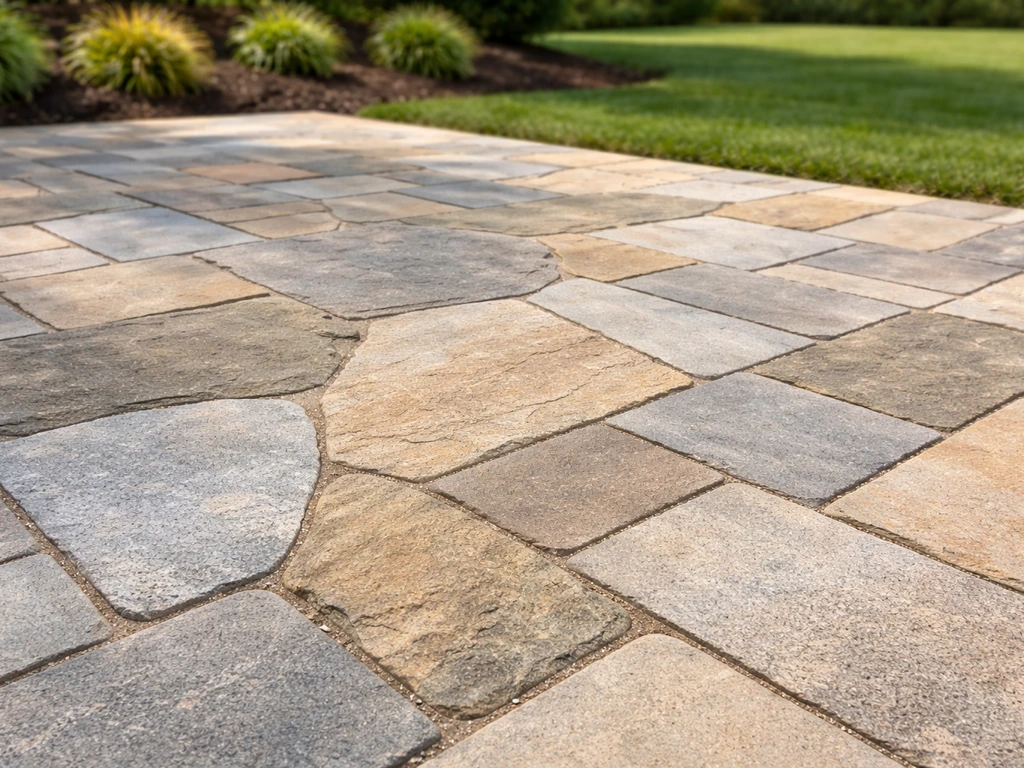
A patio stone is any flat, hard surface unit used to build a patio, walkway, or outdoor living area. The term gets used loosely to cover everything from rough-cut natural flagstone to manufactured concrete pavers to brick and porcelain tiles. What they all have in common: they sit outdoors underfoot, they need a properly prepared base to last, and they're chosen based on how they look, how much they cost, and how well they hold up in your specific climate. Because the material affects things like water absorption, durability, and freeze-thaw performance, it's worth knowing what patio stones are made of before you buy.
What Is a Patio Stone? Types, Costs, and Installation Tips
Nolan Ellison
4 Jul 2026
What people actually mean by 'patio stone'
Walk into any home improvement store and you'll see the same section labeled 'patio stones' stocking at least four or five completely different products. That's because the phrase isn't a precise material category. It's a catch-all that homeowners use for any paving unit that goes on a patio. In practice, most people use it to mean one of three things: a concrete paver (the most common manufactured option), a natural stone slab like flagstone or bluestone, or a brick unit. Porcelain pavers, travertine tiles, and composite stepping stones also get lumped in. Knowing which product you're actually looking at matters a lot because they differ in price, durability, how they're installed, and what maintenance they need.
The main types and how they're different
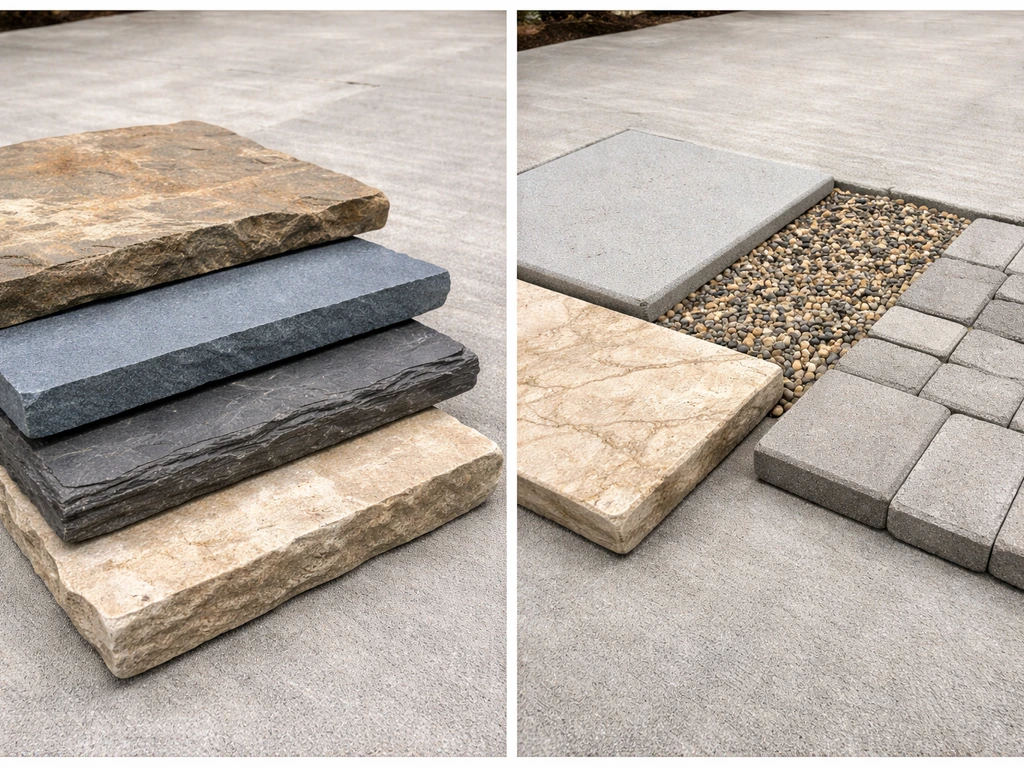
Here's a straightforward breakdown of the options you'll realistically encounter and what sets them apart.
Natural stone (flagstone, bluestone, slate, travertine)
Natural stone slabs are quarried directly from the earth and cut or split into usable pieces. Flagstone is the broadest term here: it refers to flat slabs of sedimentary rock like sandstone, limestone, or bluestone. Each piece is unique in size, color, and texture. Natural stone looks beautiful and tends to age gracefully, but it's among the most expensive options and requires more skill to install correctly because the pieces aren't uniform. Mortar-set installations lock the stone permanently onto a prepared substrate, while dry-laid flagstone sits on a compacted base. Both approaches are legitimate, but they behave differently over time, especially in freeze-thaw climates.
Concrete pavers
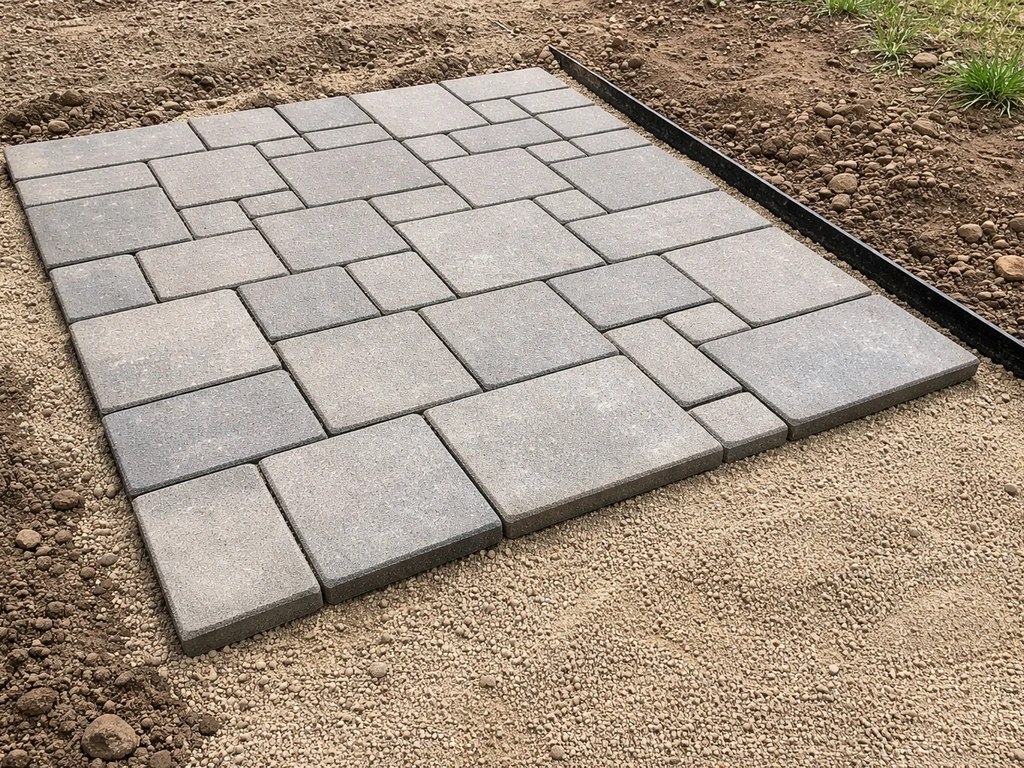
Concrete pavers are manufactured to consistent sizes and thicknesses, which makes installation more predictable and DIY-friendly than natural stone. They come in a huge range of shapes, colors, and finishes. Brands like Belgard, Unilock, and Barkman produce concrete pavers engineered to interlock or lay in patterns that add structural stability. One underappreciated advantage: if a single paver cracks or stains badly, you can pull it out and replace just that unit. With a solid base and proper jointing, concrete paver patios hold up well for decades.
Brick pavers
Brick pavers are fired clay units, denser and harder than typical building bricks. They have a classic look that suits traditional and cottage-style homes. Brick is durable and handles foot traffic well, but it can be slippery when wet if not textured, and some brick types absorb water and are prone to spalling in hard freeze-thaw climates. Always check the freeze-thaw rating before using brick in a cold region.
Porcelain pavers
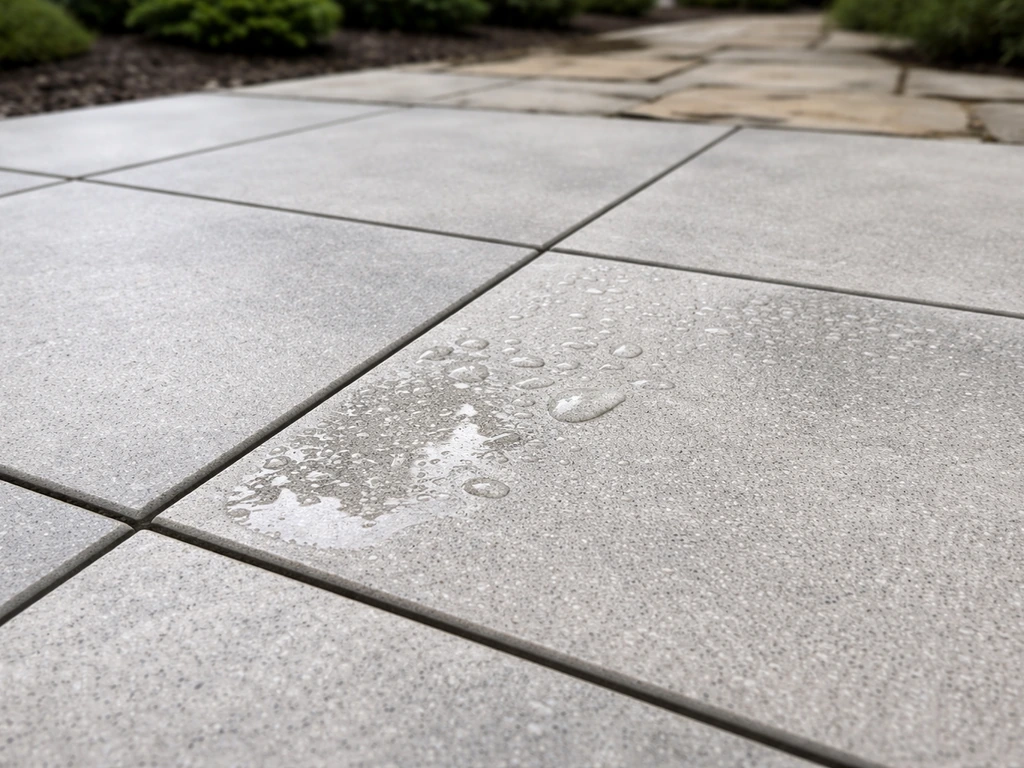
Porcelain pavers are kiln-fired tiles manufactured to very tight tolerances with extremely low water absorption, often well under 0.5%. That low absorption is what makes them one of the better choices for hard freeze-thaw climates because water intrusion into the stone is what causes frost damage. Porcelain paver spec sheets typically list ASTM-based freeze-thaw performance criteria, so you can verify the rating before buying. The trade-off is cost (they run higher than concrete pavers) and the fact that they require a more rigid base and careful installation with permanent spacers to accommodate thermal movement.
Composite and concrete stepping stones
At the budget end, you'll find pre-cast concrete stepping stones and composite materials made from recycled rubber or plastic. These are fine for informal garden paths but aren't really a full patio surface. They shift more easily, don't interlock, and don't look as refined. I'd only recommend them for low-traffic areas where aesthetics and permanence aren't priorities.
| Type | Cost Range (per sq ft) | DIY Difficulty | Freeze-Thaw Performance | Best For |
|---|---|---|---|---|
| Natural flagstone | $15–$30+ | Moderate-High | Varies by stone type | Organic, natural look; accent areas |
| Concrete pavers | $8–$20 | Moderate | Good (engineered) | Full patios, driveways, walkways |
| Brick pavers | $10–$20 | Moderate | Varies; check rating | Traditional/classic style patios |
| Porcelain pavers | $15–$35+ | Moderate-High | Excellent (low absorption) | Modern look; cold climates |
| Composite/stepping stones | $2–$8 | Easy | Fair | Informal garden paths only |
Where patio stones get used and common layouts
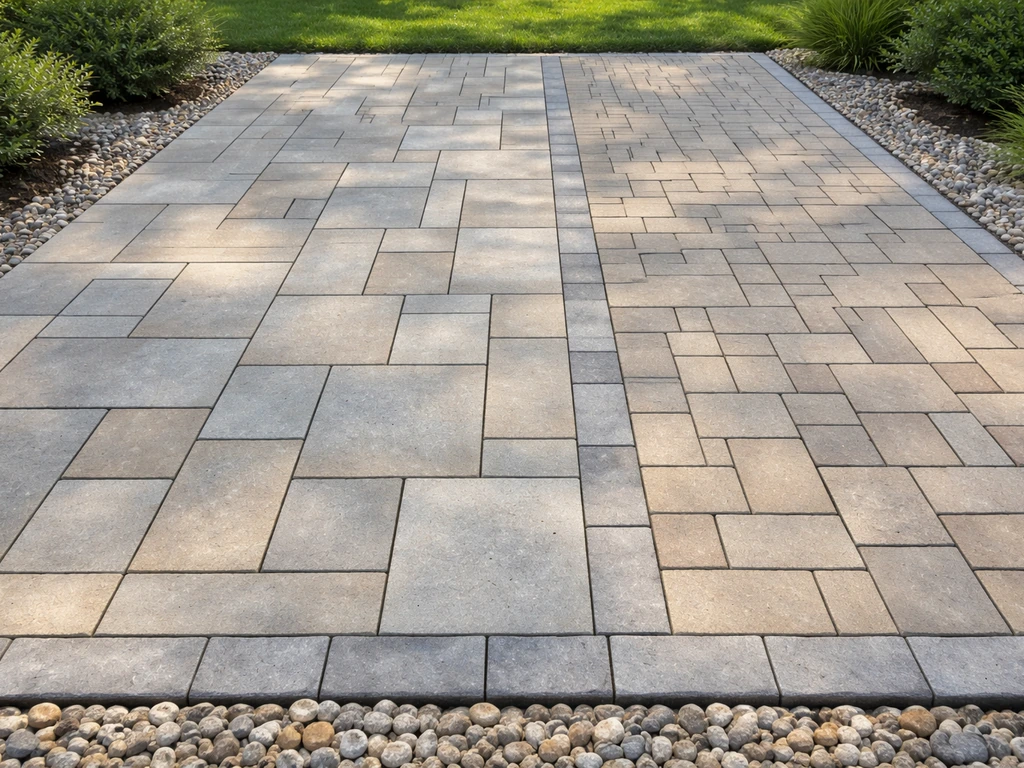
Patio stones show up in more places around a yard than most homeowners initially plan for. The obvious use is the main patio area off the back of the house, but the same materials work for front walkways, side yard paths, around fire pits, pool surrounds, and under outdoor kitchens. A fire pit safety article also warns that polymeric joint sand can be affected by high temperatures and stresses near the fire, so you should protect air gaps and joint integrity in that area blank" rel="noopener noreferrer">polymeric sand. If you plan to place a hot tub on patio stones, focus on whether the stone and base are rated to handle the weight and whether the installation provides a stable, non-settling foundation. Each use case has slightly different demands.
- Patios: The most common application. Rectangular grid patterns and running bond layouts are easiest to install; herringbone and fan patterns are more complex but add visual interest.
- Walkways: Paths from the street, driveway, or gate to the door. Flagstone with wide joints and ground cover planted between is popular for a cottage look. Concrete pavers in a simple pattern are faster to lay.
- Fire pit areas: Concrete pavers are commonly used around fire pits because of their heat resistance. That said, be careful with polymeric joint sand directly adjacent to an open flame since high temperatures can affect it. Keep a proper air gap and monitor the joint material near the fire.
- Pool surrounds: Travertine and porcelain are popular here because their texture is naturally slip-resistant when wet and they stay relatively cool underfoot in direct sun.
- Steps and borders: Larger natural stone slabs or cast concrete step units integrate with the same patio material for a cohesive look.
Layout pattern affects more than looks. A running bond pattern (like offset brickwork) distributes load more evenly than a straight grid and can help prevent the patio from shifting in one direction over time. For small patios, a simple grid or random flagstone layout is totally fine. Save the complex patterns for larger areas where the visual payoff justifies the extra cutting and fitting.
How to pick the right stone for your specific situation
The 'best' patio stone is always the one that fits your climate, budget, and how you actually use the space. Here's how to think through the decision.
Climate is the first filter
If you're in a hard freeze-thaw climate (think USDA zones 4 to 6, anywhere with serious winter), water absorption is the key spec to check. Water gets into porous stone, freezes, expands, and cracks the surface from the inside. Porcelain pavers with ASTM-verified freeze-thaw ratings and quality concrete pavers engineered for cold climates are your safest bets. For bedding sand selection, ICPI Tech Spec 4 details compatibility criteria that help support performance and reduce issues that can lead to settlement or bedding problems Porcelain pavers with ASTM-verified freeze-thaw ratings and quality concrete pavers. Natural limestone and some sandstones are more porous and can spall after several hard winters unless sealed aggressively. In mild climates (zones 8 to 10), almost anything works and you can prioritize aesthetics and budget.
Drainage and your yard's slope
Poor drainage wrecks patios. Water that pools under or around your patio will eventually undermine the base and cause settling and cracking. If your yard has drainage issues, dry-laid permeable paver systems with gravel joints let water pass through. If you're going mortar-set or using a concrete substrate, make sure the surface has a 1 to 2 percent slope away from the house. I've seen beautiful flagstone patios turn into skating rinks in winter because drainage wasn't considered during installation.
Foot traffic and use
A backyard patio used for weekend BBQs has different demands than a front walkway that gets daily foot traffic year-round. For high-traffic areas, thicker concrete pavers (2.375 inches or 60 mm for pedestrian use is standard) and a well-compacted base matter more. For a quiet garden path, thinner flagstone dry-laid on sand is perfectly adequate.
Budget reality check
Materials are only part of the cost. Base preparation (excavation, gravel, compaction) often equals or exceeds the material cost itself, especially for larger patios. Budget concrete pavers with a properly done base will outlast expensive flagstone on a poorly prepared one every time. Don't cut corners on the base to afford fancier stone. Spend the money where it matters: gravel depth, compaction, and drainage.
Installation basics: what actually needs to happen
You don't need to be a professional to install patio stones, but you do need to follow the right sequence. Skipping steps here is why patios fail. The ICPI (Interlocking Concrete Pavement Institute) has published detailed installation specs for concrete pavers, and the principles apply broadly to most stone types.
- Excavate and grade the area. Remove grass and soil to a depth that accommodates your base layers plus stone thickness. For a typical residential patio with concrete pavers, that's usually 8 to 10 inches total. Grade away from structures for drainage.
- Install a compacted aggregate base. Crushed stone compacted in layers (typically 2 to 4 inch lifts) is the foundation. This layer handles load and drainage. Compact each lift with a plate compactor before adding the next. Skimping here is the single most common cause of patio failure.
- Add the bedding sand layer. Spread a 1-inch (25 mm) nominal layer of coarse bedding sand over the compacted base. Screed it flat but don't compact it yet. This gives the stones a level bed to set into. Note: this is bedding sand, not play sand. Use angular, coarse-grained sand sized to spec.
- Set the stones. Start at a fixed edge (a wall, step, or established line) and work outward. For concrete pavers, butt joints tight together. For flagstone, work with the irregular shapes and aim for consistent joint spacing. Use a rubber mallet to seat each unit.
- Install edge restraints. Plastic or steel edging pinned into the base gravel holds the perimeter units in place and prevents the patio from spreading over time. This step is non-negotiable for a dry-laid paver system.
- Cut border pieces. Angle grinders with diamond blades or paver saws handle cuts. Concrete pavers and porcelain cut cleanly. Natural stone can be more unpredictable but a diamond blade manages it.
- Fill the joints. Sweep jointing material into the gaps and compact the surface to set the sand. Polymeric sand is the better choice here: it activates with water and hardens into a semi-permanent joint that resists weed growth far better than plain sand. Avoid washing out joint sand during activation. For flagstone with wide joints, coarse sand or decomposed granite is common.
- Final compaction and cleanup. Run the plate compactor over the finished surface (with a protective pad on porcelain or delicate stone) to seat everything. Sweep off excess, rinse lightly per the jointing material instructions, and you're done.
For mortar-set flagstone, the process is different: the stones go onto a concrete substrate with mortar, and the joints are filled with grout or mortar rather than sand. This is more permanent, looks more refined, but is harder to repair if something shifts or cracks. Dry-laid is more forgiving for DIYers.
Keeping your patio looking good for the long haul
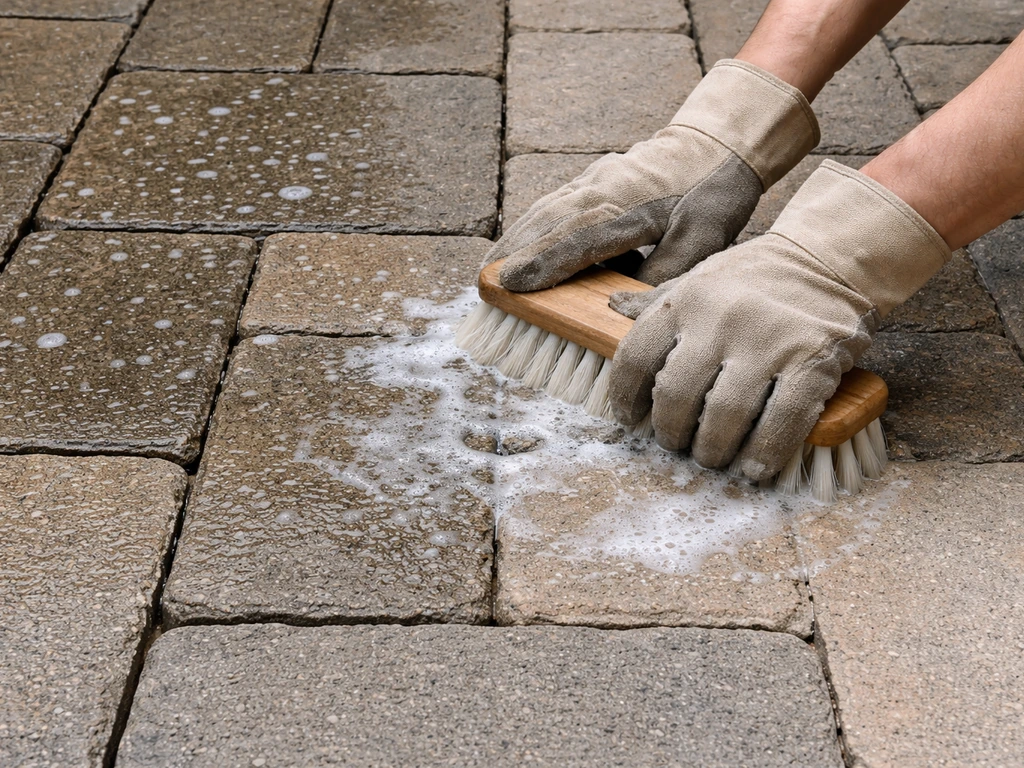
No paving material is maintenance-free. The good news is that most patio stone maintenance is simple and infrequent if you start with a good installation. However, before you paint, make sure the surface is properly cleaned and that the sealer and paint you choose are compatible with the type of patio stone you have patio stone maintenance.
Cleaning
Annual cleaning keeps stone looking fresh and prevents organic buildup from breaking down the surface. A stiff brush, soapy water, and a garden hose handles most dirt. For tougher stains, a pressure washer on a low setting works well, but be careful not to blast out joint sand in the process. If you see white chalky patches on concrete pavers, that's efflorescence: mineral salts migrating to the surface. It's cosmetic and common, and there are specific efflorescence cleaners formulated for it. Don't confuse it with polymeric sand haze, which can look similar but is a residue from improper activation and cleans up differently.
Sealing
Sealing isn't always required, but it helps with stain resistance and, for porous natural stones, with freeze-thaw protection. Concrete pavers can be sealed to enhance color and reduce efflorescence. Natural limestone and sandstone in cold climates benefit most from sealing. Porcelain and dense bluestone don't need it. If you do seal, wait until the patio has been down for at least a season (and follow any polymeric sand manufacturer timing guidance before sealing over fresh joints) so the materials have stabilized.
Weed control in joints
Weeds in joints are the most common complaint homeowners have about patio maintenance. Polymeric sand dramatically reduces this compared to plain jointing sand because the hardened joint leaves less room for seeds to germinate. When weeds do appear, pull them early before roots anchor deep. Avoid chemical weed killers that can stain certain stones. If joints are loose and weedy after a few years, it's worth sweeping in fresh polymeric sand, activating it properly, and letting it reset.
Handling shifted, cracked, or uneven stones
One of the best things about dry-laid paver patios is repairability. If a stone shifts, cracks, or settles unevenly, you can pull that section up, re-grade the base, and relay the stones. This is genuinely a weekend project for most homeowners. For mortar-set flagstone, repairs are more involved because you're breaking out mortar, but a single cracked stone can still be replaced with care. Regular inspection in spring (after freeze-thaw cycles) catches problems early before they spread.
How long should a patio stone installation last?
A properly installed concrete paver patio or flagstone patio can last 25 to 50 years or more with basic maintenance. The base is what determines longevity more than the stone itself. Patios that fail in 5 to 10 years almost always had inadequate base preparation or drainage problems. If you're planning to add a heavy structure like a hot tub on your patio stones, the base design becomes even more critical since the load requirements are much higher than typical foot traffic. Similarly, if you're considering other modifications like painting patio stones or understanding the permitting side of your project, those are worth researching as separate steps once you've settled on your material. Permits can apply depending on how large the stone patio is, whether you’re changing drainage, and your local zoning rules, so it’s worth checking before you start permitting side of your project.
FAQ
Is a patio stone always the same thing as a paver or tile?
No. “Patio stone” is a catch-all for outdoor hardscape units, but in many stores it may mean concrete pavers, natural stone slabs, brick pavers, or porcelain pavers. Tiles are often used in two different ways, true patio tiles and interior tiles used outdoors, so verify the product is rated for exterior use and freeze-thaw conditions before buying.
What thickness should I look for if I want my patio to handle foot traffic?
Thickness needs to match the load and base. Concrete pavers around 2.375 inches (60 mm) are common for pedestrian patios, while lighter garden stepping products are not comparable. For areas like walkways with strollers, wheelchairs, or frequent carts, choose a thicker unit and a well-compacted base, not just a prettier face.
Can I install patio stones directly on existing concrete or patio slabs?
Sometimes, but you must confirm the existing slab is sound, level, and properly sloped. In most cases, you still need a bonding or leveling approach appropriate to the stone type, and drainage must not be trapped. If you want dry-laid pavers, it’s usually safer to build a new base system over or adjacent to the slab rather than relying on a direct install that prevents water escape.
Should I use sand or gravel under patio stones?
Sand alone is rarely enough for long-term stability, it can shift or wash out under drainage pressure. The usual approach is compacted base layers (often gravel or crushed aggregate) for structure, then a thin bedding layer that matches the installation method. The exact type and depth depends on whether you’re dry-laid with joint sand or mortar-set.
What’s the difference between dry-laid and mortar-set, and which is easier to repair?
Dry-laid units sit on a compacted base with joints filled (often with polymeric sand) and can be lifted and re-leveled if anything settles. Mortar-set flagstone is more permanent and rigid, but when a stone fails you typically have more demolition to access the problem area. If you expect soil movement or you want DIY repair flexibility, dry-laid is usually the better fit.
How do I choose jointing sand for paver patios?
For many paver systems, polymeric sand is selected because it locks joints down and reduces weed growth compared with plain joint sand. If you use polymeric sand, follow proper activation timing and moisture guidance, because under-wetting or over-wetting can lead to haze, weak jointing, or cleaning issues later. Keep in mind it may require different cleanup steps than standard sand.
What if my patio floods after rain or stays wet for days?
Wet retention usually means drainage and slope are insufficient, even if the stone looks perfect. Rework may include improving base drainage, adding or adjusting a slope (commonly a 1 to 2 percent fall away from the house), and using a permeable system when appropriate. If water is coming from a downspout or grading issue nearby, fix that source first, otherwise new pavers can still settle.
Do I need to seal patio stones, and when should I do it?
Sealing needs depend on the material. Porous natural stones in freeze-thaw regions often benefit from sealing, while dense porcelain or certain bluestones typically do not. If you seal, wait for the patio to fully cure and stabilize, and coordinate timing with the jointing method, especially if you used polymeric sand, since sealing too early can trap moisture or interfere with joint performance.
Can I power wash patio stones without damaging them?
You can, but use a low setting and avoid blasting joint material out of the seams. Power washing too aggressively can remove bedding and jointing sand, which then allows weeds and movement. If you see joint gaps after cleaning, plan for re-sweeping and reactivating jointing sand rather than assuming the problem will stop on its own.
Why do concrete pavers sometimes look chalky, and is it permanent?
White chalky patches are often efflorescence, mineral salts migrating to the surface. It’s commonly cosmetic and usually improves over time, but the best response is using an efflorescence-specific cleaner rather than treating it like a polymeric sand haze. If you repeatedly get heavy efflorescence, it may also point to base moisture or installation issues.
Are brick pavers safe for freeze-thaw climates?
Brick can work, but it’s not automatically freeze-proof. Some brick types absorb more water and can spall over repeated winter cycles, so check the freeze-thaw rating or performance data before installing in cold regions. Also consider traction, if your pavers are smooth they can become slippery when wet unless you choose a textured surface.
What should I consider if I want to place a hot tub or heavy structure on patio stones?
You need an engineered, stable foundation designed for concentrated loads, not just typical foot traffic. Confirm the stone type and base build-up are rated for the weight and how it’s distributed, and avoid assuming a standard patio base is adequate. Concentrated loads can cause localized settlement, so planning the support and drainage around the unit matters as much as the stone choice.
Do I need a permit for a patio stone project?
Possibly, depending on your location and project scope. Permits are more likely when you change drainage, alter grading, expand an existing patio significantly, or add hardscape that affects setbacks or stormwater management. Before you start, check your local zoning rules and whether any stormwater or utility constraints apply.