Yes, you can put a hot tub on patio stones, but only if the base underneath them is properly engineered to handle the load. The stones themselves are not the foundation; what matters is the compacted subbase beneath them, the thickness and condition of the stone, and whether the whole system can handle roughly 100 pounds per square foot without cracking, shifting, or settling over time. A well-built paver patio on a proper gravel or concrete subbase can absolutely support a hot tub. A cheap DIY job with 2 inches of sand and loose stone cannot, and it will fail, sometimes slowly and sometimes all at once.
Can I Put a Hot Tub on Patio Stones? Safety and Steps
Nolan Ellison
8 Jun 2026
What a hot tub actually weighs (and why it matters so much)
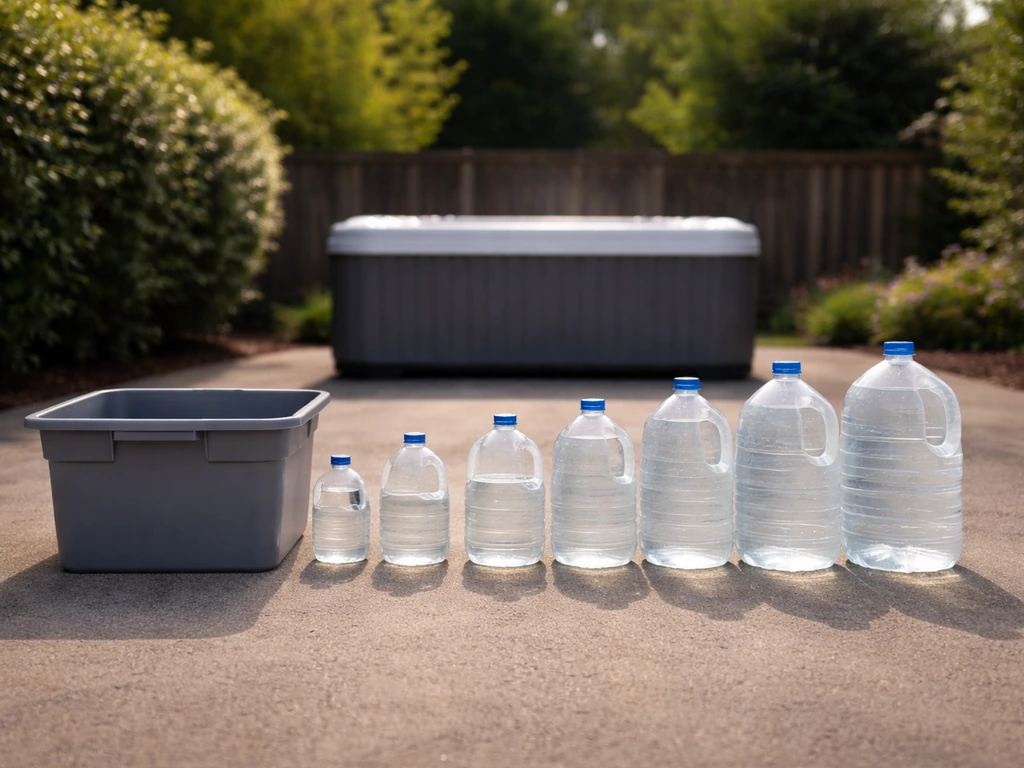
This is where most homeowners underestimate the problem. A filled hot tub typically weighs around 4,000 pounds once you factor in the water, the shell, the mechanical components, and a few people inside. Spread across the footprint of an average 7x7-foot hot tub (about 49 square feet), that works out to roughly 80 to 100 pounds per square foot. That might not sound alarming, but compare it to a deck rated for 40 to 50 pounds per square foot, and you start to see why this is not a "just plunk it down" situation.
Here is the simple load calculation to run before you do anything else: take the total weight of the hot tub filled with water (check your model's spec sheet), add roughly 175 pounds per person at full capacity, then divide by the total footprint in square feet. If that number exceeds 100 pounds per square foot, you need a seriously reinforced setup. Most residential hot tubs land between 80 and 110 pounds per square foot at capacity, which puts them right at or above what a standard patio is designed for.
| Hot Tub Size | Approx. Filled Weight (incl. people) | Footprint (sq ft) | Load (lbs/sq ft) |
|---|---|---|---|
| Small (2-3 person) | 2,800 lb | 35 | ~80 |
| Medium (4-5 person) | 3,500 lb | 42 | ~83 |
| Large (6-7 person) | 4,500 lb | 56 | ~80 |
| Extra-large (8+ person) | 6,000+ lb | 64+ | ~94+ |
What can go wrong with patio stones under a hot tub
Patio stones fail under hot tubs in four specific ways, and it is worth understanding each one so you know exactly what to look for before you commit.
Cracking from point loads
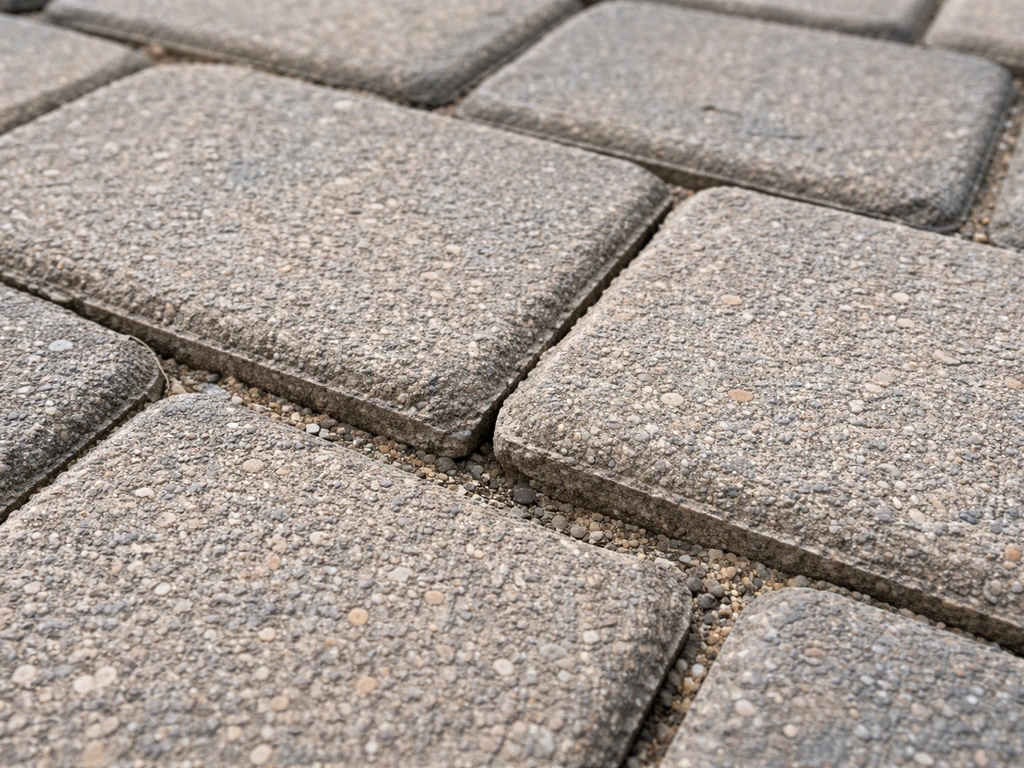
Most hot tubs do not distribute their weight evenly across the whole base. The cabinet corners and frame contact points concentrate the load into smaller areas, sometimes as little as 6 to 12 square inches per corner. If a patio stone happens to sit over a void in the subbase, or if the stone itself is thin (under 1.5 inches), that concentrated pressure will crack it. Flagstone and natural stone are particularly vulnerable because they vary in thickness and often have natural fault lines.
Shifting at joints
Individual patio stones are not bonded together the way a concrete slab is. Over time, the constant weight plus any vibration from the pump and jets causes stones to shift at the joints, especially if the joint sand was not polymeric. Once a stone shifts even a quarter inch, the hot tub develops an unlevel base, which stresses the cabinet and shell and can eventually crack the acrylic.
Inadequate compaction leading to settling
This is the most common failure mode I see. A patio built with 2 to 3 inches of sand and poorly compacted gravel will compact further under a sustained 4,000-pound load. The stones gradually sink unevenly, and within one to two years you have a visibly tilted hot tub sitting on a cracked and heaved patio. Sundance Spas specifically calls out visible heaving in a paver patio as a clear sign of unstable conditions that cannot be trusted to support a spa.
Drainage and moisture trapping
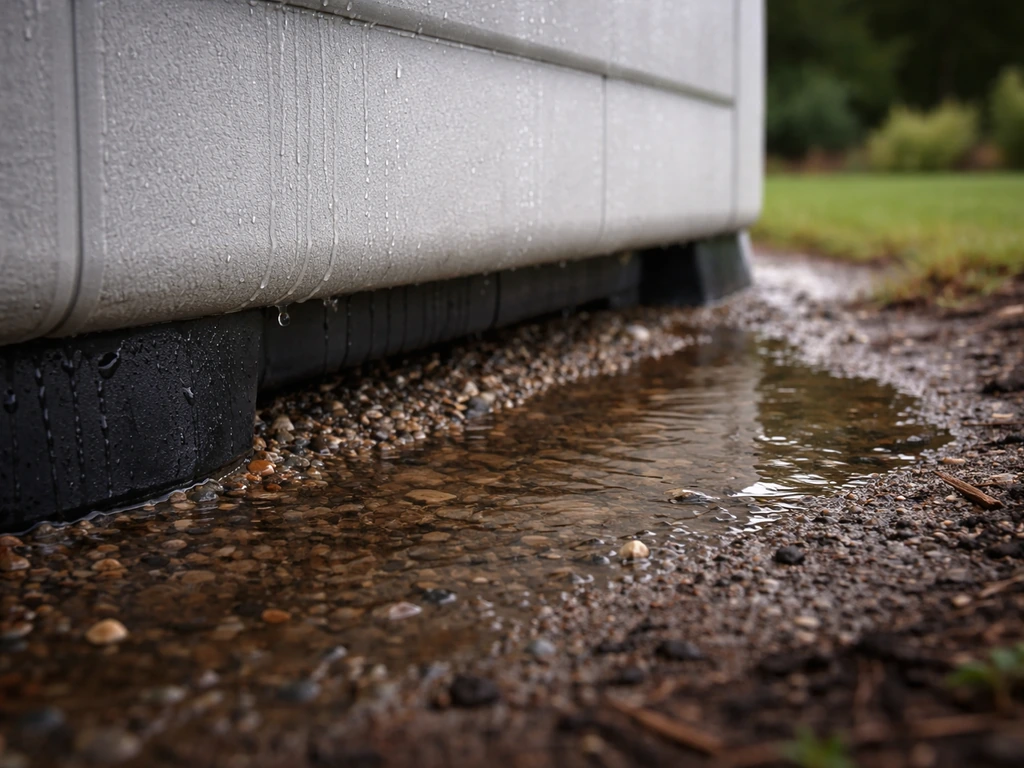
Hot tubs generate a lot of splashout and overflow. If water cannot drain away from under the tub, it saturates the subbase, softens the soil, and accelerates settling. In freeze-thaw climates, trapped water under or between stones freezes, expands, and heaves the stones upward, destabilizing the whole surface.
Inspecting your existing patio before you decide anything
Before you spend a dollar on a hot tub delivery, do this inspection today. It takes about 30 minutes and tells you most of what you need to know.
- Check for any visible heaving, rocking stones, or uneven joints. If you can wobble any stone with your foot, the base is not adequate.
- Look at the age of the patio and how it was built. Ask yourself or whoever built it: how thick is the gravel subbase? Was it compacted with a plate compactor? If you do not know, assume it is under-built.
- Probe the joints. If the sand between stones is loose, eroded, or missing in spots, the interlock between stones is compromised.
- Check the slope. A slight pitch away from the house is good for drainage, but too much pitch means the hot tub will need leveling shims, which create point loads and instability.
- Look for any signs of previous cracking, especially in stone near the edge or over a seam. Repaired cracks under heavy weight will re-open.
- Identify your soil type. Clay soil is the worst for hot tub pads because it expands and contracts with moisture. Sandy or well-draining soil is more forgiving.
What the subbase actually needs to look like
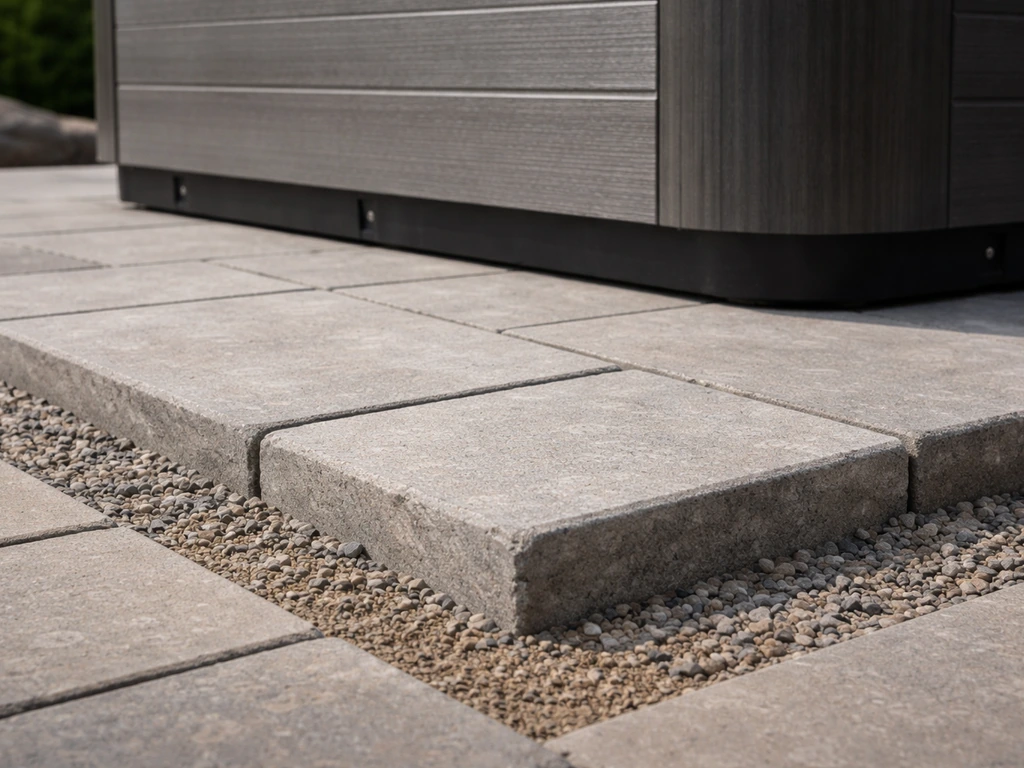
If your inspection checks out and you want to use existing patio stones, the subbase is everything. For a hot tub installation on patio stones to work long-term, the base needs to meet these minimums: at least 4 to 6 inches of compacted crushed gravel (not pea gravel, not sand, but angular crushed stone that locks together), topped with a layer of coarse bedding sand, with the stones themselves being at least 2 to 2.5 inches thick and set level to within 1/8 inch across the hot tub footprint. Jacuzzi also describes this common requirement as using a typical 4 to 6 inch gravel hot tub pad for adequate support 4 to 6-inch gravel pad specification. Jacuzzi's installation guidelines use that 4 to 6-inch gravel pad specification as a baseline for adequate support, and I consider that a floor, not a ceiling, for a heavy spa.
If you are building a new patio section specifically for a hot tub, this is your opportunity to do it right from the start. Excavate 8 to 10 inches, lay geotextile fabric to prevent subsoil migration, add 6 inches of compacted crushed stone in two lifts (compact each lift separately), finish with 1 inch of coarse bedding sand, and set your pavers. Use polymeric sand for joints, and the resulting surface will hold up for decades.
Reinforcement options and materials that work best
Not every homeowner wants to tear up an existing patio to rebuild the subbase. There are a few reinforcement approaches that can help, each with honest trade-offs.
Spa pads and support mats
Plastic interlocking spa pad systems (sometimes called spa pads or hot tub foundation pads) sit on top of existing patio stones and distribute the tub's weight more evenly. They are not a miracle fix for a bad subbase, but they do help spread point loads across more surface area and keep the tub slightly elevated so water can drain underneath. They work best on a patio that is structurally sound but just needs better load distribution.
Reinforced paver frames
For a more permanent solution on an existing paver patio, you can install a pressure-treated or composite timber frame around the hot tub footprint, set into the patio with additional compacted fill. This creates a defined, stable perimeter that prevents the surrounding stones from migrating and keeps the tub centered on the strongest part of the surface.
Choosing the right patio stone material
If you are starting from scratch or replacing the hot tub zone, choose materials with this hierarchy in mind. In general, the material matters because patio stones made of different substances handle loads and moisture very differently what patio stones are made of. Concrete pavers (manufactured) are the top choice because they are uniform in thickness, extremely dense, and interlock reliably. Natural flagstone can work but only if it is at least 2 inches thick and fully bedded (no voids). Porcelain pavers are dense and smooth but can be slippery when wet. Brick is workable but on the thinner side and better suited for decorative borders than load-bearing zones. Gravel or loose stone on its own is never appropriate directly under a hot tub.
| Material | Min. Thickness | Load Distribution | Slip Resistance (wet) | Best for Hot Tub Base? |
|---|---|---|---|---|
| Concrete pavers | 2 in | Excellent (uniform) | Good with texture | Yes, first choice |
| Natural flagstone | 2+ in | Good if fully bedded | Moderate | Yes, with proper bedding |
| Porcelain pavers | 1.5–2 in | Good | Low (needs texture) | Yes, but check slip rating |
| Brick | 2.25 in nominal | Moderate | Good | Acceptable with strong base |
| Gravel/loose stone | N/A | Poor | N/A | No |
Drainage, waterproofing, and keeping moisture under control
Water management around a hot tub on patio stones is non-negotiable. Jacuzzi points out that many concrete patios are pitched for drainage, which can actually make them unsuitable as a hot tub base because the pitch creates an unlevel surface. The same pitch issue applies to patio stones, but you need that drainage capability working for you rather than against you.
The goal is a surface that is level where the tub sits, but drains water away from the perimeter. A 1/8-inch-per-foot slope on the surrounding patio (away from the tub footprint) achieves this. Make sure no water can pool under the tub, since standing water under the base softens the subbase and invites mold and rot on the tub's cabinet. Leave at least a 2 to 3-foot clearance on all sides of the tub for drainage and access.
If you are in a freeze-thaw climate, this matters even more. Water infiltrating the patio joints freezes, expands, and physically lifts stones. Using polymeric jointing sand reduces water infiltration into the joints significantly. Some installers also add a perforated drain tile around the perimeter of the hot tub area at the gravel subbase level, directing runoff away from the zone entirely. That is overkill for most situations but worth it in wet or cold regions.
Maintenance and inspection once the hot tub is in place
The work does not stop once the tub is placed. I recommend checking the installation every spring and fall at minimum, more often in the first year when settling is most likely to occur.
- Check levelness with a 4-foot level across the base of the tub in both directions. More than 1/4 inch off level across the full length is cause for action.
- Inspect visible patio stones around the tub for cracking, lifting, or joint widening. New cracks that were not there before are a sign of movement.
- Press on any stone that borders the tub to check for rocking. A rocking stone means the subbase has lost contact underneath it.
- Look at the tub cabinet for stress signs: warped panels, widening gaps at corners, or a door that no longer closes properly can indicate the tub is torquing from an uneven base.
- Clear debris from gaps between the tub and the patio surface so water has a path to drain.
- Re-fill any eroded polymeric sand joints before winter so water does not infiltrate and freeze.
- After a hard winter, do a full re-inspection in early spring before re-using the tub for the season.
If you notice settling, do not ignore it. Catching it at 1/4 inch off level is a simple stone re-leveling job. Catching it at 1 full inch off level after two years is a major project that may require lifting the tub entirely.
When patio stones are not the right answer
Sometimes, after running through all of this, the honest answer is that your existing patio stones are not the right base for a hot tub, and trying to make them work will cost more in remediation than just doing the right thing from the start. Here are the situations where I would skip the patio stones entirely and go with an alternative.
Pour a dedicated concrete slab
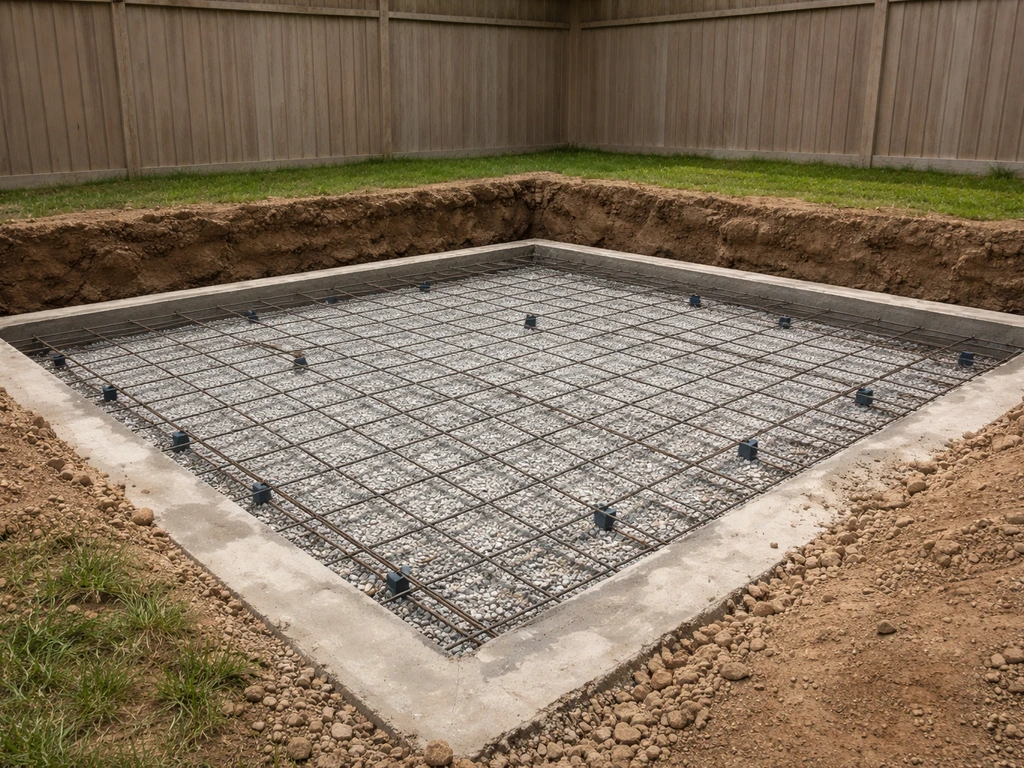
A 4-inch reinforced concrete slab (with rebar or wire mesh) on a compacted gravel base is the gold standard for hot tub foundations. It handles the load without any of the joint movement or settling concerns of patio stones. The cost runs roughly $6 to $12 per square foot depending on your region. For a 10x10-foot pad, that is $600 to $1,200, which is modest compared to the cost of a hot tub. If your existing patio is old, poorly built, or showing any signs of instability, this is the move. Note that if the slab is pitched for drainage, you may need to pour it level specifically for the tub footprint, as Jacuzzi warns that a pitched slab can be unsuitable.
Use a purpose-built plastic spa pad system
If concrete is not in the budget or you want a semi-permanent option, interlocking plastic spa pad systems are installed directly on a compacted gravel base. They are load-rated, level easily, and drain well. They work well for rentals or situations where the hot tub might eventually move. They do still require a proper compacted gravel subbase underneath them, so they are not a shortcut for skipping ground prep.
Rebuild the patio section for the hot tub zone
If you love your patio stones and want to keep the aesthetic, a targeted approach is to excavate just the hot tub zone, build a proper 6-inch compacted gravel subbase, and re-lay high-quality concrete pavers in that section. It blends into the existing patio visually and gives you a purpose-built zone that will last. Master Spas' pre-installation guidance makes clear that for any paver or brick installation, the base must be engineered to carry the full spa weight, not just whatever was already there.
One thing worth noting: before any of this work begins, check whether your municipality requires a permit. In many areas, the rules differ for patios and hot tubs, so it is a good idea to confirm requirements before you start building a stone patio do you need a permit for a stone patio. A hot tub is often classified as a pool or structure, and the foundation work may also trigger permit requirements. It is a quick call to your local building department and worth doing before you pour anything or sign a delivery contract.
The bottom line: is your patio stones setup good enough?
Use this simple checklist to make your decision today. If you can check off all five items, your patio stones are likely a viable hot tub base. If you cannot, you know what needs to change before the tub arrives.
- No visible heaving, rocking, or cracked stones anywhere in the hot tub zone.
- Subbase is at least 4 to 6 inches of compacted crushed gravel (and you either know this or can verify it).
- Stones are at least 2 inches thick and fully bedded with no voids underneath.
- The surface is level to within 1/8 inch across the tub footprint.
- Water drains away from the area; no pooling visible after rain.
Patio stones are a legitimate hot tub foundation when everything underneath them is done right. They are not a good foundation when they are just decorative surface laid on a thin, poorly compacted base. The stones themselves, what they are made of, how they are cut, whether they can be painted, all of that matters less than the 6 to 10 inches you cannot see beneath them. Get that right, and you have a setup that will last as long as the hot tub itself.
FAQ
Do I need to remove the hot tub and re-level the patio if it settles later?
Not always. Small settlement (around a quarter inch) can often be corrected by lifting and re-bedding individual pavers in the affected area, but if you see a full inch of unevenness after the first year, plan on removing the tub and rebuilding the supporting zone, because the cabinet and plumbing may be stressed beyond what patching can fix.
What should I look for during an inspection before delivery, aside from cracks and obvious tilt?
Check for soft spots by probing joints and edges with a screwdriver, look for areas where pavers rock, verify that the subbase area around the tub footprint is not holding water after rain, and confirm the patio is solid enough that you cannot move a stone with firm hand pressure.
Can I put a hot tub on patio stones over existing sand and a thin base?
Usually no. A surface that is essentially decorative pavers over 2 inches of sand and loose stone will compact further under the tub’s sustained load, leading to uneven sinking and joint failure. If the base depth or compaction is unknown, assume it is inadequate unless a qualified installer or engineer can verify otherwise.
Does the answer change if my hot tub is smaller, like 5x5 feet instead of 7x7?
Yes, because load per square foot goes up when you reduce footprint without reducing total weight proportionally. Use the article’s load calculation for your specific filled weight and your actual footprint, then compare the result to the 100 pounds per square foot benchmark for typical patio assemblies.
Are natural stones (like flagstone) safer than concrete pavers for a hot tub base?
Natural stones can work only if they are consistently thick (at least about 2 inches) and fully bedded with no voids. They are riskier when thickness varies or the pieces sit on uneven spots, because concentrated corner load can crack stone or cause differential movement.
Will a hot tub void damage my patio if the tub has a manufacturer warranty?
Warranties typically assume the unit is installed on a properly designed foundation. If the installation does not meet the base requirements, warranty coverage can be denied, especially for issues tied to settlement, out-of-level conditions, or cracked components.
How much space do I need around the tub for drainage and access, and does that affect the base design?
Plan for at least 2 to 3 feet of clearance around all sides so water can drain away and you can service equipment. If you keep the clearance tight, runoff may oversaturate the perimeter stones and joints, increasing the chance of freeze-thaw heaving and joint erosion.
If my patio stones have polymeric sand joints, do I still need to worry about freeze-thaw?
Polymeric sand reduces water infiltration, which helps, but freeze-thaw can still happen if water reaches the subbase from elsewhere or pools in low spots. You still need a correct gravel bedding system, proper slope away from the tub, and a way to prevent standing water under the base.
Can I use wood or foam panels under the hot tub to protect the patio stones?
Do not rely on cushioning materials as a structural solution. Foam or small protective layers can help with abrasion but they do not replace a compacted gravel foundation, and they can allow the hot tub to settle unevenly, which is worse for stressing the shell and plumbing.
What is the fastest way to tell if my installation is failing before cracks appear?
Watch for changes in level during routine checks, unusual noise or pump vibration that coincides with movement, and visible joint separation or minor rocking when you press on stones near the tub edge. Early correction is usually limited to re-leveling and re-bedding localized areas, but ignoring it turns it into a full rebuild.
Do I need a permit even for a patio that already exists?
Often yes, because modifying the foundation support for a hot tub can trigger zoning or pool-structure classifications, and rules can differ for repairs versus new construction. Check with your local building department before delivery, since work that changes load-bearing surfaces or drainage may require approval.