For most small stone patios, you probably don't need a permit, but that answer changes fast once your project hits certain size thresholds, involves grading or drainage changes, adds steps or retaining walls, or sits close to a property line. The honest answer is: it depends on your municipality, and checking takes about 15 minutes online or one phone call. Skip that step and you're gambling with fines, forced demolition, and real estate headaches down the road.
Do You Need a Permit for a Stone Patio? How to Check

Nolan Ellison
8 Jun 2026
What actually triggers a patio permit
Most jurisdictions don't require a permit for every stone patio, but they almost all have specific triggers. The most common ones are total surface area, changes to grade or drainage, proximity to structures or property lines, and whether the work is brand-new versus a minor repair. Some cities draw the line at 200 square feet, others at 500, and Seattle requires a grading permit once you hit 750 square feet of new or replaced paving. Beyond 5,000 square feet, Seattle requires you to hire a civil engineer. Those thresholds exist because hard surfaces affect stormwater runoff, and officials treat large paved areas as a site-engineering issue, not just a cosmetic upgrade.
Some municipalities go further than thresholds. Orland Park, Illinois, for example, requires a permit for all patio work, including replacement, widening, and new installation, regardless of material. That means swapping out old flagstone for new flagstone on the same footprint still requires a permit there. You can't assume your city is more relaxed without checking.
The most common permit triggers across U.S. municipalities for stone patio projects include:
- New patio installation above a certain square footage (commonly 200 to 750 sq ft, varies by city)
- Replacement or expansion of existing paving that exceeds the local area threshold
- Any grading, excavation, or change in ground elevation
- Changes to how stormwater drains from your lot
- Retaining walls or structural edging above a certain height (often 30 inches)
- Steps or changes in elevation between the patio surface and the house or yard
- Work within setback distances from property lines, easements, or public right-of-way
- Proximity to utilities, septic systems, or drainage infrastructure
How to check your local rules in 15 minutes
Go to your city or county's building department website and search for 'patio permit' or 'paving permit.' Many jurisdictions now post dedicated permit guides, and some, like Green Bay, Wisconsin, publish a specific patio permitting PDF you can download and read before you do anything else. If you can't find clear guidance online, call the building department directly. They field these questions constantly and can usually tell you in one conversation whether your project needs a permit and what you'd need to submit.
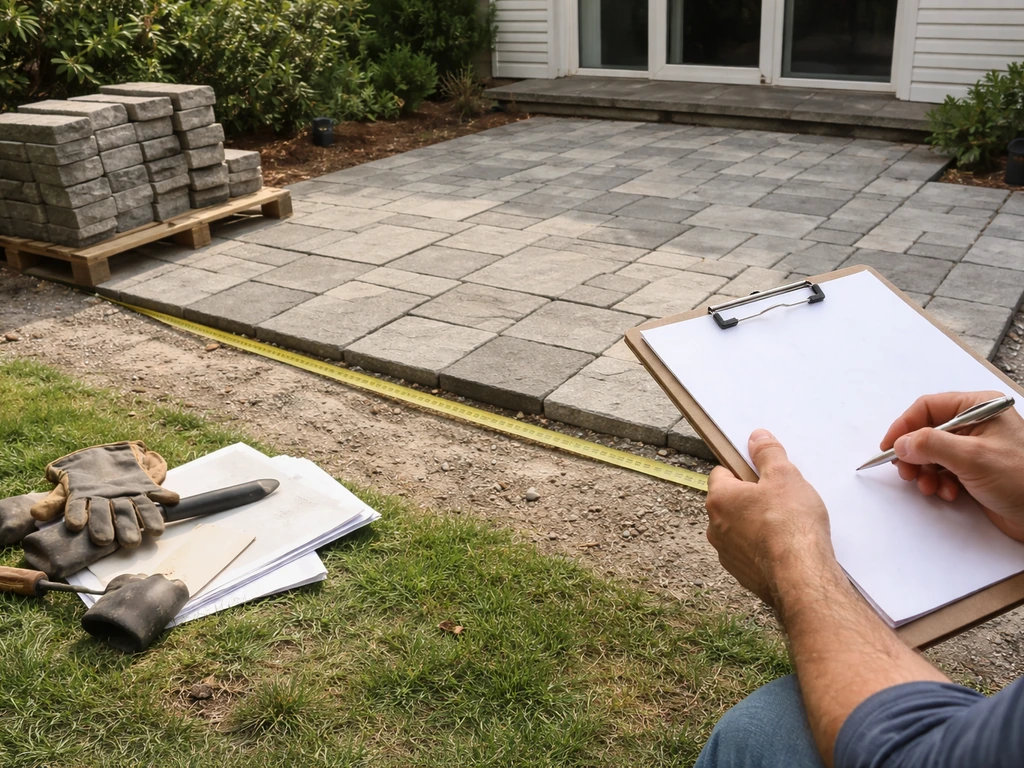
Before you make that call or fill out any online form, gather these details about your project:
- Your property address
- Intended patio dimensions (length x width, or total square footage)
- Whether this is a new installation or a replacement of an existing surface
- Any elevation change between the house and the patio edge, or between the patio and the yard
- Distance from the patio edge to each property line and to the house foundation
- Whether you plan any retaining walls, steps, or structural edging
- Whether you're changing how water drains off your property
- Whether any utilities run under the planned area
Having those numbers ready before you call saves a second trip. The building department will ask for all of them, and some, like setback distances, you'll need your property plat to answer accurately. If you don't have a plat of survey, many county assessor websites let you pull one for free, and some jurisdictions, like Orland Park, specifically require you to submit one with your permit application.
Project details that change the permit decision
Size matters most, but it's rarely the only factor. Here's how specific project details shift the answer from 'probably fine' to 'you need a permit.'
Size and area thresholds
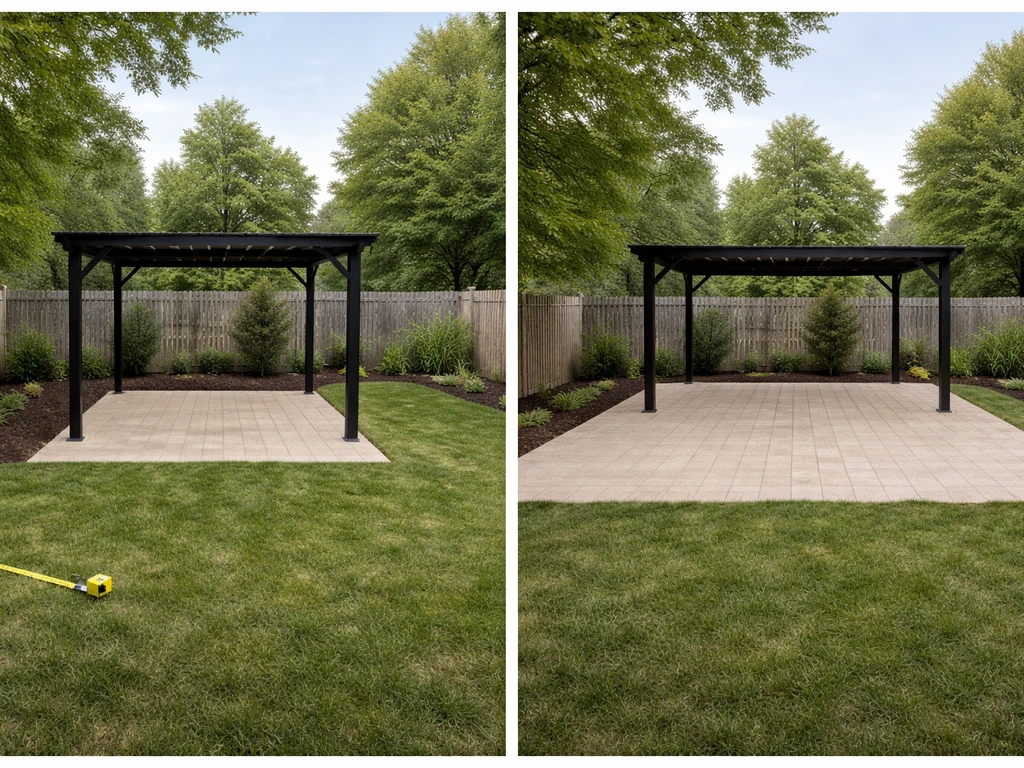
The 750-square-foot threshold in Seattle is one of the more generous ones. Many suburban municipalities set limits much lower. A 12x20-foot patio is 240 square feet and could fall under or over your local threshold depending on where you live. Even replacement paving counts in some cities: Seattle explicitly states that removing existing paving and replacing it can trigger the permit requirement once you hit that 750-square-foot mark.
Height, steps, and retaining features
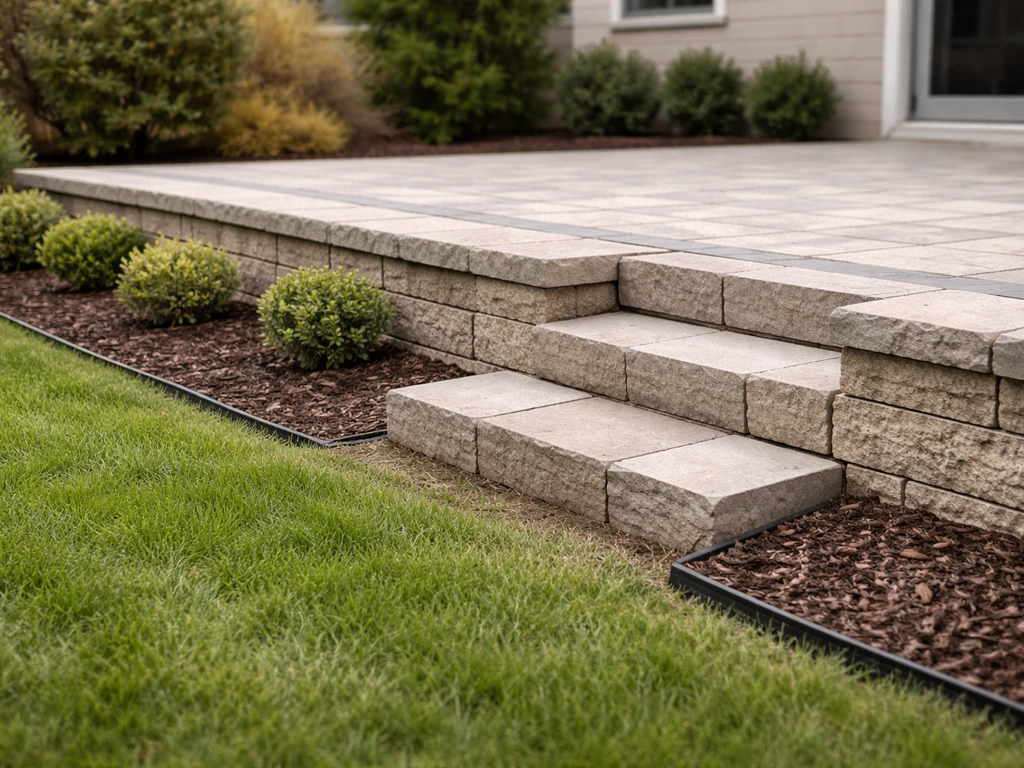
Any time your patio surface sits higher than the surrounding grade and requires a wall or edging to hold it there, permit officials start treating it more like a structural project. Bellevue, Washington, for instance, requires that retaining walls and rockeries be shown on site plans with top and bottom elevations every 10 feet, or wherever a 2-foot height change occurs. If your stone edging functions like a retaining wall, it may fall under those rules. Steps connecting the patio to the house or lower yard often trigger additional review too.
Setbacks and property lines
Every municipality has setback rules that define how close a structure, including a patio, can be to property lines, fences, and the public right-of-way. In Orland Park, patios may extend no more than 5 feet into a front setback and must stay at least 5 feet from rear and side lot lines. Green Bay's permit guide includes a front setback example of 55 feet. Your numbers will be different, but the principle is the same: if your patio sits too close to any property line, you may need a variance in addition to a permit, or you'll need to redesign before you can get approved.
Grading, excavation, and drainage
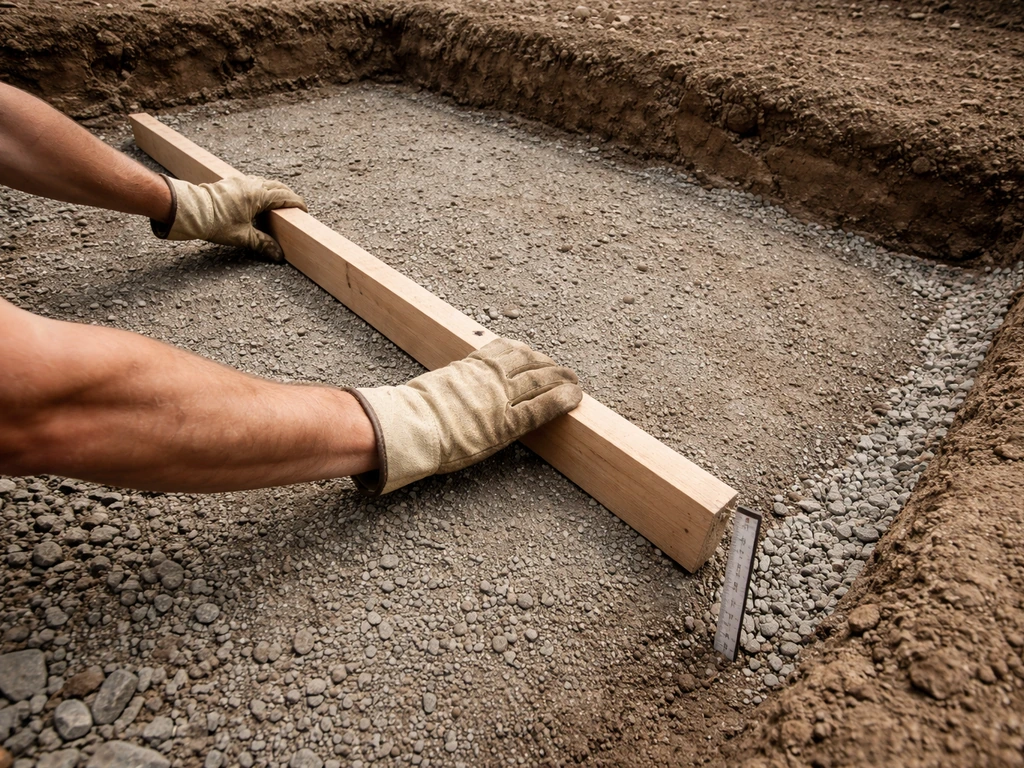
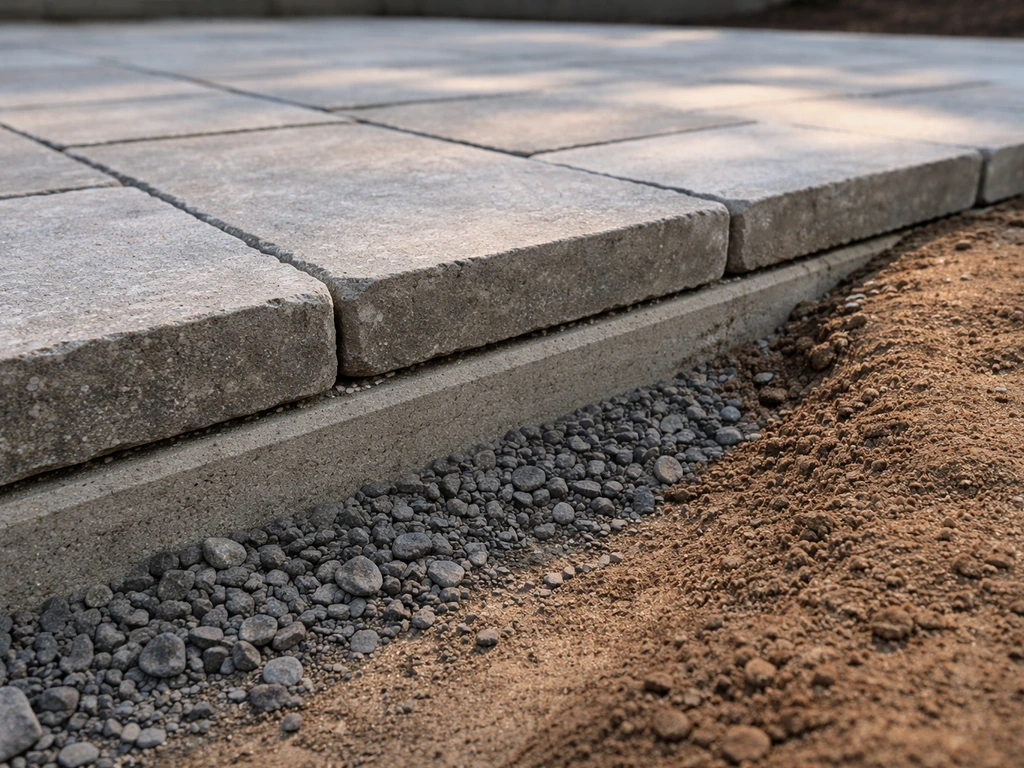
This is the one that catches the most DIYers off guard. Even a modest stone patio requires some base excavation, typically 4 to 8 inches depending on your climate and stone type. If that excavation changes how water moves across your lot or directs runoff toward a neighbor's property or a public storm drain, you've entered grading-permit territory.
If your goal is to place a hot tub on patio stones, the base, grading, and drainage requirements can change compared with a standard patio installation. Green Bay's patio guide specifically requires that patios pitch away from the house to provide proper drainage. That's not just good practice, it's a permit condition. Santa Clara County and Seattle both have dedicated grading and drainage permit processes because this is a meaningful stormwater management issue, not just a backyard aesthetic one.
When you probably don't need a permit
Minor repairs are typically exempt. Replacing a few cracked flagstones on an existing patio, releveling a couple of pavers that have settled, or patching a small section of a surface you're not expanding usually falls below any permitting threshold. The key distinction most building departments draw is between work that keeps an existing surface in its current state versus work that changes the footprint, grade, or drainage of a site.
As a general rule, you're most likely in 'no permit needed' territory when all of these apply:
- You're repairing or replacing individual stones within an existing patio footprint
- The total area of disturbed surface is small (well under your local threshold)
- You're not changing the grade, slope, or drainage pattern
- No retaining walls, steps, or raised platform elements are involved
- The patio is well within required setback distances from property lines
- No utilities run under the area
- Your municipality doesn't require permits for all patio work (confirm this first)
Even then, 'probably exempt' isn't a guarantee. If you're unsure, a quick call to your building department takes less time than the headache of fixing a violation after the fact.
What happens after you get the permit
Once a permit is approved, the work isn't quite done on the paperwork side. Most jurisdictions require you to post the permit on-site where an inspector can see it during the project. You'll typically need at least one inspection, sometimes two: one before you lay stone (to check the base and grading) and one after completion. Missing an inspection window can delay your project and sometimes requires rescheduling at an additional fee. Bellevue, for example, charges reinspection fees on top of the standard inspection fee, and overtime fees apply if you need an inspector outside normal business hours.
For the permit application itself, you'll almost always need a site plan. Portland requires a complete and accurate site plan showing all existing and proposed features, including structures, patios, driveways, and walkways, along with public right-of-way information. Bellevue requires applicants to verify and accurately depict property lines, setback distances, easements, and street widths. A basic hand-drawn site plan drawn to scale is often acceptable for residential projects, but it needs to be accurate. Submitting wrong dimensions or leaving out a setback violation creates more work for you later.
Typical documents needed for a patio permit application include:
- Completed permit application form (from your building department)
- Site plan drawn to scale showing the patio location, dimensions, and distances to property lines and structures
- Current plat of survey (required explicitly in some jurisdictions like Orland Park)
- Patio material and construction method description
- Elevation or grading plan if the project involves height changes or drainage modifications
- Retaining wall details if applicable (height, material, footing depth)
The real cost of skipping the permit
I've talked to homeowners who skipped the permit process and got away with it, and others who didn't. The ones who didn't have painful stories. Oakland, California, for example, charges double the normal permit fee (or more) when a permit is required for unpermitted work after the fact. If a structure is demolished without a permit, the fee can jump to ten times the normal amount, on top of a Stop Work Order fee. A Stop Work Order is exactly what it sounds like: you have to stop everything immediately, and work can't resume until the violation is resolved.
The resale issue is just as real. When you sell your home, unpermitted improvements often surface during title searches or buyer inspections. A stone patio built without a required permit can come back as a negotiating point, a required repair condition, or in the worst case, something the new owners have to tear out and redo to get a retroactive permit. That's your investment walking out the door.
| Scenario | Typical Consequence |
|---|---|
| Work stopped by inspector during construction | Stop Work Order, project halted, potential reinspection fees |
| Unpermitted work discovered after completion | Permit fees doubled or more, possible forced removal |
| Unpermitted work found during home sale | Repair conditions, price negotiation, delayed closing |
| Drainage violation causing neighbor damage | Civil liability in addition to code enforcement action |
| Retaining wall failure (unpermitted, no inspection) | Full rebuild at owner's expense, no insurance coverage |
How your stone and base choice connects to the permit question
This is where material selection and permit requirements actually overlap in practical ways, and it's something a lot of guides skip over. If you're also deciding what are patio stones made of, remember that the installation method and base build are usually what determine whether your stone patio counts as surface-only or requires sitework and grading review.
If you are new to the topic, you may want to review what a patio stone is and how it differs from pavers stone patio. The construction method for a stone patio, specifically how deep you excavate, how you build the base, and how you handle drainage, is often what determines whether local officials classify your project as 'surface only' or 'sitework and grading. '
Natural flagstone and large-format stone typically require a deeper, more carefully built base than, say, smaller modular pavers or gravel. A proper flagstone installation in a cold climate usually needs 6 to 8 inches of compacted gravel base below the setting bed, which means significant excavation. That depth of digging is more likely to change grade, disturb drainage patterns, and catch the attention of a building department than a simpler surface-level project. If you're also building in drainage slope, adding a perimeter edge, or installing a french drain to manage runoff, you've moved into territory that explicitly requires a grading or drainage permit in cities like Seattle and jurisdictions that follow similar stormwater management rules.
On the flip side, permeable paving approaches, like dry-laid flagstone with open joints, gravel fill, or permeable base materials, may actually keep you out of permit trouble in some drainage-sensitive jurisdictions because they allow water infiltration rather than increasing runoff. Seattle's stormwater rules are specifically triggered by hard, impermeable surfaces. If your stone patio uses a permeable design, it's worth asking the building department whether that changes your permit requirements. It sometimes does. If you are thinking about changing the look, you may also be wondering can patio stones be painted, and the answer can depend on the type of stone and whether coatings affect drainage or surface conditions.
A few material and method considerations worth raising with your building department before you finalize your design:
- Base depth and excavation required (deeper bases mean more disturbed soil and greater drainage impact)
- Whether the patio surface is permeable or impermeable (affects stormwater thresholds)
- Structural edging or border walls, especially any that function as retaining walls
- Whether a concrete slab foundation is involved (this typically escalates permit requirements over a dry-laid stone base)
- Slope and drainage direction of the finished surface (must pitch away from the house, usually a minimum 2% grade)
- Whether the patio connects to or modifies any existing drainage system or downspout routing
Stone type also matters indirectly. Heavier, thicker flagstone that requires a robust compacted base is a different structural commitment than thin-cut pavers set on a sand bed. Both can be beautiful and durable, but they represent different levels of site disturbance. If you're comparing stone types for your project and trying to minimize permit complexity, the setting method (dry-laid versus mortared, permeable versus concrete base) is often more relevant than the stone species itself. It's worth thinking through your entire build sequence before you finalize your material order, because the way you install the stone has as much bearing on your permit status as the stone itself.
Your next steps, in order
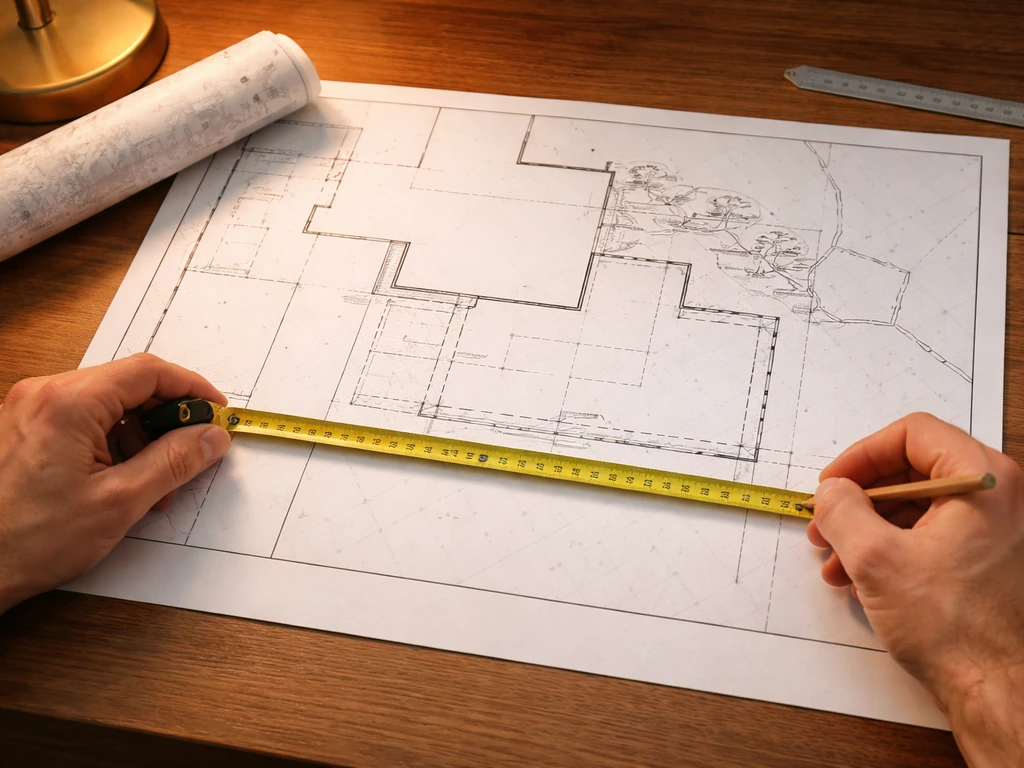
- Pull your property plat (usually free from your county assessor's website) and measure your planned patio dimensions and distances to property lines.
- Search your city or county building department website for 'patio permit' or 'paving permit' and look for a permit guide PDF specific to patios.
- If the website isn't clear, call the building department with your project details: address, dimensions, new vs. replacement, grade changes, setbacks, and any walls or steps.
- Ask explicitly whether your base construction method (depth of excavation, drainage changes, permeable vs. impermeable surface) affects the permit requirement.
- If a permit is required, request the application form, site plan requirements, and inspection schedule before you order materials or break ground.
- Post the permit on-site once approved and schedule inspections at the required project stages before covering any base work.
FAQ
If I’m replacing existing patio stones, do I still need a permit? (What if the size is the same)?
Not necessarily. Many places allow “repair like-for-like” (same footprint, same drainage, no grade change), but removal plus reinstall usually counts as replacement paving and can trigger a permit at your local size threshold. Ask your building department whether your scope is treated as a repair or a new surface installation.
My patio won’t get bigger, but I have to relevel the base. Does that affect whether I need a permit?
Runoff risk usually matters more than the stone looks. If your patio requires regrading, adds an edge that channels water differently, or changes where stormwater flows during rain, you may need grading and drainage review even when the project seems small. A simple “pitch away from the house” detail can become a permit condition, so confirm the required slope and tie-in to existing drainage.
What types of small “add-ons” (steps, edging, raised border) commonly turn a patio into a permitted project?
Usually, yes. If you need excavation beyond what’s considered minor base prep, or you’re adjusting elevations to install a wall, stairs, or a raised deck-like surface, it can shift the project into a structural or grading category. Even a low retaining wall can require site plans showing elevations and may trigger additional plan review.
What happens if my patio is close to a property line or an easement? Do I need a variance?
If your patio overlaps any regulated area, like a front setback, easement, or utility corridor, you may need a variance or an easement approval in addition to (or instead of) a building permit. Your plat and the property deed commonly show these boundaries, so confirm them before you submit to avoid a delay.
Do patios ever need permits or approvals because of public drainage, sidewalks, or the right-of-way?
Permits can be required under the driveway, parking, or right-of-way rules if your stonework touches areas that drain to public infrastructure or if any part is within the public right-of-way. Even when the patio is entirely on private property, the required drainage plan may involve city storm systems and add to review time.
Can a homeowner do a permitted stone patio without a contractor license?
Some jurisdictions allow certain work under a homeowner exemption, but inspections and posting requirements typically still apply, and oversized projects may require licensed design or engineering sign-off. Don’t assume “no contractor” equals “no permit,” because permit triggers are based on the work and thresholds, not who does it.
Why do patio permits get rejected or delayed, and what can I do to avoid it?
A permit can be denied or delayed if the site plan is incomplete or inaccurate, especially for setbacks, easements, and street widths, or if the dimensions don’t match your parcel. The most common fix is to revise and resubmit, which can extend timelines. Before submission, verify measurements on your plat and field-check the exact proposed patio edges.
If I choose permeable paving or dry-laid installation, will I definitely avoid permits?
Yes, permeable or infiltration-focused designs can change what permits are required in some drainage-sensitive jurisdictions, but they are not automatically exempt. You should ask whether your proposed base, joint style, and infiltration performance are accepted for your site conditions, and whether the inspector will require documentation.
What are the most common mistakes that cause failed inspections or stop-work orders for patios?
Common examples include missing the first inspection before placing the base, starting work outside the permit expiration window, or leaving out required slope/drainage details so the completed work no longer matches the approved plan. If you’re delayed, contact the building department early, since some places charge for rescheduling or reinspection.
If I add a french drain, sump, or connect patio drainage to an existing drain, do I need additional permits?
Often yes, especially for any system that affects water movement, like a french drain, drainage slope changes, or connecting to a downspout or storm line. Even if the patio itself is small, the drainage component can make it a separate permit or a grading-related review item.
I want to place a hot tub or a heavy fixture on the patio. Does that change permit requirements?
Typically, yes for structures supported by the patio or that change loads, but the permit answer depends on what the accessory is and how it’s anchored. Hot tubs, pergolas, and built-in features can introduce structural review. If you’re planning anchoring or heavy loads, ask whether you need separate structural or electrical permits.
What should I ask the building department when I call to confirm whether I need a permit?
Start by confirming whether your project is categorized as repair, replacement, or new installation, then ask which thresholds apply to your exact patio area and whether replacement paving counts. Bring your measurements and a simple sketch, and request the submission checklist for your municipality to avoid an extra trip later.