For most natural stone patios, a penetrating silane-siloxane sealer is the right call. It soaks into the pores, repels water and stains, stays breathable, and doesn't change how your stone looks. Film-forming sealers (acrylics, polyurethanes) are better if you want a wet-look or satin finish, but they sit on top of the surface, can trap moisture, and need more maintenance.
Patio Stone Sealer Review: Best Options and How to Apply
Nolan Ellison
29 May 2026
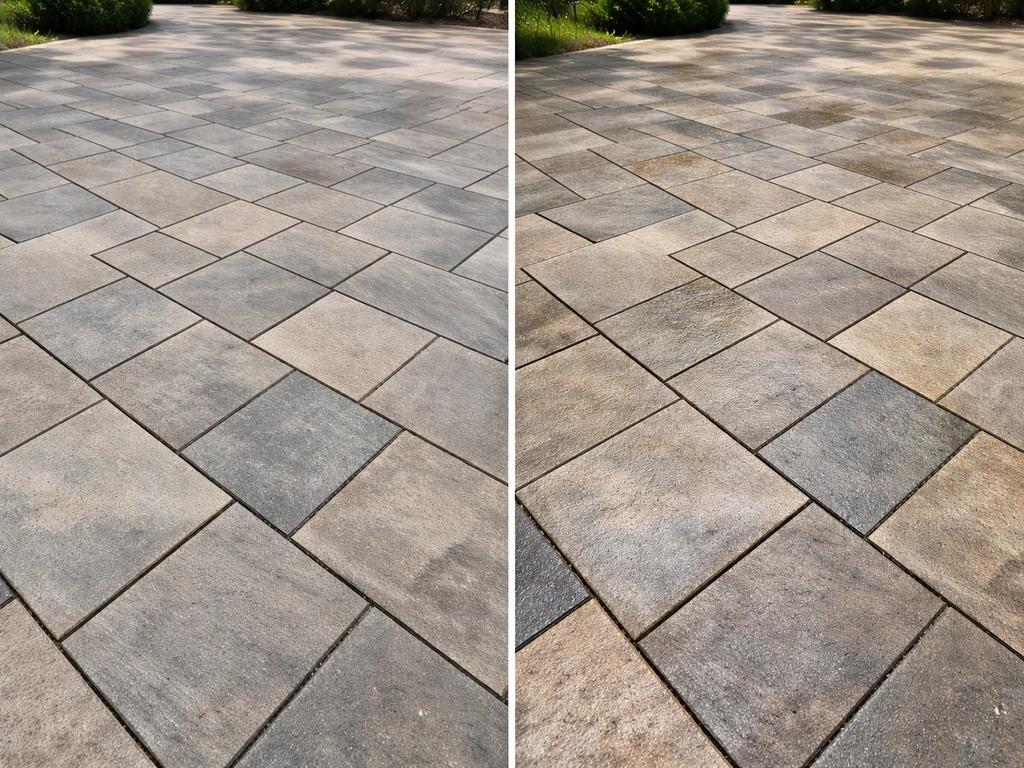
Pick the wrong type for your stone or climate and you'll end up with haze, peeling, or a slippery patio within a season. If you're aiming for the best natural stone patio sealer for your specific stone and climate, start by choosing between penetrating silane-siloxane and film-forming types first. The guide below walks through exactly which sealer works for which situation, how to apply it correctly, and how to fix the most common problems.
What patio stone sealer actually does
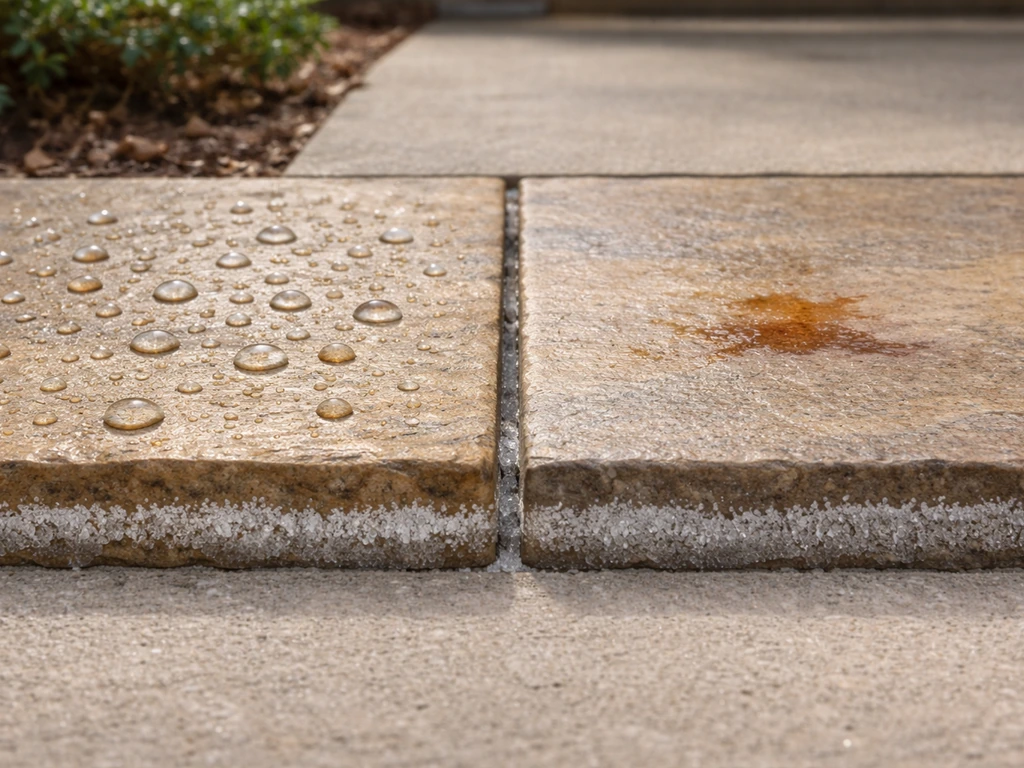
Sealer does four main things for natural stone and paver patios: it reduces how much water the stone absorbs, slows stain penetration, protects against freeze-thaw damage and salt spalling, and slows down algae and mildew growth in shaded or wet areas. Some sealers also shift how the stone looks, either enhancing color depth (wet look) or keeping the surface appearance completely unchanged (natural/matte look).
What it doesn't do is make your patio bulletproof or permanent. Even the best sealer is a layer of chemistry on a porous surface. It needs reapplication, it can fail if applied wrong, and it won't fix existing staining or surface damage. Think of it as a maintenance product, not a one-time fix. If you've got flagstone, limestone, sandstone, granite pavers, or natural stone tile out back, adding a sealer is almost always worth it. For the best flagstone patio sealer results, match the sealer type to your climate, stone porosity, and whether you want a natural or wet-look finish. The cost of re-sealing every few years is a lot lower than replacing spalled or stained stone.
How to choose the right sealer for your stone and finish
The two big decisions are sealer type (penetrating vs. film-forming) and finish (natural/matte vs. wet look/satin). Everything else flows from those two choices. Get them wrong and you'll be doing a lot of remediation work. Here's how to think through it.
Penetrating sealers vs. film-forming sealers
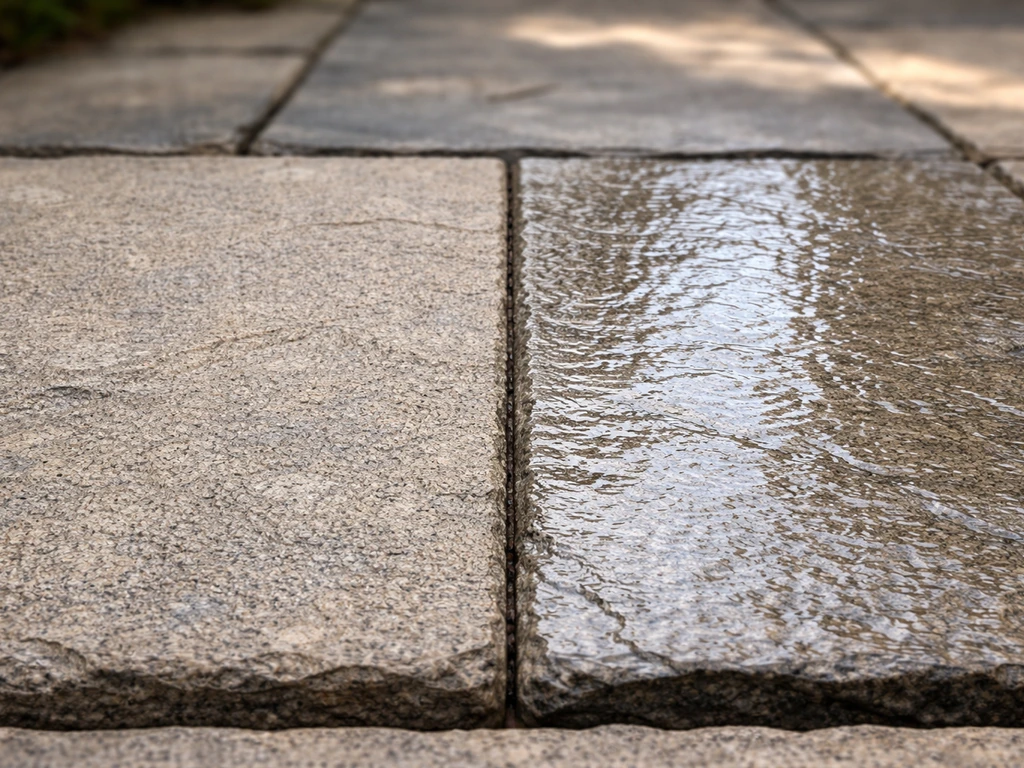
Penetrating sealers (silane, siloxane, or silane-siloxane blends) soak into the stone and chemically bond inside the pores. They form no surface film, so vapor can still pass through the stone. This matters a lot for natural stone patios in freeze-thaw climates or anywhere moisture can get trapped below the surface. Because there's no film on top, there's nothing to peel, flake, or bubble. The trade-off: they don't add gloss or enhance color much. Products like Foundation Armor SX5000 WB and Sika's Sikagard-200 Enviroseal are good examples of this category.
Film-forming sealers (acrylics, polyurethanes, modified waterborne resins) sit on top of the surface and create a physical barrier. They're what you need if you want a wet look or satin finish. Products like the Eco Advance EA Wet-Look Sealer and Techo-Bloc SB-6000 fall here. The downside is that they can trap moisture if applied over stone that isn't fully dry, they can get slippery when wet (sometimes requiring an anti-slip additive), and they need to be stripped and reapplied more carefully than penetrating types.
Match the sealer to your stone type
Porosity is the key variable. Softer, more porous stones like sandstone and limestone drink up sealer fast and benefit enormously from penetrating protection. Harder, denser stones like granite absorb sealer more slowly. Natural flagstone varies widely depending on whether it's bluestone, slate, or limestone-based. Concrete pavers are generally thirsty and respond well to both penetrating and film-forming types depending on your finish goal.
| Stone Type | Best Sealer Category | Finish Options | Watch Out For |
|---|---|---|---|
| Sandstone | Penetrating silane-siloxane | Natural/matte only | Over-absorption (use two coats); staining |
| Limestone | Penetrating silane-siloxane | Natural/matte; light enhancer | Acid sensitivity; haze from film-formers |
| Flagstone (bluestone/slate) | Penetrating or light film-forming | Natural or light satin | Moisture trap if film-forming over damp stone |
| Granite pavers | Penetrating silane-siloxane | Natural/matte | Very low porosity; excess sealer beads on surface |
| Concrete pavers | Penetrating or film-forming | Natural, satin, or wet look | Slippery finish; trapped moisture if not dry |
Other factors that affect your choice
- Freeze-thaw climate: always use a breathable penetrating sealer so moisture isn't trapped inside the stone where it can expand and crack
- Shaded or damp areas: look for products that specifically mention mildew or algae resistance, and prioritize breathability
- Heavy rain or coastal exposure: silane-siloxane blends offer strong water repellency without trapping vapor
- Existing sealer on the stone: film-forming sealers generally can't go over an existing penetrating sealer without stripping; check compatibility first
- Slip resistance: film-forming wet-look sealers on smooth stone can be dangerously slippery when wet; use an anti-slip additive or switch to a penetrating type
- Chemical exposure (pool chemicals, de-icers): look for products rated for salt and chemical resistance
Best patio stone sealer options: reviews by use case
Rather than ranking products in a simple top-five list, it's more useful to match options to common homeowner scenarios. Here's how the main categories and representative products perform in real-world use.
Best for freeze-thaw climates and natural stone: silane-siloxane penetrating sealers
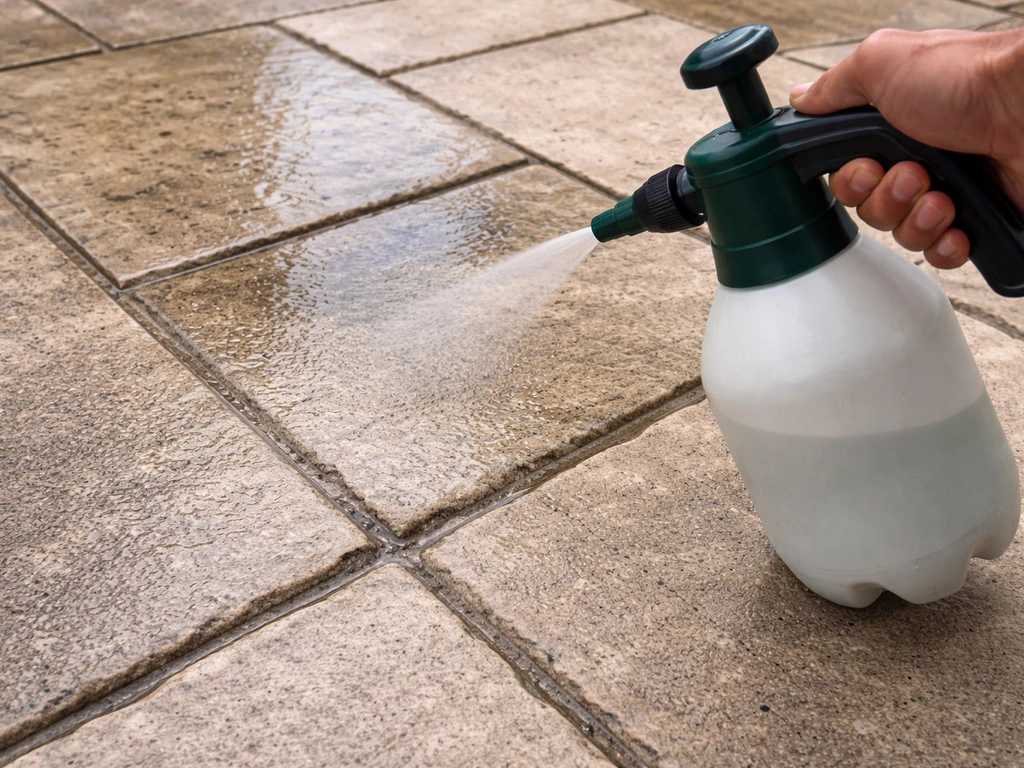
Foundation Armor SX5000 WB is one of the most consistently recommended products in this category for a reason. It's a water-based 40% silane-siloxane concentrate, it meets low-VOC requirements across most regulatory regions (OTC, CARB, LADCO, SCAQMD), and Foundation Armor claims up to 7 to 10 years of protection before recoating is needed. Two coats are recommended for even coverage, and the recoat window between coats is short, around 10 to 15 minutes, so you apply the second coat while the first is still damp. It doesn't darken stone noticeably and leaves a completely natural look. Good choice for granite, flagstone, and pavers in cold climates.
Sika's Sikagard-200 Enviroseal is another strong penetrating option, positioned as a breathable water repellent using a 20% alkylalkoxysilane formulation. It forms no surface film, dries in about 4 hours at 70 degrees F and 50% relative humidity (longer in cold or humid conditions), and covers roughly 100 to 175 square feet per gallon depending on stone porosity.
Sika’s Sikagard-200 Enviroseal technical documentation notes that drying time is influenced by temperature and relative humidity dries in about 4 hours at 70 degrees F and 50% relative humidity.
Sika specifically warns against applying if inclement weather is anticipated within 12 hours. It's a solid option for limestone, sandstone, and flagstone where breathability is the top priority. If you need the best sandstone patio sealer for your conditions, focus on the right penetrating type and apply it only when the stone is fully dry. Sandstone and limestone-specific guidance is also worth reviewing separately given those stones' unique absorption and acid sensitivity characteristics.
Best for wet-look finish on pavers: film-forming sealers
If you want that rich, color-deepened look on concrete pavers or flagstone, film-forming sealers are your only real option. Eco Advance EA Wet-Look Sealer is a waterborne modified sealer with VOC content under 100 g/L. It's dry to touch in about 1 hour, ready for light foot traffic at 24 hours, and fully traffickable at 48 hours. Apply with a roller, brush, or sprayer and keep a wet edge to avoid lap lines. The manufacturer warns specifically against over-application and drip marks, which are common failure points.
Techo-Bloc SB-6000 (also marketed as SEK Surebond SB-6000) is a water-based modified sealer designed for pavers with a satin wet-look finish. The manufacturer notes that some surfaces may require an anti-slip additive for adequate traction, which is worth taking seriously on any smooth stone patio that gets wet regularly. FILA Solutions Wet Stone Eco is another option worth noting if you're prioritizing environmental impact: it's positioned as VOC-free and uses a consolidating/stain-protecting treatment applied with a flat brush, wax applicator, or microfiber pad.
Best for siloxane water repellency on a budget
Eco Advance Concrete and Masonry Siloxane Waterproofer is a frequently cited mid-range option for homeowners who want penetrating protection without spending on a premium concentrate. It performs well on pavers and concrete, though like all siloxane products it needs a clean, dry, absorbent surface to bond correctly. The technical data sheet advises not letting the surface temperature fall below freezing for at least 24 hours after application, and recommends applying the second coat quickly after the first appears dry.
Application steps: prep, weather limits, and how to apply
I've seen more sealer jobs go wrong at the prep stage than at any other point. The stone has to be completely clean, dry, and free of any previous sealer or coating that could block absorption. Skipping this step or rushing it is the single biggest cause of haze, patchiness, and peeling.
Surface prep
- Clean the stone thoroughly: remove dirt, algae, mildew, oil stains, and efflorescence using an appropriate stone cleaner (not acid on limestone or sandstone). Pressure washing works well but allow adequate drying time afterward.
- Strip any existing sealer if you're switching sealer types or if the old sealer is failing. Solvent-based strippers or xylene can remove film-forming sealers; penetrating sealers don't strip the same way but the surface still needs to be clean.
- Let the stone dry completely. This is non-negotiable for film-forming sealers and important for penetrating ones too. Wait at least 24 to 48 hours after washing, longer in humid or cool conditions.
- Do a water-drop test: drop a small amount of water on the surface. If it absorbs within a few seconds, the stone is ready. If it beads, either the old sealer is still active or the stone is still wet.
- Protect nearby plants and landscaping with drop cloths before you start applying.
Weather and temperature conditions
Air temperature should be above 50 degrees F during application and for at least 24 hours afterward. This affects film formation and curing for most sealers, but especially for film-forming types. Don't apply in direct hot sun on stone that's been baking, as it can cause the sealer to dry too fast and leave streaks. Avoid any application if rain is expected within 12 hours. Early morning on a mild, overcast day is usually ideal.
Application method
Always do a small test patch in an inconspicuous area first and let it cure fully before proceeding. This tells you how the sealer will affect the stone's appearance and catches any adhesion or color issues before you've committed to the whole surface.
For penetrating sealers, apply thin, even coats. Flood-coat application is tempting but leads to pooling and white residue. Use a pump sprayer, roller, or brush and work in sections. For textured stone, spray and back-roll to get even coverage into surface variation. Wipe or back-roll any areas where sealer is pooling before it sets. Apply the second coat while the first is still slightly tacky (check the product's specific recoat window, as this varies considerably).
For film-forming sealers, use a 3/8-inch nap roller and maintain a wet edge the entire time to avoid lap lines. Thin coats are essential. Two thin coats always beat one thick coat. Don't go back over areas that are starting to dry and tack up.
How long sealers last and when to recoat
Penetrating silane-siloxane sealers last the longest by a significant margin. Foundation Armor claims 7 to 10 years for SX5000 WB under normal conditions, which is realistic for lower-traffic natural stone surfaces in moderate climates. Expect 4 to 6 years in heavy-use areas or harsh climates before water repellency noticeably declines. Film-forming acrylics and modified sealers typically need reapplication every 2 to 3 years, sometimes sooner in high-UV or high-traffic zones.
The best way to judge recoat timing is the water-drop test: if water no longer beads up and rolls off but instead soaks in within a few seconds, the sealer has worn past its effective life. Don't wait until you see active staining or spalling to recoat. Annual visual checks and a quick water test in early spring are good maintenance habits.
| Sealer Type | Typical Lifespan | Recoat Trigger | Notes |
|---|---|---|---|
| Silane-siloxane penetrating | 7-10 years (premium), 4-6 years (standard) | Water no longer beads | Easiest to maintain; no stripping needed |
| Film-forming acrylic/wet-look | 2-3 years | Peeling, dulling, water absorption | May need stripping before recoat if failing |
| Waterborne modified (satin) | 2-4 years | Loss of sheen, absorption increase | Monitor slip resistance over time |
Common problems and how to fix them
White haze or milky residue
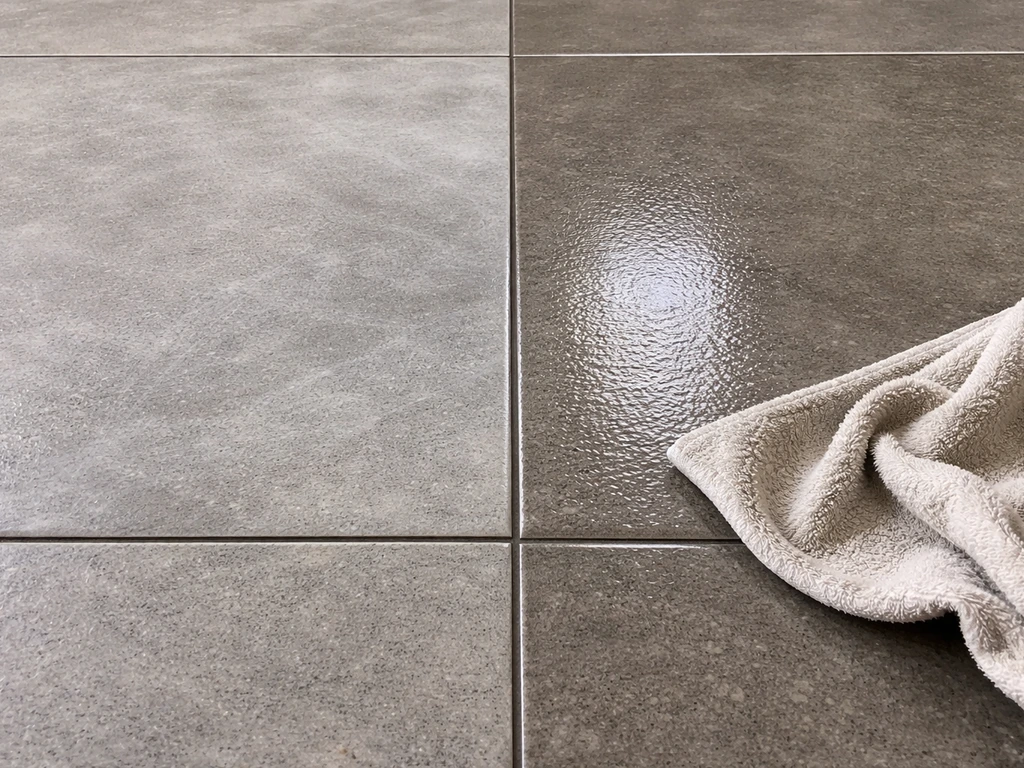
This is the most common complaint in sealer reviews, and it almost always comes from over-application, applying to a damp surface, or letting pooled sealer dry without wiping it back. For film-forming sealers, the haze is typically an air gap between the sealer film and the stone surface. In some cases, a solvent like xylene applied over the top can re-liquefy the sealer and allow it to re-bond. If that doesn't work, stripping the sealer and starting over is the reliable fix. For penetrating sealers, white residue is usually excess product that dried on the surface rather than soaking in; a solvent wipe or light pressure wash shortly after the issue appears can resolve it.
Patchiness and uneven sheen
Patchy results usually mean uneven absorption (parts of the stone were wetter or had residual sealer) or the application lost its wet edge and left lap lines. Thin, even second coats often level out minor patchiness. For bad lap lines, you typically need to strip and reapply or apply a full additional coat with careful wet-edge technique. Applying sealer in direct sun also speeds up drying unevenly across the surface and creates this problem.
Unexpected darkening
Some homeowners are caught off guard when a sealer meant to be natural-looking still darkens the stone slightly, especially on porous sandstone or limestone. Penetrating sealers generally cause minimal color shift, but dark spots can appear if the sealer pools or if the stone has variable porosity. Foundation Armor's technical guidance suggests that most dark spots from silane-siloxane products can be removed with an industrial degreaser like Spartan SC200. Always do a test patch first to check color impact before full application.
Slippery surface
Film-forming sealers, especially wet-look products, can make a patio significantly more slippery when wet. This is a real safety issue. If you've already applied a film-forming sealer and the surface is too slippery, you can mix in an anti-slip additive on the next coat, or apply a surface grip product over the top. Going forward, consider whether a wet-look finish is actually worth the trade-off on a patio surface that gets rain or hose water. For shaded, damp patios especially, a penetrating sealer with no surface film is the safer choice.
Trapped moisture and bubbling
Bubbling or blistering under a film-forming sealer almost always means moisture was present in the stone when the sealer was applied. The vapor trying to escape gets trapped under the film and creates bubbles. The fix is stripping the sealer, allowing the stone to dry completely (sometimes this takes several days), and reapplying. There's no shortcut here. This is why the 24 to 48-hour dry time before sealing is so important.
Safety, sustainability, and cleanup
Water-based sealers have improved significantly and are now the practical standard for most homeowner applications. They're lower odor, easier to clean up (soap and water while wet), and increasingly meet strict VOC regulations. Foundation Armor SX5000 WB, for example, meets OTC, CARB, LADCO, and SCAQMD VOC limits. Eco Advance's wet-look sealer comes in at under 100 g/L VOC. FILA's Wet Stone Eco is marketed as fully VOC-free. If you're working in an enclosed or poorly ventilated space, or in a state with tight VOC regulations, check the product's TDS to confirm compliance before buying.
Solvent-based sealers and strippers (including xylene for remediation work) require proper respiratory protection, gloves, and ventilation. Dispose of solvent-soaked rags carefully since they can be a fire hazard. Water-based sealer waste can generally be disposed of by letting it dry out in the container before disposal, but check local regulations.
Before you start any sealer application, cover nearby plants, grass, and landscaping with drop cloths. Even water-based sealers can harm vegetation if they run off in quantity. Rinse overspray off plants quickly if contact happens. Keep pets and children off the surface until the sealer is fully cured, not just dry to the touch. Dry-to-touch can be as fast as 1 hour for some film-forming products, but full cure for foot traffic is typically 24 to 48 hours.
Which sealer to buy and what to do next
Here's the short version for the most common situations. If you have natural stone (flagstone, limestone, sandstone, granite) and want protection without changing the look, buy a silane-siloxane penetrating sealer. Foundation Armor SX5000 WB or Sika Sikagard-200 Enviroseal are both strong choices. If you have concrete pavers and want a wet look or satin finish, Eco Advance EA Wet-Look Sealer or Techo-Bloc SB-6000 are practical options. Add an anti-slip additive if the surface will get wet regularly.
Before you commit to any product across your whole patio, do a test patch in a corner or inconspicuous area. Let it fully cure for 48 hours and check the color, sheen, and texture. That 10-minute test can save you from stripping and reapplying an entire patio.
Schedule the job for a day with temperatures between 50 and 85 degrees F, no rain in the forecast for at least 12 hours, and ideally low humidity. Morning application with afternoon cure time works well in most climates. Get the surface clean, dry, and tested first, then work in thin coats with the right tool for your sealer type. That combination gets reliable results far more consistently than the specific brand you choose.
FAQ
Can I seal my patio if there is already old sealer on the pavers or stone?
Only if the old product is compatible. Penetrating sealers can sometimes recoat over certain residues, but film-forming layers usually require removal because they can block absorption and cause haze or peeling. Do a compatibility test by applying a small amount in an inconspicuous area and checking for 24 to 48 hours of adhesion and consistent color, then perform the water-drop test afterward.
How long should I wait before sealing after pressure washing or cleaning?
You need full drying, not just a surface that looks dry. After washing, allow enough time for the interior moisture to escape, especially for dense stones and shaded areas. If you still see darker patches or the stone cools slower than surrounding areas, wait longer, and consider using a moisture meter for accurate timing.
What’s the safest way to choose between natural (matte) and wet-look if I’m worried about slipperiness?
If your patio gets rain, hose overspray, or is shaded and stays damp, prioritize a penetrating sealer for a matte appearance. Wet-look systems are more likely to become slick when wet, even with satin products, so if you must use film-forming, plan for an anti-slip additive or a separate traction treatment and test it under a water spray.
Will sealing prevent algae, moss, or mildew completely?
No, it mainly slows growth by reducing water and stain penetration. In damp or shaded zones, you still need periodic cleaning and removal of organic buildup, because trapped debris can feed growth even on sealed surfaces. If you see recurring algae, address drainage, airflow, and housekeeping, not only the sealer.
Can I apply a sealer over efflorescence or white powder (salt deposits)?
Usually no. Efflorescence indicates moisture movement and mineral salts that can interfere with bonding and lead to new haze after sealing. Remove the source, then clean and let the surface dry fully before sealing. If the efflorescence returns quickly, treat it as a drainage problem rather than a sealer issue.
How do I know if my stone is too sealed already to accept more sealer?
Use the water-drop test after cleaning and full drying. If water beads up immediately and stays beaded for a long time, the surface is still protected, and adding more can increase risk of film buildup, especially with film-forming products. If the water soaks in quickly, it is still accepting treatment and needs sealer.
What causes a sealer to look blotchy or patchy even when I applied two coats?
Patchiness often comes from uneven absorption due to residual moisture, uneven pre-cleaning, or leaving behind spots of prior coating. Another common cause is losing the wet edge during the second coat, so some areas dry first. Back-roll or wipe pooled areas promptly, and rework only when the product is still in the correct tack stage for your specific sealer.
Is it normal for the patio to feel slightly different or look darker right after sealing?
Some change is expected, especially on porous limestone or sandstone and with wet-look systems. With penetrating sealers, most overall darkening should be subtle, but variable porosity can still create darker blotches if sealer pools. Let it cure fully, then evaluate again, and only then decide whether remediation is needed.
Can I reseal the same season if I notice problems like missed spots or light coverage?
Often yes, but timing and surface readiness matter. For penetrating sealers, a prompt second application in the right window can even out coverage. For film-forming products, recoating too early or over partially cured areas can cause adhesion issues or lap lines, so follow the recoat time in the TDS and do a patch test first.
What should I do if my sealed patio becomes too slippery right away?
Act early. If you used a film-forming sealer, the fix is usually adding an anti-slip additive in a recoat or applying a surface grip/traction product designed for sealed stone. Avoid using harsh cleaners to “rough it up,” because that can damage the finish and may worsen staining. Test any traction product in a small area first.
How long until I can move furniture, wash the patio, or allow regular foot traffic?
Dry-to-touch is not the same as full cure. Many products reach light foot traffic in about 24 hours, but full cure for heavier use can be 48 hours or longer depending on humidity and temperature. Do not pressure wash or scrub for at least the full cure period, because it can strip or haze the fresh coating.
Do I need special ventilation or PPE for water-based patio sealers?
Even water-based products can irritate eyes and skin, and the application area still benefits from ventilation, especially in enclosed patios. Wear chemical-resistant gloves and eye protection, and follow the label for any respiratory requirements. For solvent-based products or solvent strippers, use appropriate respirators, gloves, and ventilation, and dispose of materials safely.
Will sealing trap moisture in my patio and cause damage over time?
It can, mainly with film-forming sealers applied over damp stone or trapped moisture sources. Penetrating sealers are designed to be breathable (no surface film), but they still require the patio to be dry enough for proper uptake. If you suspect ongoing moisture issues, address drainage and drying first, then seal.