For most flagstone patios, a penetrating silane/siloxane sealer is the right choice. It soaks into the stone rather than sitting on top, so it protects against water, stains, and freeze-thaw damage without trapping moisture or changing the surface texture. If your flagstone is in a freeze-prone climate, this is especially non-negotiable. Film-forming topical sealers can look great short-term but tend to peel, whiten, and cause problems on porous natural stone exposed to outdoor conditions. Start with a penetrating sealer, pick the right finish for your look, and you'll have a patio that stays protected for 7 to 10 years before you need to reseal.
Best Flagstone Patio Sealer Guide: Choose and Apply
Nolan Ellison
3 May 2026
What flagstone actually needs from a sealer
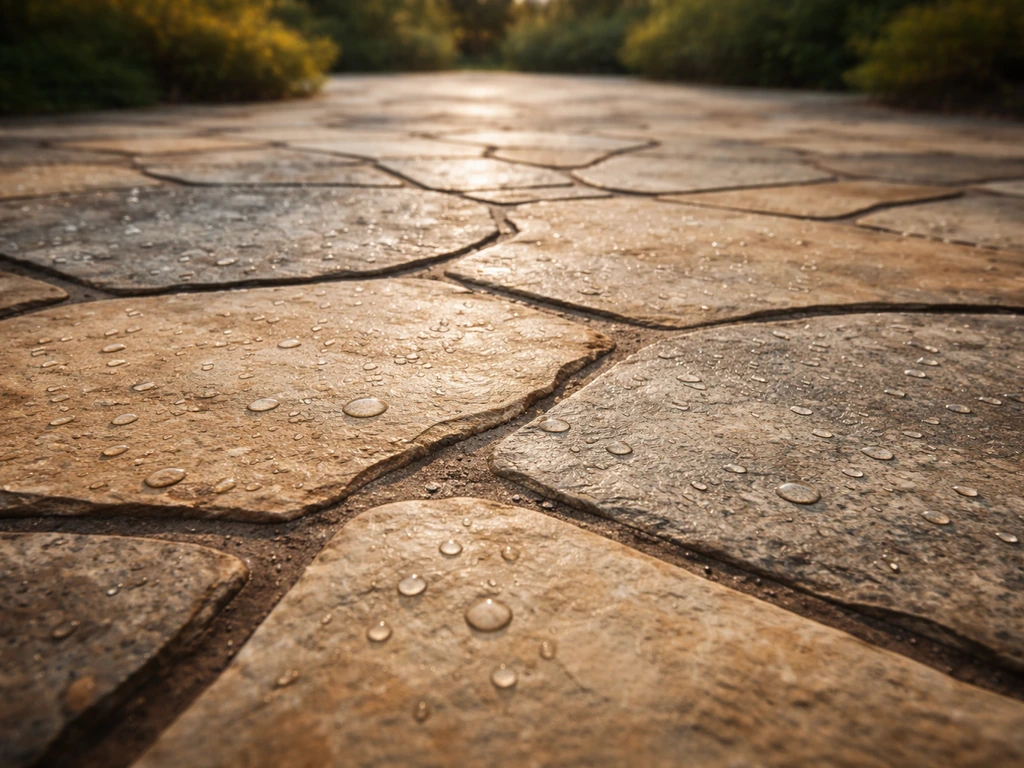
Flagstone is porous. That's what makes it beautiful and natural-looking, but it also means water, oil, algae, and dissolved salts can work their way in and cause real damage over time. A sealer has to address several distinct threats at once, and understanding each one helps you choose the right product rather than just grabbing whatever's on the shelf.
- Water infiltration: Rainwater soaks into porous stone and, if it can't escape, leads to spalling, pitting, and surface breakdown. A good sealer reduces water absorption dramatically without sealing moisture in.
- Stain protection: Cooking grease from a grill, dirt tracked in from a garden, and bird droppings all bond to open pores in unsealed stone. A sealer gives you time to wipe spills before they penetrate.
- Freeze-thaw damage: In cold climates, water that's absorbed into the stone expands when it freezes. Repeated freeze-thaw cycles crack and flake even dense flagstone. Products like Armor SX5000 specifically call out freeze-thaw and salt damage prevention in their performance claims.
- Algae and biological growth: Shaded, damp patios grow algae and moss fast. A sealer that reduces moisture absorption makes the surface less hospitable to biological growth over time.
- Breathability: This is the one most homeowners miss. Flagstone still releases moisture vapor from underneath. If your sealer forms a hard, impermeable film on top, that vapor gets trapped, and you end up with whitening, blushing, or the sealer peeling off entirely. The sealer needs to let vapor pass through (tested under standards like ASTM E96/E96M for water vapor transmission) while still blocking liquid water.
Penetrating vs topical sealers: what each one actually does
This is the most important decision you'll make, and it's simpler than it sounds. There are really two categories: sealers that go into the stone, and sealers that sit on top of it.
Penetrating sealers (silane/siloxane)
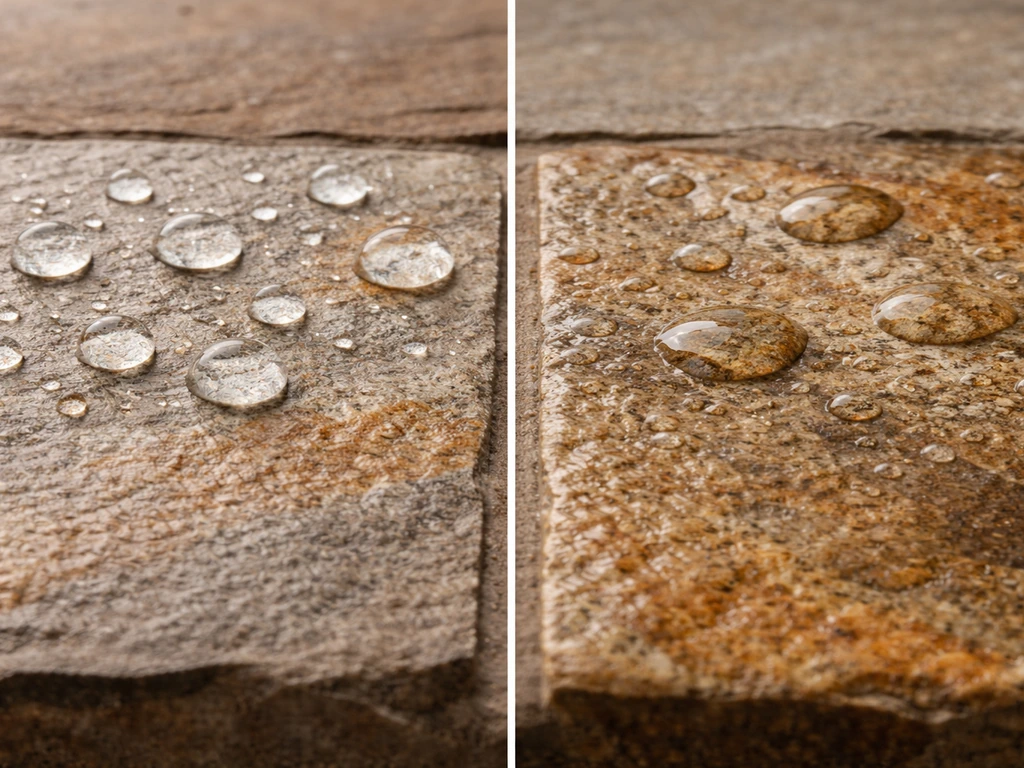
Penetrating sealers use reactive silane or siloxane chemistry to bond inside the stone's pores. Once cured, they create a hydrophobic barrier deep within the surface rather than on it. Because they don't form a film, they don't peel, they don't trap moisture vapor, and they don't change the texture of the stone underfoot. Products like Armor SX5000 and Sikagard H 177 are good examples of this category. The INTRAGUARD data sheet explicitly states the product 'does not form a film' and penetrates the surface to form an integral moisture barrier, which captures exactly what this chemistry does. Water beads up and rolls off, but the stone can still breathe. For outdoor flagstone that's horizontal, exposed to rain, and sitting in a climate with freeze-thaw cycles, this is almost always the right call.
Topical/film-forming sealers
Topical sealers coat the surface with a layer of acrylic, polyurethane, or epoxy. They can create a high-gloss or wet-look finish that looks striking, and they do offer stain resistance. The problem is that outdoor flagstone is a rough, porous, horizontal surface exposed to UV, temperature swings, and moisture from both above and below. Film-forming sealers on this kind of surface tend to trap moisture vapor underneath, which causes the sealer to whiten, blush, or peel. They also make the surface slippery when wet, which is a real safety issue on a patio. If you're wondering which choice fits a patio best, see this patio stone sealer review for a practical comparison of performance and finish. They need reapplication every 1 to 3 years and can be difficult to strip when they start failing. If you want a deep wet look on a flagstone feature wall or a vertical surface in a dry climate, a topical sealer might work. On a ground-level patio in most regions, I'd steer away from them.
| Feature | Penetrating Silane/Siloxane | Topical/Film-Forming |
|---|---|---|
| Breathability | Yes, vapor can pass through | No, traps moisture vapor |
| Appearance change | Minimal to none (or subtle enhancement) | Noticeable gloss or wet look |
| Freeze-thaw protection | Excellent | Poor to moderate |
| Peeling risk | None (no film formed) | High on porous horizontal stone |
| Slip resistance | Unchanged | Can reduce traction when wet |
| Reapplication interval | 7–10 years | 1–3 years |
| Best use case | Outdoor patios in all climates | Vertical surfaces, dry climates, decorative use |
How to pick the right sealer for your specific patio
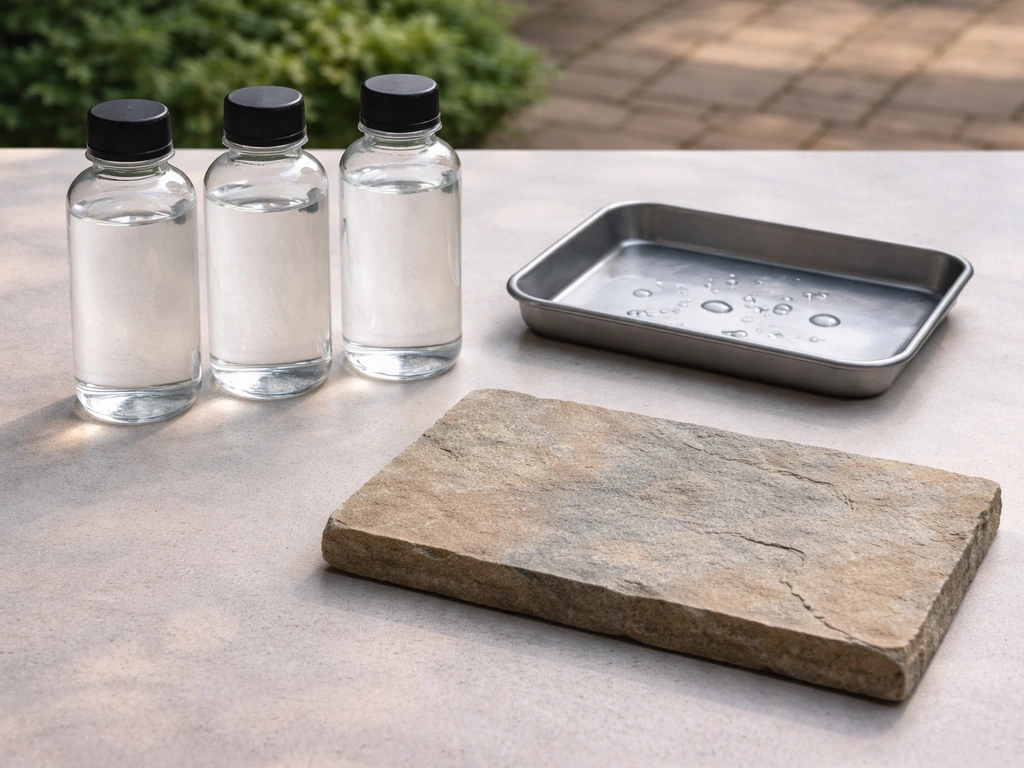
Once you've landed on a penetrating silane/siloxane as the base category, you still need to narrow it down by climate, desired look, and the condition of your stone. Here's how I think through it.
Climate and exposure
- Freeze-thaw climates (Zone 5 and colder): Go solvent-based silane/siloxane. Products like Armor SX5000 penetrate more deeply into dense or partially sealed stone and are explicitly formulated to resist freeze-thaw and salt scaling. SpecSilane 40 publishes scaling resistance data using ASTM C672, showing a rating of 0 (no scaling), which is exactly what you want in a snowy or icy climate.
- Hot, humid climates: Water-based silane/siloxane products like Sikagard H 177 work well and are easier to apply in warm weather. Apply between 55°F and 85°F to ensure proper curing.
- Shaded, algae-prone areas: Focus on a sealer with strong water absorption reduction. A penetrating sealer won't kill existing algae, but reducing moisture in the stone makes regrowth slower and easier to manage. You'll also need to deal with existing algae before sealing (more on that below).
- High foot traffic: Stay away from topical sealers that get slippery. Penetrating sealers preserve the natural texture and grip of flagstone. If you want enhanced traction on a well-used patio, look for products that list skid resistance testing (ASTM E303) in their data sheets.
Finish: natural, enhanced, or wet look
- Natural/matte finish: Most penetrating sealers leave the stone looking essentially unchanged. This is the right choice if you want to preserve the organic, varied look of flagstone.
- Color-enhancing finish: Some silane/siloxane products are formulated to deepen and enrich the stone's color without adding gloss. This is often called an 'enhancing' or 'color-enhancing' sealer and works well on darker flagstones like slate or bluestone where you want a richer tone.
- Wet look: This typically requires a topical or hybrid sealer. Given the trade-offs on horizontal outdoor surfaces, I'd only recommend it for a covered patio or an interior flagstone floor where freeze-thaw and rain exposure are controlled.
Stone type compatibility
Different flagstone types have different porosity and mineral composition. Sandstone and limestone are highly porous and drink up sealer fast. Slate and bluestone are denser. Quartzite is among the least porous. Always do a patch test before committing to a full application. blank" rel="noopener noreferrer">Sikagard H 177's instructions specifically recommend testing a 5 x 5 foot area first and observing the result before proceeding. That's good practice regardless of the brand you choose. If your flagstone has an existing sealer on it, you need to confirm the new product is compatible. Applying a solvent-based sealer over a water-based topical coating, for example, can cause adhesion failure or trapped solvent problems.
Preparing your flagstone before you open the sealer
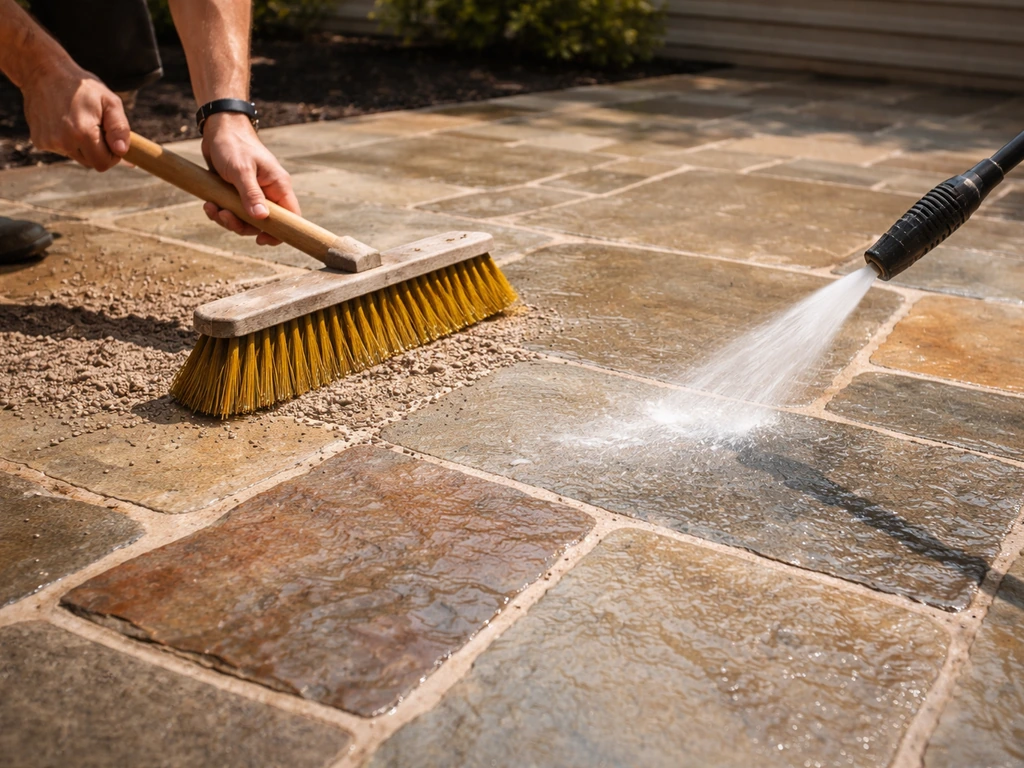
This is where most DIY sealing jobs go wrong. People rush the prep and end up sealing in dirt, efflorescence, or algae, or they apply sealer to damp stone and get whitening and blushing within a few weeks. Prep takes longer than application. Don't skip it.
Cleaning the surface
Start with a thorough sweep, then wash the entire patio with a pH-neutral stone cleaner and a stiff brush. Avoid using aggressive acidic cleaners on limestone or marble-based flagstone, as they can etch the surface. If you have oil or grease stains, treat them with a degreaser before the general wash. Rinse thoroughly and make sure no cleaner residue remains, since residue can interfere with sealer penetration.
Dealing with algae and biological growth
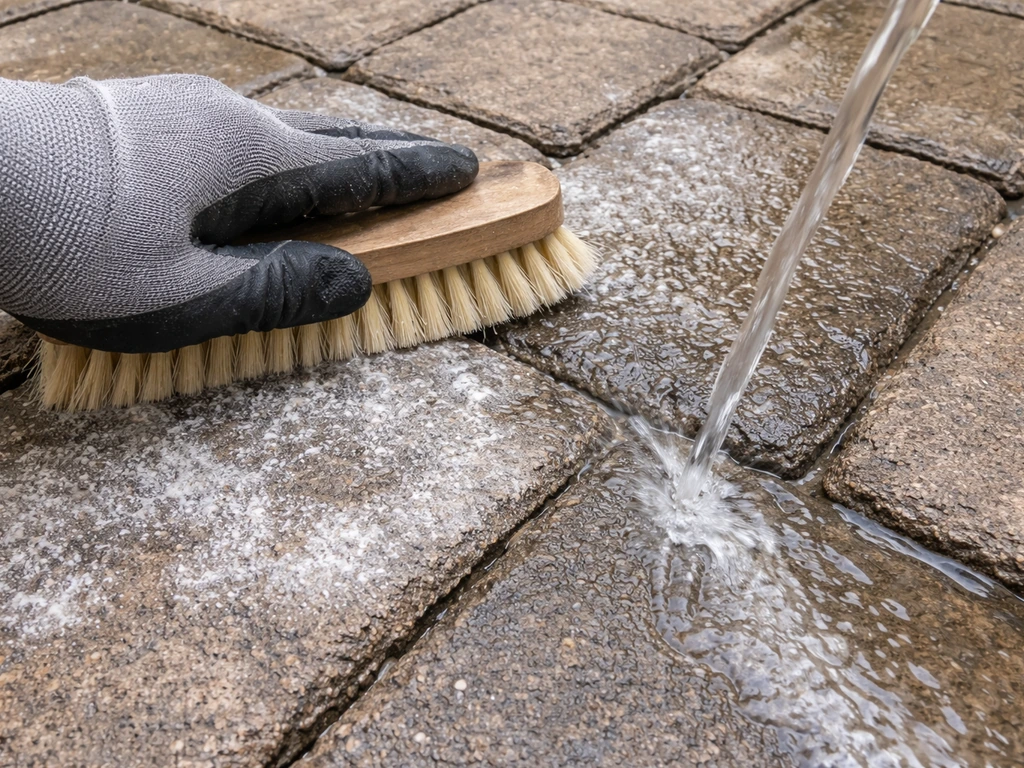
If your flagstone has green or black algae, moss, or lichen, you need to kill and remove it before sealing. A diluted sodium hypochlorite (bleach) solution works well. GSA preservation guidance suggests approximately a 5% bleach solution. Apply it carefully and let it dwell, but don't use a high-pressure sprayer when applying biocide because it can drive the solution deeper into the pores and make it harder to remove. After the biocide treatment, rinse the area thoroughly and let it dry completely. The GSA guidance also cautions against repeated chemical treatments unless prior chemicals have been fully washed away, so do a proper rinse between any successive cleaning steps.
Removing efflorescence
Efflorescence is the white, chalky salt deposit that appears on stone or mortar joints. If you seal over it, you trap those salts under the sealer and the problem continues or gets worse. Use an efflorescence remover (typically a diluted acid solution designed for masonry) and follow it with a thorough rinse. Don't skip this step if you see any white residue on the surface or in the joints.
Drying time
This is critical. The stone must be completely dry before you apply a penetrating sealer. For most outdoor conditions, that means waiting at least 24 to 48 hours after the final rinse, in dry weather with good airflow. SikaCem®-102 First Seal® specifies an application ambient condition range of 45, 90°F and guidance to apply 24 hours after SikaCem®-102 First Seal® lists an application ambient condition range of 45–90°F and suggests applying 24 hours after. Applying sealer to damp stone is one of the primary causes of whitening and hazing. Check the stone by pressing a paper towel firmly against the surface. If any moisture transfers, wait longer. In humid climates or after a deep cleaning, I've waited 72 hours to be safe.
Check for existing sealers
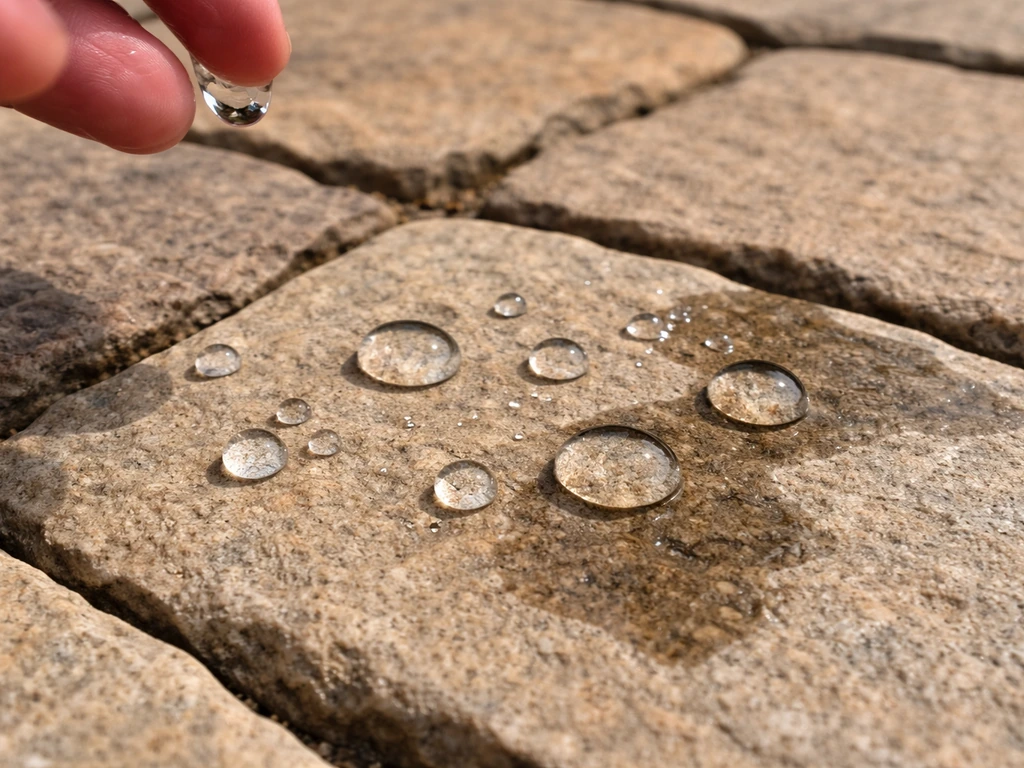
Drip a few drops of water on the surface. If it beads up immediately, there's likely an existing sealer still active. If the stone absorbs it within 30 to 60 seconds, the surface is ready for sealing. If you're not sure what existing product is on the stone, do your 5 x 5 foot patch test and watch for adhesion or compatibility issues before committing to the full patio.
Applying the sealer step by step
Once the stone is clean, dry, and confirmed compatible, application is straightforward. The goal with a penetrating sealer is to get enough product into the surface to form a complete internal barrier, without flooding the top layer with excess that has nowhere to go.
- Check the temperature window. Most silane/siloxane sealers, including Armor SX5000, specify an application range of 55°F to 85°F. Applying outside this range affects how the product penetrates and cures. Don't apply if rain is expected within 24 to 48 hours.
- Mask off adjacent surfaces. Tape off any surfaces you don't want sealer on, including siding, wood trim, painted surfaces, and planters. Penetrating sealers can stain wood and some metals.
- Do your patch test first. Apply sealer to a 5 x 5 foot section in an inconspicuous area. Let it cure for 24 hours and check the appearance, absorption, and any signs of whitening or adhesion issues before proceeding.
- Apply the first coat. Use a pump sprayer, roller, or brush depending on the product instructions and the texture of your flagstone. For spray application, INTRAGUARD's guidance calls for a nozzle producing around 0.1 GPM at 40 psi, applying enough material to create a downward flood running 6 to 10 inches below the spray point. This ensures the sealer is getting into the surface rather than just coating the top. Work in manageable sections, about 100 to 200 square feet at a time.
- Back-brush or spread the sealer. On textured flagstone, follow the spray with a brush or roller to work the sealer into depressions and irregular surfaces. This prevents puddling in low spots and ensures even coverage.
- Let the first coat penetrate, then apply the second coat. Armor SX5000 recommends two coats for even coverage and appearance. The recoat window is 0 to 24 hours after the first coat. Sikagard H 177 dries in approximately 4 hours at 70°F and 50% relative humidity, giving you a clear sense of the timing. Apply the second coat before the first has fully cured for best bonding between layers.
- Remove any excess. If you see any sealer pooling on top of the stone that the surface has not absorbed after 10 to 15 minutes, wipe it off with a clean cloth or squeegee. Excess sealer sitting on top can leave a sticky residue or hazy film.
- Allow full cure before use. Most penetrating sealers need 24 to 72 hours of cure time before foot traffic, and longer before furniture or heavy use. Check the specific product data sheet for guidance.
Coverage rates to plan for
Coverage varies with stone porosity. Armor SX5000, for example, covers up to 175 square feet per gallon on porous surfaces and up to 225 square feet per gallon on smoother, denser stone. For highly porous flagstone like sandstone, plan on the lower end of that range and budget accordingly. For a best sandstone patio sealer, prioritize a penetrating silane or siloxane that won’t form a film on porous, outdoor horizontal stone. If you’re deciding between products, looking at sandstone patio sealer reviews can help you compare real-world performance like beading, coverage, and how well each one holds up outdoors. For a 200 square foot patio with two coats on moderately porous stone, you'd need roughly 2 to 3 gallons.
What to expect after sealing (and what can go wrong)
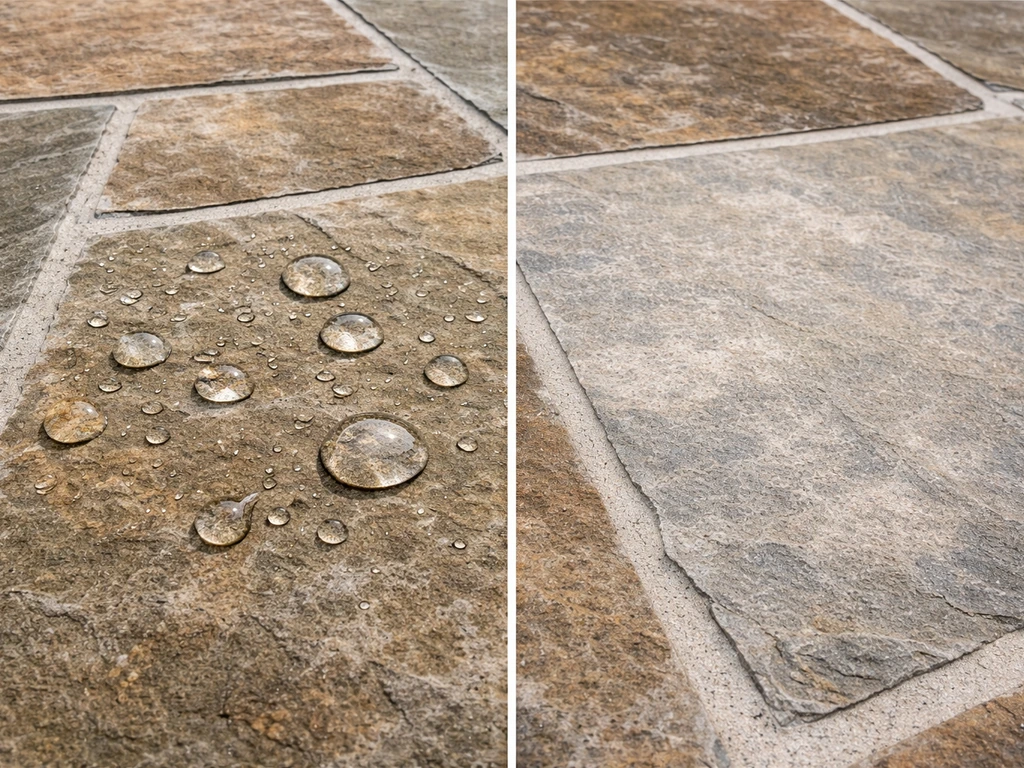
A properly applied penetrating sealer should leave your flagstone looking very close to how it did before, with water beading up on the surface and spills giving you time to wipe them away. Here's what can go sideways and what to do about it.
White hazing or blushing
This is the most common complaint after sealing. It appears as a milky or whitish cloudiness on the surface, sometimes called blooming or blushing. The ASCC and DCC sealer selection guide links this directly to trapped moisture or vapor, application in cold or damp conditions, incompatible products, or solvent entrapment between coats applied too quickly. If you see hazing, the stone was likely not dry enough when you applied the sealer, or the ambient temperature was too low for the product to coalesce properly. Mild cases sometimes clear up as the stone fully dries and cures over a few days. Severe cases may require stripping and restarting with properly prepared, dry stone.
Darkening
Some penetrating sealers, especially solvent-based products, temporarily darken the stone during application. This usually lightens as the solvent evaporates and the sealer cures. If you wanted a natural, unchanged appearance, this can be alarming at first. Wait the full cure period before judging the final look. Color-enhancing sealers are designed to maintain a richer, slightly darker tone permanently, so if you used one of those, the deepened color is the intended result.
Peeling or flaking
Peeling is almost always a topical sealer problem, not a penetrating sealer problem. Penetrating sealers don't form a film, so there's nothing to peel. If you see peeling, either a film-forming product was used, or an old topical sealer is failing and lifting off. Strip the failing film, clean the surface thoroughly, and apply a penetrating sealer correctly.
Slippery surface
Penetrating sealers don't reduce traction because they don't change the surface texture. If your patio feels slippery after sealing, you either used a topical product or there's excess sealer sitting on the surface that wasn't wiped off. Products that publish skid resistance testing data (such as ASTM E303 results) give you a concrete benchmark to check against. For any patio with steps or pooling water, always confirm slip resistance before choosing a sealer.
Sealer not beading water
If water isn't beading after the sealer has cured, either the product didn't penetrate properly (often from applying to damp stone), or the stone absorbed so much sealer that a second coat is needed to reach full protection. Do the water-bead test across multiple areas of the patio. If beading is inconsistent, apply another coat to the thin areas.
Maintenance after sealing and when to reseal
A good penetrating silane/siloxane sealer is low maintenance but not zero maintenance. The performance data from products like Armor SX5000 claims up to 7 to 10 years before a recoat is needed under normal exterior conditions. That's a realistic target for a quality product on a properly prepped surface, though heavily trafficked patios or those in harsh climates may need attention at the 5 to 7 year mark.
Annual maintenance
- Sweep the patio regularly to remove organic debris (leaves, dirt, pollen) that can hold moisture against the stone and encourage biological growth.
- Clean the surface once or twice a year with a pH-neutral stone cleaner. Avoid acidic or alkaline cleaners that can degrade the sealer chemistry over time.
- Treat any algae or moss growth promptly with a diluted bleach solution before it establishes deeply. Follow with a thorough rinse.
- Inspect mortar joints or sand-set joints annually. Cracked or eroded joints let water bypass the sealed stone surface and work underneath.
- Do the water-bead test each spring. Drip water on the surface in several spots. If it absorbs within 30 seconds rather than beading, the sealer is thinning and a new coat is due.
Resealing
When it's time to reseal, the prep process is the same as the first application: clean, treat biological growth if present, remove any efflorescence, rinse thoroughly, and wait for complete drying. Because penetrating sealers don't leave a surface film, you don't need to strip anything before reapplying. Just make sure the new product is compatible with whatever you used originally. When in doubt, use the same brand and formula, or contact the manufacturer to confirm compatibility before mixing chemistries.
If you're evaluating sealers for other natural stone patios alongside flagstone, the considerations for limestone, sandstone, and other porous stones follow similar logic, though each stone type has its own porosity and acid sensitivity profile that affects product choice. The core principles around breathability, penetrating chemistry, and proper prep apply across all of them.
Quick decision checklist before you buy
Run through these before purchasing any sealer to make sure you're getting the right product for your specific situation.
- Is your patio in a freeze-thaw climate? Choose a solvent-based silane/siloxane with published scaling resistance data (ASTM C672 rating of 0 is ideal).
- Is your stone highly porous (sandstone, limestone)? Buy more product than you think you need and plan for the lower end of the coverage range. Two coats are almost always necessary.
- Do you want the look to stay natural and matte? Stick to a standard penetrating sealer rather than a color-enhancing formula.
- Is there existing biological growth? Handle it with a bleach solution and thorough rinsing before sealing, not after.
- Is there efflorescence on the surface? Remove it with an appropriate efflorescence cleaner before sealing or you'll lock it in.
- Is there an existing sealer on the stone? Do the water-bead test. If the stone is still repelling water, assess compatibility before adding a new coat.
- What's your application temperature? Confirm the sealer's stated range (typically 55°F to 85°F) matches the forecast for the day you plan to apply.
- Have you budgeted for a patch test? Set aside a small section to test adhesion and appearance before committing to the full patio.
FAQ
Can I use a penetrating sealer on all types of flagstone, including very dense slate or bluestone?
Yes, in most cases, but coverage and number of coats can change. Denser stones absorb less, so you may see faster water beading and potentially need only one coat, while very porous limestone or sandstone may require extra product to reach full internal protection.
What finish should I choose with a best flagstone patio sealer if I want maximum natural look?
Look for a penetrating product that is described as not forming a film and does not “change texture.” If you want to minimize darkening, choose a non-color-enhancing formula, then judge final appearance after the full cure window listed on the label (not just 24 hours).
How do I tell whether an existing coating is topical (film-forming) or already a penetrating silane/siloxane?
Do the water behavior checks you would for readiness, but also watch longer-term. Penetrating sealers usually keep the stone breathable and do not create a surface peel film. If you see areas that later crack, flake, or look like a plastic layer, plan on stripping because a topical failure can telegraph through the new sealer.
Is it safe to seal right after pressure washing if the patio looks dry?
Not always. Pressure washing can force water deep into pores, so “surface dry” can be misleading. Verify with a paper-towel test (no moisture transfer) and, in humid or cool weather, extend drying to about 72 hours or follow the sealer label’s minimum temperature and dry-time requirements.
What’s the best way to prep if there’s algae but also dark staining from iron or rust?
Treat biological growth first, then reassess stains. Bleach-based biocide helps for algae and moss, but iron and rust often need an appropriate iron remover instead of repeatedly using bleach or strong acids. After each treatment, rinse thoroughly and let the stone fully dry before applying sealer.
Can I apply the sealer over white chalky deposits in the joints (efflorescence) if I use two coats?
No. White salts must be removed first. Sealing over efflorescence traps salts under the coating, so the problem typically returns or worsens even if you apply another coat.
What should I do if I get blooming or whitening after applying a penetrating sealer?
First confirm the stone was fully dry and that temperatures were adequate. Mild hazing can clear as curing completes, but if it persists, the likely causes include trapped moisture, cold application, or incompatible layered products. Severe cases may require removal and restarting with properly dried, cleaned stone.
Will a penetrating sealer make my patio more slippery when wet?
A correctly applied penetrating silane/siloxane usually preserves the original traction because it does not create a slick film or substantially change texture. If the surface feels slippery, the more likely causes are excess sealer left on top or the use of a topical product, so recheck which chemistry you bought and whether you wiped off any puddling.
How can I estimate how much best flagstone patio sealer I need for my patio?
Use porosity as your multiplier. For very porous stones, plan for lower coverage and budget extra for a first coat that soaks in. Run your numbers using the product’s stated coverage ranges, then round up to account for seams, edges, and uneven absorption across different flagstone pieces.
How many coats should I apply with a penetrating silane/siloxane sealer?
Most patios are protected with one coat, but porous flagstone often benefits from a second coat to ensure uniform internal saturation. Decide by checking water beading across multiple spots after the first coat fully cures, then apply additional coats only where absorption remains too high.
Do I need to strip the stone when it’s time to reseal a penetrating sealer?
Usually no, because penetrating sealers do not form an external film. You do need the same core prep steps, including cleaning and drying, and you must confirm compatibility with what’s already there, since mixing incompatible chemistries can reduce adhesion or cause blotchy performance.
Can I seal if rain is forecast soon after application?
Avoid it. Penetrating sealer still needs time to cure in the stone, and early rain can interfere with performance. Plan to apply when you can meet the label’s rain-free window and allow sufficient drying time afterward, especially in humid or cool conditions.