Slate can be a genuinely excellent patio material, but only when you pick the right grade, finish, and thickness, and back it up with proper installation and sealing. Get those things right and you have a patio that looks stunning, handles foot traffic well, and lasts decades. Get them wrong, especially the freeze-thaw piece or the finish choice, and you end up with shaling, cracked tiles, or a slippery surface that becomes a liability in wet weather. So yes, slate is a good choice for a patio in many situations, but it is not a forgiving material that will cover up shortcuts.
Is Slate a Good Choice for a Patio? Pros, Setup, and Tips
Nolan Ellison
10 Jul 2026
Quick verdict: is slate a good patio material?
For most climates and budgets, slate earns a solid recommendation with caveats. It is dense, naturally textured, and visually distinctive in a way that poured concrete or basic brick simply cannot match. When sourced well, a high-grade slate patio will handle rain, UV exposure, and heavy foot traffic without complaint. The caveats are real though: freeze-thaw climates demand low-absorption slate and a drainage-first installation, smooth or honed finishes become dangerously slippery outdoors, and budget slate from questionable sources can delaminate within a few seasons. If you are in a mild-to-moderate climate and willing to spend a bit more on material and installation, slate is hard to beat for character and longevity. If you are in a harsh northern climate and want minimal maintenance, porcelain or a well-chosen flagstone might be the more practical call.
Slate outdoors: durability, weather, and freeze-thaw considerations
The biggest performance question for outdoor slate is freeze-thaw resistance, and it comes down almost entirely to water absorption. Slate is graded under ASTM C406 and characterized under ASTM C217 (the standard family for weather resistance of slate), with key properties including water absorption, depth of softening, and breaking load. The lower the absorption rate, the less water the slate takes on, the less there is to freeze and expand inside the stone or behind the tile. High-absorption slate in a wet climate is a recipe for delamination, which is the familiar peeling-apart of the layers that slate's natural cleavage makes it prone to. Real-world accounts from installers back this up: mortar beds that trap water under slate tiles can shatter them in the first hard freeze, and lower-grade slate exposed to repeated freeze-thaw cycles shows layer separation within a few years.
If you are in a climate that sees hard freezes, specifically USDA zones 6 and colder or anywhere with sustained sub-freezing winters, insist on low-absorption slate and a dry-laid or well-drained mortar installation. Do not assume that any slate tile sold at a home improvement store meets the threshold. Ask for ASTM C406 grade data or water absorption test results before you buy. For mild climates, a wider range of slate grades will perform acceptably, but quality still matters for longevity.
Beyond freeze-thaw, slate holds up well outdoors. It resists UV fading better than composites, handles moderate impact, and does not soften or degrade in rain and snow the way some softer sedimentary stones do. This Old House describes slate as nearly impervious to rain and snow when properly sealed, which aligns with what you see in well-maintained slate patios that are 30 or 40 years old.
Slip resistance, comfort, and appearance over time
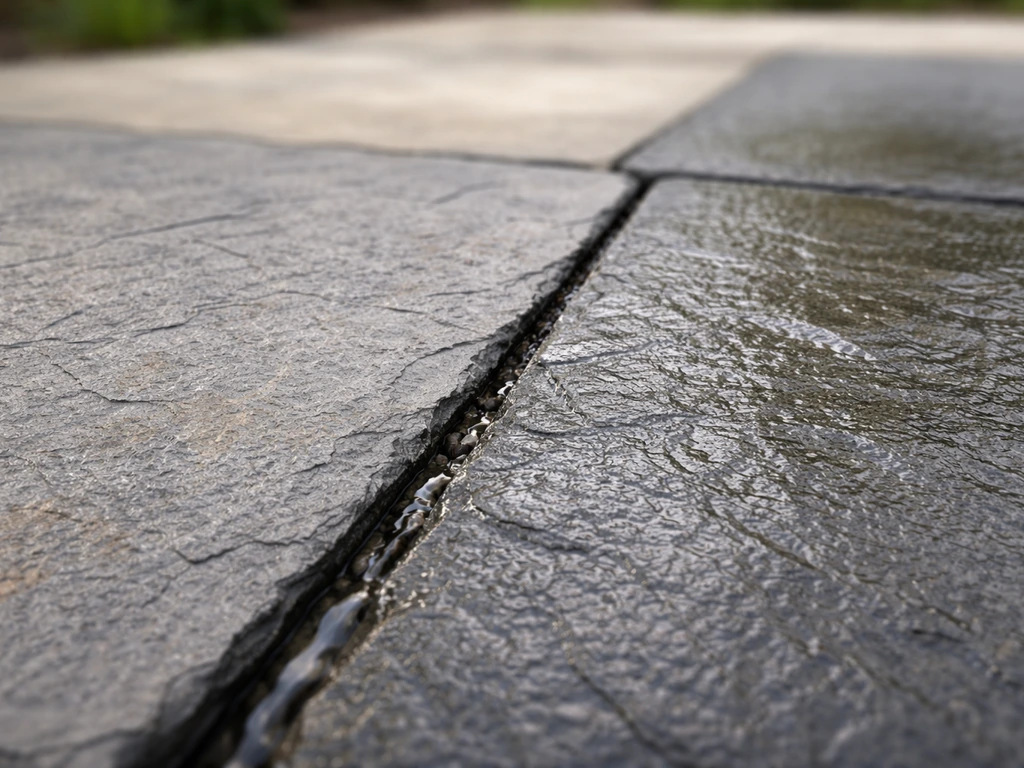
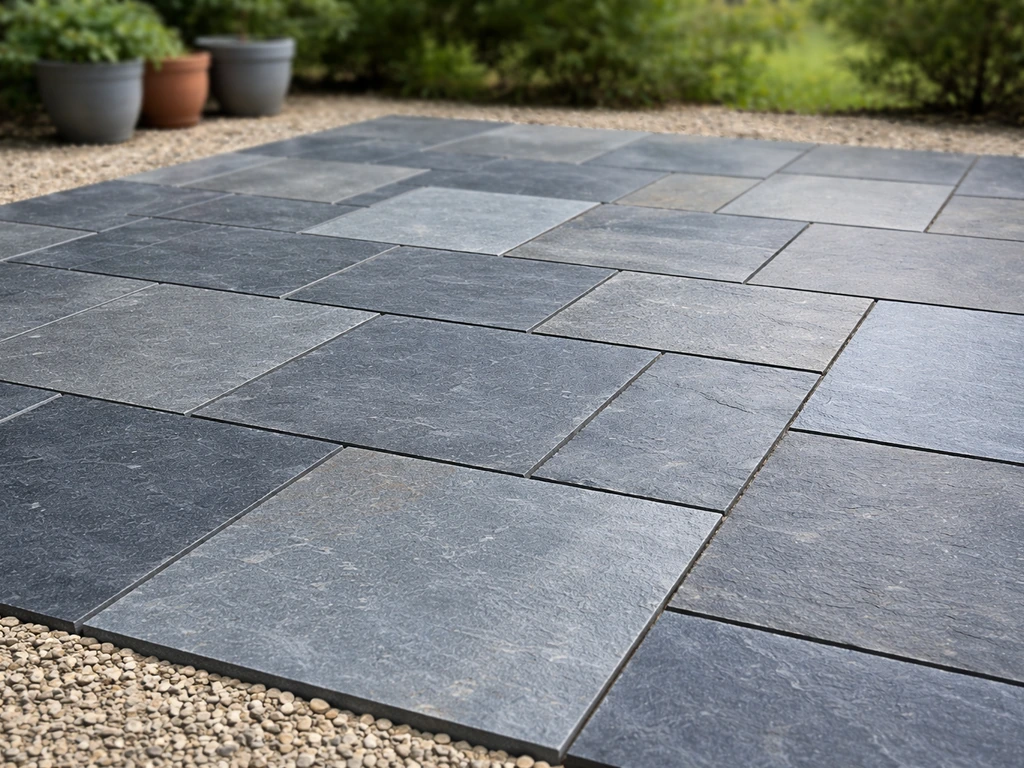
Slip resistance on a patio is not optional, and this is where finish choice makes or breaks slate as an outdoor surface. Naturally cleft slate (the rough, uneven surface that comes from splitting along natural planes) has excellent wet traction. Suppliers like Sheldon Slate publish ASTM C1028 coefficient of friction test results, and naturally cleft slate consistently performs well under wet conditions. For that reason, ASTM C1028 is the standard test method used to determine the coefficient of friction of ceramic tile and similar surfaces under both wet and dry conditions. Honed or polished slate, on the other hand, becomes genuinely slippery when wet and should never be used on an outdoor patio. If your slate sample feels smooth and even, it is the wrong finish for outside use. Stick to naturally cleft or calibrated-cleft finishes with visible texture.
Comfort underfoot is another consideration. Slate absorbs and releases heat more moderately than concrete or porcelain, so it tends not to get as scorchingly hot in direct summer sun, though it will still warm up on a south-facing patio in peak summer. The natural texture variation also means it is more forgiving on bare feet than a perfectly smooth surface.
Appearance over time depends heavily on whether you seal the slate and how well you maintain it. Unsealed slate weathers to a more matte, faded look, which some people love and others do not. Sealed slate retains more of its saturated color. Either way, biological growth, meaning moss, lichen, and algae, is the main visual problem on older slate patios, particularly in shaded or damp spots. It is manageable with seasonal cleaning but it will come back if conditions favor it. The slate itself does not stain easily if sealed, but grout joints are more vulnerable.
Choosing the right slate: tiles vs slabs, finish, thickness, and color
Slate comes to market in two broad forms: cut tiles (consistent rectangular sizes, often 12x12, 16x16, 24x24 inches) and irregular slabs or flagging (natural-shaped pieces, set with wider joints or tight-fitted like a puzzle). Both work for patios, but they have different installation demands and looks. Tiles give you a more structured, formal appearance and are easier to lay to a consistent slope. Irregular slabs give a more naturalistic, handcrafted look and are often preferred for larger garden-style patios.
For freeze-thaw climates, thickness matters. A general rule of thumb is to use slate at least 3/4 inch thick for patio applications, with 1 inch or more preferred for heavier foot traffic areas or slab-style pieces spanning wider joints. Thinner tiles, particularly the cheap 3/8-inch imports, are more vulnerable to cracking under both freeze-thaw stress and point loading from furniture legs.
Finish should always be naturally cleft for outdoor use, as discussed above. Color and quality are related: high-quality slate from established quarries (Vermont, Virginia, Pennsylvania, and parts of Brazil and China) tends to be more uniform in color and more consistent in thickness and absorption. Low-cost imports can look beautiful in the showroom and then fade dramatically or absorb water at rates that make them unsuitable for cold climates. If you are comparing patio slabs broadly, the same quality-sourcing principle applies across all natural stone options.
- Choose naturally cleft finish only for outdoor use (no honed, gauged-smooth, or polished)
- Minimum 3/4 inch thickness for tile; 1 inch or more for slab/flagging pieces
- Request ASTM C406 grade or water absorption test data in freeze-thaw climates
- Source from reputable quarries (Vermont, Virginia, Pennsylvania, quality Brazilian or Chinese suppliers with documentation)
- Match the format (tile vs irregular slab) to your design intent and installation skill level
Installation essentials: base, drainage, setting, grouting, and edges
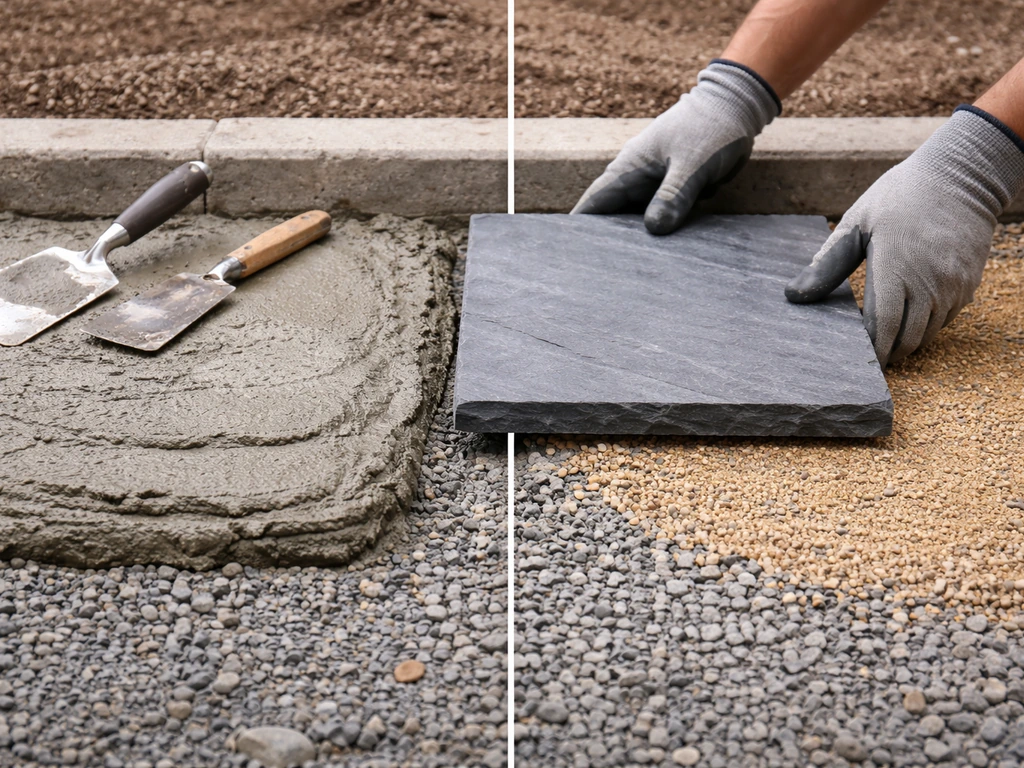
The base is everything with outdoor slate. The two main approaches are dry-laid (slate set over compacted gravel and sand) and mortar-set (slate set in a mortar bed over a concrete slab or prepared substrate). Dry-laid is more forgiving in freeze-thaw climates because it allows movement and drainage rather than trapping water under a rigid mortar bed. If you go mortar-set, the concrete slab needs to be sloped for drainage, typically 1/8 to 1/4 inch per foot away from the house, and the system needs movement joints to accommodate thermal expansion. JLC Online guidance on outdoor tile installation specifically addresses sloping mortar beds and drainage swales as non-negotiable for freeze-thaw durability.
For mortar-set tile installation, use a latex-modified thin-set rated for exterior use and natural stone. Standard grey thin-set without a latex additive can fail at the bond in outdoor freeze-thaw conditions. Set tiles with back-buttering to maximize coverage, aiming for at least 95% contact on the back of each tile.
Grouting outdoor slate is where a lot of DIYers get tripped up. Cement-based grouts are porous and can become a source of efflorescence (that white powder that leaches out over time as mineral salts migrate to the surface). Using an epoxy-based grout system, such as LATICRETE SPECTRALOCK or similar products, significantly reduces or eliminates this problem. If you use cement grout, keep joints at a minimum of 1/8 inch (MSI recommends a minimum joint width to allow for movement and prevent cracking), and seal the grout promptly and thoroughly.
Edge details are easy to overlook but matter for both appearance and safety. Bullnose slate pieces or a small chamfered edge on exposed cuts prevent chipping and create a cleaner transition to the lawn or garden bed. Avoid leaving sharp raw-cut edges exposed on high-traffic perimeters.
- Excavate and compact a gravel base of at least 4 inches (6 inches in freeze-thaw zones) before any setting bed
- Slope all setting beds and surfaces a minimum of 1/8 inch per foot away from structures for drainage
- For mortar-set installations, use a concrete slab as the substrate with expansion/movement joints every 8 to 10 feet
- Use latex-modified exterior thin-set and back-butter each tile for maximum bond
- Grout with epoxy-based grout to minimize efflorescence, or seal cement grout thoroughly within 48 to 72 hours of installation
- Install bullnose or chamfered edges on all exposed perimeter cuts
- Allow the full installation to cure before walking on it (typically 72 hours minimum for mortar-set)
Maintenance and sealing: keeping your slate patio in good shape
Sealing is not optional for outdoor slate. To get the best slate patio sealer results, choose an impregnating sealer made for slate and apply it to clean, dry stone before and after grouting Sealing is not optional for outdoor slate.. The Natural Stone Institute describes the right products as impregnating sealers or repellents, not film-forming coatings. Impregnating sealers penetrate into the stone's pores and repel water and oil from within, rather than sitting as a surface coat that peels over time. Products like Dry-Treat's STAIN-PROOF are specifically formulated for this purpose and are designed to reduce both staining and efflorescence on slate. Apply sealer to clean, dry stone before grouting if possible, and again after grouting once everything is cured.
Re-sealing frequency depends on traffic, climate, and the sealer product. A quality impregnating sealer on a lightly used patio might last three to five years before needing a refresh. The easy test is to pour a small amount of water on the surface: if it beads up and sheets off, the sealer is still working. If it soaks in within a minute or two, it is time to re-seal. Clean the patio thoroughly before any re-seal application.
Day-to-day cleaning is straightforward. Sweep or blow off debris regularly to prevent grit from grinding into the surface. For general washing, use a pH-neutral stone cleaner diluted with water, not vinegar or acidic cleaners, which can etch slate and damage grout over time. For biological growth like moss or lichen, the Natural Stone Institute and extension-service guidance both point to seasonal cleaning with appropriate stone-safe treatments, applied in dry weather and brushed off after the recommended dwell time. Ignoring moss and lichen leads to staining that is much harder to remove later.
If efflorescence does appear as white chalky deposits on the surface or in grout lines, it can be treated with a diluted sulfamic acid cleaner (Fine Homebuilding recommends this approach as effective at dissolving mineral salt deposits without destroying grout). Rinse thoroughly after treatment and re-seal the affected area once fully dry. Efflorescence is more common in the first one to two years after installation as salts work their way out of the substrate and grout. It typically diminishes on its own over time but responds well to targeted cleaning when it does appear.
Slate vs the alternatives: how it stacks up and what it costs
Slate sits in a competitive field. Flagstone, porcelain tile, brick, and composite pavers all get used for patios, and each has a different set of trade-offs. Here is how they compare honestly across the factors that matter most for a patio decision.
| Material | Freeze-Thaw Performance | Slip Resistance | Maintenance | Installed Cost (rough range) | Best For |
|---|---|---|---|---|---|
| Slate (naturally cleft, high-grade) | Good with low-absorption grade and proper drainage | Excellent (cleft finish) | Moderate: seal every 3-5 yrs, clean seasonally | $15-$30+ per sq ft installed | Character-driven patios, mild to moderate climates |
| Flagstone (bluestone, limestone, quartzite) | Varies by stone type; bluestone and quartzite perform well | Good to excellent depending on texture | Similar to slate: seal and clean regularly | $15-$30 per sq ft installed (Forbes/Angi ranges) | Natural, irregular-look patios in most climates |
| Porcelain tile (outdoor rated) | Excellent: top products are frost-free rated (Belgard and others) | Good with textured/matte finishes | Low: rarely needs sealing, easy to clean | $12-$25 per sq ft installed | Cold climates, low-maintenance priority |
| Brick | Good with SW/SX grade brick; avoid lower grades in cold | Good (textured surface) | Low-moderate: occasional joint repair and cleaning | $10-$20 per sq ft installed | Traditional look, DIY-friendly |
| Composite/concrete pavers | Good: engineered for outdoor freeze-thaw | Good with textured surface | Very low | $8-$18 per sq ft installed | Budget-conscious, high-traffic areas |
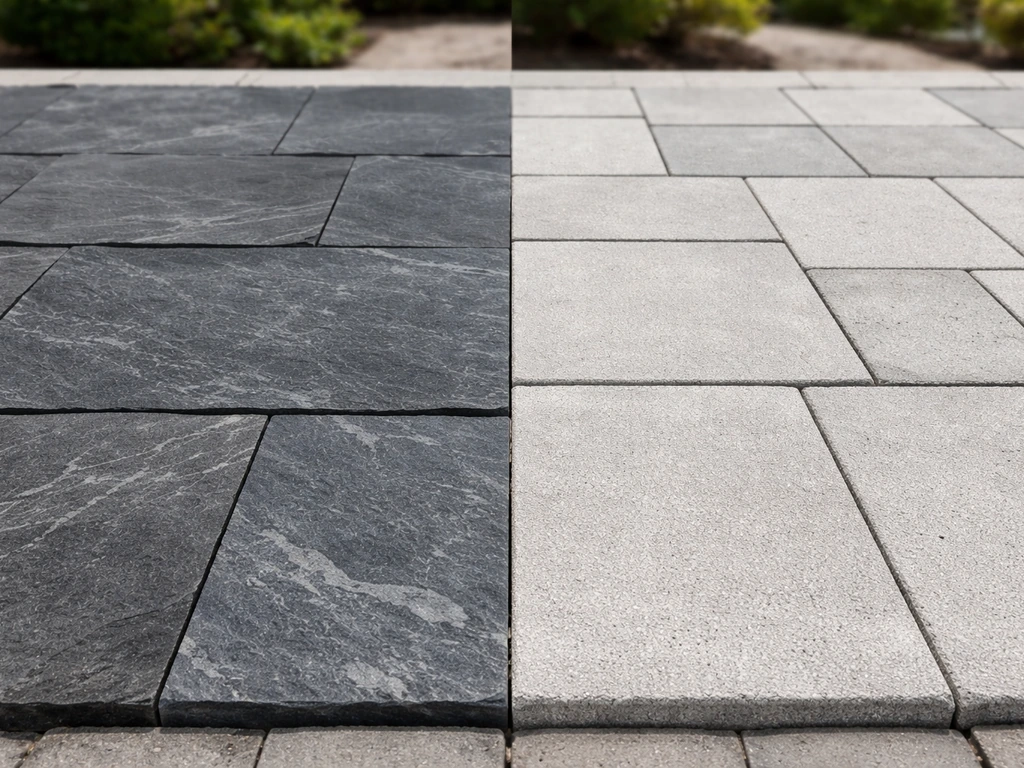
The honest comparison here is that porcelain outdoor tile beats slate on freeze-thaw reliability and low maintenance, which is why it has become so popular in cold climates. But it gives up the natural variation and depth of character that makes slate worth paying for. Flagstone is slate's closest competitor in terms of natural stone aesthetics, and bluestone or quartzite flagging in a similarly dry-laid installation will perform comparably or better in hard-freeze climates. If you are choosing between slate and other slab materials more broadly, the decision often comes down to the specific look you are after and how much maintenance you are prepared to do.
On cost, installed slate typically runs $15 to $30 or more per square foot depending on material grade, labor market, and installation complexity. That is in line with quality flagstone and above mid-range porcelain tile or brick. The material itself is not cheap, and cutting and setting irregular slate slabs adds labor. Where slate wins on value is longevity: a properly installed, well-maintained high-grade slate patio can genuinely outlast composites or lower-grade porcelain by decades.
Is slate right for your patio? A quick decision checklist
Run through this before you commit. If most of these line up, slate is a strong choice for your project.
- Your climate is mild to moderate, or you are willing to specify low-absorption, ASTM C406-graded slate for a freeze-thaw zone
- You will use naturally cleft finish only (no honed or polished slate outdoors)
- Your installation will include a properly sloped, well-drained base, not a flat mortar bed with no drainage path
- You are prepared to seal the stone before or shortly after installation, and re-seal every few years
- Your budget comfortably covers $15-$30+ per square foot installed
- You value natural character and appearance variation over the uniformity of engineered materials
- You are sourcing from a supplier who can provide absorption test data or ASTM grade documentation
If your climate is very harsh and freeze-thaw reliability is the top priority, or if you want something you can almost entirely ignore once installed, consider porcelain outdoor tile or a well-sourced flagstone. Slate rewards a little attention and the right setup with a patio surface that is genuinely hard to replicate with anything else.
FAQ
Can I use slate on a patio that gets a lot of snow, ice, and frequent freezing?.
Yes, but only if you keep it aligned with freeze-thaw rules. Use naturally cleft (not honed or polished) slate, ensure low water absorption, and prioritize drainage so water cannot sit behind or beneath the tiles. For an entrance with more point loads from stiletto heels or heavy carts, consider thicker pieces (about 1 inch minimum) and avoid any mortar approach that traps water.
What de-icer is safest for a slate patio in winter?
Avoid de-icing products that are harsh on stone or grout. Salt-based rock salt can accelerate deterioration of mortar and promote recurring efflorescence, and some specialty pellets can leave residue that builds up texture. If you need ice melt, choose a stone-safe, lower-salt option and rinse with water after storms, then re-check sealer performance using the water-bead test.
How can I tell if the slate I’m buying will be slippery when wet?
Your best indicator is how it behaves after you wet it. If you can see it darken evenly and it still feels grippy when wet, it is usually a better outdoor choice. If it looks very smooth, or it feels slick during a controlled hose test, reject it, even if the sample looks good dry.
Can slate tiles be installed over an existing patio surface?
Yes, slate can be installed over an existing base, but you must confirm stability and drainage first. Do not set new slate directly over soft pavers, deteriorating mortar, or any surface that allows water pooling. Most failures come from an inadequate slope and trapped moisture, so rebuild the base where needed and verify that the finished surface drains away from the house.
Do I really need epoxy grout for slate, or is cement grout fine?
For outdoor slate, grout choice should match the movement and porosity of the system. Epoxy grout can reduce efflorescence risk, but it can be harder to clean if you smear it during installation, so plan careful tooling. If you use cement grout, keep joints appropriately sized (minimums matter) and be ready for more frequent cleaning and earlier resealing.
Why does moss or lichen keep coming back on my slate patio?
Start with the sealer, but also plan for the edge and joint details. Seal the stone, then focus on maintaining grout joints because they are more porous than the slate itself. If you see moss returning in the same spots, adjust maintenance timing (clean in dry weather) and consider improving shade and airflow rather than relying on repeated chemical treatments.
What happens if I use the wrong type of sealer on slate?
Yes, but do not assume sealer is permanent. If you apply film-forming coatings, they can peel and create slick patches when wet. Use an impregnating sealer made for slate, apply to clean, dry stone, and test water absorption periodically to decide when to refresh.
Will slate color look different after sealing, and is uneven color a red flag?
A small color change is normal after sealing or during the first season of weathering, but dramatic fading or blotchy dark spots suggest either inconsistent stone porosity or improper surface prep. Wet a few leftover pieces and compare them side by side with the installed area, then ask for the sealer to match the stone and confirm the patio was fully cured before sealing.
Can I replace a cracked slate tile later, and will it blend in?
You typically can, but you should avoid reusing thin-set or grout that has been contaminated or skinned over. For replaced tiles, match the slate finish (texture), keep joint widths consistent, and use an exterior-rated setting material. After replacement, reseal the surrounding area once cured, and test traction because even correctly chosen slate can feel different when edges or clefts are damaged during removal.
What’s the safest way to clean slate day to day without damaging it?
Do not use vinegar, lemon juice, or other acids for routine cleaning. Even if it looks effective on stains, acidic cleaners can etch slate and weaken grout, which increases future water uptake and biological growth. Use a pH-neutral stone cleaner, and if you need stain removal, treat only the affected areas and rinse thoroughly.