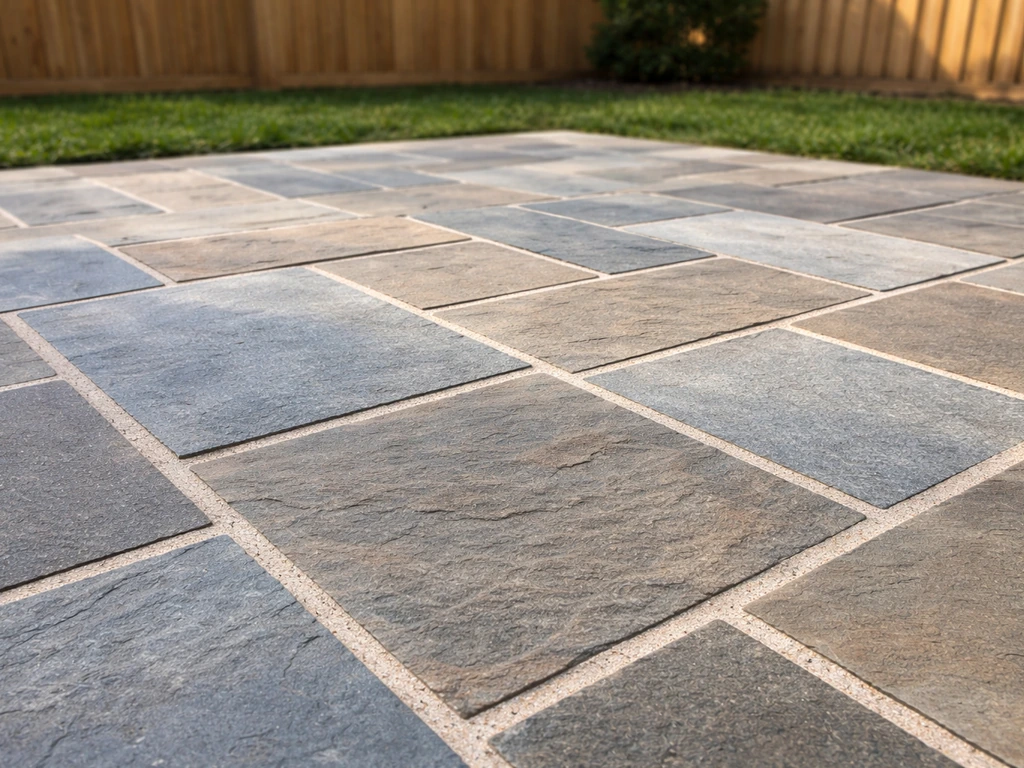
For most backyards, bluestone or flagstone gives you the best combination of durability, looks, and long-term value. If you are trying to decide between patio materials and still want the best loose stone for patio use, compare how well each option performs with your base prep and local weather bluestone or flagstone. Bluestone handles freeze-thaw cycles well, comes in consistent thicknesses that make installation straightforward, and stays slip-resistant with a natural or brushed finish. Flagstone (typically sandstone, limestone, or quartzite depending on your region) offers more character and often costs less per square foot, but it demands careful base prep and thicker slabs to avoid cracking. Which one wins for you comes down to your climate, how much prep work you're willing to do, and your budget for both materials and long-term maintenance.
Best Stone for Backyard Patio: Choose the Right Pavers
How to choose the best patio stone for your climate
Climate is the single biggest factor that narrows your stone choices before you ever think about color or texture. If you're in a freeze-thaw zone (roughly USDA hardiness zones 3 through 6, and parts of 7), you need stone with low water absorption. When water gets into porous stone and freezes, it expands and can crack or spall the surface over a few seasons. The industry standard for evaluating this is ASTM C1026, a freeze-thaw cycling test used to qualify stone and tile products. When you're shopping, ask your supplier whether the stone has been tested to this standard, or at minimum ask for the water absorption rate. For freeze-thaw climates, target water absorption below 3 percent. Bluestone, quartzite, and dense granite all hit that mark comfortably. Softer limestone and some sandstones do not.
In wet climates with heavy rainfall but minimal freezing (think the Pacific Northwest or Gulf Coast), drainage and slip resistance matter more than freeze-thaw ratings. You want a stone that stays textured when wet and doesn't turn into a skating rink after rain. In hot, sunny climates like the Southwest or Southeast, thermal mass and color stability are the concerns: lighter stones like travertine or buff limestone stay cooler underfoot in direct sun, while dark granite and slate can get uncomfortably hot. Pool-adjacent areas combine the worst of both worlds: constant moisture plus bare feet, which means slip resistance is non-negotiable and you should be specifying textured finishes regardless of stone type.
| Climate Type | Best Stone Choices | Watch Out For |
|---|---|---|
| Freeze-thaw (Zones 3–6) | Bluestone, quartzite, dense granite | Porous limestone, soft sandstone, low-grade flagstone |
| Hot and sunny (Southwest, Southeast) | Travertine (filled), limestone, light granite | Dark stones absorbing heat; unsealed travertine staining |
| Wet/rainy, mild winters | Flagstone, slate, bluestone with brushed finish | Polished or honed surfaces getting slippery |
| Pool surround (any region) | Brushed limestone, tumbled travertine, brushed bluestone | Polished or honed finishes; very dark heat-absorbing stones |
| Humid subtropical | Granite, quartzite, dense bluestone | Travertine if unsealed; porous stones that harbor mold/algae |
One thing I'd stress: don't rely on a generic "outdoor rated" label on a stone. Ask specifically whether it was tested for freeze-thaw resistance or what the water absorption number is. Suppliers who can't answer that question are usually selling landscape-grade material that may look fine for a year or two and then start flaking.
Stone types and what they're each best at
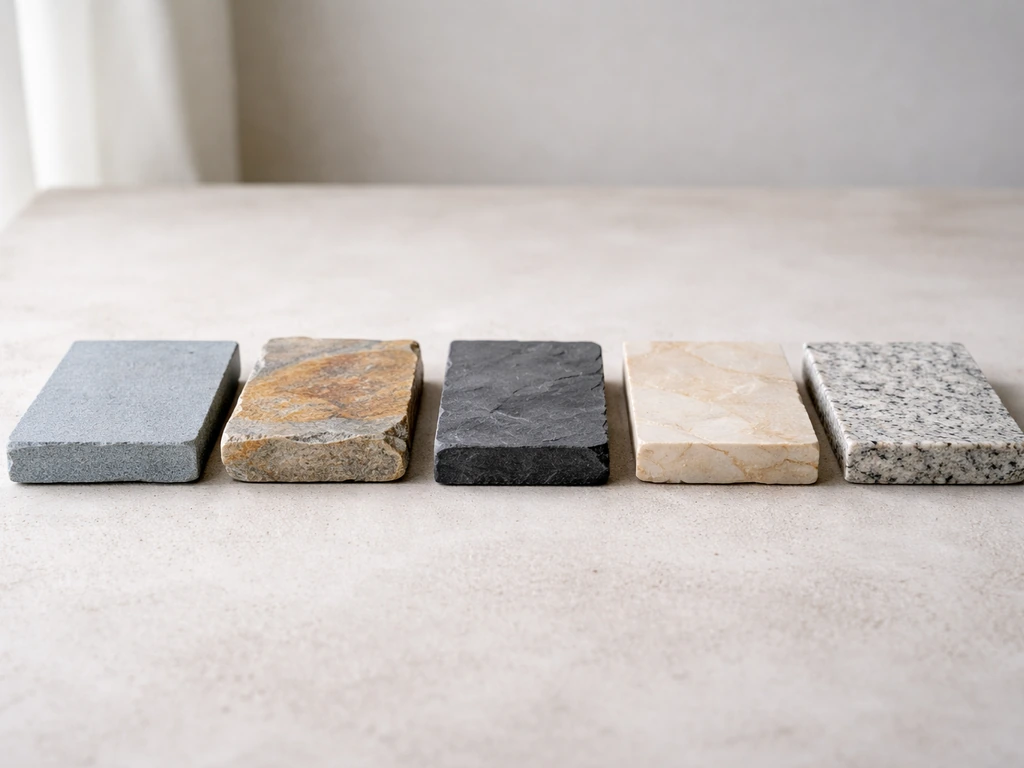
Here's an honest breakdown of the main stone types you'll encounter. Each has a real use case where it excels, and real conditions where it underperforms.
Bluestone
Bluestone (a dense form of sandstone or basalt depending on region, with Pennsylvania bluestone being the most common in the eastern US) is the go-to recommendation for good reason. It's hard, dense, naturally slip-resistant with a thermal or natural cleft finish, handles freeze-thaw well, and looks clean and contemporary without trying too hard. It comes in regular rectangular cuts (for a more formal look) and irregular flagging (for a natural look). It's not the cheapest option, typically running $4 to $8 per square foot for the stone alone, but it holds up with minimal maintenance.
Flagstone
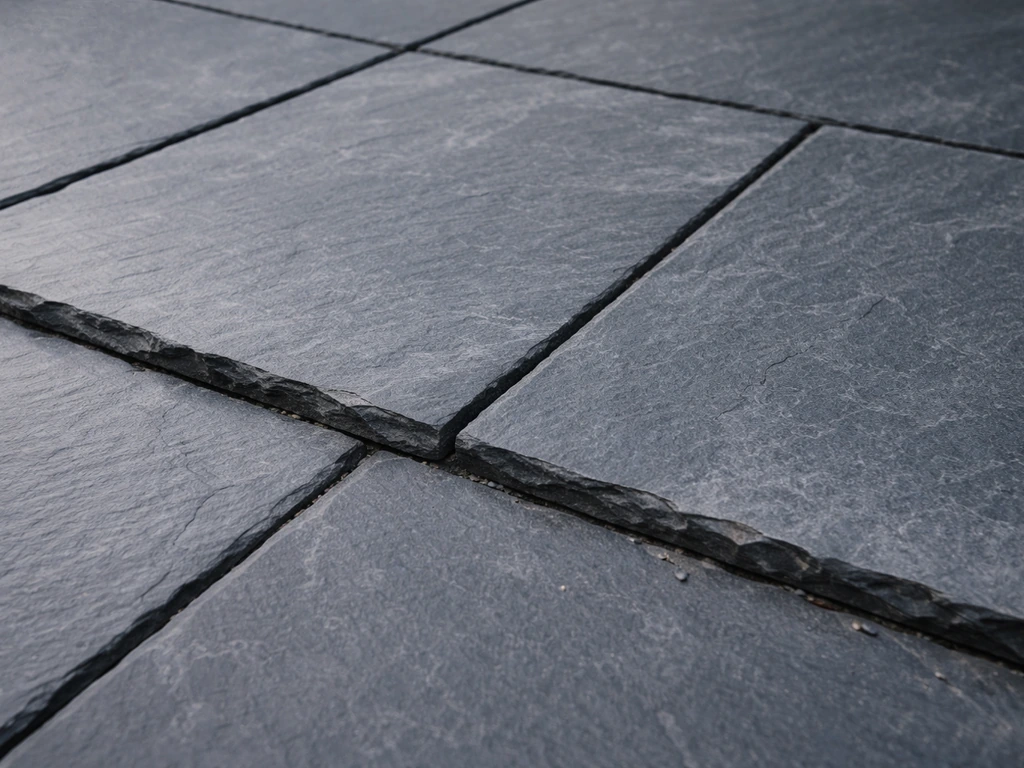
"Flagstone" is actually a shape description, not a specific stone type. You'll find flagstone cut from sandstone, limestone, quartzite, or slate depending on your region. The irregular shapes and natural edges are what most people picture when they think "flagstone patio." The wide variation in quality is the catch: quartzite flagstone is extremely durable and hard; sandstone flagstone varies hugely from one quarry to the next and some softer grades won't survive a decade of freeze-thaw. When shopping flagstone, look for pieces at least 1.5 inches thick, and buy from a supplier who can tell you the stone species, not just "flagstone." If you want to go further into the rocks and aggregate side of patio planning, there's a lot of overlap with topics like the best rocks for a patio and best crushed stone for a patio when it comes to base materials and loose-fill options.
Slate
Slate has a beautiful layered texture and excellent density, but it's more temperamental than bluestone. Lower grades of slate will flake and delaminate over time, especially in freeze-thaw climates, because the layered structure can trap moisture. Brazilian slate (often sold as "multicolor slate") is the riskiest. Pennsylvania or Vermont slate is much denser and performs better outdoors. Slate is genuinely slip-resistant in its natural cleft form, which makes it useful near water. It tends to cost slightly less than bluestone and works well in shaded patios where a darker, cooler palette suits the space.
Limestone and Travertine
Limestone is the right call for warm, dry climates. It's softer and more porous than bluestone or quartzite, which means it can erode and stain more easily in wet or freezing conditions, but in the right environment it's beautiful, comfortable underfoot (it stays cooler than granite in full sun), and less expensive. Travertine is a type of limestone with a characteristic hole-and-pit texture. For outdoor use, always buy "filled and honed" travertine, where the voids are filled with grout or resin so water and debris don't accumulate. Even filled, travertine needs sealing in any climate with moisture or freeze risk.
Granite Pavers
Granite is arguably the most durable natural stone you can put on a patio. It's extremely hard, very low water absorption, resistant to staining, and available nearly everywhere. The downsides: it's heavy, harder to cut yourself, and polished granite gets dangerously slippery when wet, which is why you almost always want a flamed or brushed finish for outdoor use. Granite cube pavers (also called setts) are popular for driveways and edging but can feel uncomfortable underfoot for large barefoot patio areas because of their irregular top texture.
Porcelain and Natural Stone Pavers: A Quick Comparison Note
You'll also see large-format porcelain pavers marketed alongside natural stone. They're worth knowing about: they have essentially zero water absorption, consistent sizing, and very high DCOF wet slip resistance ratings when textured. They're not natural stone, but for pool decks or high-moisture areas they're genuinely competitive. The trade-off is that they look manufactured because they are, they're harder to repair if one cracks, and they don't age as gracefully as real stone.
| Stone Type | Freeze-Thaw Rating | Slip Resistance (Natural Finish) | Maintenance Level | Typical Cost (Material Only, per sq ft) | Best For |
|---|---|---|---|---|---|
| Bluestone (PA) | Excellent | Good (cleft/thermal) | Low | $4–$8 | Most regions, general patios |
| Quartzite Flagstone | Excellent | Good | Low | $3–$6 | Budget freeze-thaw climates |
| Slate (PA/VT grade) | Good | Excellent | Medium | $3–$6 | Shaded patios, wet climates |
| Limestone | Fair (avoid in freeze zones) | Medium | High (sealing needed) | $2–$5 | Warm/dry climates, pool decks |
| Travertine (filled) | Fair | Good (tumbled/brushed) | High (sealing needed) | $3–$7 | Warm climates, pool surrounds |
| Granite (flamed/brushed) | Excellent | Excellent | Very Low | $5–$10 | High-traffic, pool areas, all climates |
| Sandstone Flagstone | Poor to Fair | Good | Medium | $2–$4 | Dry, mild climates only |
Thickness, base, and drainage: what actually makes stone patios last
The stone itself is only half the equation. I've seen expensive bluestone crack within three years because the base wasn't right, and I've seen modest sandstone flagging hold up for fifteen years because someone did the groundwork properly. The base is what determines longevity.
Stone thickness
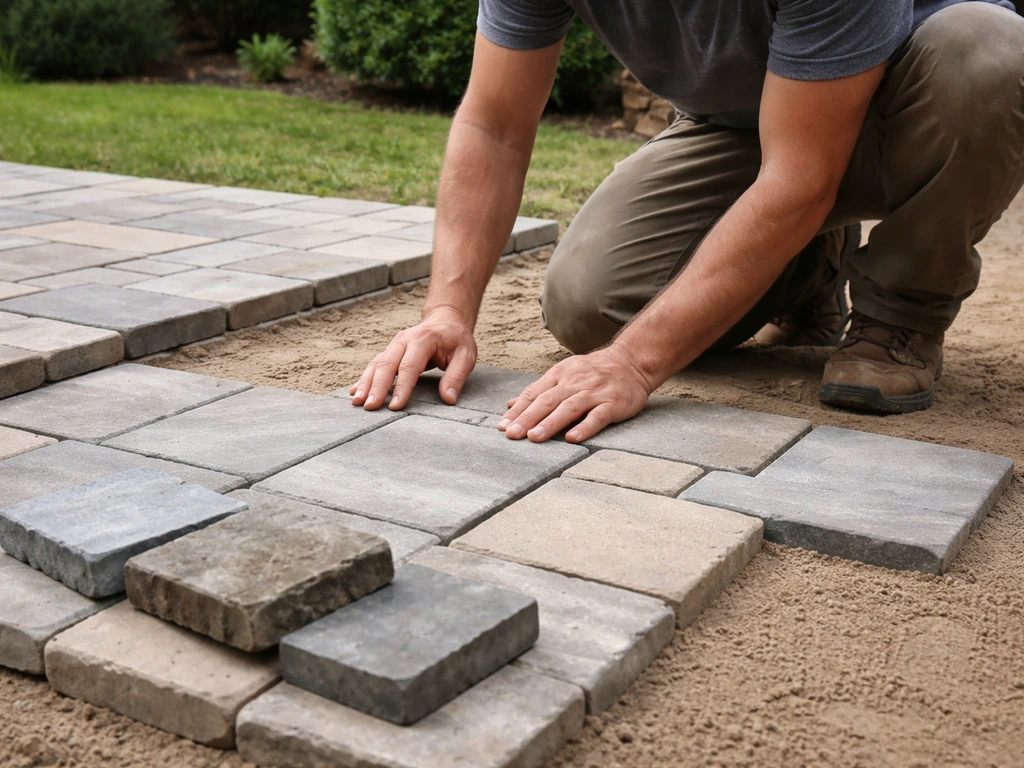
For a dry-set (sand-set) patio, use a minimum of 1.5 inches of stone thickness for foot traffic, and 2 inches or thicker if any vehicle or heavy load will cross the surface. Thinner pieces, especially irregular flagstone, will flex and crack when set on sand in anything but perfect conditions. For mortar-set applications, you can get away with 1 inch for cut stone because the mortar bed and slab underneath provide rigidity, but 1.5 inches is still the better choice.
Base construction
A proper base for a residential patio typically follows this layered structure: 4 to 6 inches of compacted crushed stone (gravel base, typically 3/4-inch clean or processed gravel), topped with 1 inch of coarse bedding sand (concrete sand, not play sand), then the stone on top. The crushed stone base provides drainage and load distribution. Skipping or skimping on this layer is the single most common reason patios fail early. In freeze-thaw climates, some professionals go to 8 inches of gravel base to get below the frost line and prevent heaving. If you're building over clay soil, add a layer of landscape fabric between the subgrade and gravel to prevent clay migration upward over time.
Drainage slope
Patios must slope away from the house at a minimum of 1/8 inch per foot, and ideally 1/4 inch per foot. Flat patios collect water, which accelerates freeze-thaw damage and promotes algae and moss growth. This slope needs to be built into the base, not just assumed to happen on the surface. Check your slope during base compaction with a long level, not after the stone is down.
Sand-set vs. mortar-set
Sand-set (dry-set) installation is more forgiving, more DIY-friendly, and easier to repair: individual stones can be lifted and reset if they settle unevenly. It works very well for irregular flagstone and for cut pavers. The trade-off is that joints are more prone to weed growth and ants, and very large or thin stones need extra support to avoid rocking. Mortar-set (wet-set) installation is more permanent, better for formal designs with tight joints, and required for certain very thin stone. But mortar doesn't flex, so if your base moves at all (common in freeze-thaw climates), you get cracked joints and eventually cracked stone. If you're in a freeze-thaw zone and setting flagstone, dry-set over a proper gravel base is almost always the more durable long-term choice.
Slip resistance, comfort underfoot, and finishing choices
Finish is a decision that most homeowners underestimate until someone slips. The tile and stone industry uses Dynamic Coefficient of Friction (DCOF) testing under ANSI A326.3, with a threshold of 0.blank" rel="noopener noreferrer">42 for wet surfaces intended to be walked on. In practical terms: polished stone almost always falls below that threshold when wet, honed stone is borderline, and blank" rel="noopener noreferrer">textured finishes (natural cleft, thermal, brushed, tumbled) typically exceed it comfortably.
For a pool patio or any area that will be wet regularly, always choose a textured finish. Tumbled travertine or limestone, brushed bluestone, thermally finished granite, or natural cleft flagstone all give you good barefoot traction. Avoid honed or polished finishes in these zones regardless of how good they look in the showroom. I've seen homeowners choose polished limestone for a pool deck because it photographed beautifully, and it became genuinely dangerous wet. For dry patio areas not near water, honed stone is fine and looks cleaner and is easier to sweep.
Comfort underfoot is a separate issue from slip resistance. Very rough textures (like heavy thermal granite or deeply irregular flagstone) can be uncomfortable for barefoot walking over long distances. A lightly brushed or natural cleft finish is usually the sweet spot: enough texture for grip without being abrasive. Travertine and limestone also stay cooler than granite or dark slate in direct summer sun, which matters a lot if kids are running around barefoot.
| Finish Type | Slip Resistance (Wet) | Comfort Barefoot | Maintenance Effort | Best Application |
|---|---|---|---|---|
| Natural cleft / split face | Excellent | Good | Low | Flagstone patios, general outdoor |
| Brushed / wire-brushed | Excellent | Very Good | Low | Pool decks, general patios |
| Tumbled | Excellent | Very Good | Low–Medium | Pool surrounds, Mediterranean style |
| Thermal (flamed) | Very Good | Fair (rough) | Low | Granite only; commercial/high-traffic |
| Honed (matte smooth) | Fair | Excellent | Medium (stains) | Dry patios only, not pool adjacent |
| Polished | Poor when wet | Excellent (dry) | High | Avoid for any outdoor wet area |
Budget and long-term maintenance: what it actually costs to own
Stone patios have a higher upfront cost than concrete or pavers, but most natural stone holds up for 20 to 40 years with reasonable maintenance, making the per-year cost quite competitive. The real budget variable is often the base work and installation labor, not the stone itself. A 300-square-foot patio might use $1,200 to $2,500 in stone, but with professional installation including proper base prep you're typically looking at $5,000 to $12,000 total depending on region and stone type. DIY installation is very achievable for sand-set flagstone and can cut labor costs in half.
Sealing: do you need it?
Dense stones like bluestone, quartzite, and granite generally don't need sealing, though a penetrating sealer can help bluestone resist the rust-orange staining that sometimes develops from iron in the stone. Limestone, travertine, sandstone, and slate all benefit from sealing in wet or freeze-thaw climates because their porosity makes them more vulnerable to water penetration, staining, and erosion. Use a penetrating (impregnating) sealer, not a topcoat sealer, for outdoor stone: topcoats peel and trap moisture underneath. Reapply penetrating sealer every 2 to 4 years depending on traffic and exposure. Test a small area first: some sealers darken stone significantly.
Weed control in joints
Weeds in patio joints are one of the most common long-term frustrations. For sand-set patios, polymeric sand (which hardens when wet and resists weed germination) is the best joint-filling option. Apply it correctly: sweep into joints dry, compact, then wet carefully per manufacturer instructions to activate the binder. It typically needs to be refreshed every 3 to 5 years. For mortared joints, weeds are less of an issue but cracked grout can become an entry point over time. A pre-emergent herbicide applied once or twice a year to sand joints slows weed growth significantly without damaging the stone.
Cleaning
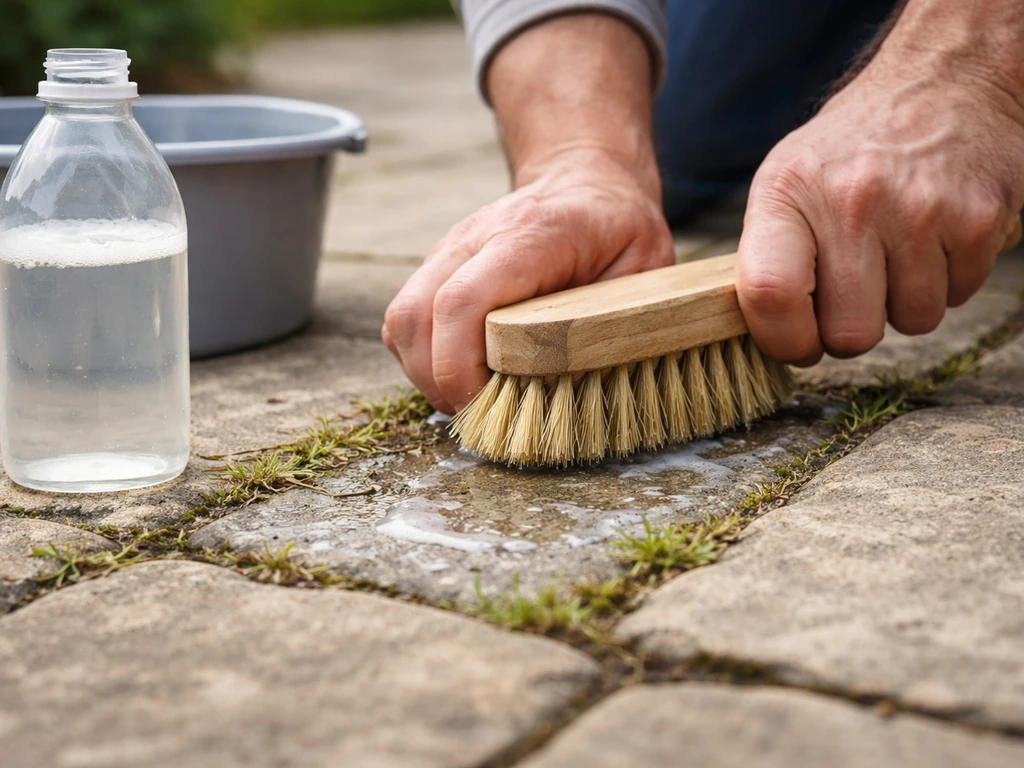
Annual cleaning with a stone-safe cleaner (pH neutral, no acid-based cleaners on limestone or travertine) and a stiff brush handles most patio maintenance. Avoid pressure washing flagstone or slate at high pressure because it can dislodge joint sand and erode softer stone surfaces. Moderate pressure at a low-angle nozzle is fine for granite and bluestone. For algae and moss (common in shaded or wet areas), a diluted outdoor bleach solution or dedicated stone algae cleaner works well. Let it dwell, scrub, and rinse thoroughly.
Installation tips and common mistakes to avoid
The most expensive mistakes in stone patio installation happen before a single stone is laid. Here are the ones I see repeatedly:
- Skipping base compaction. Dumping gravel and placing stone directly without compacting each lift leads to uneven settling within one to two seasons. Compact in 3-inch lifts with a plate compactor.
- Using the wrong sand. Coarse concrete sand (also called bedding sand or torpedo sand) is correct for the setting bed. Play sand or fine sand compresses unevenly and shifts. Don't substitute.
- Ignoring drainage before you start. If water pools in your future patio area before installation, it will pool under it afterward too. Grade the subbase to drain before building anything on top.
- Setting flagstone pieces that are too thin. Anything under 1.25 inches in a sand-set application will rock and crack, especially at corners. Sort your stone before you start and set thin pieces aside for edging or fill.
- Not dry-laying first. Arrange your flagstone pieces across the whole area before committing to placement. This lets you plan joint widths, balance piece sizes, and minimize awkward cuts.
- Leaving gaps too wide in mortar-set applications. Mortar joints wider than about 1.5 inches are prone to cracking. If you have a gap that large, fill it with a smaller stone piece rather than mortar alone.
- Setting stone right up against the house foundation without an expansion gap. Thermal expansion in summer and frost heave in winter need somewhere to go. Leave at least a 1/4-inch gap at the foundation and fill it with flexible caulk, not mortar.
- Forgetting edging restraints. For sand-set patios, soldier course edging or plastic paver restraints keep the perimeter stones from migrating outward over time. Without them, your patio slowly spreads and joints open up.
One practical tip for flagstone layout: work from the center out (or from a fixed straight edge like the house wall) so that cut pieces end up at the perimeter where they're less visible. This also makes it much easier to keep the overall pattern balanced. For pool patios specifically, always pitch the deck surface away from the pool coping (toward the yard or a drain channel) to keep dirty deck runoff out of the water.
Sourcing, colors, and matching your design goals
Where you buy your stone matters almost as much as what you buy. Big-box home improvement stores carry a limited selection, often lower-grade flagstone at inconsistent thicknesses. For any serious patio project, go to a local landscape stone yard or masonry supply yard. You'll get better quality, more variety, the ability to hand-select pieces, and staff who can tell you what species the stone is, where it came from, and how it performs in your local climate. For pool surrounds or when slip certification matters, ask for DCOF test data on the specific product.
How to estimate quantity
Measure your patio area in square feet (length times width, accounting for any irregular shape by breaking it into rectangles). Add 10 percent to your order for cuts and breakage on regular cut stone, and 15 percent for irregular flagstone where fitting waste is higher. For flagstone sold by the ton, a rough conversion is that one ton of 1.5-inch flagstone covers approximately 70 to 80 square feet depending on the stone density. Bluestone and slate are denser; sandstone covers slightly more area per ton.
Color and design coherence
Stone color varies within a species and even within a single pallet, so view samples in outdoor light before committing, not just under a store's fluorescent lights. Wet the sample too: many stones darken noticeably when wet, and if you seal the stone, it will look closer to its wet tone permanently. For design coherence, a common approach is to pull a dominant color from your home's exterior (siding, brick, trim) and choose a stone that complements rather than matches it. Warm tones (buff limestone, tan flagstone, brown sandstone) work with brick and warm-toned stucco. Cool tones (bluestone, gray granite, dark slate) complement white, gray, and painted exteriors. If you're mixing stone types, stick to the same color family and finish type across the whole area to avoid a patchy look.
For loose-fill areas adjacent to a stone patio (like a gravel path, dry-laid stepping area, or border fill), coordinating the crushed stone or aggregate color with your main patio stone creates a pulled-together look. Selecting the best aggregate for a patio helps you build the right base and drainage layer so the stone stays stable for years. This connects naturally to material decisions covered in topics like the best loose stone for a patio or the best aggregate for a patio, which deal with those fill and border zones specifically.
Your next steps
Here's a simple sequence to move from "I want a stone patio" to actually building one:
- Measure your space and sketch the footprint. Calculate square footage including any irregular edges. Note where the house wall, any pool edge, and low spots are.
- Identify your climate constraints. Are you in a freeze-thaw zone? Is this a pool-adjacent surface? This filters your stone choices immediately.
- Pick your stone type and finish. For freeze-thaw regions: bluestone or quartzite flagstone, natural cleft or brushed finish. For pool decks: brushed or tumbled limestone, travertine (filled), or brushed bluestone. For warm dry climates: limestone or travertine with tumbled or honed finish.
- Visit a local stone yard with your measurements. Ask about water absorption, freeze-thaw testing, and whether the specific product is suitable for outdoor use in your region. Bring home samples and look at them wet and dry.
- Plan your base. Mark out the excavation depth (typically 8 to 10 inches for the full base plus stone thickness in freeze-thaw climates, 6 to 8 inches in mild climates). Order crushed gravel base material and bedding sand before the stone.
- Order stone with your waste factor. Add 10 to 15 percent to your square footage for cuts and breakage.
- Install base first, stone second. Don't rush base compaction. The base is what you're paying for in long-term performance.
Get the base right, choose your stone to match your climate, and use a textured finish wherever the surface gets wet. That approach is what most homeowners are really asking when they search what stone is best for patio. Those three things will take you further than any specific brand or price point.
FAQ
What should I look for on a stone product sheet if I live in a freeze-thaw climate?
For patios in freeze-thaw zones, ask for the stone's water absorption rate and confirm it is tested for freeze-thaw performance (ASMTC1026 or equivalent). If the seller only says “outdoor rated,” treat it as a red flag. For a quick decision rule, prioritize stones with water absorption under 3 percent and avoid softer limestone or some sandstones that can spall after a few seasons.
Does “filled and honed” travertine still need sealing outdoors?
If your stone is sold as “filled and honed,” it still typically needs periodic sealing outdoors, especially where rain, irrigation, or snowmelt gets trapped. Plan on reapplying a penetrating sealer every 2 to 4 years, and do a small test patch because some sealers noticeably darken travertine or limestone.
Can porcelain pavers be the best choice near a pool instead of natural stone?
Yes, but be picky about finish and jointing. Modern textured porcelain pavers have very low water absorption and can achieve high wet-slip ratings, which is ideal near pools. Expect a more manufactured look, and if a unit cracks you may need replacement of individual tiles rather than the easier stone-by-stone reset typical of dry-set natural stone.
How do I prevent weeds in a sand-set stone patio long-term?
For dry-set installations, polymeric sand helps reduce weeds, but it is not a one-time fix. It must be swept into dry joints, compacted properly, then activated with a careful water application per the manufacturer. In heavy rain climates or high-joint-traffic areas, plan to refresh it every 3 to 5 years to keep joint edges tight.
Is it okay to power wash flagstone or slate patios?
Avoid pressure washing at high pressure on flagstone or slate. High pressure can blow out bedding and joint sand, leaving voids that later cause rocking and cracking. If you need more cleaning power, use a low-angle approach with moderate pressure, or switch to a dedicated stone-safe cleaner and scrub method for best results.
What’s the safest finish choice if my patio is near a water source?
If the patio is likely to get wet regularly, treat slip resistance as a finish choice first. Choose textured finishes (natural cleft, thermal, brushed, tumbled) rather than honed or polished surfaces. Even if a stone looks attractive dry, polished or lightly honed surfaces often become dangerously slick when wet.
Is granite always safe to walk on when it rains?
Not always. Granite can be extremely slip-resistant when flamed or brushed, but it can be slick when polished or smooth. Always match finish to conditions, and if you have kids or bare-foot traffic, prioritize a textured surface even if it slightly reduces the “shiny” look.
Why would expensive bluestone crack if the stone itself is supposed to be durable?
Yes, because insufficient base thickness or wrong drainage can crack stone even if you buy the “best” stone. Use a compacted crushed stone base (typically 4 to 6 inches for residential foot traffic), confirm the patio slope is built into the base (minimum 1/8 inch per foot), and do not skip the bedding sand layer.
When should I choose sand-set versus mortar-set installation?
Choose dry-set for easier repair and more forgiving movement, especially with irregular flagstone on a properly compacted gravel base. Choose mortar-set for formal patterns and tight joints, but accept that mortar does not flex, so base movement can translate into cracked joints over time.
How thick should patio stones be so they don’t crack or rock?
Yes, and the risk depends on your climate and stone type. In freeze-thaw areas, thin pieces and flexible layouts are more likely to rock and crack, particularly irregular flagstone set directly on sand. As a rule, target thicker stone for foot traffic (and more thickness if vehicles ever cross) and ensure the base is firm, well-drained, and uniformly compacted.
Do I need to seal every type of natural stone patio?
It depends on the stone species, finish, and your exposure to moisture. Limestone, travertine, sandstone, and slate usually benefit from penetrating sealing in wet or freeze-thaw climates, while many dense stones can go longer without sealing. If you are seeing staining, water darkening, or recurring algae, sealing often helps, but topcoat sealers can peel and trap moisture.
Why does where I buy the stone matter as much as the stone type?
Buy from a landscape stone yard or masonry supplier when you can, because they are more likely to provide stone species details and consistent thickness. Big-box selections are often limited and may include lower-grade flagstone with inconsistent performance. If slip certification matters (pool decks, wet areas), ask for DCOF data for the exact product, not just general marketing claims.