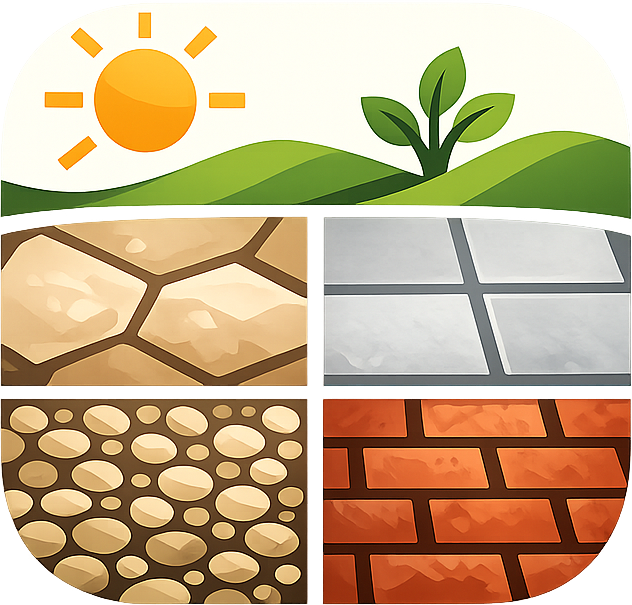
Crushed granite, decomposed granite, pea gravel, and flagstone are the best rocks for most patios. Crushed granite and decomposed granite give you the best balance of drainage, traction, and durability. Pea gravel is the cheapest and easiest to install but shifts underfoot. Flagstone and natural stone slabs deliver the most polished look but cost more and need a proper compacted base. Which one is actually best for you depends on your climate, how you plan to use the space, and how much maintenance you want to deal with. If you are narrowing it down to the best aggregate for a patio, crushed granite and stabilized decomposed granite are two of the most reliable choices.
Best Rocks for Patio: Durable, Slip-Resistant Choices
Nolan Ellison
13 May 2026
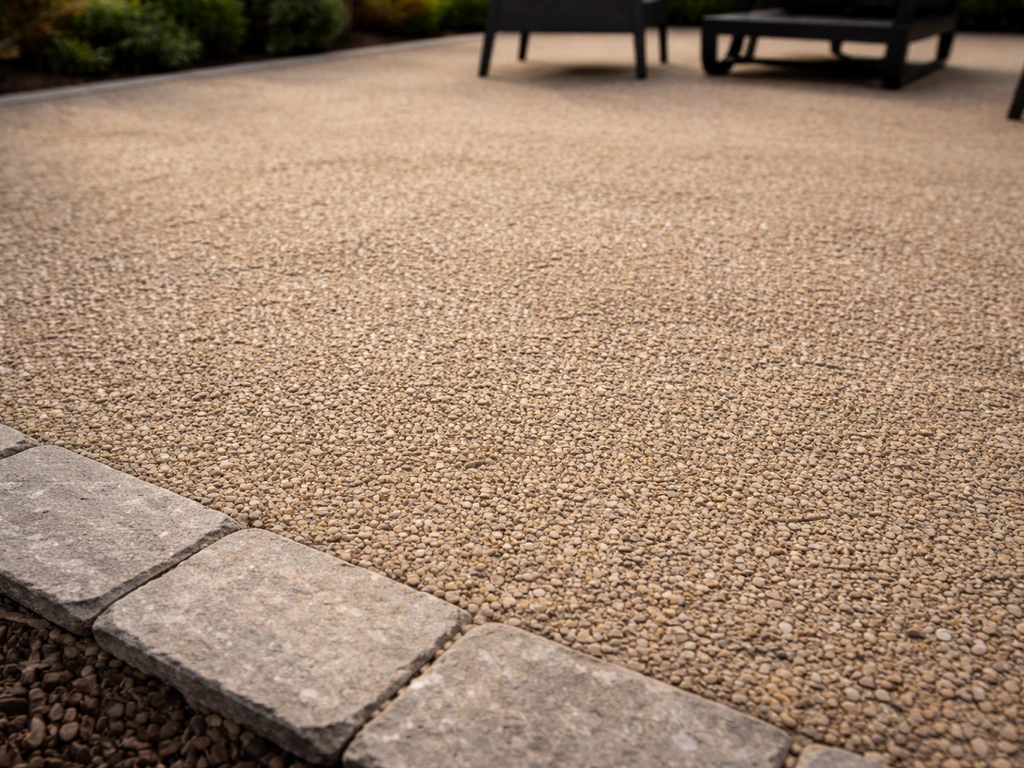
How to choose the best rock for your patio
Before you buy a single ton of rock, answer four questions: How will you use the patio? What is your climate? What look do you want? And what is your real budget, including installation and long-term upkeep? Those four filters eliminate most of the wrong choices before you even visit a quarry or landscape supplier.
Use: foot traffic, furniture, and gatherings
Loose rock patios (gravel, pea gravel, crushed stone) work fine for casual foot traffic and lightweight furniture, but furniture legs sink in and chairs are annoying to drag across loose stone. If you plan to have a dining table, heavy planters, or a fire pit that stays in one spot, a solid surface like flagstone, large flat fieldstone, or compacted decomposed granite with a stabilizer binder makes much more sense. For purely decorative or low-traffic zones, loose pea gravel or river rock is perfectly fine and cuts your installation time in half.
Climate: freeze-thaw cycles vs. hot and dry
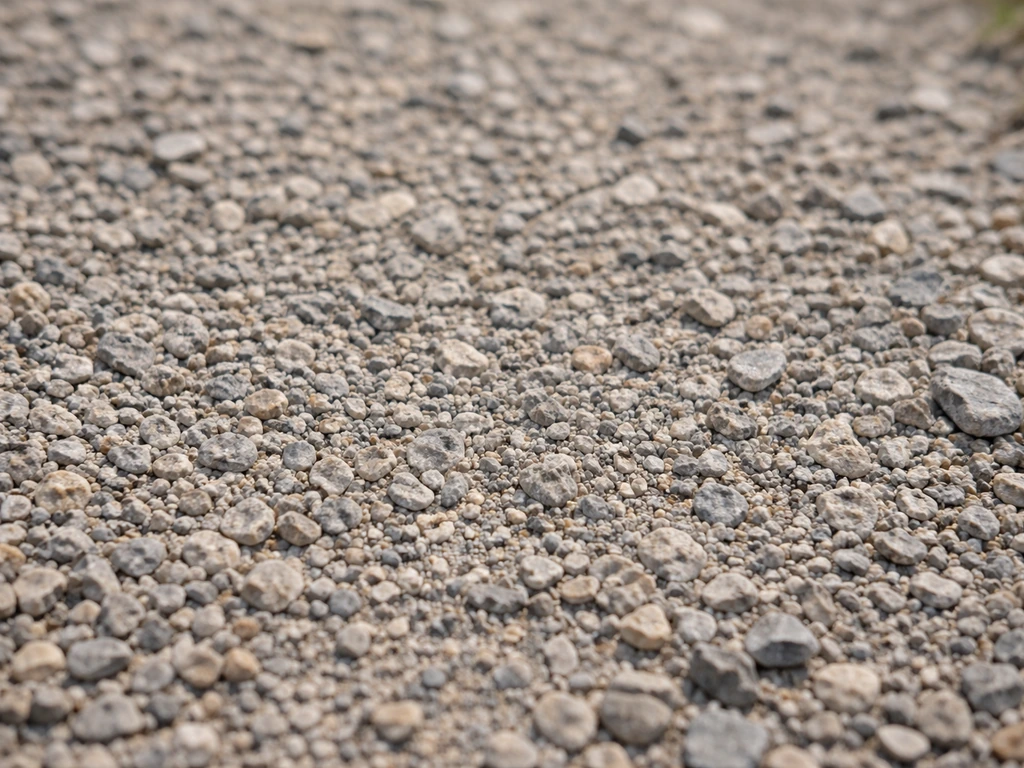
In freeze-thaw climates (Zone 5 and colder), loose rock actually has an advantage over poured concrete or porcelain tile because it has no rigid structure to crack. Crushed angular stone drains well enough that water does not pool and freeze beneath the surface. That said, natural stone slabs and flagstone can heave if your base is not deep enough. A 6-inch compacted gravel base is the minimum in cold climates. In hot, dry regions, decomposed granite with a stabilizer binder is extremely popular because it stays firm in heat, does not require re-leveling, and looks great. Pea gravel in a hot climate can get uncomfortably hot underfoot in direct sun, so factor shade into the equation.
Look: formal vs. casual
Irregular flagstone and natural fieldstone read as casual and organic. Cut bluestone or granite pavers look more formal and structured. Decomposed granite gives a Southwest or naturalistic feel. Pea gravel signals a cottage or French-garden aesthetic. Crushed limestone or granite chips can go either way depending on the color and how it is edged. Think about the architecture of your house and the style of your landscaping before locking in a rock type.
Budget: rock price vs. total project cost
Rock material is rarely the biggest cost. Labor, base prep, edging, and drainage work often cost as much as or more than the stone itself. Pea gravel runs roughly $35 to $55 per ton delivered, making it the cheapest surface option. Crushed granite is in the $40 to $70 per ton range. Decomposed granite is similar. Flagstone jumps to $200 to $600 per ton depending on species and cut. Natural stone slabs can go higher. If you are on a tight budget, loose crushed rock or gravel is genuinely the most cost-effective way to build a functional patio, but budget for quality edging and weed management or you will spend the savings on maintenance.
Top rock types for patio surfaces
Here are the rock types that consistently perform well in residential patio applications, along with the situations where each one shines.
Crushed granite
This is my top pick for loose-rock patios. Angular crushed granite compacts firmly, drains well, and gives you excellent traction because the irregular edges interlock rather than rolling around underfoot. The USDA NRCS surfacing design guides confirm that crushed rock provides better traction and drainage than rounded aggregate, and that holds true for patios too. Available in gray, tan, buff, and pinkish tones depending on your region, it is versatile enough for most landscaping styles. Use 3/4-inch minus (which includes fines) for compacting into a firm surface, or 3/8-inch angular for a slightly finer texture. It holds up in both wet and dry climates and is widely available from quarries and landscape suppliers.
Decomposed granite (DG)
Decomposed granite is crushed granite broken down to a fine, sandy-gravelly consistency. On its own it compacts nicely but can erode or become dusty. The game-changer is using a stabilizer binder, which binds the fines together and creates a surface that feels almost solid underfoot while still allowing drainage. Stabilized DG is ideal for patios in dry and semi-arid climates.
In very wet climates it can soften during heavy rain, so it is better suited to the Southwest, California, and similar regions. Per installation guidance from stabilizer manufacturers, DG should be placed over a compacted aggregate base and given 6 to 24 hours to firm up after compaction before use. Choosing the best aggregate for patio projects often comes down to matching your soil drainage and traffic needs to the right base and grading. One important note: single-size aggregates like pea gravel are not compatible with DG stabilizer systems, so use properly graded DG, not a rounded stone.
Pea gravel
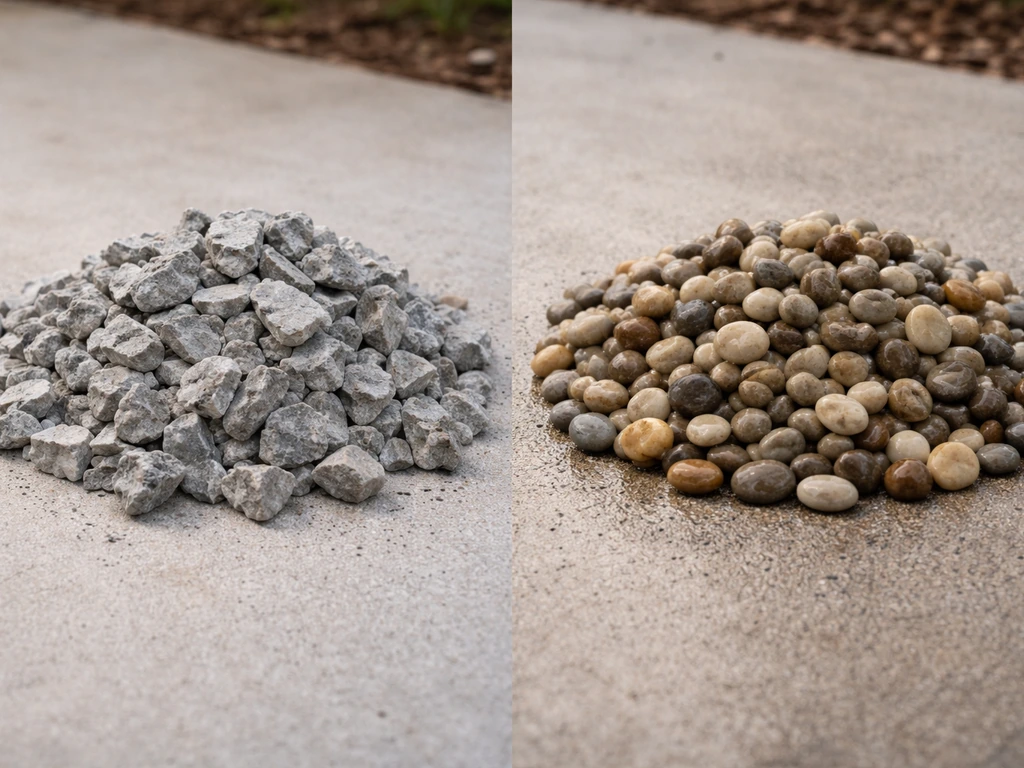
Pea gravel is the most popular budget option and for good reason. It is inexpensive, widely available, comfortable to walk on barefoot (smooth and rounded), and very easy to install. The downside is that it does not compact, it migrates out of the patio area, and furniture sinks into it. It is best used in low-traffic decorative patios, around fire pit rings, or in areas where you want a soft, permeable surface without furniture. Weed fabric underneath can help reduce weed growth, though it is not a permanent solution as it degrades over time and weeds can eventually push through or grow in the gravel on top. Use 3/8-inch to 1/2-inch rounded pea gravel for comfort underfoot.
Crushed limestone
Crushed limestone behaves similarly to crushed granite but tends to be lighter in color (white, cream, pale gray) and is more commonly available in the Midwest and South. It compacts well and drains well. The downside is that limestone is softer than granite and can degrade more quickly in acidic soils or regions with heavy rainfall. It also tends to show staining more than darker stone. For drier climates or regions where limestone is locally abundant, it is a cost-effective choice.
River rock and fieldstone
Smooth river rock looks beautiful but is one of the worst choices for a walking surface because smooth, rounded stones are genuinely slippery when wet. If you want river rock aesthetics, use it as a border or accent material, not as the primary walking surface. Larger flat fieldstones can work well as stepping stones or informal patio slabs, especially if they are set into a compacted gravel bed and leveled properly.
Flagstone and natural stone slabs
Technically a rock, flagstone (bluestone, sandstone, quartzite, slate) sits in its own category because it functions as a paving slab rather than a loose fill. It delivers the most attractive, permanent patio surface of any stone option. Irregular flagstone is set with gaps (filled with gravel, sand, or polymeric jointing sand) or dry-laid on a compacted stone dust base. Cut flagstone pavers are mortared or set on a compacted gravel and sand base.
Flagstone works in almost any climate if the base is deep enough: 4 to 6 inches of compacted gravel base is the standard, with 1 inch of leveling sand or stone dust on top. This is the most expensive rock option but also the most durable and the most visually impressive.
| Rock Type | Best Use | Climate Fit | Slip Risk | Relative Cost | Maintenance Level |
|---|---|---|---|---|---|
| Crushed granite | General patio surface | All climates | Low (angular) | Low-moderate | Low |
| Decomposed granite (stabilized) | Firm walking surface, SW/dry climates | Dry/semi-arid | Low | Low-moderate | Low-moderate |
| Pea gravel | Decorative/low-traffic areas | All climates | Moderate | Low | Moderate (raking, migration) |
| Crushed limestone | Midwest/South budget patios | Dry/moderate | Low (angular) | Low | Low-moderate |
| River rock | Border/accent only | All climates | High (wet) | Low-moderate | Low |
| Flagstone/natural stone slabs | Formal patios, dining areas | All climates | Low-moderate | High | Low (sealing optional) |
Base prep and installation for a rock patio
The surface rock you pick gets most of the attention, but it is the base that determines whether your patio lasts 5 years or 25. I have seen beautiful flagstone patios buckle and shift within two winters because the base was skipped or undersized. Do not make that mistake.
Step-by-step installation
- Mark and excavate the patio area to a depth of 6 to 8 inches below the finished surface grade. In freeze-thaw climates, go to 8 inches minimum.
- Grade the subgrade so water drains away from the house. A slope of 1/8 inch per foot (about 1%) is the minimum; 1/4 inch per foot is better.
- Compact the subgrade with a plate compactor until the soil is firm. If your soil is very sandy or clay-heavy, address drainage issues before adding any base material.
- Optional but recommended: lay a geotextile separation fabric over the subgrade to prevent the base aggregate from mixing down into the soil. Overlap seams by 6 to 12 inches.
- Add 4 to 6 inches of compacted angular gravel base (3/4-inch crushed stone or road base). Compact in 2-inch lifts, not all at once. The industry standard for patio base depth is 4 to 6 inches for most residential patios.
- For loose rock patios (gravel, crushed granite, DG): add a 2- to 3-inch layer of your surface rock directly over the compacted base and rake level. For flagstone or pavers, add 1 inch of coarse sand or stone dust over the compacted base as a leveling bed before setting stone.
- Install permanent edging (steel, aluminum, or concrete landscape edging) before adding the surface rock. Edging is what keeps loose rock from migrating into your lawn or garden beds.
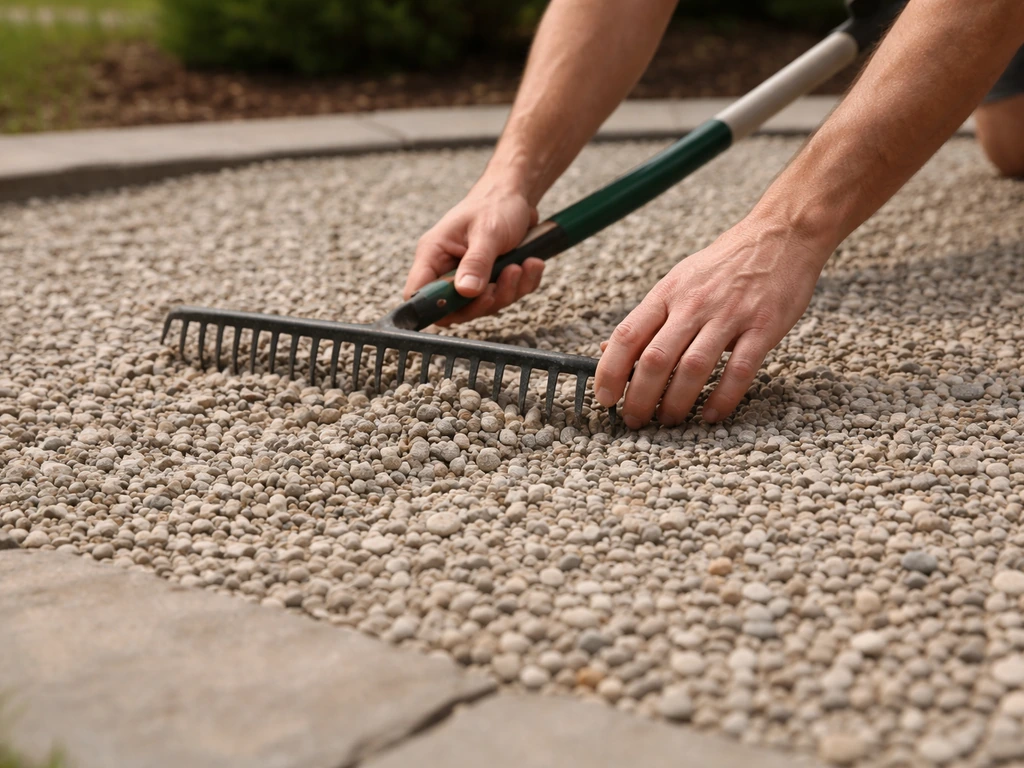
- Rake and level the surface rock. For loose gravel or crushed stone, a leaf rake and a long screed board get you a smooth, even finish.
- For DG with stabilizer: apply the binder per manufacturer instructions, compact immediately, and allow 6 to 24 hours for the surface to cure before walking on it.
- For flagstone: set each stone on the leveling bed, tap level with a rubber mallet, check with a level, and fill joints with stone dust, sand, or polymeric jointing sand.
Drainage details that matter
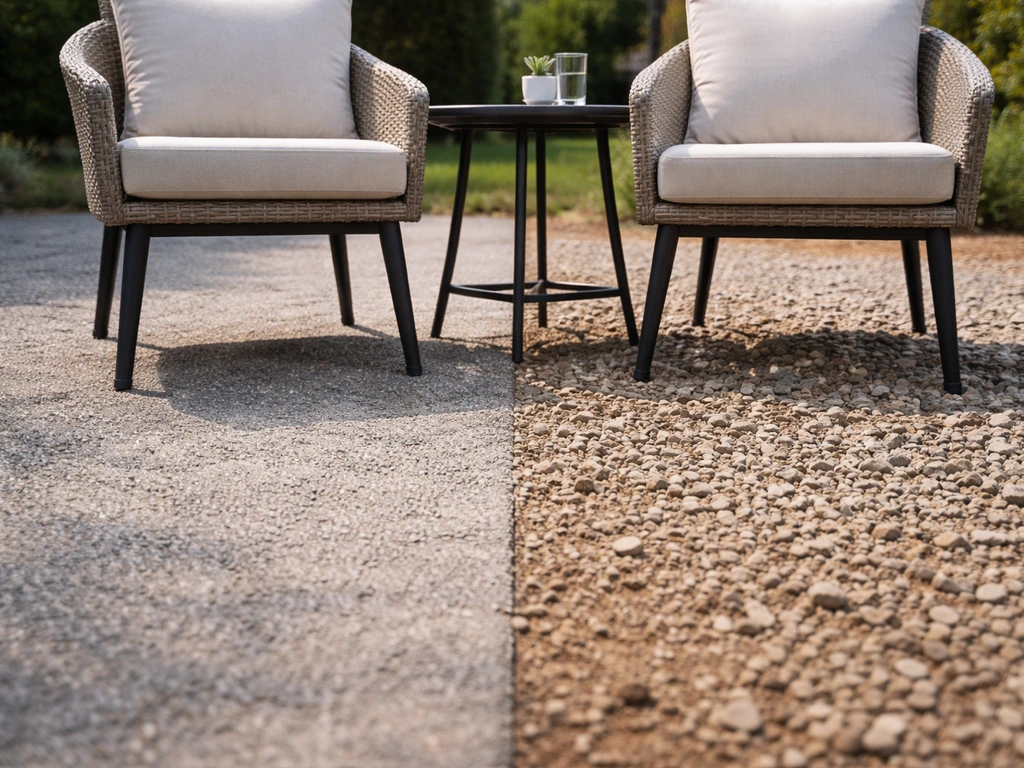
Loose rock patios are naturally permeable, which is one of their biggest advantages over concrete or pavers. Water drains straight through to the subgrade. For this to work properly, the subgrade needs to drain too. If your yard has clay soil that holds water, install a perforated drain pipe at the bottom of the excavation running to a daylight outlet or dry well. Skipping this step in a poorly draining yard leads to soggy, sinking patio sections regardless of how good your surface rock is.
Rock size, shape, and safety
Rock size and shape have a direct impact on how safe, comfortable, and functional your patio is. This is one area where people often underestimate the difference a simple spec change can make.
Angular vs. rounded stone
Angular, crushed stone has irregular edges that lock together when compacted, giving you a stable, firm surface with good traction. Rounded stone (pea gravel, river rock) rolls and shifts underfoot because the smooth surfaces cannot interlock. For any patio where safety matters, angular crushed rock is the right choice. Rounded stone should be reserved for purely decorative areas or confined spaces where stability is not a priority.
Recommended sizes by use
- 3/4-inch minus crushed granite or limestone: best all-around patio surface stone. Includes fines that compact into a firm, walkable surface.
- 3/8-inch angular crushed granite: finer texture, good for areas where barefoot walking is common. Compacts well but can scatter more easily than 3/4-inch.
- 1/2-inch pea gravel: soft and comfortable for low-traffic decorative patios. Not suitable as a furniture or dining area surface.
- 1- to 2-inch river rock: decorative borders and drainage channels only. Not a safe walking surface when wet.
- Flagstone slabs 1.5 to 2.5 inches thick: appropriate for pedestrian traffic. Thinner slabs crack under heavy point loads.
Furniture suitability
Loose gravel of any kind is frustrating under patio furniture. Chair legs sink in and create divots, table legs wobble, and moving furniture leaves ruts. If your patio will have a dining set, lounge chairs, or a fire pit, choose either stabilized DG, flagstone, or large flat stepping stones set firmly in a compacted base. For the best stone for pool patio areas, prioritize a stable, non-shifting surface like stabilized decomposed granite or tightly set flagstone. You can add a partial flagstone or paver pad within a larger loose-rock patio specifically for the furniture area. That hybrid approach gives you the drainage and cost benefits of rock while still giving furniture a stable platform.
Maintenance and long-term upkeep
Rock patios are generally lower maintenance than concrete or wood decks, but they are not maintenance-free. Here is what ongoing upkeep actually looks like.
Weed control
Weeds are the number one complaint with gravel and loose rock patios. The honest reality is that no weed fabric completely prevents weeds long-term. Landscape fabric reduces initial weed pressure by blocking light from reaching the soil, but over time it degrades, fills with organic matter on top, and weeds root in that layer anyway.
NC State Extension and Colorado State University Extension both flag synthetic weed barriers as a maintenance problem that gets worse over time as the fabric degrades.
A better long-term strategy is a combination approach: use geotextile fabric as a separation layer between the subgrade and base (where it serves a legitimate structural function), keep your rock layer at least 2 to 3 inches deep to reduce light penetration, and spot-treat weeds that do appear with a propane torch weeder or a targeted herbicide rather than relying on fabric alone.
Raking and regrading
Foot traffic, rain, and wind gradually displace loose rock. Plan on raking your gravel or crushed rock patio back into shape once or twice a year. A stiff-tined metal rake handles this quickly. In high-traffic areas or where water runoff concentrates, you will likely see low spots develop over time. A single bag of matching rock and 10 minutes of raking usually fixes it.
Replenishing rock
Even with good edging, loose rock slowly disperses. Most homeowners add a top-up layer of fresh rock every 3 to 5 years to maintain depth and color. Budget roughly one-third to one-half of your original material quantity for each replenishment. Buying extra material from the same source at installation and storing it is a smart move if you have the space.
Cleaning flagstone and natural stone
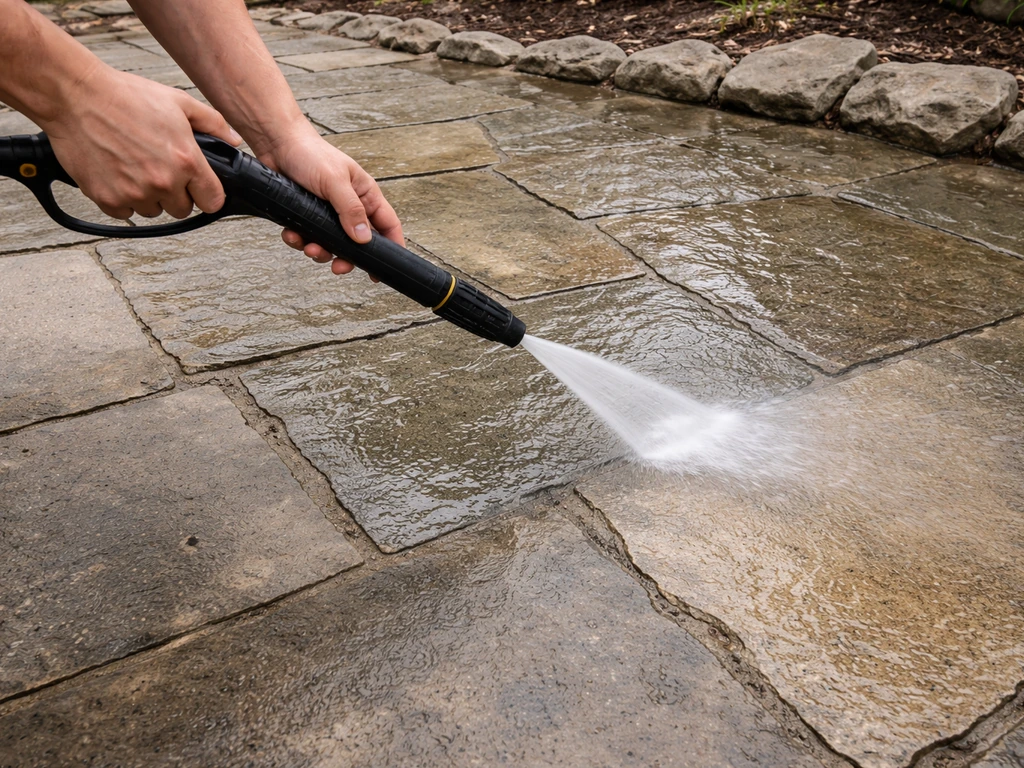
Flagstone and natural stone slabs can be pressure-washed, but keep the pressure under 1,500 psi to avoid damaging softer stone surfaces. For organic stains (algae, moss, tannins), a diluted white vinegar solution or a stone-safe cleaner works well. Avoid bleach on natural stone as it can discolor or etch the surface. Sealing is optional for most flagstone but extends life and prevents staining in high-use areas. Plan on resealing every 2 to 3 years if you go that route.
Stabilized DG maintenance
Stabilized DG can develop cracks or soft spots over time, especially in wet climates. Repair is straightforward: scarify the damaged area, add fresh DG with stabilizer, compact, and allow it to cure. The surface can fade in color over years of UV exposure, but adding a fresh layer restores the look.
How rock compares to other patio materials
Rock patios do not exist in a vacuum. If you are deciding between rock and other patio surfaces, here is a direct comparison across the options this site covers.
| Material | Cost (installed) | Drainage | Slip Resistance | Durability | Maintenance | Furniture-Friendly | Best Climate |
|---|---|---|---|---|---|---|---|
| Crushed granite / gravel | Low | Excellent | Good (angular) | Moderate | Low-moderate | No (loose) | All climates |
| Decomposed granite (stabilized) | Low-moderate | Good | Good | Moderate-high | Low | Yes (firm) | Dry/semi-arid |
| Flagstone | High | Good | Good | High | Low | Yes | All climates |
| Natural stone pavers | High | Moderate-good | Good-excellent | High | Low | Yes | All climates |
| Brick | Moderate-high | Moderate | Good | High | Low-moderate | Yes | Moderate climates |
| Porcelain tile pavers | Moderate-high | Moderate | Variable (check CoF) | Very high | Very low | Yes | Mild/dry climates |
| Composite/concrete pavers | Moderate | Moderate | Good | High | Low | Yes | All climates |
Gravel and crushed rock win on cost and drainage. Flagstone and natural stone win on appearance and furniture usability. Porcelain tile pavers have the lowest long-term maintenance of any option but can be slippery if you choose a low-friction finish, and they do not belong in hard freeze-thaw climates without a very carefully engineered base. Brick is a classic, durable middle-ground option that works well in temperate climates but can crack in severe freeze-thaw cycles. Composite and concrete pavers offer good consistency and are widely available but lack the organic appeal of natural stone.
If cost is your primary constraint and drainage is important, go with angular crushed granite or a related crushed stone. If you want a premium look with low maintenance, flagstone or cut natural stone is worth the investment. If you are in a dry climate and want something that looks more finished than gravel but costs less than flagstone, stabilized decomposed granite is genuinely excellent.
If you want the best stone for a backyard patio, stabilized decomposed granite is a top choice in dry climates because it stays firm and drains well stabilized decomposed granite is genuinely excellent. Topics like best crushed stone for a patio and best loose stone for a patio go deeper on the gravel and aggregate side of this decision if you want to narrow down further.
Sourcing your rock and estimating how much you need
Where to buy
Local quarries and landscape material suppliers almost always offer better pricing than big-box stores for bulk rock. Call around and ask for pricing by the ton (not by the bag) for any quantity over half a cubic yard. Many will deliver for a flat fee, which is worth it for a patio project. For flagstone and natural stone slabs, stone yards that let you hand-pick pieces are worth the trip: you can select for thickness, color consistency, and flat surface quality.
What to ask for
- For base material: '3/4-inch minus crushed stone' or 'road base' (this includes fines for better compaction)
- For crushed granite patio surface: '3/4-inch minus crushed granite' or '3/8-inch angular crushed granite'
- For decomposed granite: 'stabilized DG' or 'DG fines with binder'—confirm it is properly graded, not single-size
- For pea gravel: '3/8-inch to 1/2-inch pea gravel' (rounded)
- For flagstone: specify minimum thickness (1.5 inches for pedestrian use), stone species, and whether you want irregular or cut pieces
Coverage estimates
For loose rock patios, one ton of 3/4-inch crushed granite covers roughly 70 to 80 square feet at a 2-inch depth or about 50 to 60 square feet at 3 inches. Pea gravel covers similarly. A simpler rule of thumb: one cubic yard covers 108 square feet at 3 inches deep. For your base layer, figure one ton of 3/4-inch crushed stone per 50 to 60 square feet at a 4-inch compacted depth.
Always order 10% extra to account for compaction loss and waste. For flagstone, count on roughly 150 to 200 pounds per square foot coverage depends heavily on thickness and how tightly you set the pieces, so ask your stone yard for coverage estimates based on the specific material they stock.
Cost reality check
A basic DIY gravel or crushed rock patio for a 200-square-foot space typically runs $300 to $700 in materials if you do the labor yourself, including base rock, surface rock, edging, and weed fabric. A professionally installed flagstone patio of the same size can run $3,000 to $8,000 or more depending on stone species and region. Stabilized DG falls in the middle: DIY materials for 200 square feet typically run $400 to $900. The biggest cost variable is always local labor and delivery rates, so get at least two quotes before committing.
FAQ
Can I install the best rocks for patio on top of existing grass or soil?
Yes, but only if you treat it as a paving project, not a loose-fill project. For a gravel patio, you need a compacted base (typically several inches) plus edging that locks the perimeter. For flagstone or slabs, you need a deep enough compacted gravel base, then a leveling layer (sand or stone dust) so the stones sit flat and do not rock.
Should I use weed fabric under gravel or crushed rock patio?
With loose rock, weed fabric can reduce early weeds, but it does not “stop” them long term. The more effective approach is a structural separation layer (geotextile) under the base plus keeping the rock layer thick enough (about 2 to 3 inches minimum for light suppression). Plan on periodic spot-treating weeds rather than expecting zero maintenance.
What rock is best if my patio includes a heavy dining table or fire pit?
If the patio will get heavy dining-room traffic, chair legs, or a fire pit that stays put, prioritize a stable system. Stabilized decomposed granite, flagstone, or a hybrid design (loose rock overall, but a fully fixed platform pad under furniture) prevents sinkage and wobble that you would get with pea gravel.
Can I mix stabilized decomposed granite with pea gravel to save money?
Not always. Stabilizers for DG require properly graded decomposed granite, with the right mix of fines, and they do not perform well over single-size rounded aggregates like standard pea gravel. If you want stabilized DG, use DG made for stabilizer systems and follow the manufacturer’s cure window before using the patio.
Is river rock a good choice for the walking surface of a patio?
For safety and comfort, use angular crushed stone sized to lock together. Rounded river rock and pea gravel are more likely to roll or shift, and river rock is especially slippery when wet. If you like the look, use rounded material as borders or accents, and keep the main walking surface angular or firmly set.
How deep does the base need to be in freeze-thaw climates?
Use thickness as a performance spec, not just coverage. A common cold-climate baseline is about 6 inches of compacted gravel base under a loose rock surface to reduce heaving. If you skip depth or compact poorly, even the best top rock can buckle or shift after freeze-thaw cycles.
Which patio rock stays comfortable in hot, sunny weather?
Yes, but do it strategically. In hot climates, DG with a stabilizer is popular because it stays firm and does not require constant re-leveling. Pea gravel can get uncomfortably hot in direct sun, so consider shade, a lighter-colored surface rock, or a fixed pad area where people sit often.
What should I do if my patio area tends to stay soggy after rain?
If your yard has clay that holds water, the surface choice will not solve the problem by itself. You may need a perimeter or trench drain, or a perforated drain pipe leading to a dry well or daylight outlet, installed at the bottom of the excavation. Without subgrade drainage, you can end up with sinking and soggy sections.
How often will I need to re-level or top up gravel on a patio?
Plan for upkeep based on how “loose” the system is. Expect raking back into place once or twice per year for loose gravel, and plan a top-up every 3 to 5 years to restore depth and color. If you add a stabilizer system or fixed slabs, the maintenance becomes less frequent but not zero.
What’s the safest way to clean and maintain flagstone or natural stone slabs?
Avoid bleach on natural stone because it can discolor or etch surfaces. If you need cleaning, keep pressure-washing gentle (under about 1,500 psi) and use a stone-safe cleaner or a diluted vinegar solution for organic growth. For high-use areas, consider optional sealing, then reseal on a schedule if you choose that route.
Is crushed limestone as durable as crushed granite for a patio?
Not necessarily. Crushed limestone can be a great budget option in places where it is locally available, but it degrades faster in acidic soils or heavy rainfall than granite. If you’re not sure about soil acidity, crushed granite is the more forgiving all-around choice.
How do I choose between loose gravel, stabilized DG, and flagstone for my patio use?
A quick but important decision aid is matching rock type to use intensity. For furniture and level performance, choose stabilized DG or flagstone. For decorative, low-traffic areas, pea gravel or crushed rock works. For safety, default to angular crushed stone over rounded aggregates.
How much rock should I order so I don’t run short?
Many suppliers quote by volume, but you should still use a practical overage for installation losses. A common rule is ordering about 10% extra for base and surface rock to cover compaction and waste. If you expect lots of edging cuts, irregular flagstone placement, or deep base prep, add more and base your final tally on square footage plus target depth.
Can I combine loose rock with a stable section for chairs and tables?
If you want a patio that looks finished but you also want cost and drainage benefits, a hybrid plan works well. For example, keep the broader area as loose crushed rock or gravel, then install a compacted, fixed landing pad under the dining set or between the house door and seating to eliminate wobble and sinkage where it matters most.