For most homeowners, the best rock for a patio comes down to two distinct choices: loose aggregate (gravel, crushed stone, decomposed granite, or pea gravel) for a budget-friendly, permeable surface, or natural stone slabs (flagstone, slate, fieldstone) for a stable, furniture-friendly patio that looks like it belongs there permanently. Neither is universally better. What matters is how you'll use the space, what your climate throws at it, and what you're willing to spend upfront versus maintain over time. If you want a quick answer: crushed angular gravel or decomposed granite handles light to moderate foot traffic well and installs cheaply, while flagstone is the go-to when you want chairs and tables that don't wobble, a polished look, and a surface that holds up to hard winters without constant regrading.
Best Rock to Use for Patio: Options, Costs, and Install
First, decide what "best" actually means for your situation
Before you order a truckload of anything, answer three questions honestly: How will you use the patio? What does your climate do to outdoor surfaces? And what is your real budget, including long-term upkeep? A gravel patio that costs $3 per square foot to install might cost you $500 in annual weed control and regrading if you skip the right base work. A flagstone patio that costs $15 per square foot might require almost nothing for a decade.
Use case matters more than most people expect. Loose gravel shifts under furniture legs, which is frustrating if you host dinners outside. It's fine for a fire pit area where people stand or use Adirondack chairs with wide feet. Pets and kids do fine on smooth pea gravel or decomposed granite, but sharp crushed stone can be rough on paws. If you're setting up a full outdoor kitchen or dining area, you really want a solid stone surface. Think about that before anything else.
Climate is the other big filter. If you're in a freeze-thaw zone (most of the northern US, Canada, and high-elevation areas), water getting into your base and freezing is the main enemy. It heaves surfaces, creates uneven spots, and turns a nice patio into a tripping hazard within a few seasons. Free-draining materials like angular gravel and crushed stone hold up well because water moves through them rather than pooling. Natural stone set in sand-based systems also performs well if the base is done right. Mortar-set stone in freeze-thaw climates, on the other hand, tends to crack and pop joints over time.
The main loose rock and aggregate options compared
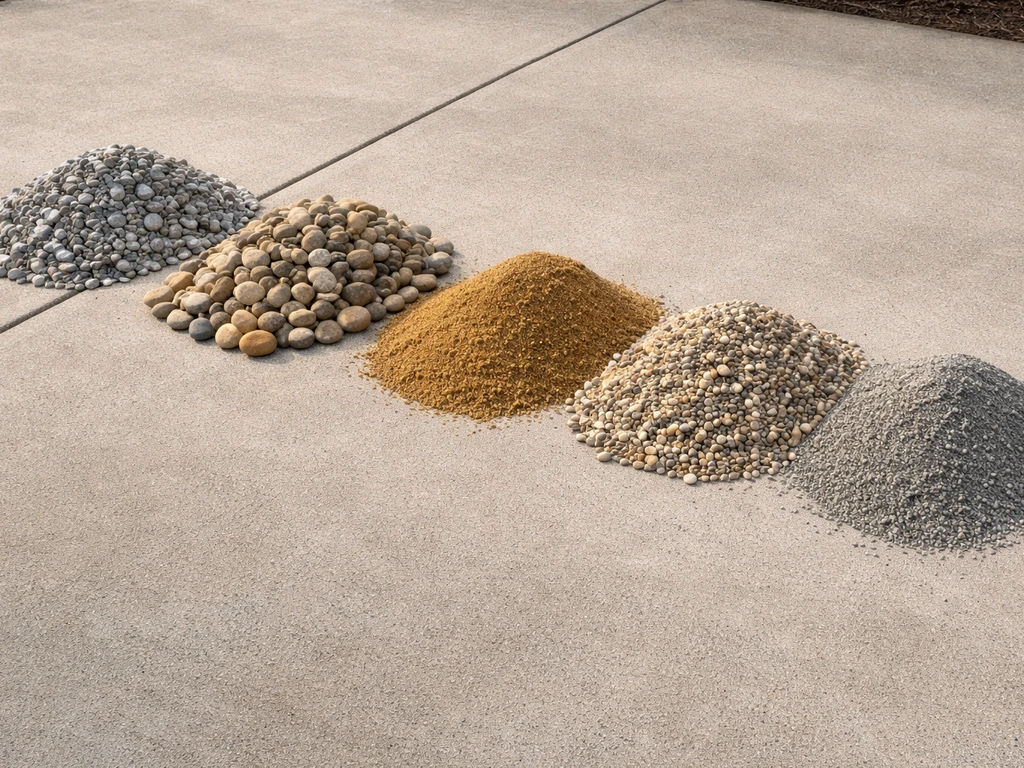
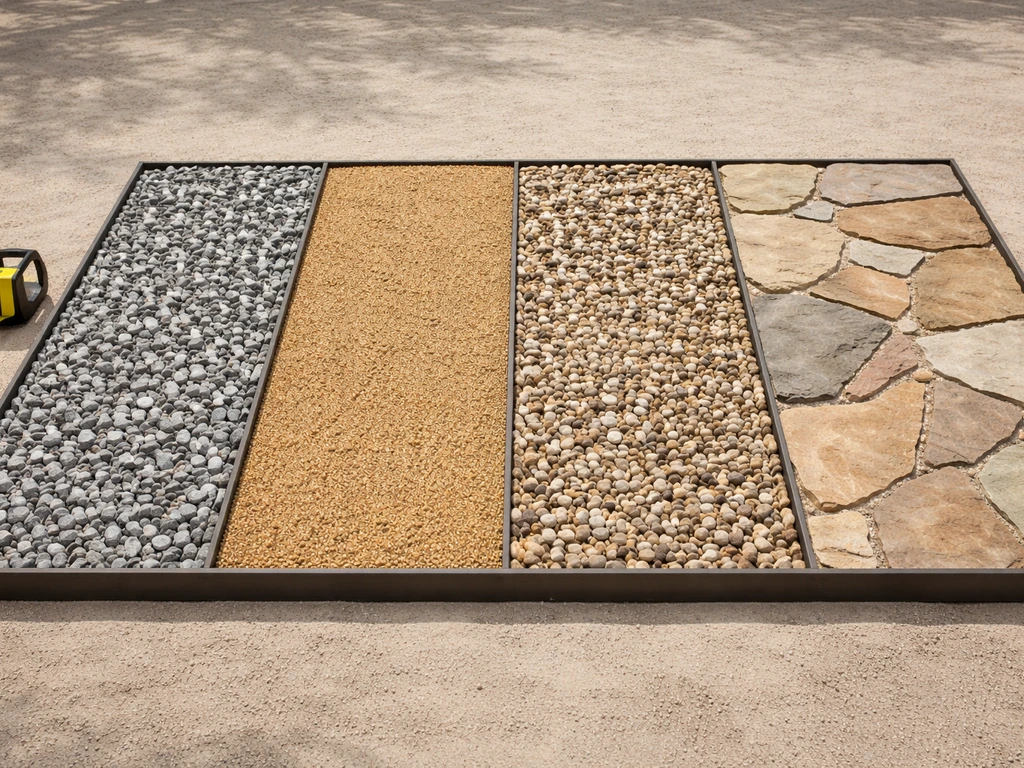
Most "rock patio" searches involve one of five materials. Here's what they actually deliver and where each one falls short.
| Material | Best Use | Stability | Drainage | Comfort Underfoot | Avg Cost (per ton) |
|---|---|---|---|---|---|
| Crushed angular gravel (3/4" minus) | General-purpose patios, driveways, paths | High — locks together when compacted | Excellent | Moderate — can be sharp | $30–$55 |
| Decomposed granite (DG) | Formal-looking patios, paths, Southwestern landscapes | High when stabilized | Good | Good — fine, smooth texture | $35–$60 |
| Pea gravel | Fire pit areas, play areas, low-traffic zones | Low — shifts constantly | Excellent | Very good — smooth and rounded | $25–$45 |
| River rock (1"–3") | Decorative borders, drainage areas, edging | Low — rolls underfoot | Excellent | Poor for walking | $40–$80 |
| Crushed limestone | Patios, base layer, compactable surfaces | High | Good | Moderate | $25–$50 |
Crushed angular gravel
This is probably the single most practical choice for a DIY gravel patio. The angular edges interlock when compacted, which means it doesn't shift around the way rounded stone does. A 3/4-inch minus blend (which includes fines) compacts into a firm, relatively stable surface. It drains well, resists frost heave better than fine soils, and costs less than almost any other option. The main downside: it can be uncomfortable barefoot, and it still shifts under chair legs over time. Plan to rake and top-dress every year or two.
Decomposed granite (DG)
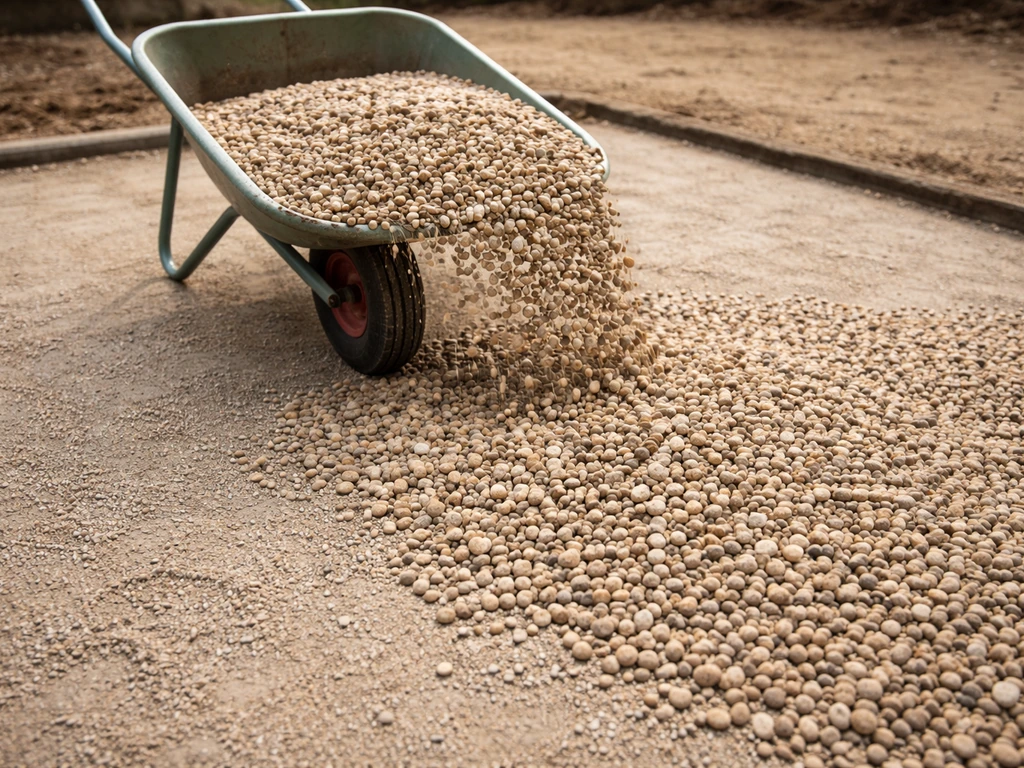
Decomposed granite looks more polished than standard gravel and compacts into an almost pavement-like surface when you use a stabilized version (DG with a binder). It's hugely popular in the Southwest and California for that reason. Unstabilized DG still tracks into the house and can wash out in heavy rain. Stabilized DG holds up much better. The catch: it softens when wet, so in climates with heavy rainfall or prolonged wet seasons, you'll fight erosion and surface rutting. It's not my first pick for the Pacific Northwest or the Gulf Coast.
Pea gravel
Pea gravel is the prettiest loose option and the friendliest on bare feet and pet paws. The problem is stability: the rounded stones do not lock together, so they roll and shift constantly. Furniture sinks into it, and you'll spend time raking it back into place after every party. It works well as a filler between flagstone steppers or as a decorative border, but I wouldn't use it as the primary surface for a seating patio unless you're okay with the maintenance tradeoff.
River rock
Large river rock (1 inch and up) is mostly a decorative material. It looks great in drainage swales, around planters, or bordering a patio, but it's genuinely difficult to walk on and nearly impossible to use with furniture. If someone suggests using river rock as your main patio surface, they're thinking more about appearance than usability. Save it for accent work.
Natural stone options: flagstone, slate, and fieldstone
When people search for the "best rock for a patio," a lot of them are actually thinking about flat natural stone slabs: flagstone, slate, or fieldstone. These aren't loose aggregate; they're set stones that create a solid walking surface. They perform very differently from gravel, and in most cases they outperform loose rock for any patio where you plan to put furniture, entertain regularly, or want a finished look that lasts decades. If your end goal is the best stone for pool patio, these set-stone options are usually the related choice when furniture and entertaining are on the checklist solid walking surface.
Flagstone
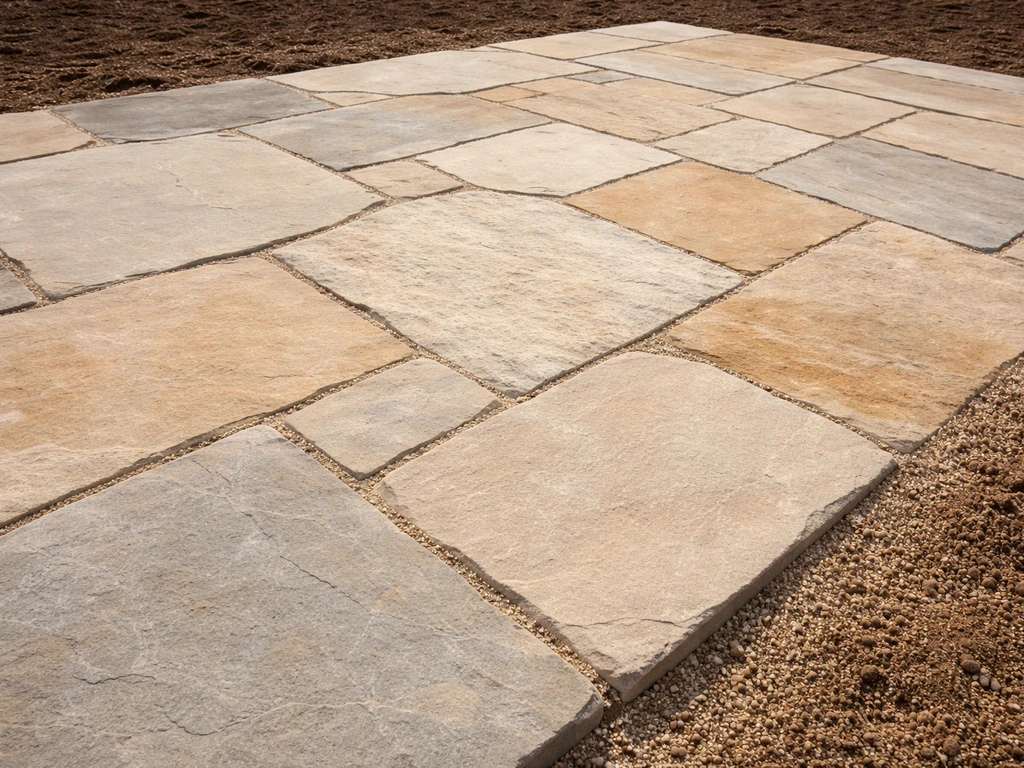
Flagstone is the gold standard for natural stone patios. It's typically sandstone, limestone, or quartzite cut or split into flat irregular or sawn pieces. Set in a compacted sand base (dry-set) or mortared over concrete, it creates a surface that furniture sits on solidly, that handles foot traffic for decades, and that looks genuinely beautiful. Dry-set flagstone in a freeze-thaw climate is actually smarter than mortared flagstone because individual stones can flex and resettle without cracking. Thickness matters: 1.5 inches is the minimum for most applications; 2 inches is better for heavier use or if you're spanning soft spots in the base.
Slate
Slate is dense, smooth, and attractive, but it comes with real trade-offs. It can be slippery when wet, which is a safety issue if your patio is in a shaded or damp location. Some slates also delaminate in harsh freeze-thaw cycles. If you're in a wet or cold climate, pick a textured or cleft-face slate rather than a polished one, and make sure you're buying a variety rated for outdoor use. Brazilian slate, for example, varies widely in quality. When slate works, it looks elegant. When it doesn't, it flakes apart in chunks.
Fieldstone
Fieldstone (sometimes called random or irregular stone) is what you find in old New England walls and farmhouse patios. It has a rustic, natural look and can be sourced locally in many regions, which keeps costs down. The challenge is that fieldstone pieces are irregular in thickness and shape, which makes leveling a patio tedious. It's slower to install than flagstone and requires more base adjustment per stone. That said, it's one of the most durable options and ages beautifully. If you're patient and want a patio that looks like it grew there, fieldstone delivers.
When natural stone outperforms loose gravel
Natural stone is the right call when you need: a stable surface for furniture and dining, a patio adjacent to the house where you want a clean transition, a surface that won't track into the home, or a space where slip resistance on slopes matters. Loose gravel makes more sense for large areas on a tight budget, informal fire pit clearings, paths through garden beds, or anywhere you want fast drainage and don't mind occasional regrading. Many patios combine both: flagstone for the main seating area and crushed gravel or pea gravel to fill the surrounding areas or as a border material.
Matching your rock choice to the real constraints
Drainage
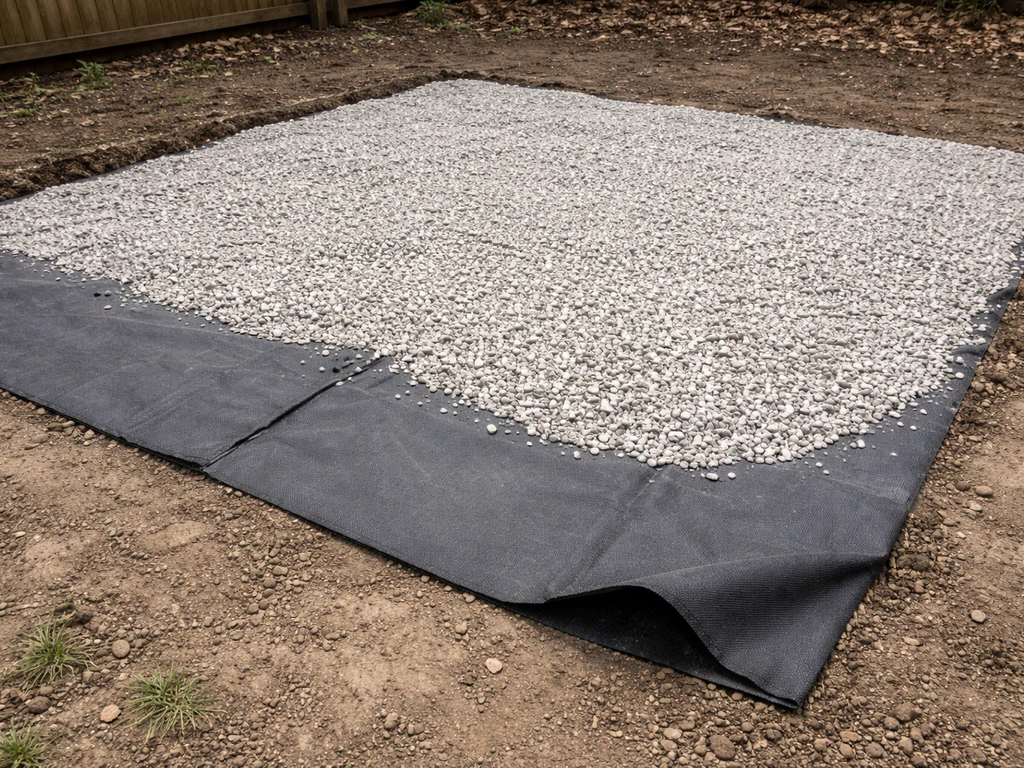
Any patio surface needs to move water away from the house and off the surface quickly. Loose gravel and crushed stone do this naturally because they're permeable. Natural stone set in sand is also permeable if you leave joints open or fill them with sand or fine gravel. The slope of your patio matters regardless of material: aim for at least a 1-to-2 percent grade (about 1/8 inch per foot) away from any structure. If your yard has drainage issues, a gravel patio is genuinely more forgiving than a solid stone surface because water goes straight through.
Weed control
Weeds are the most common complaint with gravel patios, and they're manageable if you set up the right system from the start. A geotextile weed barrier fabric installed under the aggregate dramatically reduces breakthrough, but its effectiveness is highly installation-dependent. ICPI Tech Spec 2 includes geotextile design and selection parameters, such as apparent opening size, permittivity, and strength and puncture performance, to help ensure the separator layer functions correctly under installation conditions [the effectiveness is highly installation-dependent](https://www. orco.
com/wp-content/uploads/2022/08/ICPI-TechSpec2-ORCO. pdf). The fabric needs to be properly overlapped (at least 12 inches at seams), pinned securely, and covered with the right material. Fine, light materials like sand on top of fabric can allow roots to establish in the top layer regardless of what's underneath.
Angular gravel or crushed stone on top of fabric performs better than pea gravel because it compacts into a denser layer that's harder for weeds to push through. Even with a good barrier, plan for some hand-pulling and spot treatment annually.
Slip resistance
Smooth, rounded, or polished surfaces become slippery when wet. Pea gravel in wet conditions can roll underfoot dangerously. Polished slate gets slick. For any patio in a shady, damp, or rainy environment, prioritize rough or textured surfaces: cleft-face flagstone, angular crushed stone, or textured slate. River rock is better than smooth flagstone on a steep slope if you need drainage, but frankly neither is ideal there. If slip resistance is a top concern, cleft-face sandstone or quartzite flagstone is the most practical natural stone pick, and angular 3/4-inch crushed gravel is the safest loose-aggregate choice.
Freeze-thaw durability
Freeze-thaw cycles are the biggest long-term threat to any outdoor surface. Water expands roughly 9 percent when it freezes, which means any water trapped in your base or in porous stone can crack and heave surfaces over a single winter. The fix is twofold: use free-draining base materials that don't hold water, and choose surface stones that are dense enough to resist water absorption.
Research on granular subbases consistently shows that clean, free-draining gravels and crushed rock experience little to no frost heave precisely because water moves through them rather than sitting in place. FHWA likewise notes that clean, free-draining granular subbase materials help limit frost heave by allowing water to move through rather than remain in place (FHWA-RD-97-148) [free-draining gravels and crushed rock experience little to no frost heave because water moves through them](https://www. fhwa. dot.
gov/publications/research/infrastructure/pavements/97148/073. cfm). Dense flagstone like quartzite or bluestone holds up to freeze-thaw far better than soft sandstone or poorly sourced slate. Avoid setting any stone in mortar in climates with hard winters unless you're working over a reinforced concrete slab with good drainage.
How to install each option correctly
The base is where most patio failures begin. Skipping base depth, using the wrong fill material, or compacting poorly leads to sinking, heaving, and uneven surfaces within a few years. Here's what proper installation looks like for each option.
Installing a gravel or crushed stone patio
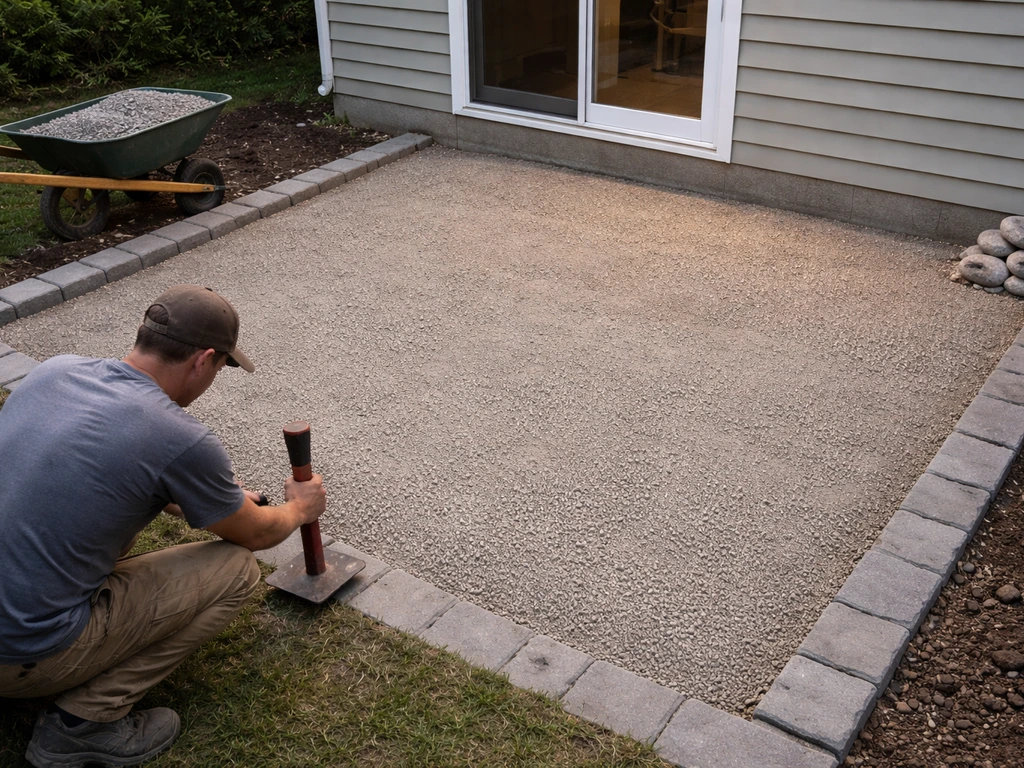
- Mark and excavate the area to 6–8 inches below your desired finished surface level. Remove all organic material and sod.
- Grade the base to slope at least 1 percent away from any structures.
- Compact the native subgrade with a plate compactor.
- Install edging (steel, aluminum, or heavy-duty plastic bender board) around the perimeter to contain the aggregate and keep it from migrating into lawn or garden beds.
- Lay a commercial-grade woven geotextile fabric over the compacted subgrade. Overlap seams by at least 12 inches and pin the fabric at 3-foot intervals. Fold the fabric up against the inside of the edging.
- Add 4–6 inches of compacted crushed angular gravel (road base or 3/4-inch minus) in two or three lifts, compacting each lift thoroughly before adding the next.
- Finish with 2–3 inches of your chosen surface aggregate (crushed gravel, DG, or pea gravel) raked level.
- For DG: if using stabilized DG, mix the binder per manufacturer directions, spread and compact, then lightly water to activate the binder and allow it to cure 24–48 hours before use.
Installing dry-set flagstone, slate, or fieldstone
- Excavate 8–10 inches below finished surface to allow for base, bedding layer, and stone thickness.
- Compact the native subgrade and establish your drainage slope (minimum 1/8 inch per foot away from structures).
- Install edging around the perimeter to contain the base materials.
- Lay geotextile fabric over the compacted subgrade if your native soil is clay-heavy or prone to erosion.
- Add 4–6 inches of compacted crushed stone base (road base or 3/4-inch clean crushed stone), compacted in 2–3 inch lifts.
- Screed a 1-inch layer of coarse bedding sand over the compacted base. Do not exceed 1 inch of sand in the bedding layer, as thicker sand beds allow stones to rock and sink unevenly.
- Set stones individually, pressing firmly into the sand bed. Check each stone with a level and adjust sand beneath as needed. For irregular flagstone, aim for gaps of 1–2 inches between pieces.
- Fill joints with polymeric sand, fine crushed gravel, or leave them open for low-growing ground cover.
- Do not walk heavily on the patio for 24 hours after setting. Check and adjust any rocking stones before the project is complete.
Common installation mistakes to avoid
- Skimping on base depth: less than 4 inches of compacted base almost always leads to sinking or heaving within 2–3 years.
- Using fabric alone without adequate aggregate over it: fabric without weight and cover compacts poorly and won't suppress weeds effectively.
- Using too much bedding sand under flagstone: more than 1 inch creates a soft layer that causes stones to rock and eventually sink.
- Setting stone in mortar in freeze-thaw climates without a reinforced concrete base: joints crack and pop within one hard winter.
- Skipping edging on gravel patios: without containment, aggregate migrates into lawn edges within a season and the patio shrinks noticeably.
- Not compacting in thin lifts: dumping 8 inches of base material at once and running a compactor over it once does almost nothing for deep stability.
Keeping it in good shape long-term
Gravel and loose aggregate
Gravel patios need annual attention at minimum. Every spring, rake the surface to redistribute material that has shifted over winter. Inspect for low spots where aggregate has compacted into the base or migrated through the fabric; add a top-dressing of fresh material to bring the surface back to level. For pea gravel, expect more frequent raking because it shifts with every footstep. Pull weeds that push through as soon as you see them, before they go to seed. Spot-treating with a pre-emergent herbicide in early spring helps slow weed pressure without damaging nearby plants when applied carefully.
Natural stone
Flagstone and other set stone patios need less frequent maintenance but deserve a yearly inspection. Check for any stones that have shifted, settled unevenly, or cracked. Dry-set stones that are rocking should be lifted, the sand bed corrected, and the stone reset before someone trips on them. Clean natural stone annually with a mild detergent and water or a dedicated stone cleaner; avoid pressure washing at high settings on soft sandstone because it can erode the surface. In freeze-thaw climates, inspect joints every spring for frost damage and refill with polymeric sand as needed.
Weed management over time
No weed barrier lasts forever. Most geotextiles degrade over 10–20 years depending on UV exposure and material quality. For gravel patios, the more realistic long-term plan is to treat weeds as an ongoing maintenance task rather than something you fully prevent once. Combining a good weed barrier installation with annual pre-emergent application and prompt hand-pulling is more effective than any single approach alone. For flagstone patios, polymeric sand in the joints dramatically reduces weed establishment compared to regular sand fills.
Costs, quantities, and where to buy
How to estimate how much material you need
For loose aggregate, the formula is straightforward: multiply the length (feet) by the width (feet) by the depth (in feet, so 3 inches = 0.25 feet) and divide by 27 to get cubic yards. Add 10–15 percent for compaction and waste. Most suppliers sell gravel by the ton; a cubic yard of crushed gravel typically weighs 1.3 to 1.5 tons depending on the material. For flagstone, measure your square footage and add 10 percent for cuts and irregular pieces. Flagstone is usually sold by the ton or by the pallet; a ton of 1.5-inch flagstone covers roughly 100–120 square feet depending on the stone type.
Realistic cost ranges
| Material | DIY Material Cost (per sq ft) | Installed Cost Est. (per sq ft) | Notes |
|---|---|---|---|
| Crushed angular gravel | $1–$3 | $4–$8 | Includes base, fabric, edging |
| Decomposed granite (stabilized) | $2–$4 | $5–$9 | Higher in regions where DG must be shipped |
| Pea gravel | $1.50–$3 | $4–$7 | Lower material cost, higher maintenance over time |
| Flagstone (sandstone/limestone) | $5–$10 | $12–$20 | Varies widely by stone type and region |
| Flagstone (quartzite/bluestone) | $8–$15 | $18–$30 | Premium durability; higher material cost |
| Slate | $6–$12 | $15–$25 | Quality varies; buy from reputable supplier |
| Fieldstone | $3–$8 | $10–$18 | Often cheaper if sourced locally; labor-intensive to install |
Sourcing tips
For loose aggregate, local landscape supply yards almost always beat big-box stores on price and material quality. You can see and feel the material before buying, and bulk delivery is typically available for orders over 1 cubic yard. Call ahead and ask specifically for "3/4-inch minus crushed stone" or "road base" rather than just "gravel" to make sure you're getting angular material that compacts properly. For natural stone, regional quarries and stone yards will have the best selection for your area. Local stone also tends to be climatically appropriate, which matters for freeze-thaw performance. If you're buying flagstone online or from a national supplier, ask for samples before committing to a full pallet.
Your quick decision path
If you want a stable, furniture-friendly patio with a polished look and you're willing to spend more upfront, go with flagstone (quartzite or bluestone if you're in a freeze-thaw climate, sandstone or limestone if you're in a mild zone). For most patio projects, flagstone is also one of the best answers to what stone is best for a patio.
If you want a large, low-cost patio for a fire pit area or casual use, crushed angular gravel or stabilized decomposed granite is the best bang for your money. For a “best loose stone for patio” in most situations, start with crushed angular gravel because it compacts well and holds up to foot traffic. If you’re specifically comparing the best aggregate for a patio, start by matching your material to your climate and intended use.
Crushed stone is also a top choice for patio projects when you need a stable, free-draining base material best crushed stone for patio. If you need something kid- and pet-friendly with easy drainage, pea gravel works well as a fill material around stepping stones or as a secondary surface, but not as your main seating area floor.
And if you want the rustic, old-world look and you're willing to put in the installation effort, fieldstone delivers something no manufactured material can replicate.
Whatever you choose, the base preparation determines whether it lasts 2 years or 20. Compact a proper granular subbase, use edging to contain your material, install geotextile fabric correctly with good overlap, and give your surface the right thickness. Those four steps matter more than which specific stone you pick.
FAQ
What base should I use under the “best rock” patio materials so it won’t heave or sink?
For most patios, choose a free-draining angular material (3/4-inch minus crushed stone) for the base layer under whatever surface you pick, then install your top layer at the thickness the material needs. Skip over soft topsoil, do compaction in lifts, and confirm the subbase drains (no standing water after a heavy rain).
My existing patio is uneven, can I just top-dress with more rock instead of redoing the base?
If you already have a patio that’s uneven, adding rock on top often makes the problem worse. A practical fix is to lift and re-level, replace any saturated or organic base, then re-compact. If you cannot lift everything, use a leveling sand bed only for set-stone systems, and do not bury drainage problems under gravel.
Can I mortar-set flagstone or slate if I’m in a freeze-thaw climate?
Yes, but the risk depends on your climate and the stone. In freeze-thaw areas, dry-set flagstone generally performs better because stones can flex, while mortar over sand can crack. If you’re using mortar, only consider it when you have a well-drained reinforced concrete slab and proper joint design.
How do I keep patio rock from tracking into the house?
To reduce tracking, prioritize permeable base and a contained surface that stays level, then manage edges. Use edging (metal or concrete restraints) to prevent migration, keep a tight joint strategy (sand or polymeric where appropriate), and consider a short gravel-to-paver transition mat at the door.
Why do weeds still grow through geotextile under gravel patios?
Weed barrier fabric can help, but the key is overlap, pinning, and coverage depth. If you use sand or fine material over fabric, weeds can still root in that top layer, so choose a compactable, angular aggregate as the top layer and maintain the surface by re-raking and spot-treating early.
What rock should I choose if my patio gets wet or is in shade where it stays damp?
For slippery conditions, avoid polished stone and smooth pea gravel as the main walking surface. Choose textured or cleft-face stone (like cleft-face sandstone or textured slate) for set-stone patios, or stick with angular crushed stone for loose areas because it tends to provide better traction than rounded material.
How often do I need to refill joints or repair the surface after freeze-thaw winters?
Sand-based joint material needs periodic renewal. With dry-set flagstone, refill joints when they wash out, and in freeze-thaw climates inspect in spring and replace lost material before joints widen. For polymeric sand, follow the manufacturer’s rules closely, since over-wetting can cause hardening issues.
What’s a good way to mix flagstone with gravel so chairs stay stable but the patio still looks finished?
Yes, but treat it as an edging and separation tool rather than the main floor. A common combo is flagstone for the seating zone and crushed gravel as the surrounding infill, contained with edging so the loose material does not migrate into the stone area.
Is a flagstone patio really cheaper in the long run than a gravel patio?
Usually, yes, but confirm local expectations for weight and drainage. A single patio with set-stone has a higher upfront cost and more labor, while a gravel patio has lower material costs but recurring rake, weed control, and occasional top-dressing. The right choice depends on whether you value “sit-and-forget” stability or low initial cost with maintenance.
What’s the most comfortable and pet-friendly rock option that still stays fairly stable?
For pet paws and kid play, prioritize rounded pea gravel only where you can tolerate shifting, or use decomposed granite or compacted angular crushed stone where you need stability. Avoid sharp crushed stone as a primary surface in bare-foot areas if you will have lots of walking without shoes.
How do I know if my rock patio build will be too thin to last?
Start by avoiding underbuilding: too little depth is the main cause of sinking and rocking stones. As a rule of thumb, design your subbase for compaction, then match your surface thickness to stone type (flagstone typically needs at least about 1.5 inches, more for heavier use or when spanning soft spots).
What drainage setup matters most, slope or material choice?
Even the best “rock” can fail if water is directed toward the home or trapped in the base. Use at least a 1 to 2 percent slope away from structures, keep it draining quickly off the surface, and avoid letting runoff concentrate under the patio where freeze-thaw water can enter the base.