For most homeowners, porcelain tile rated DCOF ≥ 0.42 or tumbled/brushed natural stone (travertine, bluestone, flagstone) gives you the best combination of safety, durability, and looks around a pool. Porcelain wins on low maintenance and chemical resistance; natural stone wins on heat comfort and aesthetics. Brick and gravel are solid budget-friendly options for the right situations, and composites fill a niche for DIYers who want speed. The material that's actually best for your pool patio depends on your climate, budget, foot traffic, and how much upkeep you're willing to do, and this guide will walk you through all of it.
Best Material for Pool Patio: Top Options Compared
Nolan Ellison
4 Jun 2026
What a pool patio actually has to survive
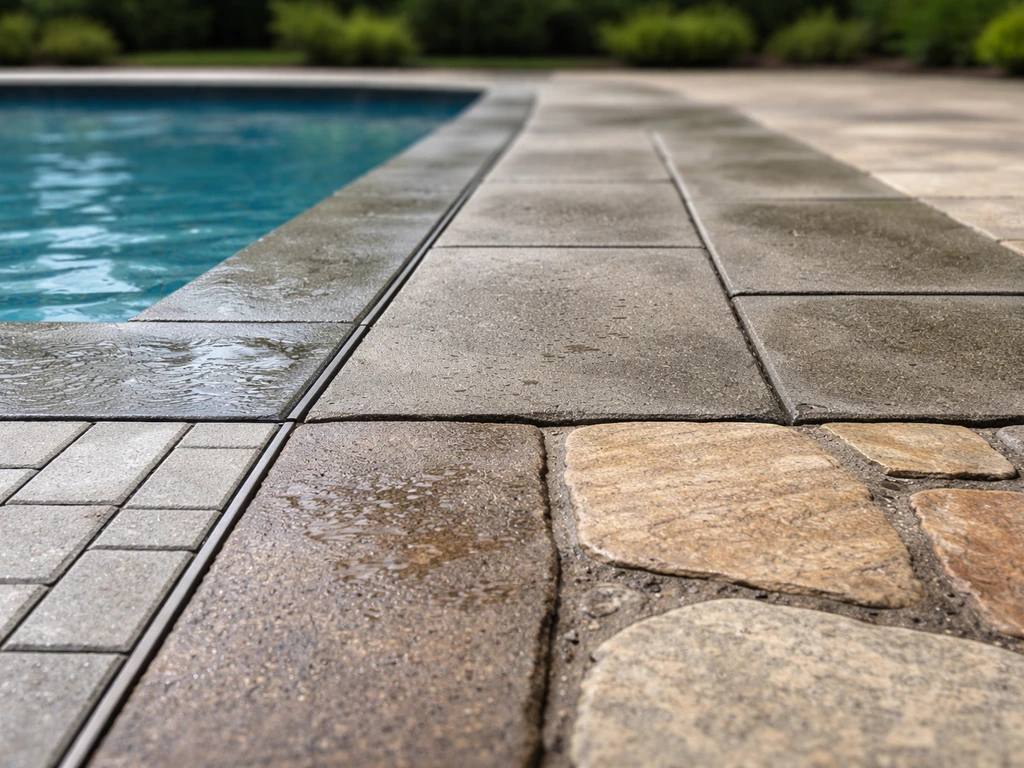
A pool patio is a different beast from a regular backyard patio. You've got wet feet, chlorine splash, UV exposure, constant foot traffic, and in many climates, hard freeze-thaw cycles every winter. Before you pick a material, make sure it checks every box on this list, skipping one is how people end up with cracked tiles or slippery surfaces three years in. For help choosing the best material for patio paving, compare traction, freeze-thaw durability, and maintenance needs for your exact conditions.
- Slip resistance: Hard surfaces must meet a wet DCOF of 0.42 or higher per ANSI A137.1. For natural stone, look for tumbled, brushed, cleft, or thermal finishes. Avoid honed or polished finishes anywhere wet feet will walk.
- Drainage: The surface must slope 1/8 to 1/4 inch per foot away from the pool toward drains. For pavers and interlocking systems, maintain a minimum 2% finished grade.
- Heat tolerance: Light-colored or naturally porous materials stay cooler underfoot in full sun. Dark porcelain and smooth concrete can get painfully hot in southern climates.
- Freeze-thaw resistance: If you're in a climate with hard winters, any tile or stone must pass ASTM C1026. Porous materials that absorb water and freeze will crack and spall.
- Chemical resistance: Chlorine, saltwater, and pool chemicals can degrade sealers, stain porous stone, and attack grout. Use chlorine-resistant penetrating sealers and pool-rated grouts.
- Durability under foot traffic: Pool decks see more barefoot and wet-shoe traffic than almost any other outdoor surface. Look for materials rated for heavy outdoor use.
- Repairability: Cracked tiles or broken stones in an odd size or discontinued color become permanent eyesores. Factor in how easy it is to source replacement pieces.
Quick comparison: all the main materials at a glance
| Material | Wet Slip Rating | Heat Comfort | Freeze-Thaw | Maintenance | Approx. Installed Cost (per sq ft) | Best For |
|---|---|---|---|---|---|---|
| Porcelain Tile (pool-rated) | Excellent (DCOF ≥ 0.42) | Moderate (gets hot in dark colors) | Excellent (if rated) | Very low | $12–$25+ | Low-maintenance, modern look, all climates |
| Flagstone | Good (natural texture) | Good (stays cooler) | Good–Excellent (dense varieties) | Moderate | $15–$30 | Natural look, warm climates, DIY-friendly |
| Travertine / Natural Stone | Good (tumbled/brushed only) | Excellent (cool underfoot) | Moderate (seal required) | Moderate | $12–$22 | Hot climates, classic look |
| Bluestone | Good (cleft/thermal finish) | Good | Good (dense stock) | Moderate | $18–$35 | Northeast climates, upscale look |
| Brick Pavers | Good (textured) | Good | Good (SW-rated only) | Moderate | $10–$18 | Traditional look, DIY, budget-friendly |
| Gravel / Decomposed Granite | Excellent (inherent grip) | Good | Excellent | Low–Moderate | $2–$8 | Informal pools, drainage priority, budget |
| Composite Decking/Pavers | Good (textured surface) | Good | Good–Excellent | Very low | $10–$20 | DIY speed, modern look, wet climates |
These cost ranges reflect installed pricing as of mid-2026 and can shift significantly based on region, complexity, and material grade. If you're shopping for the cheapest overall option, gravel and brick are the clear leaders, a separate deep-dive on the cheapest patio materials covers those tradeoffs in more detail.
Flagstone: the dependable all-rounder
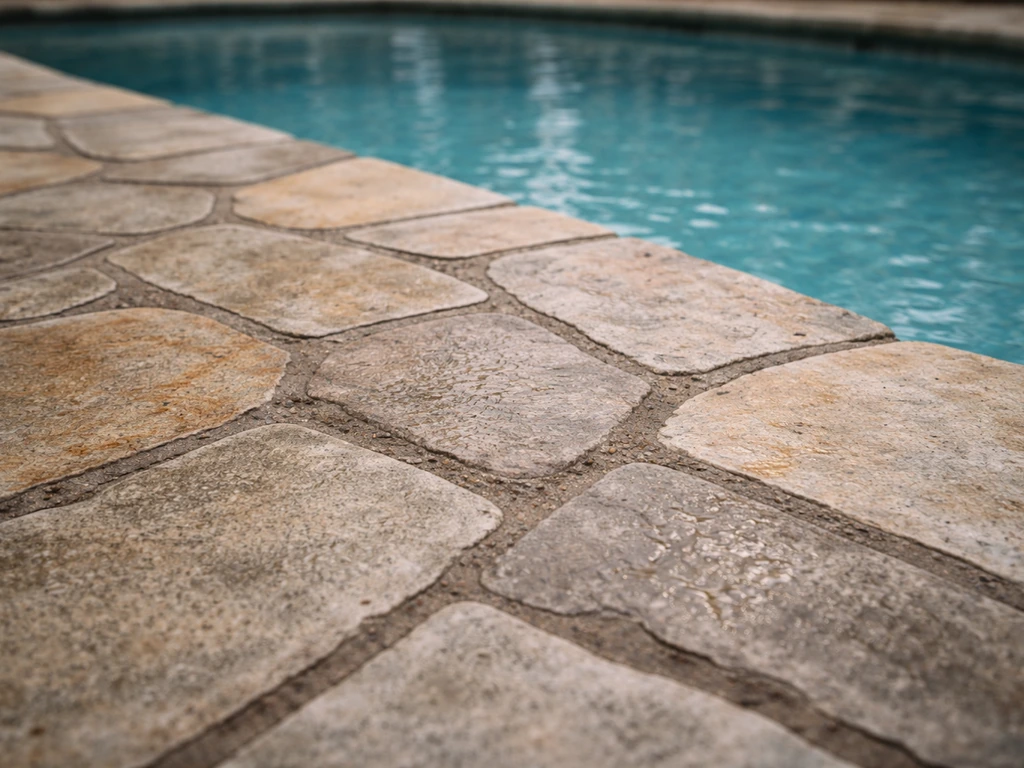
Flagstone is one of my go-to recommendations for pool surrounds because it threads the needle between natural beauty, traction, and durability without demanding expert installation. The naturally irregular, slightly rough surface texture gives you built-in slip resistance without any extra treatment. Typical flagstone varieties used poolside include Pennsylvania bluestone (cleft finish), Tennessee crab orchard, Arizona sandstone, and quartzite.
Flagstone pros
- Natural texture provides excellent wet grip without additional treatments
- Stays relatively cool underfoot in hot sun compared to concrete or dark porcelain
- Irregular shapes and earthy tones age gracefully and hide minor wear
- Dense varieties (quartzite, bluestone) handle freeze-thaw cycles well
- Can be set dry or in mortar, giving DIYers flexibility
- Broken or mismatched pieces can often be sourced from stone yards for repairs
Flagstone cons
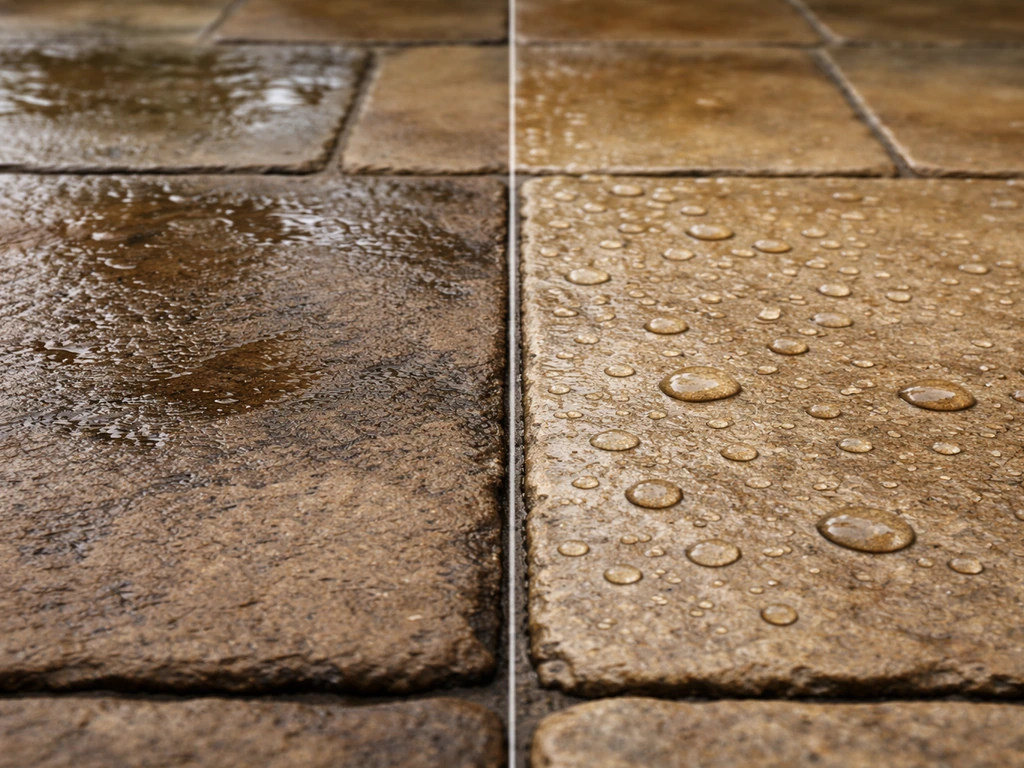
- Porous varieties (sandstone, softer limestone) absorb water and degrade in freeze-thaw climates unless sealed and maintained
- Irregular surface can be uncomfortable for bare feet if stones are very uneven
- Mortar-set flagstone requires a good base — skip this and you'll get cracking and settling
- Needs sealing every 2–4 years with a penetrating, chlorine-resistant sealer to prevent staining and chemical degradation
- Costs more than brick or concrete pavers at equivalent quality
Best climates and install notes
Flagstone works in almost any climate as long as you match the stone density to your winters. In freeze-thaw zones, stick with dense, low-absorption varieties like quartzite or hard bluestone and seal annually. In hot, dry climates (Arizona, Southern California), sandstone and flagstone stay comfortably cool and handle UV without fading. For installation, mortar-set flagstone on a concrete slab is the most stable pool surround approach. Dry-laid flagstone on compacted gravel works but requires more attention to joint maintenance and is better suited to low-traffic areas. Always slope the base a minimum of 1/8 to 1/4 inch per foot away from the pool.
Porcelain tile: the modern, low-maintenance choice
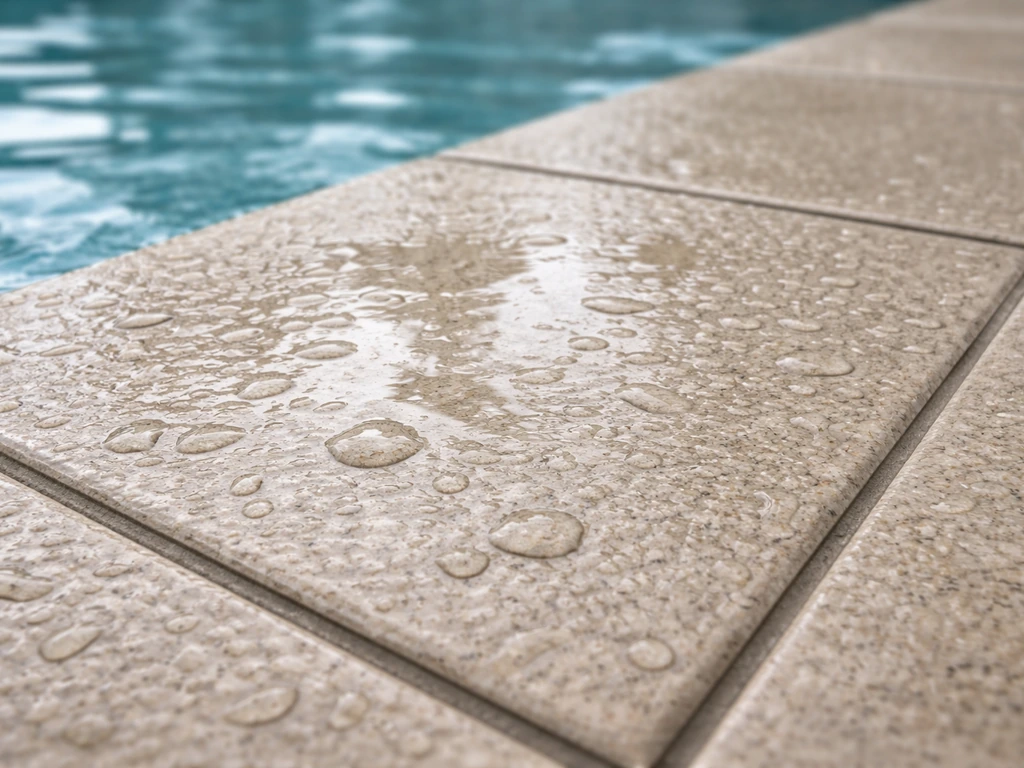
If you want something that looks sharp, resists pool chemicals, and stays looking new with minimal upkeep, pool-rated porcelain tile is hard to beat. If you're comparing options, this same pool-rated approach is usually the best way to pick the best material for patio deck surfaces. The key word is pool-rated, not all porcelain is made for wet outdoor use. You specifically need tile with a wet DCOF (Dynamic Coefficient of Friction) of 0.
For “swimming pool and wet area surrounds,” the cited requirement is tile with DCOF ≥ 0. 42 and use of substrate waterproofing membranes meeting ANSI A118. 10 tile with a wet DCOF of 0.
42 or higher per ANSI A137. 1. This is the minimum standard for surfaces walked on when wet, and most quality pool deck tiles exceed it. Ask for the DCOF rating before you buy anything.
What to look for when choosing pool porcelain
- DCOF ≥ 0.42 (confirmed by manufacturer's test data, not just a product description)
- Freeze-thaw rated per ASTM C1026 if you're in a cold climate
- Textured or matte surface finish — avoid polished or high-gloss tile near water
- Pool-rated grout and a substrate waterproofing membrane meeting ANSI A118.10
- Light or medium colors to reduce heat absorption in sunny climates
- Large-format tiles (18x18 or 24x24) reduce grout joints and lower maintenance
Grout and cracking: the details that matter
Grout is the weak link in any tile installation near water. TCNA research shows that on exterior tile systems, water intrudes mainly through grout joints rather than through the tile itself. Use an epoxy grout or a premium modified grout rated for pool chemical exposure. More importantly, follow TCNA EJ171 movement joint guidelines: plan expansion joints at all changes of plane and at regular intervals across large fields. Exterior installations use a 2:1 width-to-depth ratio for sealant joints. Skip the movement joints and you will get cracking, it's just a question of when. A waterproofing membrane under the tile (ANSI A118.10 compliant) keeps water from reaching and damaging the substrate if a grout joint fails.
Porcelain pros and cons
| Pros | Cons |
|---|---|
| Very low maintenance — hose off and done | Requires professional installation for best results |
| Excellent chemical and stain resistance | More expensive upfront than brick or concrete pavers |
| Wide range of styles including stone-look options | Grout lines need monitoring and periodic resealing |
| Freeze-thaw durable when properly rated | Dark colors absorb heat — can get very hot barefoot |
| Non-porous surface resists algae and mold buildup | Cracked tiles can be hard to match years later if color is discontinued |
Natural stone and brick: classic looks, earned care
Travertine
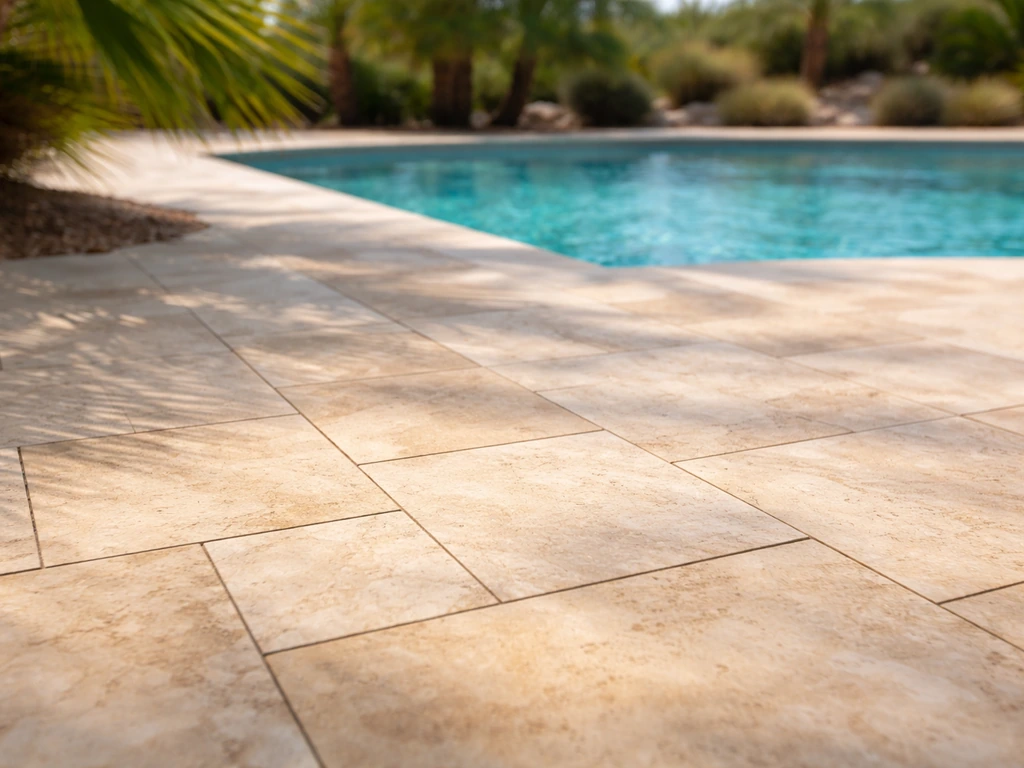
Travertine is probably the most popular natural stone for pool decks in warm climates, especially in Florida, Texas, and the Southwest. It's cool underfoot, looks elegant, and the slightly textured surface of a brushed or tumbled finish provides solid wet traction. The critical rule: only use tumbled or brushed travertine around pools. Honed or polished travertine is significantly more slippery when wet and is simply not safe poolside. Filled travertine (where the natural voids are filled with grout or epoxy) is the practical choice, unfilled travertine traps debris and moisture in those holes. Seal with a penetrating, chlorine-resistant sealer every 1–2 years, especially in saltwater pool environments where chemical exposure accelerates degradation.
Bluestone
Bluestone is the workhorse of the Northeast. It's dense, handles freeze-thaw cycles well when you choose quality stock with low absorption, and a cleft or thermal finish gives you reliable wet traction. Honed bluestone outdoors is risky for the same reason as honed travertine, the smooth surface gets slick. If you want to use honed bluestone for aesthetic reasons, apply a slip-resistant topical sealer. Seal bluestone with a penetrating sealer annually in harsh climates. It costs more than travertine, but the cold-climate durability is worth the premium in northern states.
Brick pavers
Brick pavers are underrated for pool surrounds. The textured clay surface is naturally grippy, they stay reasonably cool in the sun, and they look great around traditional or colonial-style homes. For pool use, you need SW-rated (Severe Weathering) brick, not standard paving brick. SW-rated brick has a higher density and lower water absorption, giving it the freeze-thaw resistance you need in cold climates. Lay them with a proper base (compacted aggregate base, 1 inch of bedding sand), maintain a 2% slope minimum, and use polymeric sand in the joints for stability. The joints need attention every few years, but brick is easy to repair, matching replacement pavers are widely available.
Layout, sealing, and traction tips for stone and brick
- Always slope away from the pool: 1/8 to 1/4 inch per foot minimum for hard surfaces, 2% for paver systems
- For travertine and bluestone, apply a penetrating (non-film-forming) chlorine-resistant sealer — film-forming sealers can become slippery when wet
- To boost traction when sealing, add a non-skid additive to the sealer coat
- Never use honed or polished stone finishes on wet-zone surfaces
- For brick, fill joints with polymeric sand and compact thoroughly — joint depth should be at least 1.5 inches
- Inspect sealers annually; reseal as needed based on water bead test (if water no longer beads on the surface, it's time to reseal)
- For natural stone in saltwater pool environments, use a sealer specifically formulated to resist salt penetration and freeze-thaw cycles
Gravel and composites: the practical alternatives
Gravel and decomposed granite
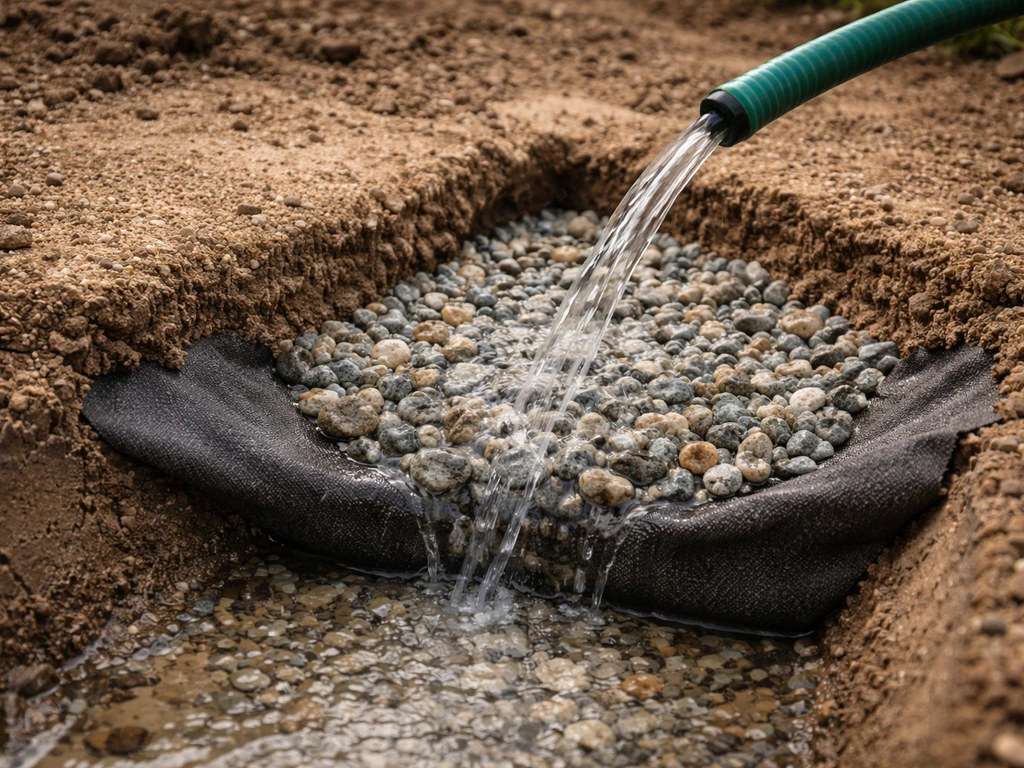
Gravel and decomposed granite (DG) are the budget champions and have a genuine drainage advantage that hard surfaces can't match, water drains right through them, so there's virtually no runoff management needed and no standing puddles. For pool surrounds, pea gravel or larger rounded aggregate works well barefoot because there are no sharp edges. DG compacts into a firmer surface and looks more refined. The downsides are real though: gravel migrates into the pool and onto feet, and it can shift under furniture, making chairs and loungers unstable. These materials work best when you want a large informal pool area on a tight budget, have excellent natural drainage, and aren't using the area for outdoor furniture setups.
Composite pavers and decking
Composite materials for pool patios come in two main forms: composite deck boards (used when the pool area is on a raised platform or deck) and composite paver tiles (modular snap-together or dry-laid systems). Both are engineered to resist moisture, UV, and algae, they won't rot, splinter, or fade the way wood does.
If you still want a wood option elsewhere on your outdoor build, use the best wood for patio posts as a comparison point to make sure you’re choosing something engineered for moisture and UV exposure. The surface texture is built-in for slip resistance, and they stay cooler than solid concrete or dark porcelain. Installation is genuinely DIY-friendly, especially with modular paver tiles that float on a gravel or sand base.
The tradeoff is that composites don't have the premium look of natural stone, quality varies a lot between brands, and some composites can feel slightly springy underfoot compared to stone or tile. They're a good fit for homeowners who want low maintenance, fast installation, and a clean modern look without spending on professional labor.
Drainage and upkeep for gravel and composites
- Gravel: install a landscape fabric underlayer to suppress weeds, add edging to contain migration, and plan for annual raking and top-up of material
- DG: compact in 2-inch lifts with a plate compactor, apply a stabilizer if you want a firmer surface that tracks less
- Composite pavers: rinse periodically with a garden hose; avoid pressure washers above 1500 psi which can damage the surface texture
- Composite deck boards: clean annually with a composite-specific deck cleaner; check manufacturer's guidance on UV and chlorine exposure ratings
- All loose-fill materials: check that the surrounding grade still directs water away from the pool equipment and house foundation annually
Pick this if... (scenario-based recommendations)
Here's the bottom line by common homeowner situation. These aren't hedged suggestions, they're what I'd actually recommend after working through the tradeoffs. A good way to decide on the best material for a backyard patio is to match the surface to your climate, slip risk, and maintenance expectations best material for backyard patio.
| Your Situation | Best Pick | Runner-Up |
|---|---|---|
| Hot climate (South, Southwest, Florida) | Tumbled travertine or flagstone | Light-colored matte porcelain |
| Freeze-thaw climate (Midwest, Northeast) | Freeze-thaw rated porcelain or dense bluestone (cleft finish) | SW-rated brick pavers |
| Lowest maintenance possible | Pool-rated porcelain tile | Composite pavers |
| Tightest budget | SW-rated brick pavers | Pea gravel or DG |
| DIY installation | Composite modular pavers or brick pavers | Dry-laid flagstone on gravel base |
| Kids and pets, safety priority | Tumbled travertine or textured flagstone (rough finish, no sharp edges) | Matte porcelain DCOF ≥ 0.42 |
| High-end look, contractor install | Porcelain (stone-look, large format) or bluestone | Flagstone (mortar-set on concrete slab) |
| Drainage challenges or large informal area | Pea gravel or DG | Permeable composite pavers |
Installation basics, spec checklist, and maintenance plan
Base preparation, this is where projects succeed or fail
No matter which material you choose, a bad base will ruin it. If you are also wondering what materials do i need for a patio, the same base-prep and traction-first thinking applies before you choose tile, stone, pavers, or composites. For mortar-set tile and stone on a concrete slab, the slab must be structurally sound, free of active cracks, and sloped correctly before you start.
For paver and dry-laid systems, excavate to a depth that accommodates your aggregate base (typically 6–8 inches of compacted crushed stone) plus 1 inch of bedding sand. Screen the bedding sand to a level surface and maintain that 2% minimum slope throughout. Final base elevations shouldn't vary more than 3/8 inch to prevent low spots where water pools. These aren't suggestions, they're the specs that determine whether your surface lasts 5 years or 25.
Installation spec checklist
- Confirm material slip rating: DCOF ≥ 0.42 for tile, tumbled/brushed/cleft/thermal finish for natural stone
- Confirm freeze-thaw rating (ASTM C1026) if your climate has hard winters
- Set finished grade slope: 1/8–1/4 inch per foot (1%–2%) away from pool toward drains
- For paver systems: 6–8 inch compacted aggregate base, 1 inch bedding sand (25 mm), final grade within ±3/8 inch tolerance
- For tile/mortar systems: use ANSI A118.10 compliant waterproofing membrane under tile; plan movement joints at changes of plane and every 8–12 feet in field
- Grout and joint sealant: use pool-rated epoxy or modified grout; movement joint sealant at 2:1 width-to-depth ratio
- For polymeric sand in paver joints: fill to 1/8 inch below top of paver (or below chamfer), minimum 1.5 inch joint depth
- Apply penetrating, non-film-forming sealer to all natural stone and brick; use chlorine-resistant formula for pool environments
Ongoing maintenance plan
| Task | Frequency | Applies To |
|---|---|---|
| Rinse surface to remove chlorine and chemical residue | Weekly during pool season | All materials |
| Inspect grout joints and polymeric sand for gaps or cracking | Every 6 months | Tile, brick, stone pavers |
| Water bead test to check sealer effectiveness | Annually | Natural stone, brick |
| Reseal with penetrating chlorine-resistant sealer | Every 1–3 years depending on finish and climate | Travertine, bluestone, flagstone, brick |
| Top up and rake gravel; check edging containment | Annually | Gravel, DG |
| Inspect and clean composite surface; check manufacturer UV ratings | Annually | Composite pavers and decking |
| Check drainage slope and clear drain openings | Each spring | All materials |
| Inspect for cracked tiles or spalled stone; source replacements early | Annually | Porcelain tile, natural stone |
How to evaluate samples before you buy
Always get physical samples and test them wet before committing to a material. Pour water on the sample, then walk on it in bare feet. If you hesitate or feel any slipping, move on. For tile, ask the supplier for the DCOF test certificate, not just a verbal confirmation.
For natural stone, wet the sample and look at how the surface changes: some stones become noticeably glossier when wet. Check the tile or stone manufacturer's freeze-thaw test results if you're in a cold climate. And get a sample large enough to see how it looks in your actual light conditions, not just under showroom fluorescents. One more thing: check availability of the same material for future repairs.
A discontinued tile color is a real long-term problem on a pool deck that takes regular wear.
FAQ
What’s the best material for a pool patio if it’s mostly exposed to splashes (not rain)?
If your pool gets more splashes than rain, prioritize wet traction and chemical resistance over color. Porcelain (with a wet DCOF of 0.42 or higher) and dense, low-absorption stones like quartzite or hard bluestone usually handle splash zones better, while gravel can migrate and create instability for pool ladders and furniture legs.
How do I prevent cracking if I’m adding a pool patio section to an existing slab?
Use expansion and movement joints even if you think the patio is small. Tile and stone still move with temperature swings, and the article already warns that skipping movement joints leads to cracking, regardless of size. If you are adding a new section to an existing slab, plan joints at the transition line so both surfaces can move independently.
Can I use regular outdoor porcelain tile around the pool?
Don’t assume “outdoor porcelain” is pool-ready. Ask for the specific wet slip rating (DCOF test documentation) and confirm it is rated for exterior wet pedestrian use. The wrong porcelain may pass visually, but it can be too slippery when the deck is wet or when pool chemicals are present.
What should I do differently in grout selection for a pool surround compared with an indoor backsplash?
Yes, but do it with the right grout and joint plan. Since grout joints are the weak point, use epoxy grout or a premium modified grout rated for pool chemical exposure, and include waterproofing and movement joints per the system design. If you skip the membrane or joints, you are trading “pretty” for hidden substrate damage over time.
Which pool patio materials hold up best in hard freeze-thaw climates, and what’s the biggest failure cause?
For deep-freeze regions, your safest path is to pick dense, low-absorption stone and seal correctly, then focus on base prep and slope. Quartzite or hard bluestone are better choices than honed/polished surfaces, and annual (or per manufacturer) sealing helps reduce water uptake. Still, even good stone fails if the base is flat and holds water.
Is travertine safe around a pool if it’s honed for a smooth look?
You can, but only with the correct finish and base details. If you choose travertine, use brushed or tumbled, not honed or polished, because wet slipperiness is the safety risk. Also choose filled travertine if you want fewer places for debris and moisture to lodge, and maintain your sealing schedule.
What are the real-world downsides of using gravel or decomposed granite around a pool?
Budget gravel can work, but only if you’re okay with maintenance and stability tradeoffs. Expect more litter into the pool (especially with breezes), and use larger rounded aggregate (pea gravel is a common barefoot-friendly choice) to reduce sharp edges. Avoid gravel zones where you want stable chair placement or frequent ladder access.
Which option stays most stable under outdoor furniture, brick pavers or gravel/DG?
It depends on your seating patterns and whether furniture needs to move. Polymer sand joints in brick are repairable, but they require periodic attention, and improper slope or base can cause settlement. If your loungers are moved often, brick and tile usually stay more stable than gravel and DG.
Can I use the same material on a raised pool deck and the pool surround?
Yes, and it’s a common way to get a deck that looks consistent across pool and nearby outdoor living spaces. The article’s porcelain approach is the same idea, but you still must verify it is specifically pool-rated for wet traction. For raised decks, confirm the substrate and fastening system is compatible with exterior moisture, not just the surface material.
Are composite pavers or deck boards a good choice for wet poolside areas?
Composite can be a practical DIY solution, especially for modular paver tiles on a gravel or sand base or for deck boards on a raised platform. The limitation is brand variability and possible “springy” feel, so it’s smart to test samples wet like you would with tile and stone. Choose composites that are designed for wet pedestrian areas, not just general outdoor use.
How do I plan for future repairs so a pool deck doesn’t look patchy later?
Skip any material without a reliable replacement path, especially for tile and stone. The article notes that discontinued colors create long-term repair problems, so check availability of the exact SKU or a close match before you commit. For natural stone, also confirm that the same lot, finish, and texture are available so future repairs blend.