Bluestone is beautiful, but it is not always the right fit. A broken bluestone patio is one of the common triggers for exploring these bluestone replacements. If you are dealing with a cracked slab, an eye-watering material quote, or a surface that turns into an ice rink every time it rains, you have plenty of solid alternatives: flagstone, concrete pavers, brick, porcelain outdoor tile, permeable pavers, and even gravel-based systems can all deliver a better result depending on your yard, your climate, and what you actually want to spend.
Alternatives to Bluestone Patio: Best Materials and Costs
Nolan Ellison
13 May 2026
What bluestone is and why people want to replace it
Bluestone is a dense, fine-grained sandstone or siltstone quarried mainly out of New York and Pennsylvania. It gets its name from a narrow blue-grey color palette, though individual batches can lean toward green, lavender, or sandy tones depending on the quarry. Patio slabs typically run 1 to 2 inches thick, and the natural cleft surface finish gives it that classic layered, slightly textured look that has been popular in the Northeast for decades. Bluestone patios are commonly chosen for their natural look, but they also have specific maintenance and performance considerations Patio slabs typically run 1 to 2 inches thick.
So why are homeowners looking past it? A few reasons come up again and again. Cost and regional availability are the biggest drivers outside the Northeast, where sourcing becomes expensive and lead times stretch out. Maintenance is another: bluestone needs periodic sealing with an impregnating sealer to resist staining and to slow down the moisture migration that causes efflorescence (that white chalky residue that appears when water pulls soluble salts up through the stone and leaves them on the surface when it evaporates). Polished or honed bluestone also gets dangerously slippery in the rain. And some homeowners simply find the traditional bluestone aesthetic feels dated compared to the cleaner look of large-format porcelain or the rustic warmth of flagstone.
The best surface alternatives to bluestone
Flagstone
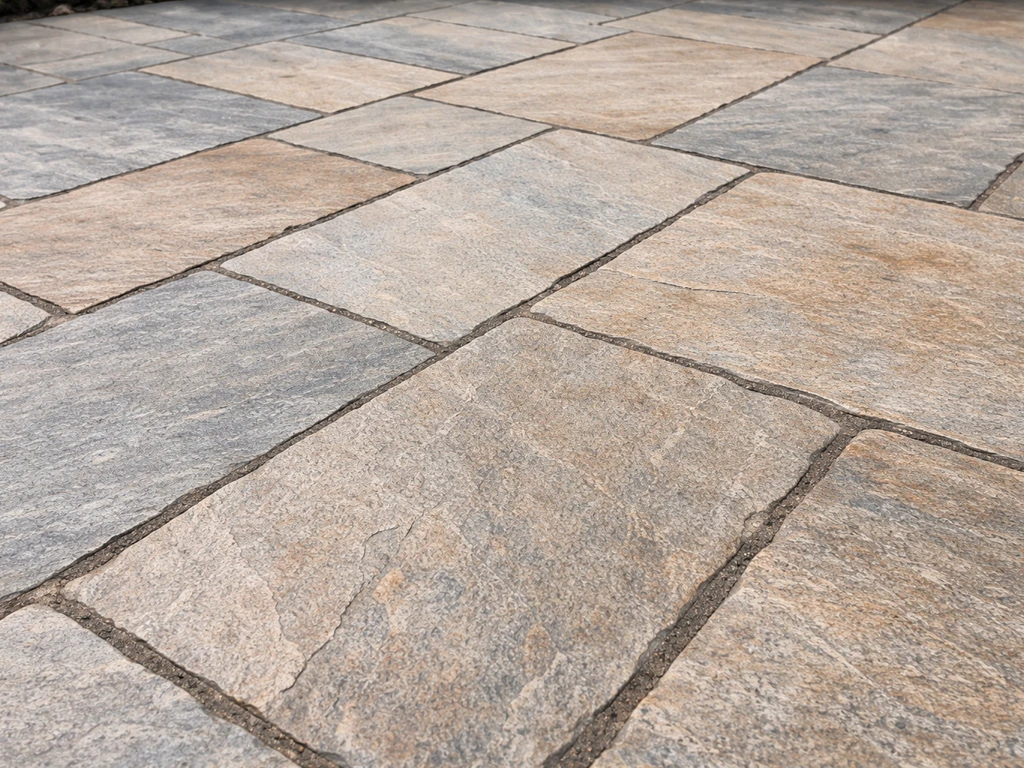
Flagstone is the most natural substitute for bluestone because it is essentially the same product category: large-format natural stone slabs cut or split for outdoor use. The difference is the breadth of options. You can choose limestone, slate, travertine, sandstone, quartzite, or even other regional bluestones depending on what is available locally. Thickness runs about 1 to 2.5 inches for dry-laid installs, with thicker pieces preferred when setting without mortar because the extra mass adds stability. Irregular flagstone has a casual, organic look; cut flagstone in rectangular or square formats reads more formal and modern. Slate, in particular, is worth a direct comparison to bluestone if you like the grey-blue palette but want something denser and with tighter layering.
Concrete pavers
Concrete pavers are one of the most practical, DIY-friendly alternatives on this list. They are manufactured in consistent thicknesses and sizes, which makes installation predictable. The base system is well-established: compacted aggregate base (typically 4 to 6 inches for residential pedestrian use), then a 1-inch bedding sand layer, then pavers, then polymeric sand in the joints to lock everything together and resist washout. Unlike large natural stone slabs, concrete pavers are easy to lift and relay if one section settles, which keeps long-term repair costs low. The downside is that they can look utilitarian unless you spend up for textured or tumbled finishes that better mimic natural stone.
Brick
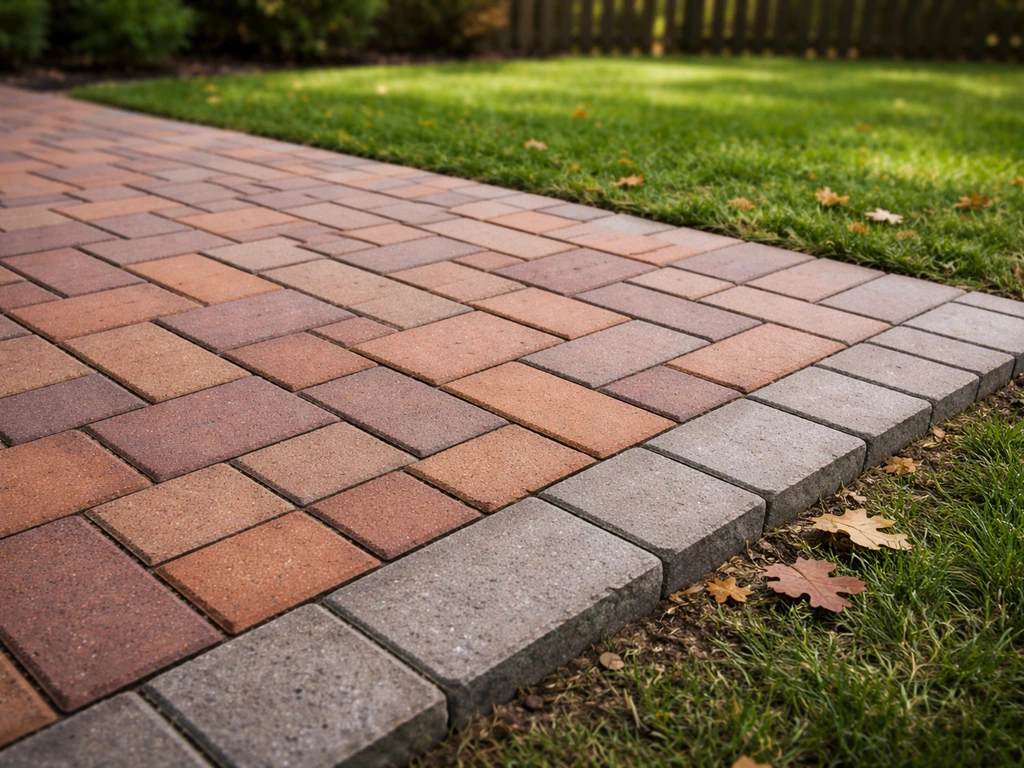
Brick patios give you a warm, classic look that ages well and can feel more characterful than cut bluestone. Clay brick is genuinely durable in freeze-thaw climates as long as you are buying paving brick specifically (not standard face brick, which can spall outdoors). Brick is also easy to source almost anywhere in the US, which solves the regional availability problem that affects bluestone pricing. Pattern options like running bond, herringbone, and basketweave add visual interest. The trade-off is that brick absorbs more moisture than porcelain or dense concrete pavers, so joint maintenance and occasional moss growth need to be managed.
Porcelain outdoor tile
Outdoor porcelain pavers have become one of the most popular bluestone alternatives in the last five years, and honestly, the performance numbers justify the hype. They are manufactured at around 20mm (about 3/4 inch) thick specifically for exterior use, water absorption sits below 0. 5% in quality products, and they pass ASTM freeze-thaw testing, which means they perform reliably in cold climates where bluestone can pit and spall over time.
They are also non-porous enough that staining and efflorescence are essentially non-issues. The look is clean, large-format, and contemporary. The downsides: they are more expensive to install correctly (a mortar or screened-stone bed plus proper slope and spacers are required), they can be slippery if you choose a polished finish, and they are harder to cut and handle than concrete pavers. Always use exterior-rated tile and grout, not interior products.
Composites and other patio surfaces
Composite decking panels and rubber-based tiles occasionally come up as alternatives for elevated patios or rooftop applications, but for a ground-level patio they are generally a compromise rather than an upgrade. Resin-bound gravel systems are worth knowing about though: they bond aggregate into a seamless, permeable surface that reduces weed growth compared to loose gravel or open-jointed pavers, and maintenance is mainly pressure washing to prevent pore clogging.
Resin-bound surfaces are typically described as very low maintenance, with regular cleaning and prompt attention to stains to keep them performing well over time maintenance is mainly pressure washing to prevent pore clogging. They do not carry the visual weight or durability of stone or pavers for heavy-use patios, but for a lightly used garden seating area they are a practical option.
If you are still comparing options, exploring patio stone alternatives can help you pick a surface that matches your climate and maintenance tolerance.
Natural stone vs. engineered and manufactured materials
This is the core trade-off most homeowners wrestle with. Natural stone (flagstone, slate, limestone, quartzite) gives you authentic variation, visual depth, and a look that is hard to replicate. But that variation also means inconsistent thickness and color, which complicates installation and can affect long-term performance. Engineered and manufactured options like concrete pavers and porcelain tile give you dimensional consistency, predictable performance specs, and in many cases stronger resistance to freeze-thaw cycling, staining, and moisture. Porcelain in particular outperforms natural stone on almost every technical metric. If you love the organic look of stone, flagstone wins. If you want the lowest long-term maintenance and the best freeze-thaw performance, porcelain or concrete pavers are the honest answer.
| Material | Visual Character | Freeze-Thaw Performance | Maintenance Level | Typical Cost (Installed) |
|---|---|---|---|---|
| Bluestone (baseline) | Blue-grey natural stone | Good but can spall over time | Moderate (sealing required) | $15–$30/sq ft |
| Flagstone | Organic, varied natural stone | Varies by stone type | Moderate (sealing optional) | $12–$25/sq ft |
| Concrete Pavers | Uniform, many styles | Excellent | Low | $8–$20/sq ft |
| Brick | Warm, classic | Good (use paving brick) | Low-moderate | $10–$20/sq ft |
| Porcelain Outdoor Tile | Clean, modern, large-format | Excellent (low absorption) | Very low | $18–$35/sq ft |
| Permeable Concrete Pavers (PICP) | Similar to concrete pavers | Excellent | Low-moderate (periodic cleaning) | $12–$25/sq ft |
| Decomposed Granite/Gravel | Casual, naturalistic | Good | Low (weed control needed) | $3–$8/sq ft |
Gravel, permeable pavers, and drainage-first options
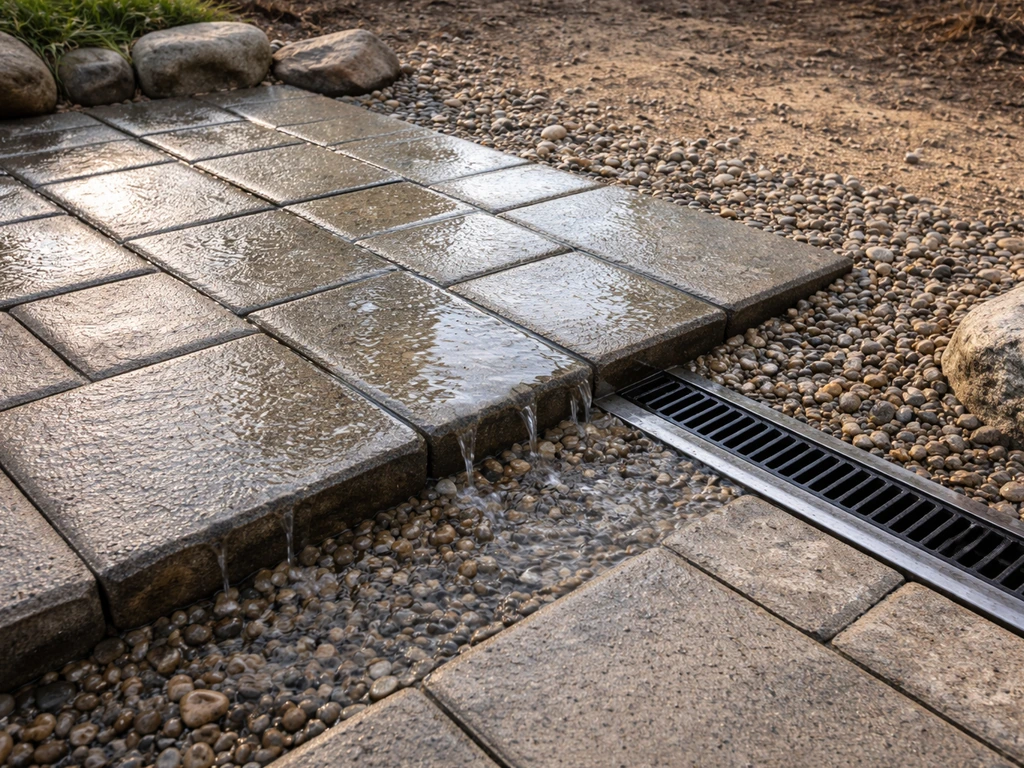
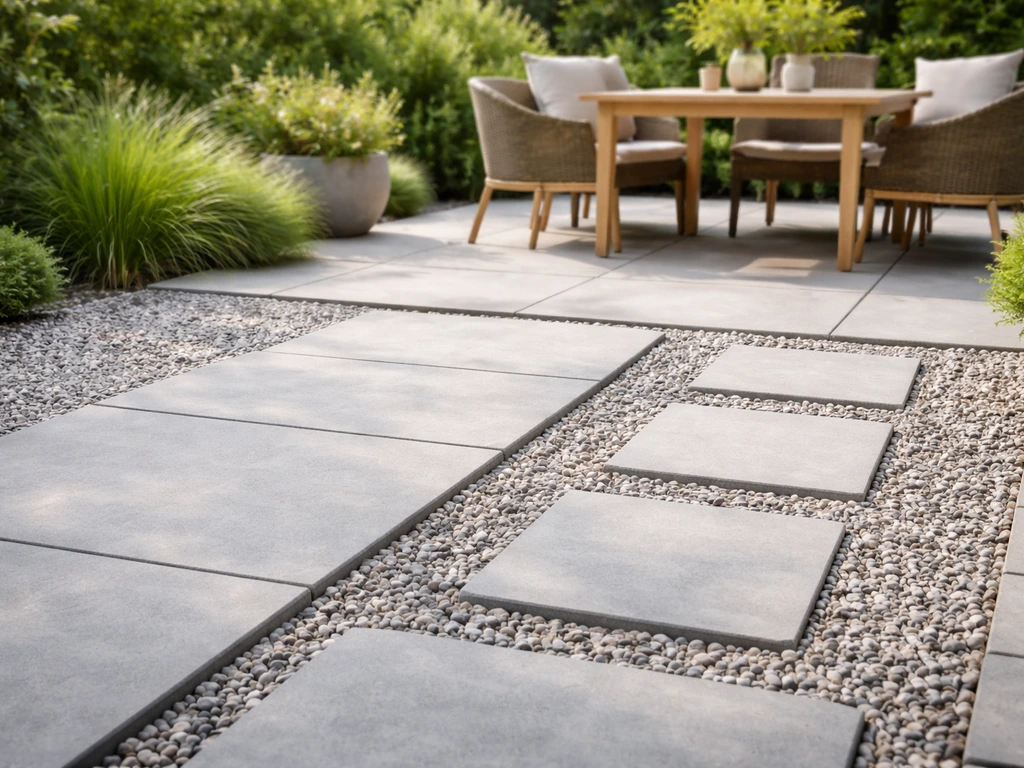
If part of your reason for moving away from bluestone is water pooling or runoff issues, this category of alternatives deserves serious attention. Permeable interlocking concrete pavers (PICP) look nearly identical to standard concrete pavers but are designed to let stormwater infiltrate through the joints and into the base below, which dramatically reduces puddles and surface runoff. They perform well in freeze-thaw conditions because the drainage prevents the water accumulation that causes frost heave. The maintenance commitment is real though: grass clippings, mulch, and leaf debris clog the joints and reduce infiltration, so you need to vacuum-sweep the surface once or twice a year and keep landscaping debris out of the contributing drainage area.
Decomposed granite (DG) and crushed gravel patios are at the opposite end of the formality spectrum. A compacted DG patio with a properly prepared base (crushed stone subbase, geotextile fabric where soil conditions call for it) can be surprisingly stable and attractive for a relaxed garden setting. Costs are low. Weed management is the main ongoing job. Loose gravel shifts under furniture and footwear, which some people find annoying. Resin-bound systems solve the loose-material problem by binding the aggregate into a permeable surface that stays put and resists weeds more effectively than open-joint paving.
How these materials stack up on cost, maintenance, and climate
Cost comparisons matter most when you look at total cost of ownership over 10 to 20 years, not just the installation quote. Porcelain pavers cost more upfront to install correctly but require almost no sealing and resist staining without treatment. Natural flagstone is cheaper to source in some regions but needs periodic sealing and can be more labor-intensive to set properly due to thickness variation. Concrete pavers are usually the sweet spot for cost and repairability: if something shifts or cracks, you lift the affected section, regrade the base, and relay. With mortar-set bluestone or porcelain, repairs are more involved.
- Freeze-thaw climates (Zone 5 and colder): porcelain pavers and concrete pavers are the safest choices; avoid porous natural stones with high absorption
- Hot, sunny climates: light-colored concrete pavers and textured porcelain stay cooler underfoot than dark natural stone; avoid very dark finishes that absorb heat
- Wet climates or poor drainage sites: permeable concrete pavers (PICP) or a gravel/DG system actively manage water rather than just tolerating it
- High-traffic or pets/kids: concrete pavers and porcelain are the most forgiving for heavy use; flagstone with wide joints can be a trip hazard for running kids
- Slip resistance: always specify a textured or brushed finish for any outdoor surface; polished/honed finishes on natural stone or porcelain become slippery when a water film forms
Installation essentials that actually affect how long your patio lasts
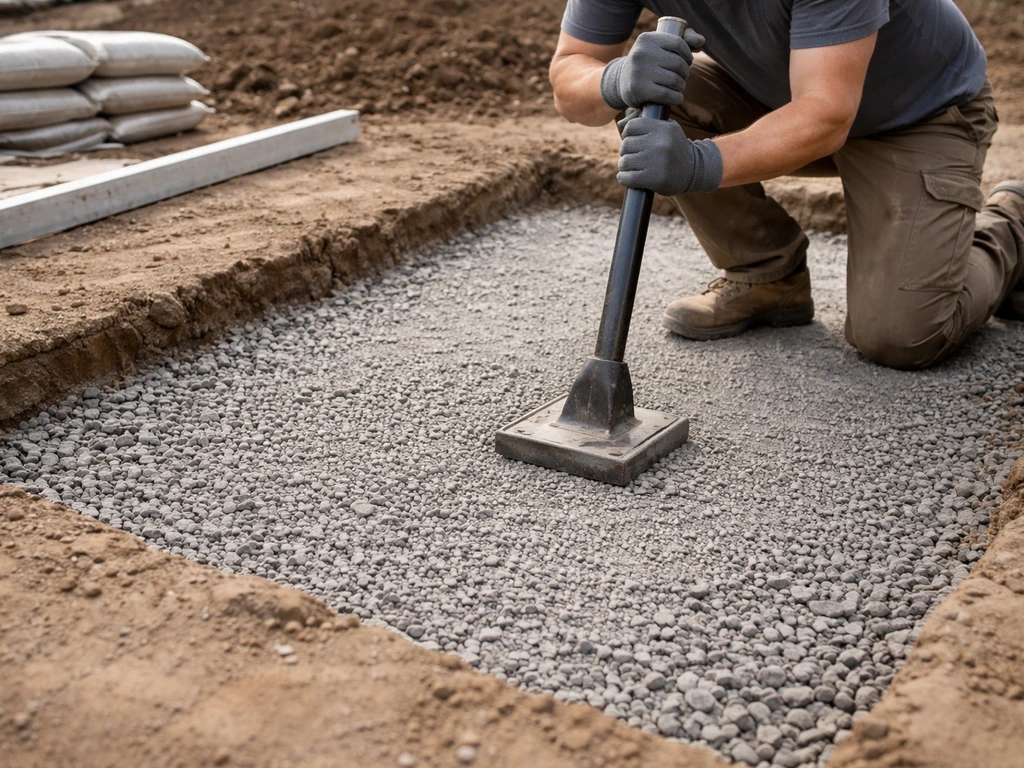
The material you choose matters less than the base system underneath it. I have seen beautiful bluestone patios fail in three years because the base was skipped, and I have seen basic concrete pavers last 20-plus years because the sub-base was built properly. Here is what you need to get right regardless of which alternative you choose.
- Excavate to depth: for most residential patio applications, you need to dig out 8 to 10 inches below your finished surface level to accommodate the compacted gravel base (4 to 6 inches), bedding layer (1 inch of sand or stone screenings), and paver/stone thickness (typically 1.5 to 3 inches depending on material)
- Compact the subgrade: do not skip this step. Use a plate compactor on the native soil before adding any base material
- Install compacted aggregate base: use crushed angular gravel (not rounded pea gravel) and compact in lifts of 2 to 3 inches; a geotextile fabric between subgrade and base is worth adding in clay-heavy or poorly draining soils
- Set the drainage slope: slope the finished surface 1/4 inch per foot (about 2%) away from your house or any structure; porcelain paver installations specifically require this minimum slope
- Bedding layer: for sand-set systems, spread 1 inch of coarse bedding sand or stone screenings and screed level; for mortar-set systems, use the appropriate exterior-rated mortar thickness and follow product specs
- Set pavers or stone with proper joint spacing: for porcelain pavers, use 4mm spacers between units consistently; for concrete pavers, maintain consistent joints for polymeric sand to fill properly
- Fill joints: use polymeric sand for concrete and brick paver joints and make sure joints are filled to the full depth (a minimum joint depth of 1.5 inches is a common product requirement); for porcelain tile on mortar, use exterior-rated grout
- Install edge restraints: plastic or aluminum edging spiked into the base holds the perimeter and prevents pavers from spreading over time; this is the most commonly skipped step and the most common cause of edge failures
- Sealing: porcelain does not need sealing; natural stone benefits from an impregnating sealer applied after installation and reapplied every 2 to 4 years; concrete pavers can be sealed or left natural depending on the look you want
One note on DIY vs. hiring a pro: excavation, base compaction, and drainage slope are the steps where mistakes are most costly and hardest to fix after the fact. This Old House’s stone patio guidance likewise emphasizes getting the drainage slope and compacted base right so the patio settles evenly when set into a mortar or wet mix [drainage slope and base compaction](https://www. thisoldhouse.
com/patios/how-to-lay-a-stone-patio). If you are comfortable renting a plate compactor and working to a level, concrete pavers and flagstone are genuinely DIY-friendly materials. Porcelain pavers on a mortar bed are not, because the cutting requires a wet saw and the mortar work requires experience to get the slope and leveling right. Permeable PICP systems need precise base aggregate specs to function correctly, so professional installation is worth the investment there.
How to pick the right alternative for your specific yard
Run through this checklist before you commit to a material. It takes five minutes and will save you from buyer's remorse.
- What is your climate zone? If you get hard freezes, eliminate any porous natural stone with high water absorption and prioritize porcelain or concrete pavers
- Do you have a drainage problem? If yes, look at permeable pavers or a gravel/DG system first rather than treating surface drainage as an afterthought
- What is your realistic budget? Concrete pavers give you the best cost-to-performance ratio for most budgets; porcelain is worth the premium if low maintenance is a priority
- How much maintenance can you commit to? Porcelain needs almost none; natural stone needs sealing every few years; permeable pavers need annual debris clearing; gravel needs weed management
- Who will use the patio? For kids and pets, prioritize textured finishes and avoid irregular flagstone with uneven surfaces that can catch small feet
- What does your house look like? A traditional home with brick or wood detailing pairs well with flagstone or brick; a modern or contemporary exterior looks sharper with large-format porcelain or clean-cut concrete pavers
- Can you source it locally? Check what stone yards and paving suppliers in your area actually carry before you fall in love with a material online; availability drives both cost and timeline
Once you have a shortlist of two or three materials, order samples and bring them outside in wet and dry conditions to check color, texture, and slip feel under real light. What looks great in a showroom can look completely different next to your house's siding and landscaping. Verify your installer has experience with the specific material, especially for porcelain or PICP, and ask to see a completed project. Then plan your excavation depth, confirm your base materials are ordered, and build it right from the ground up. A well-built concrete paver or flagstone patio will outlast a poorly built bluestone one every time.
FAQ
If I want the look of bluestone but better slip resistance, which alternative should I choose?
Go with exterior-grade porcelain in a matte or textured finish, or slate/flagstone with a mechanically textured surface. Avoid polished finishes on any stone or porcelain if you get freeze-thaw or frequent rain, and ask your supplier for a slip rating for wet conditions rather than relying on indoor showroom samples.
Are concrete pavers truly easier to repair than natural stone?
Yes, when the base was built correctly. With pavers you can lift and relay only the affected units after a localized settlement. With mortar-set porcelain or mortar-set natural stone, a repair often requires lifting a larger section to maintain slope and to match the finished plane, which increases labor and material waste.
What’s the biggest DIY mistake that causes alternatives to fail early, even if the material is high quality?
Skipping or underbuilding the drainage and base. The article’s key idea applies to all options, but the most common failure points are incorrect excavation depth, poor base compaction, and lack of a consistent slope for runoff. If you cannot confidently verify these, hire a pro for the base even if you plan to do the paver or stone set afterward.
How do I decide between flagstone and slate if I want a similar color palette?
If you want that grey-blue family look but with tighter layering and denser behavior, slate is usually the better match. Flagstone gives more variation and a more organic, rustic character, but thickness inconsistency can make leveling and final surface height more labor-intensive, especially for dry-laid patios.
Which option holds up best in heavy freeze-thaw climates?
Porcelain pavers generally outperform most natural stones due to very low water absorption and consistent manufacturing, and permeable interlocking concrete pavers also do well because water drains away from the surface. Natural flagstone and slate can still work, but performance depends heavily on stone density, correct jointing, and the base that prevents water from sitting under the surface.
Do I still need to seal flagstone or other natural stone alternatives?
Often, yes, but the schedule depends on the stone and the sealer type. Plan on periodic sealing for many natural stones to reduce staining and moisture migration, especially for porous varieties. Porcelain typically does not need sealing in the same way, which is one reason it’s a low-maintenance alternative.
For permeable pavers, what counts as maintenance “good enough” to keep them draining?
You need to prevent joint clogging from organic debris. Budget for vacuum-sweeping or power sweeping once or twice a year, and keep mulch, leaf litter, and grass clippings from accumulating in the joint lines. If you have downspouts that dump onto the patio, you may also need splash control or a drainage plan so water loading does not exceed infiltration capacity.
What’s the difference between permeable pavers and resin-bound gravel for weeds and debris?
Resin-bound systems usually suppress weeds better because the aggregate is bound into a stable matrix, and it does not leave wide open voids like loose gravel. Permeable interlocking pavers allow stormwater through joints, but organic material can clog those joints over time, so weeds may still appear if the joints become blocked. Choose based on whether you prefer periodic joint cleaning (permeable pavers) or a more uniform, sealed-feeling surface (resin-bound).
If my yard slopes toward the house, which patio alternative helps reduce water issues?
Permeable pavers (PICP) can reduce surface puddling, but they do not replace a proper drainage slope and a correctly designed base. If water is moving toward the foundation, focus on grading, positive runoff away from the house, and possibly a drainage solution. Then select a surface like permeable pavers or porcelain that won’t trap moisture at the surface.
Can I put porcelain pavers or tile over an existing patio?
Usually not as a straightforward retrofit. Porcelain and other tile systems require a stable, properly sloped base, and existing slabs can be uneven or bonded poorly to the new system. In most cases you need full removal or a professional assessment for how to achieve correct slope and structural support.
Which paver option is safest if I’m worried about future settlement and uneven spots?
Use concrete pavers with a well-specified compacted aggregate base and correct bedding, because they are modular and can be lifted and re-leveled. For permeable systems, settlement can also happen if the base aggregate is wrong or compaction is inconsistent, so confirm the base spec before installation.
How should I test samples before I commit to a material?
Do not rely on dry showroom photos. Bring samples outside and test under your real conditions, check wet slip behavior, and view color under morning and evening light because many greys and greige stones shift tone. Also test texture by stepping barefoot or with footwear similar to how you’ll actually use the patio, since the slip feel is often the deciding factor.