If you're choosing between slate and bluestone for a patio, here's the practical answer: bluestone is the more forgiving, widely available choice for most North American homeowners, especially in freeze-thaw climates. Slate looks stunning and costs less in some markets, but it demands more careful material sourcing and installation to perform well outdoors. Neither is a bad choice, but they have real differences in how they age, where they perform best, and what they ask of you to maintain them. This guide walks through every factor you need to make a confident call. If you're researching stone options more broadly, patio stone alternatives can help you compare setup, cost, and durability beyond just slate versus bluestone.
Slate vs Bluestone Patio: Which Stone to Choose
Nolan Ellison
29 Apr 2026
What slate and bluestone actually are
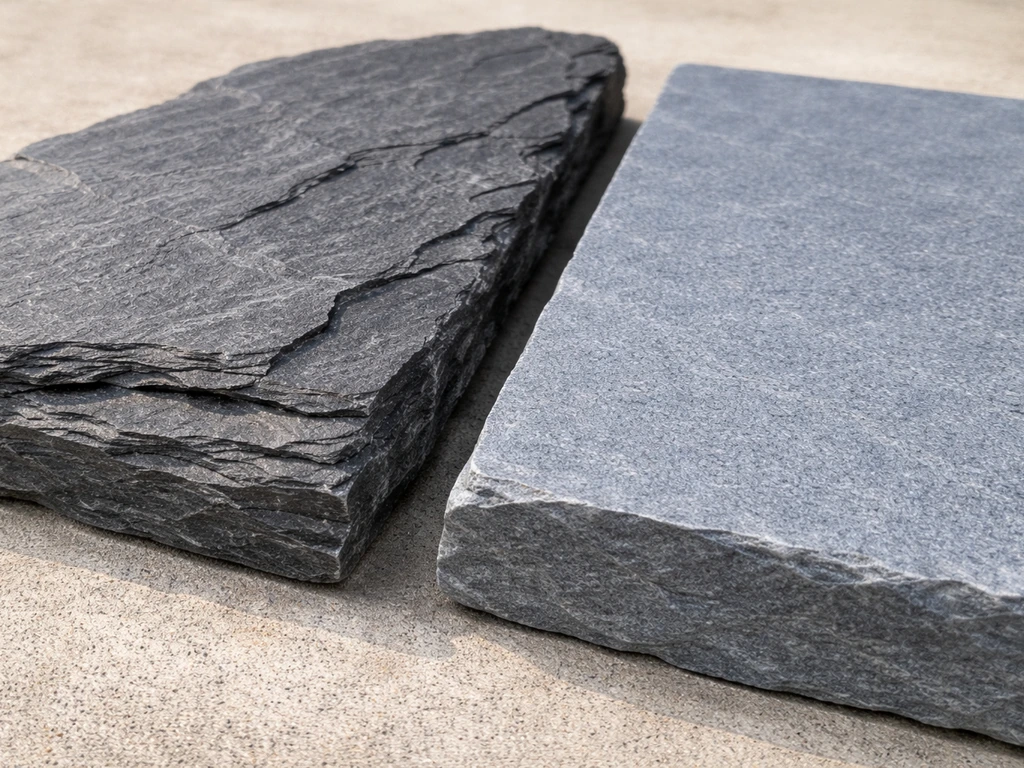
Slate is a metamorphic rock formed when shale or mudstone gets compressed and heated over millions of years. That process creates distinct mineral layers, which is why slate splits into flat sheets so cleanly. It's quarried in many parts of the world, including the US, Brazil, India, and China, and the country of origin matters a lot for outdoor durability. Indian and Chinese slates, commonly sold at lower price points, tend to be softer and more porous than domestic or Brazilian varieties. When a spec sheet references ASTM C121 (water absorption) and C217 (weather resistance), those numbers tell you whether a given slate will hold up outside or eventually delaminate.
Bluestone is a marketing term more than a geological one, which trips people up. In North America, it most commonly refers to a dense, fine-grained sedimentary stone (technically a sandstone or bluish limestone-like rock) quarried primarily from the Hudson Valley and Catskill regions of New York and the Delaware Valley of Pennsylvania. Pennsylvania and New York bluestone has been the workhorse of East Coast patios for generations. It's dense, relatively low-absorption, and quarried in flat slabs that suit outdoor paving naturally. If you're shopping outside that regional supply chain, you may encounter stones marketed as "bluestone" that are actually different rocks entirely, so always ask where it was quarried.
Color, texture, and finish options
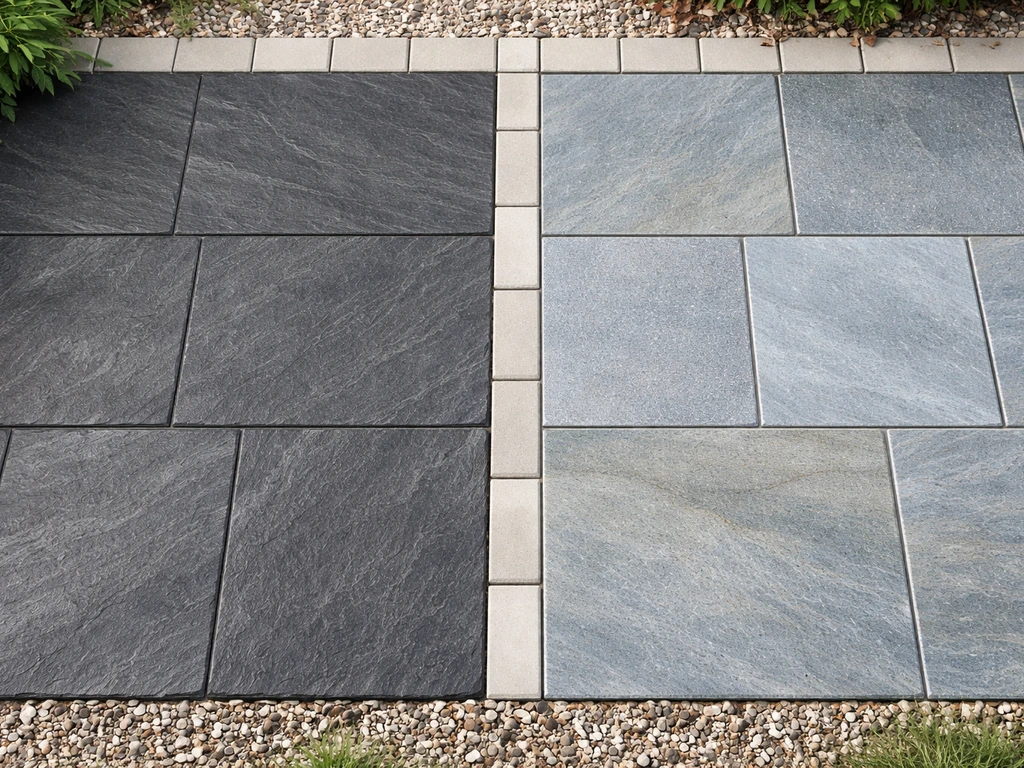
Bluestone's signature look is a cool blue-gray, sometimes with hints of green or brown depending on the specific slab. It reads as clean and classic, which is why it pairs so well with both traditional and contemporary architecture. Slate covers a much wider color range: deep charcoal, rust, copper, purple, and multicolor blends are all common depending on where it was quarried. If you want a warmer, more earthy palette, slate gives you more options. If you want that clean, neutral gray, bluestone is hard to beat.
Both stones come in several surface finishes, and your finish choice affects slip resistance, maintenance, and appearance significantly. Here are the main options you'll encounter for each:
- Natural cleft: The stone is split along its natural layers, leaving a slightly uneven, textured surface. This is the most common outdoor finish for both slate and bluestone, and it provides good traction without any processing.
- Thermal (flamed): A high-heat process that causes the surface to micro-fracture into a slightly rough, matte texture. Bluestone thermal finishes are widely available and offer tighter dimensional tolerances than cleft pieces, making installation easier. Great for pool decks and wet areas.
- Honed: Ground smooth to a consistent flat surface with a low sheen. Looks polished and refined indoors, but can be slippery when wet outdoors. Not the best choice for exterior use unless you seal with a non-slip additive.
- Bush-hammered: Mechanically textured with a dimpled surface. Intentionally increases traction. Works well for steps and pool surrounds.
- Tumbled: Stone edges and surfaces are rounded and worn-looking, giving an aged, rustic appearance. Common with both slate and bluestone for informal garden patios.
- Brushed: Wire-brushed to open the surface slightly for texture. Less aggressive than bush-hammered but still improves traction over honed.
For any outdoor patio, natural cleft, thermal, or bush-hammered finishes are the safest bets underfoot. Honed and polished finishes are beautiful but belong indoors or on covered surfaces where they won't get rained on.
Durability and how each handles freeze-thaw cycles
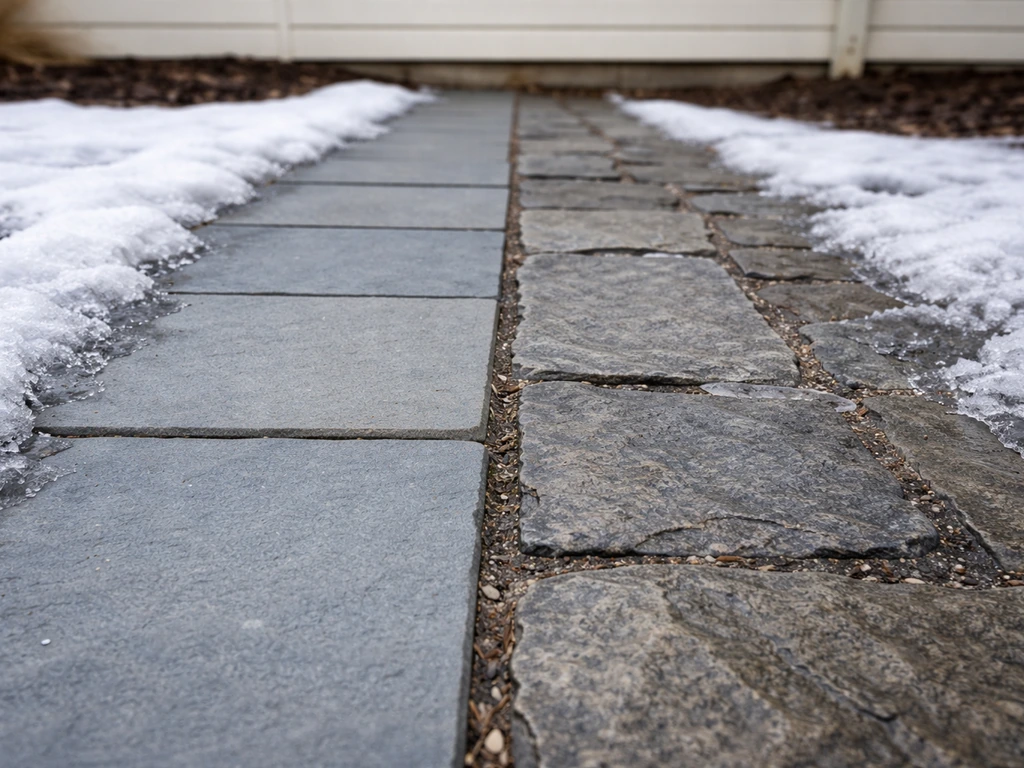
This is where the two stones diverge most meaningfully. Bluestone, when sourced from Pennsylvania or New York, is dense and low in water absorption, which is exactly what you want in a freeze-thaw climate. Water absorbed into a stone expands when it freezes, and if enough cycles repeat, softer or more porous stones will crack, spall, or delaminate. Pennsylvania and New York bluestone has a long track record of surviving cold northeastern winters in good shape. It's also dimensionally stable, meaning it doesn't warp or shift much seasonally.
Slate's freeze-thaw performance is highly variable and depends entirely on where it was quarried and how it was processed. Domestic slate from Virginia or Vermont is generally dense and reliable outdoors. Lower-cost imported slate from India or China can have higher water absorption rates, and some softer varieties will begin to delaminate (the layers separate) after several freeze-thaw cycles. Freeze-thaw resistance testing per ASTM methods and the Army Corps CRD-C 144 standard is used to evaluate exactly this risk.
If a supplier can't tell you the absorption rate or freeze-thaw test results for their slate, that's a warning sign for cold-climate applications. I've seen budget slate patios in New York look beautiful the first summer and start flaking by year three.
| Factor | Bluestone (PA/NY) | Slate (Domestic) | Slate (Imported, budget) |
|---|---|---|---|
| Freeze-thaw performance | Excellent | Good to excellent | Risky to poor |
| Water absorption | Low | Low to moderate | Moderate to high |
| Cracking/spalling risk | Low | Low (if dense) | Moderate to high |
| Delamination risk | Very low | Low | Moderate to high |
| Dimensional stability | High | High | Variable |
Slip resistance and safety when wet
Both stones can be slippery or safe depending on the finish you choose. For exterior wet applications, the relevant performance metric is the Dynamic Coefficient of Friction (DCOF), tested per ANSI A326.3. Rougher, more textured finishes score higher on this scale and are safer underfoot. Natural cleft and thermal finishes on both bluestone and slate provide good traction. Honed surfaces on either stone drop friction significantly when wet and should be avoided on open patios, pool decks, and steps.
If your patio doubles as a pool deck or gets heavy rain exposure, thermal or bush-hammered bluestone is one of the safest natural stone options available. The thermal process creates a slightly coarse, micro-textured surface that grips wet feet well. For slate in the same setting, a natural cleft or bush-hammered finish works similarly. The mistake I see most often is homeowners choosing honed slate or bluestone for appearance reasons and then being surprised by how slick it becomes. A non-slip sealer additive can help, but it's not a permanent solution and requires reapplication.
Installation differences
Base preparation
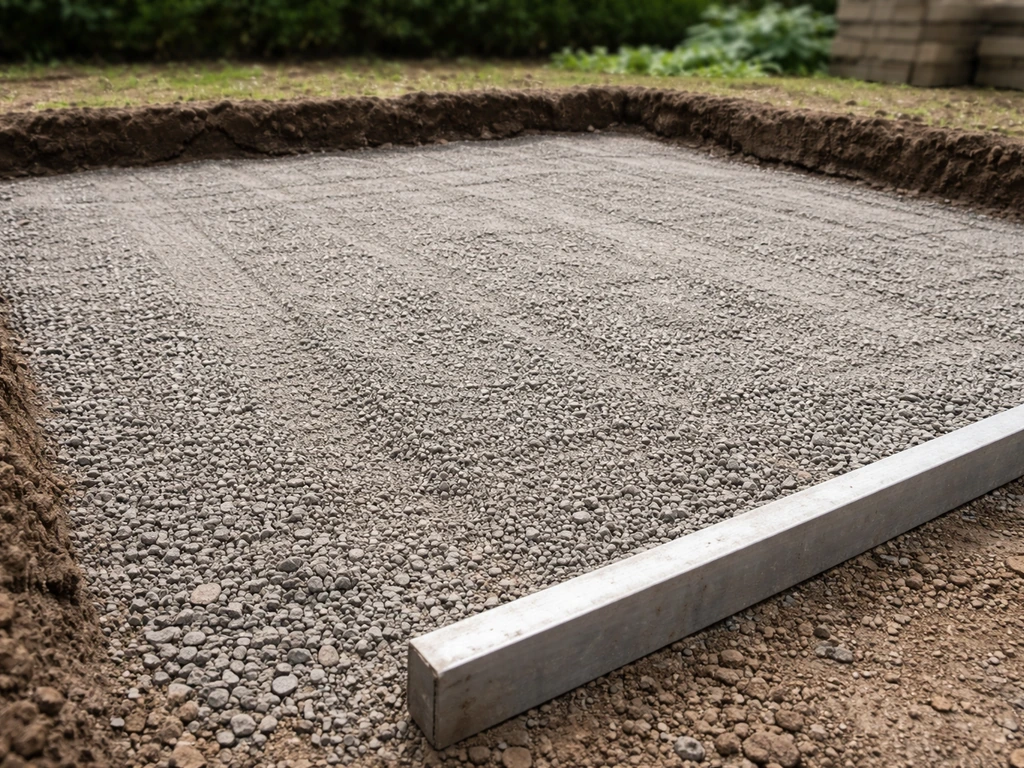
Both stones need a well-compacted, stable base to perform over time. The typical approach is a 4 to 6 inch compacted crushed stone base (more in freeze-thaw climates, where frost heave is a concern), topped with a 1 inch setting bed of coarse sand or stone dust. For mortar-set installations, the stone sits in a thin mortar bed over a concrete slab. Drainage slope matters enormously: you want at least a 1 to 2 percent slope away from structures to prevent water from pooling under or around the stone. In problem areas, a perforated drainage pipe beneath the base layer helps channel water away.
Setting methods and thickness
Bluestone pavers are commonly sold in 1.5 inch and 2 inch thicknesses for residential patios. Thicker pieces are heavier and more stable in a dry-laid (sand-set) installation. Slate is available in similar thickness ranges, though irregular natural cleft pieces can vary more in thickness across a single slab, which means your leveling work during installation takes longer. Thermal-finish bluestone has tighter dimensional tolerances, making it faster to set consistently. For a dry-laid patio without mortar, consistent piece thickness is genuinely helpful.
Joints, lippage, and drainage
Lippage, where the edge of one stone sits higher than the adjacent one, is the most common visual problem in natural stone patios, and it's also a trip hazard. Irregular natural cleft pieces on both slate and bluestone require more skill to set flush than machine-cut or thermal pieces. If you're hiring a contractor, ask specifically how they handle lippage and what tolerance they work to (generally, less than 3/16 inch for pedestrian surfaces is a reasonable benchmark). Joint width depends on the look you want: random irregular stone typically uses wider joints filled with polymeric sand or stone dust, while pattern-cut pieces can be set with tighter joints.
Sealing and keeping your patio looking good
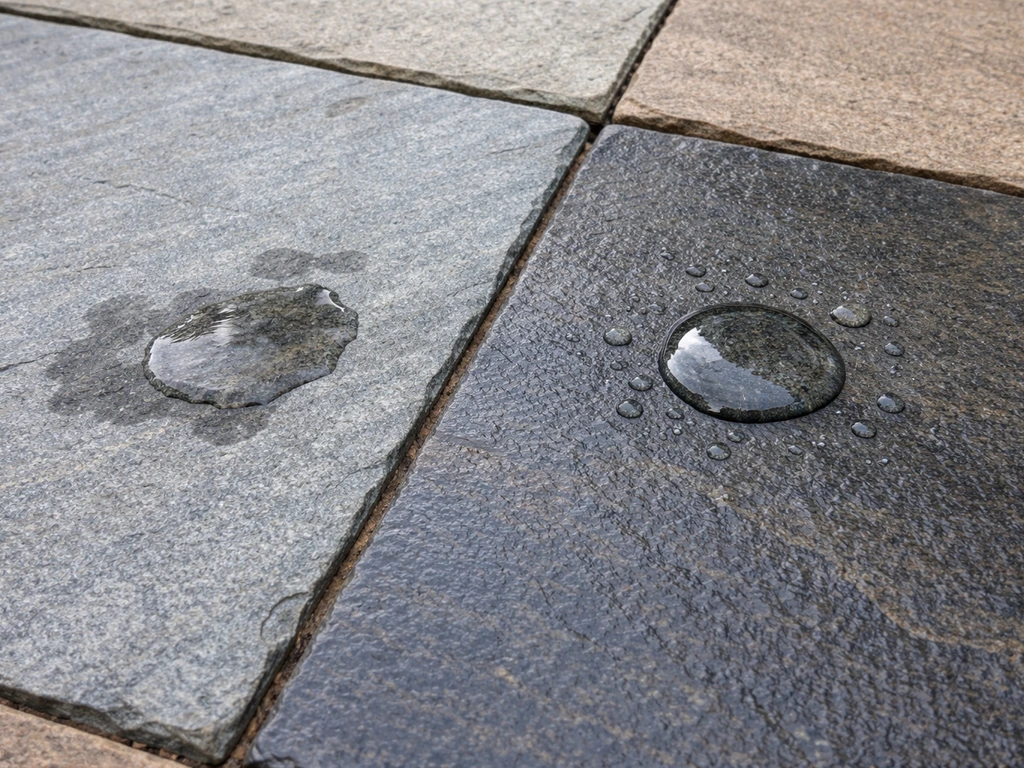
Bluestone doesn't need to be sealed, but sealing it gives you better stain resistance and can enhance the color. A penetrating (impregnating) sealer is the right product for outdoor natural stone. It won't create a film that can peel or trap moisture. For bluestone, resealing every 2 to 3 years is a common maintenance interval, though high-traffic or heavily shaded patios (which stay wetter longer) may need it more often.
Slate actually benefits more from sealing, especially if it's a softer imported variety. blank" rel="noopener noreferrer">Sealing reduces water absorption, which directly protects against freeze-thaw damage and staining. Use a pH-neutral cleaner for routine washing on both stones. Avoid acidic cleaners (like vinegar-based products) on bluestone, as the slight limestone content in some bluestone can react to acid and etch the surface over time. For slate, avoid wire brushes that can scratch and open the surface layers.
| Maintenance Task | Bluestone | Slate |
|---|---|---|
| Sealing recommended? | Optional but beneficial | Recommended, especially for imported |
| Resealing frequency | Every 2–3 years | Every 1–3 years (varies by stone density) |
| Cleaner type | pH-neutral; avoid acid | pH-neutral; avoid wire brushes |
| Winter care | Clear snow promptly; avoid metal shovels | Clear snow promptly; avoid metal shovels |
| Stain resistance (unsealed) | Good | Moderate (varies by porosity) |
Cost, value, and which one to choose
Bluestone patio installation typically runs $17 to $31 per square foot installed, depending on the finish, thickness, region, and layout complexity. Slate paver materials can range from $10 to $30 per square foot for the stone itself, with labor on top. On paper, slate looks cheaper, but domestic or Brazilian slate with good freeze-thaw specs tends to land in a similar price range to bluestone. The budget-level slate (imported, thin, softly quarried) is genuinely cheaper, but it carries real durability risk in cold climates. You're not always saving money when the patio needs repairs in year four.
Here's how I'd steer someone based on their specific priority:
| Your Priority | Best Choice | Why |
|---|---|---|
| Best in freezing weather | Bluestone (PA/NY) | Dense, low-absorption, proven freeze-thaw track record |
| Safest underfoot when wet | Thermal or bush-hammered bluestone | Tight tolerances, consistent texture, excellent traction |
| Most striking visual character | Slate (multicolor or copper tones) | Wider color range, dramatic natural variation |
| Lowest long-term maintenance | Bluestone | Durable, sealing optional, easier to source matching repair pieces |
| Best budget option | Domestic slate or natural cleft bluestone irregular | Lower material cost, but verify stone specs before buying |
| Pool deck or high-moisture area | Thermal bluestone or bush-hammered slate | Both work well with the right finish; thermal bluestone easiest to source |
If you're in the mid-Atlantic, Northeast, or Midwest and want a patio that holds up with minimal drama, bluestone is the easier answer. If you're in a mild climate and want a specific look that slate delivers, it's a great choice, just be selective about the source. Understanding what bluestone actually is and where it comes from is worth a closer look before you assume any blue-gray stone qualifies.
Before you buy: checklist and questions to ask
Before you commit to material or contractor, go through these steps. It takes maybe an afternoon, but it's the difference between a patio that looks great at year ten and one that's already showing cracks or unevenness at year two.
- See samples in real daylight, not just showroom lighting. Both slate and bluestone look different in shade, full sun, and wet conditions. Take samples home and view them on your actual patio footprint at different times of day.
- Ask the supplier for the water absorption rate (ASTM C97 or C121) and country of origin for any stone you're considering, especially slate.
- For cold climates, ask specifically: has this stone been freeze-thaw tested? Can they provide spec sheets showing results per ASTM or CRD-C 144?
- Confirm piece thickness and dimensional tolerances. Thermal-finish and sawn-edge pieces should have tight tolerances. Natural cleft pieces can vary, so ask how much thickness variation is in the lot.
- Ask your installer about base depth. For freeze-thaw regions, 6 inches of compacted crushed stone base is a minimum. Ask how they handle drainage slope and whether they install perforated drainage pipe.
- Ask about lippage tolerance. Get a specific number, not just 'we'll keep it flat.' A reasonable standard is no more than 3/16 inch variation at joints for pedestrian-use patios.
- Discuss joint filling material. Polymeric sand is more stable than plain sand for dry-laid installations. For mortar-set work, ask about the grout product and whether it's rated for exterior freeze-thaw exposure.
- Get the sealing plan in writing. Ask what product they use, when they seal (typically after installation cures), and when you should reseal. A contractor who says 'it doesn't need sealing ever' for slate in a cold climate is cutting corners.
- Check that enough extra material is ordered for breakage and future repairs, typically 10 to 15 percent overage. Matching natural stone years later from the same quarry run can be difficult, especially with slate's color variation.
- For broken or damaged patio concerns after installation, confirm whether the contractor's warranty covers base failure versus stone breakage, and what repair approach they recommend.
One last thing worth knowing: if you're researching stone options more broadly, bluestone has some genuinely strong alternatives worth considering depending on your region and budget, and irregular or broken stone formats can actually be a cost-effective way to get a natural look with either material. Broken bluestone patio formats can be a budget-friendly way to achieve a natural, varied look while still meeting durability needs for your region broken stone formats.
The right stone for your patio isn't always the most expensive or the most popular. If you want to broaden your options beyond bluestone patio materials, there are several alternatives worth comparing for your climate and finish preferences alternatives to bluestone patio. It's the one that fits your climate, your maintenance reality, and the way you actually use the space.
FAQ
Which finish should I choose if my patio is near a pool or gets wet often?
Yes, but only if the finish supports traction. On open patios and steps, avoid honed or polished slate and bluestone, even if they look great dry. Choose natural cleft, thermal, or bush-hammered surfaces, then verify the supplier’s DCOF data (ANSI A326.3) for wet conditions.
How often do slate and bluestone need sealing, and how do I know when it’s time?
Expect it to be a renewal schedule, not a one-time job. Bluestone commonly needs penetrating sealer every 2 to 3 years, while slate often requires more frequent sealing if it is softer or more porous. If the stone darkens quickly after a light water test, it usually still needs protection.
What’s the safest way to clean slate or bluestone patios without damaging the surface?
Use pH-neutral cleaners and rinse thoroughly. For bluestone, skip acid-based products (including vinegar-type cleaners) because some bluish limestones can etch and dull over time. For slate, avoid wire brushes, since scratching can open micro-areas that hold dirt and accelerate wear.
If I find cheaper slate online, what should I ask before buying it for a cold climate?
Budget slate can be fine in mild climates, but it’s risky in freeze-thaw areas if the stone is soft or too porous. Ask for water absorption (ASTM C121) and relevant weathering or freeze-thaw performance, and be cautious if the supplier cannot provide test results or stone origin.
What causes natural stone patios to crack even when the stone seems “durable”?
The key is controlling water under the stone. Confirm the patio has a compacted base of appropriate depth for frost-heave conditions, a properly graded slope (at least 1 to 2 percent away from structures), and drainage in problem areas. Without these, even the right stone can heave, crack, or shift.
How can I reduce lippage and trip hazards when using slate or cleft bluestone?
Start by measuring for lippage risk. Irregular natural cleft pieces can settle at slightly different heights unless the installer uses careful leveling and selection, and higher lippage can become a trip hazard. Ask contractors what height tolerance they target (less than 3/16 inch for pedestrian areas is a common benchmark).
Which stone is easier to install for a dry-laid patio, especially if I want fewer leveling problems?
For dry-laid (sand-set) patios, thickness consistency helps. Bluestone with tighter dimensional tolerances is often faster to level than slate pieces that vary across a slab, especially with irregular cleft forms. If you want a quick, repeatable install, thermal-finish bluestone is usually more predictable.
Will sealing protect against stains equally for slate and bluestone?
Not necessarily. Bluestone and slate can both stain, but slate typically benefits more from sealing, especially for porous imported varieties. Also watch joint material choice, since polymeric sand and stone dust can trap debris if the joints aren’t kept clean.
Is bluestone automatically less slippery than slate, or does it depend on something?
Yes, and it’s a common mistake. Slipperiness is usually a finish problem, not only a stone problem. If you are tempted by honed slate or bluestone for appearance, plan for increased slip risk in rain, dew, and near-freezing conditions.
How do I verify I’m actually buying the kind of bluestone that works in my climate?
Bluestone is commonly sold as specific regional material, while “bluestone” outside that supply chain may be a different rock. Always ask where it was quarried and whether the product matches the dense, low-absorption types used successfully in freeze-thaw regions.