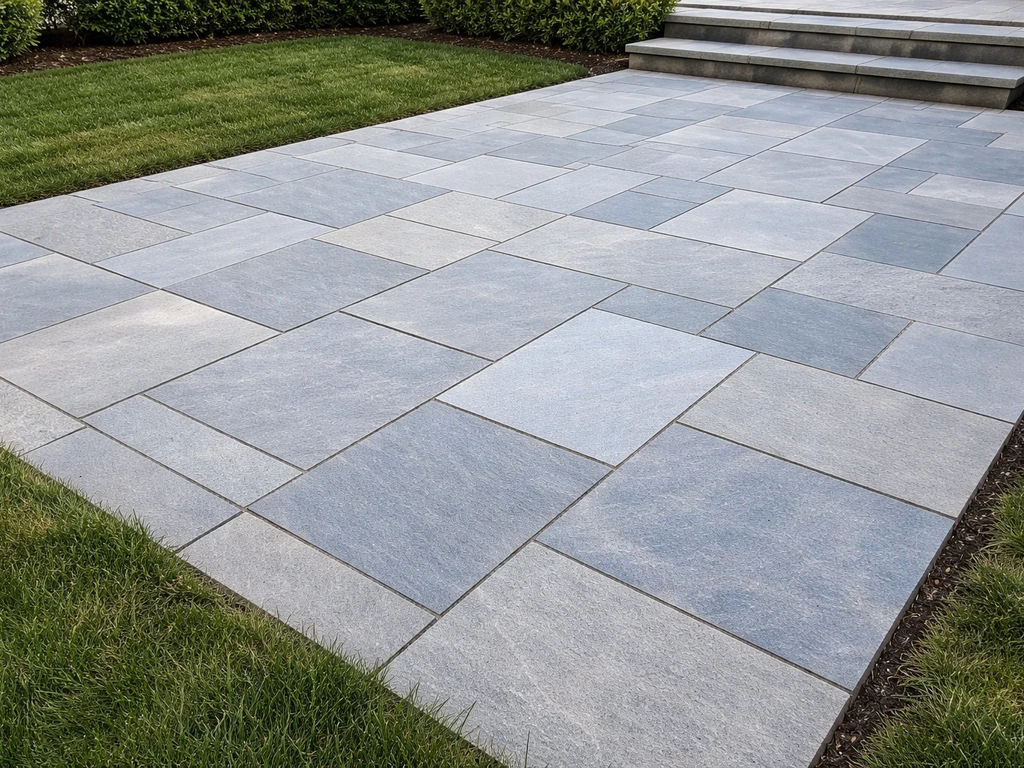
A bluestone patio is an outdoor patio surface built from bluestone, a dense, fine-grained natural stone that typically ranges in color from blue-gray to slate gray, sometimes with warm rust or brown tones mixed in. It's one of the most popular premium patio materials in the northeastern United States, prized for its clean, classic look, its durability through harsh freeze-thaw winters, and its natural texture that makes it practical underfoot. If you're trying to figure out whether bluestone is right for your space and budget, here's everything you need to know before you buy a single slab.
What Is Bluestone Patio? Materials, Cost, and Installation Guide
Nolan Ellison
29 Apr 2026
What actually counts as "bluestone"
Here's where things get confusing fast. "Bluestone" is a commercial trade term, not a strict geological one, and it gets applied to more than one type of rock depending on where you're shopping. The most well-known variety is Pennsylvania bluestone, which is technically a dense sandstone. But Shenandoah bluestone, sold widely in the mid-Atlantic region, is actually a limestone-type stone. Both get marketed under the same "bluestone" label, but they behave a little differently outdoors, especially when it comes to acid sensitivity and how they weather over time.
What they share is density. Bluestone in either form is a hard, fine-grained stone with low water absorption, which is what makes it genuinely well-suited to outdoor use. The commercial definition used in the North American hardscape trade emphasizes that density and hardness, along with the characteristic dark gray to blue-gray coloring. Color does vary more than most people expect: the same quarry can produce pieces ranging from deep blue-gray to warm brown-gray depending on oxidation and mineral content, so a fully uniform look is rarely realistic with natural material.
Two common mix-ups worth knowing: First, slate gets confused with bluestone constantly. Both are flat, layered stones with similar tonal ranges, but they start from different parent rocks and behave differently outdoors. Slate tends to be more prone to delamination over time, especially in wet climates. Second, the generic phrase "blue stone" (two words) sometimes shows up in listings as a catch-all for any dark flat paving stone, which isn't the same thing. When you're sourcing material, always ask for the quarry of origin and the specific stone type in writing.
Bluestone patio styles and finishes
The finish you choose affects how your patio looks, how safe it is to walk on, how much it costs, and how easy it is to maintain. There are four main finishes you'll encounter for bluestone patio applications.
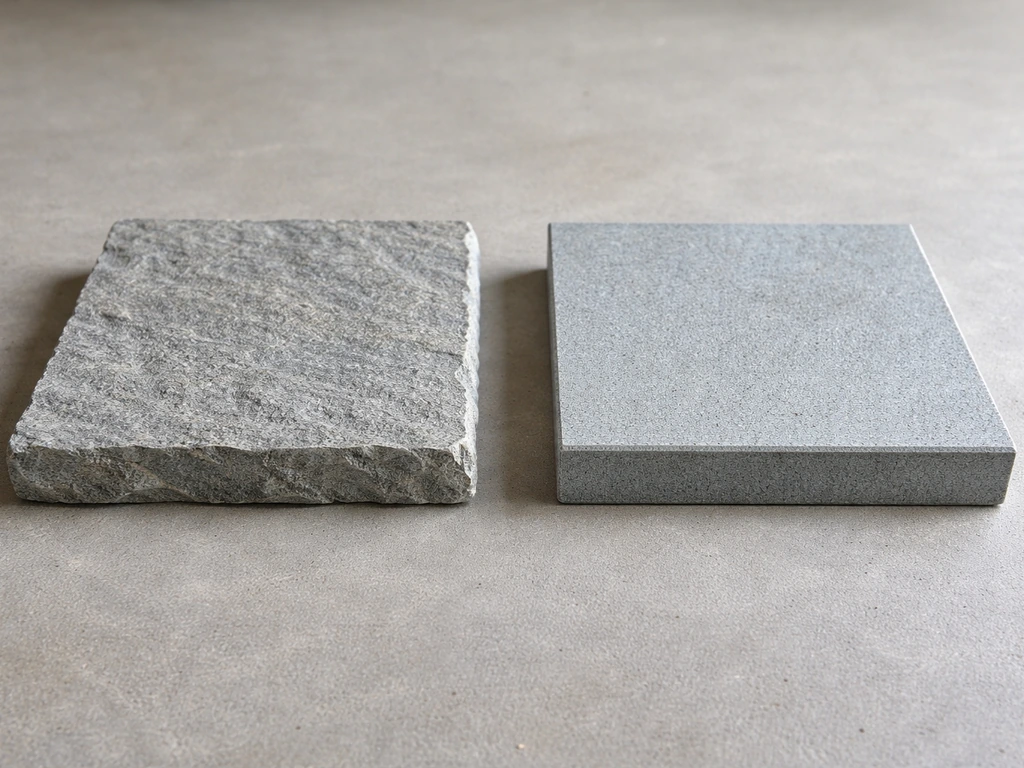
- Natural cleft: This is the classic bluestone look. The stone is split along its natural bedding planes, leaving a textured, slightly uneven surface. It's traditional, it's safe underfoot, and it handles outdoor use well. The trade-off is that the irregular surface texture makes furniture placement a little less stable and can be harder to clean thoroughly.
- Thermal (flamed): A machine-cut slab is treated with high heat, which opens the surface texture and creates a more uniform but still slip-resistant finish. Thermal bluestone has tighter sizing tolerances than natural cleft, which makes it easier to lay with consistent joint widths. This is often the best choice for exterior patios where you want a cleaner, more modern look without sacrificing traction.
- Honed: Honed bluestone is ground smooth. It looks elegant and is easy to clean, but a smooth finish on a wet patio is a real slip hazard. Most professionals recommend against honed bluestone for exterior walking surfaces unless you're applying an anti-slip treatment. Save the honed finish for interior use or fireplace surrounds.
- Tumbled/chiseled: The edges are mechanically worn or chipped to give an aged, rustic look. This finish is popular for more informal or cottage-style landscapes. It's textured and safe, but the irregular edges mean you'll have wider, less consistent joints.
Beyond finish, you'll choose between two basic formats: random irregular flagstone and sawn pavers. Random irregular bluestone comes in natural shapes with varying thicknesses, giving a more organic, hand-laid look. Sawn pavers are cut to specific dimensions (commonly 12x12, 16x16, 24x24 inches, or larger slabs) with consistent thickness. Sawn pavers cost more and take more skill to cut to fit, but the result is a more polished, precise layout.
How a bluestone patio gets built
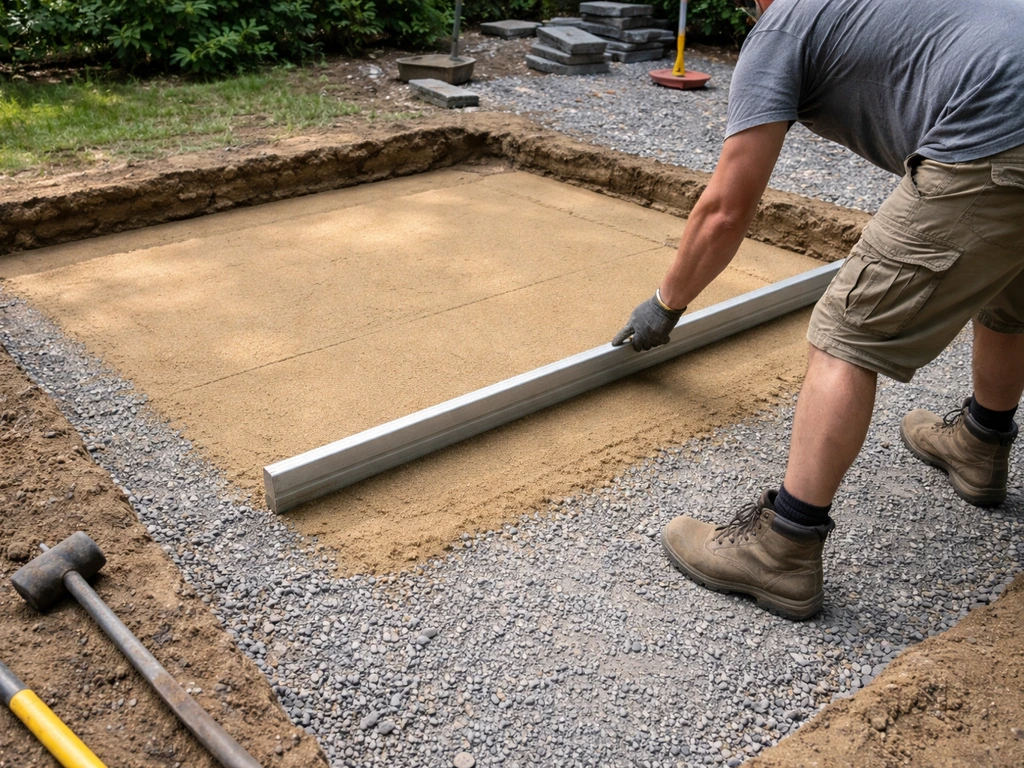
A bluestone patio is only as good as what's underneath it. I've seen beautiful stone laid over a poor base shift, rock, and heave within two winters. Getting the base right is non-negotiable.
Base preparation
Excavate at least 6 to 8 inches deep for a typical residential patio in a freeze-thaw climate (more in very cold regions). Fill with compacted gravel (typically 3/4-inch crushed stone) in lifts of 2 to 3 inches, compacting each layer. The finished base should feel completely solid underfoot with zero movement before any stone goes down. Over the compacted gravel, spread a 1-inch layer of coarse bedding sand evenly across the surface. This is what you'll set the stone into and use to fine-tune the height of individual pieces.
Slope and drainage
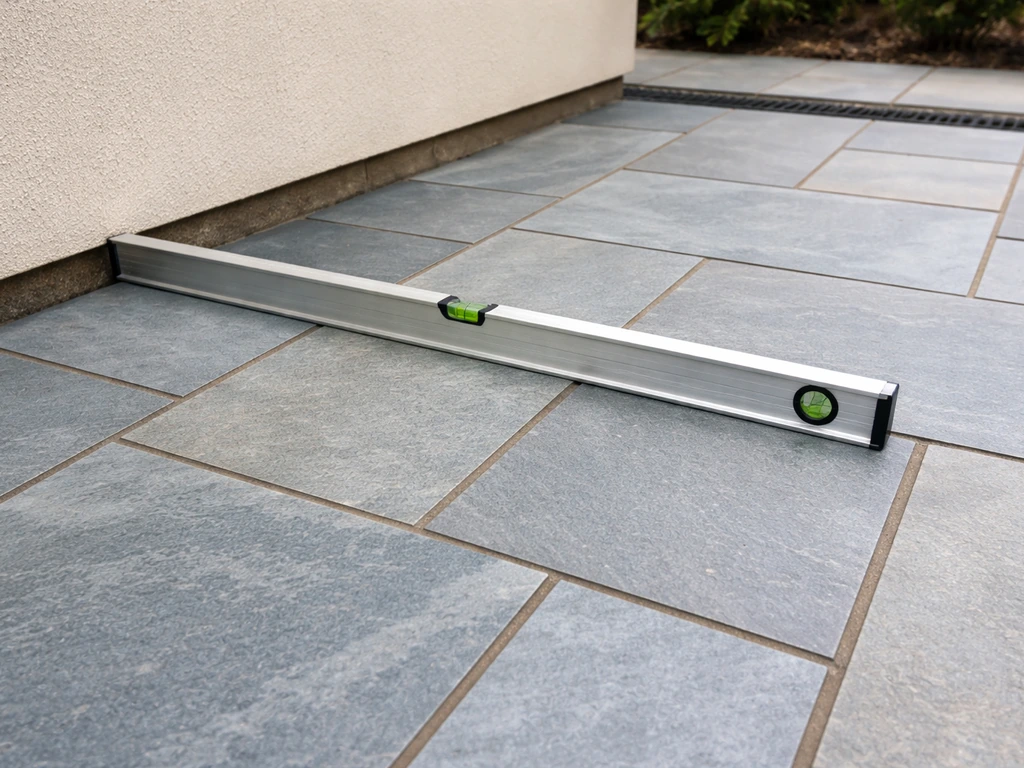
Slope the entire patio surface away from any structure at a rate of 1/8 to 1/4 inch per foot. This is one of the most important details and one of the easiest to skip when you're rushing. Water that pools on or under natural stone is the primary cause of freeze-thaw damage, staining, and efflorescence. A permeable dry-set system (stone over sand over gravel, with no impermeable membrane trapping moisture) is generally preferred over a fully mortared system for this reason, especially in cold climates.
Setting and leveling the stone
Because natural cleft bluestone varies in thickness from piece to piece, each stone needs to be individually bedded. Screed the sand to your target height, set the stone, check it with a level, and add or remove sand beneath it as needed. The goal is a stable stone with no rock or wobble when you step on it. Larger slabs (anything over 24 inches square) are harder to hand-carry and level precisely, which is one reason large-format bluestone costs more in labor.
Joints and edges
For joints, you have two main options. Polymeric sand swept into the joints is the most common choice for dry-set patios. It locks in place when wet, discourages weeds, and allows minor movement without cracking. Mortar joints (wet-set) are more formal looking and more permanent, but they require a full mortar bed and are more prone to cracking if there's any base movement. For most residential patios, polymeric sand is the practical choice. If you go mortar, you need a concrete slab base, not a sand-and-gravel base. Edge restraints (plastic or metal paver edging spiked into the ground) should be installed at all perimeter edges to prevent the stone from spreading outward over time.
Common pitfalls
- Rocking stones: Almost always caused by inconsistent bedding depth or skipping the individual leveling step. Fix it during installation, not after.
- Weed growth through joints: Using regular play sand instead of polymeric sand is the usual culprit. Polymeric sand significantly reduces weed infiltration.
- Efflorescence (white mineral deposits): Caused by moisture moving through the base and depositing salts at the surface. Proper drainage and a permeable base are the preventive measures. Sealing too soon (before the stone has dried and cured after installation) can trap salts and make this worse.
- Stone too thin for the application: For a patio with foot traffic, bluestone should be at least 1.5 inches thick. Thinner material works for walkways with lighter use but will crack under heavy loads or furniture.
How bluestone performs in different climates
Bluestone has an excellent track record in cold northeastern climates, which is largely why it became the default premium patio stone in states like Pennsylvania, New York, and Connecticut. Its low water absorption means there's less moisture inside the stone to freeze and expand, which is what causes softer, more porous stones to crack and spall. Properly installed (with good drainage), a bluestone patio in a zone 5 or 6 climate should last decades without significant frost damage.
In wet climates, drainage is the main concern. A well-draining permeable installation handles rain well, but if water pools on the surface or is trapped under the stone, you'll get algae growth, staining, and in cold weather, ice damage. Natural cleft and thermal finishes drain better than honed surfaces because the texture breaks surface tension.
For slip resistance, natural cleft and thermal finishes are both safe for exterior use when dry. When wet, textured finishes still provide reasonable traction, but like any hard surface, they can get slippery in standing water, frost, or algae buildup. A honed finish gets genuinely dangerous when wet. In hot, sunny climates, darker bluestone will absorb heat, which can make a south-facing patio uncomfortable to walk on barefoot in summer. Lighter gray tones from certain quarries help, but this is worth thinking about if you're in the Southeast or Southwest.
Staining is a real-world concern. Bluestone is not immune to oil, rust, or organic stains, and limestone-type bluestone can etch slightly with acidic cleaners or acidic foods and drinks. If you're installing near a grill or expect heavy food-and-drink traffic, sealing is worth doing.
What it will cost you and how to source it
Installed bluestone patio costs in 2026 typically run from about $15 to $31 per square foot for the full project (materials plus labor), with most homeowners landing in the $17 to $25 range for a standard residential patio. Larger-format slabs and more complex layouts push costs toward the higher end. For a 200-square-foot patio at a midrange estimate of $20 per square foot, you're looking at roughly $4,000 total.
Several factors move the needle on cost. Finish matters: thermal bluestone with tight sizing tolerances costs more per square foot than irregular natural cleft because it requires more processing. Thickness matters: 1.5-inch stone costs more than 1-inch material, and the thicker material is usually worth the premium for a primary patio surface. Slab size matters: large-format slabs (3x3 feet or bigger) cost more in both material and labor because they're harder to transport, cut, and position precisely. Regional availability also plays a role. In the mid-Atlantic and Northeast, Pennsylvania bluestone is relatively accessible. In the Midwest or South, shipping adds cost and you may be looking at regional alternatives that get sold under the bluestone name.
When sourcing, buy from a stone yard that can tell you the quarry of origin and the actual stone type. Ask specifically: Is this a sandstone-type bluestone or a limestone-type bluestone? That affects maintenance (limestone-type is more acid-sensitive) and long-term weathering. Order 10 to 15 percent extra material to account for cuts, breakage, and future repairs. Stone from the same quarry run will match better than material ordered months later.
Keeping a bluestone patio looking good long-term
Routine cleaning
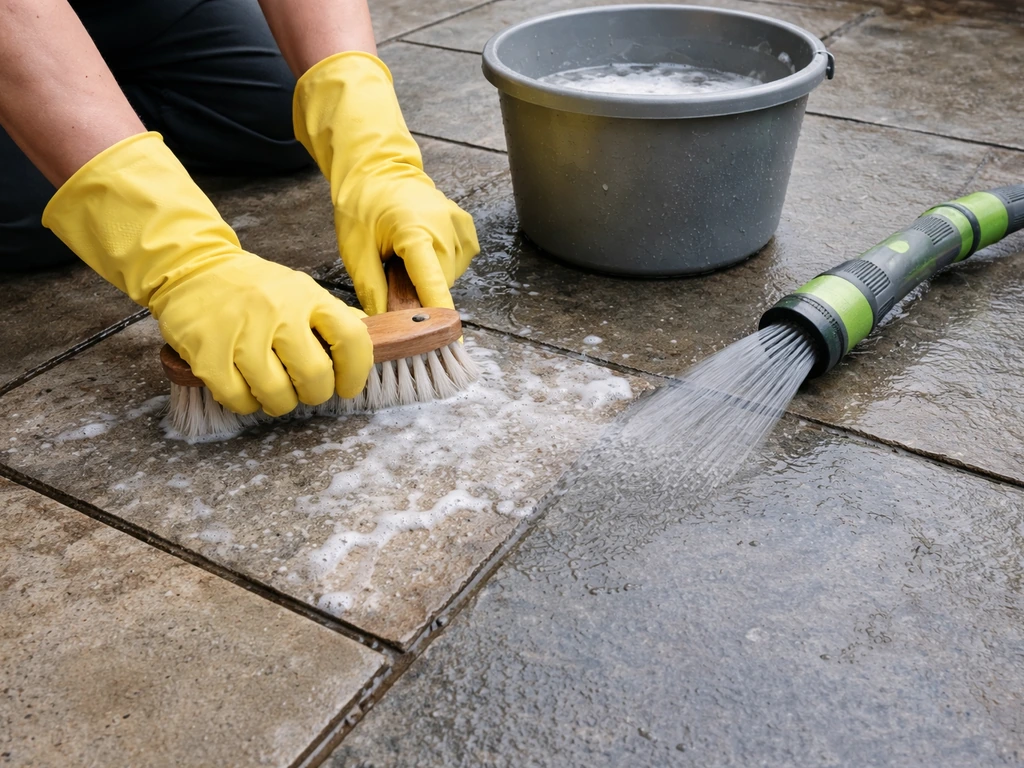
Regular cleaning is straightforward. Use a pH-neutral detergent diluted in warm water and a stiff brush or a low-pressure hose. Avoid acidic cleaners (vinegar, citrus-based products) and anything with bleach on limestone-type bluestone, as both can etch or discolor the surface. For stubborn organic stains (algae, moss, leaf tannins), a diluted pH-neutral cleaner left to soak before scrubbing usually does the job. High-pressure washing is fine on natural cleft or thermal finishes but can erode polymeric sand from joints, so keep the nozzle at an angle and avoid direct blasting at joint lines.
Sealing
Sealing is optional for bluestone, not mandatory, but it has real benefits if you want stain protection and easier cleaning. Wait at least 30 to 60 days after installation before sealing to allow the stone and any mortar or sand to fully cure. Sealing too early can blank" rel="noopener noreferrer">trap moisture and salts and cause the white hazing (efflorescence-like appearance) that a lot of homeowners blame on the stone itself. Re-sealing every 2 to 4 years is a reasonable schedule depending on traffic, climate, and the sealer you use. A penetrating sealer (impregnating sealer) is generally preferred over a topical sealer for exterior bluestone because it doesn't change the surface texture or create a shiny film that can become slippery.
Efflorescence and stain removal
Efflorescence (the white powdery or streaky deposits that sometimes appear on natural stone) is caused by water carrying mineral salts from the base or mortar through to the surface. It's more common in the first year after installation and usually diminishes on its own as the base dries out. Dry brushing with a stiff bristle brush removes light deposits. More stubborn efflorescence can be treated with a dedicated efflorescence remover formulated for natural stone. Avoid DIY acid washes on bluestone without knowing whether you have limestone-type material, because acid will damage it.
Weed and joint maintenance
Even with polymeric sand, some weed growth in joints is common over time, especially after the sand gets disturbed by freeze-thaw cycles or pressure washing. Pull weeds manually when they're small, before roots establish in the joints. Re-apply polymeric sand to joints every few years as it depletes. For broken or shifted stones, re-bedding individual pieces is straightforward: lift the stone, adjust the sand bed, re-level, and reset. If you are dealing with a broken bluestone patio, focus on fixing the underlying base and drainage before you choose a replacement stone or joints.
Bluestone vs other patio materials
Bluestone isn't the right answer for every project. Here's how it honestly stacks up against the main alternatives.
| Material | Installed Cost (per sq ft) | Durability/Freeze-Thaw | Maintenance | Look/Feel | Best For |
|---|---|---|---|---|---|
| Bluestone (natural cleft/thermal) | $15–$31 | Excellent in cold climates | Moderate (seal every 2–4 yrs) | Classic, natural, premium | Northeast/mid-Atlantic, traditional or modern designs |
| Flagstone (general) | $12–$25 | Varies by stone type | Moderate | Organic, varied color | Informal, cottage-style patios |
| Brick pavers | $14–$26 | Good, but can spall in harsh freeze-thaw | Low to moderate | Warm, traditional | Classic/colonial styles, budget-conscious premium |
| Poured concrete | $6–$12 | Fair (cracks over time) | Low (until it cracks) | Plain, can be stamped | Large areas, tight budgets |
| Porcelain pavers | $15–$30 | Excellent (very low absorption) | Very low | Uniform, modern | Modern designs, low-maintenance priority |
| Gravel | $2–$8 | Not applicable | Very low | Informal, crunchy | Casual areas, tight budgets, drainage-first projects |
The closest competition for bluestone is porcelain pavers and general flagstone. Porcelain is virtually impermeable, which makes it arguably better in extreme freeze-thaw or high-moisture environments, and it requires almost no sealing or stain treatment. The trade-off is that it looks manufactured (because it is), and many homeowners find the natural variation of real stone more appealing. If natural look matters to you and you're in a climate that suits bluestone, the stone wins. If you want ultra-low maintenance and a clean modern aesthetic, porcelain is worth a serious look.
Compared to other natural flagstone options, bluestone's main advantage is its density and consistency relative to softer flagstones like some varieties of sandstone or slate. Slate in particular is a common comparison (and a common mix-up), but slate is more prone to delamination and long-term surface weathering outdoors. That is the key difference in the slate vs bluestone patio comparison, since slate tends to weather less reliably outdoors. If you're weighing those two specifically, bluestone is generally the more durable outdoor choice. For homeowners who find bluestone costs too high or want a different look, there are solid alternatives worth exploring alongside the patio stone alternatives that make sense for your specific region and climate.
Your next steps before you start
If you've decided bluestone is the direction you want to go, here's how to move forward without wasting money or ending up with the wrong material.
- Measure your space and sketch a basic layout. Calculate square footage, add 10 to 15 percent for waste and cuts, and use that number for material quotes. Decide whether you want a regular grid pattern (sawn pavers), a running bond, or an irregular flagstone layout, since each affects material cost and labor time.
- Decide on format and finish before you shop. Natural cleft irregular flagstone for a traditional look, thermal sawn pavers for a more modern or precise layout. Write down your finish preference and bring it to the stone yard.
- Visit at least two stone yards in person. Look at actual slabs, not just website photos. Ask the yard to identify the quarry of origin and whether the stone is sandstone-type or limestone-type bluestone. Ask to see thickness samples.
- Get three installation quotes if you're hiring out. Ask each contractor specifically what base depth they're planning, how they'll handle slope and drainage, what jointing method they'll use, and whether they've worked with this stone type before. A contractor who can't answer those questions confidently is a risk.
- For DIY installations, rent a plate compactor for base prep. This is not a step to skip. Compacting gravel by hand or with a hand tamper produces an inadequate base.
- Plan your sealing timeline. Don't seal immediately after installation. Give the patio at least a month (longer if there's been significant rain or cold) before applying a penetrating sealer.
Bluestone is a genuinely excellent patio material when you buy the right product, install it properly, and maintain it consistently. The projects that go wrong almost always trace back to a poor base, stone that was too thin or the wrong type for the climate, or cutting corners on drainage. Get those fundamentals right and a bluestone patio will outlast most of the alternatives at a similar or higher price point.
FAQ
How do I confirm which type of bluestone I’m buying (sandstone vs limestone)?
Not every “bluestone” listing is the same rock, so the safest way is to request the quarry of origin and the stone type in writing (sandstone-type like Pennsylvania bluestone, or limestone-type like Shenandoah). If you already purchased material, check the label or ask the yard to confirm the exact product line, since the type affects acid sensitivity and long-term weathering.
Can bluestone be used for a pool deck or areas that get wet often?
Yes, but only when you pick a finish designed for wet-area traction and you maintain a permeable, well-draining base. Avoid using a honed finish in areas that get frequent standing water, and plan regular joint upkeep since algae and slip risk increase when joints stay damp for long periods.
What’s the most common cause of bluestone patio failure after installation?
For a dry-set patio, the most common reason stones fail is movement from the base, not the stone itself. If you see rocking, gaps widening, or stones heaving after winter, stop and correct drainage and compaction before re-setting pieces, otherwise the problem will repeat even with new stone.
Is thicker bluestone always better for longevity?
Don’t treat “thickness” as the only factor, especially for random irregular flagstone. For freeze-thaw climates, thicker pieces usually hold up better to traffic and minor base imperfections, but you still need a solid compacted gravel base and correct slope, otherwise thin or thick stones can both shift over time.
Do I really need edge restraints for a bluestone patio?
Edge restraints are critical where the patio is free to spread, including perimeter borders and any transitions that can trap load. If you skip edging, joint sand can wash out and stones may drift outward, especially once freeze-thaw cycles start moving the base.
Can I use mortar joints on top of a sand-and-gravel base?
You typically should not. Mortar joints require a compatible base, often a concrete slab base rather than a sand-and-gravel build-up. If you want mortar looks, plan the whole system around it, otherwise you can get cracking from base movement even if the stones are bedded correctly.
How soon can you use a newly installed bluestone patio?
If you’re using a permeable dry-set system, you can often walk on the patio right after installation, but you should avoid heavy traffic and moving furniture for several days to protect the bedding sand and joints. If any polymeric sand was installed, follow the product’s curing guidance before wetting the surface.
Is sealing necessary, and what’s the right way to time it after installation?
Yes, sealing is most helpful for stain resistance, but choose a penetrating sealer and don’t rush it. Wait the full cure window (often at least 30 to 60 days), and test on a small hidden area because sealer can slightly darken the stone and may change how water beads.
What should I do if white streaks or powder appear on my bluestone?
Efflorescence is usually moisture-driven mineral salts, and light deposits can often be dry brushed away. If it’s persistent or heavy, use a dedicated natural-stone efflorescence remover, and check drainage and joint permeability because repeated wetting can keep bringing salts to the surface.
How do I re-fill polymeric sand joints, and why might weeds come back quickly?
For re-jointing polymeric sand, you’ll usually need to remove loose sand first, then re-screed and compact the joints in thin working steps as directed by the product. If weeds return quickly, it often means water flow disturbed the joints, so inspect slope, edging, and drainage before applying more sand.
What’s the safest cleaning routine for bluestone if I’m not sure of the stone type?
Avoid acidic cleaners (vinegar, citrus-based products, and anything with bleach), especially if you have limestone-type bluestone. Stick to pH-neutral detergent with warm water and scrubbing, and for organic staining use a pH-neutral cleaner that soaks before you scrub.
Can I use degreasers or stain removers on bluestone without damaging it?
If your stone is limestone-type or you’re unsure, be cautious with homeowner “spot treatments,” especially anything marketed as acid wash or heavy degreaser. For stains near food or grill areas, seal when appropriate and clean promptly, then test any product in a small inconspicuous area to avoid etching or discoloration.