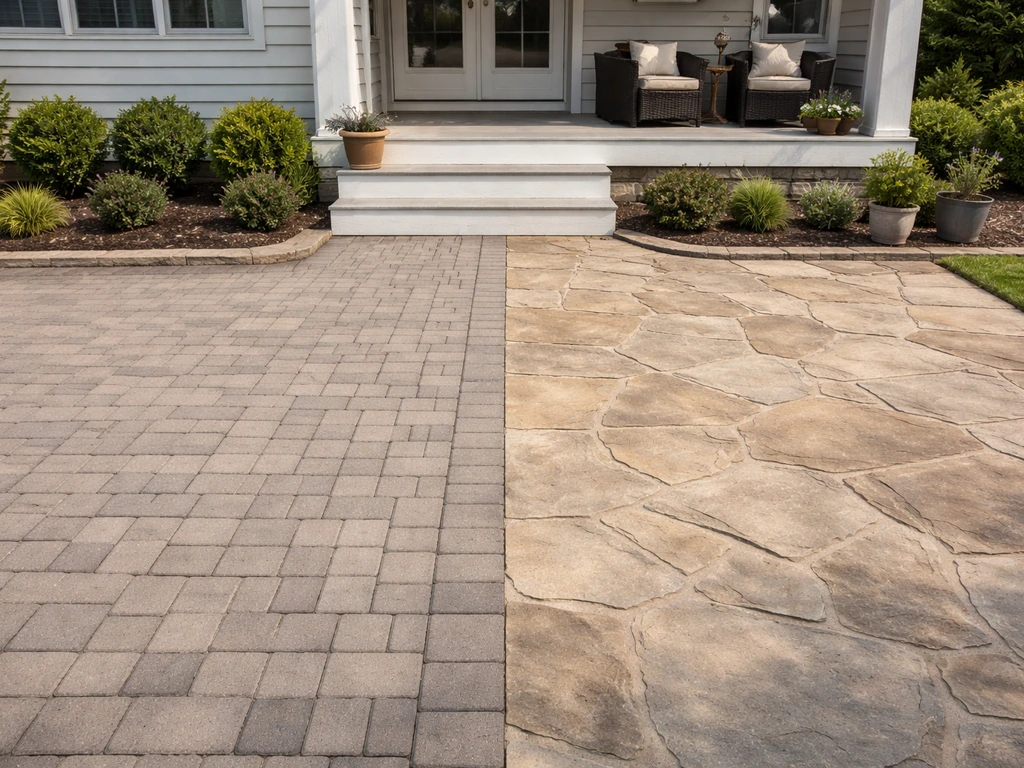
The best patio stone alternatives depend on your budget, climate, and how much maintenance you want to deal with long-term. Concrete pavers are the most versatile all-around choice for most homeowners: they handle freeze-thaw cycles well, come in dozens of styles, cost $8–$25 per square foot installed, and are easy to repair. Porcelain tile systems are the premium pick for a clean, modern look. Brick is the classic option with serious longevity. Gravel is the cheapest and fastest to install. Flagstone gives you a natural, irregular look that sits somewhere between traditional patio stone and a more design-forward surface. Each has a different subbase requirement, maintenance rhythm, and ideal climate fit, so the right answer really does depend on your specific situation.
Patio Stone Alternatives: Best Options, Costs, and Install Tips
Why people look for patio stone alternatives
Traditional patio stones, whether that's plain bluestone, cut slate, or generic stepping stones, cause real headaches for a lot of homeowners. The most common complaints I hear are uneven settling that creates trip hazards, stubborn weeds pushing through joints, poor drainage that leaves puddles after every rain, and surfaces that get dangerously slippery when wet. Cost is another driver: natural stone can be expensive and hard to source in certain regions, and when you need to repair or expand, matching existing stone years later is nearly impossible.
Some people are also starting fresh and just want to know what the smartest surface is before they commit. If you're comparing options like bluestone specifically, the considerations around freeze-thaw performance and slip resistance are very similar to what we'll cover here. The short version: there are genuinely better options for certain conditions, and knowing what they are before you pour a foundation saves a lot of money and frustration.
Your main alternatives, explained honestly
Flagstone
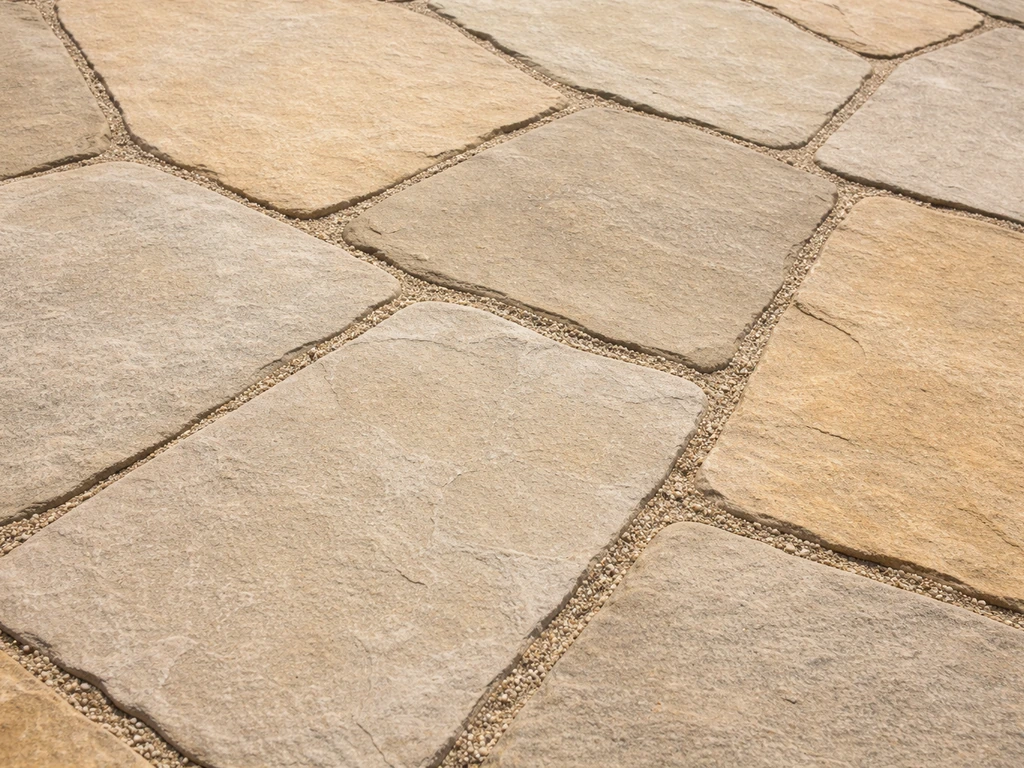
Flagstone (sandstone, limestone, quartzite, or irregular slate pieces) is often itself suggested as an alternative to formal cut patio stone, and for good reason. It looks natural, works well in informal garden settings, and dry-laid flagstone costs $15–$32 per square foot installed, with mortared methods running up to $42–$45 per square foot depending on complexity and location. The trade-off is that irregular shapes mean more joint filler, and joints can be wide and inconsistent, which is harder to seal against weeds. In freeze-thaw climates, dry-laid flagstone can shift significantly over time if the subbase isn't done right.
Concrete pavers (interlocking)
This is the option I'd point most homeowners toward first. Interlocking concrete pavers are manufactured to consistent dimensions, tested for freeze-thaw durability per ASTM C1645 with water absorption not exceeding 5%, and available in textures that genuinely improve slip resistance when wet. Installed cost typically runs $8–$25 per square foot depending on paver type and your region, though high-end professional installs in some markets run $20–$35 per square foot. The real advantage over cut stone is repairability: if one paver settles or cracks, you pull it out and replace it without disturbing the rest of the surface.
Porcelain and ceramic tile systems
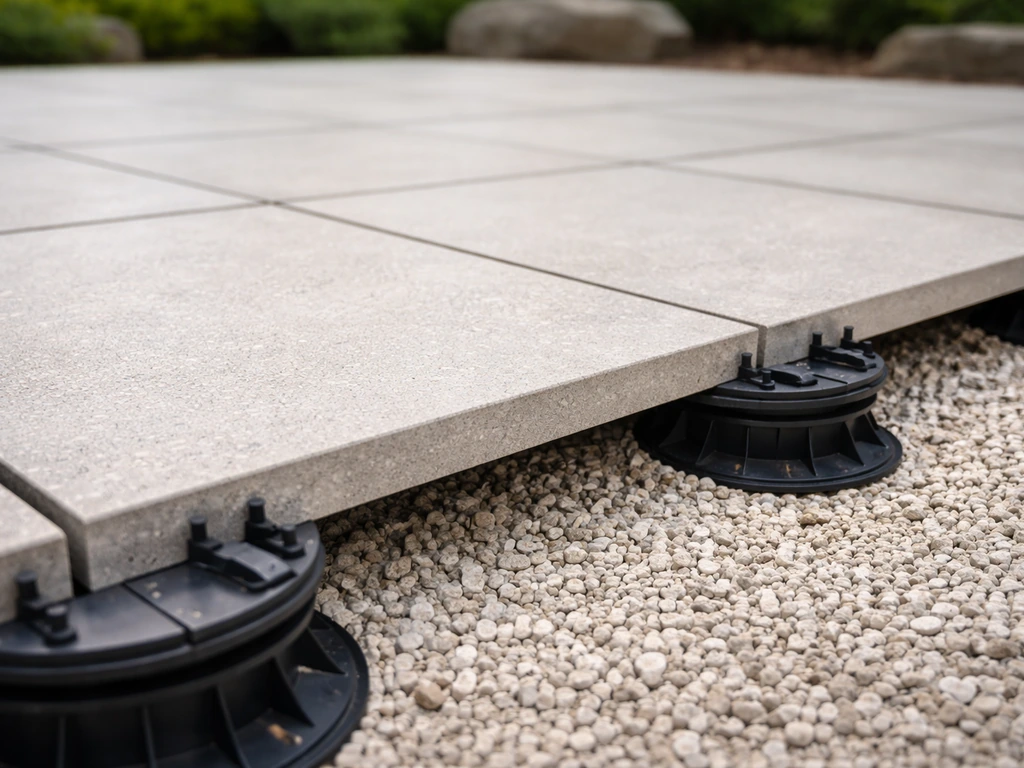
Exterior porcelain pavers have gotten dramatically better in the last few years. The better products hit 36+ PTV (pendulum test value) with an R11 slip resistance rating, which is considered suitable for wet external use. They're available in 2 cm and 3 cm thicknesses, with thicker formats recommended for areas with freeze-thaw exposure. Joint spacing for exterior installs is typically 1/8 to 3/16 inch, and you use exterior-grade thinset mortar for wet-set applications. The downside: porcelain is less forgiving than pavers if the subbase shifts even slightly, because grout joints can crack and the tiles themselves can chip at edges. It's also harder to DIY well.
Brick
Clay brick is one of the most durable patio surfaces you can install. A properly built brick patio can last 50 years or more with minimal maintenance. It handles freeze-thaw reasonably well when set on a correct compacted base, it ages beautifully, and it's easy to source. The drawbacks are cost (similar to or slightly higher than mid-range concrete pavers), limited color variation, and the fact that moss and algae can build up in shaded areas. Polymeric sand in the joints, like products from QUIKRETE or Techniseal, locks them in place and significantly reduces weed growth and joint erosion.
Concrete slabs and stamped concrete
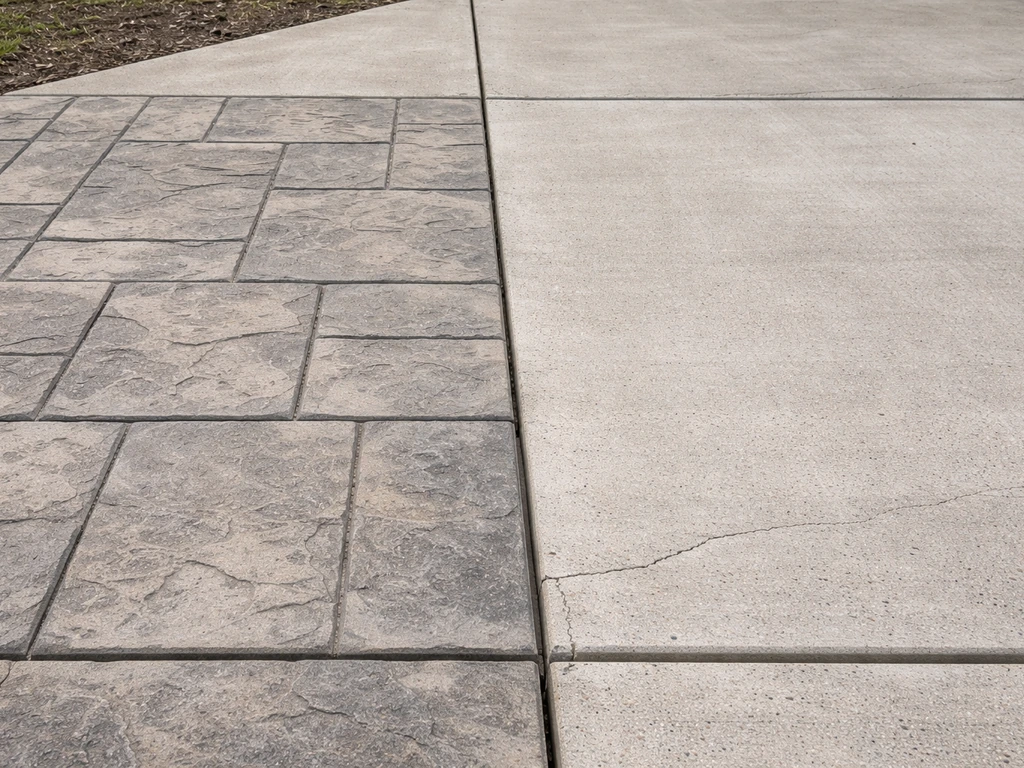
Poured concrete is the most affordable hard surface per square foot, and stamped or textured finishes can mimic stone or brick reasonably well. The problem is cracking: in freeze-thaw climates, concrete slabs crack, and unlike pavers, you can't pull out and replace just the damaged section. Repairs are visible. That said, for a covered patio or in a mild climate, poured concrete with a broom finish or exposed aggregate is a solid, low-maintenance choice. Control joints help manage cracking, but they won't eliminate it.
Gravel and decomposed granite
Gravel is the fastest and cheapest option, typically $1–$4 per square foot for materials, and you can lay it yourself in a weekend with basic tools. It drains perfectly (essentially no runoff), handles any climate, and weeds are manageable with a good landscape fabric underneath. The downsides are comfort underfoot (loose gravel under furniture or bare feet isn't great), migration (gravel wanders unless you use solid edging), and accessibility concerns for people with mobility issues. Decomposed granite compacts firmer and works better under furniture.
Artificial turf and ground covers
For low-traffic casual spaces or areas where you want a softer feel, artificial turf or low-maintenance ground covers like creeping thyme between pavers can work well. Artificial turf costs $5–$20 per square foot installed, drains adequately if the subbase is prepared correctly, and needs no mowing. It does heat up significantly in direct sun (surface temperatures can exceed 140°F on a hot day), which makes it uncomfortable in full-sun southern climates. It's not a full patio replacement, but it works well for lawn-adjacent seating areas.
Composite and wood-plastic decking
Composite decking (wood-plastic composite or PVC) is technically a deck product, but many homeowners use it on grade over a compacted base or sleepers to create a patio-like surface. It's comfortable underfoot, doesn't splinter, and holds up well to moisture. It does require a frame and some structural planning, and it gets warm in direct sun. It's worth considering if you prefer the feel of wood but not the maintenance of real timber.
Quick comparison: pros, cons, and best use cases
| Surface | Installed Cost (per sq ft) | Freeze-Thaw | Drainage | Slip Resistance | DIY Friendliness | Repairability |
|---|---|---|---|---|---|---|
| Flagstone | $15–$45 | Moderate (dry-lay shifts) | Good (gaps) | Moderate (varies by stone) | Moderate | Easy (dry-lay) |
| Concrete Pavers | $8–$35 | Excellent (ASTM C1645) | Good (permeable options) | Good (textured profiles) | Good | Excellent |
| Porcelain Tile | $15–$40 | Good (2–3 cm formats) | Moderate (joints) | Good (R11 rated products) | Difficult | Moderate |
| Brick | $12–$30 | Good (correct base) | Good (jointed) | Good | Moderate | Good |
| Concrete Slab | $6–$18 | Poor–Moderate (cracks) | Poor (no joints) | Moderate (broom finish) | Difficult (poured) | Poor |
| Gravel/DG | $1–$6 | Excellent | Excellent | Poor–Moderate | Easy | Easy |
| Artificial Turf | $5–$20 | Good | Good (with prep) | Good | Moderate | Moderate |
| Composite Decking | $15–$35 | Good | Good (raised) | Good | Moderate | Good |
Cost and value by budget level
If you're working with a tight budget (under $8 per square foot in materials), gravel or decomposed granite is your realistic path. You can do the work yourself, the materials are cheap, and the result looks intentional if you use proper edging and a clean layout. It won't hold furniture as firmly as a hard surface, but it works.
In the mid-range ($8–$20 per square foot installed), concrete pavers offer the best overall value. You get a durable, attractive surface with good repairability, and a motivated DIYer can install them with rented equipment. Brick falls in this range too and adds long-term value to a property. Basic stamped concrete is also achievable here but carries the cracking risk mentioned above.
For premium budgets ($20–$45 per square foot), porcelain tile systems, high-end flagstone, and premium paver products deliver the best aesthetics and longevity. At this price point you're typically paying for professional labor, and that's where the cost is well spent: a bad porcelain install will fail within a few freeze-thaw cycles, while a properly set one can last decades.
How different climates and site conditions change the answer
Freeze-thaw climates
This is where surface choice matters most. Poured concrete slabs are the worst performers because they crack with thermal cycling. Concrete pavers designed to ASTM C1645 standards are the most reliable, specifically because individual units can move slightly without catastrophic failure. Porcelain at 2–3 cm thickness on a well-prepared base also performs well. Unilock's maintenance guidance specifically calls out frost heaving (upward bulges) as one of the primary failure modes for pavers, almost always caused by poor drainage or inadequate base depth. If water gets under the base and freezes, anything on top moves.
Heavy rain and drainage
For sites with drainage challenges, permeable pavers or gravel are the most sensible choices. Standard concrete slabs and mortared porcelain create essentially impermeable surfaces that push water elsewhere, which can mean flooding adjacent areas or saturating your foundation. Interlocking pavers with open-graded bases allow water to pass through. If you're on a slope, drainage swales and proper grading matter more than surface choice, and that's something to address at the subbase stage regardless of what surface you choose.
Hot and dry climates
In hot, sunny climates, surface temperature is a real consideration. Polished porcelain and dark natural stone get extremely hot underfoot. Light-colored concrete pavers or textured flagstone with natural tones stay cooler. Gravel and ground covers are the coolest options. Artificial turf should be avoided in full-sun hot climates for comfort reasons.
Weeds, pets, and high-traffic areas
Weed control comes down to joint management. Polymeric jointing sand (products from QUIKRETE, Techniseal, or Hanover) hardens as it cures and resists weed growth, erosion, and insect intrusion when correctly installed in joints up to 2 inches wide. It's one of the best upgrades you can make to any paver or brick patio. For pets and high traffic, textured concrete pavers hold up well and don't show scratches. Gravel is a poor choice for pets because it scatters and can get tracked inside. Porcelain is excellent for cleanliness but edges chip if heavy objects are dropped.
Installation basics: what actually matters
Subbase depth
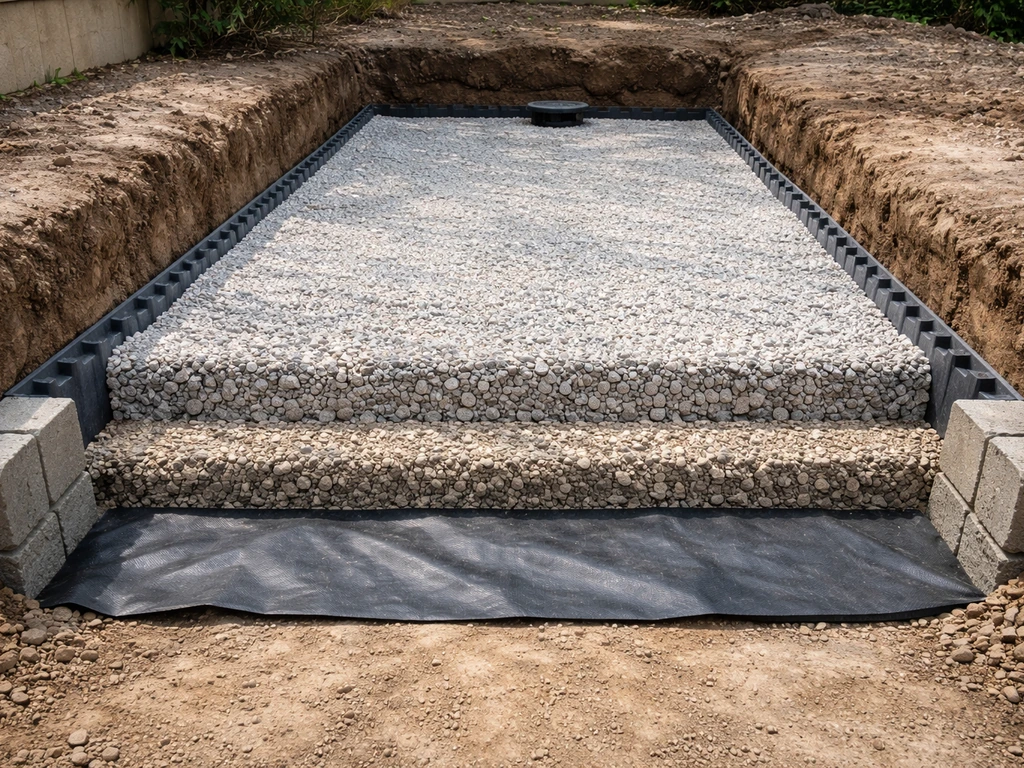
The subbase is what makes or breaks any patio surface. For pedestrian patios, the minimum compacted aggregate base is 4–6 inches according to CMHA guidance, with 6–8 inches for driveways or heavier loads. CMHA further breaks this down by application, commonly recommending 4 inches for pedestrian walkways and patios and 6 inches for residential driveways 4–6 inches according to CMHA guidance. Techo-Bloc recommends a minimum 6–8 inch stone base for patios. In areas with poor-draining soils (clay-heavy), go to the higher end of those ranges. The setting bed over the compacted base is typically 1 inch of coarse concrete sand, screeded level before pavers are placed. Final surface grade should not deviate more than 3/8 inch over a 10-foot straightedge per ICPI tolerances.
Geotextile and edge restraint
Geotextile fabric goes on the compacted subgrade before you add your base aggregate. It separates the base from native soil and prevents fines from migrating upward and contaminating the drainage layer. Both Techo-Bloc and BelGard include this in their standard installation cross-sections. Edge restraint is equally important: without it, the perimeter pavers gradually spread outward and joint sand migrates out, which leads to the exact settling and unevenness you were trying to avoid in the first place.
DIY vs. professional installation
Gravel, dry-laid flagstone, and interlocking concrete pavers are genuinely DIY-accessible projects for someone willing to rent a plate compactor and spend a weekend. The learning curve is in getting the base level and the edging secure, not in the surface installation itself. Porcelain tile systems are much less forgiving: improper thinset coverage or a flex in the substrate causes cracks, and most homeowners are better off hiring a professional for porcelain. Poured concrete almost always requires a pro unless you have forming and finishing experience. As a rough guide: budget $2–$8 per square foot for professional labor on pavers, and $5–$15 for porcelain or concrete work.
Maintenance, repair, and how long things actually last
Concrete pavers need almost no maintenance beyond occasional washing and periodic joint sand reapplication every 5–10 years as needed. Sealing is optional: Techo-Bloc states sealing is primarily for aesthetics and stain protection, not structural performance. Brick is similarly low-maintenance, though repointing joints every decade or so is typical. Flagstone joints need attention more regularly, especially in wet climates where moss and shifting are common.
Porcelain is easy to clean (non-porous surface resists staining) but chipped edges are difficult to repair invisibly, and grout joint failures require professional re-grouting. Gravel needs annual raking and occasional top-up to replace scattered or compacted material. Concrete slabs, once cracked, are difficult to repair without visible patching. Artificial turf typically needs replacing every 10–15 years as fibers wear down.
For any jointed surface in a freeze-thaw climate, drainage is the biggest longevity factor. Unilock's guidance on paver failure specifically calls out inadequate water drainage as the root cause of frost heaving and settlement. Frost action, which is upward heaving caused by soil moisture expanding as it freezes, is a key mechanism behind frost heaving failures. Keeping drains clear, maintaining positive slope away from structures, and not letting joint sand fully erode are the three maintenance habits that extend patio life more than anything else.
| Surface | Typical Lifespan | Sealing Needed | Main Maintenance Task | Repairability |
|---|---|---|---|---|
| Concrete Pavers | 30–50+ years | Optional | Reapply polymeric sand every 5–10 years | Excellent (swap individual units) |
| Flagstone (dry-laid) | 20–40 years | Optional | Reset shifted stones, weed joints | Easy |
| Porcelain Tile | 20–30+ years | Not needed | Regrout joints if cracked | Moderate (chips are visible) |
| Brick | 50+ years | Not needed | Repoint joints every 10–15 years | Good |
| Concrete Slab | 15–25 years | Recommended | Seal cracks before water intrudes | Poor |
| Gravel/DG | Ongoing with top-up | Not applicable | Annual rake and top-up | Easy |
| Artificial Turf | 10–15 years | Not needed | Rinse, brush fibers | Moderate (patch sections) |
| Composite Decking | 25–30 years | Not needed | Annual wash | Good |
How to choose the right option and get started
Start by answering four questions: What's my budget per square foot (materials plus labor)? Is my site in a freeze-thaw climate? Do I have drainage or slope challenges? How much maintenance am I actually willing to do? Those four answers will narrow your list significantly. If you're in a freeze-thaw zone with a tight budget, concrete pavers are the clear winner. If you want the best-looking surface and have professional budget, porcelain or premium flagstone are worth the investment. If you just need something functional and fast, gravel with solid edging gets you there in a weekend.
- Measure your space: length x width in feet, plus note any irregular edges or steps you'll need to work around.
- Check your slope: use a level and tape measure to confirm you have at least 1/8 inch per foot of drop away from the house for drainage.
- Identify your soil type: sandy or loamy soil drains well; clay-heavy soil needs extra base depth and possibly a perforated drain.
- Set your budget: use the cost ranges above to reality-check what's achievable with materials only vs. professional installation.
- Choose your surface based on the table comparisons above, weighting climate and drainage as your top constraints.
- Calculate base materials: for a 4-inch compacted base, you need roughly 0.5 cubic yards of crushed aggregate per 40 square feet.
- Source materials from local hardscape suppliers or masonry yards, not just big-box stores, for better selection and often better pricing on bulk orders.
- Rent a plate compactor for any hard surface installation: hand-tamping does not achieve the same compaction and is the single most common DIY shortcut that causes later settling.
- Use polymeric jointing sand for any paver, brick, or flagstone with joints up to 2 inches to reduce weeds and joint erosion from day one.
On thickness: for concrete or porcelain pavers, standard 2.375-inch (60 mm) concrete pavers handle normal pedestrian loads fine on a 4–6 inch compacted base. Porcelain at 2 cm works for light pedestrian use; upgrade to 3 cm if you're in a harsher climate or expect heavy furniture loads. Flagstone should be at least 1.5 inches thick for stability, with thicker pieces (2 inches) used for high-traffic areas. If you're comparing specific natural stone surfaces, the setup considerations for flagstone and other alternatives to traditional bluestone share many of the same base and joint requirements.
The most important next step is to actually visit a local hardscape supplier or masonry yard with your measurements in hand. If you are specifically wondering what a bluestone patio is and whether it suits your climate, start by comparing base needs and slip resistance across materials what is bluestone patio. If you are specifically wondering what a bluestone patio is and whether it suits your climate, start by comparing base needs and slip resistance across materials what is bluestone patio slate vs bluestone patio. Most will help you estimate material quantities, show you samples in person, and flag any regional issues (local stone availability, frost depth requirements, soil conditions) that no online guide can fully account for. Getting two or three quotes from installers before deciding on DIY vs. pro is also worth the time, because the labor gap between a simple gravel install and a proper porcelain system is large enough to change the math on which option actually fits your budget.
FAQ
What’s the safest patio stone alternative if I’m worried about slipping when wet?
Choose surfaces designed for wet traction, for example textured interlocking pavers or exterior porcelain with a high PTV rating. Also plan the slope so water drains off quickly, because even a high-traction surface can become slick if water sits in low spots.
How do I prevent weeds from coming back, even if I use polymeric sand?
Use edge restraints and keep joint sand topped up, because gaps widen when pavers shift. For high-weed areas, consider a second control layer such as heavier-duty edging plus better subbase compaction, since the fabric alone cannot stop weeds if water and fines migrate.
What base thickness should I choose if my patio is near a downspout or where water pools?
Increase the base depth toward the higher end of the patio range, and make sure you build in positive drainage away from the house. If water regularly pools, prioritize drainage hardware like swales or a drain channel, because a thicker base helps but will not fully compensate for constant saturation.
Can I install patio stone alternatives over existing concrete or old pavers?
Usually you need to remove or grind down high areas and confirm the new system has room for the correct base and slope. Over old slabs, many failures come from trapped moisture and an insufficient depth for a stable base, so a pro estimate should include how much build-up you can add.
What’s the difference between dry-laid and mortar-set for flagstone, and does it affect cracking?
Dry-laid flagstone relies on a stable base and joint filler, so movement can show up as shifting over time in freeze-thaw climates. Mortar-set installs reduce some movement but increase the chance of visible failures if the substrate flexes, so the subbase and compaction still matter most.
If I want DIY, which patio stone alternatives are most forgiving for beginners?
Interlocking concrete pavers, gravel, and decomposed granite are the most forgiving because individual units can be adjusted and replaced. Porcelain tile on a prepared substrate is much less forgiving, since small substrate irregularities can lead to cracked grout or chipped edges.
How do I choose between permeable pavers and gravel for poor-draining soil?
Permeable pavers work best when you can maintain the correct open-graded base and keep voids from filling with fines. Gravel can be more resilient for debris and DIY, but you must use strong edging to prevent migration and ensure the area still drains to an appropriate outlet.
Will sealing concrete pavers or porcelain tile make them last longer?
Sealing usually improves stain resistance and appearance, it does not replace good drainage and base construction. For pavers, sealing can sometimes make it harder to notice joint sand issues early, so treat drainage and joint maintenance as the longevity foundation.
How often should I reapply joint sand or polymeric sand?
Plan on checking joints every 1 to 3 years and reapplying as needed, many homeowners do full top-up on a multi-year cycle. If joints are eroding quickly, that is a sign of drainage, compaction, or slope problems rather than a sand-only fix.
What’s the best option if I have pets, especially if they scratch or if they track mud?
Textured concrete pavers and brick usually hold up well to scratches and are easier to clean than porous natural stone. Avoid gravel as a long-term pet patio surface because it scatters, tracks into the house, and can increase the mess around high-traffic areas.
What patio stone alternatives stay comfortable in hot climates?
Light-colored textured pavers, natural-toned flagstone, and gravel generally stay cooler than dark or polished finishes. Artificial turf can feel comfortable in the shade but can exceed very high surface temperatures in full sun, so it is risky for hot-weather comfort.
How do I estimate square footage accurately before buying materials?
Measure the patio area in segments and add 10 to 15% for waste and cutting, the exact amount depends on shape complexity and the installer’s approach. Edge cases like narrow borders or curves increase waste, and natural stone pieces also vary, which affects quantity planning.
What’s the quickest way to reduce patio settling and trip hazards?
Start with a properly compacted base and correctly installed edge restraint, because spreading at the perimeter often leads to unevenness. After installation, confirm the surface is within tolerance across multiple directions so small low areas are corrected early before joint sand erodes.