For most climates and budgets, porcelain tiles rated for outdoor use are the best patio tile you can buy. They handle freeze-thaw cycles, resist staining, need almost no sealing, and come in every look imaginable. That said, natural stone, stone-look porcelain, and even interlocking composite tiles each win in specific situations. The right pick depends on your climate, how you'll use the space, and how much ongoing maintenance you're willing to do. This guide walks through all of it.
Best Tiles for Patio: Top Choices by Climate and Budget
Nolan Ellison
11 May 2026
What "best" actually means for patio tiles
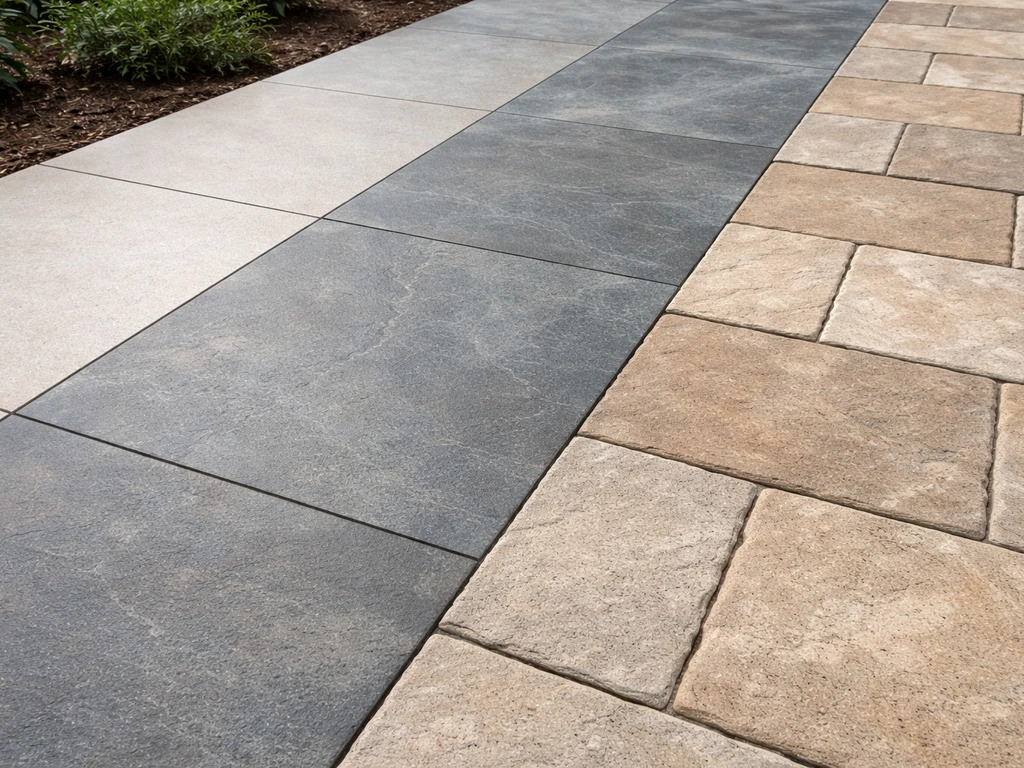
Outdoor tile has to survive things indoor tile never faces: rain, UV exposure, temperature swings, and feet that track in mud and grit. So when you're shopping, "best" isn't just about how a tile looks in the showroom. There are three performance factors that matter most.
Freeze-thaw resistance
If you live anywhere that sees freezing temperatures, this is non-negotiable. Water gets into porous tiles, freezes, expands, and cracks the tile from the inside out. Freeze-thaw resistance is formally tested under ASTM C1026, and any tile you buy for a cold-climate patio should pass that test. The spec sheet will say "freeze-thaw resistant" or list ASTM C1026 compliance. If it doesn't, don't use it outdoors in a climate with hard winters.
Water absorption
Water absorption (tested under ASTM C373) tells you how porous a tile is. Porcelain tiles are classified as porcelain when absorption is 0.5% or less, which is the threshold set by the Porcelain Tile Certification Agency. Low absorption means the tile won't soak up water, won't stain easily, and is far more resistant to freeze damage. Natural stones like travertine and sandstone have much higher absorption rates, which is why they need sealing and are riskier in cold climates.
Slip resistance
Outdoor tiles get wet. A slip on a patio is not a minor inconvenience. Slip resistance is measured using the DCOF AcuTest, a method defined in ANSI A326. To get the best tile for an outdoor patio that stays non-slip, use tiles that meet the ANSI A326 DCOF AcuTest requirements.
3. The ANSI A137. 1 standard sets 0. 42 as the minimum DCOF value for level wet-floor interior spaces, but for outdoor patios you want a tile that exceeds that threshold, ideally 0.
60 or higher, especially around pools or areas that stay damp. Look for "outdoor rated" or "R11" or higher on European-rated tiles. A textured or matte finish consistently outperforms polished surfaces on wet ground. I've seen beautifully polished porcelain pavers installed on a patio that looked stunning until the first rain, when they became practically a skating rink.
Matte or structured surfaces are the call outdoors.
Patio tile materials compared
Here's how the main tile types stack up across the specs that matter most for outdoor use.
| Material | Water Absorption | Freeze-Thaw Safe | Slip Resistance (typical) | Maintenance | Cost (per sq ft installed) |
|---|---|---|---|---|---|
| Porcelain (outdoor rated) | ≤0.5% | Yes (check spec sheet) | High if textured/matte | Very low | $8–$20+ |
| Natural stone (granite) | Low–moderate | Generally yes | Moderate–high (honed) | Seal annually | $15–$30+ |
| Natural stone (slate) | Low–moderate | Yes for dense slate | High (cleft surface) | Seal every 1–2 yrs | $12–$25+ |
| Natural stone (travertine) | High (3–12%) | No (risk of cracking) | Moderate | Seal frequently | $10–$22+ |
| Stone-look porcelain | ≤0.5% | Yes | High if textured | Very low | $9–$22+ |
| Ceramic (outdoor-rated) | 0.5–3% | Limited (mild climates) | Moderate–high | Low | $5–$14+ |
| Interlocking composite/deck tiles | N/A | Varies by product | Generally good | Low | $4–$18+ |
Porcelain patio tiles
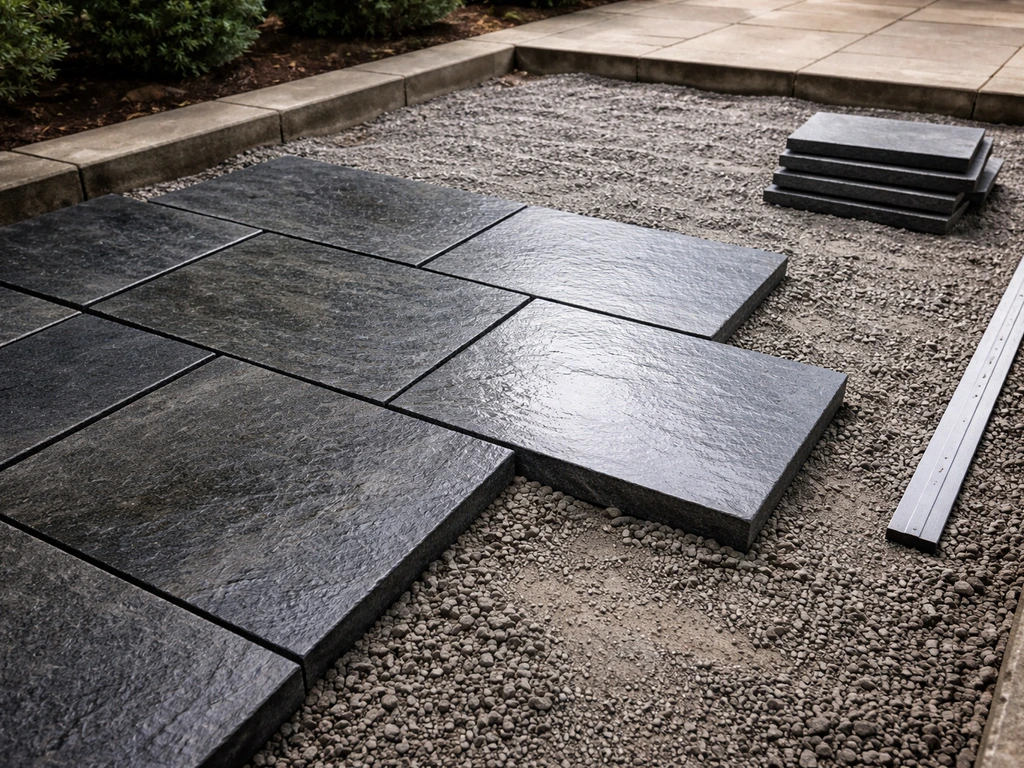
Outdoor-rated porcelain is the workhorse. With water absorption at or below 0. 5%, it's essentially impervious to moisture, which means it performs well in freeze-thaw climates when properly installed. It doesn't need sealing, it's resistant to UV fading, and the modern large-format stone-look porcelain tiles (24x24 inches or bigger) give you a high-end appearance at a fraction of natural stone's price.
Choose the right tile finish and size to match your patio table top needs, especially if it will see direct weather exposure tiles for patio table top. The downsides: porcelain is dense and harder to cut (you'll need a wet saw with a diamond blade), large format tiles are heavy, and a polished finish is dangerously slippery outside. Always spec a matte, structured, or anti-slip textured finish for patios.
Natural stone
Granite and slate are the natural stones that hold up best outdoors. Dense granite has low absorption, handles freeze-thaw reasonably well, and gets a naturally textured finish when flamed or brushed. Slate's cleft surface is naturally slip resistant and looks great. Travertine is the one to be careful with: its high porosity makes it a freeze-thaw liability in cold climates, and even in warm climates it needs diligent sealing to prevent staining. Sandstone is similarly risky. If you love the natural stone look without the maintenance, stone-look porcelain is worth a serious look.
Stone-look porcelain
This is the fastest-growing category and honestly a great option for most homeowners. You get the visual warmth of travertine, slate, or limestone with porcelain's durability and near-zero maintenance. Manufacturers have gotten very good at replicating natural texture digitally, and the structured surface of many stone-look tiles provides solid slip resistance. It works in cold and hot climates alike, and you can often match patio pavers with indoor flooring for a seamless indoor-outdoor flow.
Ceramic and interlocking alternatives
Standard ceramic tiles are only an option in mild, frost-free climates. Their higher water absorption makes them prone to cracking in freeze-thaw cycles, even if they're rated for outdoor use. Interlocking patio tiles (snap-together wood-composite, porcelain, or rubber-top deck tiles) are a different animal: they're great for apartment balconies, rental patios, or temporary installations because they sit over an existing surface without mortar. They're not as durable as a mortared porcelain installation, but they're a legit option if you can't or don't want to dig up and redo a concrete base.
Picking the right tile for your climate and budget
Climate is the first filter, budget is the second. Here's how to think through it.
Cold climates (zones 1–6, regular freezing)
You need a tile that passes ASTM C1026 freeze-thaw testing, period. That points you firmly to outdoor-rated porcelain (water absorption ≤0.5%) or dense natural stones like granite and hard slate. Avoid travertine, most sandstones, and standard ceramic tiles. For budget-conscious builds, a 20x20 or 24x24 matte porcelain in a stone-look pattern in the $9–$14 per square foot range is a smart, durable choice. Spend on the proper base (see installation section) before you spend on premium tile.
Hot and arid climates (Southwest, zones 7–10)
UV stability matters here. Porcelain holds color much better than natural stone under intense sun, and it doesn't stain from dust and grit the way travertine does. Travertine actually works fine in a dry, warm climate if you're diligent about sealing, and it stays cooler underfoot than dark-colored porcelain in direct sun. If you're using the patio barefoot in summer, light-colored tile in any material is more comfortable than dark. Travertine's light tones and natural texture make it a popular and functional choice in southern climates.
Humid and coastal climates (Southeast, Hawaii, Pacific Northwest)
Mold, algae, and moisture are the enemies here. You want tile with low porosity (porcelain is best) and a textured finish that provides grip even when wet. Grout joints can become algae highways in humid areas, so a wider joint with a good quality polymer-modified grout, or even an epoxy grout, is worth considering. In coastal environments, you'll also want to check that any metal trim pieces or fasteners are corrosion resistant.
Budget guide
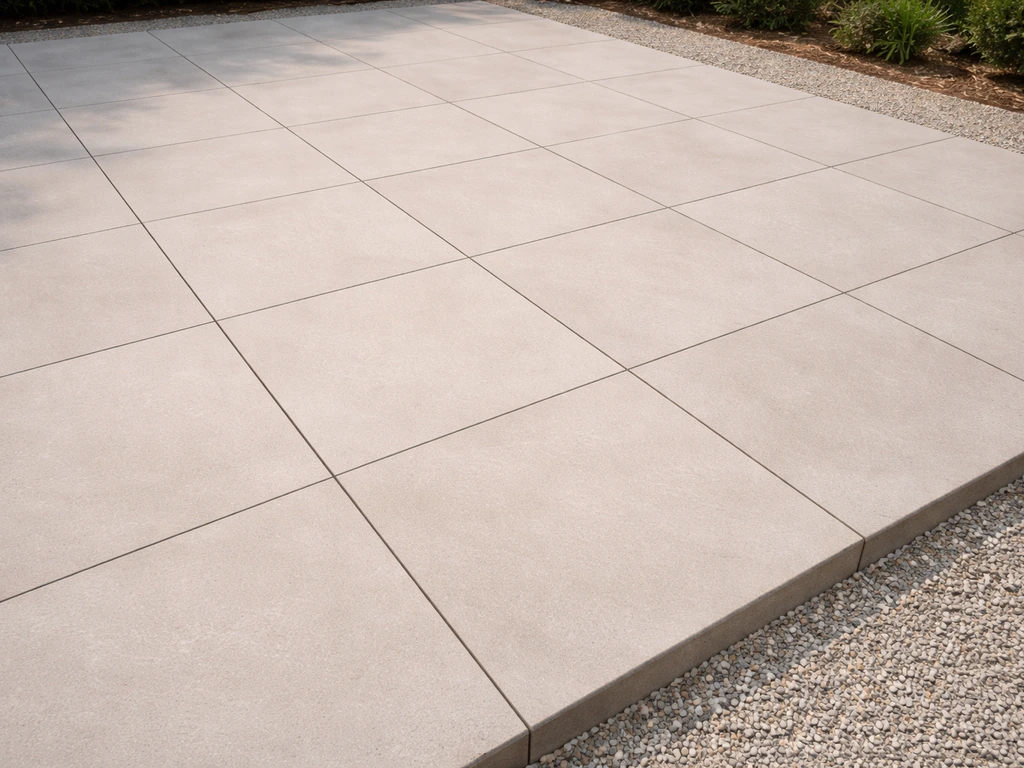
- Under $10/sq ft installed: Standard 18x18 or 20x20 matte porcelain in neutral tones. Totally workable, especially in a cold climate where durability matters more than aesthetics.
- $10–$18/sq ft installed: Stone-look large-format porcelain (24x24 or larger), or entry-level natural slate and granite. Good balance of looks and longevity.
- $18–$30+/sq ft installed: Premium large-format porcelain, high-end natural granite or slate, or custom tile work. Worth it for high-visibility patios or forever-home projects.
Installation: what actually makes patio tiles last
This is where most DIY patio tile jobs fail. The tile itself is rarely the problem. It's almost always the base, the drainage, or the adhesive choice. Get these right and a porcelain patio lasts 30+ years. Get them wrong and you'll be re-laying tiles in five.
The base and subbase
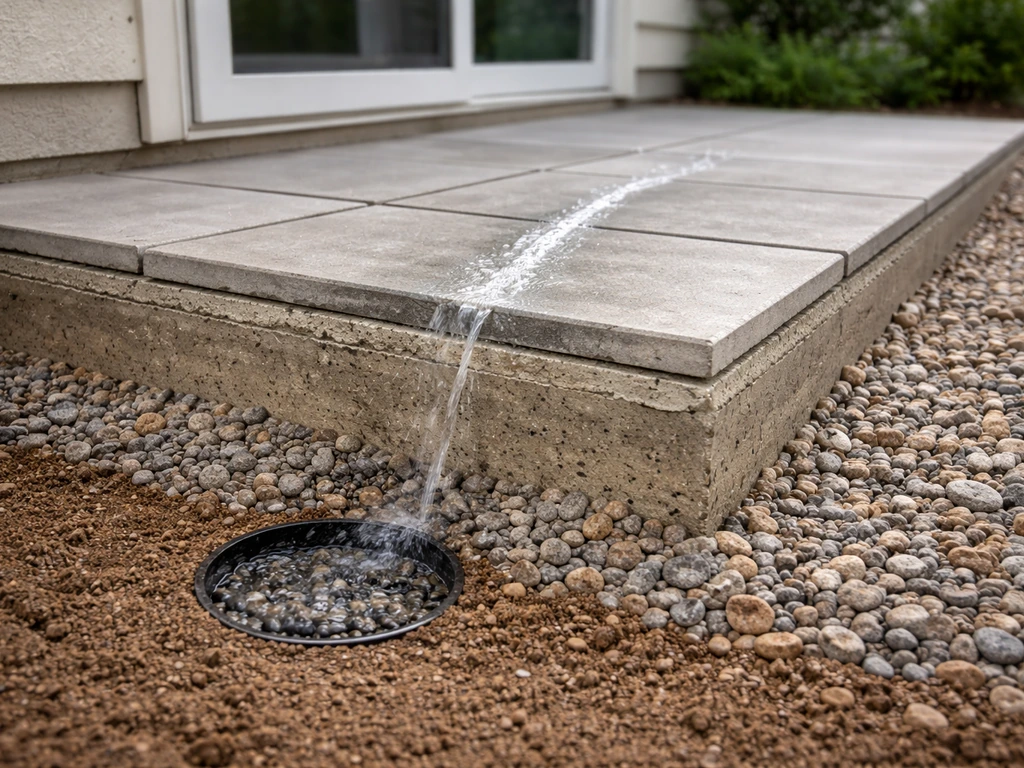
Tile needs a rigid, stable, non-moving surface. For most patio installations, that means a concrete slab, minimum 4 inches thick, on a compacted gravel subbase (typically 4–6 inches of compacted crushed stone). If you're setting tiles over an existing concrete slab, it needs to be sound, not cracked, and properly cured. Any movement in the base translates directly into cracked tiles and failed grout joints. If your existing slab is heaved, settled, or cracked, address that first before spending a dollar on tile.
Slope and drainage
Outdoor tile surfaces must drain. The standard slope for a patio is 1/8 to 1/4 inch of drop per foot of run, directing water away from the house foundation. This slope is built into your concrete base, not compensated for with thicker mortar in one area. Standing water under or between tiles accelerates freeze-thaw damage and promotes mold. Plan your drainage before you pour the slab.
Mortar and adhesive selection
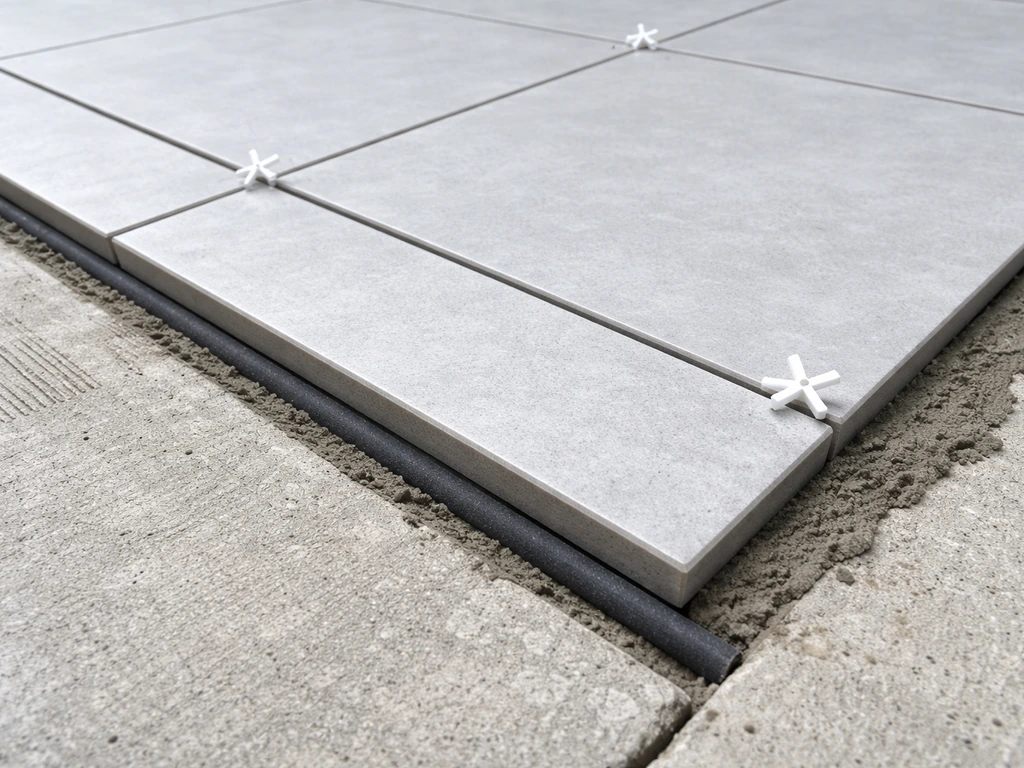
For outdoor tile on concrete, use a polymer-modified thin-set mortar rated for exterior use. Standard interior thin-set is not appropriate outdoors as it doesn't handle moisture and temperature cycling well. For large-format tiles (anything bigger than 15x15 inches), use a medium-bed or large-format tile mortar to ensure full coverage across the back of the tile. Aim for at least 95% mortar contact on outdoor tile (versus 80% acceptable indoors). Voids under tile collect water and crack.
Grout joint spacing and expansion joints
Don't butt tiles together outdoors. You need grout joints of at least 3/16 to 1/4 inch to allow for thermal expansion, especially with large-format tiles that will noticeably expand and contract with temperature swings. More importantly, install expansion joints (filled with a flexible sealant, not grout) at regular intervals across the field, at any change of plane, and where the tile meets a wall or fixed structure. Skipping expansion joints is the single most common cause of cracked outdoor tile installations.
Step-by-step overview for a standard patio tile installation
- Excavate and compact the subgrade. Remove organic material and compact the soil.
- Install 4–6 inches of compacted crushed gravel subbase with proper slope away from the house.
- Pour a 4-inch concrete slab with the correct drainage slope (1/8 to 1/4 inch per foot). Let it cure fully (28 days for full strength, or at minimum 7–14 days before tiling).
- Snap layout lines and dry-lay tiles to plan your pattern and minimize small cut pieces at edges.
- Mix exterior-rated polymer-modified thin-set to a peanut butter consistency and apply with a notched trowel sized for your tile format.
- Set tiles with firm pressure and a rubber mallet, checking level and slope as you go. Back-butter large tiles for full coverage.
- Leave 3/16 to 1/4 inch grout joints. Install expansion joints every 8–10 feet in the field and at all fixed edges.
- Allow thin-set to cure (typically 24–48 hours) before grouting.
- Apply sanded exterior grout or polymer-modified grout. For high-moisture climates, consider epoxy grout for joints.
- Seal grout joints (and tile if natural stone) after grout cures fully, typically 72 hours.
Sealing, grout choices, and keeping your patio looking good
Does porcelain need sealing?
The tile itself? Generally no. Porcelain's low absorption means sealers don't penetrate or bond well, and most manufacturers don't recommend sealing the tile body. The grout joints are a different matter. Cement-based grout is porous and will stain and discolor outdoors unless sealed. Apply a penetrating grout sealer after curing and re-apply annually or as needed.
Natural stone sealing
Natural stone absolutely needs sealing outdoors. Slate, granite, and travertine should all be sealed with a penetrating impregnating sealer before use and then re-sealed on a schedule based on the stone's porosity: travertine may need it every 6–12 months in a wet climate, granite can often go 2–3 years. Do a simple water-bead test annually. If water soaks into the stone instead of beading up, it's time to re-seal.
Grout selection for outdoors
For grout joints 1/8 inch and wider (which is typical for outdoor tile), use sanded grout. Unsanded grout shrinks and cracks at wider joint widths. For the best long-term performance outdoors, choose a polymer-modified sanded grout, or go up to epoxy grout in very high-moisture or pool-adjacent applications. MAPEI’s ANSI A118.15 technical documentation covers polymer-modified mortars and grout products and the performance details used for tile and stone installation compliance blank" rel="noopener noreferrer">polymer-modified sanded grout. Epoxy grout is harder to install but essentially impervious to staining, water, and mold.
Ongoing maintenance routine
- Sweep or blow off debris weekly to prevent grit from scratching the surface.
- Wash with a pH-neutral cleaner and a stiff brush or mop monthly, or after heavy use.
- Avoid acidic cleaners (vinegar, citrus-based products) on natural stone and cement grout.
- Inspect grout joints seasonally. Re-grout or caulk any cracked or missing sections before water infiltrates.
- Re-apply grout sealer annually on cement-based grout.
- For natural stone, do the water-bead test annually and re-seal as needed.
- In cold climates, use sand or kitty litter (not rock salt) for traction on icy tile. Rock salt damages grout and some stones.
Shopping checklist: what to look for and how to order
Once you've settled on a tile type, here's what to check on the spec sheet and how to order smart.
Key specs to verify before buying
- Water absorption ≤0.5% (ASTM C373) for porcelain confirmation.
- Freeze-thaw resistance: ASTM C1026 compliance listed on the spec sheet if you're in a cold climate.
- DCOF AcuTest value of 0.42 or higher minimum (look for 0.60+ for wet outdoor areas). Check ANSI A326.3 rating.
- Outdoor or exterior rated: the product must explicitly be listed for exterior/outdoor use.
- PEI wear rating of 4 or 5 for floor tile that will see foot traffic.
- Tile thickness: 3/4 inch (20mm) porcelain pavers are more crack-resistant on patios than thinner tiles; minimum 3/8 inch (10mm) for mortared installations.
- R-rating for slip (European standard): R10 minimum outdoors, R11 or R12 for pool surrounds or very wet areas.
How to calculate tile quantity
Measure your patio's length and width in feet, multiply to get square footage, then add 10% for cuts and waste (15% for diagonal patterns or irregular shapes). Order all tiles from the same dye lot to ensure color consistency. Even tiles from the same product line can vary slightly between batches. If you're tiling a patio that's 200 square feet, order 220–230 square feet. Keep a box or two in reserve for future repairs.
Accessories and underlayment you'll need
- Exterior-rated polymer-modified thin-set mortar (medium-bed formula for large-format tiles).
- Sanded, polymer-modified exterior grout in a color that complements your tile.
- Flexible sealant (such as a color-matched urethane or silicone caulk) for expansion joints.
- Penetrating grout sealer, and a stone sealer if using natural stone.
- Tile spacers in your desired grout joint width (3/16 inch or 1/4 inch for outdoors).
- A diamond-blade wet saw for cutting porcelain (rental is fine for one job).
- A rubber mallet and large notched trowel (sized to your tile format).
- A long level and tape measure for checking slope as you work.
Where to source reliably
Tile specialty showrooms and distributors are worth visiting because staff can pull actual spec sheets and confirm outdoor ratings. Big-box home improvement stores carry a decent selection, but it's easier to end up with an interior-only tile if you're not careful about reading labels. If ordering online, always request the full technical data sheet before committing, not just the product description page. When comparing options, look at the tile's PEI rating, DCOF value, and absorption figure side by side, not just the price per square foot.
If you're specifically looking at smaller-format solutions like interlocking patio tiles or snap-together deck tiles for a balcony or overlay project, the sourcing and spec considerations are somewhat different from a full mortar-set installation. If you want the simplest path to a flexible, no-mortar patio surface, interlocking systems are one of the best ways to start interlocking patio tiles. Those options are worth evaluating separately based on your base surface and permanence needs.
FAQ
Can I use porcelain tile that says “outdoor” if it does not mention ASTM C1026 or freeze-thaw compliance?
You can, but only for patios in frost-free climates. If you have any consistent risk of freezing, skip it unless the technical sheet explicitly states ASTM C1026 compliance or a documented freeze-thaw resistance claim. “Outdoor rated” can mean UV and rain resistance, not necessarily freeze-thaw durability.
What grout should I choose if my tile joints are wider than 1/4 inch outdoors?
For joints wider than 1/4 inch, confirm the grout manufacturer’s spec for maximum joint width. Many standard polymer-modified grouts have limits where they can shrink or crack. In very wide joints, homeowners often move to epoxy grout or use a grout designed for large joints, then verify color and cleanup requirements before committing.
Is sealing necessary for porcelain patio tile?
In most cases, no. Sealers typically do not bond well to porcelain because of its low absorption, and the grout is usually the real staining risk outdoors. If you want extra protection, focus on sealing the grout (not the tile face) using a product compatible with polymer-modified grout.
How do I tell whether a tile is actually anti-slip, not just “textured”?
Check the DCOF/AcuTest or an outdoor slip rating on the technical data, not the marketing description. Even matte finishes can be slick if the texture is shallow. As a practical check, look for a surface profile described as structured, anti-slip, or rated R11 or higher (where available), especially for pool-adjacent areas.
What size patio tile is best for preventing lippage and movement?
For most DIY or smaller crews, 12x24 or 24x24 matte porcelain can work well, but larger formats demand higher accuracy in setting and better substrate flatness. If your base is not very smooth, consider slightly smaller formats, use large-format mortar with full coverage, and plan to back-butter only where recommended to reduce voids and hollow spots.
Do I need to add an exterior membrane or waterproofing layer under porcelain tile on a slab?
Often yes, depending on your slab condition and local climate. If the slab is new and properly cured, many installations still rely on correct mortar and drainage, but adding a suitable exterior system (waterproofing and crack isolation) can protect against moisture movement and minor substrate cracking. Follow the membrane maker’s compatibility guidance for thin-set type.
Can I install patio tiles over old concrete that has hairline cracks?
Sometimes, but you need to evaluate movement. Hairline cracking that is stable may be addressed with the right crack-isolation strategy, while any heaving, settling, or widening cracks should be corrected before tiling. If the slab is still active, new tile usually fails at grout lines first.
How much slope should a patio have if it is partially covered or near a door?
Use the standard 1/8 to 1/4 inch per foot away from the house, but ensure the water path is not blocked by thresholds, planters, or furniture. If a section is covered and doesn’t get rainfall, it can tolerate slightly different drainage, but areas that receive splash or runoff still need the same drainage logic to avoid standing water.
What’s the single most common reason outdoor tile installations crack, even when the tile is correct?
Expansion joints and substrate movement. Cracks often come from skipping flexible joints at changes of plane and along the field, or from a base that is not rigid and non-moving. Even with the right freeze-thaw rated porcelain, no-joint installs commonly fail when temperatures cycle.
Should I use sanded grout outside, and what happens if I accidentally use unsanded?
For the typical outdoor joint range (about 1/8 inch to 1/4 inch), sanded grout is usually preferred because it resists shrinkage in wider joints. If you use unsanded in wider joints, it can crack sooner and may allow water penetration that drives staining and potential freeze-thaw stress in harsh climates.
What tile color is best for comfort if people walk barefoot in summer?
Lighter colors usually stay cooler, regardless of material. Dark porcelain can absorb more heat, so if your patio is exposed to direct sun for long periods, choose light or medium tones and pair them with a matte or structured surface for both comfort and traction.
Is polymer-modified thin-set always required outdoors?
For exterior porcelain tile on a slab, polymer-modified thin-set is the typical requirement. Interior thin-set may not handle long-term moisture and temperature cycling. Also, for large-format tiles, use medium-bed or large-format mortar to improve coverage and reduce voids that trap water.
How should I order tiles to minimize color mismatch on an outdoor patio?
Order from the same dye lot and keep extra boxes for future repairs. If you buy later, even the same product line can have slight tonal shifts between batches. Plan for at least 10% waste for straight layouts, and increase to 15% or more for diagonal patterns and irregular edging.
Are interlocking patio tiles a true “long-term” solution, or only temporary?
They can be long-lasting, but the expected lifespan depends heavily on the stability of the base and how water drains at the seams. Interlocking systems are often ideal for overlays, balconies, and situations where you cannot mortar-set, but they are generally not as permanent as a properly mortared porcelain installation on a rigid, drained slab.