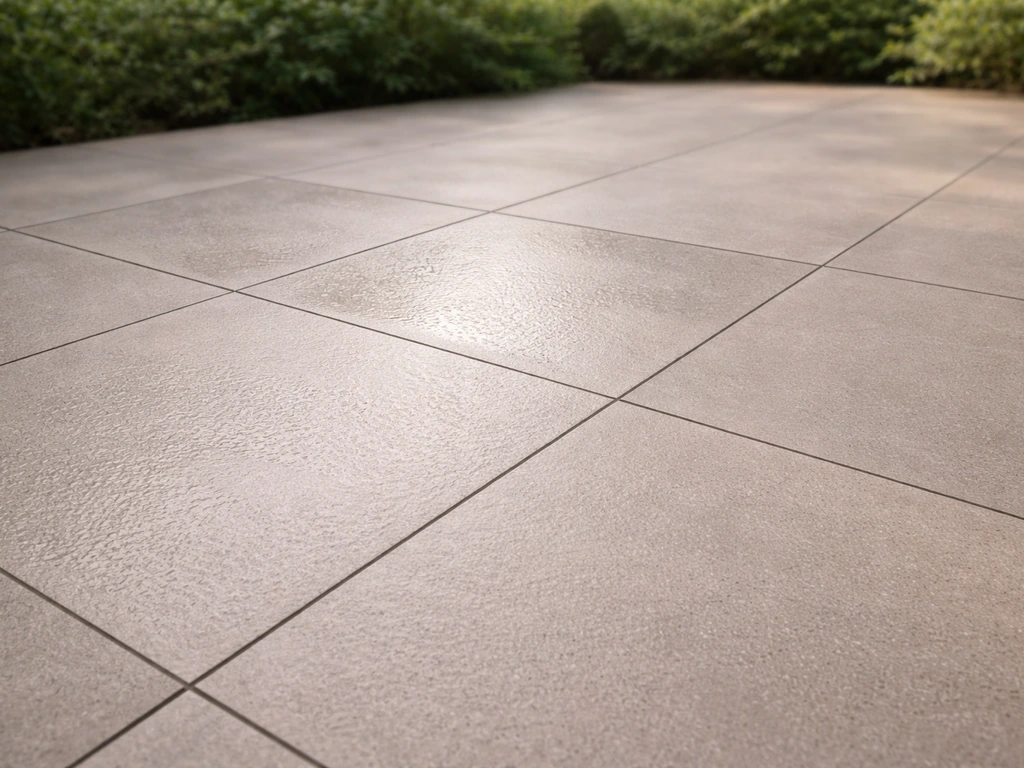
For most outdoor patios, a textured porcelain tile rated R11 or higher (on the DIN 51130 ramp scale) and with a DCOF of at least 0.42 is your safest, most durable choice. Matte or structured-surface porcelain with water absorption under 0.5% handles wet conditions, freeze-thaw cycles, and heavy foot traffic better than almost anything else on the market. That said, the tile itself is only part of the equation: a properly sloped base, the right grout joint width, and a cleaning routine that prevents algae are what keep a patio actually non-slip over years of use.
Best Non Slip Tile for Outdoor Patio: How to Choose
Nolan Ellison
11 May 2026
How to Choose Non-Slip Outdoor Tile (What Actually Matters Underfoot)
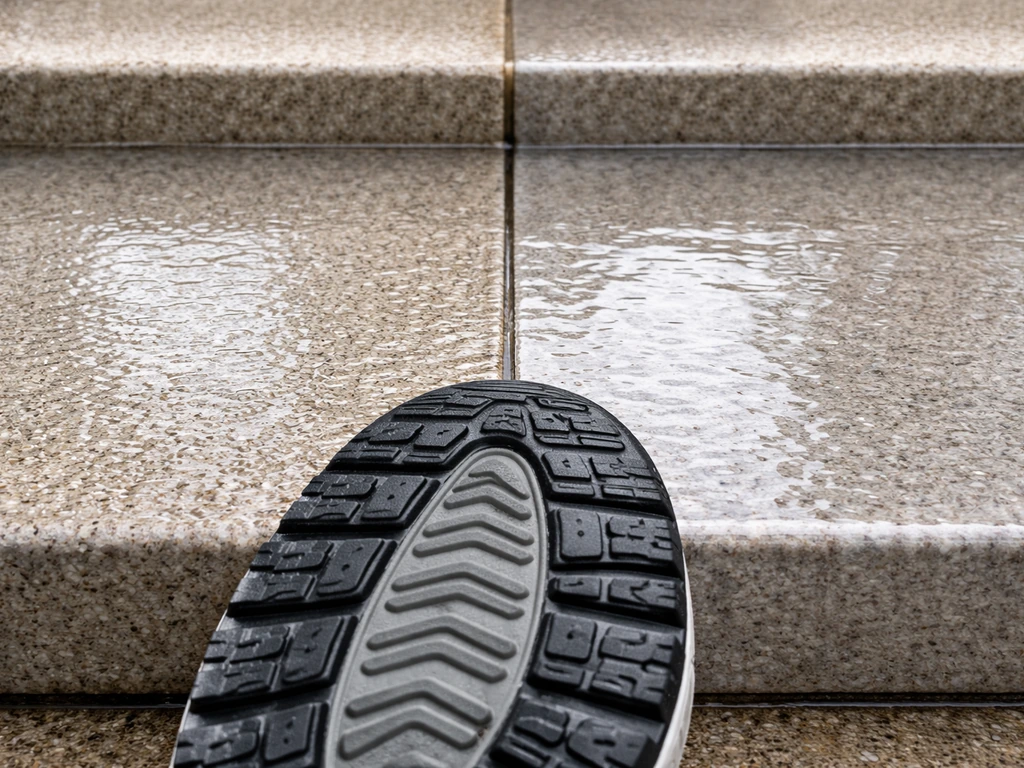
Slip resistance is not just a product label. It's a measured property that varies with surface texture, finish, wetness, foot traffic, and biological growth. Before you shop, you need to understand the two main rating systems you'll encounter on product sheets and what they actually tell you.
The DIN 51130 R-rating system (R9 through R13) comes from a German ramp test where a person walks on oil-coated flooring at increasing angles. Higher numbers mean the surface resists slipping at steeper angles. R9 is the minimum for any commercial wet area. R10 is suitable for most outdoor patios. R11 is better for pool surrounds, shaded patios, or anywhere water pools regularly. R12 and R13 are typically reserved for industrial kitchens and steep ramps. When a manufacturer lists an R-rating, it tells you how the tile performs under those specific test conditions, not every real-world scenario.
In the U. S. , you'll more often see DCOF (Dynamic Coefficient of Friction) referenced, tested under ANSI A326. 3 using a BOT-3000E tribometer.
The standard threshold is 0. 42 DCOF for level, wet interior applications, and the 2021 update extended criteria to exterior and barefoot traffic categories. ANSI A326. 3, 2021 specifies the [0.
42 DCOF](https://tcnatile. com/wp-content/uploads/2023/01/ANSIA326. 32021February2022_Locked. pdf) threshold value and discusses how the relevant criteria can vary by application type, including newer categories/criteria beyond a baseline approach and device-specific notes such as BOT 3000E.
Think of 0. 42 as the floor, not the goal. For an outdoor patio exposed to rain, leaves, and shaded conditions, you want tiles that test noticeably higher, or that pair a solid DCOF number with an R11-rated texture. Neither rating is a guarantee of absolute safety, especially once algae or soap residue enter the picture.
The older ASTM C1028 static COF test (using Neolite heel assemblies under dry and wet conditions) still appears on some product data sheets. It measures static rather than dynamic friction, so it's less predictive of real walking conditions than DCOF testing. If you see C1028 numbers on a spec sheet, treat them as a secondary reference point rather than the primary decision driver.
Beyond ratings, think about your actual patio conditions: Is it south-facing and sunny, or shaded and damp? Do you have kids or older adults using it? Is it near a pool? Shaded patios in humid climates grow algae on grout lines and tile surfaces faster than you'd expect, and that biological film is the single biggest driver of traction loss in well-installed outdoor tile systems. Any tile you choose needs to be easy to clean and paired with a drainage system that doesn't let water sit.
Best Tile Types for Outdoor Non-Slip Patios
Not all tile materials perform equally outdoors. Here's how the main categories stack up when non-slip performance is your priority.
Porcelain Tile and Porcelain Pavers (Best Overall)
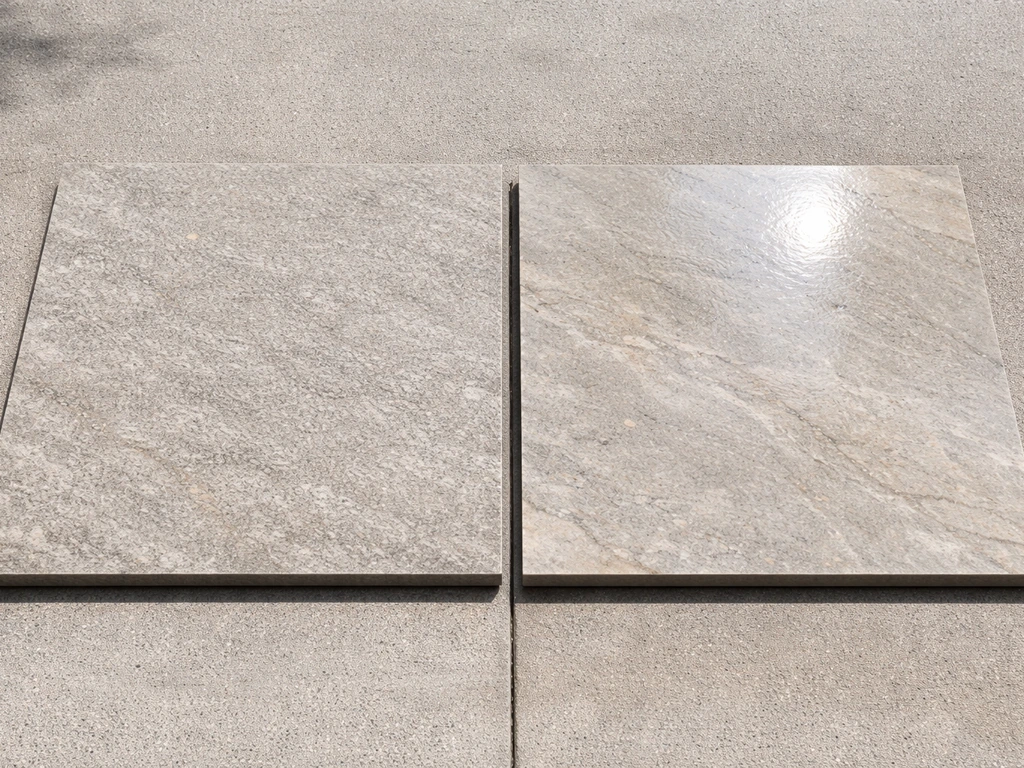
Porcelain is the gold standard for outdoor patio tile, and it earns that reputation. Porcelain is often considered the best tile for outdoor patios because it resists water absorption and performs well in freeze-thaw conditions. It's defined by water absorption of 0. 5% or less (tested per ASTM C373), which means it won't soak up water, swell, or crack in freeze-thaw conditions the way higher-absorption materials can.
Modern porcelain pavers come in thicknesses from 3/4 in. up to 2 cm (about 3/4 in. ) for heavy-use applications, and manufacturers offer textured, matte, and structured finishes specifically designed to hit R10 or R11 ratings. You can also find large-format porcelain (24x24 in.
and up) with through-body color, so chips and scratches don't show a different material underneath.
The one honest trade-off: glazed porcelain with a polished or high-gloss finish can be dangerously slippery when wet, regardless of how beautiful it looks in a showroom. If a porcelain product doesn't list an R-rating or DCOF value for its specific surface finish, assume it's not rated for wet outdoor use and move on.
Natural Stone: Slate, Granite, and Sandstone
Certain natural stones work well outdoors, but you have to choose the right type and finish. Slate's naturally cleft (split) surface is inherently rough and provides excellent traction, often hitting R11 or better without any treatment. Granite with a flamed or brushed finish is dense, low-absorption, and very durable. Sandstone offers a naturally grippy texture but varies significantly in porosity by source, so check the absorption rating before buying. All three can handle outdoor use when properly sealed.
Limestone and travertine are more problematic. Both are calcium-based, softer, and significantly more porous. They're susceptible to biological colonization by algae and fungi, which research confirms can both reduce traction and cause surface deterioration over time. If you're drawn to the look of limestone or travertine, be realistic: they require more frequent sealing and cleaning to stay safe underfoot, and even then, shaded damp locations will challenge them.
Flagstone
Flagstone is a broad category (it includes slate, quartzite, sandstone, and limestone cut into irregular pieces) and it shows up a lot on patio-focused sites for good reason. The rough, irregular surfaces of quartzite and slate flagstone are naturally non-slip and require no special finish to perform well. However, flagstone is harder to install with precise flatness and slope control compared to uniform tile, and lippage between irregular pieces creates trip hazards that are as important as slip resistance. If you're comparing flagstone to porcelain tile for a DIY project, porcelain's dimensional consistency makes it easier to achieve a safe, even surface.
Ceramic Tile (Exterior-Rated Only)
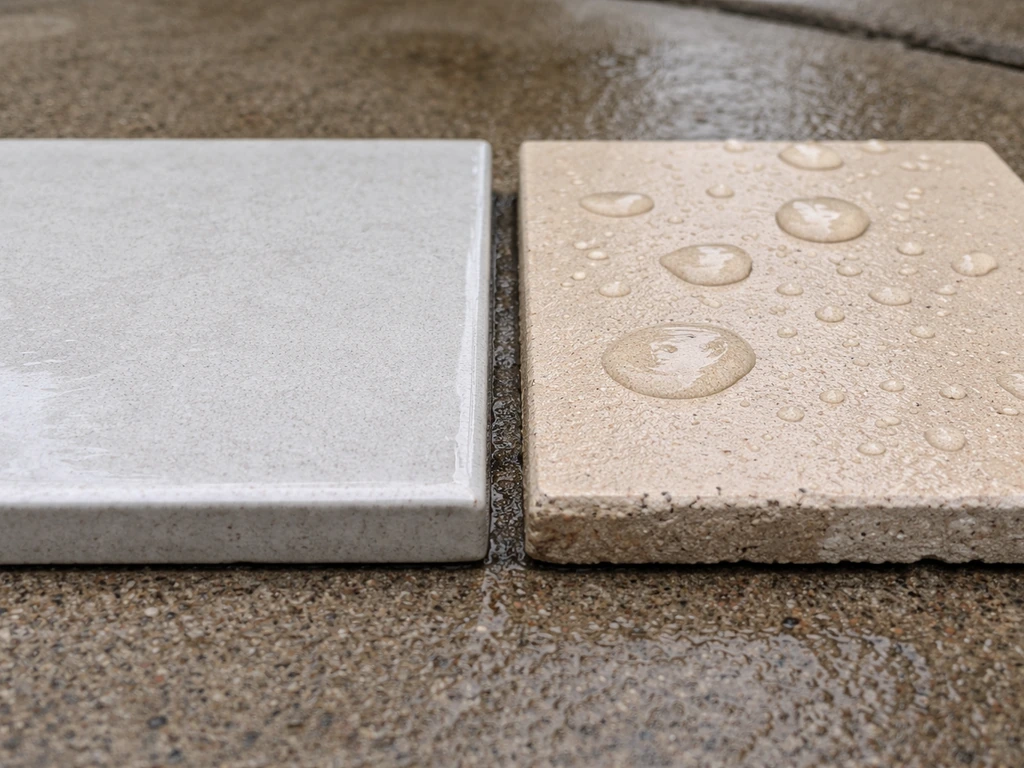
Standard ceramic tile is not recommended for most outdoor patios. Its water absorption is typically well above porcelain's 0.5% threshold, making it vulnerable to freeze-thaw cracking. Some exterior-rated ceramic products exist, but they're the exception rather than the rule. If you see ceramic tile being sold for outdoor use, check the ASTM C1026 freeze-thaw test rating on the product data sheet before buying. Without it, you're gambling on longevity.
| Tile Type | Typical R-Rating | Freeze-Thaw Safe | Algae/Maintenance Risk | Best For |
|---|---|---|---|---|
| Porcelain (textured/matte) | R10-R11 | Yes (≤0.5% absorption) | Low-Medium | Most outdoor patios |
| Slate (cleft finish) | R11+ | Yes (dense varieties) | Low | Rustic, shaded patios |
| Granite (flamed/brushed) | R10-R11 | Yes | Low | High-traffic, modern patios |
| Sandstone | R10 | Variable (check absorption) | Medium | Dry climates, sunny spots |
| Limestone/Travertine | R9-R10 | No (unless sealed/dense) | High | Warm, dry climates only |
| Flagstone (quartzite/slate) | R11+ | Yes | Low-Medium | Natural, informal patios |
| Standard Ceramic | Varies | Usually No | Medium | Not recommended outdoors |
Surface Finishes and Textures: What to Look For
The finish on a tile does more to determine real-world traction than the material type alone. This is where a lot of homeowners get burned: they fall in love with a polished stone or high-gloss porcelain in a showroom and don't realize it becomes an ice rink the moment it rains.
- Matte finish: Low sheen, no polish. Provides good natural grip. Usually rated R10 or better for outdoor use. This is the minimum finish you should consider.
- Textured/structured finish: Surface has deliberate relief, grooves, or raised patterns pressed in during manufacture. Typically R10-R11. Best for pool surrounds, rainy climates, and shaded areas.
- Anti-slip coated finish: Some tiles are treated with an applied anti-slip coating or have aggregate embedded into the glaze. Check whether the R-rating applies to the coated or uncoated version, as ratings are finish-specific.
- Honed finish: Flat and smooth with a very low sheen. Better than polished, but not as safe as textured. Acceptable for drier climates with good drainage.
- Polished/gloss finish: Avoid for any wet outdoor surface. Wet polished tile, whether porcelain or natural stone, is dangerously slippery regardless of material quality.
- Flamed/brushed (stone): Thermal flaming opens up the surface of granite and quartzite, creating a naturally rough texture. Reliably R11+ and very durable outdoors.
One thing worth repeating: the R-rating and DCOF value apply to the specific surface finish tested, not the material category. A manufacturer might list an R11-rated product in their catalog, but if the specific tile you're ordering has a different finish variant, it may not carry that rating. Always ask for the slip-resistance data for the exact product and finish you're buying, not the product line in general.
For pool surrounds and barefoot wet areas, ANSI A326.3 and industry guidance specifically call out stricter requirements beyond standard wet-level minimums. In practice, this means choosing R11 or above, with a textured surface and a DCOF value meaningfully above 0.42. Don't let a salesperson talk you into a smoother tile because it looks more modern, the liability when someone falls is very real.
Climate, Freeze-Thaw, and Water Management
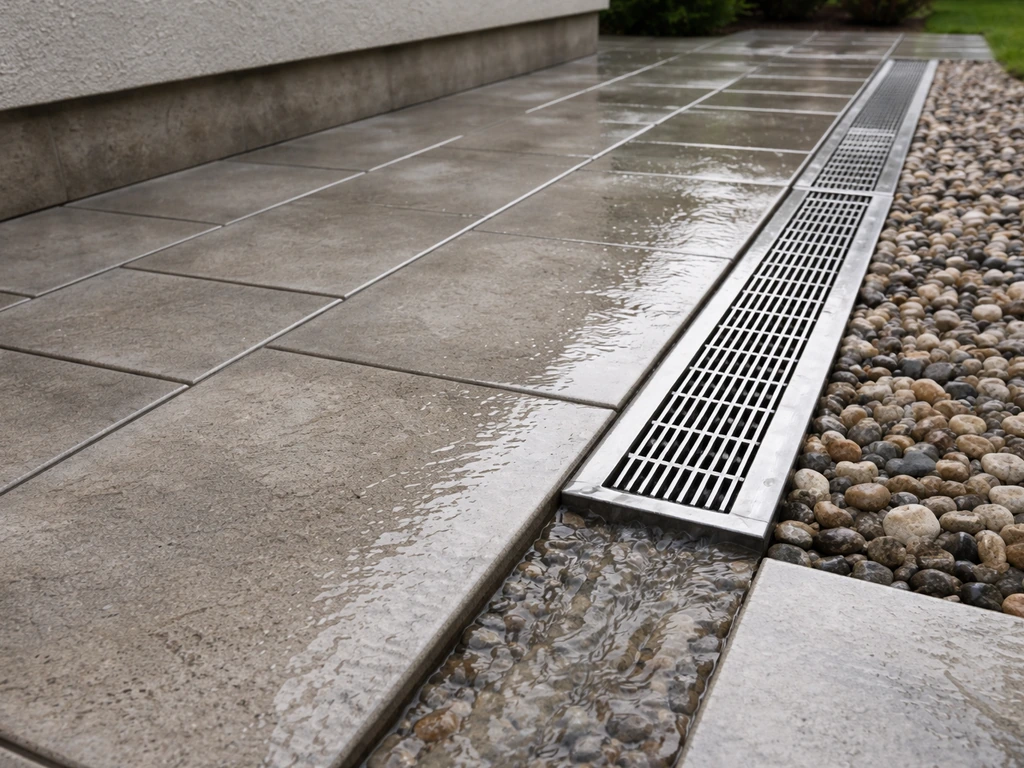
Where you live should drive a significant part of your tile decision. A tile that performs beautifully in Phoenix can crack and heave in Minneapolis after one winter. Here's what to think through for your climate.
Cold Climates and Freeze-Thaw
In any climate where temperatures drop below freezing, you need tile that passes ASTM C1026 (the freeze-thaw cycling resistance test). Intertek’s ASTM C1026 freeze-thaw cycling test listing confirms ASTM C1026 is the standard method used to measure ceramic and glass tile resistance to freeze-thaw cycling ASTM C1026 freeze-thaw cycling resistance test.
Porcelain with water absorption at or below 0. 5% almost universally passes this test. Dense natural stones like granite and slate typically do as well. Limestone, travertine, and many sandstones do not, and should be avoided in freeze-thaw zones unless you can verify specific product testing.
When water infiltrates a porous tile and freezes, it expands and breaks the tile or grout from the inside. That damage doesn't just look bad; it creates uneven surfaces and sharp edges that are genuine safety hazards.
Wet, Humid, and Shaded Environments
Shaded, humid patios are where algae and biological growth cause the most traction problems. Research on outdoor stone surfaces confirms that algae and fungi colonize both the tile surface and grout lines, and that colonization doesn't just look unsightly; it can change the mechanical surface properties and make wet tile dramatically more slippery over time. In these conditions, choose a tile with the tightest possible surface texture (not open-pored), use epoxy grout or a polymer-modified grout that resists biological infiltration, and build a cleaning schedule into your maintenance plan from day one.
Drainage and Water Ponding
Standing water is the enemy of outdoor tile safety. The industry standard slope for outdoor tile drainage is 1/4 inch per foot (approximately 2% grade) away from the house and toward drainage. If your patio is flat or drains poorly, even an R12-rated tile will become slippery as water pools on the surface. Plan your drainage before you set a single tile, and if you're adding tile to an existing concrete slab, check the existing slope before committing to the project.
Installation Details That Make Tile Actually Safe
I've seen beautifully specified tile become a safety problem because the installation cut corners on the base or slope. The tile you choose matters, but the system it's installed in determines whether it stays safe for 5 years or 25.
Subbase and Substrate Flatness
Outdoor tile needs a stable, flat substrate. Check flatness with a 10-foot straightedge: industry practice allows a maximum of 1/4 inch variation across that span before setting tile. Voids beneath tile (caused by an uneven base or improper thinset application) allow tiles to flex slightly under load, which cracks grout joints and creates low spots where water and algae accumulate. For most residential patios, a properly prepared concrete slab or mortar bed assembly is the right starting point. For elevated decks, follow TCNA method references (such as F103/F103B on mortar bed assemblies) and include a waterproofing membrane beneath the tile layer to protect the structure and ensure water exits the system.
Mortar and Adhesive Selection
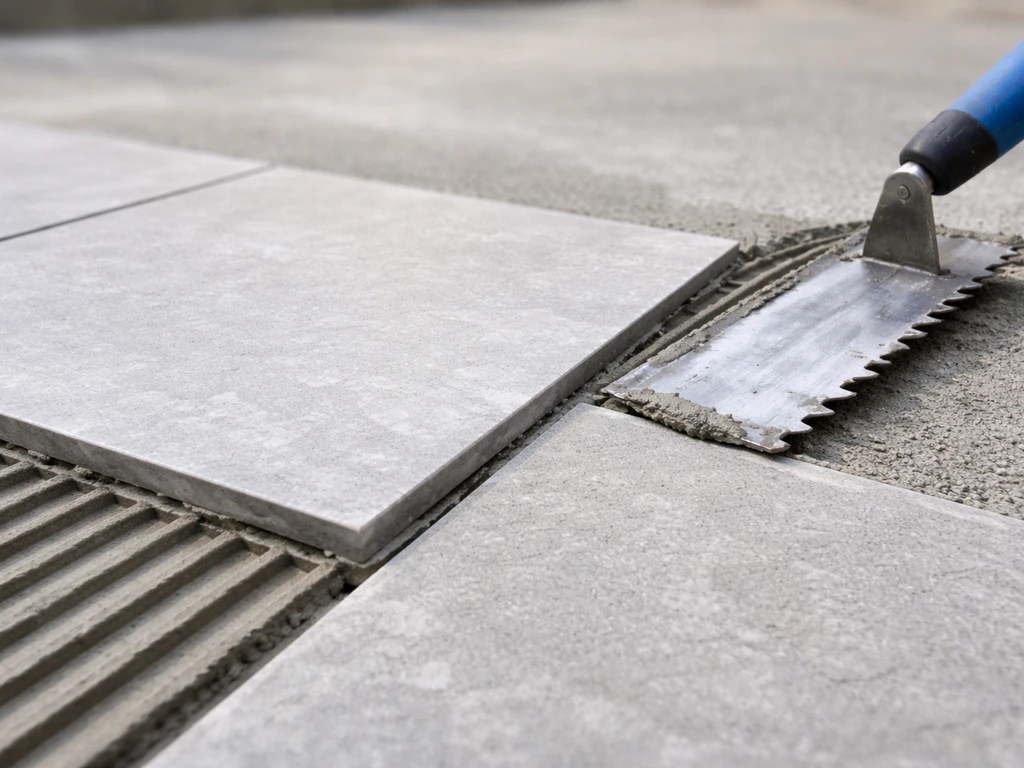
Not all thinsets are rated for exterior use. For outdoor tile, you need a polymer-modified thinset meeting at minimum ANSI A118.4, or ideally A118.11 for large-format or wet-exposure applications. These mortars maintain bond strength through wet-dry and freeze-thaw cycles that would cause a standard interior thinset to fail. Look for products that explicitly state exterior suitability and freeze-thaw durability on their technical data sheets. Don't let a contractor substitute indoor thinset to save a few dollars on a job that's going to see rain and frost.
Grout Joint Width and Grout Selection
TCNA guidelines call for movement joints at minimum every 8 to 12 feet in exterior applications, with joint widths of at least 3/8 inch on 8-foot centers and 1/2 inch on 12-foot centers. These joints need to be filled with a backer rod and ASTM C920-rated sealant, not grout, to accommodate thermal movement. For regular grout joints between tiles, use a polymer-modified sanded grout or epoxy grout for outdoor applications. Epoxy grout is harder to work with but resists biological growth and moisture penetration far better than standard cement grout, which matters a lot in shaded or consistently wet areas.
Slope, Waterproofing, and Sealing
Build your 1/4-inch-per-foot drainage slope into the subbase or mortar bed, not as an afterthought. A crack-isolation membrane beneath the tile on a concrete slab both protects against substrate cracking telegraphing through to the tile surface and provides a secondary drainage plane. For natural stone, sealing with a penetrating (not topical film-forming) sealer reduces water absorption and slows biological growth; re-seal every one to two years depending on exposure. For porcelain, sealing is generally not required but can help protect grout lines.
Maintenance and Cleaning for Long-Term Traction
The best tile installation becomes slippery when neglected. A simple maintenance routine does most of the work.
- Rinse the patio regularly, especially in shaded areas. A monthly rinse with plain water removes dust, pollen, and early biological deposits before they form a grip-reducing film.
- Clean with a pH-neutral tile cleaner. Avoid ammonia, bleach, vinegar, and acid-based products. These can modify grout color, degrade grout integrity, and in some stone types cause surface etching. Damaged grout joints trap more moisture and accelerate algae growth.
- Address algae and moss quickly. For biological growth, use a diluted oxygen bleach solution (not chlorine bleach) or a dedicated outdoor tile cleaner rated safe for grout. Scrub with a stiff brush and rinse thoroughly.
- Inspect grout joints annually. Look for cracks, missing grout, or darkening that suggests moisture infiltration. Repair failed grout promptly to prevent water from getting under the tile.
- Re-seal natural stone every one to two years. Use a penetrating impregnating sealer appropriate for the stone type. Don't use topical sealers on outdoor surfaces, as they can peel and create their own slip hazard.
- Check movement joints. Perimeter and field expansion joints filled with sealant can crack or harden over time. Replace failed sealant before water gets into the substrate.
One cleaning mistake I see regularly: homeowners use a pressure washer on full power, which feels satisfying but can erode grout joints and force water under the tile system. Use a pressure washer on a low-to-medium setting with a wide fan tip, and keep it moving. Let the cleaner do the work, not the pressure.
Budget vs Performance: What to Buy and Where to Start
You don't have to spend a fortune to get a safe, durable outdoor patio tile, but you do need to spend enough to get the right material and installation. Here's how to think about budget against performance.
| Budget Level | Tile Option | Approximate Material Cost (per sq ft) | Best Climate Fit | Key Trade-Off |
|---|---|---|---|---|
| Entry ($) | Exterior-rated porcelain, 12x12 or 18x18, matte finish | $2-$5 | Most climates | Smaller format means more grout lines; verify R10+ rating |
| Mid ($$) | Large-format porcelain paver, textured, 24x24 | $5-$12 | All climates including freeze-thaw | Higher install skill needed for flatness; premium results |
| Mid-High ($$$) | Slate or flamed granite tile | $8-$15 | All climates (slate/granite) | Heavier material; professional install often needed |
| Premium ($$$$) | 2 cm porcelain paver or high-end granite | $15-$30+ | All climates, pool surrounds | Best longevity and traction; high upfront cost |
When shopping, bring a checklist to the tile store or use it to filter online product pages. You want to see: an R-rating of R10 minimum (R11 for pool surrounds or shaded/humid areas), a DCOF value of 0.42 or above tested under ANSI A326.3, water absorption of 0.5% or less for freeze-thaw climates, and a freeze-thaw test reference (ASTM C1026) for any cold-climate installation. If the product sheet doesn't list these values, ask the retailer for the full technical data sheet before buying.
Questions to ask at a tile store or when ordering online: Does this specific finish (not just the product line) carry an R-rating, and what is it? What is the DCOF tested value for wet conditions? Is it rated for freeze-thaw cycling? What thinset do you recommend for outdoor use with this tile? What grout joint width and type do you recommend for exterior applications? A good tile supplier will have answers to all of these. If they don't, that's useful information too.
If you're also comparing interlocking tile systems or patio tile options beyond traditional mortar-set installations, the performance trade-offs around drainage and stability shift somewhat, and those formats deserve their own evaluation. Many homeowners researching interlocking patio tiles reviews also compare drainage and stability details against standard mortar-set installations interlocking tile systems. If you want the best interlocking patio tiles for safe traction and long-term stability, compare their drainage design and slip ratings for your specific finish.
Similarly, if your project involves a patio table surface rather than the patio floor itself, the slip-resistance requirements are different and material choices like faux stone or smaller format tiles become more relevant. For a faux stone patio table top replacement, make sure the tabletop finish matches the slip-resistance needs for wet use and verify relevant DCOF or R-rating data for that exact surface patio table surface.
If you are sourcing tiles for patio table top, prioritize a slip-resistant finish and confirm the product’s wet-use traction ratings for the exact tile and surface style you plan to install patio table surface. For the ground plane of a patio where people walk, though, textured porcelain or natural cleft stone set on a properly sloped, well-drained base is where you start, and the specs above are what you use to evaluate every product you consider.
The bottom line: don't buy any outdoor patio tile without a published slip-resistance rating for its specific finish, and don't let an installer skip the slope, the right thinset, or the movement joints. Get those fundamentals right, and even a mid-budget porcelain tile will stay safe and attractive for decades.
FAQ
Can I use the same slip-resistant outdoor tile on covered areas where it rarely gets direct rain?
Yes, but only if you verify the slip rating for the exact finish and confirm it is rated for wet outdoor use. Even tiles described as “porcelain” can have multiple surface treatments, and high-gloss or polished variants often fail traction when wet. If the product page does not show an R-rating or a DCOF value tied to the specific finish, treat it as not suitable for a non-slip patio.
If my patio is shaded and humid, what should I prioritize beyond just choosing a textured tile?
You should still treat the patio as a wet environment because humidity, sprinkler overspray, leaves, and shade-driven algae can keep surfaces damp. If your climate is humid or shaded, prioritize textured porcelain with an R11-rated surface and a DCOF that is clearly above 0.42, then keep grout and tile clean to prevent biological film from building up.
What’s the most common reason a patio tile that tests non-slip still becomes slippery in real life?
Look for the slip rating for the finish that matches what you’re buying, then confirm the installation details that prevent “slick” outcomes. Foamy algae growth, soap residue from cleaners, and lippage from uneven installation can override the tile’s lab performance. A practical rule, if you see green, black, or white film, stop using mild soaps that leave residue and switch to an outdoor-safe biological cleaner appropriate for your grout and tile.
Can I install outdoor non-slip tile using regular indoor thinset and grout to save money?
Use a proper exterior thinset and matching grout, and do not substitute indoor-only mortars. For outdoor porcelain or stone, choose a polymer-modified thinset that is explicitly labeled for exterior use and freeze-thaw durability, typically meeting at least ANSI A118.4 (or A118.11 for large-format). For grout, consider epoxy or outdoor polymer-modified products in consistently damp locations.
Do higher R-ratings and higher DCOF numbers guarantee the patio will never slip?
Higher ratings help, but traction can still drop when the surface is contaminated or worn down. Lab ratings assume clean conditions, a specific surface texture, and controlled wetness. In service, grime and residue can reduce friction, so plan regular cleaning and avoid aggressive sealers or products that create a slick film on the tile.
Is epoxy grout worth it for improving non-slip performance on an outdoor patio?
Don’t rely on grout choice alone, but grout type strongly affects long-term traction in shaded zones. Cement grout can support biological growth where water lingers, which can turn wet joints slick. Epoxy grout and well-sealed, properly proportioned joints usually maintain better surface traction over time.
If my tile has an R11 or DCOF above 0.42, do I still need to worry about patio slope and standing water?
Not necessarily. Water accumulation is often the bigger hazard than the tile’s baseline coefficient of friction. Verify your subbase or mortar bed slope is about 1/4 inch per foot (2% grade), then inspect that the final tile surface has no low spots where puddles can form. If you already have an existing slab with poor drainage, address the drainage issue before changing tile.
Can non-slip outdoor tile be installed on an elevated deck without increasing slip risk?
Yes, but choose carefully. Some patio tiles can be installed on decks, yet you must include a waterproofing membrane over the supporting structure and follow exterior-rated movement and joint requirements. Deck installations often need more attention to deflection and movement joints, because flexing can create unevenness that traps water and reduces traction.
What should a DIY installer double-check to avoid creating low spots or lippage that causes slipping?
For DIY, the two biggest install-related “slip killers” are flatness and movement joints. Check the substrate flatness with a 10-foot straightedge (keep variation within typical industry tolerances), then include movement joints at recommended intervals and fill them with a backer rod and ASTM C920-rated sealant, not grout. Improper joints can lead to cracking, lippage, and water retention.
How do I verify a tile’s slip rating when I order online and can’t see the exact finish in person?
Use the product’s published slip data, then confirm the installation method does not alter the surface behavior. For example, smoothing, cutting, or finishing the surface after purchase, or installing a different finish variant than the one tested, can remove the expected traction. When ordering, ask for the exact spec sheet for the specific SKU and finish, not just the product line.
Is it safe to use a pressure washer to clean non-slip outdoor patio tile?
A pressure washer can worsen traction by eroding grout joints and driving water under the tile system, which promotes biological growth later. If you use a washer, use low-to-medium pressure, a wide fan tip, and keep distance and motion consistent. In many cases, a soft brush with an appropriate cleaner gives better results while preserving joint integrity.