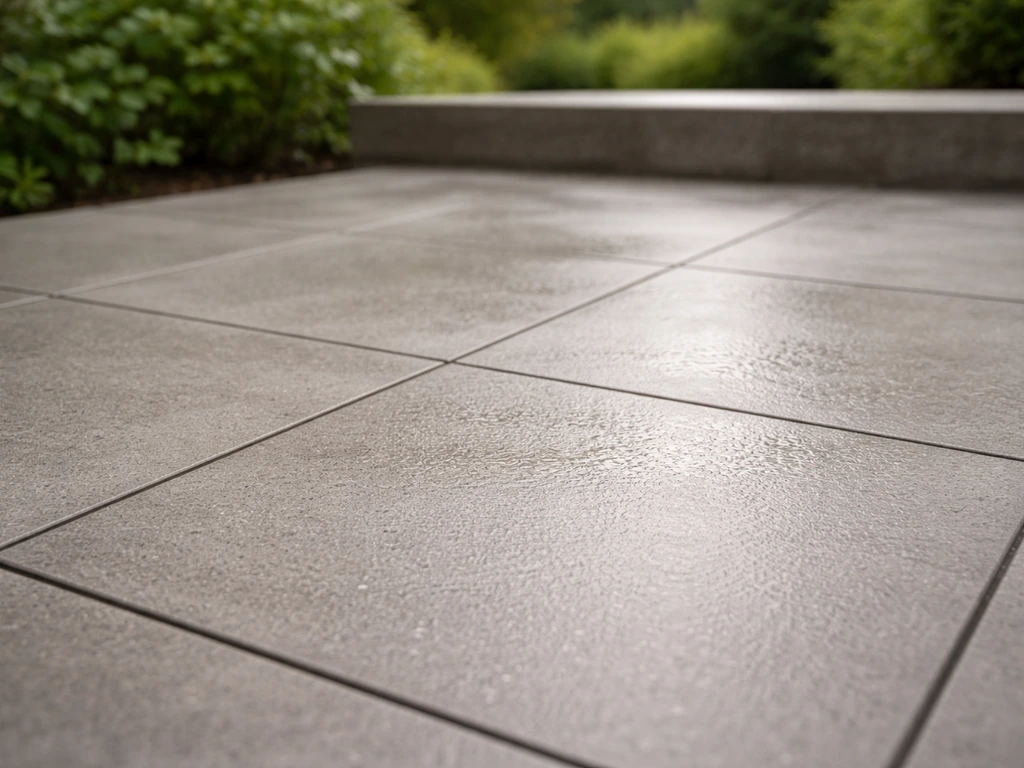
Porcelain tile is the best choice for most outdoor patios. It absorbs less than 0.5% water (tested per ASTM C373), which makes it essentially impervious to moisture, resistant to freeze-thaw cracking, and easy to keep clean year after year. If you want one answer you can act on today, buy a textured, rectified porcelain tile rated for exterior use, with a wet DCOF of 0.42 or higher, and install it over a properly prepared concrete base with exterior-rated thinset and sanded grout. That combination handles most climates, most budgets, and most homeowners without drama.
Best Tile for Outdoor Patios: Porcelain and Alternatives
Nolan Ellison
8 May 2026
Choosing the Right Tile Based on Your Climate and Conditions
Climate is the single biggest variable in outdoor tile selection, and it's the one most people skip over when they're browsing tile samples. What works beautifully in Phoenix can crack and heave in Minneapolis by February. Before you pick a tile, you need to be honest about your local conditions: how cold does it get, how much rain or snow do you deal with, and does water pool on your patio after a storm?
In freeze-thaw climates (anywhere that drops below 32°F regularly), your tile must be tested to ASTM C1026, the standard for freeze-thaw cycling resistance. Tiles that fail this test absorb enough water that the expansion of freezing water inside the tile cracks or spalls the surface. Porcelain passes easily because of its near-zero absorption rate. Many natural stones, especially certain limestone and sandstone varieties, do not, so you have to verify before you buy. In warmer, humid climates, freeze-thaw resistance matters less, but water absorption and slip resistance become your priority. In hot, sun-drenched climates like the Southwest, tile color and heat retention become the dominant design concern.
| Climate Type | Primary Risk | Best Tile Choice | Tiles to Avoid |
|---|---|---|---|
| Freeze-thaw (Cold/Northern) | Cracking from moisture expansion | Porcelain (ASTM C1026 rated) | Limestone, soft sandstone, non-porcelain ceramic |
| Hot and dry (Southwest) | Heat absorption, thermal shock | Light-colored porcelain, travertine | Dark-colored tiles, glazed ceramic |
| Humid/tropical (Southeast) | Algae, slip hazard, moisture | Textured porcelain, slate | Polished stone, smooth glazed tile |
| Coastal/salt air | Efflorescence, corrosion in joints | Porcelain, dense granite | Porous limestone, low-density stone |
| Mild/temperate (Pacific NW) | Moss, algae, constant moisture | Textured porcelain, slate | Polished surfaces, light grout colors |
The Main Tile Types for Patios, Ranked Honestly
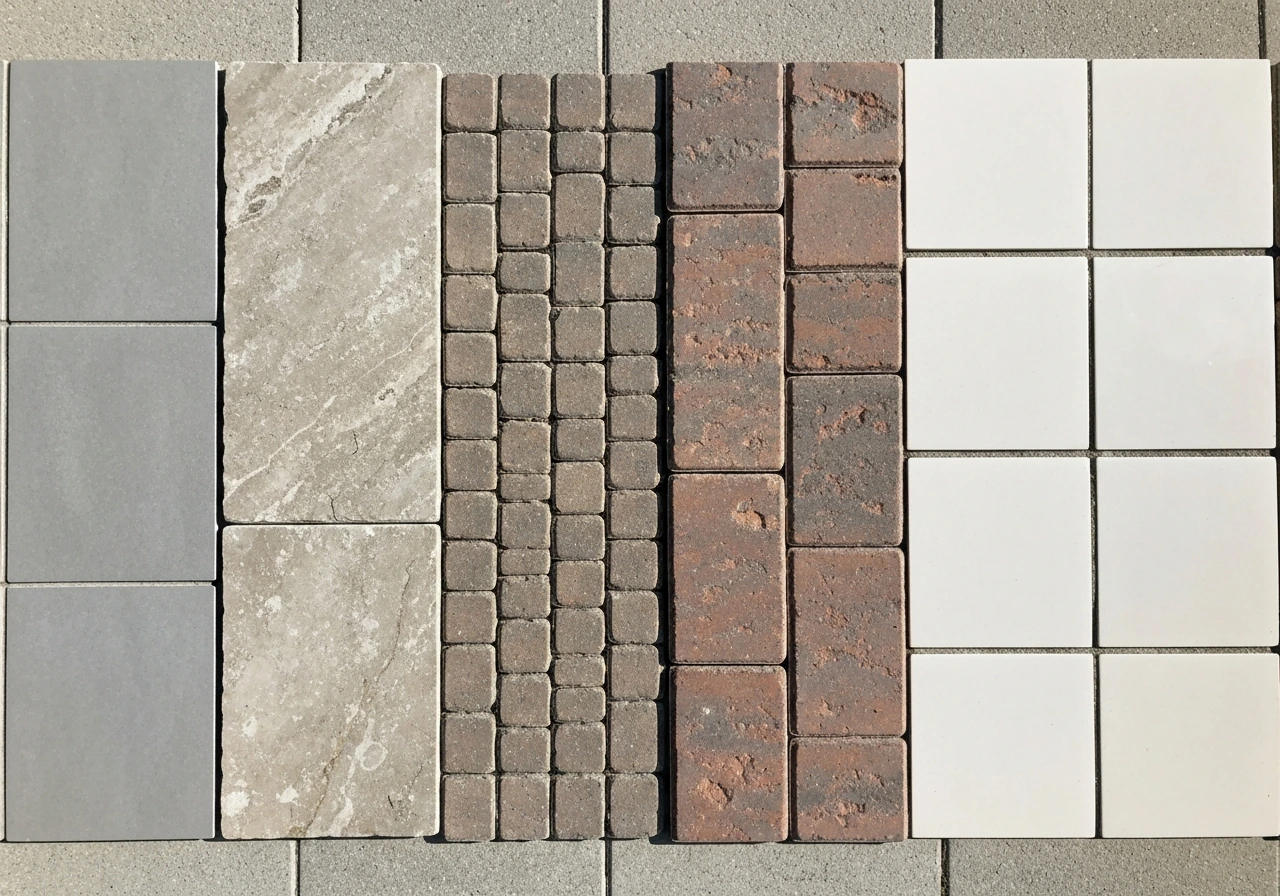
There are really five tile categories worth considering for an outdoor patio. Here's how they stack up in real-world performance, not just showroom appeal.
Porcelain Tile
This is the workhorse. Porcelain is fired at extremely high temperatures, which drives its water absorption below 0.5% per ASTM C373. That's why it passes freeze-thaw testing and why it doesn't stain the way softer materials do. Modern porcelain comes in enormous format sizes, realistic stone and wood looks, and a range of finishes from matte to textured. For a patio, you always want a matte or structured finish, never polished. The tile industry has heavily improved exterior porcelain in recent years, and you can find options that look like expensive travertine or slate at a fraction of the cost. The downside: large-format porcelain tiles are heavy and less forgiving of substrate movement, so installation prep matters a lot.
Natural Stone Tile
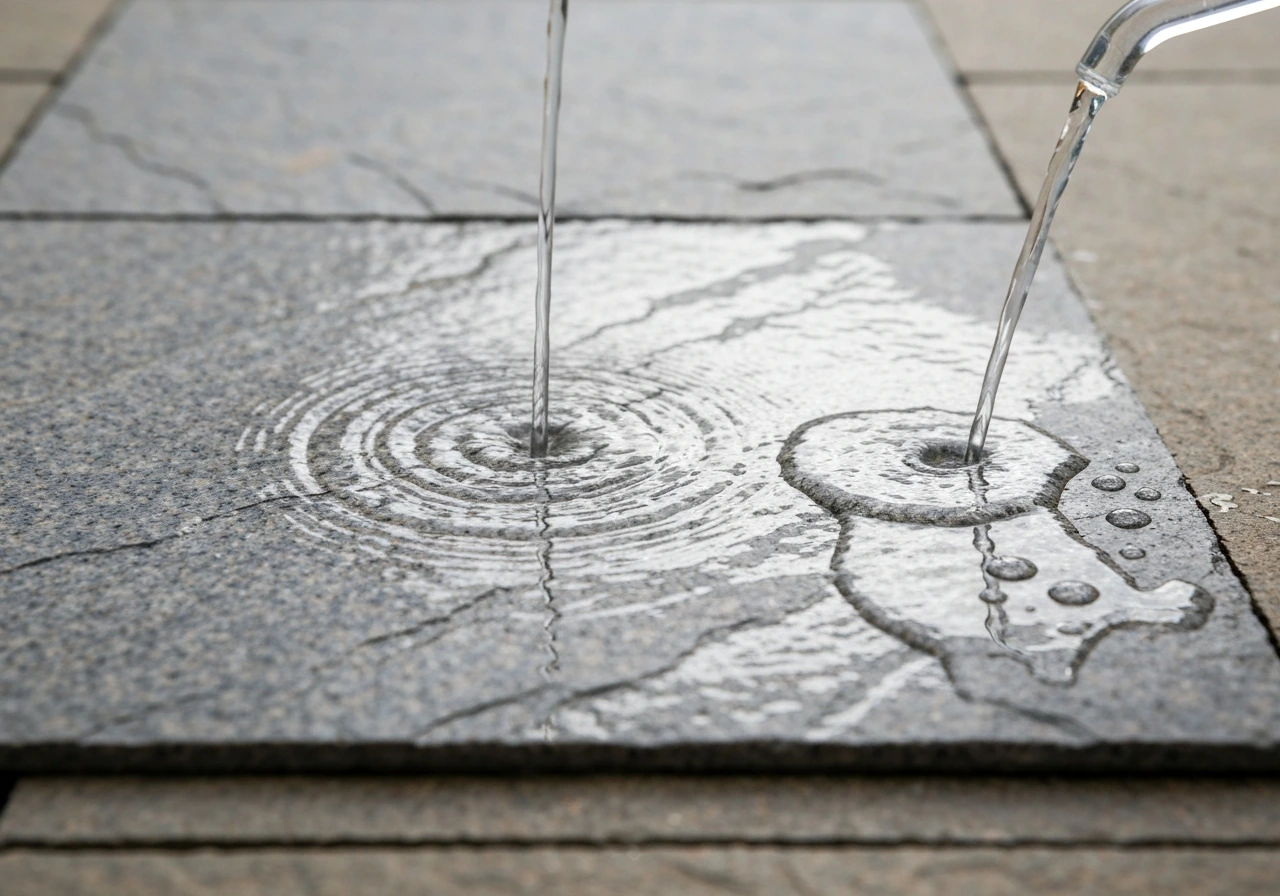
Natural stone covers a wide range of materials, and they don't all perform equally outdoors. Slate and dense granite are excellent outdoor tiles. Slate has naturally high slip resistance due to its cleft surface texture, and granite's low porosity (typically under 0.5%) makes it comparable to porcelain in freeze-thaw performance. Travertine and limestone are more porous, require regular sealing, and should only go outside in mild climates unless you're diligent about maintenance. Sandstone is the most risky of the common stones for outdoor use in cold climates. All natural stone needs periodic sealing to manage moisture absorption, which is an ongoing cost and commitment that porcelain doesn't require.
Ceramic Tile
Standard ceramic tile is not a great outdoor choice in any climate with real winters. It absorbs significantly more water than porcelain and is rarely rated for freeze-thaw exposure. If you're in a warm climate that never freezes, exterior-rated glazed ceramic can work, but you need to specifically confirm the tile is rated for exterior use and check that the glaze has adequate slip resistance when wet. Glazed surfaces get dangerously slippery when wet, which is a serious concern on a patio where people walk barefoot or in flip-flops.
Interlocking Patio Tiles
Interlocking tiles, typically made of porcelain, composite, or wood-look materials, are worth mentioning because they're popular for DIY installations. If you want the best interlocking patio tiles, prioritize porcelain options and confirm the slip and freeze-thaw ratings before you buy. They snap or click together over an existing surface without mortar.
The convenience is real, but so are the trade-offs: gaps between tiles can collect debris and weeds, the tiles can shift over time, and the performance depends entirely on the quality of the tile itself and the flatness of the surface underneath. Porcelain interlocking tiles perform best. If you're considering this route, it's worth looking at real-world reviews of specific products before committing.
To narrow down your options, reading interlocking patio tiles reviews for your specific product and climate can save you from common DIY surprises real-world reviews.
Quarry and Brick-Look Tile
Quarry tile is a fired clay product that's been used outdoors for decades, particularly in commercial settings. It's durable, slip-resistant, and handles moisture well, though it's not as freeze-thaw resistant as porcelain. Brick-look porcelain tiles give you that classic aesthetic with better performance specs. If you love the look of brick but want modern durability, go with porcelain in a brick format rather than actual clay brick tile.
Slip Resistance, Freeze-Thaw Durability, and Moisture Resistance
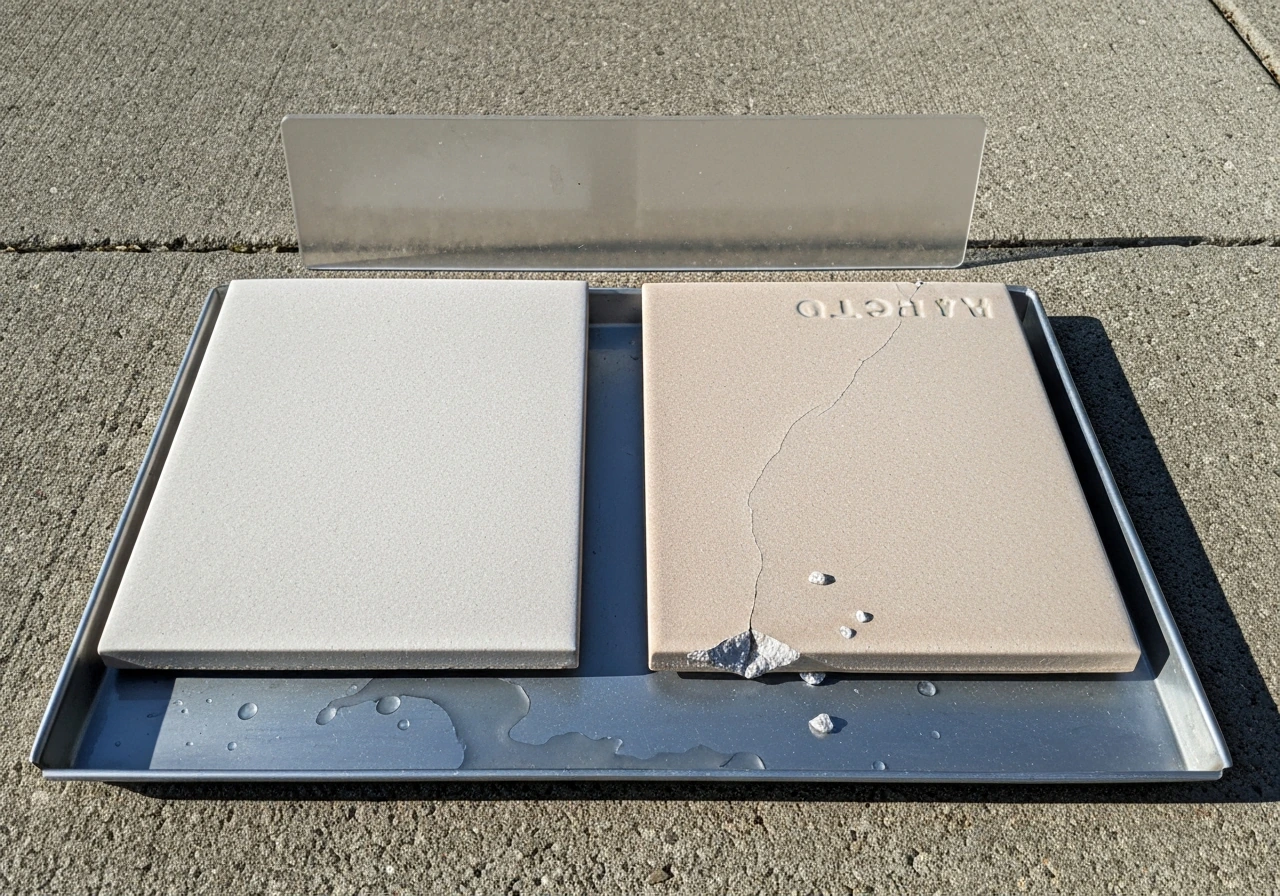
These three factors are non-negotiable for an outdoor tile that lasts and stays safe. Let me break down what the specs actually mean so you can read a product sheet intelligently.
Slip Resistance: What the DCOF Number Means
Wet DCOF (Dynamic Coefficient of Friction) is the most commonly used slip-resistance measurement in the U. S. tile industry. The ANSI A137.
1 standard establishes a minimum wet DCOF of 0. 42 for level interior spaces walked on when wet, and this number is widely used as a baseline for outdoor specification too. For a patio, especially one that gets rained on or sits near a pool, aim for a wet DCOF of at least 0.
Choosing the best tile for an outdoor patio that stays non slip starts with that wet DCOF number and a textured, matte or structured surface wet DCOF of at least 0. . 42, and higher is better. Textured, matte, and structured-surface tiles almost always meet or exceed this threshold.
Polished or high-gloss tiles often don't. In Europe, slip resistance is evaluated using the pendulum friction method under EN 16165, which measures similar properties and confirms that surface finish dramatically affects wet traction. Bottom line: always check the DCOF rating on the spec sheet, and avoid any tile that doesn't clearly list one for an outdoor application.
Freeze-Thaw Durability
The relevant test is ASTM C1026, which cycles tile samples through freeze-thaw conditions to see if they crack, spall, or delaminate. Look for tiles explicitly labeled as passing ASTM C1026 if you live in a cold climate. Porcelain's low absorption rate (under 0.5% per ASTM C373) is the underlying reason it passes this test. A tile with higher water absorption soaks up moisture, that moisture expands when frozen, and the tile eventually breaks apart from the inside. This is exactly why using standard ceramic or a soft natural stone in a northern climate is a costly mistake I've seen homeowners make more than once.
Moisture and Water Absorption
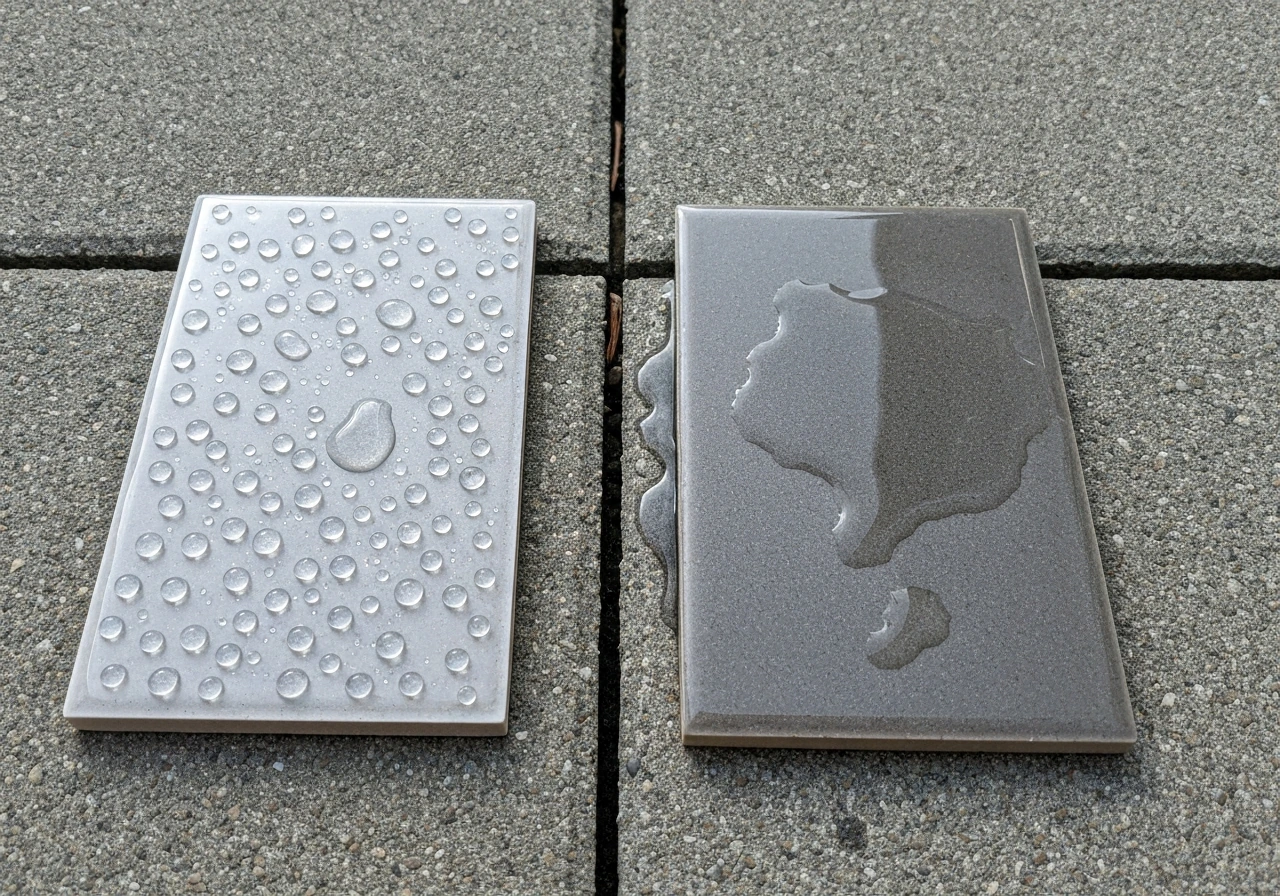
ASTM C373 is the test for water absorption. ASTM C373 is the standard test method used to determine water absorption for fired whiteware products, ceramic tiles, and glass tiles [ASTM C373 is the test for water absorption. ](https://store. astm.
org/c0373-14a. html). Porcelain is classified as impervious at 0. 5% or less.
Most natural stones fall into the semi-vitreous or non-vitreous range, meaning they absorb more water and need sealing to compensate. For outdoor use, target impervious or vitreous tiles whenever possible, particularly in wet or cold climates. Beyond the tile itself, the system's ability to drain water away is equally important.
The Tile Council of North America (TCNA) emphasizes that proper slope and water management are fundamental to exterior tile longevity, because even a good tile can fail if water pools under it repeatedly.
Design and Performance Factors: Size, Color, Grout, and Layout
Tile Size and Format
Large-format tiles (18x18 inches and up, or plank formats like 12x24) give a clean, modern look and have fewer grout joints for weeds and dirt to accumulate in. That's a real practical advantage outdoors. However, they require a very flat, stable substrate. If your base has any flex or unevenness, large tiles will crack at stress points.
Smaller tiles (12x12 or 12x24) are more forgiving of minor substrate imperfections and allow more flexibility in layout around curved or irregular patio shapes. For most homeowners doing a standard rectangular patio on a concrete slab, 16x16 or 12x24 porcelain is the sweet spot between ease of installation and visual impact. If you're specifically choosing tiles for patio table top surfaces, prioritize the same outdoor-rated specs for slip resistance and water absorption.
Color and Heat Retention
Dark tiles absorb significantly more heat than light ones. A dark charcoal or black porcelain tile in full sun can get uncomfortably hot underfoot, especially if you have kids or pets. In hot climates, stick to light grays, beiges, or off-whites. In cooler climates where you want the patio to warm up faster in spring, medium tones work well. Light-colored tiles also show dirt less on textured surfaces (they hide particulates in the texture), while smooth light tiles can show every leaf stain and watermark.
Grout Selection
Grout is often an afterthought, but it's one of the most failure-prone parts of an outdoor tile installation. Standard unsanded grout is not suitable for exterior use. You need an exterior-rated, sanded or polymer-modified grout. Products like Mapei's Ultracolor Plus FA are rated for interior and exterior use, meet ANSI A118.6 and A118.7, and include freeze-thaw performance in their testing profile. For patio joints over 1/8 inch wide (which most outdoor joints are), use sanded grout or a urethane-based product. Keep grout color practical: medium tones hide dirt and minor staining far better than white or very light grout outdoors.
Layout and Drainage Slope
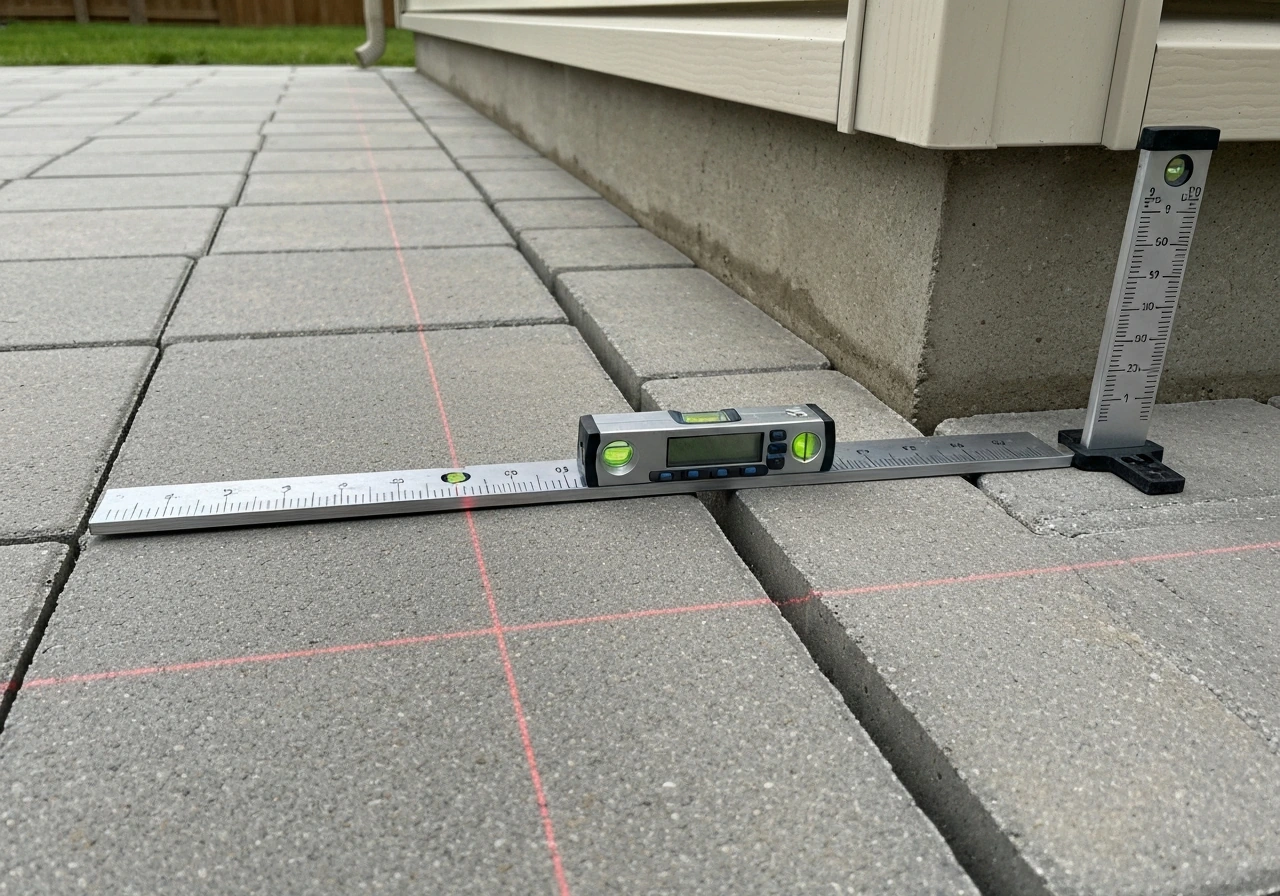
Your patio surface needs to slope away from the house, typically at a minimum of 1/8 inch per foot (though 1/4 inch per foot is better in wet climates). This isn't just an installation nicety; it directly affects how long your tile system lasts. Standing water under tiles in a freeze-thaw climate is one of the fastest ways to destroy an otherwise good installation. Plan your layout so the tile pattern accommodates this slope without creating awkward cuts, and make sure your installer or subcontractor understands that drainage slope is a structural requirement, not optional.
Installation Best Practices: How to Do It Right the First Time
A great tile installed incorrectly will fail. Most outdoor tile failures I've seen come down to a skipped step in prep or installation, not the tile itself. Here's what proper installation actually looks like.
Site Prep and Base
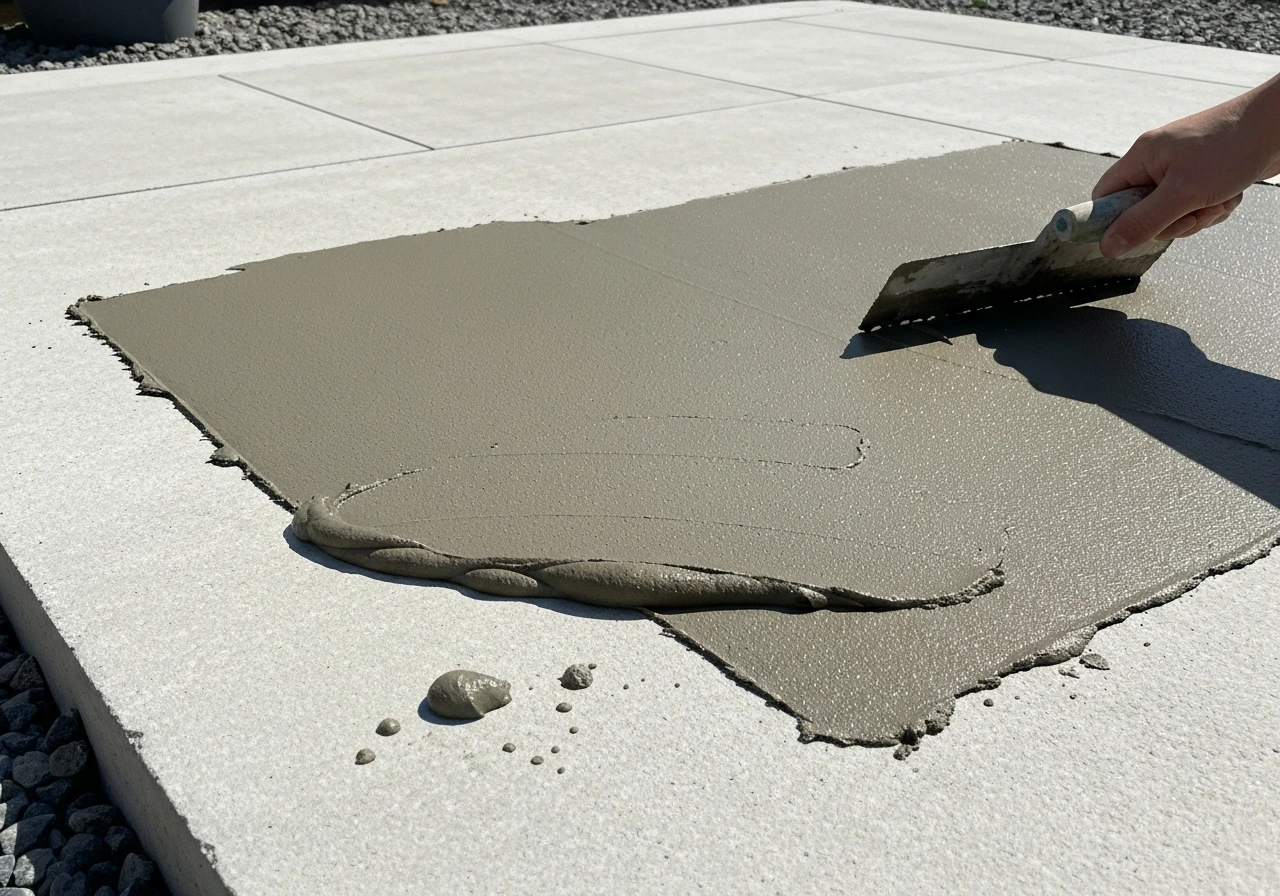
Your base needs to be structurally sound, flat, and able to handle the weight and movement that comes with outdoor use. A concrete slab is the most common and best base for outdoor tile. It should be fully cured (at least 28 days for new concrete), clean, and free of cracks wider than 1/8 inch. If you're tiling over an existing cracked slab, you need to address those cracks first, either by filling them with an appropriate filler or by using an uncoupling membrane to isolate the tile from substrate movement. If you're building from scratch, aim for a 4-inch-thick reinforced concrete slab over a compacted gravel base of at least 4 inches.
Uncoupling Membranes
An uncoupling membrane, like Schluter's DITRA or DITRA-XL, is a polyethylene mat that goes between the concrete slab and the tile. It serves two key functions: it isolates the tile from minor movement in the substrate (preventing cracks from transferring up), and it provides a waterproofing layer. For outdoor patios, particularly in freeze-thaw climates or over slabs with any history of cracking, an uncoupling membrane is worth the added cost. Schluter specifies using unmodified thinset mortar between DITRA and the substrate, which is an important detail to follow. Don't substitute modified mortar there, as it can trap moisture under the membrane and affect the bond.
Setting Materials and Mortar Contact
Use an exterior-rated thinset mortar. For large-format tiles, a medium-bed mortar is often better than standard thinset because it fills minor substrate irregularities without shrinking excessively. The TCNA specifies achieving better than 95% mortar contact on exterior installations, meaning there should be essentially no hollow spots under the tile. To achieve this, back-butter your tiles in addition to combing mortar onto the substrate, and use the right notch trowel size for your tile format. Hollow spots allow water infiltration and are a primary cause of outdoor tile cracking and debonding.
Expansion Joints
Outdoor tile expands and contracts with temperature changes. If you don't provide movement joints, the tile will crack or tent (pop up) as the system moves. The TCNA's EJ171 guideline covers placement and sizing. A practical summary: plan for movement joints at a minimum of every 8 feet, with joint widths of at least 3/8 inch. At 12-foot spacing, use joints at least 1/2 inch wide. These joints must be filled with a flexible sealant (like a silicone or polyurethane caulk) rated for exterior use, not grout. Also include joints wherever the tile meets a wall, curb, or any fixed structure.
- Assess and repair the concrete slab: fill cracks, grind high spots, confirm proper drainage slope
- Install uncoupling membrane if needed (use unmodified thinset under DITRA per Schluter specs)
- Lay out your tile pattern dry first to confirm cut placements and minimize awkward slivers
- Apply exterior-rated thinset using the correct notch trowel; back-butter large tiles
- Set tiles with firm pressure, checking for hollow spots and maintaining consistent joint spacing
- Install expansion joints at 8-12 foot intervals and at all fixed structural boundaries
- Allow full thinset cure time before grouting (typically 24-48 hours depending on product)
- Apply exterior-rated sanded or polymer-modified grout; clean haze before it hardens
- Fill expansion joints with flexible exterior sealant, not grout
- Seal natural stone tiles once grout has cured; apply sealer per manufacturer instructions
Maintenance, Sealing, and Long-Term Care
Outdoor tile doesn't require much upkeep if you chose the right material and installed it correctly, but 'not much' doesn't mean nothing. Here's what you should expect by tile type over the long haul.
Porcelain
Porcelain is the lowest-maintenance outdoor tile option. Its low absorption means stains stay on the surface rather than soaking in, so most cleaning is done with water, a stiff brush, and occasional use of a pH-neutral cleaner. For organic staining from leaves or algae, a diluted bleach solution or purpose-made tile cleaner works well. Porcelain does not need sealing. The grout joints, however, do benefit from sealing every two to three years outdoors, especially in wet climates, to prevent moisture infiltration and staining. Watch for any cracked or hollow-sounding tiles annually and replace them promptly before water gets under the system.
Natural Stone
Natural stone requires more attention. Slate and granite are relatively low maintenance but still benefit from a penetrating sealer applied every one to three years depending on the stone's porosity and your climate. Travertine and limestone need sealing more frequently, sometimes annually outdoors, and you should inspect them regularly for etching or surface erosion from rain acidity. To seal, clean the surface thoroughly, allow it to dry completely (at least 24-48 hours after cleaning), and apply a penetrating impregnating sealer per the manufacturer's directions. Avoid topical/film-forming sealers outdoors as they can peel and trap moisture beneath.
Grout Maintenance and Weed Prevention
Grout joints outdoors are an invitation for weeds, especially if the joints are wide or the grout was not fully sealed. Applying a penetrating grout sealer annually in the spring is the simplest prevention. If weeds do establish, treat them with a targeted weed killer rather than prying at the grout, which can damage joints. Over time, outdoor grout can crack or erode. Spot regrouting is straightforward: grind out the old grout with an oscillating tool to a depth of about 1/4 inch, clean the joint, and apply fresh exterior-rated grout. Don't fill expansion joints with grout if they've been damaged; replace the flexible sealant instead.
Lifespan Expectations
A properly installed porcelain tile patio should last 25-50 years or more with basic upkeep. Natural stone patios (slate, granite) have similar longevity with proper sealing. Softer stones like travertine or limestone in demanding climates may need resurfacing or replacement within 15-20 years. If you end up needing a faux stone patio table top replacement, choose materials and coatings that can handle water absorption and freeze-thaw cycles the same way you would for outdoor tile replace a damaged tile. Interlocking tiles typically have shorter functional lifespans of 10-15 years before the system shows significant wear or shifting, depending on use and climate.
Budget vs Value: What Things Actually Cost and Where to Spend Wisely
Outdoor tile pricing spans a huge range, and the sticker price of the tile itself is only part of the total picture. Here's a realistic breakdown of what you're looking at per square foot, installed, including materials and labor.
| Tile Type | Tile Material Cost (per sq ft) | Installed Cost (per sq ft) | Lifespan (well installed) | Sealing Required |
|---|---|---|---|---|
| Porcelain (standard) | $2–$6 | $10–$20 | 25–50+ years | No (seal grout only) |
| Porcelain (large format/premium) | $6–$15 | $18–$35 | 25–50+ years | No (seal grout only) |
| Slate | $4–$10 | $12–$25 | 25–40 years | Yes, every 1-3 years |
| Granite | $5–$15 | $15–$35 | 30–50+ years | Yes, every 2-3 years |
| Travertine | $3–$10 | $12–$25 | 15–30 years (climate dependent) | Yes, annually outdoors |
| Limestone | $4–$12 | $14–$28 | 15–25 years (cold climates less) | Yes, annually |
| Ceramic (exterior-rated) | $1–$4 | $8–$16 | 10–20 years | No |
| Interlocking porcelain tiles | $4–$12 (DIY-friendly) | $4–$12 (DIY) | 10–15 years | No |
Where to Spend and Where to Save
Spend on the tile and the installation. The tile itself is only a fraction of the total project cost once you factor in prep work, mortar, grout, and labor. Buying a slightly cheaper tile to save $1 per square foot on a 400-square-foot patio saves you $400 upfront but can cost you significantly more if you have to re-tile in 10 years instead of 30. The prep work (including uncoupling membrane if needed, proper mortar contact, and expansion joints) is where most DIYers shortcut and most contractors cut costs. Don't let them. Those steps are what separates a patio that looks great for decades from one that starts popping tiles in year three.
What to Look For When Buying
When you're shopping for outdoor tile, treat the spec sheet like a checklist, not a formality. The tile should clearly list its water absorption rate (ASTM C373), ideally at or below 0. 5% for porcelain. It should state wet DCOF of at least 0.
42, preferably higher for a patio. It should either be labeled as freeze-thaw resistant or specify ASTM C1026 compliance if you're in a cold climate. And the finish should be matte, textured, or structured, not polished or glazed. If a tile listing doesn't include these specs, ask the retailer directly or look for a brand that publishes full technical data sheets.
Any reputable tile manufacturer will have them. Avoid buying outdoor tile based on looks alone from a general home improvement store bin without confirming those specs, that's how patios end up cracked and slippery.
A Quick Sourcing Tip
Tile distributors and specialty tile showrooms almost always have better-quality outdoor options than big-box retailers, and their staff can actually pull spec sheets. For large projects, buying from a distributor and specifying rectified porcelain (tiles with precisely cut, consistent edges) gives you cleaner grout lines and more professional-looking results. For smaller patios or DIY projects, big-box store porcelain tile in an exterior-rated, textured finish is a perfectly reasonable choice, just verify the specs before you load it in the cart.
FAQ
Can I use the same tile I’d use indoors for an outdoor patio if it looks durable?
If your patio is not in a freeze-thaw area, you can still buy interior-looking tile, but you must verify the product is explicitly rated for outdoor use (water absorption and wet slip rating). The practical rule is to require a published wet DCOF and exterior rating, then focus on water management so the surface does not stay wet for long periods after storms.
Do I need rectified porcelain specifically for outdoor patios, or is any porcelain fine?
Yes, but the tile needs compatible specs. Porcelain is often safe, yet “rectified” only affects edge squareness, not performance. Make sure the tile listing still shows wet DCOF and, if you have winter freeze, ASTM C1026 compliance. Also confirm your grout type matches the joint width you plan for, since narrower joints can require different grout behavior than wider outdoor joints.
Is wet DCOF 0.42 always enough for slippery areas near pools or splash zones?
For pool decks and areas where water puddles or people walk through water, aim higher than the baseline. Even if a tile meets wet DCOF 0.42, consider selecting a textured porcelain that clearly publishes a higher DCOF value for exterior and wet-area use, and avoid smooth finishes that look “natural” but can lose traction when wet.
When should I use an uncoupling membrane, and can I skip it?
Uncoupling membranes are most helpful when the slab may move slightly, has older cracking, or you want extra insurance in freeze-thaw climates. If you have a brand-new, properly cured slab that is flat, crack-free, and will not flex, you may not need it. If you do have existing movement, DIY “patch and tile” over cracks often leads to reappearing fractures.
Can I fill movement joints with the same grout I’m using for the rest of the patio?
Don’t. Movement joints are not meant to be grouted. If you fill expansion joints with rigid grout, the system will crack or the grout will separate. Use a flexible exterior-rated sealant in all movement joints and at tile-to-wall or tile-to-curb transitions.
What’s the most common reason outdoor tile patios fail early, and how can I prevent it?
Yes. Many failures happen from insufficient mortar contact, poor trowel selection, or not back-buttering large tiles. Before setting the tile, ask your installer how they will ensure proper coverage (for example, back-buttering and a medium-bed mortar for large-format) and confirm they will hit the target mortar contact recommended for exterior installations.
Does freeze-thaw testing on the tile guarantee my patio will survive winters?
A tile that passes freeze-thaw testing but is installed over a weak base can still fail. If the slab isn’t fully cured, isn’t flat, or has cracks wider than about 1/8 inch that aren’t addressed, freeze-thaw only accelerates the underlying problem. Focus on base curing, crack repair, flatness, and complete mortar contact.
How do I plan tile layout so the drainage slope doesn’t cause awkward cuts or low spots?
Rectangular patios can be laid without “bad cuts” by planning the pattern around the slope and where the movement joints land. The key is to keep the drainage slope consistent across the entire field of tile and avoid building local low spots with your layout. If your cuts force tiny slivers at edges, redesign the grid rather than forcing the same tile around it.
Are interlocking patio tiles actually safe for freeze-thaw climates and wet areas?
Interlocking systems can work, but they’re more sensitive to the flatness and stability of the surface underneath. If the base is uneven, the tiles shift and gaps collect debris and weeds. Also check that the specific interlocking tile product publishes both a slip rating and freeze-thaw performance before you commit, especially if winters are harsh.
If I’m swapping tile colors or finishes, do I need to re-check the outdoor specs every time?
Yes, because the “same tile” can behave differently depending on finish and installation system. If you change from matte to a smoother product, traction can drop. If you change grout or leave out sealing where needed, staining and moisture intrusion can increase. Match the tile finish and the grout, sealants, and membranes to the outdoor-spec requirements of the system.
What’s the safest way to clean algae or leaf staining on outdoor porcelain?
For algae and organic staining, start with mechanical removal (stiff brush and water). If that’s not enough, use a cleaner made for exterior tile and follow the dilution and dwell-time instructions carefully, because some aggressive products can affect grout color or film on stone. Always avoid letting chemical residue pool on the patio surface.
How do I know whether to reseal grout versus regrout the joints?
Grout sealing is not permanent. In wet climates, reseal on a more frequent schedule, and check grout lines annually for pinholes, soft spots, or hollow areas. If weeds are returning from joints, it often indicates the grout or joint sealing has failed, then you should reseal or spot-regrout rather than just applying weed control.