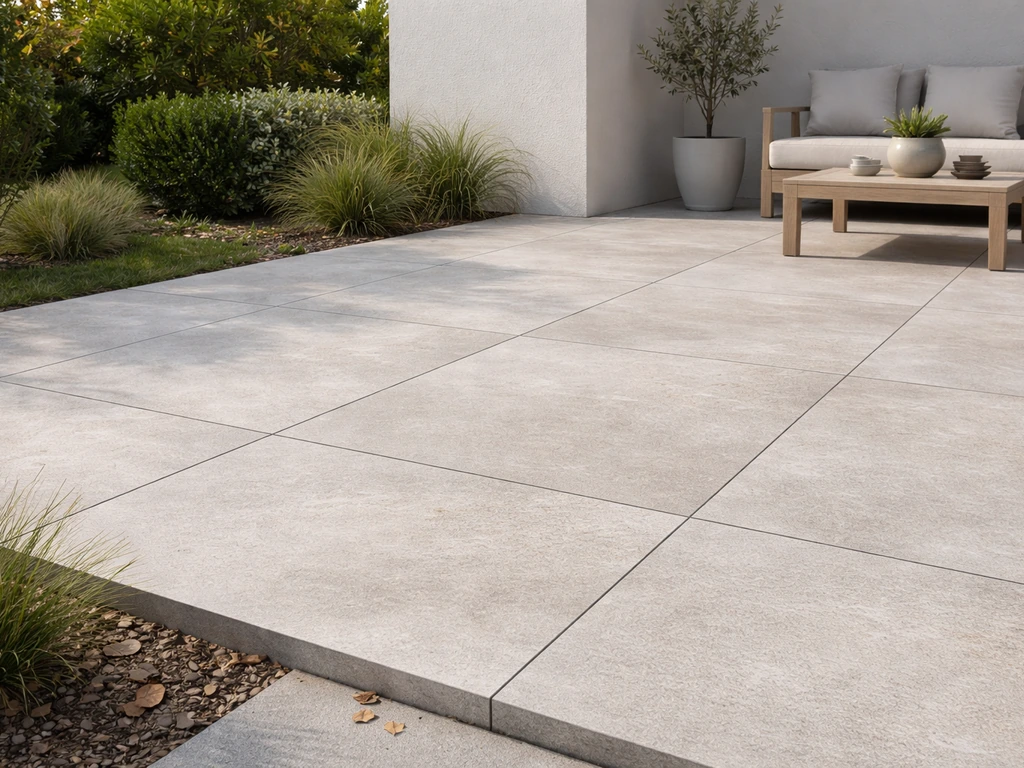
Porcelain pavers are the single lowest-maintenance patio slab option available right now. They absorb less than 0.5% water, never need sealing, resist staining, and hold up through freeze-thaw cycles better than almost any other material. If you want to stop there, get large-format porcelain pavers on a well-prepared compacted base with polymeric sand joints and a 1/4-inch-per-foot slope to drain. That combination will give you years of sweep-and-done upkeep. But the right choice also depends on your climate, budget, foot traffic, and how your garden looks, so keep reading and you'll have everything you need to decide confidently today.
Best Low Maintenance Patio Slabs: Guide by Climate and Care
Nolan Ellison
20 Jun 2026
What 'low maintenance' actually means for patio slabs
When most homeowners say they want low-maintenance slabs, they mean a few specific things: they don't want to be out there scrubbing every spring, they don't want weeds splitting their joints every summer, they don't want to reseal every year or two, and they don't want to reset a shifted slab every time the ground thaws. In practice, low maintenance breaks down into four categories: cleaning effort, sealing frequency, joint and weed management, and structural stability over time.
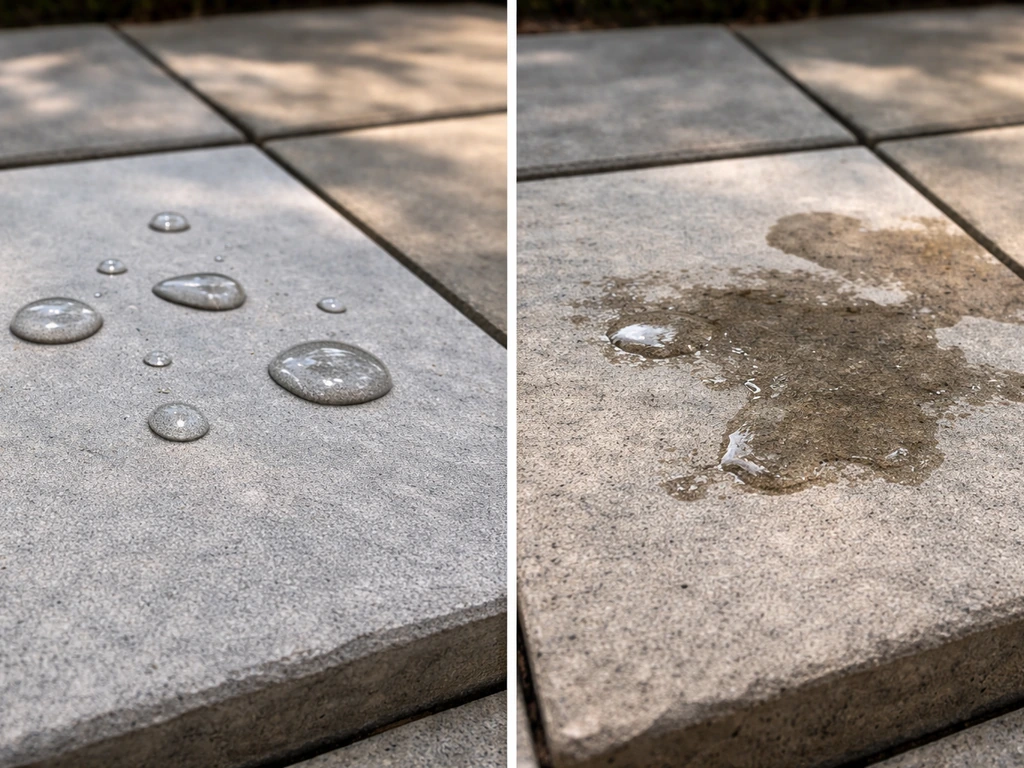
Cleaning effort is mostly about how porous a surface is. A dense, non-porous slab sheds stains before they penetrate. A rough, open-pored surface traps oil, bird droppings, and moss within minutes. Sealing frequency matters because some materials, natural stone especially, need a fresh coat every one to three years or they stain easily and weather badly.
Joint and weed management is a function of joint width, joint fill material, and how well your base drains. Structural stability comes down almost entirely to base preparation and drainage: a slab on a solid, well-drained base stays flat for decades; the same slab on a poorly compacted or waterlogged base heaves, shifts, and cracks within a few winters. The material you choose matters, but the installation underneath it matters just as much.
The best slab options ranked by maintenance effort
Here's an honest look at each major material type, from least effort to most, so you can match your tolerance for upkeep with the right choice from the start.
Porcelain pavers (lowest effort)
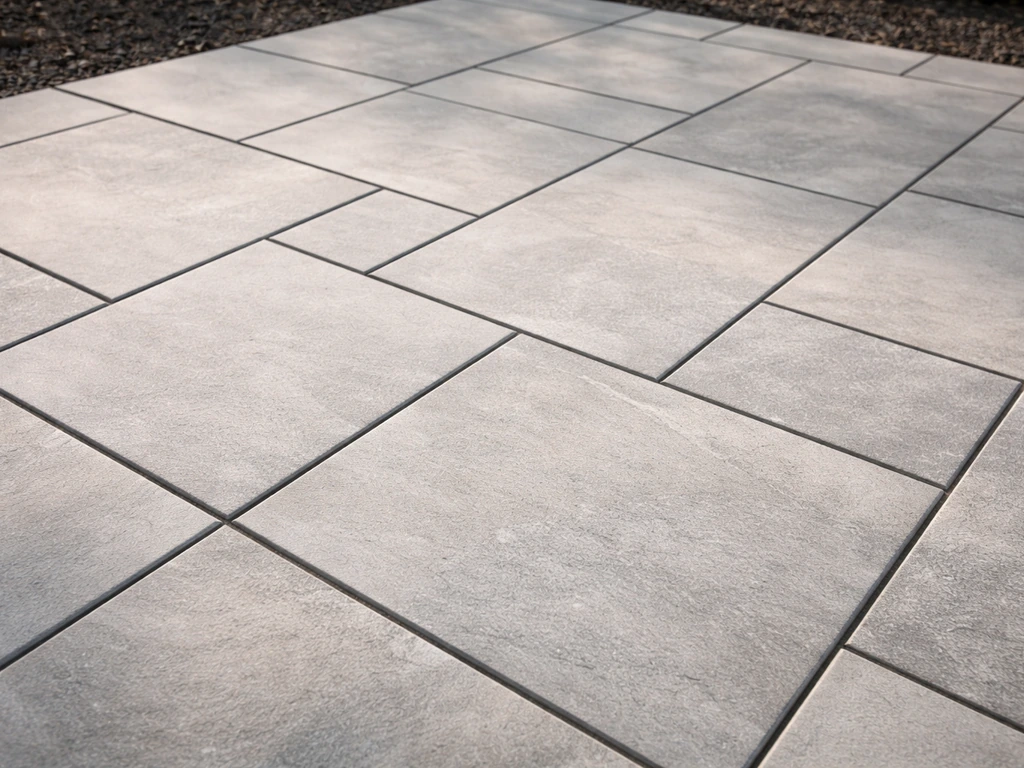
Porcelain pavers designed for outdoor use are genuinely in a class of their own for low maintenance. Water absorption is typically below 0. 5%, classified as impervious under ANSI A137. 1, which means virtually no moisture enters the tile body.
That single property eliminates the two biggest maintenance headaches: staining and freeze-thaw damage. Multiple manufacturers explicitly state that no sealing or ongoing maintenance is required beyond routine cleaning. In practice, that means sweeping off debris and occasionally rinsing with a garden hose or low-pressure wash. Because the surface is so dense, moss and algae struggle to get a foothold compared to rougher stone.
The main trade-off is cost (porcelain pavers typically run higher per square foot than concrete) and the fact that cutting them requires a wet saw with a diamond blade, so DIY installation takes more care. They also feel visually colder and more manufactured than natural stone, which matters for some garden styles.
Interlocking concrete pavers (low to moderate effort)
Quality concrete pavers that meet ASTM C936, the standard specification for solid concrete interlocking paving units, are durable, widely available, and very budget-friendly compared to porcelain. They do absorb more water than porcelain, which means they're more vulnerable to staining and, in freeze-thaw climates, you need to pay attention to the product's absorption rating and freeze-thaw test compliance.
The good news is that reputable manufacturers test to ASTM C1262 and ASTM C672 (freeze-thaw and de-icing salt scaling resistance), so you can verify performance before you buy. The maintenance reality: you'll likely want to seal concrete pavers every two to five years, depending on wear and exposure. The practical trigger is when water stops beading on the surface or staining gets noticeably harder to clean.
Weeds in joints are the most common complaint, but this is almost always a joint sand or base drainage problem rather than a concrete problem.
Brick pavers (low to moderate effort)
Clay brick is one of the oldest paving materials for good reason: fired clay pavers are dense, UV-stable (the color runs through the whole unit, not just a surface coating), and extremely durable in most climates. Maintenance is similar to concrete: occasional sealing helps with staining, but the color won't fade the way a surface-colored concrete paver might.
Brick does get mossy in shaded, damp spots, and efflorescence, the white salt bloom that appears on masonry surfaces, can show up, especially in the first year or two after installation. The bigger trade-off with brick is that the traditional laid look has fairly narrow joints, which means more opportunity for weed growth if joint sand fails.
Choose a quality extruded clay brick paver rated for exterior paving (not a standard wall brick), and maintenance stays manageable with periodic sweeping, a light wash, and resealing when needed.
Natural stone (moderate effort)
Flagstone, slate, sandstone, travertine, and granite all fall under natural stone, and the maintenance effort varies enormously depending on which one you pick. Dense, low-absorption stones like granite are close to porcelain in performance. Porous stones like sandstone and travertine absorb water readily, stain easily, and in freeze-thaw climates can spall or crack if moisture gets into the stone body and freezes.
Sealing intervals for natural stone typically run one to three years for porous types and longer for dense stones like granite, but you have to keep up with it or the surface degrades. If you love the look of natural stone, slate or granite gives you the best durability-to-maintenance trade-off. Travertine and sandstone are beautiful but genuinely high-maintenance choices for outdoor patios in most climates.
This is one area where the extra cost of a denser stone pays for itself in reduced annual upkeep.
Composite and porcelain-look alternatives (low to moderate effort)
Composite paving products, fiber-reinforced concrete, resin-bonded aggregates, and similar materials, sit somewhere between concrete and porcelain in maintenance terms. They're typically UV-stable and resistant to staining, and some are specifically engineered to reduce weed and moss growth. Resin-bound surfaces (where aggregate is set in clear resin on a base) are permeable, which handles drainage well but also means the resin surface itself can degrade over time from UV exposure. These are worth considering when budget is tighter than porcelain but you still want better performance than basic concrete. Check the manufacturer's specific absorption and UV stability data before buying.
How outdoor performance factors drive your maintenance load
The material is only part of the story. Four performance factors determine how much work your patio creates over the years: freeze-thaw behavior, slip resistance, drainage, and UV/color stability. Get these right and almost any decent slab stays low maintenance. Get them wrong and even the best material becomes a problem.
Freeze-thaw: the biggest climate risk
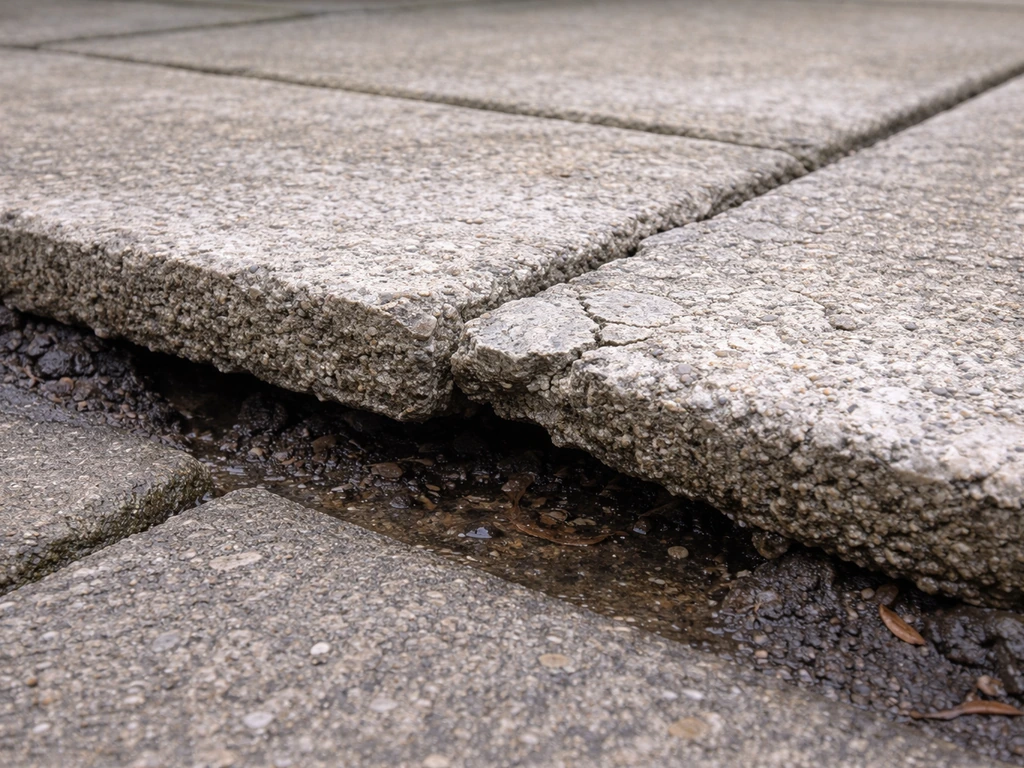
Water expands about 9% when it freezes. Any slab that absorbs significant moisture will experience internal stress each freeze-thaw cycle. Over years, that stress causes spalling, cracking, and surface flaking. The principle is simple: lower water absorption means better freeze-thaw survival.
Porcelain pavers at less than 0. 5% absorption are the clear winner here. National Commercial Authority notes that porcelain paver water-absorption testing, often referenced to ASTM C373, is commonly used with a [≤0. 5%](https://nationalcommercialauthority.
com/national-tile-authority. html) threshold to support freeze-thaw suitability in exterior applications. Concrete pavers should be verified against ASTM C1262 or ASTM C672 freeze-thaw test data before purchase if you're in a cold climate, don't just assume any concrete paver is freeze-thaw rated. For natural stone, stick with dense stones and confirm the sealer is maintained annually or biannually to keep moisture out.
De-icing salts compound the problem significantly, so if you use salt near your patio in winter, choose your material accordingly and check for ASTM C672 scaling resistance data.
Slip resistance
Outdoor patios get wet. A smooth, polished surface that looks beautiful dry can become a genuine hazard in rain. Wet dynamic coefficient of friction (DCOF) is the standard measure; ANSI guidance points to a minimum of 0. 42 wet DCOF for level wet areas, but practical guidance for outdoor walkways and patio areas suggests targeting at least 0.
60 wet DCOF (per NFSI B101. 3). When selecting porcelain pavers specifically, look for products tested to ANSI A326. 3 for outdoor use and confirmed to meet that higher threshold.
Textured, matte, or structured surface finishes on any material, stone, concrete, or porcelain, almost always perform better than polished finishes for outdoor slip safety. If you have young kids or elderly family members using the patio, make slip resistance a hard requirement, not an afterthought.
Drainage: the silent maintenance driver
Poor drainage is the root cause of more patio problems than any other single factor. Standing water saturates bases, drives efflorescence, accelerates freeze-thaw damage, and keeps surfaces wet and slippery. The standard minimum slope for an exterior paved surface is 1/4 inch per foot away from the house or toward a drain. Even if your slabs are impervious porcelain, water still enters through the joint system and the substrate, so slope matters for every installation. In freeze-thaw climates, a waterlogged base is a base that heaves, shifts, and cracks slabs from below.
UV and color stability
Color fade is a real issue for some concrete pavers, especially those with surface-applied pigment rather than through-body color. After a few years of sun exposure, a through-body pigmented concrete paver will weather more evenly and look more natural than one with a surface coating that fades unevenly. Clay brick and natural stone are inherently UV-stable because the color is the material itself. Porcelain pavers are also UV-stable since the color runs through the body. If you're choosing concrete pavers, ask specifically about through-body pigmentation and whether the product is UV-tested.
Installation choices that make a big difference long-term
I've seen beautiful, expensive slabs fail within three winters because of shortcuts taken during installation. The slab material gets the credit when a patio looks good, but the base and jointing get the blame when it fails. These are the details that separate a truly low-maintenance patio from one that needs annual repairs.
Base preparation
A minimum 4-inch compacted gravel base (6 inches in freeze-thaw climates) is the standard starting point for most residential patio slab installations. The base needs to be properly graded for drainage before anything else goes on top. For interlocking concrete pavers, ICPI guidance specifies a nominal 1-inch bedding sand layer over the compacted base, and that thickness matters: inconsistent bedding is one of the primary causes of lippage (uneven slab edges) and shifting over time. For mortar-set stone or porcelain on a concrete substrate, a bonded mortar bed on a reinforced concrete slab is more stable in freeze-thaw conditions than a sand-set approach.
Edge restraints
Without edge restraints, sand-set pavers migrate outward over time, especially at high-traffic areas. Plastic or aluminum edge restraints pinned into the base keep the field contained and reduce the amount of resetting work you'll need to do over the patio's life. They should be set at the correct height relative to the pavers so they don't create a trip hazard. This is a small detail that almost every DIY install either skips or installs incorrectly.
Jointing strategy and weed control
Joint width for interlocking pavers is typically specified in the range of 1/16 to 3/16 inch. Wider joints admit more weed seeds and require more joint fill. Polymeric sand is the standard choice for filling joints in sand-set paver systems: it hardens when activated with water and resists weed germination and ant activity far better than regular joint sand. The critical catch is that polymeric sand installation requires precise moisture control during and after application.
Incorrect wetting, too much or too little before the sand cures, is the number-one cause of early joint failure. Follow the manufacturer's instructions exactly. Plan to inspect joints annually and top up or replace any sections where the sand has washed out or cracked.
It's not truly set-and-forget, but when done right it dramatically reduces weed maintenance compared to plain sand.
Slope to drain
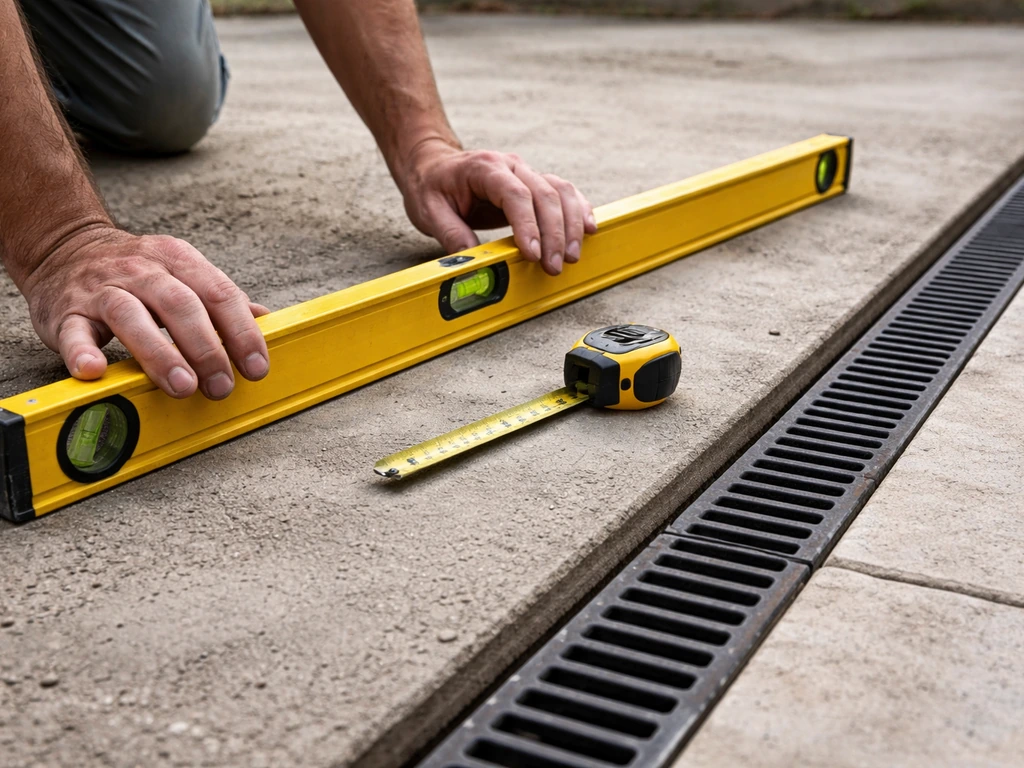
Build in a minimum 1/4-inch-per-foot slope from the start. This isn't something you can add after the fact. Check slope with a level and a tape measure before you set a single slab, and verify it again as you work. It's the single most important thing you can do to prevent long-term problems, and it costs nothing beyond a bit of planning.
Maintenance routines by material
Here's what routine maintenance realistically looks like for each material type, so you can set accurate expectations before you commit.
| Material | Routine Cleaning | Sealing | Typical Reseal Interval | Joint Maintenance |
|---|---|---|---|---|
| Porcelain pavers | Sweep + occasional rinse or low-pressure wash | Not required | None | Inspect polymeric sand annually; top up if needed |
| Concrete pavers | Sweep + periodic wash; spot-treat stains promptly | Recommended | Every 2–5 years (when water stops beading) | Inspect and top up polymeric sand; watch for efflorescence |
| Clay brick pavers | Sweep + periodic wash; moss removal in damp areas | Optional but helpful | Every 3–5 years | Inspect joint sand or mortar; treat efflorescence in year 1–2 |
| Dense natural stone (granite, slate) | Sweep + rinse; pH-neutral cleaner for stains | Recommended | Every 2–3 years | Inspect grout or sand joints; resand if needed |
| Porous natural stone (sandstone, travertine) | Gentle sweep; careful spot cleaning; avoid acidic cleaners | Essential | Every 1–2 years | Inspect and replace joint material regularly |
| Composite / resin | Sweep + rinse; check manufacturer spec for cleaners | Product-dependent | Varies by product | Inspect resin bonds and joints annually |
For porcelain and concrete pavers, avoid high-pressure washing directly into joints: it blasts out joint sand and can cause exactly the weed and shifting problems you're trying to avoid. A medium-pressure fan spray aimed across the surface, not into the joints, is safer. For natural stone, always use a pH-neutral cleaner; acidic cleaners etch limestone-based stones and strip sealers from any stone rapidly.
Common problems and how to prevent them
Efflorescence
Efflorescence is that chalky white bloom that appears on concrete, brick, and natural stone surfaces. It's caused by water moving through the slab or base material, dissolving soluble salts, and depositing them on the surface as the water evaporates. It's most common in the first year of a new installation as excess moisture works its way out, and again after heavy rain or snow-melt seasons. Mild efflorescence often weathers off on its own.
Persistent efflorescence means you have a drainage or moisture problem in the base that needs fixing, not just a surface to clean. Removal requires either a dilute acid wash (carefully, following the product instructions) or a proprietary efflorescence remover, and critically, you need to protect the joint sand and surrounding materials during treatment. Pressure washing joint areas to remove efflorescence is a mistake: it strips the joint material and creates a bigger long-term problem.
Heaving and cracking in freeze-thaw climates
Frost heave happens when water in the base or under the slabs freezes, expands, and lifts the surface. The prevention is simple to describe and harder to execute: a well-drained base with adequate depth and proper slope eliminates most of the water that would otherwise freeze. If you're in a cold climate and skimping on base depth, you will eventually deal with heaving.
Cracking is a related problem but more often caused by inadequate base support (a void under the slab) or slabs that are too thin for the application. Standard residential patio slabs should be at least 1. 5 to 2 inches thick for pavers; larger format slabs used as stepping stones in lawn areas need more thickness or a supporting base.
Loose slabs and lippage
Slabs that rock or sit proud of their neighbors are almost always a base or bedding issue: inadequate base compaction, inconsistent bedding sand thickness, or missing edge restraints. Lippage, where adjacent slab edges sit at different heights, is a tripping hazard and a sign that the installation tolerance wasn't tight enough. Fixing it means lifting the affected slabs, regrading the bedding, and relaying them. The prevention is getting base preparation right the first time.
Weed intrusion and joint sand failure
Weeds in paver joints are almost always a sign of joint sand failure or drainage problems, not just normal wear. Early weed growth in the first season usually means the polymeric sand wasn't activated correctly or wasn't installed with adequate coverage. Persistent weed growth after a few years can indicate that the sand has washed out from below (a drainage/slope problem) or been disturbed by surface traffic. Pulling weeds manually and refilling joints with fresh polymeric sand is the correct fix; using weed killer in paver joints risks staining and can damage some joint materials.
Spalling and surface degradation
Spalling, where the surface layer of a slab flakes or pops off, is almost exclusively a freeze-thaw failure mode, usually combined with a surface that absorbed too much water. It can also be accelerated by de-icing salt use. Prevention: choose a low-absorption material, maintain sealer on any porous stone or concrete, and minimize de-icing salt contact. If you do use de-icing products near your patio, choose calcium magnesium acetate (CMA) over rock salt or sodium chloride, which is far more corrosive to masonry surfaces.
How to choose the right slab for your situation
Work through these four questions in order. By the end, you'll have a clear shortlist. If you are specifically looking at Belgard LaFitt patio slabs, it helps to compare their material, absorption, and finish against the low-maintenance categories described here clear shortlist.
- What's your climate? If you have freeze-thaw winters, porcelain pavers or verified freeze-thaw-rated concrete pavers (ASTM C936/C1262 compliant) are your safest choices. Natural stone works in cold climates if it's dense and sealed, but it takes more commitment. Porous stone (sandstone, travertine) is best reserved for mild climates.
- What's your realistic maintenance tolerance? If you genuinely don't want to reseal every few years, porcelain pavers are your answer. If you're OK with a periodic seal and occasional cleaning, concrete or brick pavers work well at lower cost. If you're prepared to seal every one to two years and monitor carefully, you can have natural stone.
- What's the traffic and use pattern? Pets and kids mean you need a textured, slip-resistant surface (minimum 0.60 wet DCOF for outdoor use) and a material that handles staining well. Porcelain and concrete both work here. Heavy foot traffic patterns also need verified edge restraints and a solid base.
- What's your budget? Porcelain pavers typically cost more per square foot than concrete, which typically costs more than basic brick. Factor installation costs — proper base prep is not optional and is a significant portion of total project cost. Skimping on base prep to afford better slabs is backwards logic.
Quick recommendation by scenario
| Your Situation | Best Material Choice | Runner-Up |
|---|---|---|
| Freeze-thaw climate, minimal effort wanted | Porcelain pavers (≤0.5% absorption, no sealing) | ASTM C936-compliant concrete pavers |
| Mild climate, natural look, moderate budget | Slate or granite flagstone (sealed) | Clay brick pavers |
| Family patio with kids and pets | Textured porcelain or concrete pavers (≥0.60 wet DCOF) | Brick pavers with textured finish |
| Tight budget, cold climate | ASTM C936 concrete pavers with polymeric sand | Brick pavers (verified freeze-thaw rated) |
| Garden patio, natural aesthetic, mild climate | Sandstone or travertine (if committed to annual sealing) | Slate on a properly drained base |
| Maximum durability, low maintenance forever | Large-format porcelain pavers on compacted base | Dense concrete pavers with quality sealant |
Sourcing and install checklist
Use this before you buy anything or hire anyone. It covers the key verification points that most homeowners miss.
- Check water absorption rating: porcelain should be ≤0.5% (ASTM C373); concrete pavers should meet ASTM C936 and carry freeze-thaw test data if you're in a cold climate
- Verify wet DCOF for slip resistance: look for ≥0.60 wet DCOF for outdoor use, confirmed by ANSI A326.3 or equivalent testing for porcelain
- Confirm UV and color stability claims: ask whether pigment is through-body or surface-applied
- Request freeze-thaw test results (ASTM C1262 or ASTM C672) if you're in a climate with winter temperatures below freezing
- Plan your base before you buy slabs: 4 inches minimum compacted gravel for mild climates, 6 inches for freeze-thaw zones; 1-inch nominal bedding sand for interlocking pavers
- Build in 1/4-inch-per-foot minimum slope away from the house or toward a drain
- Specify polymeric sand for joints and review the manufacturer's activation instructions before installation day
- Buy edge restraints for all non-wall-bound edges and confirm they're rated for the paver weight you're using
- If hiring a contractor, ask specifically how they handle base compaction, slope verification, and edge restraints — vague answers are a red flag
- Keep a record of the product name, batch number, and supplier for any future repairs or matching needs
One final thing worth knowing: the slab material you choose also affects your budget, and it's worth comparing options if cost is a primary concern alongside maintenance. To get the best patio slabs best price, compare similar materials by thickness, finish, and warranty before you buy. Similarly, if you're thinking about resin-bound surfaces as an alternative to traditional slabs, the performance and cost trade-offs are worth investigating separately before you commit. The core principle holds across all of them: the material gets you started, but the base and jointing keep it low maintenance for the long haul.
FAQ
Are porcelain pavers truly “no maintenance,” or do I still need to do joint work?
Porcelain is the lowest-maintenance choice for most patios, but you still need light upkeep of the joint system. Sweep off debris and rinse occasionally, then inspect joints once a year and top up polymeric sand only where it has washed out or cracked, especially in high-traffic edges.
What causes weeds between patio slabs even when the slabs themselves are sealed or low-absorption?
Yes, you can still get weeds on “sealed” looking patios if the joints fail or the base holds moisture. For paver systems, the fix is to correct slope and drainage first, then remove loose joint fill and re-install polymeric sand at the correct moisture level per the manufacturer.
How do I remove efflorescence without damaging the patio joints or finish?
Do not use a full acid wash as a first step. If efflorescence is mild, wait and monitor, then try a gentle efflorescence remover that will not erode joint material, protect the joints during treatment, and only escalate if it persists after the installation fully dries.
If I live in a freeze-thaw climate, what exact info should I confirm before buying concrete or natural stone?
Look for three things on the spec sheet or product data, absorption rating, freeze-thaw test compliance, and slip resistance for outdoor use. In cold climates, verify freeze-thaw test data, not just “exterior rated,” and choose a matte or textured finish to avoid wet slipperiness.
My patio has puddling after rain, can I solve it with sealer or a surface coating?
Often, the goal is to minimize water infiltration into the substrate and keep the surface traction-safe. Aim for at least the recommended slope toward drains or away from the house, and use an outdoor-rated textured finish. If your patio already exists and pools, the real solution may require re-leveling or drainage correction, not just adding a sealer.
Can I use a pressure washer to clean low-maintenance patio slabs?
For interlocking pavers with polymeric sand joints, medium-pressure rinsing across the surface is safer. High-pressure spraying aimed into joints can wash joint sand out and trigger early weed growth and movement, even if the slab material is low-absorption.
What should I do if my patio slabs rock, or I start seeing lippage?
If lippage shows up, assume base or bedding inconsistency unless you can prove otherwise. Fix typically requires lifting the affected area, correcting bedding sand thickness and compaction, adding proper edge restraints, then relaying so adjacent units meet at a safe height.
Why does polymeric sand sometimes fail early, and what is the most common installation mistake?
Wrong: apply polymeric sand and rely on it without strict moisture control. Correct: follow the manufacturer’s wetting and curing steps, then avoid disturbing joints for the curing window, and plan on annual inspection for early washout.
Is efflorescence normal in the first year, or does it always signal a bigger problem?
Efflorescence early on can be normal, especially after heavy rain or initial curing. Persistent recurrence months later usually indicates a drainage or moisture pathway in the base or substrate, which you may need to address before it becomes a repeated cycle.
What de-icing products are safest for keeping patio slabs from spalling in winter?
Yes, de-icing product choice matters. In masonry and low-absorption stone/concrete systems, calcium magnesium acetate is generally less damaging than rock salt or sodium chloride, and minimizing direct salt contact reduces spalling risk.
How can I tell if my patio slabs will fade unevenly over time?
A “through-body” pigmented paver is more resistant to uneven color fading than surface-coated pigment. If you’re comparing concrete options, ask whether the pigment is integrated throughout the unit and whether the finish is UV-tested for outdoor exposure.
Which finish gives the best low-maintenance traction, especially in rain?
Use the same material, but compare how the finish affects traction when wet. Even with low-absorption slabs, a polished or smooth face can be hazardous, so prioritize a textured finish and confirm an outdoor slip rating for wet conditions.
My slabs heave or shift after winters, is the problem usually the slab material or the base?
If base depth is too shallow for the climate, freeze-thaw will eventually exploit it regardless of slab quality. In cold regions, undersized bases are a common driver of heaving, so you may need to verify base depth and compaction or plan for a reconstruction rather than a patch.
Are permeable or resin-bound patio surfaces truly lower maintenance in terms of moss and cleaning?
Rough or structured surfaces generally resist moss better, and permeable designs can reduce standing water. If you choose resin-bound or other permeable systems, confirm UV stability from the manufacturer because resin surfaces can degrade from sun exposure and still need periodic evaluation.