For most homeowners in 2026, concrete pavers give you the best overall price on a patio: material costs start around $3–$7 per sq ft, installed totals run $10–$17 per sq ft, and they hold up well across most climates without expensive maintenance. But "best price" isn't just the sticker on the slab. How much you actually spend depends on material choice, slab size, finish, how you handle delivery, whether you DIY or hire out, and whether your cheapest option today still looks decent in five years. This guide walks you through every one of those levers so you can make a genuinely informed buy.
Patio Slabs Best Price Guide: Compare Costs and Value
Nolan Ellison
4 Jun 2026
The real pricing levers: what actually drives your cost
Most people shop for patio slabs by looking at the per-square-foot price on a retailer's website, then multiply by their patio area and assume that's the budget. It's almost never that simple. Here's what actually moves the needle on your final bill.
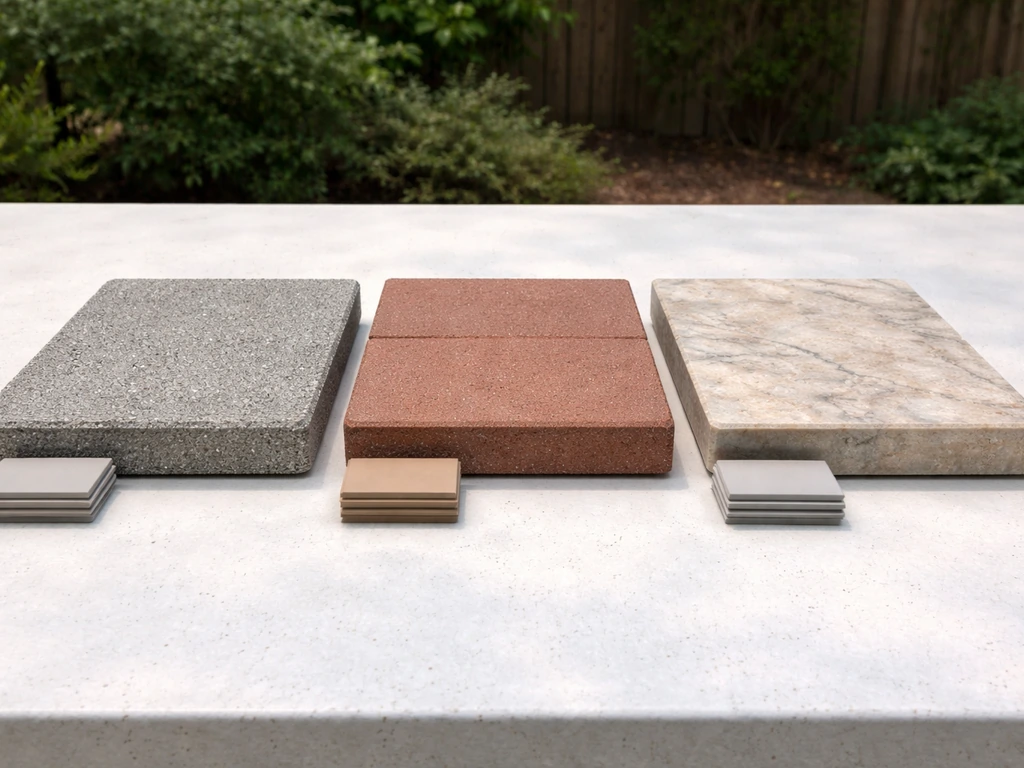
- Material type: Concrete is cheapest, then clay brick, then natural stone, then porcelain. The gap between concrete and natural stone can be 3x to 5x on material alone.
- Finish and edge style: A tumbled or hand-chiseled edge costs more to produce than a straight-cut slab. Smooth finishes are generally cheaper than textured or embossed ones, though textured adds slip resistance worth paying for in wet climates.
- Thickness: A 1.5-inch concrete paver costs less than a 2.5-inch one. Thicker slabs are stronger but overkill for pedestrian-only patios.
- Color and range: Standard grey or tan concrete is the baseline price. Multiple color blends or premium palettes (like the "OldVillage" range at $6.88/sq ft vs. a basic 12x12 at $3.17/sq ft) carry a clear premium.
- Pallet and delivery fees: Many suppliers charge pallet deposits and delivery separately from the slab price. A delivery run can add $80–$200 or more depending on distance and access. Order everything at once if you can.
- Tax and surcharges: Retail price guides often exclude tax, delivery, and pallet deposits. Always ask for a fully landed cost before comparing quotes.
- Installation method: Dry-laid over compacted gravel and sand costs less in labor than mortar-set or concrete-bed installation. The base prep is the same either way, but dry-lay saves on mix, time, and usually makes future repairs easier.
A lesson I've seen play out more than once: someone buys the cheapest slab, skips proper base prep, and spends more fixing sunken sections after the first frost than they saved on the slab. Getting the price right means accounting for the full picture, not just the material line.
Types of patio slabs and which are generally cheapest
Different slab categories serve different budgets, and it's worth knowing roughly where each one lands before you commit.
| Slab Type | Typical Material Cost (per sq ft) | Installed Range (per sq ft) | Durability | Best For |
|---|---|---|---|---|
| Concrete pavers | $3–$7 | $10–$17 | Good to very good | Budget-first builds, most climates |
| Clay brick pavers | $4–$8 | $11–$18 | Very good | Traditional look, freeze-thaw climates |
| Natural stone (flagstone, sandstone) | $8–$20+ | $20–$35+ | Excellent (varies by stone) | High-end finish, irregular patterns |
| Porcelain/ceramic tiles | $6–$15 | $15–$25+ | Excellent (low porosity) | Low maintenance, modern look |
| Composite/resin-bound | $6–$12 | $15–$28 | Good | Drainage, accessible surfaces |
| Pre-cast concrete slabs (plain) | $1.50–$4 | $8–$14 | Moderate | Tightest budgets, temporary or utility patios |
Plain pre-cast concrete slabs (the big grey stepping-stone style) are the cheapest entry point, but they chip more easily and look utilitarian. If you want something that holds up and looks intentional, standard concrete pavers in a 12x12 or 16x16 format hit the sweet spot of price, availability, and durability for most homeowners. Porcelain is worth a look if you want near-zero maintenance, though the upfront cost is higher and installation is less forgiving on an imperfect base.
Material and finish choices that change both cost and performance
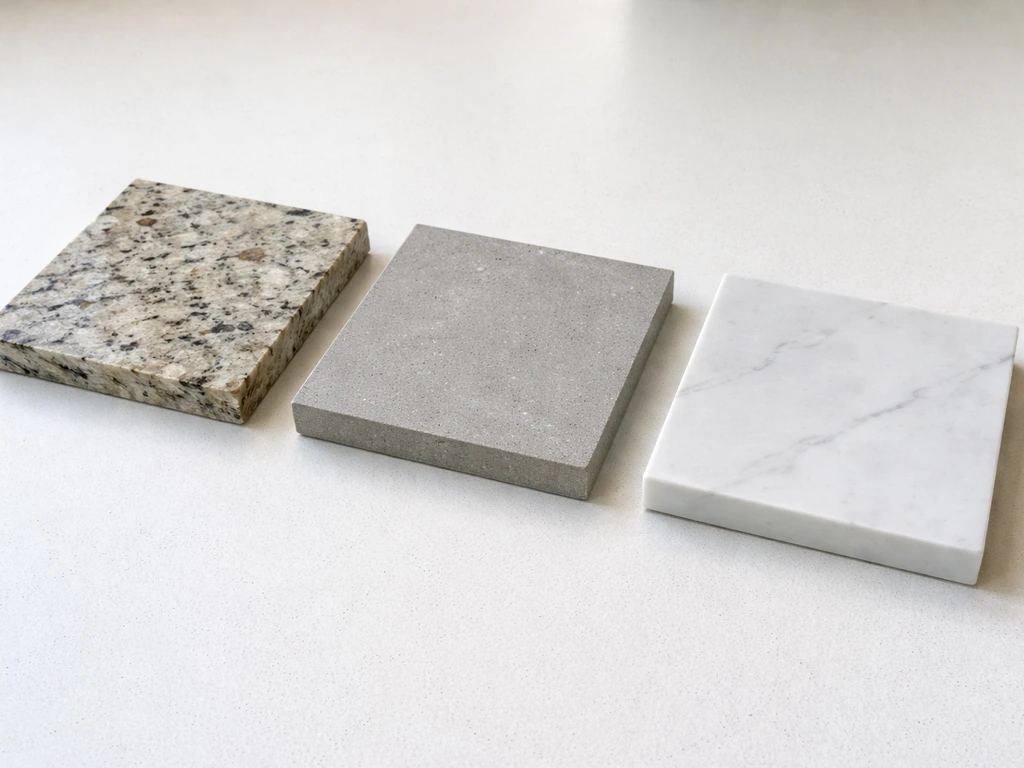
Natural stone vs. concrete vs. porcelain
Natural stone (flagstone, slate, bluestone, sandstone) looks stunning but is expensive and variable. Because it's cut from actual rock, thickness and surface aren't uniform, which means more time leveling and more waste. In wet or freezing climates, porous stones like sandstone can absorb water, crack, and stain if not sealed regularly. Bluestone and granite are denser and more frost-resistant but push material costs to $12–$20+ per sq ft. If natural stone is on your list, check out the broader comparison between garden patio slab options to see whether the look justifies the cost for your specific use case.
Concrete pavers are manufactured to consistent thickness and tolerances, which makes installation faster and more predictable. If you are specifically weighing Belgard LaFitt patio slabs, focus on how the material finish, base requirements, and long-term maintenance stack up against other concrete and porcelain options belgard lafitt patio slab reviews. They're available in a huge range of colors and textures, freeze-thaw rated versions exist for cold climates, and replacement is easy because the same product is usually still available years later. The downside is that concrete can fade over time and lighter colors show oil or tyre marks.
Porcelain slabs have become much more competitive in 2026. They're non-porous, don't need sealing, resist staining, and can mimic stone or wood convincingly. The trade-off is cost (both material and installation) and brittleness: a porcelain slab dropped edge-first onto a hard surface is likely to crack, which matters a lot during delivery and laying. If low-maintenance is your top priority, porcelain is worth the premium. For more on low-maintenance options specifically, there's a dedicated comparison worth reviewing alongside this guide.
Finish and slip resistance
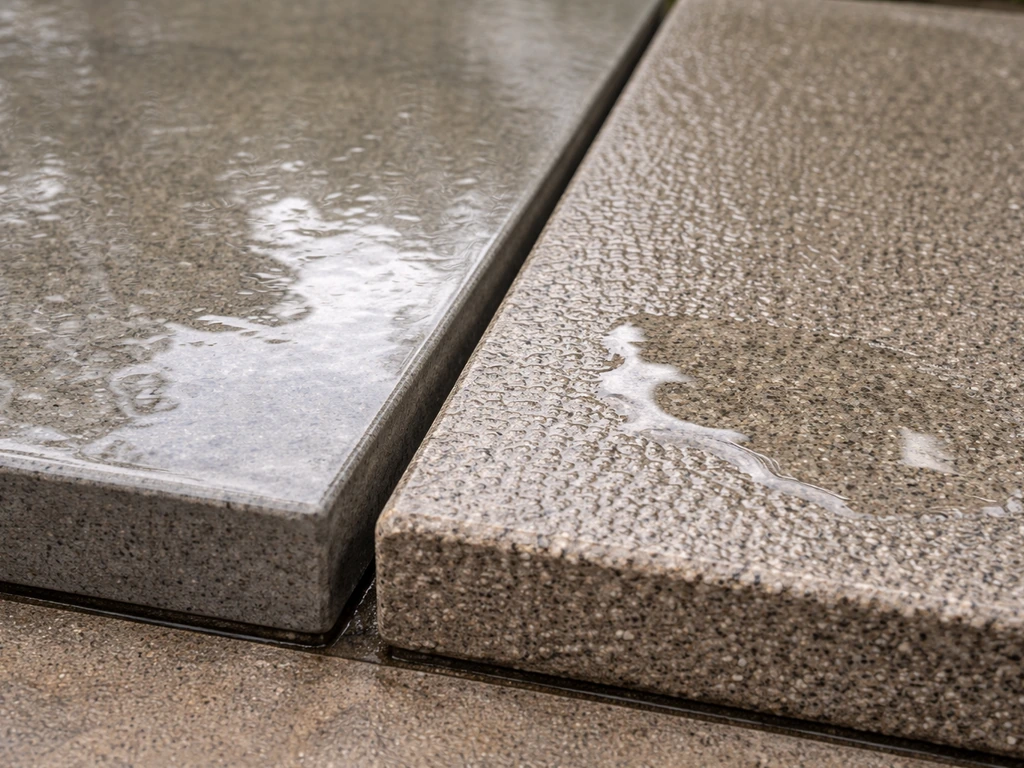
A polished or honed finish looks sharp but gets slippery when wet. For an outdoor patio, always prioritize a textured, sandblasted, or brushed finish with a slip rating of R11 or higher (the German R-rating scale is commonly referenced for outdoor tiles). Textured finishes usually cost the same or only marginally more than smooth ones for concrete and porcelain, so there's no good reason to choose a smooth finish for a patio that gets rain. Natural stone with a flamed or sawn finish is typically fine for slip resistance.
Size, thickness, and coverage: how to buy the right amount
Overbuying wastes money. Underbuying means a return trip, possible stock mismatch, and delay. Here's a straightforward process to get the number right.
- Measure your patio area accurately: length x width in feet, then multiply to get total square footage. For irregular shapes, break it into rectangles and add them up.
- Add a joint allowance: If you're laying with grout or sand joints (typically 3/8 inch to 1/2 inch), your slab coverage will be slightly less than the raw area. For most standard layouts this difference is small, but factor it in for large patios.
- Add a waste factor: For straight grid layouts, add 5–8% for cuts and breakage. For diagonal, herringbone, or curved layouts, add 10–15% because more cuts are required at edges.
- Calculate slab count: Divide total adjusted square footage by the coverage area of one slab. A 16x16 inch slab covers approximately 1.78 sq ft; a 12x12 inch covers 1 sq ft.
- Round up to the nearest full pallet: Partial pallet orders often cost more per unit and leave you with awkward delivery logistics. Check pallet coverage (usually 50–100 sq ft depending on slab size) and round up.
- Keep a few spares: Order 5–10 extra slabs and store them. If one cracks a year later, you'll want an exact match and the batch may no longer be available.
On thickness: for a pedestrian patio over a well-compacted base, 1.5 to 2 inches is sufficient for concrete pavers. If you're planning to drive a vehicle over part of the area, go to 2.5–3 inches or switch to a driveway-rated product. Thicker is not always better for a pure patio application, and it adds meaningfully to cost and weight.
Slab size also affects apparent waste. Large-format slabs (24x24 or bigger) look impressive but require more cuts on edges and corners, especially in patios that aren't perfectly rectangular. A 12x12 or 16x16 format tends to minimize waste in most residential patio shapes.
Where to buy and how to compare quotes properly
Your main sourcing options
| Source | Typical Price Level | Pros | Cons |
|---|---|---|---|
| Local masonry/paving suppliers | Competitive to premium | Better range, bulk pricing, staff expertise, easier returns | May require trade account for best prices |
| Big-box stores (Home Depot, Lowe's) | Budget to mid-range | Convenient, easy returns, no minimum order | Limited range, inconsistent stock, may not carry larger formats |
| Online specialist retailers | Mid to premium | Huge range, detailed specs, delivery to site | Can't inspect before buying, delivery costs add up, breakage risk higher |
| Reclaimed/salvage yards | Budget (variable) | Unique look, very low cost per slab | No guarantee of consistency, may need cleaning/leveling, limited quantity |
When comparing quotes, always ask for a fully landed price that includes material, delivery, pallet deposits, and tax. A slab at $4/sq ft from a supplier 60 miles away with a $180 delivery fee may work out more expensive than $4.80/sq ft from a local yard. Get at least three quotes for any order over 200 sq ft and ask each supplier to quote the same product specification (size, thickness, finish, color) so you're comparing apples to apples.
Also ask about seconds or discontinued lines. Many masonry suppliers have end-of-run pallets at significant discounts (sometimes 30–50% off) that are perfectly usable. The catch is you usually can't reorder to match, so make sure you have enough for the whole job plus spares before committing.
Timing can save you real money
Paving suppliers tend to discount in late autumn and early winter when demand drops. If you can plan your project for spring installation but order in November or December, you can sometimes lock in prices 10–20% lower. Big-box stores also run seasonal sales around Memorial Day and Labor Day that are worth watching.
Installation cost basics: DIY vs. hiring a pro
Labor for a paver patio runs roughly $6–$10 per sq ft on top of materials, based on 2026 estimates for a standard dry-laid installation. That puts a professionally installed concrete paver patio at $10–$17 per sq ft all in. Natural stone with mortar setting runs considerably higher, often $20–$35+ installed. Those numbers include base preparation, which is where most of the labor cost actually lives.
What the base prep involves
No matter what slab you choose, the ground underneath needs to be excavated (typically 6–8 inches deep for a frost-prone climate, shallower in warmer regions), compacted, and layered with crushed gravel (4–6 inches) topped by coarse bedding sand (1 inch). Skip or shortcut this and you'll have a wavy, heaving patio within a few years. This is the part homeowners most often underestimate on cost and effort. Renting a plate compactor for a weekend runs $80–$150; hiring someone to do the excavation and base work alone can run $3–$5 per sq ft.
Is DIY worth it?
For a dry-laid concrete paver patio, DIY is genuinely achievable for most homeowners with a weekend's work and some physical stamina. The skills required are not advanced: mark out, excavate, compact, lay sand, set pavers, compact again, and sweep in jointing sand. Savings of $6–$10 per sq ft on a 200 sq ft patio is $1,200–$2,000, which is meaningful. For porcelain slabs, natural stone, or any mortar-set installation, I'd recommend at least getting a pro involved for the actual laying, even if you handle the excavation and base work yourself. Porcelain in particular is unforgiving of an uneven base, and a poorly laid mortar bed is expensive to redo.
- DIY-friendly: concrete pavers, clay brick pavers, simple flagstone dry-laid with sand
- Hire a pro (or be very experienced): porcelain tiles on mortar, natural stone on concrete bed, any large-format slab over 24 inches
- Always get drainage right: slope your patio at least 1/4 inch per foot away from the house, regardless of who installs it
Delivery, storage, and handling to avoid costly breakage
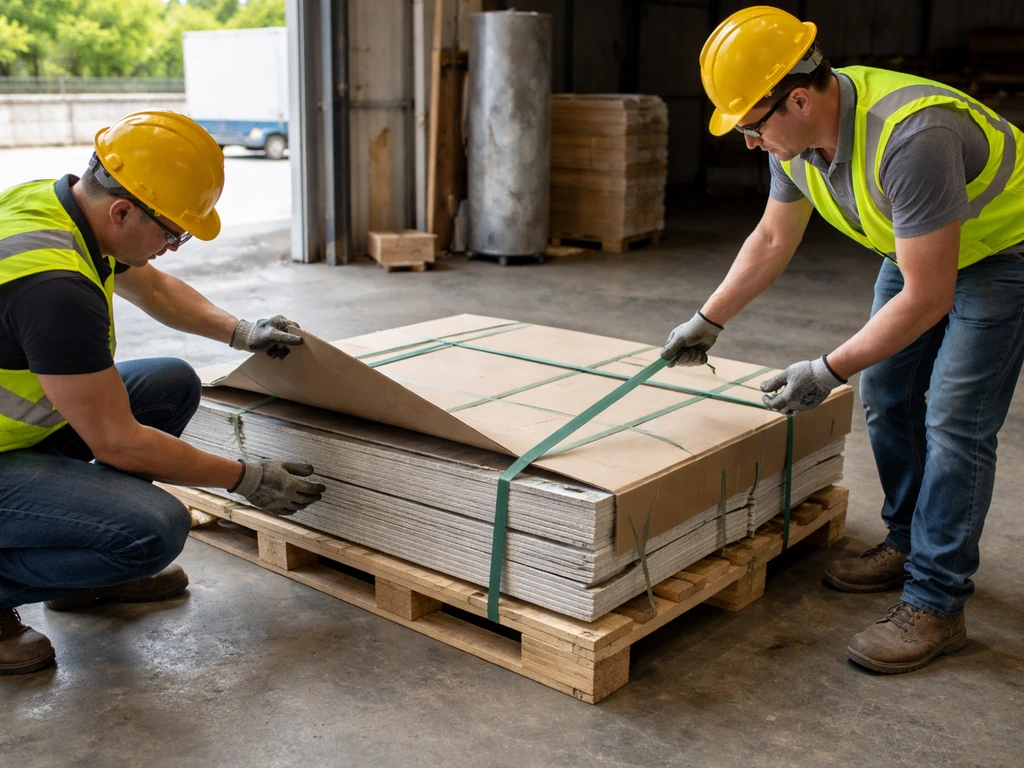
Broken slabs on delivery or during installation are a silent budget killer, especially for porcelain and natural stone. A few steps reduce that risk significantly.
- Inspect every pallet on delivery before signing: Check for cracked, chipped, or mismatched slabs and note any damage on the delivery paperwork before the driver leaves. Once signed, claims get complicated.
- Keep slabs on the pallet until you need them: Moving individual slabs repeatedly increases breakage risk, especially porcelain. Leave them banded until you're ready to lay each section.
- Store on a flat, dry surface: Slabs stored on uneven ground or tilted against a wall can crack under their own weight, particularly larger formats. Keep them flat and off wet soil.
- Use proper handling for large-format slabs: Anything over 24 inches typically needs two people or a slab lifter tool. Carrying a large porcelain slab with one person is a reliable way to snap it.
- Protect cut edges: Cut slabs are more vulnerable. Stack them carefully, cut edges up, to avoid corner chips.
- Don't store near construction traffic: A slab pallet in the path of wheelbarrows or workers is an accident waiting to happen. Position delivery where slabs are accessible but out of the main work zone.
If you're ordering online and delivery involves courier pallets rather than a dedicated flatbed, ask about their damage policy upfront. Some online paving retailers offer replacement for transit damage; others put the burden on you to file a claim. Know this before you order.
Maintenance and longevity: does the cheap option stay cheap?
The cheapest slab per square foot isn't always the cheapest over ten years. Maintenance requirements, durability in your specific climate, and ease of repair all factor into the real cost of ownership.
What each material typically needs
| Material | Sealing Needed? | Cleaning Frequency | Freeze-Thaw Risk | Repair Ease | Lifespan (maintained) |
|---|---|---|---|---|---|
| Concrete pavers | Optional (helps with staining) | Annually or as needed | Low (if rated) | Easy (individual pavers) | 25–50 years |
| Clay brick | Rarely needed | Annually | Very low | Easy | 50+ years |
| Natural stone (porous) | Yes, every 2–3 years | Seasonally | Moderate to high | Moderate | 20–40 years |
| Natural stone (dense, e.g., granite) | Optional | Annually | Low | Moderate | 40+ years |
| Porcelain | No | Low effort | Very low | Hard (exact match needed) | 30–50 years |
| Plain concrete slabs | Recommended | Annually | Moderate | Easy but may not match | 10–20 years |
Sealing is the maintenance step most homeowners skip, and it's where cheap concrete and porous stone surfaces lose the most ground over time. A good penetrating sealer applied every two to three years on concrete pavers reduces oil absorption, prevents freeze-thaw spalling, and keeps colour looking fresh. Products run $30–$80 for a 200 sq ft patio, which is a tiny cost relative to resurfacing or replacement.
In freeze-thaw climates (anywhere that regularly hits below 32F in winter), porosity matters enormously. A porous sandstone or unsealed concrete slab will absorb water, which then expands on freezing and cracks the surface. Always check the frost rating or water absorption spec for any slab you're considering for a northern climate. Porcelain and dense clay brick are the safest choices here from a pure durability standpoint. This is also where a resin-bound surface can be worth comparing: it's fully permeable, which eliminates freeze-thaw water pooling, though installed cost is typically higher.
Keeping jointing sand and edges in shape
For dry-laid patios, the jointing material between slabs is often the first thing to fail. Polymeric sand (sand mixed with a binder that hardens when wet) is worth the upgrade over plain kiln-dried sand: it resists washout, deters weeds, and holds pavers in alignment. It costs about $20–$40 per bag versus $8–$12 for plain sand, but a single application lasts much longer. Check joints every spring and top up any areas where sand has washed out, especially near downspouts.
Edge restraints are equally important. Without them, the perimeter pavers gradually migrate outward and the pattern opens up. Plastic or steel edge restraints pinned into the base layer cost very little and prevent a problem that's annoying and expensive to correct after the fact.
Putting it all together: the best-value pick for most homeowners
For the majority of homeowners in 2026, a concrete paver in a standard size (12x12 or 16x16), mid-range color, dry-laid over a proper compacted gravel and sand base is the best overall value. If you want to compare materials and finishes side by side, focus on the best outdoor patio slabs for your climate, slip needs, and maintenance tolerance.
If you're comparing materials and finishes to find the best garden patio slabs for your yard, start with concrete pavers as the baseline and then weigh low-maintenance options like porcelain. Material costs start at $3–$4 per sq ft for basic options and top out around $7 for premium finishes. A 2026 concrete paver retail pricing guide example shows material-only prices like $3. 17 per sq ft for a Patio Paver (12×12) and $6.
88 per sq ft for an OldVillage line, excluding items such as tax, delivery, pallet deposits, and certain product fees [material-only prices such as $3. 17 per sq ft and $6. 88 per sq ft](https://www. pavingstonesupply.
com/concretepricing/). Installed totals of $10–$17 per sq ft are achievable, and the system is repairable, durable in most climates, and looks good for decades with minimal effort. If budget is extremely tight, plain pre-cast concrete slabs work for utility areas. If low maintenance is the top priority and budget allows, porcelain is the better long-term choice. If low maintenance is the priority, those best low maintenance patio slabs often point you toward porcelain.
If low maintenance matters most to you, porcelain is the better long-term choice compared with options that require more frequent sealing or upkeep. Natural stone remains the premium aesthetic pick, but only makes sense if you're ready for both the upfront cost and the sealing/care routine.
FAQ
What’s the fastest way to figure out the real patio slabs best price for my project, not just the per-square-foot number?
Convert every quote to a fully landed cost per square foot by adding delivery, pallet charges or deposits, tax, and any required base materials (crushed gravel, bedding sand, edging restraints, and jointing sand). Then add a 10% overage for cutting waste if your patio is not a clean rectangle, and ask the supplier to confirm the exact slab size, thickness, and finish you are being priced on.
How much extra should I buy for waste and broken slabs during delivery?
Plan for 8% to 15% extra total, higher if your patio has curves, many cuts, or a diagonal layout. For porcelain or natural stone, bump toward the top end because edge chipping during transit is more likely, and keep 1% to 3% specifically for future matching if you can reorder only from the same lot.
Do I really need edge restraints, and what happens if I skip them?
Yes, edge restraints are one of the most common “cheap now, costly later” omissions. Without restraints, pavers can slowly migrate outward due to freeze-thaw movement and seasonal settling, creating open joints and uneven edges that are difficult to fix without lifting and resetting sections.
What’s the difference between dry-laid and mortar-set installations in terms of cost and failure risk?
Dry-laid is typically lower cost and easier to repair by lifting and re-laying individual pavers, but it relies heavily on correct base prep and jointing sand. Mortar-set can look cleaner and be more stable visually in some designs, but if the base is uneven, correcting mistakes is expensive because you often need to remove a larger area.
Can I lay patio slabs directly on existing concrete or soil to cut costs?
You generally should not. Over soil, you still need excavation, compaction, gravel base, and bedding sand to prevent settling. Over existing concrete, slabs must be evaluated for cracks, moisture movement, and flatness, and you may still need a leveling system or drainage plan. If flatness is off, you’ll see rocking and joint issues quickly.
How do I choose a slip-resistant finish if my area gets frequent rain or freeze-thaw?
Prioritize a textured or brushed finish with a slip rating of R11 or higher for wet outdoor use. Also avoid very smooth finishes in shaded areas where water lingers. For natural stone, confirm the surface finish type (flamed or sawn is usually safer) rather than relying on the stone name alone.
Is thicker always better for a patio, or is it mostly wasted money?
Thicker is not always better. For pedestrian traffic over a well-compacted base, thicker pavers usually add cost without improving performance much. Increase thickness only for vehicle loading or if your base conditions cannot be improved. Otherwise, invest in correct base depth and compaction, since those control settlement.
How can I prevent joint sand washout and weed growth in wet climates?
Use polymeric sand instead of plain kiln-dried sand, especially near downspouts and areas that see runoff. Keep in mind that polymeric sand needs the right moisture to activate, so follow the application instructions and plan on checking joints each spring and top-ups where sand has been lost.
What should I ask about for delivery to avoid the real cost killer of broken slabs?
Ask whether delivery is by curbside parcel, pallet courier, or a dedicated flatbed, and confirm the damage claim process (replacement offered or you must file a claim). For fragile options like porcelain and natural stone, request the most careful handling available and inspect pallets immediately on arrival, before signing for them.
If I find “seconds” or discontinued lines at a big discount, how do I know it’s still worth it?
Only buy if you can cover the entire patio area plus spares with that lot, because you may not be able to reorder later and the color or batch variation can be noticeable. Ask what the defect actually is (surface variation vs edge chips), and confirm whether discontinued stock can be matched by shade if you run short.
How often should I reseal concrete pavers or porous stone, and what if I’m trying to minimize maintenance?
For most homeowners, penetrating sealer on concrete pavers is typically reapplied every two to three years to maintain stain resistance and color vibrancy. Porous natural stone may need more frequent attention depending on local rainfall and freeze-thaw exposure. If you want the lowest upkeep, prioritize non-porous options like porcelain rather than relying on long sealing intervals.
What are the biggest base-prep mistakes that drive costs higher after installation?
The most expensive issues come from insufficient excavation depth, poor compaction, and skipping drainage-aware base layering. Incorrect base depth or weak compaction leads to settlement and heaving in freeze-thaw zones, which then triggers rocking pavers and repeated repairs that wipe out any “best price” savings.
Should I budget for the tool rental and disposal, or is that usually ignored in quotes?
Most material quotes do not include plate compactor rental, wheelbarrows, disposal fees for excess soil, or extra bedding materials if your excavation is deeper than expected. Ask for a scope breakdown or estimate those line items yourself, particularly if you are doing base work DIY. These costs can easily add hundreds to the project.