For most homeowners in moderate climates with decent drainage, a stone patio (flagstone or concrete pavers) is the more durable, lower-maintenance choice over the long haul. Wood wins when you need a raised or elevated surface, you're on a tight budget, or you love the warm, natural look of timber underfoot. If cost is your main concern, compare installed prices and 20-year lifecycle costs for both options. But stone outlasts wood, handles moisture better, and avoids the rot-and-refinish cycle that catches a lot of wood patio owners off guard five or ten years in.
Stone vs Wood Patio: Costs, Durability, and Best Choice
Nolan Ellison
16 Jun 2026
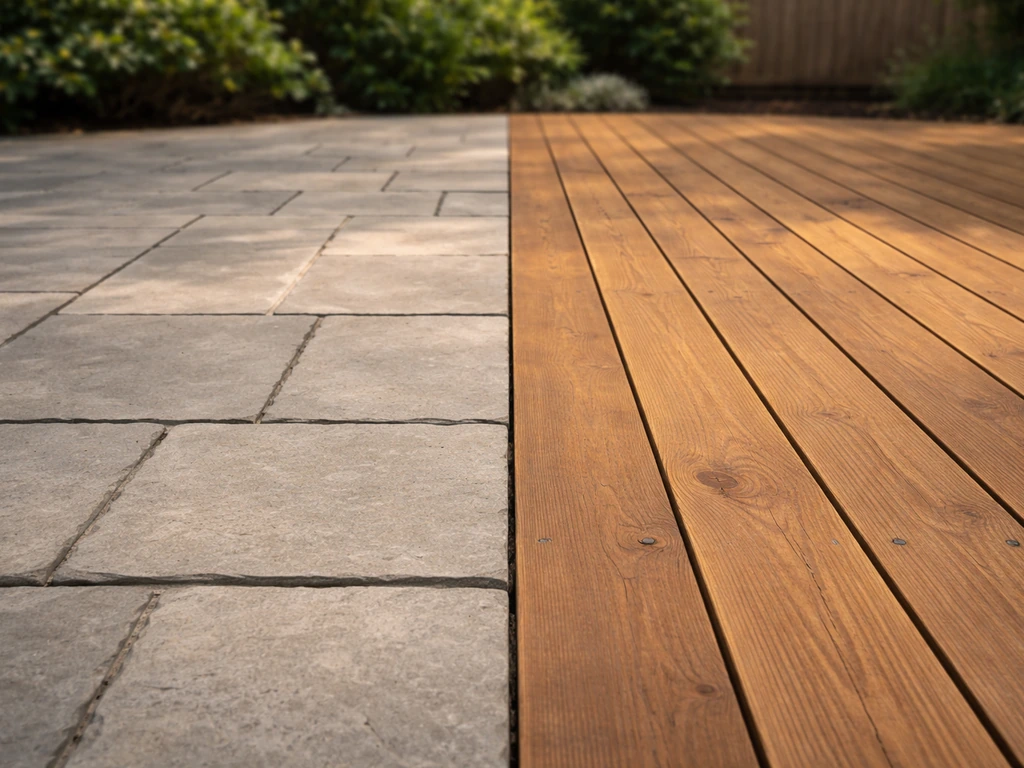
Quick decision: when wood beats stone and when stone wins
Before going deep on specs, here's the straight answer based on common scenarios.
Choose wood (or composite) when your yard has significant grade change and you need a raised deck structure, when your initial budget is tight (pressure-treated wood decks typically run $30 to $60 per square foot installed, while flagstone can reach $27 per square foot and pavers $10 to $17, but wood framing costs add up quickly on raised structures), or when you want a warmer surface that's comfortable barefoot in the morning. Wood is also the right call when you genuinely enjoy hands-on annual upkeep and refinishing projects.
Choose stone when your patio sits at or near grade, you're in a high-moisture or high-traffic climate, you want something that can plausibly last 50-plus years with minimal intervention, or you hate the idea of sanding, staining, and sealing every couple of years. Stone doesn't rot, warp, or splinter, and a well-laid paver or flagstone patio is about as close to set-it-and-forget-it as outdoor surfaces get.
| Situation | Better Choice | Why |
|---|---|---|
| Raised/elevated surface needed | Wood deck | Stone requires grade-level or near-grade installation |
| Tight upfront budget, simple flat yard | Pavers or flagstone | Installed paver cost starts around $10/sq ft |
| High rainfall or humid climate | Stone | Wood rots; stone drains and resists moisture |
| Freeze-thaw climate | Properly bedded stone pavers | Can be re-leveled; wood frames can shift and rot |
| Barefoot comfort, warm feel | Wood or composite | Stone gets very hot in summer sun |
| 50+ year lifespan goal | Stone | Wood lifespan typically 10 to 20 years |
| DIY-friendly project | Pavers (dry-laid) | No framing, no fasteners, no ledger board needed |
| Low-maintenance lifestyle | Stone or composite | Pressure-treated wood needs stain/seal every 1 to 2 years |
How your climate and site conditions should drive the decision
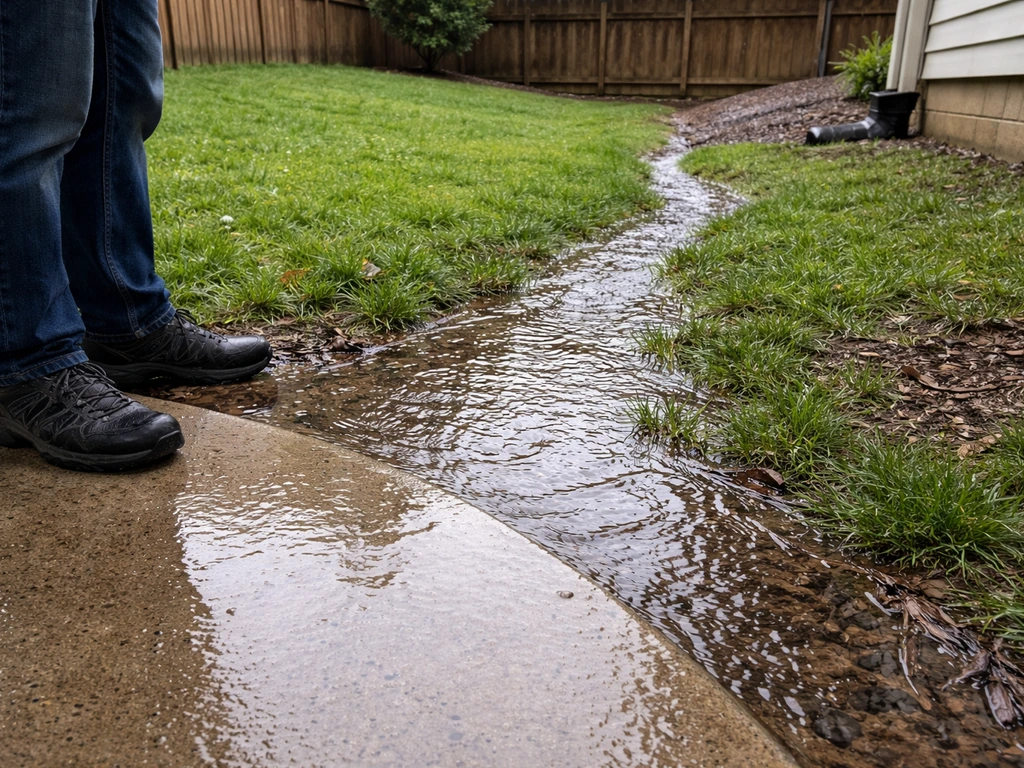
Climate is the single biggest factor most homeowners underweight when comparing stone vs wood patio options. Walk around your yard after a heavy rain and pay attention to where water sits. If you have a low spot, a shaded corner that stays damp for days, or soil that stays wet after every storm, wood is fighting an uphill battle. Persistent moisture is the primary enemy of wood framing, and even pressure-treated lumber will break down faster when it never fully dries out between rains.
Moisture and drainage
Stone patios at or near grade drain naturally when installed on a properly compacted gravel base. Pavers are typically laid over 4 to 6 inches of compacted aggregate base plus about 1 inch of bedding sand, which channels water downward and away. Wood, by contrast, sits above a subframe, and if that framing traps moisture beneath it, deck joist decay starts from the inside out, often invisibly. The Think Wood guidance on pressure-treated projects specifically calls out lack of ventilation as a primary cause of premature deck failure. If your yard has drainage issues, fix grading before choosing either material.
Freeze-thaw cycles
In climates that freeze and thaw repeatedly, both materials have vulnerabilities. Stone pavers can heave if the base isn't deep enough to get below the frost line, but individual pavers can be lifted and re-leveled without replacing the whole patio. Flagstone can crack in hard freezes if installed on an inadequate base. Wood decks in freeze-thaw zones experience repeated expansion and contraction cycles that loosen fasteners, warp boards, and accelerate rot at joinery points. If you live anywhere north of roughly USDA Zone 6, a paver patio on a properly compacted base with edge restraints will generally outperform wood framing over a 20-year window.
Sun, shade, and surface temperature
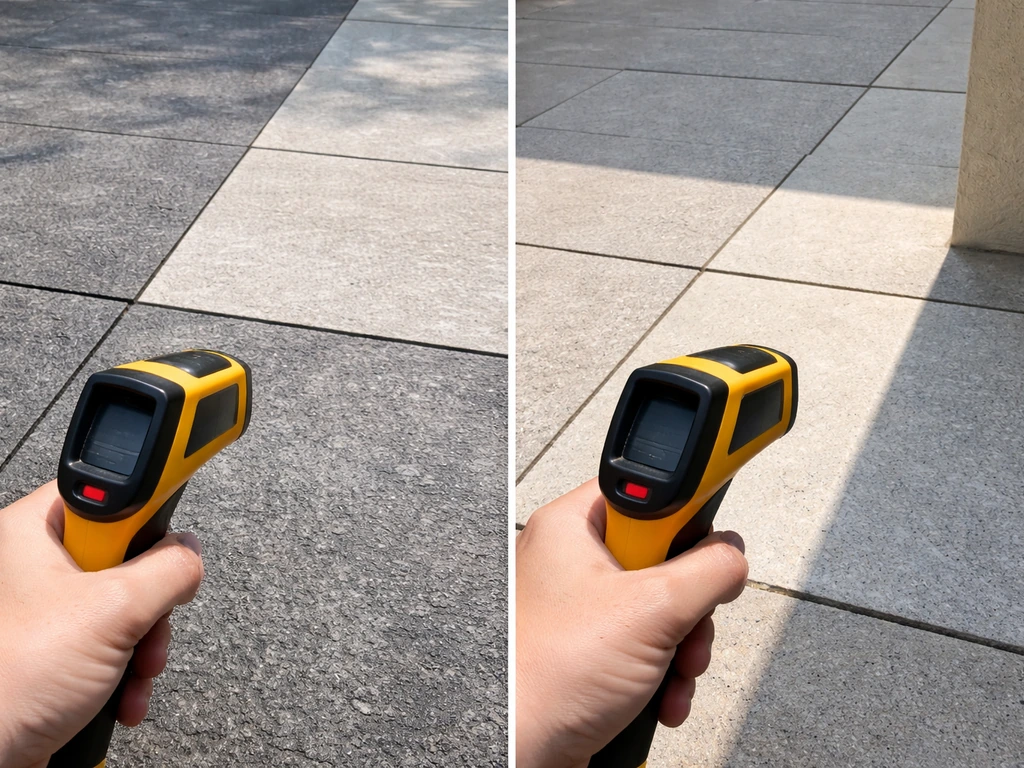
Full-sun patios get brutally hot with dark stone. A south-facing flagstone or dark paver patio in July can reach 130 to 150 degrees Fahrenheit on the surface. Wood and composite surfaces run cooler, which matters a lot for barefoot use and pets. Shaded areas flip the equation: wood in deep shade holds moisture and develops mold and mildew quickly, while stone in shade just gets slippery with algae growth unless you clean it periodically.
Durability and lifespan: what each material actually delivers
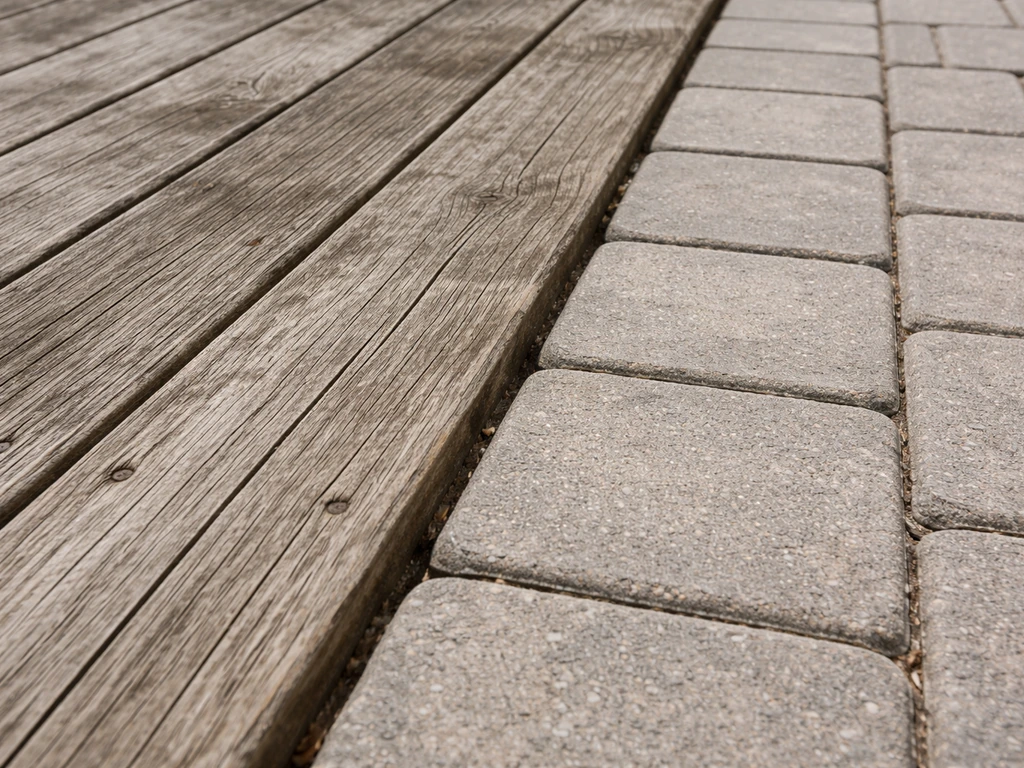
Pressure-treated wood decks typically last 10 to 20 years depending on climate, maintenance quality, and how well the structure drains and ventilates. That's a real range with a lot of variability. A well-built, well-maintained deck in a dry climate can hit the upper end. A deck in a wet, shaded yard that skips annual sealing often starts showing rot and loosened boards by year eight or ten. The framing underneath (joists, ledger board, posts) tends to fail before the decking surface itself, and framing repairs are expensive and disruptive.
Composite decking extends that lifespan considerably. Premium capped composite lines carry warranties up to 50 years from manufacturers like TimberTech, and these products resist staining, fading, and moisture far better than wood. They're genuinely closer to stone in terms of maintenance demands, though they still require a wood subframe, which remains the weak point.
Natural stone patios, when properly installed, can last generations. A well-laid paver or flagstone patio doesn't rot, warp, or require refinishing. The main failure modes are heaving from freeze-thaw, cracking under point loads (heavy planters, vehicles near the edge), and settling if the base wasn't compacted properly from the start. None of those issues require replacing the whole patio. You lift the affected stones, re-compact or add base material, and reset them. That repairability is a major advantage over wood, where structural rot often means a more extensive rebuild.
Weathering over time
Wood weathers to a gray patina if left unsealed, which some people like and others don't. Staining and sealing every one to two years keeps it looking fresh but adds ongoing cost and labor. Natural stone weathers gracefully, developing a patina that most people find attractive. Pavers resist fading well. Polymeric sand in joints does degrade over 5 to 10 years and may need to be refreshed, but that's a manageable maintenance task compared to annual deck refinishing.
Installation basics: what each option actually takes
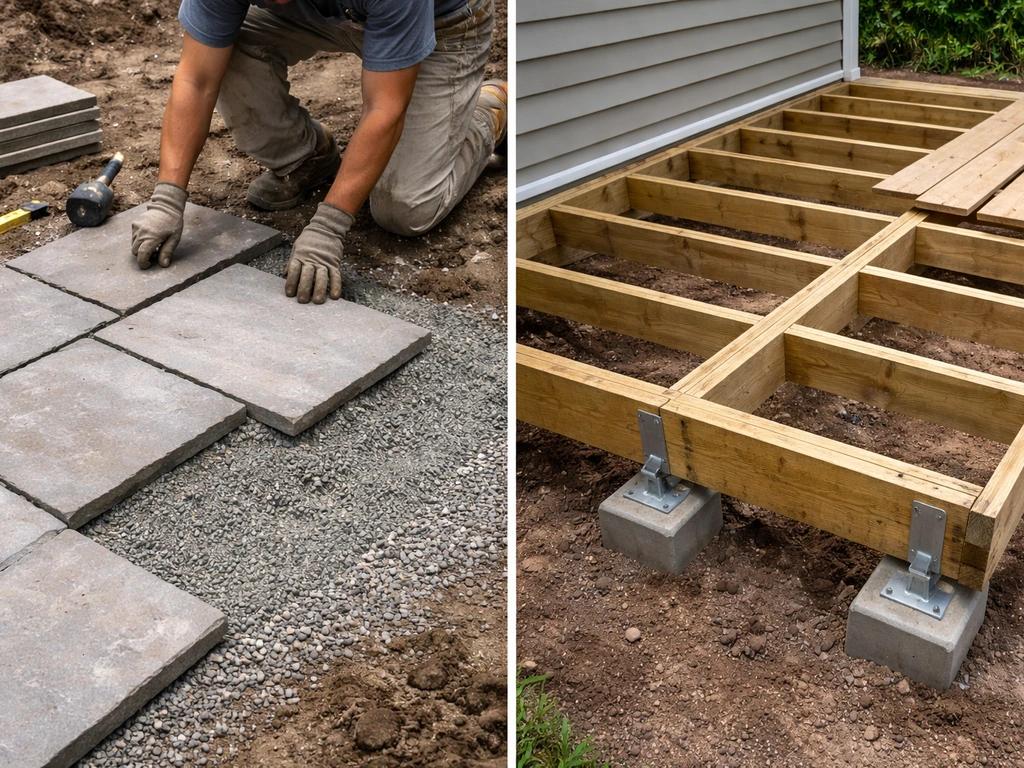
This is where stone and wood diverge most dramatically. They're fundamentally different construction methods, not just different surface materials.
Stone patio installation
A paver or flagstone patio starts with excavation, typically 7 to 10 inches deep depending on your frost depth and the paver thickness. You then need a compacted aggregate base (minimum 98% compaction per Belgard's installation standards), roughly 1 inch of bedding sand, then the stones or pavers, then jointing material. Edge restraints are non-negotiable: without them, the patio slowly migrates outward and the field loses its integrity. Polymeric sand in the joints locks out weeds and debris far better than regular sand. The whole system is gravity-based and forgiving of minor adjustments during installation, which makes it genuinely DIY-accessible for a motivated homeowner on a flat site.
Wood deck installation
A wood deck requires footings (concrete piers, usually dug to frost depth), posts, beams, joists, and ledger board attachment to the house if it's attached. Joist spacing matters a lot: for composite decking, manufacturers like Trex specify 16 inches on-center for straight decking and 12 inches on-center for diagonal layouts. Ledger board flashing is critical and frequently done wrong: improper flashing traps water against the house and causes both deck failure and structural damage to the home itself. If you're not experienced with framing, ledger attachment, and local building codes, this is not a beginner DIY project. Most jurisdictions require permits and inspections for decks.
DIY vs pro: honest assessment
A dry-laid paver patio on a flat site is one of the more DIY-accessible hardscape projects out there. The skill ceiling isn't too high, the tools are rentable (plate compactor, hand tamper, level), and mistakes are correctable. Flagstone is a bit harder to lay neatly because of irregular shapes, but still manageable. Wood decks at ground level are doable for confident DIYers, but attached elevated decks with ledger boards and footings really should involve a licensed contractor, both for safety and because botched flashing and framing creates expensive problems years later.
Safety and comfort: what it actually feels like to use
Slip resistance is a real consideration with stone, especially natural stone with a polished or honed finish. Polished granite, marble, and similar surfaces have low DCOF (dynamic coefficient of friction) ratings when wet and are genuinely hazardous, particularly around pool areas or in rain. The ASTM C-1028 test has been used to evaluate slip resistance for stone tile, and American Olean and Daltile explicitly advise against polished stone finishes anywhere slip resistance is a concern. If you're using natural stone outdoors, stick to tumbled, brushed, flamed, or split-face finishes, all of which have meaningfully better wet-surface grip.
Wood and composite surfaces have naturally better slip resistance in most conditions due to their texture and grain, though algae-covered wet wood can get slippery too. Composite has the edge here because it maintains its surface texture over time without the splintering risk of older pressure-treated boards. Bare feet on aged pressure-treated wood is genuinely uncomfortable and occasionally produces splinters. Composite eliminates that.
Heat is stone's biggest comfort liability. A light-colored limestone or travertine patio in partial shade is pleasant. A dark slate or charcoal paver patio facing south in July is effectively unusable barefoot during peak afternoon hours. Wood runs cooler. Composite falls somewhere in between, though dark composite colors can get quite hot as well.
Real costs: upfront, installation, and over 20 years
The upfront cost comparison isn't as simple as it looks. Paver patios run approximately $10 to $17 per square foot installed. Flagstone patios run $15 to $27 per square foot installed, with dry-laid flagstone at the lower end of that range. If you're zeroing in on a tight range, compare the flagstone patio cost vs stamped concrete tradeoff next flagstone patios. Professional wood deck installation runs $30 to $60 per square foot. On a pure installed-cost basis, a paver patio is often cheaper than a wood deck, which surprises a lot of people who assume stone is the premium option.
| Cost Factor | Stone Patio (Pavers) | Flagstone Patio | Pressure-Treated Wood Deck | Composite Deck |
|---|---|---|---|---|
| Installed cost (pro) | $10–$17/sq ft | $15–$27/sq ft | $30–$60/sq ft | $50–$80/sq ft (est.) |
| Annual maintenance cost | Low ($0–$50/yr) | Low-moderate (sealing optional) | Moderate ($100–$300/yr) | Low ($0–$50/yr) |
| Staining/sealing frequency | Not required (optional) | Every 2–5 yrs (optional) | Every 1–2 years | Not required |
| Major repair likelihood at 10 yrs | Low (re-level isolated stones) | Low-moderate | Moderate (board or joist replacement) | Low (subframe at risk) |
| Expected lifespan | 40–50+ years | 30–50+ years | 10–20 years | 25–50 years (surface) |
Lifecycle cost is where stone really separates itself. If you're deciding between patio stones vs deck materials, the choice usually comes down to drainage, maintenance preferences, and how much moisture your site holds patio that mostly just needs periodic cleaning. A pressure-treated deck that needs staining every one to two years, occasional board replacement, and eventually a full rebuild at year 15 to 20 costs significantly more over 30 years than a paver patio that mostly just needs periodic cleaning and maybe a polymeric sand refresh every decade. If you're building something you plan to own for more than 10 years, the lower per-year ownership cost of stone is a compelling argument. If you are weighing a flagstone patio vs wood deck, focus on how moisture, drainage, and freeze-thaw cycles affect durability where you live.
Maintenance routines: what you're actually signing up for
Stone patio maintenance
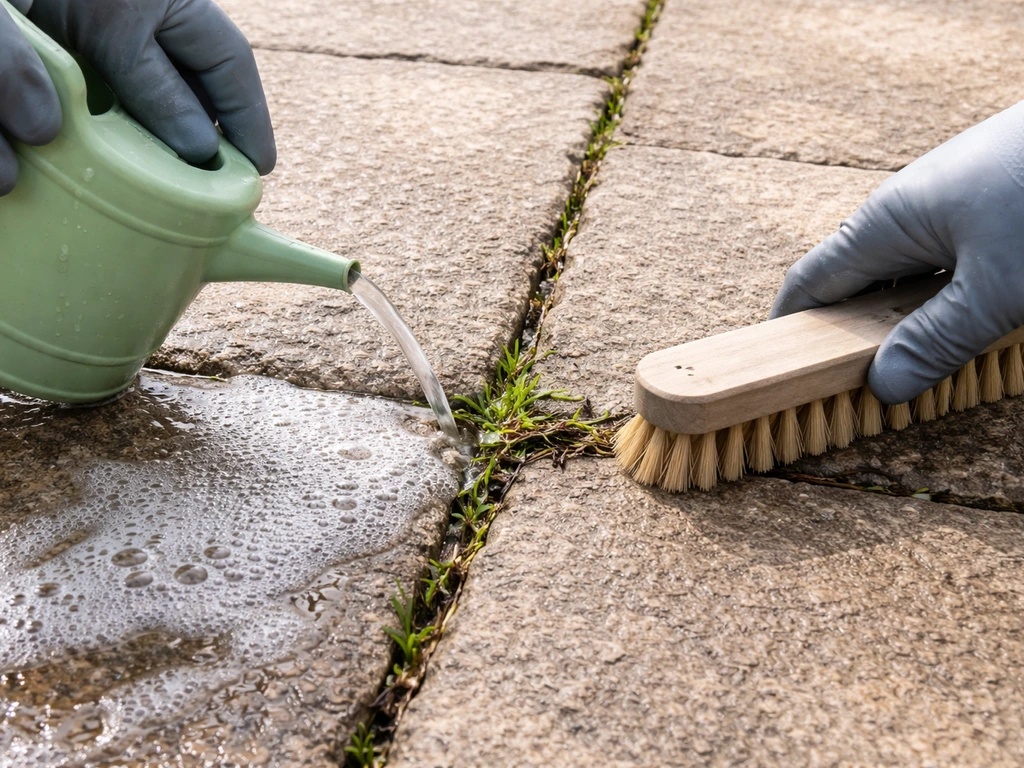
The main ongoing tasks for a stone patio are cleaning and occasional joint maintenance. For cleaning, use pH-neutral cleaners only. Acidic cleaners, including vinegar, lemon-based products, and anything with bleach, can etch and damage natural stone surfaces. A gentle pressure wash with a fan nozzle or a scrub brush with stone-safe soap handles most seasonal buildup. Polymeric sand joints may need refreshing every 5 to 10 years as the binding agent breaks down and weeds start finding their way in. Sealing natural stone is optional but recommended for porous stones like limestone or travertine in wet climates: it reduces staining and water absorption.
- Spring: inspect for heaved or settled stones, re-level as needed; clean surface with pH-neutral soap or pressure washer
- Summer: spot-clean stains promptly; check joint sand for erosion or weed breakthrough
- Fall: clear leaves and debris from joints to prevent staining and organic growth
- Every 5–10 years: refresh polymeric sand in joints; reseal porous stone if needed
Wood deck maintenance
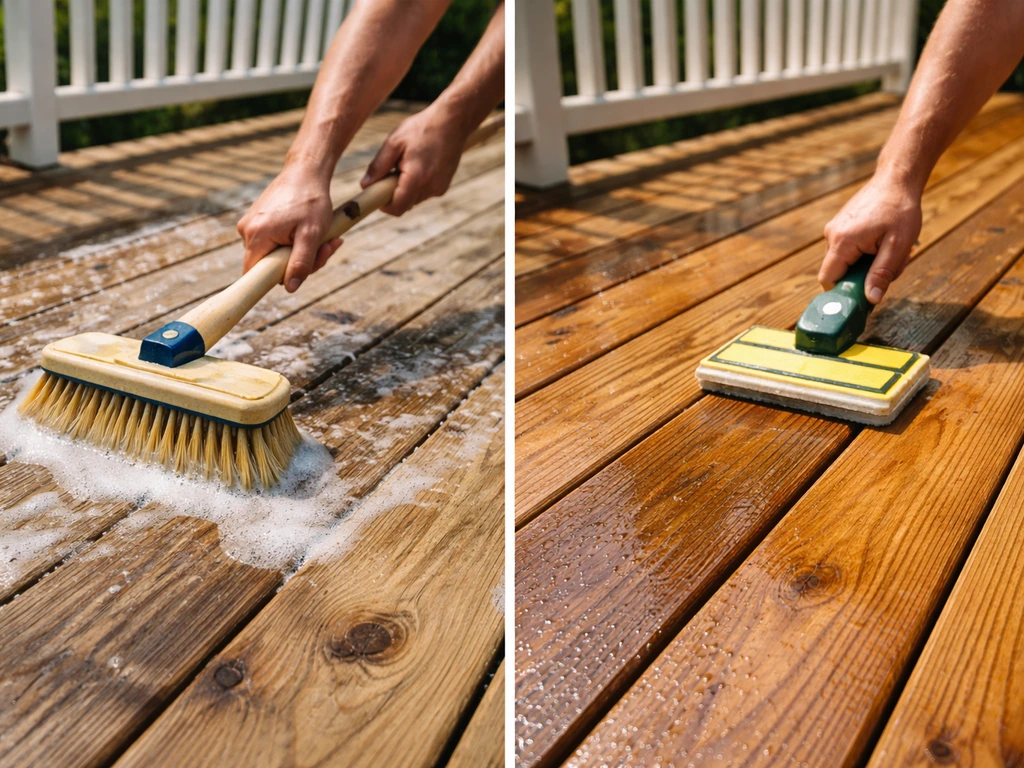
Pressure-treated wood requires annual cleaning and staining or sealing every one to two years to maintain protection and appearance. Deck maintenance guidelines recommend cleaning thoroughly before each stain application, inspecting for loose fasteners, cracked boards, and early signs of rot, especially at joinery points and where the deck meets the ledger board. Skipping a sealing cycle doesn't cause immediate visible damage, but it accelerates weathering and moisture penetration into the grain.
- Spring: inspect all boards, joists, and ledger board for rot, soft spots, or fastener corrosion; clean deck surface
- Summer: check for splinters or warped boards; apply sealant or stain if due
- Fall: clear debris from gaps between boards to maintain drainage and ventilation
- Every 1–2 years: apply stain or sealer after cleaning; re-drive or replace any raised fasteners
Composite decking is dramatically lower maintenance. For most lines, a semi-annual cleaning with soap and water or a gentle pressure wash (under 3,100 PSI with a fan nozzle held at the right standoff distance) is all it needs. No staining, no sealing, no refinishing. The subframe underneath still needs the same inspections as a wood deck.
Common mistakes and how to source materials or find the right installer
Stone patio mistakes
The number one paver mistake is skipping or skimping on the base. Laying pavers on uncompacted soil, on too-thin a gravel layer, or without hitting proper compaction specs means your patio will heave, settle unevenly, and develop rocking stones within a few years. Angi specifically lists this as the most common paver installation error. The second major mistake is forgetting edge restraints: without them, the patio slowly migrates outward from foot traffic and freeze-thaw pressure. Third: using regular sand instead of polymeric sand in joints, which leads to weed infiltration and ant colonization within a season or two.
Wood deck mistakes
Inadequate ventilation under the deck is the leading cause of premature framing failure, per Think Wood's guidance on pressure-treated projects. Boards packed too tight without spacing also trap moisture and accelerate surface decay. Ledger board flashing errors are the other big one: water that gets behind the ledger destroys framing and can damage the house wall. If you're hiring a contractor for a deck, specifically ask how they handle ledger flashing and what their ventilation plan is under the structure. Any good contractor will have a clear answer.
Sourcing materials
For stone patios, buy pavers from a hardscape supplier or masonry yard rather than a big-box store if you want consistent quality and color lot matching. Natural stone like flagstone varies significantly by quarry, so see the actual stone in person or request a sample before committing to a full order. For wood decks, pressure-treated lumber grades vary: look for ground-contact-rated (UC4B or UC4C) lumber for any framing members close to or in contact with soil, and confirm your composite decking supplier's joist spacing requirements before ordering.
Hiring a contractor
For attached decks, get at least three quotes and verify the contractor pulls permits. For stone patios, look for a hardscape contractor who can demonstrate base preparation standards, not just someone who lays pavers on top of whatever is there. Ask specifically: how deep is the gravel base, what compaction method do you use, and what edge restraint system do you install. A contractor who can answer those questions clearly knows what they're doing. One who pivots to talking about the pretty patterns and color options probably doesn't.
If you're comparing a wood deck to a stone patio for a raised or multi-level outdoor space, you'll also want to weigh a dedicated wood deck structure as its own category. Topics like the broader wooden deck vs stone patio comparison and the more specific flagstone patio vs wood deck tradeoffs are worth exploring once you've narrowed down your surface and grade requirements. The broader wooden deck vs stone patio comparison depends largely on drainage, site moisture, and how much upkeep you want to handle each year. The cost angle is also worth digging into separately if budget is your primary driver.
FAQ
How can I tell if my yard is “wet enough” that wood will fail sooner, even if it doesn’t look like a swamp?
After a heavy rain, check for saturated soil at the exact deck footprint, not just around it. If you see water ponding or the ground stays dark and cool for more than 24 to 48 hours, the subframe will stay wet between rains, accelerating joist decay. In that situation, prioritize fixing grading and improving under-patio drainage before choosing wood.
Is pressure-treated wood enough to eliminate rot concerns on a damp site?
It helps, but it does not solve persistent moisture. Pressure-treated lumber still deteriorates faster when it never fully dries, especially in shaded, poorly ventilated areas or where the subframe blocks airflow. If the space under the deck feels “damp,” plan on ventilation improvements or choose stone/composite for the surface.
Do I need to worry about weeds coming through stone patios?
You can reduce weeds a lot by using the right base, compacting properly, and using polymeric sand in the joints when specified for the product. If you skip base compaction or forget edge restraints, weeds and insects find paths through gaps. Even with good installation, expect occasional joint touch-ups if the joint material degrades over time.
What’s the practical difference between flagstone and concrete pavers for maintenance and repairs?
Both are repairable, but repairs differ in complexity. Pavers are typically easier to lift, reset, and re-level one unit at a time, while flagstone often requires matching shapes and managing uneven surfaces when you reset a cracked piece. If you expect to do localized repairs yourself, pavers are usually more straightforward.
Will stone patios be too hot for pets or bare feet, and how do I reduce heat without changing materials?
Heat spikes are mainly driven by color, exposure, and sunlight hours. Choose lighter colors, add a shade structure or pergola, and avoid placing dark stone directly adjacent to frequently used paths for pets. You can also use strategically placed rugs or cooling mats in the hottest zone.
Which stone finish is safest on a wet day, polished vs tumbled or brushed?
Polished stone finishes can become very slick when wet, especially around pools, steps, and rain-prone entry areas. Prefer tumbled, brushed, flamed, or split-face textures outdoors, and if you’re choosing for a high-slip-risk area, avoid “decorative smooth” finishes.
Can I DIY either option, or is one clearly harder to get right?
A dry-laid paver patio on a flat site is the more DIY-friendly option because the system is gravity-based and individual units can be reset. Wood decks become harder when they are elevated or attached to the house, because you must get footing depth, ledger flashing, and ventilation correct to prevent hidden framing failure. If you are not confident with ledger attachment and local permitting, hire a licensed deck contractor.
What is the most expensive “gotcha” if I pick wood for an attached deck?
Ledger flashing and attachment details. If water gets behind the ledger, it can cause both deck structural failure and damage to the house wall, leading to costly repairs that are difficult to access. Ask your contractor for a clear flashing plan and how they manage water runoff away from the ledger.
How deep should the base be for a paver patio in freeze-thaw climates?
Depth depends on frost depth and total paver thickness, but a shallow base is a common cause of heaving. The key is building a properly compacted aggregate layer to the correct engineered depth, then adding bedding sand and edge restraints. If your contractor can’t specify depths and compaction method, get a different quote.
Will a stone patio ruin my lawn or landscaping over time?
It can, if the patio is built without proper drainage design and edge restraint. Water can be redirected, and soil can migrate if the perimeter is not restrained. Plan transitions (mulch beds, plant borders, and downspouts) so runoff is directed to suitable drainage points, not under the patio.
How often do I need to seal stone, and is sealing always required?
Sealing is often optional, but it is recommended for porous stones in wet climates, like limestone or travertine, to reduce staining and water absorption. If you can see darkening or water soak-in after a light spray test, sealing is likely helpful. For non-porous pavers, sealing may not add much and can even change appearance.
What’s the “minimum viable” maintenance plan for each option after installation?
For stone patios, keep to gentle seasonal cleaning and monitor joint material, with a polymeric sand refresh typically every 5 to 10 years depending on conditions. For pressure-treated wood, plan for cleaning plus staining or sealing about every 1 to 2 years, plus fastener and board inspections. For capped composite, expect semi-annual washing, plus routine inspections of the subframe even though the surface needs no refinishing.