For most homeowners, a stone patio wins on longevity and low maintenance, while a wood deck wins on cost, warmth underfoot, and elevated-grade flexibility. If you want something in between, capped composite decking beats natural wood on durability without giving up the wood-like look. The right answer depends on three things: your climate (especially freeze-thaw cycles), how much ongoing maintenance you're willing to do, and whether your yard actually needs a raised surface. Work through those three factors and the choice usually becomes obvious.
Wooden Deck vs Stone Patio: Pros, Cons, and Cost to Own
Nolan Ellison
5 May 2026
Quick verdict: which one wins for your situation
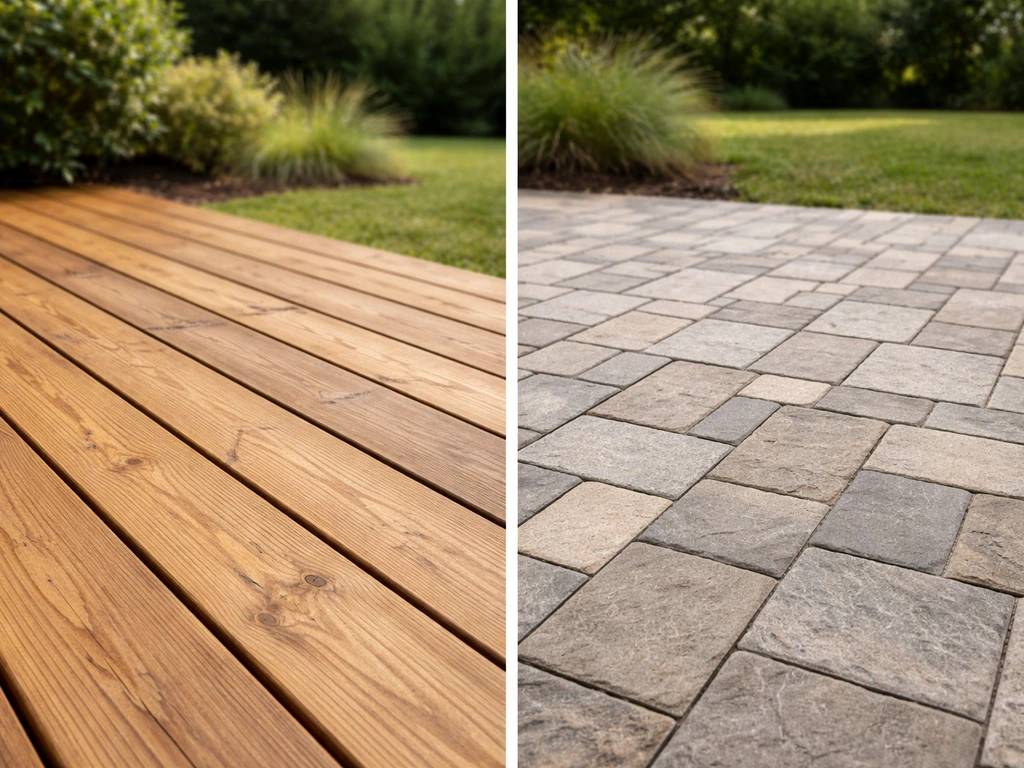
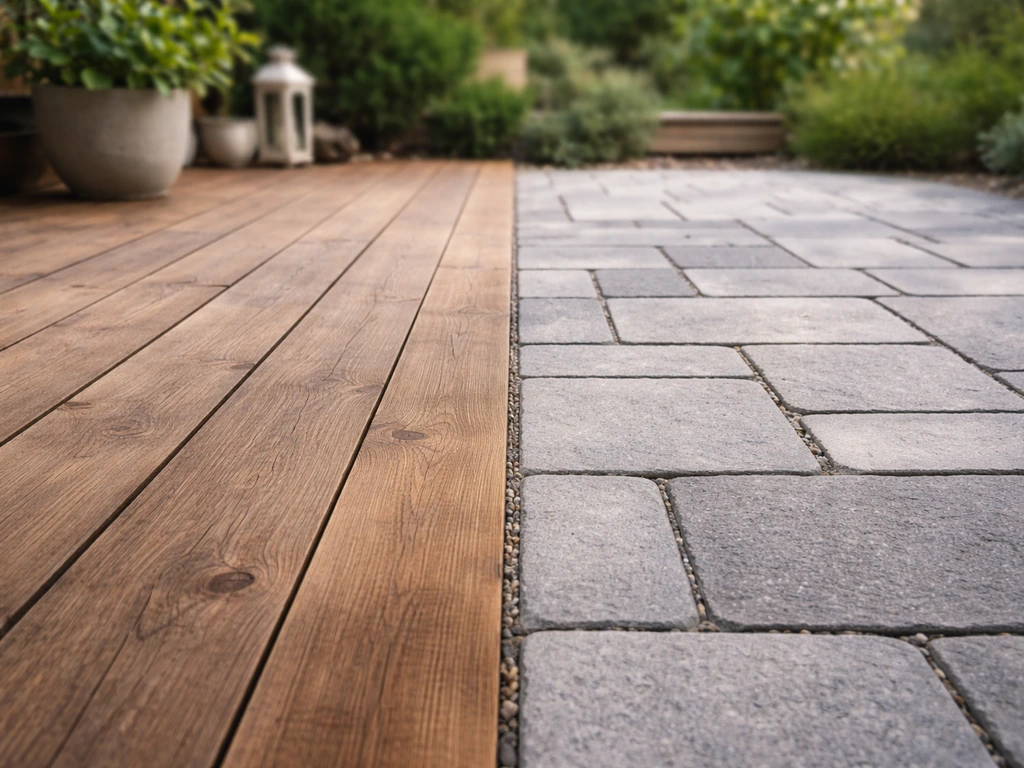
Here's the fastest way to cut through the noise. If you're on a tight budget, need a raised structure over a slope or crawl space, or want a warm surface for bare feet in cool climates, go with a wood deck (pressure-treated framing is fine; just budget for staining every 2-3 years). If you're on a tight budget or want a warm surface for bare feet, the wood deck option is worth comparing to a flagstone patio vs wood deck tradeoff. If you're in a wet or hot climate, want zero refinishing work, and have a mostly flat yard, a stone patio is the most durable long-term play. If you like the look and feel of wood but live somewhere with intense UV, humidity, or heavy rain, capped composite decking is the practical upgrade: it skips the annual stain, resists moisture far better than natural wood, and carries manufacturer warranties of 25 to 50 years depending on the product line.
| Factor | Wood Deck | Composite Deck | Stone Patio |
|---|---|---|---|
| Budget (installed) | Lowest | Mid to high | Mid to high |
| Lifespan | 15-30 years | 25-30+ years | 30-50+ years |
| Maintenance effort | High (annual staining/sealing) | Low (occasional cleaning) | Low to medium (sealing, joint repair) |
| Freeze-thaw performance | Good if framed well | Good if framed well | Good with proper base; mortar joints can fail |
| Works on slopes/grades | Yes (raised framing) | Yes (raised framing) | Limited without major grading |
| Bare-foot comfort | Warm, comfortable | Can get very hot in sun | Can get very hot or cold |
| DIY-friendly | Yes | Moderate | Moderate to hard |
Wood deck vs stone patio: durability, weather, and lifespan
Wood decks and stone patios fail in completely different ways, and understanding that helps you pick the right one for your climate. Wood deteriorates from moisture and UV exposure: boards crack, splinter, and eventually rot if water sits on them. Pressure-treated wood performs better than untreated lumber, with lifespan estimates ranging from roughly 15 to 30 years depending on the preservative system used and how well the deck drains and dries between rain events. Cedar and redwood, which are naturally decay-resistant, typically land in the 15-20 year range in practice. Without regular refinishing, surface deterioration accelerates, and in severe cases, surface finish failure can signal underlying decay risk.
Stone patios fail from the ground up rather than the surface down. The stones themselves are essentially indestructible under normal residential use, but the base beneath them can shift and heave if it wasn't built correctly. Freeze-thaw cycles are the main enemy: water works into gaps or under improperly bedded stones, freezes, expands, and slowly tilts or lifts individual pieces. This Old House and various hardscape contractors in cold climates all point to the same root cause: inadequate drainage and insufficient base depth. A well-built patio with a properly compacted gravel base, typically 4-6 inches deep after excavation, can last 30-50 years or longer without the surface wearing out. In mild climates with minimal freeze-thaw exposure, even a modestly built stone patio will outlast most wood decks.
One practical point on mortar vs. dry-laid stone: dry-laid installations handle freeze-thaw cycles better because the open joints allow individual stones to move slightly without cracking or buckling. Mortared joints look cleaner initially but can crack and fail as the base moves through seasonal cycles. If you're in a climate with serious winter freezing, dry-laid with polymeric sand in the joints is a smarter long-term choice than full mortar-set flagstone.
Composite deck vs stone patio: what changes and when it's better
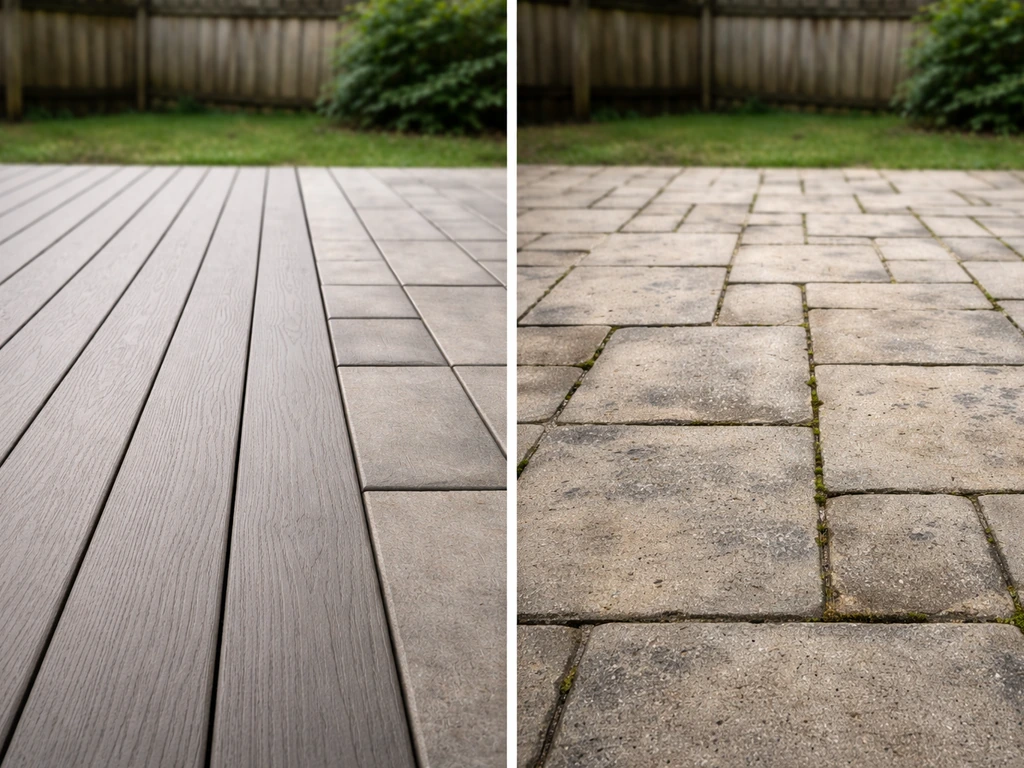
Composite decking changes the wood vs. stone calculation in a meaningful way. Traditional wood decking's biggest weakness is maintenance: you're committing to staining, sealing, or painting every 2-3 years, plus occasional board replacement as pieces crack or cup. Capped composite decking largely eliminates that cycle. The key word is 'capped': capped composite uses a co-extruded protective shell around the wood-plastic core, and the color is built into that cap rather than applied as a surface stain. That's why brands like Trex and TimberTech can offer 25-year, 35-year, and even 50-year fade-and-stain warranties on their higher-end lines. Uncapped composite (older or budget products) doesn't have that shell and fades more noticeably over time, so if you're going composite, capped is the only version worth serious consideration.
So when does composite beat stone? Primarily when you need a raised structure. Stone patios require a flat or gently graded surface; building a raised stone patio over a significant slope is an expensive masonry project involving retaining walls and a lot of excavation. A composite deck on a framed substructure handles grade changes easily and costs less labor to install in those situations. Composite also wins if you want a wood-look aesthetic without the maintenance commitment, and it's a strong choice in high-UV, high-humidity climates where natural wood deteriorates faster than average. Where stone still wins over composite: it's harder underfoot (better for heavy furniture without plastic feet), handles heavy point loads without concern, requires no substructure, and in flat-yard applications is often competitive in cost.
Maintenance and long-term cost
What you're actually signing up for each year
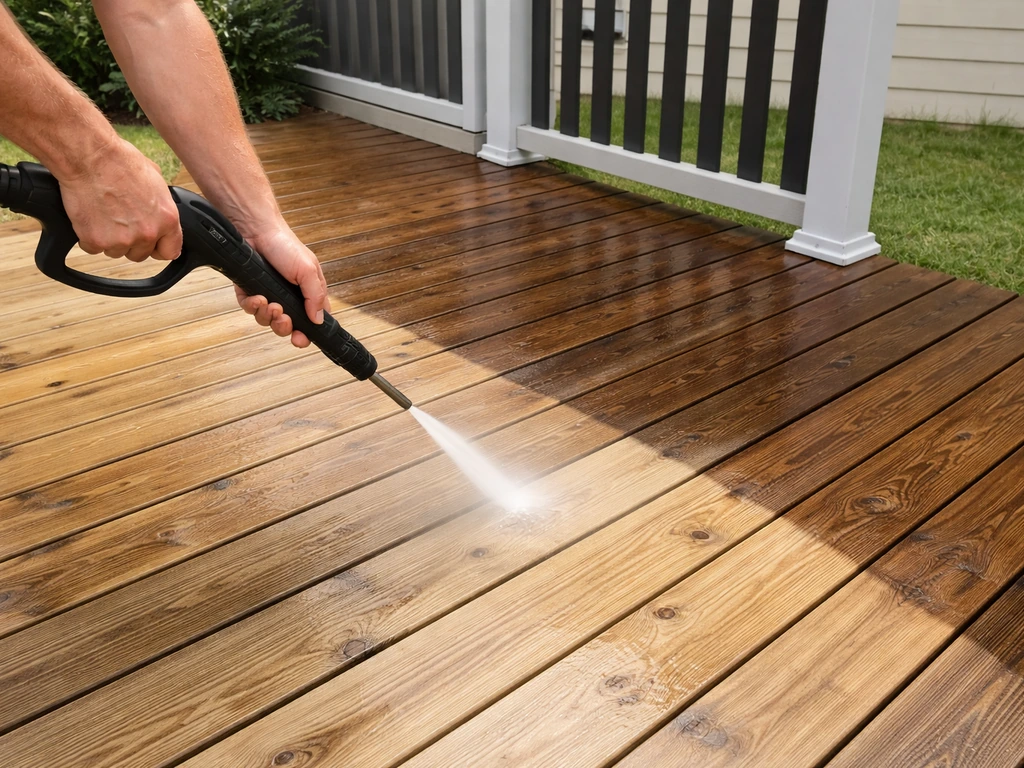
Natural wood decks are the most maintenance-intensive of the three options. Plan on cleaning and applying a water-repellent stain or sealer every 2-3 years minimum; in sunny or wet climates, annually is more realistic. Skip a cycle and you're looking at cracking, graying, and accelerated surface degradation. Beyond aesthetics, Consumer Reports notes that finish failures on wood can correlate with underlying decay, so this isn't just cosmetic upkeep. You'll also want to do annual structural checks: look at fasteners, joists, ledger connections, and any posts in contact with soil. NADRA’s Check Your Deck consumer checklist also emphasizes doing regular checks for safety and maintenance issues such as split or decaying wood annual structural checks. The Consumer Product Safety Commission's injury data for decks and porches underlines why structural inspection isn't optional.
Composite decks are dramatically lower maintenance. The main task is an annual wash-down, often just a garden hose or a soft brush with soapy water. No staining, no sealing the deck surface itself. You still need to inspect the framing annually, because the substructure is almost always pressure-treated wood, which requires the same checks as a wood deck's structure. Budget for occasional cleaning of mildew if you're in a humid climate, but that's minor compared to a full wood refinish.
Stone patios are low maintenance but not zero maintenance. Natural stone like bluestone, slate, or flagstone benefits from sealing every 2-3 years to resist staining and reduce moisture absorption, especially in freeze-thaw climates. Concrete pavers typically need less sealing. The most common repair job over time is resetting stones that have heaved or settled and refreshing the joint sand or mortar. Weeds growing through joints are a nuisance in dry-laid installs. None of this is expensive or time-consuming, but it's a different kind of upkeep than a wood deck.
| Task | Wood Deck | Composite Deck | Stone Patio |
|---|---|---|---|
| Surface cleaning | Annual scrub + prep | Annual rinse/scrub | Occasional hose/scrub |
| Staining/sealing surface | Every 1-3 years | Not needed | Every 2-3 years (stone) |
| Joint/gap maintenance | Check fasteners, re-gap boards | Check fasteners | Refresh joint sand or mortar |
| Structural inspection | Annual (critical) | Annual (framing) | Check for heaving/settling |
| Board/stone replacement | As needed (cracking, rot) | Rarely needed | Reset heaved stones as needed |
| Estimated annual time | High | Low | Low to medium |
Installation and groundwork: bases, drainage, and framing
Stone patio base prep
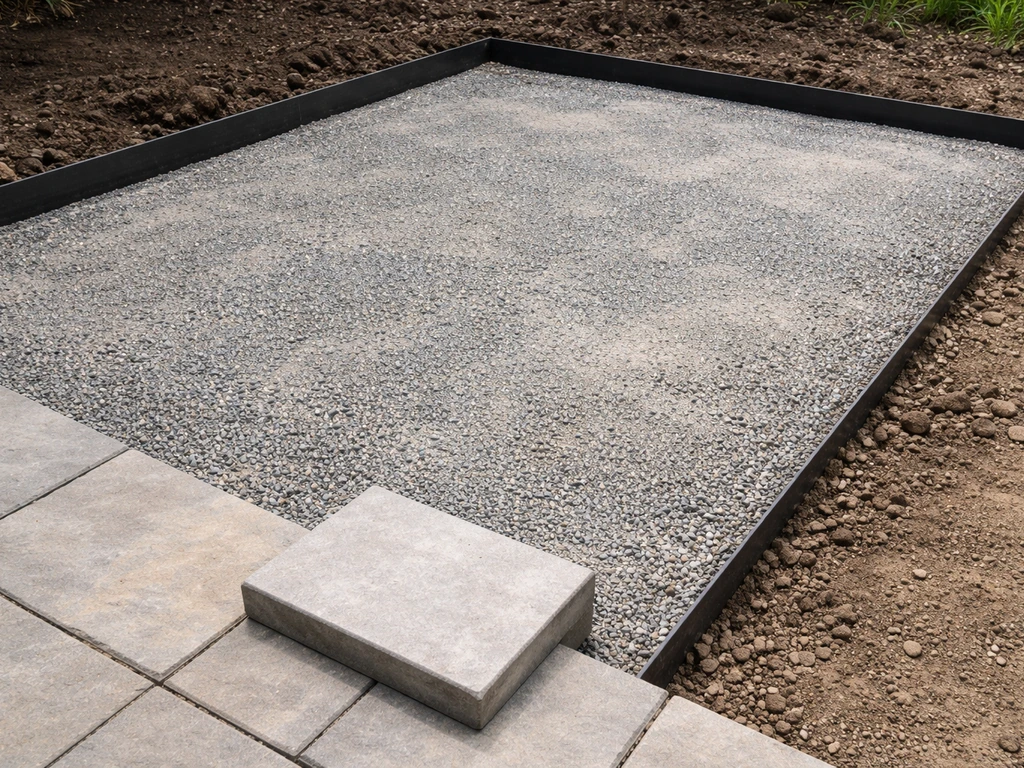
A stone patio lives or dies by what's underneath it. The standard installation sequence starts with excavating to roughly 8-10 inches below finished grade, then compacting the subgrade, laying a geotextile fabric to stabilize the soil, adding and compacting a crushed-gravel base (targeting 4-6 inches of compacted depth), and then finishing with a 1-inch bedding sand layer before setting the pavers or flagstone. In freeze-thaw climates, some installers go deeper on the gravel base, pushing toward 6-8 inches, to get below the frost line influence. Drainage is the other non-negotiable: the finished surface should slope at least 1/8 to 1/4 inch per foot away from any structure or toward a designated drainage point. A patio that holds water will fail faster, full stop.
Pavestone's spec references include ASTM freeze-thaw resistance criteria for pavers (performance after 28 and 49 freeze-thaw cycles with defined mass-loss limits), which tells you that even the pavers themselves are rated for freeze-thaw when you buy quality material. The bigger failure point is almost always the base, not the stone.
Deck framing and substructure
Both wood and composite decks share the same pressure-treated framing system: footings (concrete piers dug below frost line), posts, beams, joists, and ledger board (if attached to the house). For composite decking, manufacturers typically require closer joist spacing, often 12 inches on center for diagonal board runs, compared to the 16 inches standard for wood decking. That matters for your material cost. Composite boards also expand and contract more than wood with temperature changes, so following the manufacturer's gap spacing recommendations exactly is important: boards installed too tight in cold weather will buckle in summer heat. Home Depot's pressure-treated lumber FAQ notes approximate 1/4-inch spacing as a starting point for wood board gaps, but always check the composite product's specific install guide, not generic lumber guidance.
One thing both decks have in common: post footings must go below the local frost depth. This is not optional in cold climates. A footing at 12 inches in a climate where frost reaches 36 inches will heave just like a poorly built patio. Check your local frost depth with your building department before pouring footings.
DIY vs. hiring a pro
A flat, ground-level stone patio is the most accessible DIY project of the three, especially with concrete pavers or simple dry-laid flagstone. It requires renting a plate compactor and doing careful base prep, but there's no framing, no structural engineering, and no ledger-to-house waterproofing to worry about. A wood deck is also DIY-friendly if you're comfortable with basic carpentry and are building a simple, ground-level or single-level structure. Composite decks follow the same framing process as wood but the boards themselves are heavier and more expensive to replace if you cut them wrong, so precision matters more. Complex elevated decks in any material, and stone patios involving grading, drainage systems, or heavy equipment, are better left to pros.
Comfort, traction, and everyday usability
Wood decking is genuinely the most comfortable surface underfoot of the three. It stays cooler than stone or composite in direct sun, has natural give that feels easy on joints, and provides good traction even when wet if you keep the surface clean and don't let algae build up. In cold climates, a wood deck feels noticeably warmer to bare feet in early spring and fall compared to stone, which can feel cold enough to discourage outdoor use on cool but sunny days.
Composite decking's biggest real-world drawback is heat. Dark-colored composite boards in direct sun can get uncomfortably hot, hot enough to be genuinely unpleasant or even painful for bare feet, especially for kids and pets. Surface temperatures on composite boards in full sun can run 30 degrees Fahrenheit or more above ambient air temperature. Trex's SunComfortable technology is designed to address this and does help, but it doesn't eliminate the issue entirely, and the effect varies by board color (darker colors always run hotter). If your deck is in direct sun for most of the day in a warm climate, this is a real usability consideration, not just a marketing talking point.
Stone patios can also get very hot in summer sun, particularly dark stone like bluestone or slate, and they get very cold in winter. For a shaded or partially shaded yard, stone is comfortable in warm months and the cold-surface issue in winter is less of a concern since you're typically not using it then anyway. Traction on stone is good when the surface is textured or has a natural cleft finish; polished stone gets slippery when wet, so avoid it for pool surrounds or high-traffic paths. For households with young kids, dogs, or people doing a lot of grilling (with grease drips), stone's hard, non-absorbent surface is easier to clean than wood and more resistant to staining than unsealed composite. A dog's nails won't scratch stone; they can eventually wear down the surface of some composite products over years.
- Bare feet in cool climates: wood wins clearly
- Bare feet in hot/sunny climates: stone edges out composite (both get hot, but stone cools faster and doesn't hold heat the same way as composite)
- Kids and pets running: stone is easiest to clean and most forgiving of nail scratches
- Grilling: all three work, but stone handles grease drips and dropped embers without damage
- Wheelchair or walker access: stone patio (ground level, no gap between boards) is easiest to navigate
- Wet conditions/traction: textured wood and textured stone are both good; avoid polished stone; grooved composite profiles are designed for wet traction
How to choose: site checks, budget ranges, and contractor questions
Check these things in your yard first
Before you call a single contractor, spend 20 minutes walking your yard with these questions in mind. Is the ground flat or does it slope significantly? If it slopes more than a foot or so across the project area, a deck is probably easier and cheaper than grading for a patio. How does water drain after a heavy rain? Standing water that lingers for hours points to soil drainage problems that need to be addressed before you build anything, and they affect stone patios more directly than decks (which sit above grade). A stone patio vs deck comparison also comes down to whether you can handle maintenance and how your site conditions affect drainage and freeze-thaw performance. What's your local frost depth? If you're in a northern climate with frost below 24 inches, stone patio base prep becomes more involved and more important. How much direct sun hits the space? Full sun all day pushes you toward wood or light-colored stone and away from dark composite. What's the primary use: dining and entertaining, kids and pets, a grilling zone, or a quiet retreat? That shapes how much you care about heat, traction, and surface durability.
- Measure the space and note grade changes (a simple 4-foot level and tape measure are enough for a rough check)
- Identify where water flows and pools after a 1-inch rain event
- Look up your local frost depth (your county extension office or building department can tell you in 60 seconds)
- Check how many hours of direct sun the space gets in summer (morning vs. afternoon sun matters for heat buildup)
- Decide on your non-negotiables: no ongoing staining, specific budget ceiling, needs to handle dogs/kids, needs to be accessible for a family member with mobility challenges
Budget ranges to expect in 2026
Rough installed cost ranges vary significantly by region, but as a working framework: pressure-treated wood decks typically run $15-$35 per square foot installed for a straightforward design. Composite decks (capped, mid-to-high quality) run $35-$60+ per square foot installed once you include framing and all hardware. Stone patios with concrete pavers run $15-$30 per square foot installed; natural flagstone runs $25-$50+ depending on the stone type and local availability. These are ballpark figures; complex grades, drainage work, or premium materials push all of them higher. When comparing bids, always compare the total installed price including base prep and drainage, not just the material cost per square foot. A cheap patio quote that skips proper base compaction will cost you more in repairs within five years than a slightly more expensive quote that does it right.
Questions to ask contractors before you sign anything
- What is the base prep process, and how deep will you excavate and compact? (For stone: you want to hear 4-6 inches of compacted gravel minimum, more in freeze-thaw climates)
- How will you handle drainage? Where does water go at the edges and under the surface?
- For decks: what's your footing depth, and does it go below local frost depth?
- For composite: what brand and product line are you using, and is it capped composite? Can I see the warranty document?
- For wood: what preservative treatment level (retention level) are you using for the decking boards vs. the framing?
- What permits are required, and will you pull them? (Any contractor who suggests skipping permits on a deck is a red flag)
- What does your warranty cover, and for how long? What voids it?
- Can you provide references from projects you did 5+ years ago so I can see how they've held up?
The cost comparison question, specifically which option is cheapest over time, deserves its own careful look since upfront cost and long-term cost-to-own can lead you to different conclusions. That question, what is cheaper wood deck or stone patio, depends on climate, maintenance, and installation quality cheapest over time. Similarly, if you're specifically weighing flagstone vs. a wood or composite deck, or comparing stone against stamped concrete as a patio alternative, those comparisons have their own nuances worth digging into. If you're comparing flagstone patio cost vs stamped concrete, make sure you also account for base prep, drainage, and expected repairs over the next 10 to 20 years stone against stamped concrete. But if you've worked through the site checks and contractor questions above, you'll walk into any estimate with a clear enough picture to make a confident decision and ask the right follow-up questions.
FAQ
Can a stone patio be built on a slope without ruining it quickly?
Yes, but only if the patio is built to shed water. Ask contractors whether they will create a consistent slope away from the house (typically at least a small fraction of an inch per foot) and where runoff will go. If a patio dips or holds puddles after rain, stone joints and the base will degrade faster, even if the stone itself looks fine.
What’s the most common installation mistake that ruins composite decking?
You should verify the joist spacing and gap requirements for the specific composite product. Even if your framing looks right, using the wrong board spacing or forgetting expansion gaps can cause buckling in summer heat, or excessive cupping and surface separation in cold snaps.
Do I need to worry about rot for deck posts even with pressure-treated framing?
If any posts or framing elements are in contact with soil, failure risk goes up. Ask how the deck handles ground contact (post bases, standoff hardware, and drainage clearance) and confirm pressure-treated components meet the local requirements for your climate and exposure level.
Which option is truly lower-maintenance if I include minor repairs, not just cleaning?
Not usually. The “maintenance schedule” differs in type, not effort. Wood needs periodic staining and sealing to slow UV and moisture damage, while stone needs periodic joint sand refresh (especially dry-laid) and sealing on many natural stones every couple of years.
What should I ask about the stone patio base to avoid heaving in winter?
It matters a lot. For paver or flagstone installs, the contractor should specify the base depth after excavation and how it will be compacted. Ask for the target compacted gravel depth and whether they will use geotextile to stabilize subgrade, since underbuilt bases are the main reason stone patios heave.
Is composite decking too hot for kids and pets in direct sun?
Measure your sun exposure and board colors before you buy. Dark composite can become uncomfortable or unsafe for bare feet, and surface temperature effects also depend on climate and wind. If kids or pets will use the deck daily, consider lighter colors or a heat-mitigating surface strategy, and ask the seller for performance info by color.
What happens if I skip wood-deck staining for a year or two?
For wood, you generally want the finish to be maintained before cracks and greying become severe. If you delay for multiple seasons, you may need more aggressive prep, and in some cases partial board replacement, before a stain will adhere properly.
Can water issues under a deck be prevented with better installation details?
Yes, but the bigger “gotcha” is underlying structure. For both wood and composite, water management starts with the deck surface and continues to flashing, ledger connections (if attached to a house), and the ability for the framing to dry. Ask how they handle waterproofing at the ledger and ventilation under the deck.
When comparing bids, should drainage be treated as a separate cost or included in the main price?
Ask the contractor to include drainage in the quote, not as an optional line item. For patios, proper grading and directing water away from foundations is central. For decks, drainage still matters for the ledger area and posts, but patios are more sensitive to trapped water at the surface and in the base.
Is mortared stone better than dry-laid stone in cold weather?
Yes. If you’re in a freeze-thaw climate, full mortar-set joints can be more likely to crack under movement, while dry-laid installations with the right joint material can accommodate slight shifts. Ask what joint system they will use and whether it’s appropriate for your specific winter conditions.
Over 10 years, which is usually cheaper, wooden deck vs stone patio?
It can, but it depends on what you mean by “cheapest.” Wood often has lower upfront costs but can have higher recurring costs (staining/sealing, possible board replacements). Stone often has fewer ongoing surface costs but higher upfront base preparation and potential resetting work. Get a 10-year line-item comparison, including expected cleaning, sealing, and likely repairs.
When should I hire a pro instead of building a wooden deck or stone patio myself?
A professional can help if you need raised stonework, any engineered retaining features, or significant grading and drainage corrections. DIY is more realistic for ground-level patios with straightforward base prep. If you have complex slope, buried utilities, or a plan to route drainage, it’s often worth paying for expertise.