For most homeowners, a stone patio wins on longevity and zero structural maintenance, while a deck wins on comfort underfoot, easier builds on sloped or uneven ground, and a warmer feel. If you have a flat yard, a modest budget, and don't want to sand, stain, or seal a surface every few years, go with stone. If your yard slopes, you want a raised outdoor living space, or barefoot comfort matters more than permanence, a composite or wood deck makes more sense. Neither choice is universally better. It comes down to your specific site, climate, budget, and how much upkeep you're willing to commit to each year.
Stone Patio vs Deck: Costs, Durability, and Maintenance
Nolan Ellison
27 May 2026
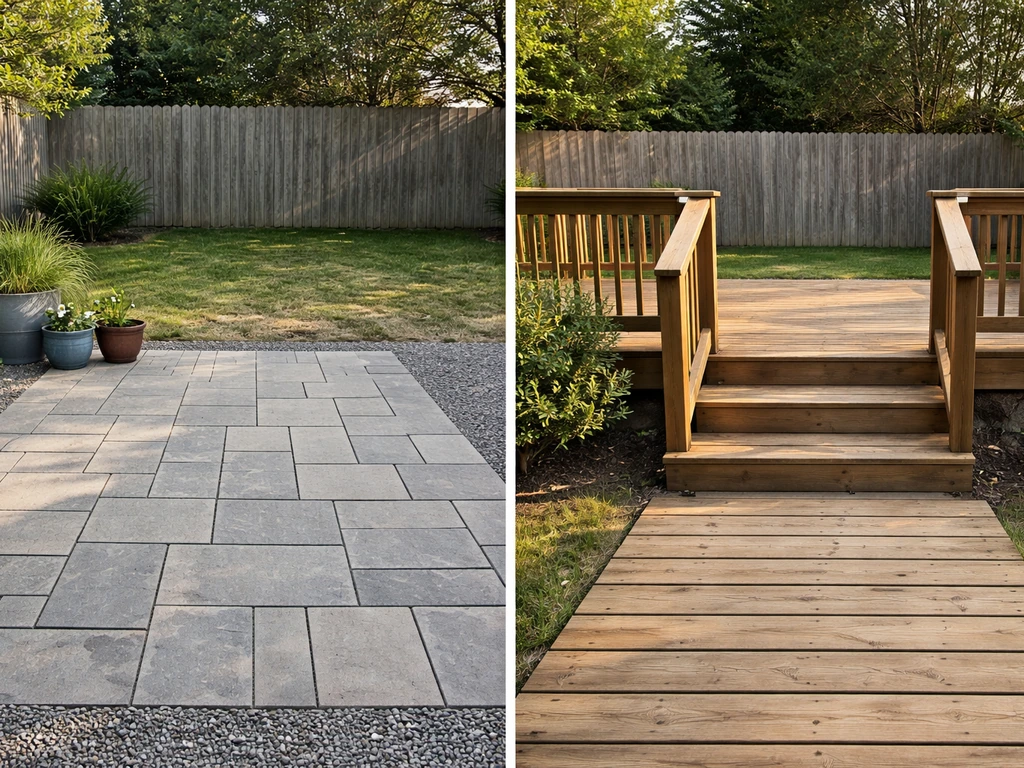
What "stone patio" and "deck" actually mean (materials and typical builds)
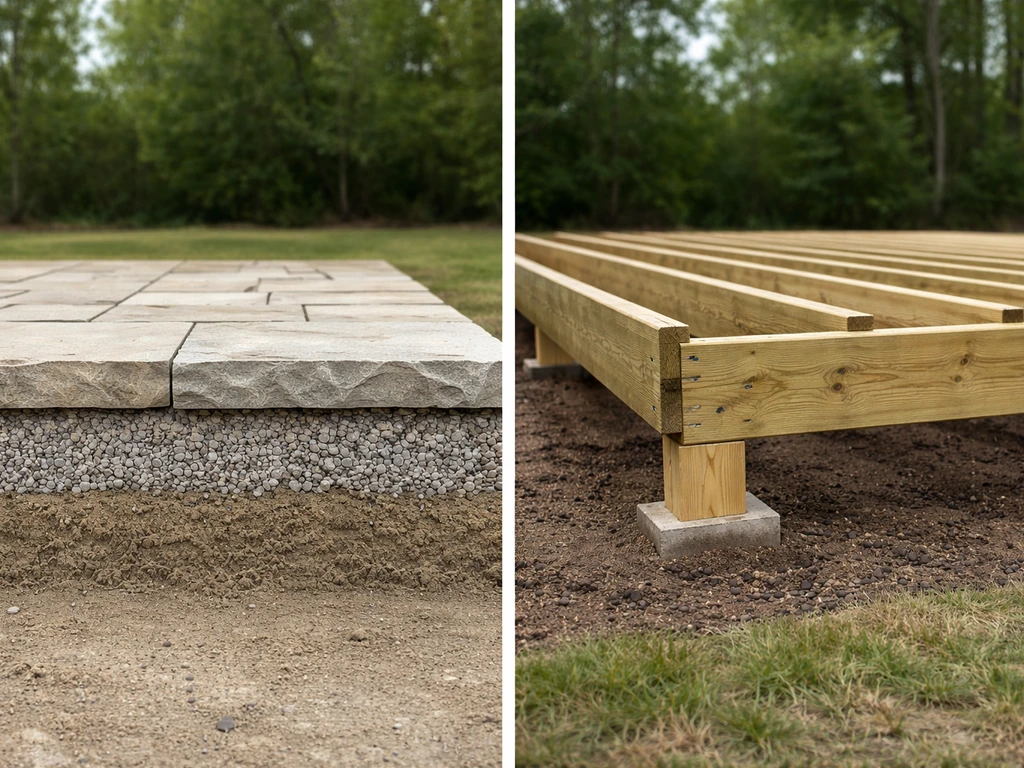
A stone patio is a ground-level surface built from natural or manufactured stone materials laid over a compacted base. The most common options are flagstone (irregular-cut natural stone like bluestone, limestone, or travertine), natural stone pavers (cut into uniform shapes), and interlocking concrete pavers that mimic stone. Each sits on a compacted gravel base, typically 4 to 6 inches deep depending on your soil and climate, plus a 3/4 to 1.5-inch sand bedding layer. The result is a surface that's essentially flush with the ground, drains between the joints, and has no structural framing beneath it.
A deck is a raised or at-grade platform built on a structural wood or steel subframe, anchored to footings. The two main surface materials are pressure-treated lumber (usually southern yellow pine) and composite or PVC decking boards. Composite boards are engineered wood fiber and plastic, while PVC boards are entirely synthetic. Both composite and PVC require joists spaced no more than 16 inches on center for standard straight-run installations, dropping to 12 inches on center for diagonal layouts. The substructure is what makes a deck possible on slopes and at elevated heights, which is something a ground-level stone patio simply can't do.
Cost breakdown: upfront, long-term, and the stuff nobody tells you about
Upfront costs for a flagstone patio run roughly $15 to $30 per square foot installed, depending on stone type, region, and whether joints are mortared or dry-laid. If you want a straight comparison, the flagstone patio cost can be higher upfront than some concrete-based options, but it may win on long-term upkeep. Concrete pavers come in a bit lower, around $6 to $17 per square foot on the lower end, with premium interlocking systems approaching flagstone prices. A 400-square-foot stone patio could run anywhere from $6,000 to $12,000 installed, and flagstone on the upper end can push toward $12,000 to $16,000 for that same footprint.
Decks are harder to pin down because substructure complexity varies so much. A pressure-treated wood deck typically costs $15 to $25 per square foot installed. Composite decking, like Trex or TimberTech, runs $30 to $60 per square foot installed when you factor in the subframe, hidden fasteners, and labor. On a 400-square-foot deck, that's $12,000 to $24,000 for composite. Wood is cheaper upfront, but it rarely stays cheap.
The long-term math shifts the picture significantly. Pressure-treated pine decks need staining or sealing every 1 to 3 years, and boards typically need replacing within 10 to 15 years. If you're lucky and diligent, maybe 20 years. Composite decks last 25 to 30 years with minimal surface maintenance, and premium lines from Trex and TimberTech carry 25- to 50-year limited residential warranties. Stone patios, properly installed, can realistically outlast the house. The ongoing costs are low: occasional resealing, joint sand replenishment, and maybe lifting a settled stone every decade or so.
Hidden expenses to watch for: with stone, drainage issues that weren't addressed at install can cause chronic settling and efflorescence (salt deposits that bleed through the surface when water moves through the stone). With wood decks, fastener corrosion is a real issue. Moisture gets into the wood and accelerates corrosion of screws and joist hangers, which means a deck that looks fine on top might have a compromised substructure underneath. Composite decking reduces this risk significantly but doesn't eliminate it at the substructure level.
| Cost Factor | Stone Patio (Flagstone/Pavers) | Wood Deck (Pressure-Treated) | Composite Deck |
|---|---|---|---|
| Installed cost per sq ft | $6–$30 | $15–$25 | $30–$60 |
| 400 sq ft total (approx.) | $6,000–$12,000+ | $6,000–$10,000 | $12,000–$24,000 |
| Lifespan | 30–50+ years | 10–15 years (20 with great care) | 25–30+ years |
| Annual maintenance cost | Low ($0–$100) | Moderate–High ($200–$600+) | Low (~$50–$100) |
| Major replacement timeline | Rarely (individual stones) | 10–15 years (full deck) | 25–30+ years (boards) |
How each holds up in your climate
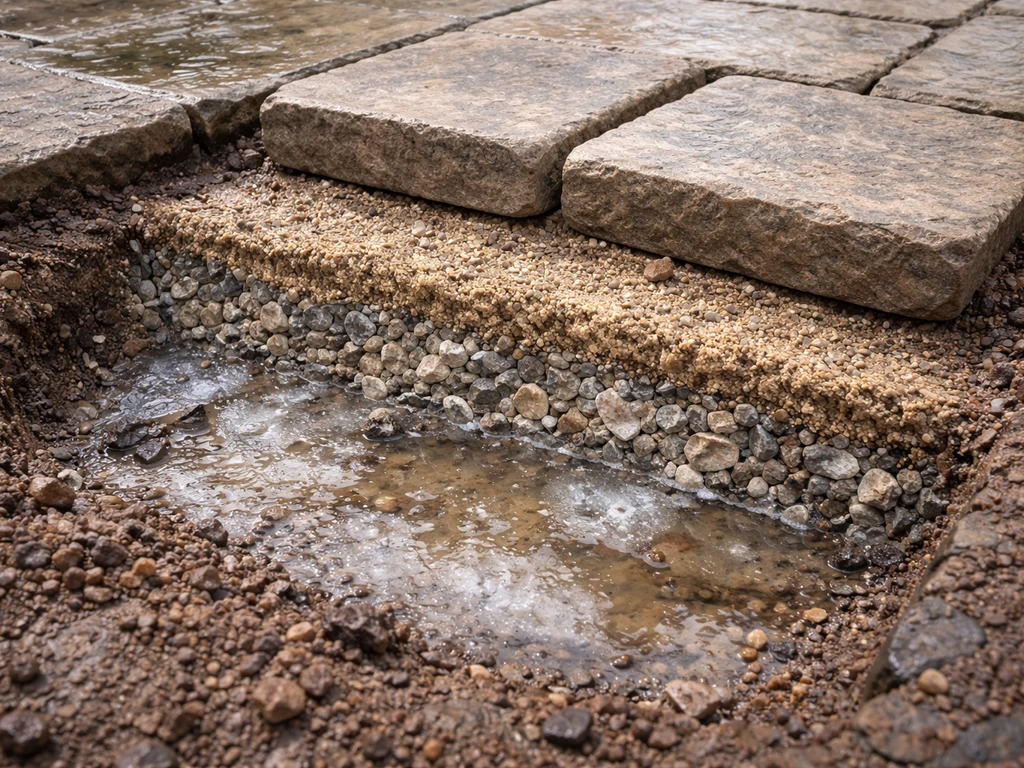
Freeze-thaw climates (Midwest, Northeast, Mountain West)
This is where stone patio installation quality really matters. Water infiltrates the base, freezes, expands, and heaves stones. Proper base construction, typically 4 to 6 inches of compacted gravel after compaction for well-drained soils, combined with edge restraints and good joint sand, dramatically reduces freeze-thaw damage. A patio installed with a thin, poorly compacted base will shift and heave repeatedly. Mortared flagstone is even more vulnerable because mortar cracks under freeze-thaw stress. Dry-laid or sand-set patios actually handle cold climates better because the flexible base allows slight movement without cracking.
Wood decks in freeze-thaw climates suffer from repeated moisture absorption and drying cycles that accelerate cracking, checking, and rot. Composite and PVC decking handle cold much better, though composite boards can experience some expansion and contraction. Properly spaced boards with manufacturer-spec gaps handle this fine. Footings need to extend below the frost line regardless of deck material, which adds to excavation cost in northern climates.
Hot, humid climates (Southeast, Gulf Coast)
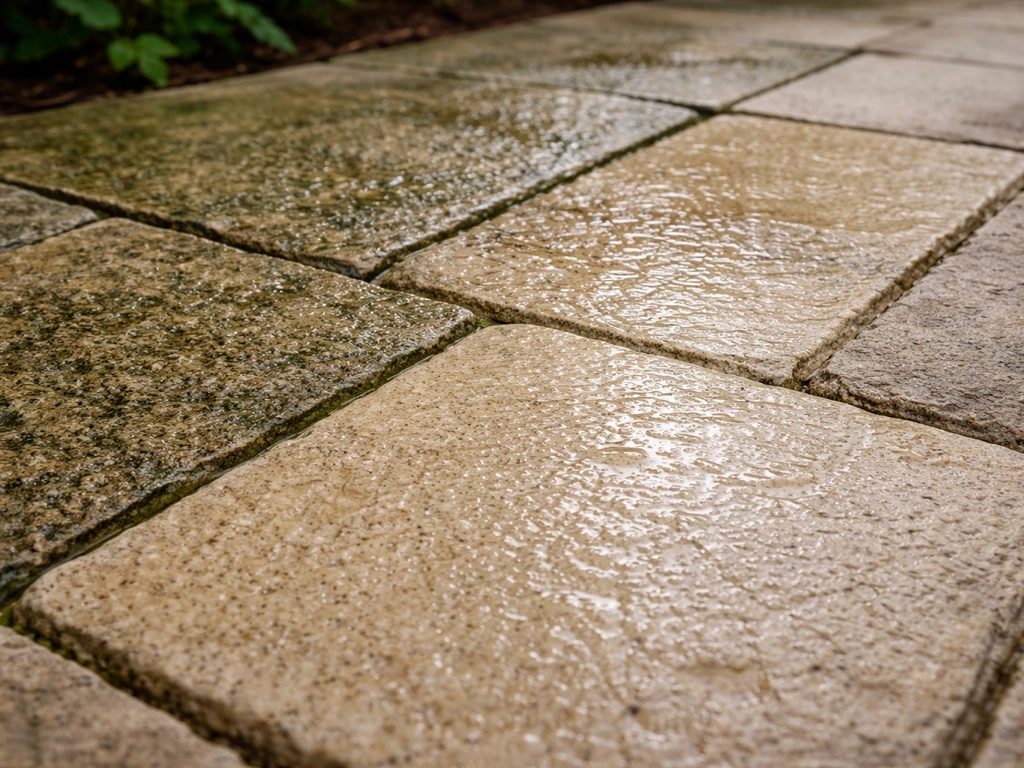
Stone patios thrive here. They don't rot, they don't mold from within, and they stay structurally stable. The concern is surface algae and mildew growth on the stone, especially in shaded areas, which makes them slippery. Regular cleaning and sealing helps. Natural stone like travertine and bluestone can get extremely hot in direct sun in these climates, which is a comfort issue worth thinking through. Wood decks in humid climates are a maintenance nightmare unless you're meticulous. Composite and PVC hold up well, though surface temperatures on darker composite boards can be uncomfortable in full southern sun.
Dry, arid climates (Southwest)
Both options perform reliably, but stone has a clear edge in longevity. UV exposure is the main enemy of composite and wood surfaces over time. Stone simply doesn't fade or degrade from sun. Efflorescence (those white salt deposits) can still occur in arid areas if there are soluble compounds in the stone and moisture variability, but it's far less common than in wet climates.
Maintenance and upkeep: what you're actually signing up for
Stone patio maintenance
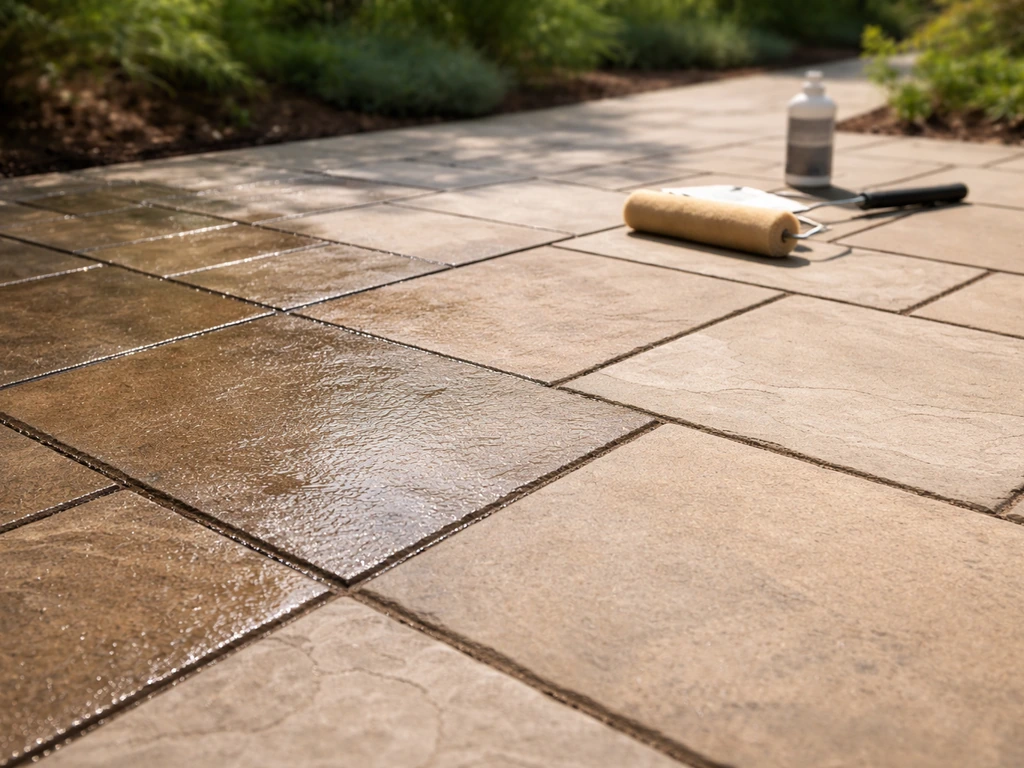
A well-installed stone patio is genuinely low maintenance. Annual cleaning with a pressure washer or stiff brush handles most surface buildup. Sealing every 2 to 4 years with a penetrating water-based sealer (like siliconate-based treatments) protects porous stone from moisture intrusion, salt damage, and efflorescence. Deck-O-Seal Plus (Deck-O-Seal) is described on the product page as a sealer formulated for natural stone to help protect against efflorescence and rust staining, using its water-based penetrating protection Sealing every 2 to 4 years with a penetrating water-based sealer (like siliconate-based treatments) protects porous stone from moisture intrusion, salt damage, and efflorescence.. If you see white chalky deposits forming, that's efflorescence: soluble salts being pulled to the surface by water and evaporation. A good sealer and addressing any drainage issues at the source will stop it. Polymeric joint sand may need to be refreshed every 3 to 5 years if it washes out or weeds start pushing through.
Wood deck maintenance
Pressure-treated wood decks demand the most attention. Expect to clean the surface each spring, then stain or seal every 1 to 3 years depending on your climate and sun exposure. Skipping a sealing cycle lets water force into grain cracks, which accelerates rot and fastener corrosion from the inside. Even diligent maintenance only gets you 15 to 20 years before boards need significant replacement. Plan for that cost from day one.
Composite deck maintenance
Composite and PVC decking are marketed as low maintenance, and that's mostly true. No staining, no sealing the boards themselves. Regular cleaning with soap and water or a composite-approved cleaner is typically all that's needed. One real issue: moisture can cause composite boards to cup or bow if they're installed with inadequate spacing or fastening. Boards installed to spec, with proper gap allowances and 16-inch on-center joist spacing, handle expansion predictably. The substructure (joists, beams, ledger board) still needs periodic inspection for moisture damage and fastener integrity, especially in humid climates.
Comfort, safety, and how each surface actually performs
Stone surfaces get hot. In full summer sun, natural stone like bluestone or travertine can reach surface temperatures that are uncomfortable or even painful to walk on barefoot. Light-colored stones like travertine or limestone reflect more heat than dark granite or slate. Composite decking has the same problem on darker boards, though manufacturers have improved heat resistance in newer generations. Pressure-treated wood stays cooler than stone or dark composite in direct sun, which is a real comfort advantage in hot climates.
Slip resistance is a legitimate safety concern for stone, especially when wet. Natural stone pavers typically show static coefficients of friction in the range of 0.50 to 0.60 when wet (measured using ASTM C-1028), which is acceptable but not exceptional. Textured or tumbled stone surfaces grip better than polished finishes. A honed or brushed stone surface is safer than a polished one for any outdoor application. Wood and composite decking generally offer good traction when clean, but algae and mildew buildup on wood decks in shaded or moist areas creates serious slip hazards. Composite with a brushed or embossed surface pattern holds up better here.
Drainage is built into a stone patio through the joints themselves. Water passes through sand-set joints into the base, which is why proper base construction matters so much. A compacted gravel base that's correctly sloped handles significant rainfall without puddling. Decks drain through board gaps by design, though if the area under the deck isn't managed, it can become a muddy, poorly-ventilated zone that accelerates substructure decay. Splinters from aging wood decks are a common complaint, especially with barefoot kids and pets. Composite and stone both eliminate that issue entirely.
| Performance Factor | Stone Patio | Wood Deck | Composite Deck |
|---|---|---|---|
| Barefoot comfort (summer heat) | Poor to fair (gets very hot) | Good (stays cooler) | Fair (dark boards get hot) |
| Slip resistance (wet) | Fair to good (textured stone = good) | Fair (algae risk) | Good (embossed surface) |
| Drainage | Excellent (through joints) | Good (through gaps) | Good (through gaps) |
| Splinter/sliver risk | None | High (aging boards) | None |
| Mold/algae surface risk | Moderate (shaded areas) | High | Low to moderate |
| Comfort underfoot feel | Hard | Moderate | Moderate to comfortable |
Installation: what it actually takes to build each one
Stone patio installation
The most important part of a stone patio installation isn't the stone itself. It's the base. You need to excavate, compact the soil, install a geotextile fabric, then build up a gravel base of at least 4 inches after compaction in freeze-thaw climates (some specifications call for 6 inches in non-freeze areas with well-drained soils). Over that goes a 3/4 to 1.5-inch layer of coarse sand, screeded flat. Then the stone. Edge restraints are non-negotiable: without them, the sand migrates and the whole patio creeps and opens up gaps over time. The process is labor-intensive but very DIY-friendly if you're willing to rent a plate compactor and invest a full weekend or two for a modest-sized patio.
Flagstone requires more skill because you're working with irregular shapes that need to fit together with consistent joint widths. Uniform pavers are much more forgiving for DIY installs. Mortar-set flagstone requires even more expertise and is less freeze-thaw friendly. Most homeowners tackling a first patio project should start with interlocking concrete pavers or regular-cut natural stone rather than irregular flagstone.
Deck installation
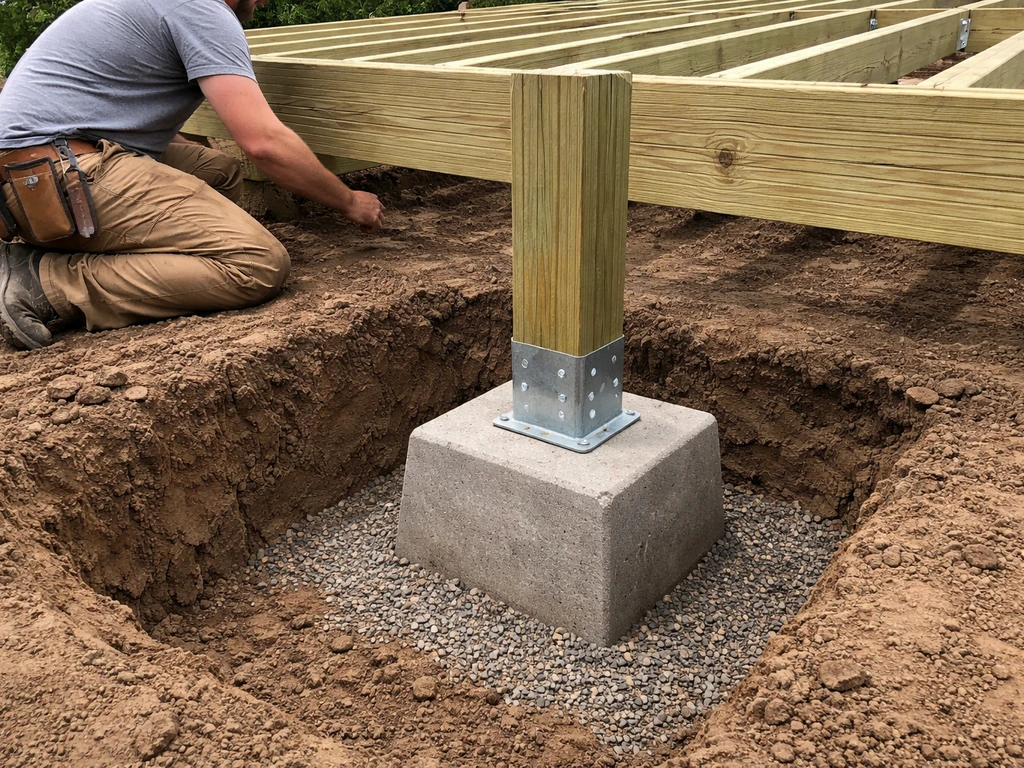
A deck build starts with footings dug below the frost line, then posts, beams, and joists. Joists should be set no more than 16 inches on center for standard composite decking, or 12 inches on center for diagonal board runs or for a stiffer underfoot feel. The framing needs to be square, level, and structurally sound before a single deck board goes down. Most deck builds require permits, structural drawings, and inspections, especially for elevated structures attached to the house. Decks attached to the house also need a properly flashed ledger connection to prevent moisture intrusion into the rim joist.
A ground-level floating deck without ledger attachment is more DIY-friendly and sometimes avoids permit requirements (check your local jurisdiction). Elevated decks, multi-level builds, and anything over about 30 inches off grade should involve a licensed contractor. The substructure cost is often where people are surprised: framing, hardware, footings, and ledger work can represent 40 to 60 percent of the total project cost even before you pick a decking board.
Which is easier to DIY?
A small, ground-level paver patio is probably the most accessible outdoor hardscape project for a capable DIYer. The tools are rentable, the process is methodical, and mistakes are usually fixable by resetting stones. A floating deck at grade is the second-most accessible DIY project. An elevated or attached deck is a contractor job for most homeowners, both for structural safety and because permit requirements are real.
How to choose for your yard: a quick decision checklist
Run through these questions honestly. Your answers will point you toward the right choice faster than any general recommendation.
- Is your yard flat or gently sloped (less than 1 foot of grade change across the area)? If yes, stone patio is a strong candidate. If there's significant slope, a deck is almost always easier and more cost-effective.
- Do you live in a freeze-thaw climate? If yes, both options work but stone requires a properly built base and composite deck materials outperform wood significantly.
- Is barefoot comfort and a warmer feel underfoot important to you? Composite or wood deck wins here, especially in hot climates.
- Are you looking for the lowest long-term cost and highest durability? A properly installed stone patio almost always wins over 20-plus years.
- Do you want to raise the outdoor surface level (e.g., even with an interior floor, or elevated for a view)? Only a deck does this.
- How much ongoing maintenance are you willing to do? Stone: low. Composite: low. Wood: high. If you know you won't maintain it, skip wood entirely.
- What's your upfront budget? If you're under $8,000 for a 400-square-foot space, a paver patio or pressure-treated wood deck are your realistic options. Flagstone and composite both push above that range.
- Do you need a permit? Check local requirements early. Decks almost always require one; ground-level patios often don't.
- Is the space shaded and moist? Both wood decks and natural stone need more maintenance in shaded, humid conditions. Composite and sealed pavers hold up better.
Next steps: moving from comparison to a real decision
- Measure and grade your space. Use a string line and level to find out how much elevation change you're working with. More than 12 to 18 inches of grade change across the patio area makes a deck significantly easier to build than a stone patio.
- Get quotes for both options side by side. Ask contractors to price both a paver/flagstone patio and a composite deck for the same footprint. The real numbers for your region may shift the math.
- Ask installers specifically about base preparation (for stone) and footing depth (for decks). These are the two most common places where corners get cut and problems appear years later.
- Choose your surface material based on your maintenance commitment. For stone: sealed natural pavers or tumbled concrete pavers are more forgiving than polished flagstone. For decks: if you won't stain annually, budget for composite from the start.
- If going with stone, ask about polymeric sand vs. regular sand for joints, and whether your specific stone type needs sealing at install. Porous stones like travertine and limestone benefit from sealing immediately. Dense granite or slate needs it less.
- If going with a deck, ask about hidden fastener systems (cleaner look, no screw heads to trap moisture) and whether the substructure lumber will be treated to the right retention level for ground contact where applicable.
- Plan for drainage before breaking ground on either project. A French drain or proper site grading upstream of the patio or deck can prevent years of maintenance headaches caused by standing water.
The stone patio vs. If you are weighing flagstone patio vs wood deck for your yard, compare the long-term upkeep and the comfort underfoot before you commit. deck decision is genuinely close for many homeowners, which is why it comes up so often. If your site works for both, your personality and lifestyle will probably be the tiebreaker. Low-maintenance people who want something that lasts without thinking about it tend to love stone patios over time. Homeowners who want a comfortable, versatile outdoor living platform with railings, shade structures, and built-ins tend to be happier with a well-built composite deck. Either way, the quality of the installation matters more than the material choice. A cheap deck or a poorly based patio will cause regret. Build it right the first time and you'll rarely have to think about it again.
FAQ
How do I tell if my soil or yard conditions favor a stone patio over a deck?
If your yard drains poorly or has a high water table, stone can still work but only if the patio base is built with a proper slope and you address runoff paths during installation. Decks avoid surface soak-through by keeping boards elevated, but they introduce more excavation and buried footings. A practical next step is to observe where water stands after a heavy rain and whether water stays in the footprint for more than a couple of hours.
Will a stone patio trap moisture and cause efflorescence or algae faster than a deck?
Stone patios can develop white efflorescence when soluble salts move with moisture, especially where joints get repeatedly wet and then dry. Algae is more likely in shaded areas where the surface stays damp. Decks typically stay drier on the top surface, but the area underneath can become a moisture pocket, so you still need ventilation and periodic inspection for substructure issues.
Are mortared flagstone patios better than sand-set patios in cold climates?
Mortared installations are generally less forgiving during freeze-thaw because rigid mortar can crack as stones shift slightly. Sand-set or dry-laid approaches allow minor movement on a flexible base, which reduces cracking and heaving. If you live where freezing cycles are frequent, prioritizing a well-compacted, properly sloped base is usually more important than the stone choice alone.
What spacing, gaps, and fasteners matter most on a deck to prevent long-term problems?
The biggest prevention lever is following the manufacturer’s expansion gap requirements and keeping the correct joist spacing, since trapped moisture and limited movement can lead to cupping or bowing. For wood decks, fastener type and corrosion resistance matter, because moisture can accelerate deterioration of screws and joist hangers even if the boards look okay.
Can I switch from a stone patio to a deck later, or vice versa, without major rework?
Often you cannot. A stone patio typically leaves you with a built compacted base that can complicate later footing depth, and tearing out pavers usually doesn’t restore a simple flat subgrade for a new deck. Similarly, a deck’s footings can make it harder to excavate a clean patio base around them. If you expect a future change, plan utilities and drainage routes now and consider how footings will interact with later excavation.
Is sealing required for stone patios, and how do I avoid sealing mistakes?
Sealing is usually about controlling moisture intrusion and reducing the risk of efflorescence and joint deterioration, not making stone waterproof forever. The common mistake is sealing too soon before the patio has fully cured or has dried out after installation or joint work. Another mistake is using the wrong sealer type for your stone’s porosity. If chalky deposits already appear, sealing without correcting drainage and base issues often only slows the problem.
How often should I refresh polymeric sand joints on a stone patio?
Polymeric joint sand typically needs attention when it washes out, breaks down, or when weeds begin to establish, which is why the interval can vary from a few years to longer depending on rainfall, slope, and patio usage. A useful check is to monitor joint gaps after heavy storms and to inspect for haze or gaps that indicate migration. Re-sanding is generally easier early, before stones start shifting.
Will a deck feel safer underfoot than stone when it rains?
It depends on surface condition. Stone can be slippery when algae or mildew forms, so texture and regular cleaning matter. Decks generally provide consistent traction when clean, but algae on wood in shaded zones can still create slip hazards. If safety is a priority, choose a honed or brushed stone finish and consider a composite deck surface texture that resists buildup.
Which option is better for barefoot use in summer and winter?
In hot sun, stone often gets significantly hotter than decks, especially dark natural stones, which can make bare feet uncomfortable. Wood stays cooler than stone and many darker composites, but it requires maintenance to prevent splinters and moisture damage. In winter, decks can still be cold to the touch, but stone’s thermal mass may stay cold longer, while slip risk on wet algae is an ongoing concern for stone.
What maintenance should I expect if I choose a low-maintenance composite or PVC deck?
Even low-maintenance decks still need periodic inspection of the substructure, because moisture can accumulate and corrode hardware from below. You should look for fastener issues, movement, pooling water under the deck, and signs of rot at cut ends or where components meet. Cleaning on a regular schedule is also important to prevent buildup that can trap moisture and accelerate surface staining.
Do decks require permits or inspections even for small backyard builds?
They often do, especially for elevated decks, decks attached to a house, and anything over a local threshold height. Ground-level floating decks may sometimes avoid permitting, but rules vary by jurisdiction. If you want to DIY, a smart next step is to call your local building department with a rough plan that includes height relative to grade, attachment method, and proposed footing size.
How can I estimate the real “hidden cost” before I choose stone patio vs deck?
Ask yourself what has to be done for site readiness. For stone, the hidden costs usually come from drainage corrections, extra base depth for your soil type, geotextile, and edge restraint materials. For decks, hidden costs commonly come from ledger flashing for attached builds, adequate footings below frost depth, hardware costs, and substructure labor. A budgeting shortcut is to line-item excavation and substructure separately, then add 10 to 20 percent contingency for grading surprises.