For most homeowners today, porcelain patio tiles are the more durable, lower-maintenance choice, especially if you live somewhere with hard winters or you want a surface that stays looking sharp with minimal effort. If you are weighing porcelain patio pros and cons, start by comparing durability, upkeep, and how each material handles your specific climate porcelain patio tiles. Sandstone is a genuinely beautiful natural material, but it asks more of you, it absorbs water, it needs sealing, and in freeze-thaw climates it can spall and crack over time if you're not diligent. That said, sandstone wins on warmth, character, and that organic feel that manufactured tiles simply can't replicate. The right answer really does depend on your climate, your budget, and how much upkeep you're willing to do, so let's go through everything you need to make a confident call.
Porcelain vs Sandstone Patio: Which One Performs Better?
What porcelain tiles and sandstone actually are
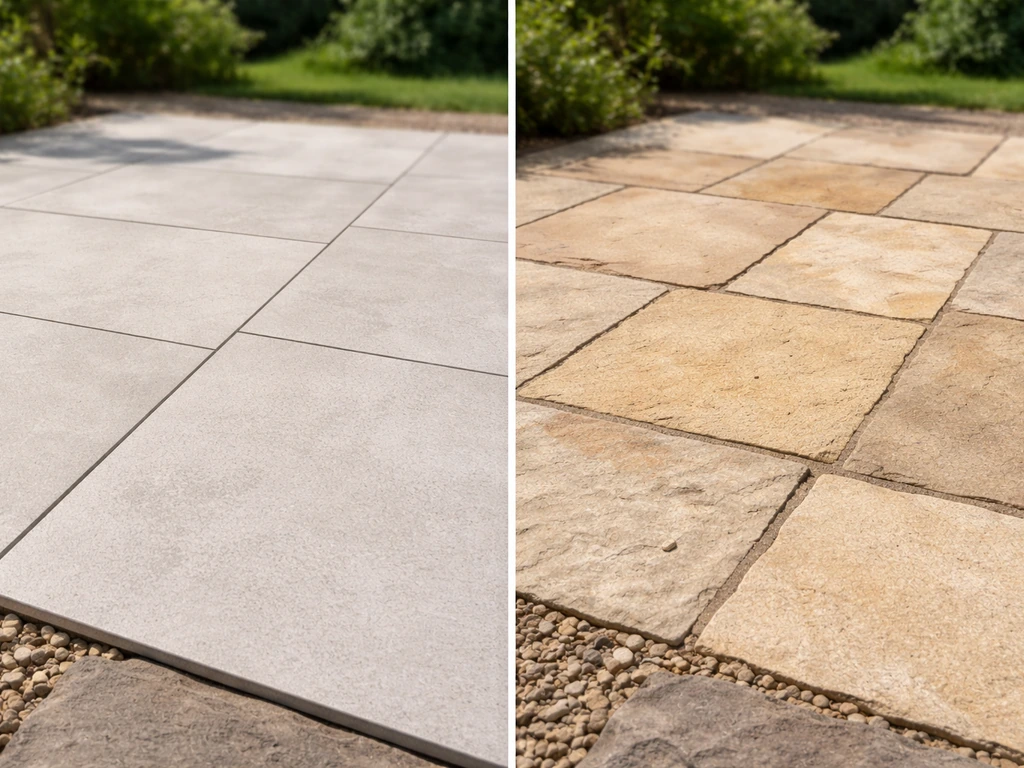
Porcelain patio tiles are a type of ceramic tile fired at very high temperatures, which makes them extremely dense. The defining characteristic is water absorption at or below 0.5% by mass, which is the threshold set by ISO 13006. In practice, a quality outdoor porcelain often absorbs far less than that, sometimes as little as 0.05%. They come in large formats (common sizes for patios are 600x600mm, 600x900mm, and larger), with surface textures ranging from smooth to heavily riven, and they're manufactured to precise tolerances so every tile is consistent in thickness and flatness.
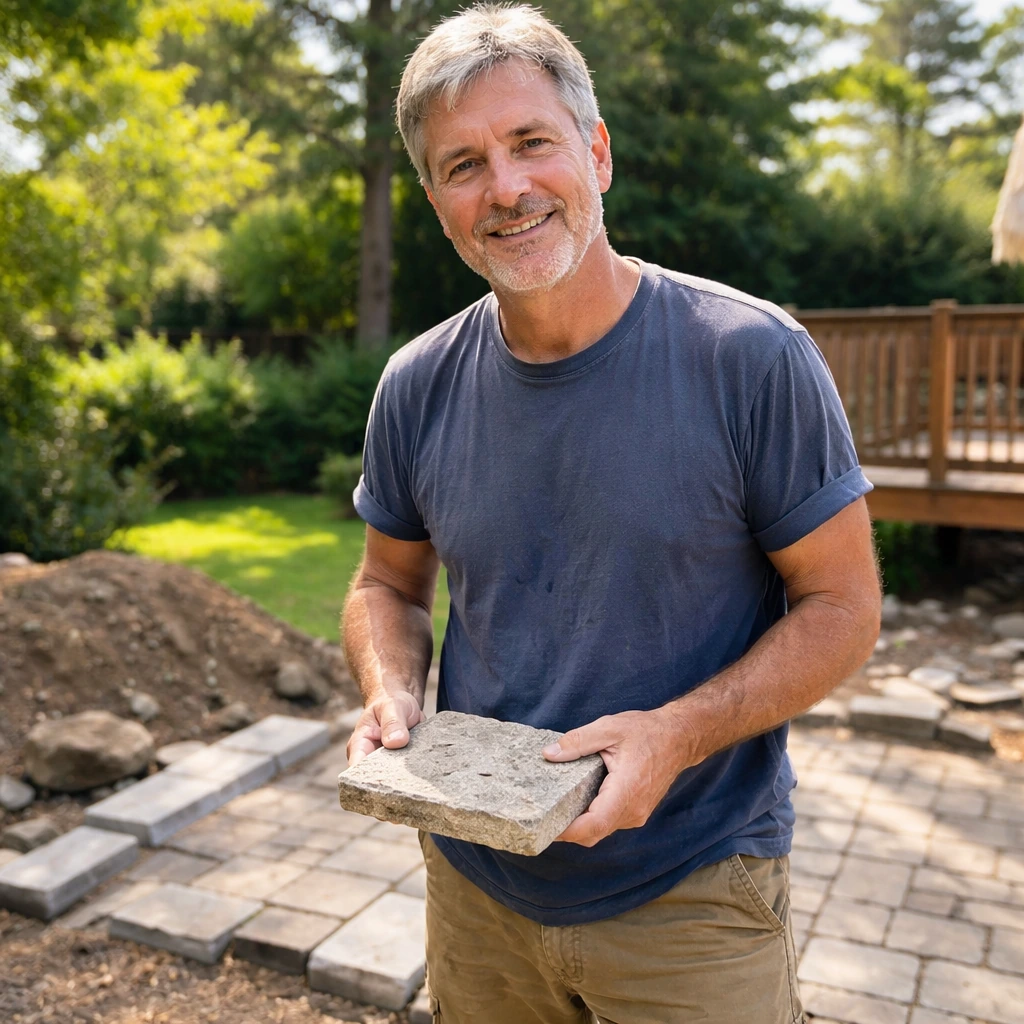
Sandstone is a sedimentary rock made of sand-sized mineral grains cemented together by natural minerals like silica, calcite, or iron oxide. That cementation process is what determines quality: well-cemented sandstone is relatively dense and durable, while poorly cemented sandstone crumbles more easily, especially under moisture stress. Typical water absorption for sandstone runs between 1% and 5%, which is meaningfully higher than porcelain. It comes in natural irregular slabs or cut rectangular flags, and surface finishes include honed (smooth, matte), sawn (precise cut), and thermal or flamed (rough, textured). Color and texture vary by quarry, which is part of its appeal, but it also means you rarely get two identical pieces.
How each material holds up in real weather
Freeze-thaw climates (USDA zones 3-6 and similar)
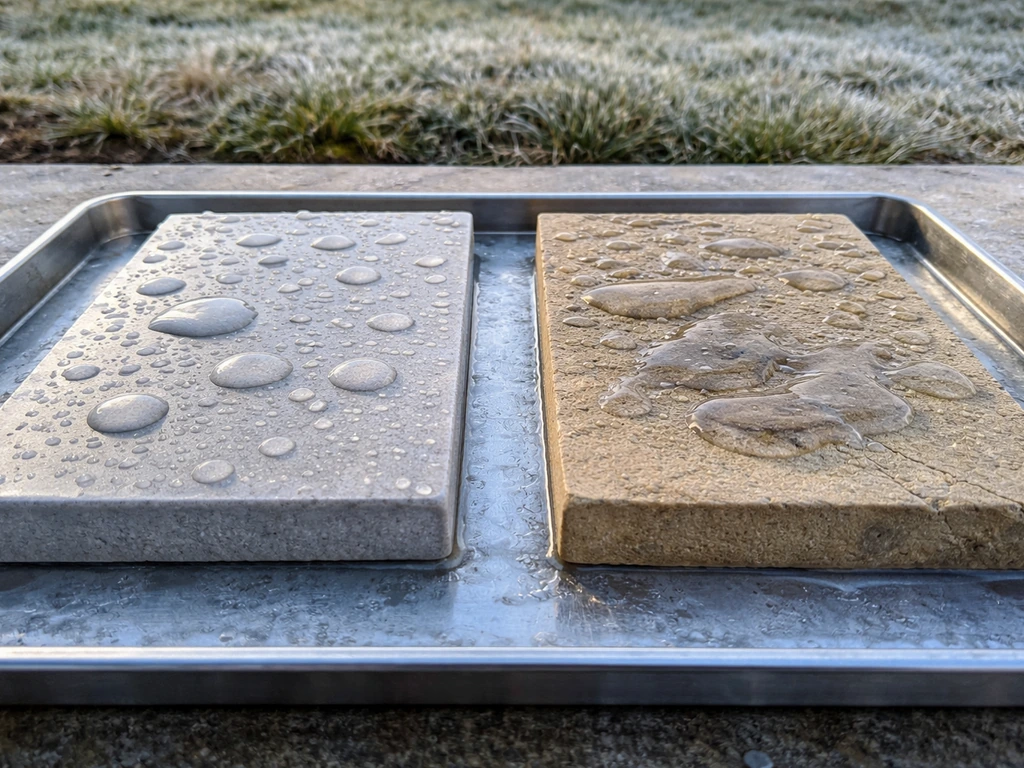
This is where the difference between the two materials is most consequential. When water gets into a porous material and freezes, it expands by about 9%, and that expansion creates internal pressure. Porcelain's near-zero water absorption means there's almost nothing to freeze, which is why frost-resistant porcelain tiles are rated to survive 300 freeze-thaw cycles in ASTM C1026 testing (cycling between 27°F and 40°F) without degradation. If you're in the northern US, Canada, or northern Europe, confirmed frost-resistant porcelain is the safest call for longevity.
Sandstone sits between 1% and 5% absorption, and that water has to go somewhere when temperatures drop. High-quality, densely cemented sandstone can handle moderate freeze-thaw exposure reasonably well, but poorly cemented or high-porosity varieties will spall, flake, and crack within a few seasons if they stay wet heading into winter. Regular sealing reduces (but does not eliminate) water ingress. In harsh freeze-thaw zones, I'd steer most homeowners toward porcelain unless they're prepared to seal annually and accept that some surface wear is inevitable over a decade or two.
Heat, UV, and summer conditions
Both materials handle heat well in general. Porcelain doesn't fade because the color is baked into the body of the tile, not just applied to the surface. In very hot, sunny climates, the thermal mass of both materials means they can get uncomfortably hot underfoot at midday, especially darker tones. Lighter-colored sandstone tends to stay cooler than dark porcelain in direct sun, which matters if you have kids or pets who go barefoot. UV doesn't chemically degrade either material, though sandstone can show some bleaching of iron-rich colors over decades.
Rain and standing water
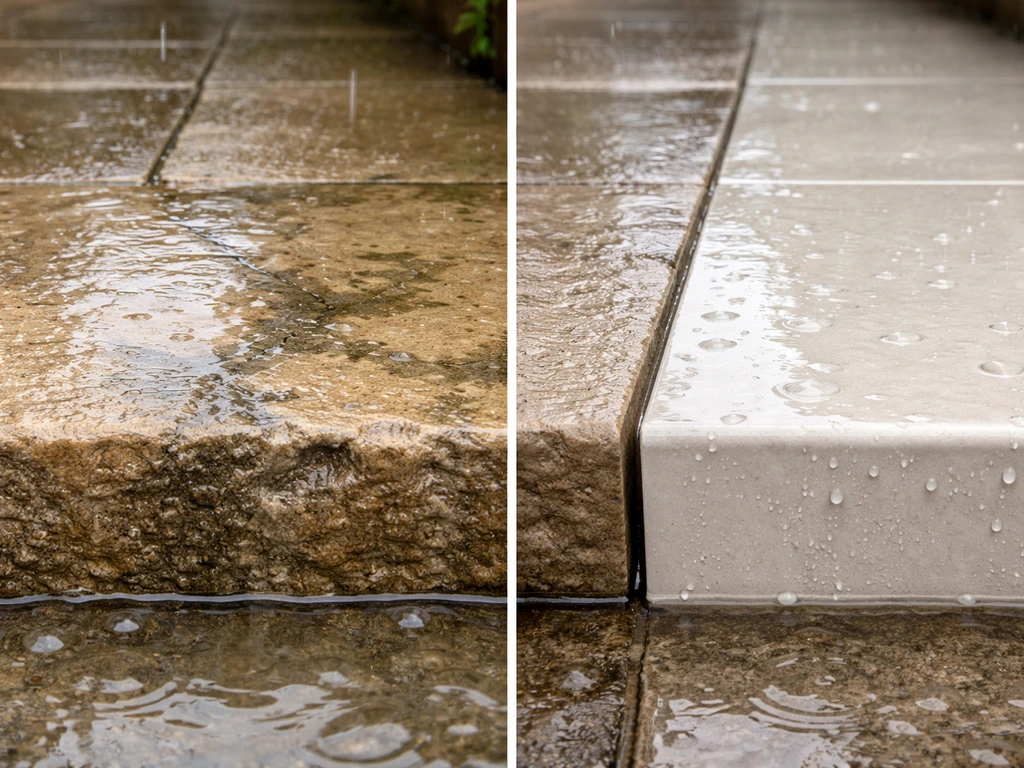
Persistent moisture is sandstone's main enemy. Without adequate drainage and sealing, sandstone will absorb rainwater, which encourages efflorescence (salt migrating to the surface as water evaporates), algae and moss growth in shaded areas, and eventual surface deterioration. Porcelain sheds water off the surface and is naturally resistant to moss and algae because there's nothing for spores to grip into. For wet climates, shaded patios, or areas with poor drainage, porcelain is the more forgiving option.
Slip resistance, comfort, and surface damage
Slip resistance
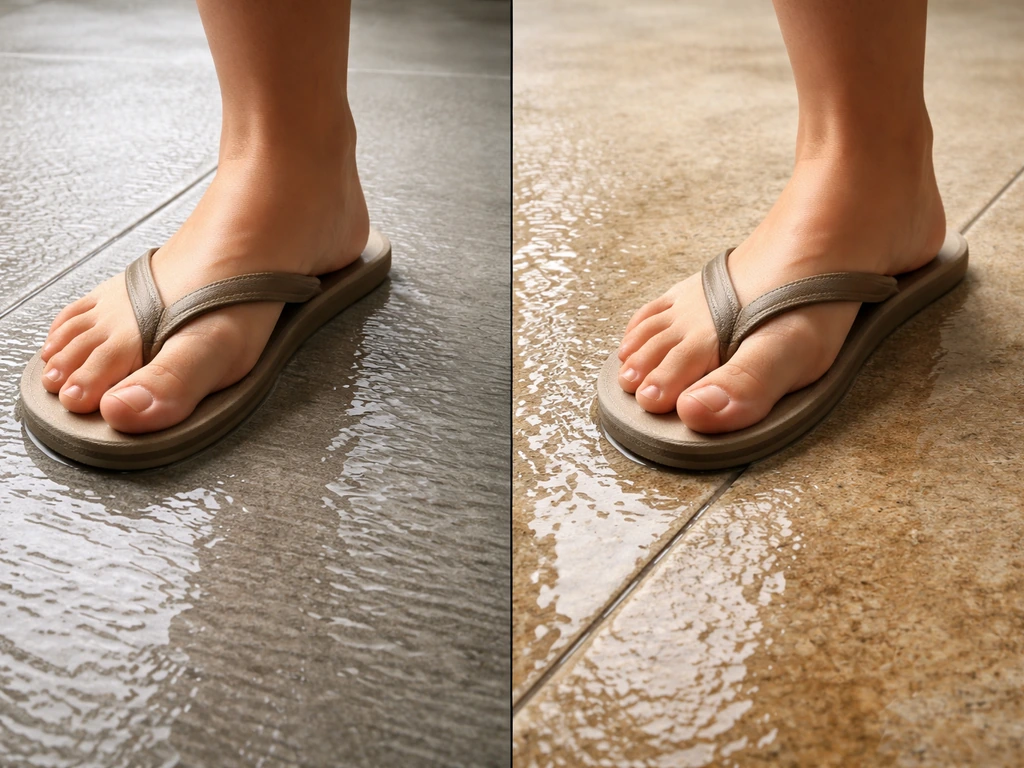
Neither material is inherently safe or slippery on its own: finish is what determines grip. For porcelain, ANSI A137.1 sets a minimum wet dynamic coefficient of friction (DCOF) of 0.42 for level interior wet spaces, and exterior ratings should be higher. Look for tiles with an R11 or higher slip rating (German DIN scale), a pendulum test value (PTV) of 36 or above, or a confirmed exterior DCOF above 0.42. Gloss-finish porcelain is genuinely dangerous when wet outdoors; always specify matte, textured, or riven-finish tiles for patios. Sandstone's naturally rough or honed texture typically provides good grip when dry and acceptable grip when wet, though a honed finish can become slippery when algae colonizes it. A thermal or flamed finish on sandstone gives you the most reliable wet grip. Whatever you choose, check the actual tested wet slip rating for the specific product, not just the general material category.
Comfort underfoot
Sandstone wins here for barefoot comfort. The slight variation in surface texture and natural warmth of stone makes it much more pleasant underfoot than hard, flat porcelain, particularly on a warm summer day. Porcelain can feel harder and colder underfoot, and larger format tiles emphasize that rigidity. If your patio is primarily a relaxing, barefoot space, sandstone has a tactile quality that's hard to replicate.
Staining, spalling, and surface damage
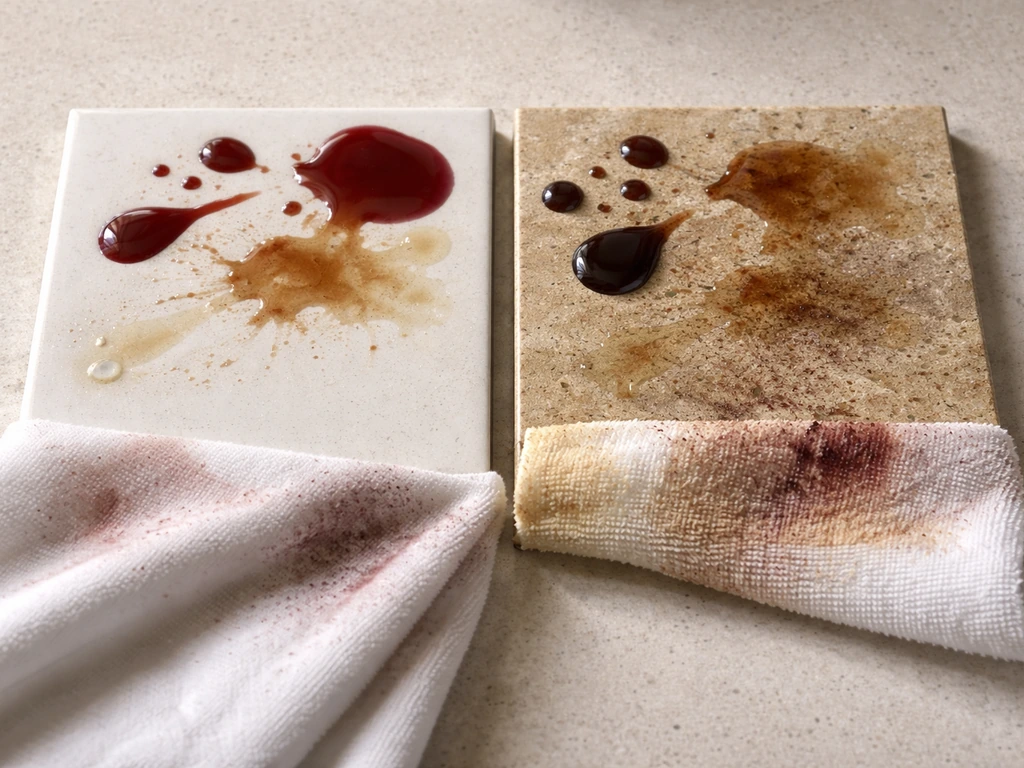
Glazed and through-body porcelain resists staining very effectively because there's essentially no porosity for stains to penetrate. Red wine, cooking grease, and rust marks wipe off with a pH-neutral cleaner in most cases. Sandstone stains relatively easily without a good sealer in place, and some stains (particularly iron-based rust marks or oil) can penetrate deeply if left unsealed. Spalling (surface flaking) is a sandstone risk in wet and freeze-thaw conditions; it rarely affects porcelain. Porcelain can chip at corners and edges from impact, and once a porcelain tile chips, the edge is sharp and obvious, though the core body remains unaffected. Sandstone chips tend to look more natural and blend in better visually.
Installation: what's actually different
Substrate and drainage
Both materials need a solid, well-prepared base, but porcelain is less forgiving of movement and settling. The industry standard minimum slope for drainage is 1/4 inch per foot (6mm per 300mm) directed away from the building. For porcelain in a mortar bed, the substrate is typically a concrete slab with a waterproofing membrane (products like LATICRETE HYDRO BAN XP provide anti-fracture protection and waterproofing in one layer). Sandstone can be laid on a compacted sub-base with a sand/grit bed for more traditional, dry-laid approaches, or set in mortar for a more permanent installation. Dry-laid sandstone handles minor ground movement better but can rock and shift over time; mortar-set sandstone and porcelain both need a stable base to prevent cracking.
Mortar, adhesive, and cutting
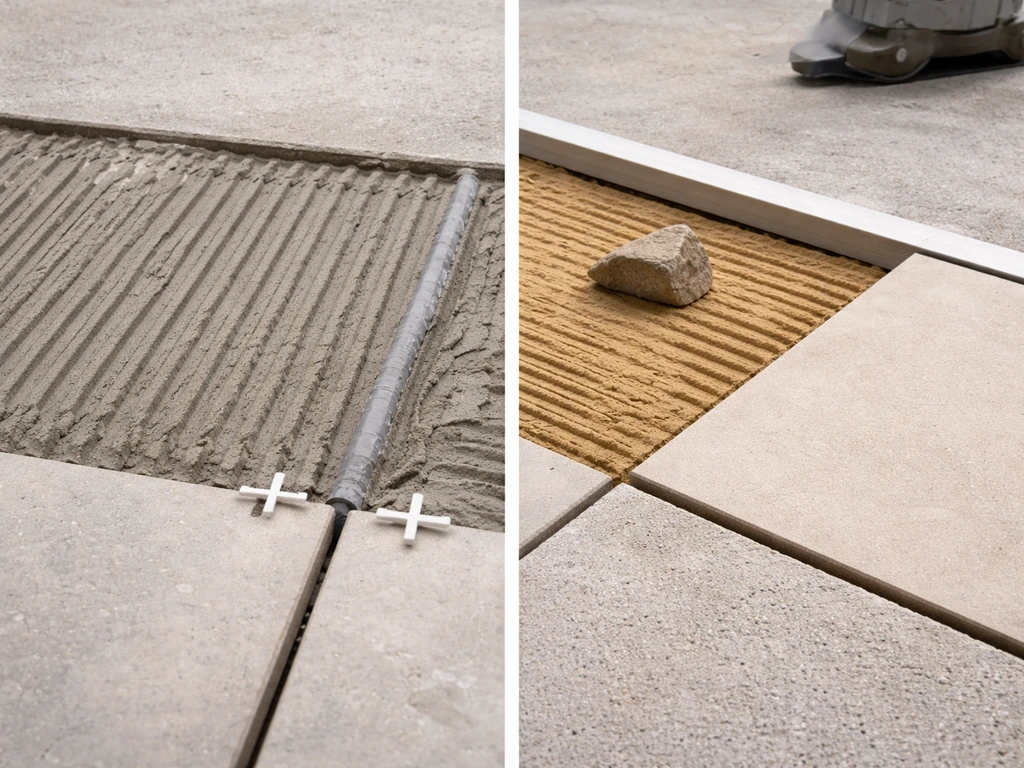
For exterior porcelain in freeze-thaw zones, polymer-modified mortars meeting ANSI A118. For exterior settings in freeze-thaw zones, polymer-modified mortars that meet ANSI A118.4 or A118.15 are a minimum standard and should not be replaced with unmodified thinsets For exterior porcelain in freeze-thaw zones, polymer-modified mortars meeting ANSI A118.4 or A118.15 are the minimum requirement.. 4 or A118.15 are the minimum requirement. Unmodified thinsets are not acceptable in these conditions because they lack the flexibility and bond strength to accommodate thermal movement. Large-format porcelain tiles also typically require back-buttering in addition to combing the substrate to ensure full coverage and eliminate hollow spots. Sandstone laid in mortar uses similar polymer-modified mortars, but the process is less technical because natural stone is more forgiving of minor substrate imperfections. Cutting porcelain requires a continuous-rim diamond wet saw; sandstone can also be cut with a diamond blade but cuts less cleanly and produces more dust. Neither is a pleasant DIY cutting job without the right tool.
Movement joints
Porcelain has virtually no flex, so thermal expansion and contraction must be managed with movement joints. TCNA's EJ171 guidelines are the primary US industry reference for movement joint placement, sizing, and materials in tile installations. Perimeter joints, field joints at regular intervals, and joints over any substrate control joints are all mandatory. Skipping these is one of the most common reasons porcelain patios crack within a few years. Sandstone is naturally more variable in dimensions and is often laid with wider, less formal joints filled with sharp grit or mortar, which makes accommodating movement somewhat easier.
Common installation mistakes to avoid
- Insufficient drainage slope, leading to puddles and water ingress under the tile assembly
- Using unmodified thinset mortar for exterior porcelain in cold climates
- Skipping movement joints in porcelain installations, especially around perimeters
- Laying porcelain over an unstable or settling substrate without a crack-isolation membrane
- Choosing a honed or glossy sandstone finish in a wet or shaded location where algae will colonize it
- Failing to back-butter large-format porcelain tiles, which creates hollow spots and promotes cracking
Maintenance and cleaning over the years
Porcelain
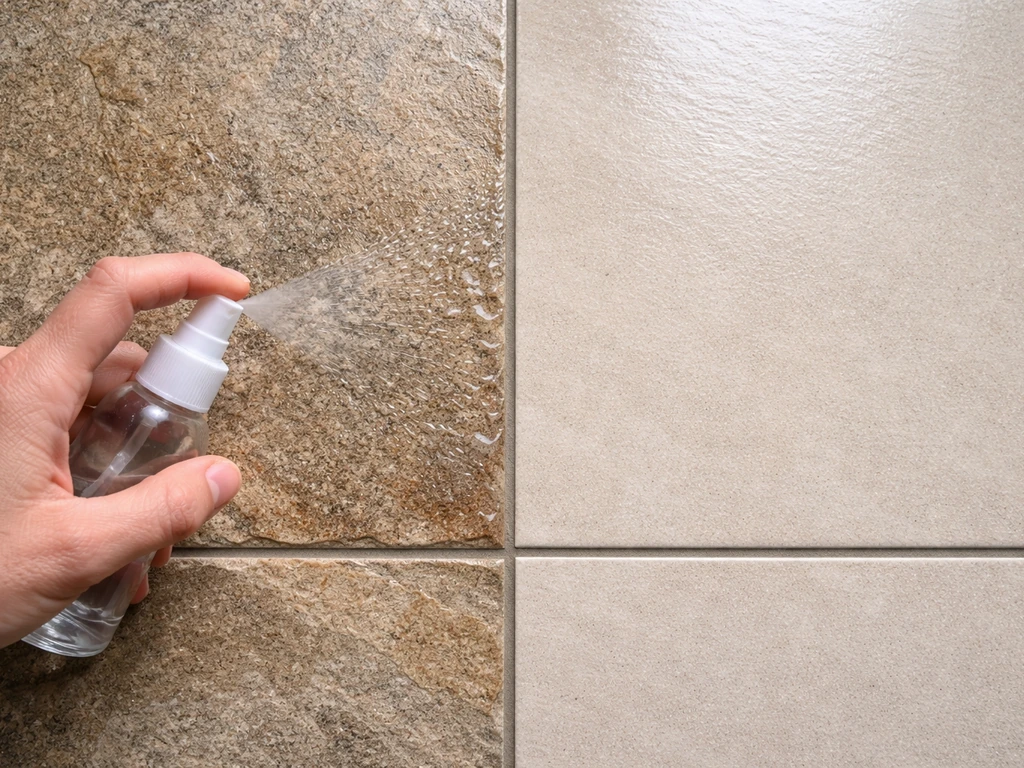
Porcelain tile does not need sealing. MAPEI, American Olean, and most major tile bodies confirm that glazed and through-body porcelain is essentially impervious and resists staining without a sealer. The only part of a porcelain patio that genuinely benefits from sealing is the grout joints, which are more porous and can stain or harbor mildew. Routine cleaning is a sweep and a wash with a pH-neutral cleaner. Stubborn algae on textured porcelain can be tackled with a diluted proprietary patio cleaner and a stiff brush. Avoid acid-based cleaners, which can attack grout and mortar over time.
Sandstone
Sandstone needs sealing, and it needs it regularly. A penetrating impregnator sealer applied before first use and reapplied every one to three years (depending on traffic and climate) is the standard approach. Sealing doesn't waterproof the stone completely, but it significantly reduces absorption and makes cleaning much easier. Day-to-day cleaning should use a pH-neutral stone cleaner, not acidic or alkaline products, which can damage the stone surface and degrade the sealer. Efflorescence (white salt deposits) is a common issue in the first year or two, particularly in mortar-set sandstone as moisture works its way out of the installation; it can typically be removed with a dilute white vinegar solution or a specialist efflorescence remover, then sealed promptly. Moss and algae in shaded areas need periodic treatment with a stone-safe biocide. Repairing a cracked or spalled sandstone flag usually means replacing that individual piece, and matching color and texture from the original quarry can be tricky years later.
Cost and long-term value: the honest breakdown
| Factor | Porcelain Tiles | Sandstone |
|---|---|---|
| Material cost (per sq ft, typical range) | $3–$12 supply only | $2–$8 supply only |
| Installed cost (material + labor) | $15–$35+ per sq ft | $12–$28 per sq ft |
| Installation complexity | High: precise substrate, movement joints, back-buttering required | Moderate: dry-lay option available; mortar-set needs similar care |
| Sealing required? | No (grout joints only) | Yes, every 1–3 years |
| Lifespan (properly installed) | 30–50+ years with minimal degradation | 15–30 years, climate-dependent |
| Freeze-thaw durability | Excellent (near-zero absorption) | Moderate to poor in harsh climates |
| Repair cost | Moderate: tile replacement, color/batch matching needed | Moderate: slab replacement, quarry matching can be difficult |
| Long-term maintenance overhead | Low | Moderate to high |
The installed cost difference between the two materials is narrower than most people expect, because porcelain's higher installation complexity (substrate prep, waterproofing, movement joints, precision cutting) means labor costs are comparable or higher than sandstone. Where porcelain genuinely saves money over a 20-year horizon is in reduced maintenance spend: no sealing products, no annual labor, and dramatically lower risk of freeze-thaw replacement costs in cold climates. Sandstone at the lower end of the quality spectrum looks cheaper upfront but can become expensive if spalling, cracking, or persistent staining requires early replacement or remediation. If you are also comparing different stone or tile looks, the porcelain vs travertine for patio decision often comes down to porosity, slip, and how much maintenance you want to do.
Which one should you actually choose?
Here's how I'd frame the decision based on the most common use cases I see homeowners working through. If you’re comparing a patio look and performance, natural stone versus porcelain tile patio options come down to durability, maintenance, and climate demands natural stone vs porcelain tile patio.
| Your situation | Best choice | Why |
|---|---|---|
| Cold climate with hard winters (freeze-thaw) | Porcelain (frost-rated) | Near-zero absorption survives 300+ freeze-thaw cycles; sandstone spalling risk is real |
| Hot, dry climate with lots of direct sun | Sandstone (light color) or light porcelain | Lighter sandstone stays cooler underfoot; both handle heat well structurally |
| Wet/rainy climate or shaded patio | Porcelain | Resists moss, algae, and efflorescence; doesn't rely on sealing to repel water |
| Barefoot family use, kids and pets | Sandstone (thermal/rough finish) or textured porcelain (R11+) | Sandstone warmer and softer underfoot; check slip rating regardless of material |
| High foot traffic, entertaining space | Porcelain | Harder-wearing surface, easier to clean, no sealing schedule |
| Period home or cottage garden aesthetic | Sandstone | Natural variation and organic look that porcelain reproductions don't fully match |
| Tight budget, DIY installation | Sandstone (dry-lay) | Dry-laid sandstone is more forgiving for DIY; porcelain mortar-set is unforgiving of mistakes |
| Low maintenance priority | Porcelain | No sealing, no annual treatment; just clean as needed |
Your next steps before buying or booking an installer
- Measure your patio area and note the orientation: does it get full sun, partial shade, or is it predominantly shaded? Shade favors porcelain due to moss/algae resistance.
- Check your climate zone: if you're in a freeze-thaw region, confirm any porcelain you shortlist carries frost-resistant certification and has been tested to ASTM C1026 or equivalent.
- For porcelain, verify the DCOF or R-rating on the specific tile: ask the supplier for the wet slip rating and don't accept 'suitable for exterior use' as sufficient evidence on its own.
- Ask any installer to confirm they'll use polymer-modified mortar (ANSI A118.4 or A118.15) for exterior porcelain, and ask how they handle movement joints. If they look puzzled, find someone else.
- For sandstone, ask the supplier about the specific quarry and porosity of the stone: avoid anything described as 'soft' or with visible loose grains, and ask what sealer is recommended and how often.
- Get quotes that break out materials and labor separately so you can compare like-for-like. A much cheaper sandstone quote may include lower-grade stone.
- Budget for sealing product and labor if you choose sandstone: a realistic figure for a quality penetrating sealer applied by a professional is $1–$3 per sq ft and needs repeating every one to three years.
If you're weighing sandstone against other natural stones, the considerations around porosity and freeze-thaw durability come up in the same way with limestone and travertine, where porcelain's low absorption tends to give it a similar structural advantage in cold or wet climates. And if you're still on the fence about whether porcelain is right for your patio at all, looking at a fuller breakdown of its specific pros and cons in isolation can help clarify whether its installation demands are worth taking on for your project.
FAQ
Can I install porcelain or sandstone over existing patio pavers or old concrete slabs?
You usually can, but it depends on how flat and stable the substrate is. Porcelain requires a very stiff, well-bonded surface plus proper waterproofing and movement-joint planning, so thick leveling over soft or rocking pavers is risky. Sandstone can tolerate minor irregularities better in dry-laid setups, but if the old surface traps moisture underneath, sandstone can still deteriorate from the underside even if the top looks fine.
Do I need sealing on grout for porcelain, or only the stone itself?
On porcelain, the tile body typically does not need sealing, but grout almost always benefits from a grout sealer because grout has higher porosity. If you choose a cement-based grout, expect it to absorb water and discolor faster in shaded, wet, or freeze-thaw areas unless it is sealed and maintained.
How do I choose between honed and flamed finishes for sandstone in wet climates?
For wet, shaded, or freeze-thaw zones, prioritize finishes that stay textured when algae starts growing. A flamed or thermal finish tends to hold grip more consistently than a honed finish because the surface microtexture is more resistant to becoming slick as organics build up.
What causes porcelain patio cracking even when it’s frost-resistant?
Most porcelain cracking comes from movement issues rather than freeze-thaw alone. The big culprits are skipped movement joints, inadequate substrate stiffness, improper mortar selection, or hollow spots from poor coverage (especially on large-format tiles). Even with the right tile, an unstable base or no back-buttering increases the odds of failure.
Is sandstone safe for pets or kids because it’s warm, or does slipperiness change when it gets wet?
Sandstone is often comfortable underfoot and usually less slippery when dry, but wet conditions can change the outcome based on finish and algae growth. In shady areas, honed sandstone is more likely to feel slick unless you manage algae, while more heavily textured finishes maintain better traction.
How can I estimate whether my patio is a high or low freeze-thaw risk for sandstone?
If you experience repeated thaw-freeze cycles where the surface gets wet (rain, irrigation, or poor drainage), sandstone’s higher absorption becomes a liability. If your patio stays mostly dry during winter nights and you have good drainage and slope away from the home, sandstone has a better chance, but you still need sealing and periodic maintenance to reduce internal moisture buildup.
What’s the best way to handle efflorescence on sandstone, and when should I worry it won’t stop?
Efflorescence often peaks in the first year or two as trapped moisture works out, then it usually slows down. If white salts keep appearing after prolonged periods of dry weather, it may indicate ongoing water ingress, a sealer gap, or moisture migrating from the base, which you should address rather than only cleaning and resealing.
Are porcelain tiles more stain-proof than sandstone for common patio messes like grease and rust?
Porcelain is generally easier to clean because the tile body is extremely low-absorption, so stains don’t penetrate deeply. Sandstone can stain from oil and iron-rich rust quickly if it is not well-sealed or if the sealer has aged off, so you may need faster spot cleaning and more frequent resealing for the same level of appearance control.
Which material is better if my patio often gets standing water after storms?
Neither is ideal with standing water, but porcelain is more forgiving because it absorbs far less and resists biological growth. Sandstone can deteriorate when it remains wet, even with sealing, especially in freeze-thaw zones. If standing water is frequent, correcting drainage and slope is usually the most important first step before choosing finishes.
Is DIY installation realistic for either option?
DIY is more workable for some sandstone layouts if you already have experience with stonework and you’re using a plan for base prep and joint movement. Porcelain is much less forgiving on substrate prep, waterproofing, and movement-joint placement, and large-format tiles increase the likelihood of hollow spots if coverage is not excellent. If you plan to DIY, be honest about your ability to build a stiff, correctly sloped base and follow movement-joint rules.