Yes, you can use house bricks for a patio, but only if they carry the right frost resistance and low water absorption rating for your climate. Standard house bricks designed for above-ground wall use are often too porous and too soft for a horizontal outdoor surface. Lay the wrong ones and you will be pulling up a crumbled, spalled mess within two or three winters. Get the spec right, however, and brick makes a genuinely beautiful, long-lasting patio surface. The key is knowing how to read what you have before you start.
Can You Use House Bricks for a Patio? Yes, If You Check This
Nolan Ellison
6 Jun 2026
What 'house bricks' actually means (and why it matters)
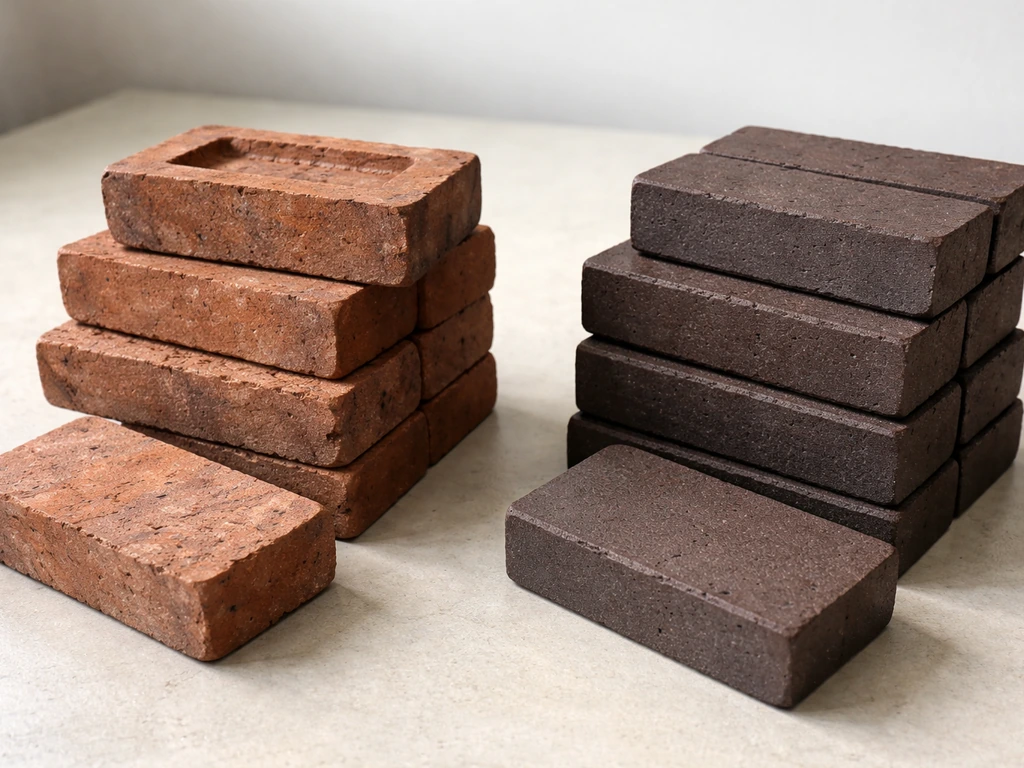
When most people say 'house bricks' they mean clay facing bricks: the units used to build the outer leaf of a cavity wall. These are graded under BS EN 771-1 and given a frost resistance category of F0, F1, or F2. F0 bricks are 'passive' exposure only, meaning they're not frost resistant and shouldn't be used anywhere they'll get saturated. F1 is moderately frost resistant, fine for vertical walls in sheltered positions.
F2 is the highest category, suitable for severe and very exposed conditions. The problem with horizontal paving is that it collects water rather than shedding it. A brick that's perfectly fine in a wall face can be chronically saturated when it's lying flat on the ground, which puts it into a completely different exposure category.
Water absorption is the other number to look at. Higher absorption means more water in the pores, and more water means more damage when that water freezes and expands. The freeze-thaw cycle creates internal stress that exceeds the clay's tensile strength, causing the surface to flake, spall, and eventually powder away. When you're deciding on the best brick for a patio, focus on low water absorption and strong freeze-thaw performance Engineering bricks solve this by being very dense.
Engineering bricks solve this by being very dense: Class A engineering bricks under BS EN 771-1 have compressive strength above 125 N/mm² and water absorption below 4. 5%. That's the kind of number that holds up on a patio. Many common facing bricks have water absorption of 10–15% or higher, which is a completely different proposition.
When house bricks work, and when they definitely don't
The answer depends on three things working together: the brick's frost rating, your local climate, and your drainage setup. A patio surface that drains quickly and dries fast is a much kinder environment than one that stays wet for days. Here's how to think about it.
| Situation | House brick suitability | Reason |
|---|---|---|
| Mild, rarely freezing climate (e.g., southern coastal UK) | Possibly yes, with F1-rated bricks | Freeze-thaw cycles are infrequent; risk is lower if drainage is good |
| Cold or upland UK climate with regular winter frosts | No, unless F2-rated | Repeated freeze-thaw cycles will cause spalling in lower-rated bricks |
| Good falls, fast-draining base, shaded area (stays damp) | Reduced risk, still use F2 or engineering | Shade keeps bricks saturated longer, increasing freeze risk |
| Standing water or poor drainage | No, regardless of frost rating | Prolonged saturation accelerates deterioration in any brick type |
| Salvaged or reclaimed house bricks (unknown rating) | Not recommended without testing | Frost rating often unknown; older bricks may already be compromised |
I've seen homeowners use reclaimed house bricks from a demolition thinking they'd look great on a patio, and they did look great, right up until the second winter when the surface started flaking. The problem wasn't just frost resistance; the bricks had already been through years of wall service and had micro-cracks that weren't visible until freeze-thaw made them catastrophic. If you're using salvaged bricks, treat them as unknown-spec unless you can confirm their original grade.
Which brick types actually hold up as paving
Engineering bricks (Class A and Class B)
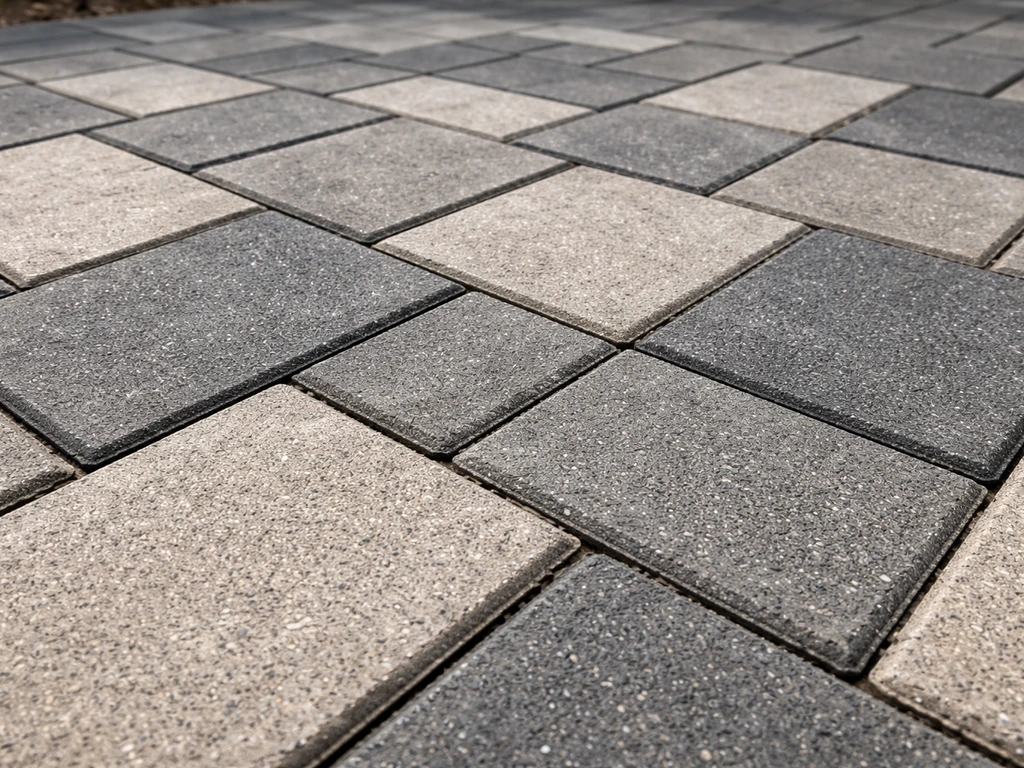
Engineering bricks are the gold standard for paving. They're manufactured to be dense and low-porosity, which is exactly what a horizontal surface needs. Class A is the tighter spec (above 125 N/mm² compressive strength, below 4.5% water absorption). Class B is still strong and low-absorption, just with slightly less demanding thresholds. Either class will outlast most facing bricks on a patio by years, possibly decades. The trade-off is appearance: engineering bricks tend to come in a narrower range of colours (blues and reds are traditional), and they can look more industrial than some homeowners want. If that's your concern, look at purpose-made clay brick pavers instead.
F2-rated facing bricks
A facing brick with an F2 frost resistance rating under BS EN 771-1 is the minimum you'd want to consider for exposed patio use in the UK. Check the product datasheet rather than relying on appearance or what the merchant says. F2 means the brick has been classified for use in exposed conditions where saturation is possible, which describes a patio surface pretty well. You still want to check the water absorption figure: aim for below 7% if you can find it, and definitely avoid anything above 12% for a ground-level surface.
Purpose-made clay brick pavers
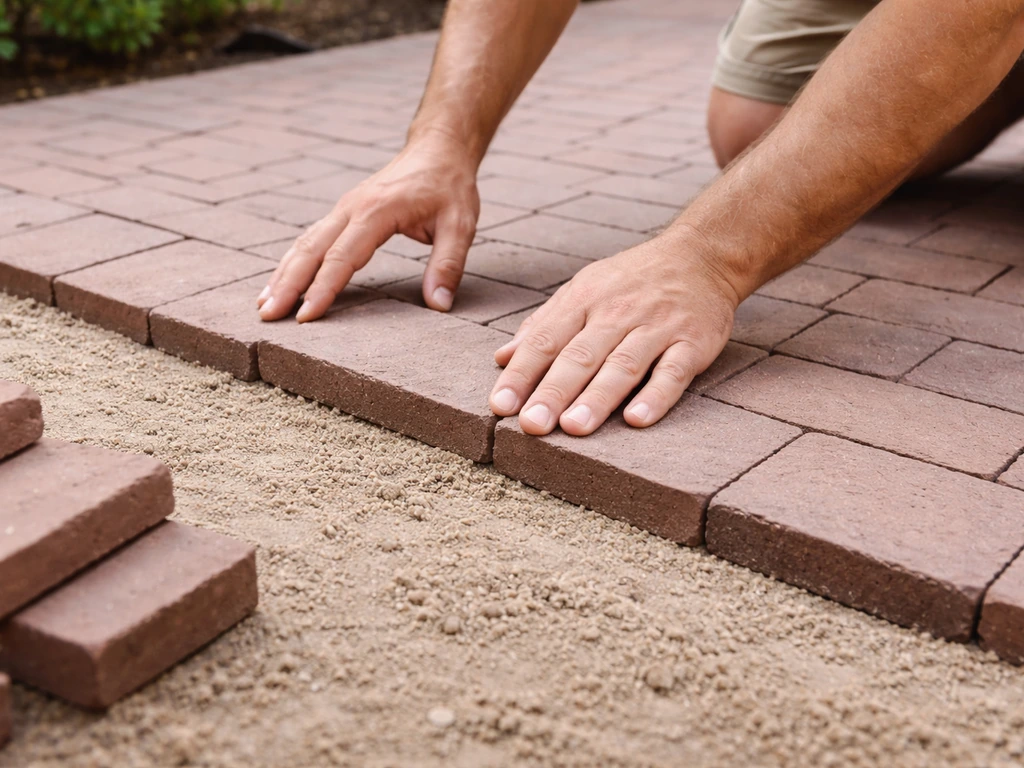
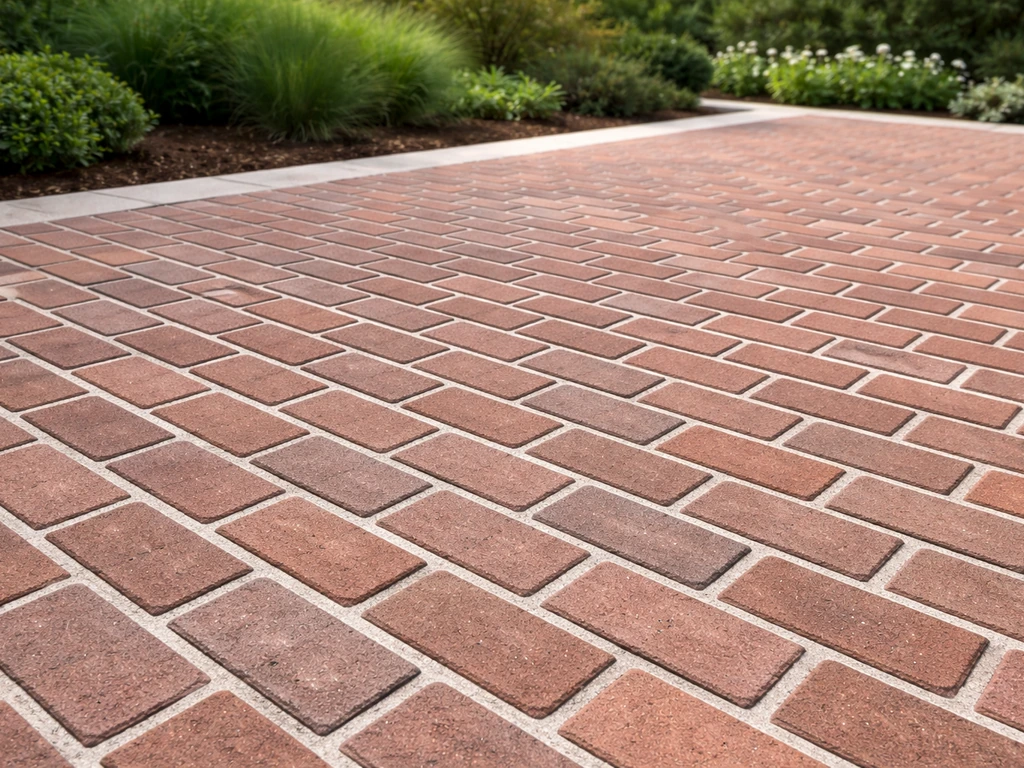
Clay brick pavers are manufactured specifically for paving and are a better choice than repurposed house bricks in most cases. They're typically thinner than standard bricks (around 50–65 mm versus 65–73 mm for a standard metric brick) and come with declared paving performance. Many are rated to relevant paving standards rather than just masonry ones. If you want the look of a traditional brick patio without the guesswork of spec-checking house bricks, pavers are the smarter starting point. To get the best brick pattern for patio results, plan your layout early and follow the same spec and base rules throughout the surface.
How the build-up affects whether your patio lasts
Even if you nail the brick spec, a bad base will destroy the patio. The base is what keeps bricks level, allows drainage, and prevents the whole surface from heaving and settling. There are two systems: flexible (dry-laid onto sand) and rigid (mortar-bedded onto concrete). Both can work for bricks, but they have different requirements and failure modes. Either way, you need proper sub-base preparation first.
Sub-base: the layer that does the real work
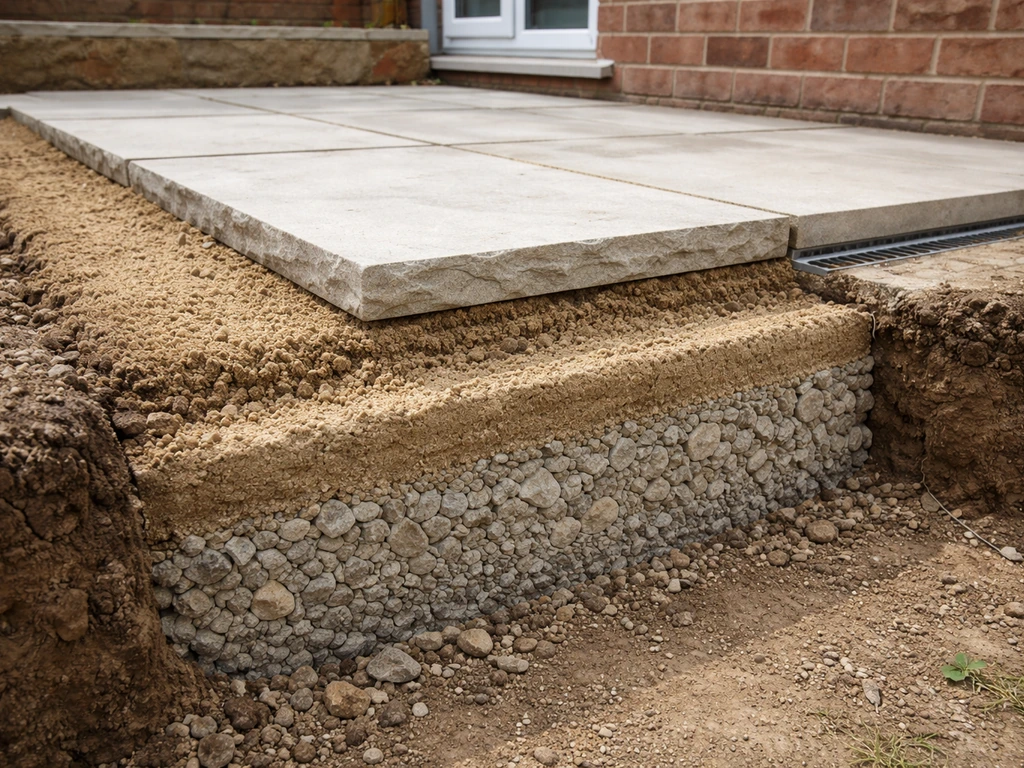
For a domestic patio, you want a minimum of 75–100 mm of compacted MOT Type 1 (granular sub-base material to the Department of Transport specification). Type 1 is angular, well-graded aggregate that locks together under compaction and resists movement. Don't cut corners here and don't substitute building sand or topsoil. Compact it in layers with a plate compactor if the area is large, or a hand tamper for small areas. The sub-base is what carries the load and prevents long-term settlement.
Falls and drainage
A patio surface needs a fall of approximately 1:60 away from the house (or toward a drainage point) so water doesn't pool. This doesn't sound like much, about 17 mm per metre, but it makes an enormous difference to how long the bricks stay dry between rain events. Build the fall into your sub-base and maintain it through your bedding layer. If you're falling toward a boundary, make sure there's somewhere for the water to go: a channel drain, a soakaway, or a planted border.
Bedding layer options
For flexible (dry-laid) installations, the bedding layer is 25–40 mm of compacted coarse grit sand laid directly on the sub-base. This is sometimes called sharp sand or concreting sand, not building sand (which is too fine and will wash out). Level it to your finished falls and lay bricks directly onto it. For rigid installations, you're looking at a 30–40 mm full mortar bed on a concrete base, with bricks pressed firmly into the mortar with no voids underneath.
Spot bedding (mortar only at corners or edges) is a known failure point and should be avoided. Paving Slabs Direct similarly explains that spot bedding is a known failure point for paving slabs, and contrasts it with [full mortar bed approaches](https://www. pavingslabsdirect. co.
uk/blogs/paving-slabs-advice/why-spot-bedding-fails-for-paving-slabs-full-mortar-bed-guide) for a more uniform foundation.
Step-by-step: laying a brick patio
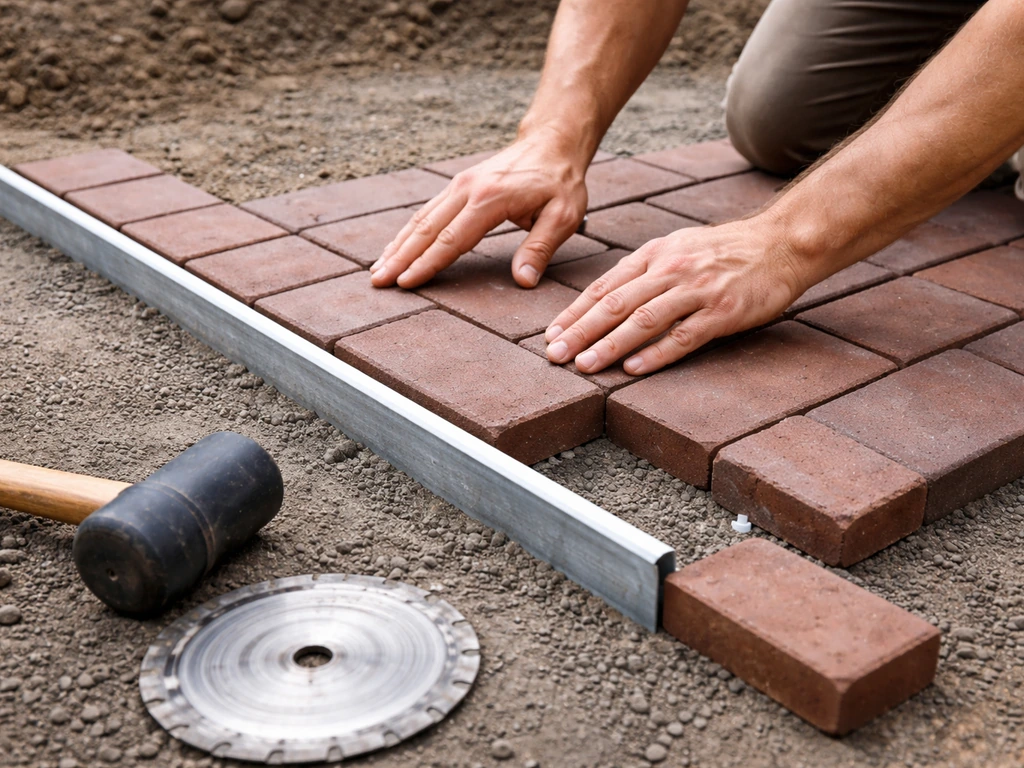
- Mark out the area and excavate to the required depth: typically 150–200 mm below finished surface level to accommodate sub-base, bedding, and brick thickness.
- Compact the subgrade (existing soil base) thoroughly. If it's soft or waterlogged, consider a geotextile membrane before adding sub-base material.
- Lay and compact 75–100 mm of MOT Type 1 sub-base in layers. Use a plate compactor for areas larger than a couple of square metres.
- For flexible laying: add 25–40 mm of coarse grit sand, screed it flat to the correct falls using timber rails as guides, and do not compact the sand before laying bricks.
- For rigid laying: pour a concrete slab base (C20 mix, minimum 100 mm thick), allow it to cure fully (at least 3–5 days), then apply a 30–40 mm full mortar bed as you work.
- Choose your laying pattern. Stretcher bond (running bond) is the easiest for beginners. Herringbone is stronger in both directions and traditional for paths and driveways. Basketweave looks good but requires more cuts. Stack bond looks clean but has weak joint lines and isn't recommended for high-traffic areas.
- Lay bricks from a fixed corner or straight edge, working outward. Check level and alignment every few rows. Use spacers or the natural frog/indent to set joint width consistently (aim for 3–5 mm joints for flexible laying).
- Cut bricks to fit edges and around obstacles using an angle grinder with a diamond disc, or hire a brick splitter for cleaner cuts on simpler angles. Always wear eye protection and a dust mask when cutting.
- Install edging restraints. For flexible paving, edging bricks or concrete haunching is essential to stop the surface from spreading outward at the edges. For rigid laying, the mortar bed itself provides restraint, but haunching the perimeter still adds durability.
- Fill joints. For flexible paving, brush dry kiln-dried sand across the surface and work it into the joints; repeat after a few days once traffic has settled the surface. For rigid laying, point the joints with a semi-dry mortar mix, keeping mortar off the face of the brick where possible.
Mortar vs dry-lay, sealing, and keeping it looking good
Mortar vs dry-lay: which should you choose?
Dry-laid flexible paving is easier to install, easier to repair (individual bricks can be lifted and re-laid), and forgiving of minor settlement. It suits areas with tree roots nearby or any situation where ground movement is likely. The downside is that it needs good perimeter restraint, and the sand joints can harbour weeds and ants. Rigid mortar-laid paving is more stable, better for steeper falls, and more appropriate where the patio connects to a house wall or steps. It's harder to repair if something goes wrong and requires a concrete base underneath. For a standard garden patio laid by a competent DIYer, flexible installation is usually the better choice unless there's a specific reason to go rigid.
Should you seal brick paving?
Sealing is genuinely controversial for clay bricks and I'd approach it carefully. The Clay Brick Association warns that sealing can trap moisture inside bricks, which can soften them and cause mortar failure, exactly the problems you're trying to prevent. If you seal too early (before the brick has fully dried out after installation), moisture gets locked in and you can end up with whitish haze under the sealer or worse, frost damage from trapped water. If you do decide to seal, wait at least 6–12 months for the paving to weather and for efflorescence (the white salt deposits that appear on new brickwork) to wash out naturally. Then choose a breathable, silicone-based impregnating sealer rather than a surface film-forming one.
Efflorescence: normal, not structural
Almost every new brick patio will show some efflorescence, the white powdery or chalky bloom caused by soluble salts migrating to the surface with moisture. It looks alarming but it's cosmetic and doesn't affect structural performance. In most cases it weathers away within one to two seasons without intervention. Don't seal over it; you'll make it much harder to shift. If you want to clean it faster, use a dilute solution of brick cleaner (dilute hydrochloric acid-based products are available from builders' merchants) and rinse well.
Ongoing maintenance
- Weed joints every spring: a long-handled weeding tool or a patio weed killer applied carefully keeps joints clear without disturbing the sand.
- Re-sand flexible joints every 2–3 years or when you notice the sand level has dropped. Brush in dry kiln-dried sand and leave it to settle.
- For rigid-jointed patios, check mortar joints annually for cracks and repoint any loose sections before water gets in.
- Clean the surface with a stiff brush and water annually. Avoid pressure washing at high settings on older or softer bricks: it can erode the face and open up the pores.
- Inspect bricks for spalling, flaking, or crumbling edges each autumn. Individual damaged bricks in a flexible installation can be lifted and replaced without disturbing the whole surface.
- Expected lifespan for a well-specified, well-laid brick patio: 20–30 years minimum, potentially much longer with engineering bricks and good drainage.
Costs, sourcing, and when to consider something else
What brick paving costs
UK patio installation costs in 2026 typically range from around £90 to £180 per m² for materials and labour combined, depending on complexity, access, and material choice. Engineering bricks sit toward the lower end for the brick itself (they're not premium products) but the sub-base and bedding costs are the same regardless of what you lay on top. Porcelain paving, by comparison, often runs £100–£150 per m² installed. Natural stone can be similar or higher depending on the stone. Brick is genuinely competitive on cost, especially if you're confident doing the groundwork yourself.
Where to source the right bricks
For new bricks, go to a builders' merchant rather than a general DIY retailer, and ask specifically for engineering bricks (Class A or B) or clay brick pavers with a declared F2 frost resistance rating. Ask for the product datasheet and check the water absorption figure. For reclaimed bricks, use a specialist reclamation yard that can tell you provenance and intended use, and treat anything without a clear history as unsuitable for paving without a sample test. Some reclamation yards can do basic absorption tests if you ask.
When you should just choose a different material
If you're in a climate with frequent hard frosts and you can't source F2-rated or engineering bricks locally at a sensible price, switch to a material that sidesteps the porosity problem entirely. Porcelain paving has near-zero water absorption and is essentially frost-proof, which is why it's become so popular in the UK. For a brick patio, a good outdoor rug is also one that can handle damp conditions without trapping moisture underneath.
Porcelain does require careful cutting with the right diamond blade and a flat, well-prepared base, but it won't spall in a freeze. Natural stone varies enormously: some sandstones are actually more porous than house bricks and can be equally problematic, while dense granite or slate is more forgiving. Gravel is the most frost-tolerant surface of all because there's nothing solid to crack.
If you're considering alternatives, it's worth comparing brick against stone, porcelain, and composites properly before committing, since the right material for your patio depends as much on your climate and drainage situation as on your aesthetic preferences. If you’re comparing materials, it’s useful to look at how brick versus stone behaves under freeze-thaw and how each handles water on the surface comparing brick against stone.
If you want specific patio stone examples to compare with brick, look for slabs with low water absorption and good freeze-thaw performance patio depends as much on your climate and drainage situation as on your aesthetic preferences.
Signs you should rethink your material choice
- You can't confirm the frost resistance rating of the bricks you have access to, and you live somewhere with more than a handful of freeze-thaw cycles per year.
- The area you're paving stays shaded and damp for long periods, even in summer, meaning bricks will rarely get the chance to dry out fully.
- Your drainage options are limited and the patio is likely to hold standing water after rain.
- You're using reclaimed bricks with no known specification or visible surface deterioration (previous spalling, crumbling, or powdering).
- Your budget doesn't stretch to engineering bricks or purpose-made clay pavers, and you're considering very cheap or unknown-grade facing bricks as a substitute.
FAQ
If my house bricks are labelled facing bricks, can I still use them for a patio?
Usually, no. Standard “facing” house bricks graded for wall use can cope with vertical exposure because they dry out quickly, but on a patio they sit horizontally and can become saturated. If you cannot confirm an F2 frost category and a low water absorption figure from the product datasheet, treat them as unsuitable.
Which matters more for a brick patio, frost rating (F rating) or water absorption?
Start by checking the F category and water absorption together. A brick can be frost-rated but still too absorbent for a ground-level, water-collecting patio. As a rule of thumb from the specs discussed, aim for low absorption (around or below 7% if possible) and avoid high figures (especially above about 12% for ground contact).
Can I use reclaimed house bricks from a demolition patio or driveway?
Yes, but it raises the risk. Reclaimed bricks may have micro-cracks or altered porosity from years in a wall, freeze-thaw can then finish the damage. If the yard cannot confirm origin and original grade, you should either get a sample test (at least an absorption check) or choose paving bricks designed and declared for external use.
What happens if my patio doesn’t have enough fall away from the house?
If the patio is subject to standing water, the bricks are much more likely to fail. Make sure your base creates the correct fall and that you have an outlet path (drain channel, soakaway, or suitable border). Even good F2 or engineering bricks will suffer if the surface repeatedly stays wet for days.
Can I bed patio bricks on regular building sand instead of coarse grit?
For flexible dry-laid paving, “sand” must be the right type and kept from washing out. Use a 25 to 40 mm bedding layer of coarse, compactable grit sand, not building sand, and compact the layers. If bedding is too fine, it can erode, leaving voids that let bricks rock and crack.
Is spot bedding (mortar only at corners or edges) ever acceptable for a rigid brick patio?
At least in terms of long-term risk, avoid it. Spot bedding, mortar only at edges or corners, leaves areas unsupported and creates stress points when the ground moves. Proper rigid builds are typically mortar-bedded across a full concrete base, with bricks fully pressed in and no voids underneath.
Should I seal over efflorescence, or clean it first?
Some cleaning can be worth doing, but do not seal too early. Efflorescence is usually cosmetic and disappears within 1 to 2 seasons. If you want to clean faster, use a dilute brick cleaner product and rinse thoroughly, and wait until salts and haze have cleared before thinking about any sealer.
When is the best time to seal a brick patio, and what type of sealer should I use?
If you decide to seal, delay it significantly. The article cautions that sealing too early can trap moisture and increase the risk of freeze damage and mortar failure. Waiting roughly 6 to 12 months lets the paving dry and gives efflorescence time to weather off, then choose a breathable, silicone-based impregnating sealer.
Can brick patio paving be used at an entrance step or hard connection to a wall?
You can, but you need to manage heat and moisture movement and ensure the joints are planned. Bricks laid too tightly without allowance for bedding movement can push and open gaps. If the patio connects to steps, boundaries, or a wall, the choice between flexible and rigid (and strong restraint) becomes more important.
If I can’t find F2 or engineering bricks locally, what are the best alternative patio materials?
Yes, and it’s a practical fallback if you cannot source suitable bricks. Porcelain has near-zero water absorption and is essentially frost-proof, making it far less sensitive to the porosity and saturation issues that punish many house bricks. Gravel is also very frost-tolerant because there is no rigid cracking surface.