If you want one stone that works well in most climates, handles foot traffic, and looks great for decades, flagstone (particularly bluestone or limestone) is the most versatile pick. But the honest answer is that the best outdoor patio stone depends on three things: your climate, your site conditions, and how much you want to spend on installation and upkeep. If you are wondering which patio stone is best for your yard, start by matching the material to your climate, drainage, and budget. For many homeowners, the practical way to find the best stone patios is to match the paving material to your climate, site drainage, and budget for installation and upkeep. Granite is the toughest and lowest-maintenance option. Travertine brings a warm, resort look and performs better in freeze-thaw than most people expect. Porcelain pavers dominate poolside installs. And if budget is the main driver, concrete pavers or a simple flagstone set in gravel will get you 90% of the way there for half the cost. This guide walks through all of it so you can make the call for your specific situation.
Best Outdoor Patio Stone: Top Choices by Climate and Use
What 'best' actually means for an outdoor patio stone
People search for the best patio stone expecting one winner, but outdoor paving is a context game. A stone that's perfect for a shaded Arizona courtyard can crack apart in a Minnesota winter. A beautifully smooth marble slab becomes a hazard next to a pool. So before you pick a material, it helps to understand the criteria that separate a durable patio from one that fails in five years.
- Freeze-thaw durability: In IECC Climate Zones 4 and colder, water absorption is the critical number. Per ASTM C97 testing standards, granite should have absorption of no more than 0.75%, limestone and sandstone no more than 6%, and marble no more than 0.20%. Stone that absorbs too much water will eventually crack as that water freezes and expands.
- Slip resistance: Any walking surface exposed to rain or pool splash needs texture. Wet DCOF (Dynamic Coefficient of Friction) should be at least 0.42 for level wet areas per ANSI A137.1, and higher for poolside or sloped surfaces. Smooth polished finishes almost always fall short.
- Compressive strength and thickness: High-traffic patios need stone thick enough to resist cracking under point loads. For most natural stone pavers, 1.5 to 2 inches is the minimum for a residential patio.
- Drainage behavior: Water should shed off the surface or drain through joints, not pool. Poor drainage accelerates freeze-thaw damage and creates slip hazards.
- Heat and sun behavior: Dark, dense stone like black granite can get uncomfortably hot in direct sun. Lighter, more porous stones stay cooler underfoot.
- Aesthetics and cut consistency: Tumbled or irregular edges look rustic and informal. Clean-cut or sawn edges look contemporary. The style affects installation difficulty, jointing choice, and overall visual outcome.
- Cost and availability: Natural stone prices vary enormously by region. What's cheap locally in Tennessee (limestone) might be expensive shipped to the Pacific Northwest.
The bottom line: weight these criteria by your situation. A freeze-thaw region puts absorption at the top of the list. A poolside or wet-area patio puts slip resistance first. A high-traffic entertaining patio needs compressive strength and durability. A low-traffic garden path can get away with softer or thinner stone.
Top patio stone types and who each one fits best
Here are the main contenders worth considering today, with an honest look at where each one excels and where it struggles.
Flagstone (bluestone, limestone, sandstone, quartzite)
Flagstone is a broad category covering any flat, slab-cut stone used for paving. Bluestone and quartzite are the toughest options in this group, handling freeze-thaw well and resisting surface wear. Limestone is softer and more porous (often at the upper edge of that 6% absorption limit), so it needs sealing in freeze-thaw climates but works beautifully in warm, dry regions. Sandstone is similar to limestone in terms of softness and porosity. Flagstone is the go-to choice for irregular, natural-looking patios and works as both a dry-laid (gravel bed) or mortar-set installation. Best for: homeowners who want a natural, organic aesthetic, DIY-friendly installation, and a wide budget range.
Granite
Granite is arguably the most durable outdoor patio stone you can buy. ASTM C615 governs granite dimension stone, and its absorption rates (typically well under 0.75%) make it one of the few natural stones that genuinely shrugs off freeze-thaw cycles without sealing. It resists staining, scratching, and heavy foot traffic. The trade-off is cost and weight: granite pavers are dense, heavy to work with, and tend to cost more per square foot than limestone or sandstone. Polished granite is slippery when wet, so always specify a flamed, bush-hammered, or sandblasted finish for any outdoor use. Best for: cold climates, high-traffic areas, long-term low-maintenance priorities, and homeowners willing to pay more upfront.
Travertine
Travertine has a reputation for being soft and fragile, but select-cut travertine pavers (governed by ASTM C1527) perform better in freeze-thaw climates than most homeowners expect, especially when the natural pores are filled during manufacturing. It has a warm, creamy look that photographs beautifully and stays relatively cool underfoot in hot climates, which is why it dominates pool decks in the Southeast and Southwest. The brushed or tumbled surface finish gives it decent slip resistance. Avoid unfilled travertine outdoors in cold climates. Best for: pool areas, warm-climate patios, Mediterranean or resort-style aesthetics.
Porcelain pavers
Porcelain is technically a manufactured tile, not a natural stone, but it belongs in this conversation because it competes directly with natural stone for outdoor patios. Modern large-format porcelain pavers (24x24 inches or larger) are extremely dense, have near-zero absorption, handle freeze-thaw exceptionally well, and come in textured finishes that meet or exceed wet DCOF requirements. They are consistent in thickness, which makes installation faster and more forgiving. The downside is that they need to be mortared to a concrete slab or rigid base and cannot be dry-laid. Best for: contemporary design styles, cold and wet climates, pool surrounds, and homeowners who want a very low-maintenance surface.
Slate
Slate has a naturally textured, layered surface that provides good slip resistance, and it's one of the more affordable natural stone options. The challenge with slate outdoors is delamination: in freeze-thaw climates, moisture can work into the stone's layers and cause surface spalling over time. It performs best in mild, drier climates. Best for: mild climates, shaded patios, budget-conscious buyers who want a natural stone look.
Limestone and bluestone pavers (cut and calibrated)
When limestone or bluestone is cut into uniform, calibrated pavers (rather than irregular flagstone slabs), you get a more refined look with easier installation. Bluestone is harder and denser than most limestone varieties, making it a better candidate for cold climates. Both are widely available in the Northeast and Mid-Atlantic regions. Thermal or brushed finishes on these stones improve slip resistance significantly over sawn or honed surfaces. Best for: formal patio designs, moderate to cold climates (bluestone especially), homeowners in regions where these stones are locally available.
Quick comparison: patio stone types side by side
| Stone Type | Freeze-Thaw Performance | Slip Resistance (textured) | Maintenance Level | Relative Cost | Best Use Case |
|---|---|---|---|---|---|
| Granite | Excellent | Good (flamed/bush-hammered) | Very Low | $$-$$$ | Cold climates, high traffic |
| Bluestone | Very Good | Good (thermal/brushed) | Low | $$ | Northeast, formal patios |
| Travertine (filled) | Good (select-cut) | Good (brushed/tumbled) | Moderate | $$ | Pool areas, warm climates |
| Limestone | Moderate (seal required) | Good (rough-cut) | Moderate | $-$$ | Warm/dry climates, DIY installs |
| Quartzite | Good | Good | Low | $$ | All climates, rustic look |
| Slate | Poor-Moderate | Very Good (natural texture) | Moderate | $ | Mild climates, shaded areas |
| Porcelain pavers | Excellent | Excellent (textured) | Very Low | $$-$$$ | All climates, pools, modern style |
| Sandstone | Poor-Moderate | Good | High | $ | Warm/dry climates only |
Slip resistance and finish: getting the surface texture right
This is the section most people skip, and then regret. Slip resistance is not a style preference, it's a safety issue. The relevant benchmark for wet, level walking surfaces is a wet DCOF of at least 0.42 per ANSI A137. Daltile notes that ANSI A137.1 requires a DCOF of at least 0.42 for tile products recommended for wet, level interior spaces, and that DCOF testing follows the ANSI A326.3 method wet DCOF of at least 0.42 per ANSI A137. 1 (tested to ANSI A326.3 methodology). For poolside or sloped surfaces, you want a higher margin. Keep in mind that lab-measured coefficients are not a guarantee of real-world safety in every condition, so when in doubt, go rougher.
Here is how common stone finishes stack up for outdoor use:
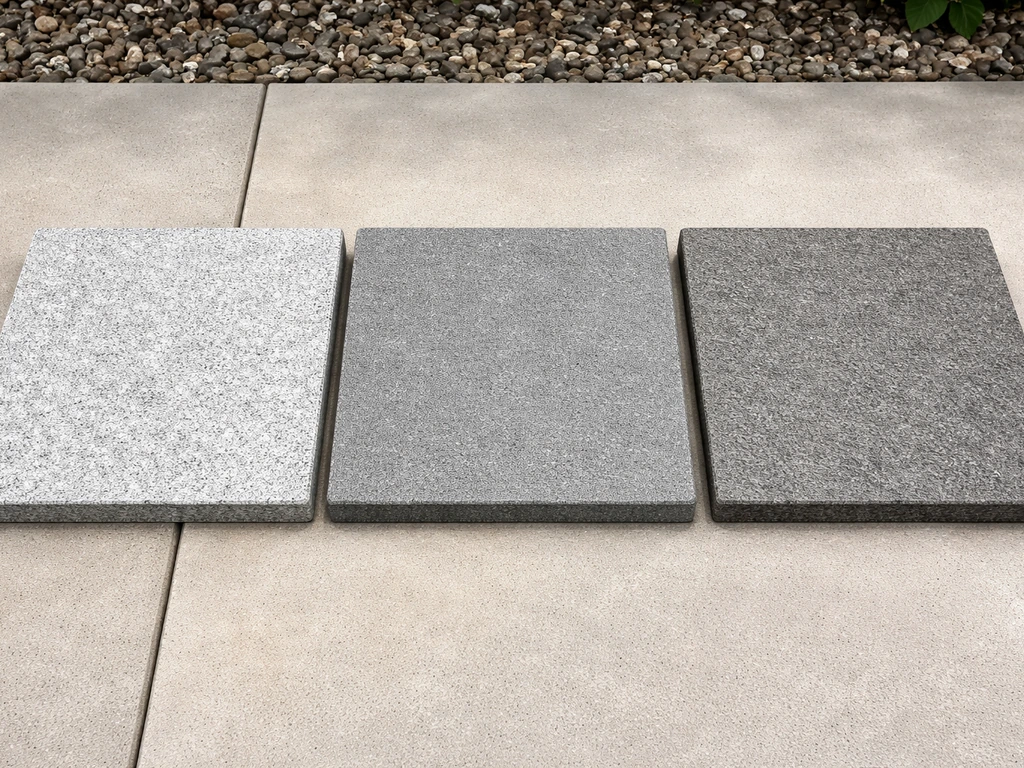
- Flamed: Produced by applying intense heat to the stone surface, causing the surface to burst and roughen. Excellent slip resistance. Works on granite and some limestones. One of the best outdoor finishes overall.
- Bush-hammered: A mechanical process that creates a pebbled, textured surface. Very slip-resistant. Good for granite and harder stones.
- Thermal (also called flamed in some markets): Similar to flamed. Widely used on bluestone and granite for outdoor applications.
- Brushed or antique brushed: Stone is mechanically brushed to soften edges and add texture. Good slip resistance. Common on travertine and limestone pavers.
- Tumbled: Stones are tumbled to create worn, rounded edges and a naturally aged look. Good texture, good slip resistance. Very popular for dry-laid flagstone and travertine.
- Sandblasted: Creates a matte, slightly rough surface. Decent slip resistance. Often used on granite and porcelain.
- Sawn/honed: Smooth, flat surface with a matte or satin appearance. Not recommended for outdoor wet areas without additional texturing. Acceptable for covered, low-moisture patios.
- Polished: Glossy, mirror-like finish. Avoid outdoors entirely, especially near water.
One practical rule: if you can see your reflection in the stone, it's too slippery for an outdoor patio. Always specify the finish when ordering, and ask your supplier for DCOF test data if you're installing near a pool or in a rainy climate.
Climate and site conditions: matching stone to your environment
Freeze-thaw climates (IECC Zones 4 and colder)
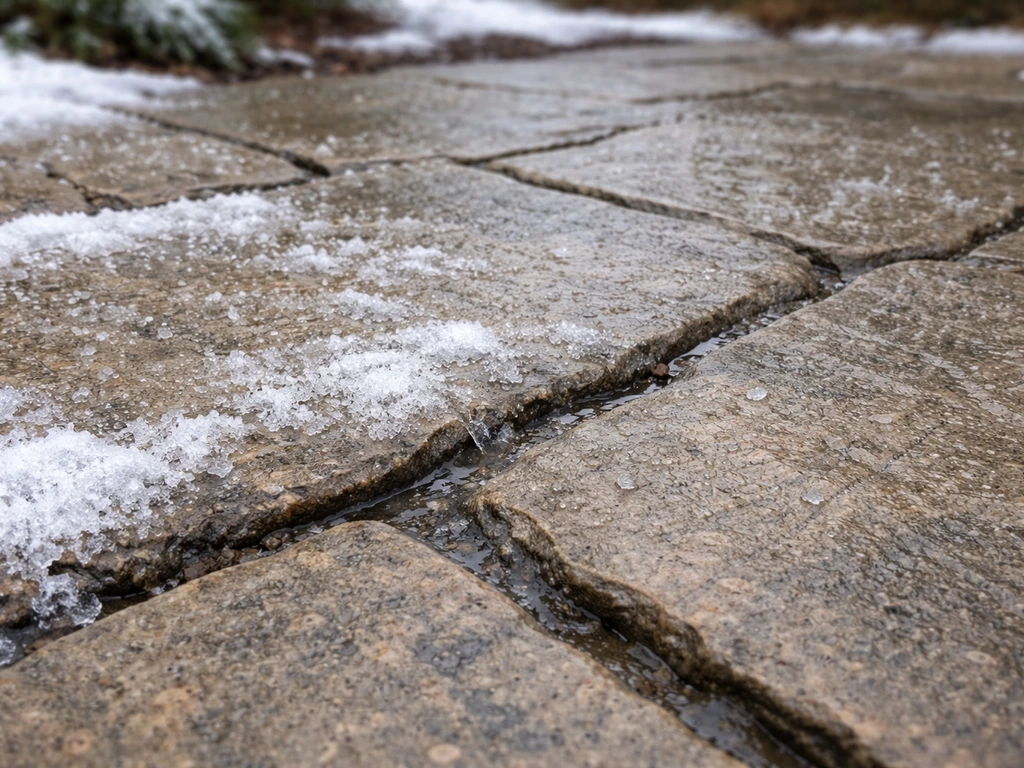
In cold climates, water absorption is the number that matters most. The ASTM C97 test measures how much water a stone absorbs by weight. Stones with high absorption soak up water, which then freezes, expands, and cracks the stone from the inside. For these climates, stick to granite (absorption under 0.75%), dense quartzite, filled travertine pavers rated for exterior use, porcelain pavers (absorption under 0.5%), or hard bluestone. Avoid unsealed limestone, sandstone, and slate in climates with regular hard freezes. If you love limestone and live in a cold climate, you can use it, but you'll need to seal it every 1 to 2 years and accept a shorter lifespan than harder options.
Hot, dry climates
Freeze-thaw is not your concern here, so a wider range of stones work. Limestone, sandstone, and travertine are all popular in the Southwest and Southeast. The bigger issue is heat absorption: dark stones like black granite can reach 140 to 160°F in direct sun, making them uncomfortable to walk on barefoot. Choose lighter-colored stones or a honed finish to reduce surface heat. Drainage matters here too, as intense storm events (even in dry climates) can overwhelm a poorly graded patio.
Pool surrounds and wet areas
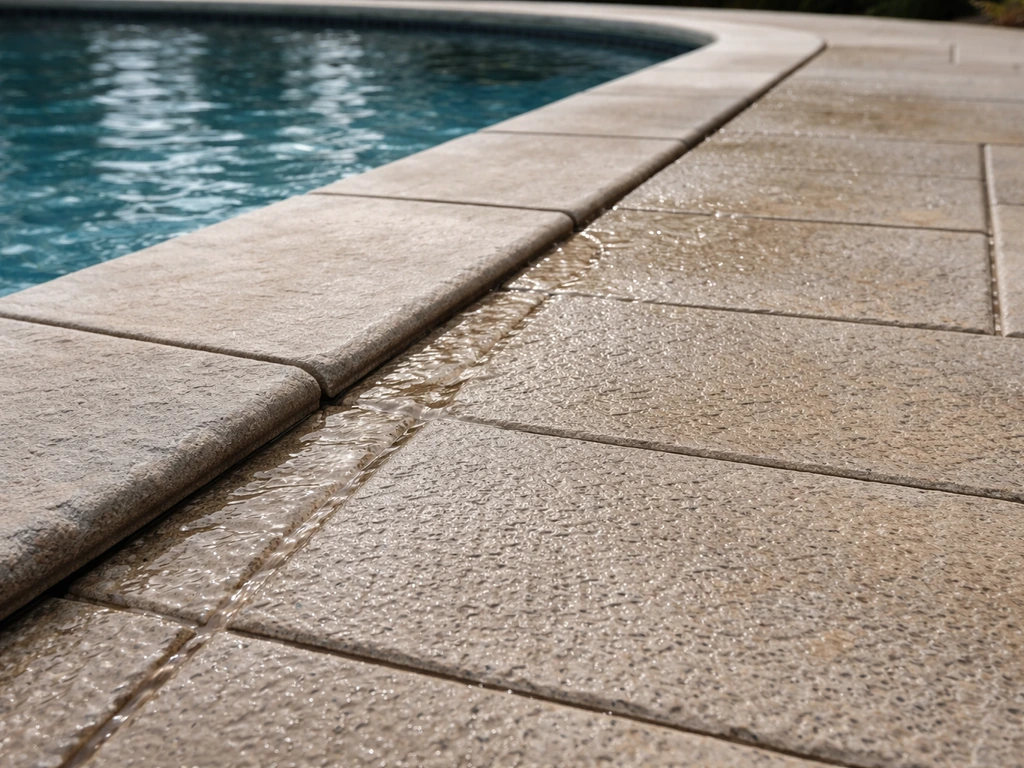
Poolside is where the ADA's guidance on wet walking surfaces becomes most practically relevant: the surface should be designed to drain water away and prevent pooling, and slip resistance needs to be treated seriously. Travertine is the traditional poolside choice because it stays cool, absorbs minor splashing rather than letting it sheet, and has a naturally textured brushed surface. Porcelain with a textured finish is the modern alternative and is arguably easier to maintain. Avoid any honed or polished stone within the wet zone. Also avoid very porous unfilled travertine in pool areas because pool chemicals can accelerate staining.
High-traffic entertaining areas vs. low-traffic garden paths
For a patio that doubles as an outdoor living room with furniture, foot traffic, and regular entertaining, you want stone that is at least 1.5 inches thick (2 inches is better for larger slabs), set on a proper compacted base, and hard enough to resist scratching from chairs and furniture. Granite, bluestone, and quartzite hold up well here. For a garden path or decorative stepping-stone area with minimal traffic, you can use thinner, softer, or less expensive stone and even get away with a dry-laid gravel-bed installation.
Installation essentials: base prep, leveling, and jointing
I've seen more patio failures caused by a bad base than by a bad stone choice. The stone itself almost never fails first. The base does. Get this part right and your patio will last 20 to 30 years regardless of which stone you choose.
Base construction
For most residential patios, a compacted crushed stone base of 4 to 6 inches is the standard (4 inches for light residential use, 6 inches if you're in a freeze-thaw climate or expect vehicle access). Excavate to a depth that accounts for the base, the bedding layer, and the stone thickness, with about a 1 to 2% slope away from the house for drainage. Compact the base in lifts using a plate compactor, not just your feet.
Bedding layer
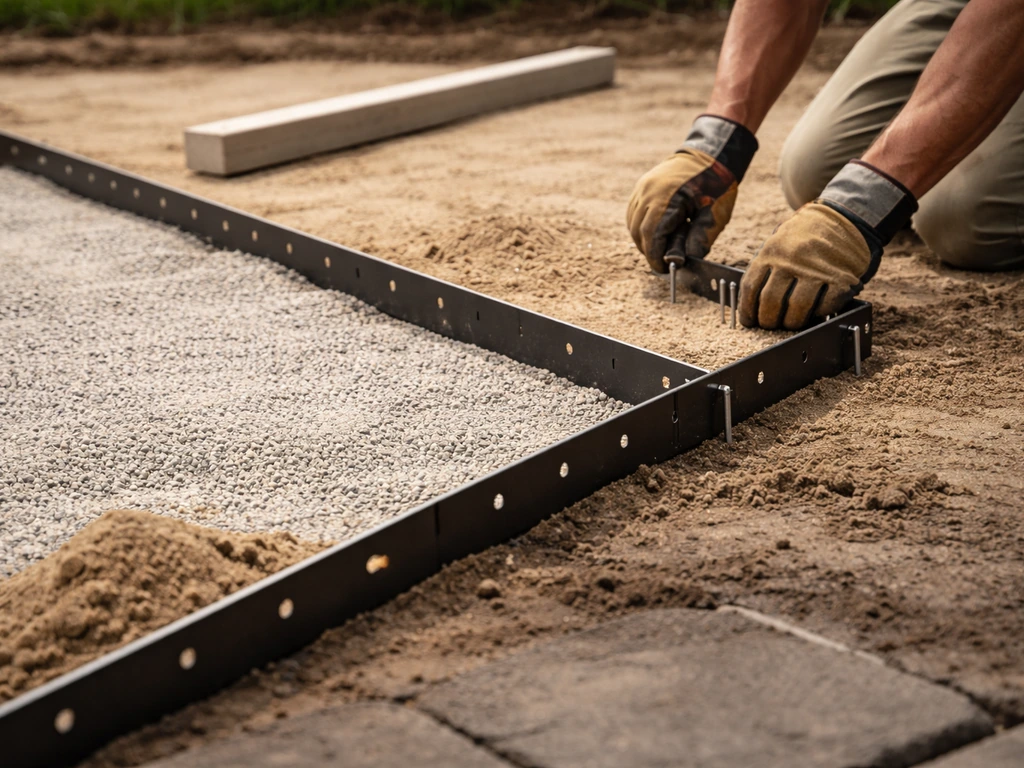
Over the compacted base, you spread a bedding course. For dry-laid pavers and flagstone, this is typically coarse bedding sand or limestone screenings screeded to a consistent 1-inch depth (about 25mm). ICPI guidelines and installation specs from multiple manufacturers call for this consistent 1-inch nominal thickness. Do not use fine play sand or mason sand as the bedding layer for pavers since it migrates too easily. For mortar-set installations (porcelain, formal natural stone on a concrete slab), you skip the sand bed and use a polymer-modified mortar bed instead.
Edge restraints
Edge restraints are not optional on a sand-set patio. Without them, the bedding sand slowly migrates outward under load, the perimeter pavers start to shift, and the whole surface begins to creep. Plastic or metal paver edge restraints spiked into the base keep everything locked in place. Install them before you lay the stone, not after.
Leveling and setting stone
Screed the bedding sand to a consistent height using pipe or screed rails as guides. Set the stone onto the screeded sand without disturbing the surface, then tamp each piece down with a rubber mallet or a plate compactor with a protective pad. Check for rocking after setting each piece: a stone that rocks means a point load situation that will eventually cause cracking. Shim or re-screed as needed.
Jointing
For dry-laid pavers and flagstone, polymeric sand swept into the joints and activated with water is the most durable jointing option. It resists weeds, ant tunneling, and washout better than regular sand. Leave joints at least 1/4 inch wide to get adequate sand penetration. For mortar-set installations, use a flexible exterior grout or sanded caulk for joints under 1/2 inch, and a sanded exterior grout for wider joints. Rigid cement grout on a sand-set patio will crack as the base settles.
Cost, availability, and figuring out how much to buy
Typical price ranges
Stone prices vary significantly by region and supply chain, but here are realistic ballpark figures for material cost as of 2026 (not including installation labor or base materials):
| Stone Type | Approx. Material Cost (per sq ft) | Notes |
|---|---|---|
| Sandstone flagstone | $2–$5 | Cheapest option; widely variable quality |
| Limestone flagstone or pavers | $3–$8 | Price depends heavily on local availability |
| Slate | $3–$7 | More available in some regions than others |
| Travertine pavers (filled) | $4–$10 | Select-cut exterior grade costs more |
| Bluestone | $5–$12 | Most affordable in Northeast; higher elsewhere |
| Quartzite | $5–$12 | Durable; price varies by variety and region |
| Granite pavers | $6–$15 | Dense, heavy; costs more to ship |
| Porcelain pavers (large format) | $6–$18 | Needs rigid base; installation adds cost |
How to estimate quantity
Measure your patio area in square feet (length times width, accounting for irregular shapes). Add 10% for cuts, breakage, and pattern waste. For irregular flagstone, add 15 to 20% because the irregular shapes mean more cuts and more waste. If you're ordering by weight (common for irregular flagstone sold by the ton), ask your supplier how many square feet a ton covers at your preferred thickness. A typical 1.5-inch flagstone runs roughly 100 to 130 square feet per ton depending on the stone's density.
What to inspect before buying
When you're at the stone yard or evaluating samples, check for consistent thickness (critical for leveling), visible cracks or seams that extend more than halfway through the stone, unusual staining from iron deposits (which can bleed through sealer outdoors), and whether the supplier can tell you the stone's origin and absorption rating. For cold climates, ask specifically whether the stone is rated for exterior freeze-thaw use. A reputable supplier will know this. If they can't answer, that's a red flag.
Maintenance and long-term care: keeping it looking good for decades
Cleaning
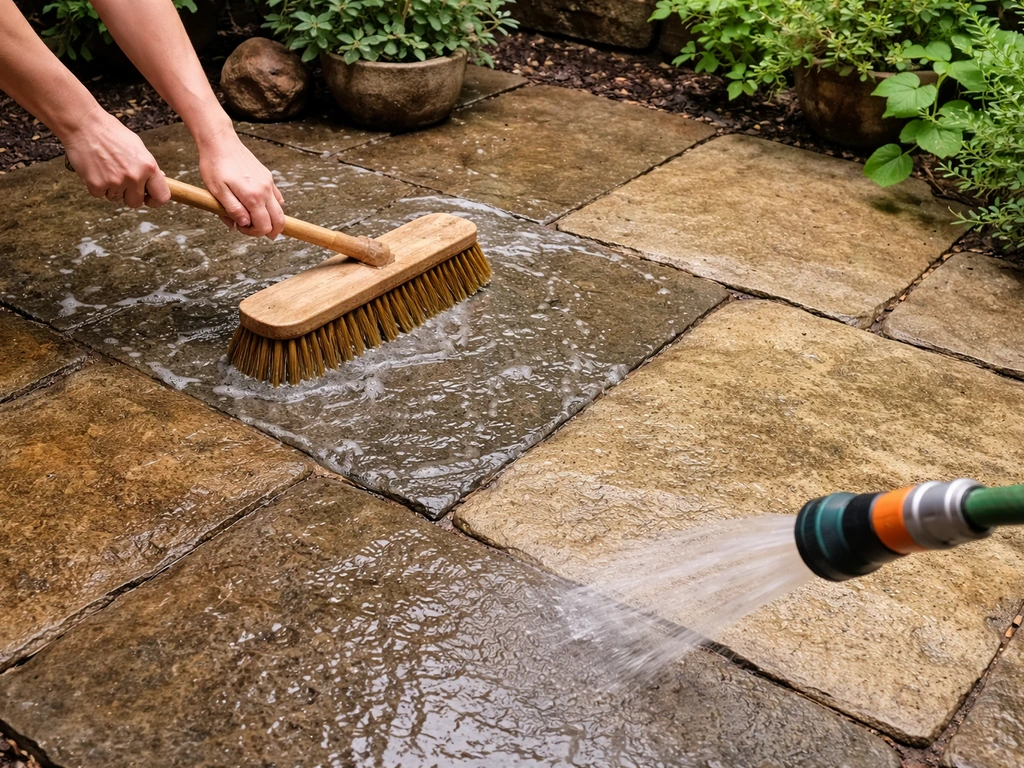
Most natural stone patios need nothing more than regular sweeping and an occasional rinse with a garden hose. For deeper cleaning, a diluted pH-neutral stone cleaner (not vinegar, not bleach, not general-purpose deck cleaners) and a stiff brush handle most stains. Pressure washing works for granite and dense stones, but use a wide fan tip and keep the pressure under 1500 PSI on softer stones like limestone or travertine to avoid surface erosion. Clean up organic stains (leaves, bird droppings) promptly because they can etch softer stones.
Sealing
Not all stone needs sealing, but most benefits from it outdoors. Granite generally does not need sealing but can be sealed for easier cleaning. Limestone, sandstone, and travertine should be sealed before first use and resealed every 1 to 3 years depending on traffic and climate. Use a penetrating (impregnating) sealer rather than a surface film sealer for outdoor use. Film sealers peel in freeze-thaw conditions and trap moisture underneath. A penetrating sealer soaks into the stone and repels water without changing the surface texture or creating a glossy finish.
Weed and joint maintenance
Even with polymeric sand, weeds eventually find a way in, especially along edges. An annual check of the joints in spring, with polymeric sand topped off where needed, keeps this under control. Avoid chemical weed killers with high concentrations of acids or bleach near natural stone. If moss is an issue in shaded areas, a diluted sodium hypochlorite solution (test on a small area first) or a purpose-built moss remover handles it without damaging most stones.
Handling freeze-thaw damage and repairs
If you see surface spalling, flaking, or cracking in cold climate stone, the most common causes are: the wrong stone for the climate (too porous), water sitting under the stone due to poor drainage, or a sealer trapping moisture. For isolated cracked or damaged stones, the good news with a dry-laid patio is that individual stones can almost always be lifted and replaced without disturbing the surrounding area. For mortar-set patios, repairs are more involved and may require chiseling out the old stone and regrounding a new one.
Longevity expectations
A well-built patio using the right stone for the climate, with a proper compacted base and good drainage, should last 25 to 50 years with normal maintenance. Granite and porcelain patios at the high end of that range are genuinely generational investments. Limestone and sandstone in appropriate climates can last just as long with regular sealing. The biggest enemies of patio longevity are not the stone itself but poor drainage, an inadequate base, and using the wrong stone for the climate. Get those three things right and almost any stone on this list will serve you well.
Making the final call: the shortlist by situation
If you are still deciding, here is the practical shortlist based on the most common scenarios:
- Cold climate, low maintenance priority: Granite (flamed or bush-hammered finish). It costs more upfront but practically takes care of itself.
- Cold climate, natural look on a budget: Bluestone (thermal finish). Widely available in the Northeast, excellent freeze-thaw performance, beautiful aesthetic.
- Warm climate, pool surround: Filled travertine (brushed finish) or textured porcelain pavers. Both stay cool underfoot and handle wet conditions safely.
- Warm climate, general patio: Limestone flagstone (sealed) or travertine. Affordable, widely available, attractive.
- All climates, modern/contemporary look: Large-format porcelain pavers. Most consistent, easiest to maintain, excellent durability. Requires a rigid base.
- Budget-friendly, DIY-friendly, any climate: Irregular flagstone (quartzite or bluestone in cold climates, limestone in warm climates) dry-laid in a gravel/sand bed. Lower cost, forgiving installation, easy to repair.
- High-traffic entertaining patio, any climate: Granite or dense quartzite, 2-inch thickness, mortar-set or properly sand-set on a 6-inch base.
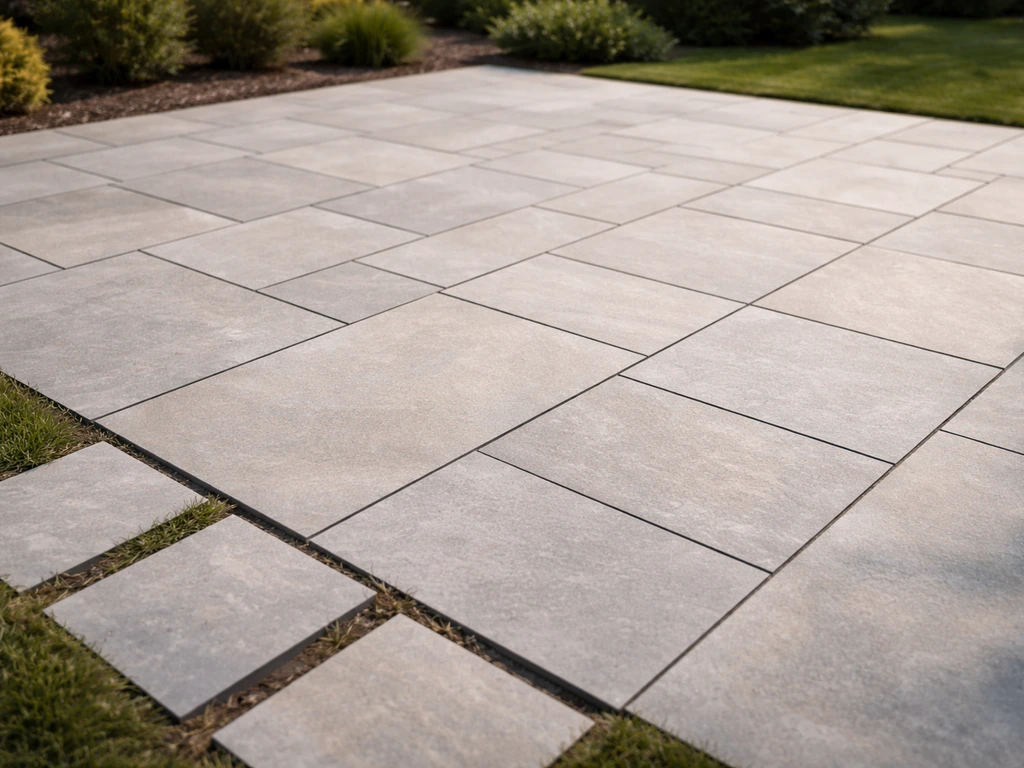
The related questions of which specific stone slabs to choose, how to find the best stone patio design for your space, and which natural stone performs best in your specific region all follow from the fundamentals covered here. For a quick shortcut, focus on stone slabs that match your climate, slip needs, and maintenance expectations best stone slabs for patio. Once you match the stone to your climate and site conditions, you can start comparing specific best stone patio ideas for layout, textures, and finishes. Get the material choice and base prep right, and the rest of the decisions get much easier.
FAQ
What’s the fastest way to tell if a specific patio stone will survive freeze-thaw in my area?
Ask for the stone’s absorption rating and whether it is certified for exterior freeze-thaw use, then confirm the finish. Even “freeze-thaw rated” stones fail when water is trapped under them due to poor drainage or an incorrect base. If you can’t get absorption data from the supplier, treat it as a higher-risk purchase.
Do I need to worry about patio stone height or step-up clearance when switching materials?
Yes. Different paving systems build different heights, especially when you choose mortar-set porcelain on a slab versus a dry-laid stone bed. Before ordering, measure from finished grade to door thresholds and plan for grout joints, bedding thickness, and any edge restraints so you don’t end up with awkward steps or blocked door clearance.
Can I use polymeric sand if I live in a very rainy area?
It can work well, but you still need correct drainage and joint width. Polymeric sand relies on water activation and stays more stable when joints are wide enough (at least about 1/4 inch) and the patio slopes properly. If your patio stays wet for days, consider switching to a design that drains faster, or use a system the manufacturer specifies for exterior wet climates.
What’s the difference between a dry-laid patio and a mortar-set patio, and when does it matter?
Dry-laid relies on compacted base support plus a sand or screenings bedding layer and jointing material, while mortar-set uses a rigid slab (often concrete) and a mortar bed with grouted joints. It matters most for freeze-thaw and pool zones, because mortar-set can reduce water infiltration between units, but it requires a properly engineered concrete base to avoid cracking and movement.
Is it safe to seal limestone or travertine “right away,” or should I wait?
Wait until the stone is fully cured from installation conditions and confirm the sealer is designed for newly installed outdoor pavers. Many failures come from sealing too soon or using the wrong product type. Penetrating (impregnating) sealers are typically preferred outdoors, and you should plan on resealing based on traffic and local freeze-thaw severity.
Why do some patio stones look darker after sealing, and is that normal?
Yes, especially with penetrating sealers. Even when they do not create a glossy film, impregnators can darken natural stone slightly by changing how light interacts with the pores. Test on a hidden area first and confirm whether the sealer is “enhancing” so you know what the final look will be.
Can I lay patio stone directly on gravel or compacted dirt?
Not if you want predictable long-term performance. The most common failure is movement from an inadequate base. The standard approach is excavate to the designed depth, build a properly compacted crushed-stone base in lifts, then add the correct bedding course thickness. Skipping base prep usually leads to rocking, shifting, and cracked stones later.
How do I prevent rocking and point loading when setting large format pavers?
Before setting, make sure your bedding is uniformly screeded to the specified thickness, then place pavers without disturbing the sand bed. Check each piece for rocking by applying light downward pressure at corners. If it rocks, remove it and correct the bedding, shimming or re-screeding instead of forcing it into place.
What finish should I choose for a patio that will get wet from rain and sprinklers?
Choose a textured finish and verify wet slip resistance expectations. A quick rule is to avoid anything where you can see a clear reflection, because many reflective or smooth finishes become hazardous when wet. Also ensure the patio slopes away from structures so water does not linger in low spots.
If I’m near a pool, can I use “almost polished” travertine or honed stone?
It’s risky. In wet zones, avoid honed or polished surfaces and prioritize textured, slip-resistant finishes. Also confirm the travertine is intended for exterior pool applications and consider that unfilled or very porous material can stain due to pool chemicals even if the texture handles splash.
How much extra material should I plan for when buying irregular flagstone?
Typically more than you think. Plan for additional cuts and breakage, and budget 15 to 20% extra for irregular flagstone compared to more standardized, calibrated pavers. If stone is sold by weight, ask the supplier how many square feet a ton covers at your chosen thickness so you can avoid coming up short mid-project.
What causes weeds to reappear even when I used polymeric sand?
Weeds usually return where jointing sand has been washed out, where joints are too narrow for sand penetration, or along the edges where restraints are missing or underbuilt. Do an annual joint inspection in spring, top off where needed, and make sure edges are mechanically locked so joint material does not migrate.
My patio is cracking or spalling in cold weather, what should I check first?
Start with the three biggest drivers: wrong stone for freeze-thaw conditions (too porous or unsealed), water trapped under or within the system due to poor drainage, and moisture trapped under an incompatible sealer. Then verify base construction, because a weak base can magnify freeze-thaw stresses even with the “right” stone.
Can I replace individual stones if a few units fail?
Often yes for dry-laid patios. If only a few stones spall or crack, they can usually be lifted out and replaced without demolishing the whole surface. Mortar-set repairs are more disruptive because you may need to remove grout, chisel out affected units, and re-establish mortar bond and joint width.