For most climates and budgets, bluestone flagstone is the best natural stone for an outdoor patio. It handles freeze-thaw cycles better than travertine or limestone, offers natural slip resistance, stays relatively affordable, and looks great for decades with minimal upkeep. That said, if you're in a warm, dry climate, travertine is a compelling runner-up, and if budget is your top concern, sandstone can work well with the right finish and sealing routine. The right answer really does depend on your climate, how you use the space, and what you're willing to spend, so read on and you'll know exactly which stone to buy before you finish this page.
Best Natural Stone for Outdoor Patio: Top Picks by Use
Nolan Ellison
19 May 2026
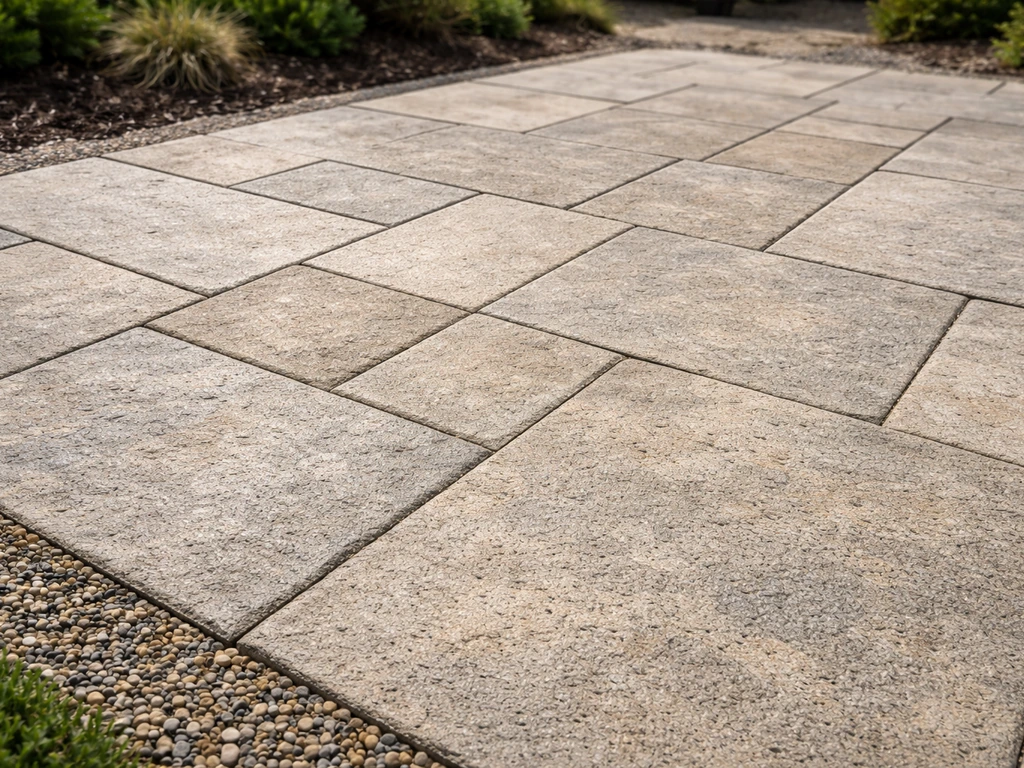
How to Choose the Right Patio Stone for Your Situation
Before you pick a stone, get clear on three things: your climate, your use case, and your realistic budget. These three factors will narrow the field fast and keep you from making an expensive mistake.
Climate: the biggest filter
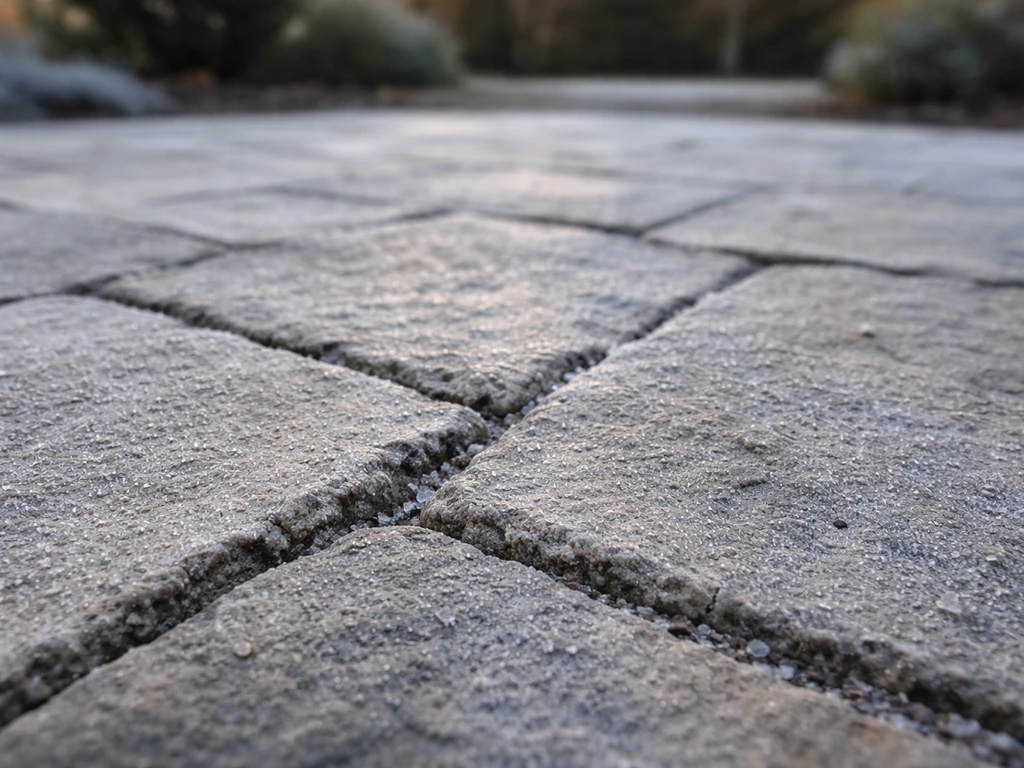
If you get hard winters with ground freeze, your number one concern is porosity. When water soaks into a porous stone and freezes, it expands by roughly 9 percent volumetrically. That internal pressure is what cracks and spalls stone over time. The more connected the pore structure, the faster the damage accumulates.
This is the mechanism measured by ASTM C1026 (the freeze-thaw cycling standard) and quantified by ASTM C97 water absorption testing. A stone with low water absorption and a tight, low-connectivity pore structure simply lasts much longer in cold climates. Granite is the winner here. Dense quartzite and bluestone are also strong.
Travertine, limestone, and sandstone are risky in USDA zones 5 and below unless they're sealed religiously every year or two.
Use case: foot traffic, grills, pets, and poolside
A patio that hosts weekend cookouts with kids and dogs needs a harder, more abrasion-resistant stone than a quiet garden seating area that sees light foot traffic. Hardness (typically measured on the Mohs scale) matters for wear resistance, but surface finish matters just as much for slip resistance, especially near a pool or in rainy climates. Soft stones like limestone and sandstone show scuff marks and surface wear faster under heavy use. Harder stones like granite and quartzite hold up better. Also think about stain exposure: cooking grease, wine, and plant tannins will permanently mark an unsealed porous stone.
Budget: real-world costs to expect
Natural stone patio costs vary widely. Sandstone and limestone are usually the most affordable flagging options, often running $3 to $6 per square foot for the material alone. Bluestone and travertine fall in the mid-range at roughly $5 to $10 per square foot. Granite and quartzite typically cost $8 to $15 per square foot or more depending on source and finish. Add installation (base, bedding, jointing, labor) and your total installed cost easily doubles or triples the material price. A cheaper stone that needs re-sealing every year or replacement in ten years may cost more over time than a pricier stone that needs little attention.
The Best Natural Stones for Outdoor Patios
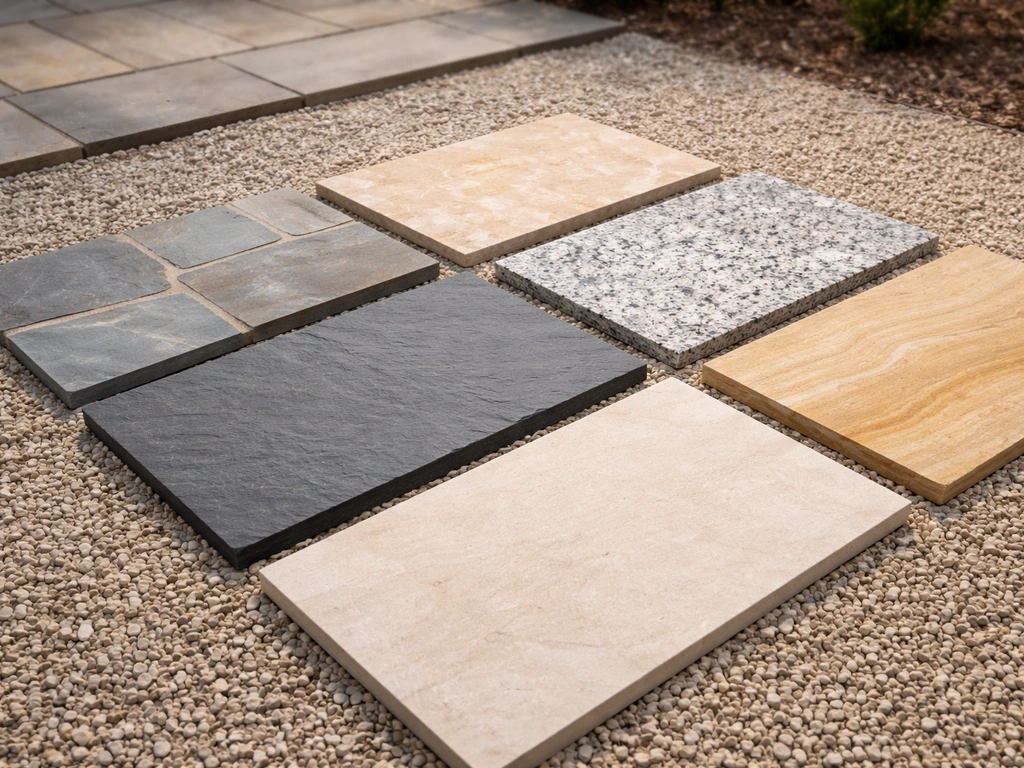
Here are the main contenders, with honest assessments of where each one shines and where it struggles. Next, use these best stone patio ideas to compare popular options by climate, foot traffic, and maintenance needs.
Bluestone (flagstone): best overall
Bluestone is a dense, fine-grained sandstone or argillite (depending on the quarry) with low porosity and a naturally textured cleft surface. It handles freeze-thaw cycles well, provides good natural slip resistance, and is widely available in the Northeast and Mid-Atlantic U.S. It comes in irregular flagging or cut rectangular slabs, giving you layout flexibility. It weathers to a pleasant blue-gray tone and pairs well with most landscape styles. It's my go-to recommendation for anyone in a four-season climate who wants a low-drama patio. If you want the fastest answer, start with bluestone for a low-drama all-around option and then narrow by your climate and traffic level which patio stone is best.
Travertine: best for warm and dry climates
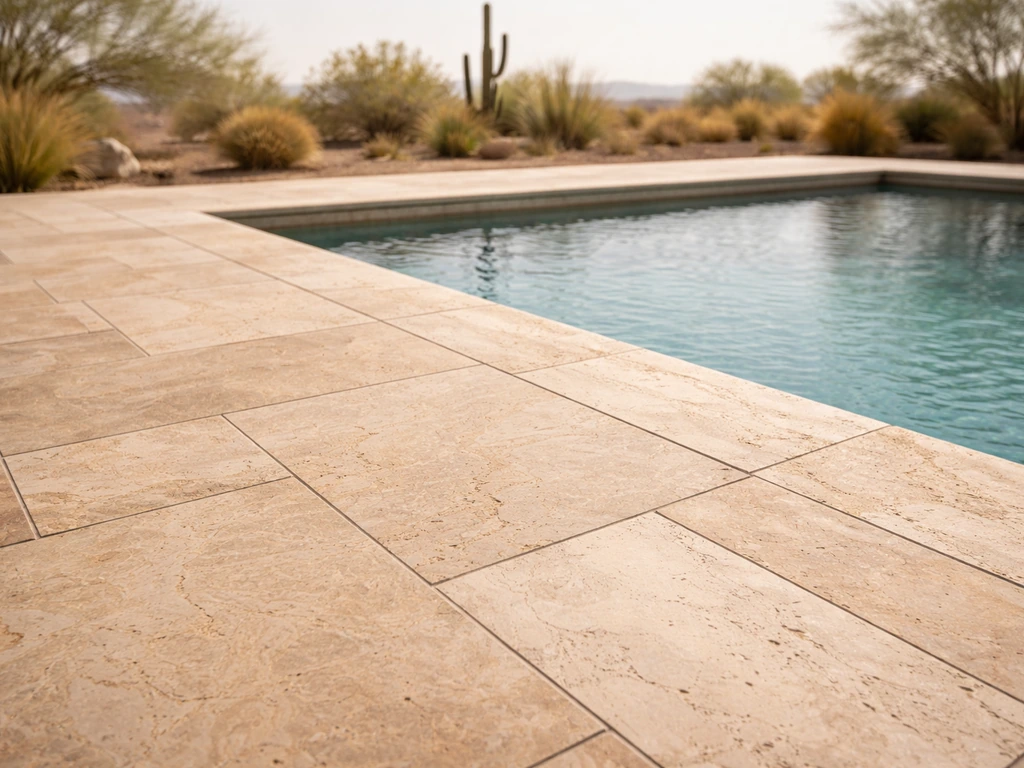
Travertine is a sedimentary limestone with a distinctive pitted, vein-filled surface. It's a popular choice in Florida, Southern California, Arizona, and pool surround applications everywhere because it stays cooler underfoot than dense stone in hot sun. The problem is porosity: travertine is genuinely porous and absorbs water readily. In freeze-thaw climates, unsealed or poorly sealed travertine cracks and spalls. Always use a penetrating sealer on travertine outdoors, and plan on re-sealing every one to two years. In warm climates without hard freezes, it's a beautiful, relatively affordable option.
Granite: best for high-traffic and cold climates
Granite is the hardest and densest natural stone you'll commonly find for patios. Its water absorption is extremely low, which makes it the most freeze-thaw-resistant option available. It resists staining and abrasion better than any other stone on this list. The trade-off is cost and, depending on the finish, slip resistance: polished granite gets dangerously slippery when wet. Always specify a flamed, bushed, or sandblasted finish for outdoor use. Granite is overkill for a simple backyard patio if budget matters, but if you're doing a high-traffic terrace in Minnesota, it earns its premium.
Slate: best for a natural, low-maintenance look
Slate is a metamorphic stone that splits into thin, flat layers with a naturally rough, cleft surface. Its layered structure gives excellent natural grip underfoot. It's moderately porous, though denser than travertine or limestone, and holds up reasonably well in freeze-thaw conditions if it's quality slate (Brazilian and Welsh slates are denser and more durable than some cheaper Chinese imports). The downside is brittleness: thin slate tiles chip and crack more easily under point loads, and the layers can delaminate over time in wet climates. Keep thickness at 3/4 inch or more for outdoor use.
Limestone: best budget option in mild climates
Limestone is widely available, relatively inexpensive, and comes in earthy tones ranging from cream to buff to gray. It's soft and porous, which makes it vulnerable to freeze-thaw damage and staining. In mild climates (zones 7 and warmer, with minimal hard freezes), sealed limestone is a practical, attractive choice. In colder zones, you're fighting an uphill battle. Efflorescence is also a common problem with limestone: salts migrate to the surface and leave white deposits that require specific cleaners before re-sealing. Budget for yearly sealing and occasional efflorescence treatment.
Sandstone: best budget flagstone for dry climates
Sandstone is soft, widely available, and comes in warm tones (tan, rust, gold, brown) that look great with natural landscaping. It's the most porous stone on this list by a significant margin, which makes it a poor choice anywhere with hard winters. In dry, warm climates it's a genuinely affordable and attractive option. The surface texture varies from smooth to rough depending on how it's cut and finished, and the rougher varieties have decent slip resistance. Seal it on installation and re-seal regularly; skipping this step leads to staining from leaves, grease, and organic matter.
Quartzite: best premium option
Quartzite sits between granite and bluestone in terms of hardness and density. It's a metamorphic stone formed from sandstone under high heat and pressure, and the result is a very low-porosity material that handles freeze-thaw cycles well. It often has beautiful layered coloring (whites, silvers, pinks, and golds) and a naturally textured split face. It costs more than most other stones on this list, but if you want a stone that performs like granite and looks more organic, quartzite is worth considering for premium installations.
Marble: beautiful but problematic outdoors
Marble looks stunning in photos but is a poor choice for most outdoor patios. It's porous, acid-sensitive (rainwater and organic acids etch it over time), slippery when polished and wet, and expensive. If you're committed to marble, use a heavily brushed or tumbled finish, seal obsessively, and accept that it will show wear. In most cases, travertine or limestone gives you a similar warm aesthetic with fewer headaches outdoors.
How the Main Stones Actually Compare
The table below cuts through the marketing and gives you a practical side-by-side on the factors that matter most for outdoor use. Slip resistance ratings here reflect a natural cleft or textured finish, which is what you should always specify outdoors.
| Stone | Freeze-Thaw Risk | Hardness / Wear | Porosity / Stain Risk | Slip Resistance (textured) | Maintenance Level | Relative Cost |
|---|---|---|---|---|---|---|
| Bluestone | Low | Medium-High | Low-Medium | Good | Low | Mid |
| Granite | Very Low | Very High | Very Low | Good (if flamed) | Very Low | High |
| Quartzite | Low | High | Low | Good | Low | High |
| Slate | Low-Medium | Medium | Medium | Very Good | Low-Medium | Mid |
| Travertine | High | Medium | High | Good (tumbled) | High | Mid |
| Limestone | High | Low-Medium | High | Medium | High | Low-Mid |
| Sandstone | Very High | Low | Very High | Medium-Good | High | Low |
| Marble | Medium-High | Medium | High | Poor (polished) | Very High | High |
On slip resistance: the industry has moved toward dynamic coefficient of friction (DCOF) rather than static COF as the more meaningful measure of real-world slip risk, since slipping happens in motion, not at rest. ANSI A137.1 sets a minimum DCOF of 0.42 for wet level surfaces. Any natural stone with a cleft, flamed, brushed, or tumbled finish will comfortably exceed this threshold. Polished finishes on granite and marble often do not, which is why you should never spec a polished surface for an outdoor patio.
Surface Finish, Thickness, and Layout: the Details That Actually Affect Performance
Which finish to choose
For outdoor patios, you want a finish that provides grip, weathers naturally, and doesn't show every scuff. Here are the main options:
- Natural cleft: the stone is split along its natural planes, leaving a slightly uneven, textured surface. This is the best all-around choice for slip resistance and a natural look. Bluestone, slate, and quartzite all come this way.
- Thermal (flamed): the surface is exposed to a high-heat torch, which causes surface minerals to expand and pop off, leaving a rough, slightly pitted texture. Excellent for granite and harder stones. Great slip resistance and hides wear well.
- Bushed (brushed): wire brushes abrade the surface to create a matte, slightly rough finish. Good grip, less dramatic texture than flamed. Works on most stone types.
- Tumbled: stones or tiles are tumbled with abrasives to soften edges and give a worn, antique appearance. Travertine and limestone are often tumbled for outdoor use. The rounded edges and rough surface improve grip compared to honed.
- Honed: a flat, smooth, matte finish created by grinding. Better than polished but still slippery when wet. Acceptable for covered patios in dry climates, but not recommended for general outdoor use.
- Polished: avoid for outdoor use entirely. Beautiful indoors, dangerous outdoors when wet.
How thick should the stone be?
For patios that see regular foot traffic, 1. 5 to 2 inches is the practical minimum for most natural stone, and 2 inches is a safer target for flagstone and irregular pieces. For a patio rule of thumb focused on durability, Lapis Patios also recommends flagstone thickness around 1. 5 to 2 inches [1.
5 to 2 inches is the practical minimum for most natural stone](https://lapispatios. com/articles/best-flagstone-for-patios/). Thinner pieces (3/4 to 1 inch) can work for cut and gauged tile formats set in mortar over a concrete slab, but they chip and crack more easily under point loads from furniture legs or heavy pots. If you're doing a dry-set flagging installation on a sand/gravel base, go with 1.
5 to 2 inches minimum. Slate is the exception: it naturally comes in thinner pieces, but stay at 3/4 inch or more to avoid delamination.
Layout patterns and joint width
Layout affects both aesthetics and drainage. Random (crazy pave) flagging with irregular joints suits natural landscape styles and allows flexible drainage paths. Cut stone in running bond, herringbone, or grid patterns gives a cleaner, more formal look but requires more precise base preparation. Whatever pattern you choose, maintain consistent joint widths. A minimum of 3/8 inch (10 mm) is the practical low end; 1/2 to 5/8 inch (12 to 16 mm) is a comfortable target for natural stone joints filled with polymeric sand. Wider joints are fine aesthetically but need more sand and are more susceptible to weed intrusion if the polymeric sand isn't installed well.
Drainage slope: don't skip this
Water pooling under or on your patio is the primary cause of long-term deterioration, especially in cold climates. The surface should slope away from the house at a minimum of 1/8 inch per foot for smooth, cut stone and 1/4 inch per foot for rough or irregular surfaces. This Old House recommends sloping a patio away from the house by 1/8 to 1/4 inch per foot for drainage. In practice, 1/4 inch per foot is the safer standard for most natural stone patios and is what most installation guides recommend. Make sure this slope is built into the base preparation, not corrected by adjusting individual stones later.
Installation Best Practices
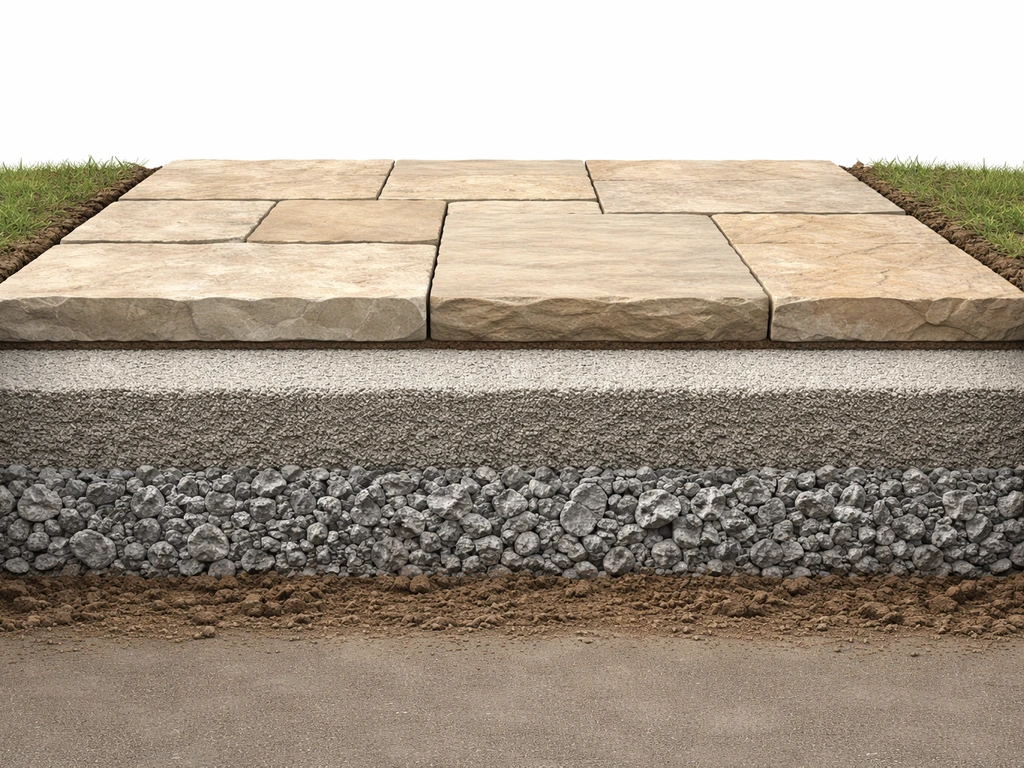
A well-installed natural stone patio can last 50 years or more. A poorly installed one can start heaving and cracking within three winters. The base is everything.
The base: your most important decision
Excavate down far enough to accommodate 4 to 6 inches of compacted crushed stone base (3/4-inch clean crushed stone is ideal), plus a 1-inch bedding layer, plus the stone thickness. In freeze-thaw climates, err toward the deeper end of that range. Compact the crushed stone base in 2-inch lifts with a plate compactor. This base layer drains water downward rather than letting it pool under the stone, which is critical for freeze-thaw performance. Skipping compaction is one of the most common DIY mistakes and leads directly to settling and cracking.
Bedding layer: sand vs mortar vs dry mix
The bedding layer sits on top of the compacted base and supports the stone. For dry-set (mortarless) installations, use a 1-inch layer of coarse concrete sand or stone dust. Avoid fine or silty sand, which compacts poorly and allows stone movement. For mortar-set installations over a concrete slab, use a polymer-modified thin-set or a traditional dry mortar bed. Mortar-set is better for thinner stone formats and formal cut patterns; dry-set works well for thick flagging in informal layouts. In cold climates, a mortar-set installation over a reinforced concrete slab is the most stable long-term approach because it eliminates the ground movement variable entirely.
Jointing: polymeric sand is worth it
Once stones are set and leveled, filling the joints is what holds the system together and keeps weeds and ants out. Standard sand washes out over time, allowing weed seed germination and ant nest building in the joints. Polymeric sand (a blend of fine sand and a polymer binder that hardens when activated with water) is the clear upgrade. It's widely available, relatively easy to apply, and dramatically outperforms plain sand in weed resistance and joint stability. Sweep it into the joints, compact it, sweep again, then mist with water per the product instructions. Make sure the stone surface is dry and the weather is cooperative: applying polymeric sand in rain or before rain washes it out before it sets.
Sealing: when and what
Use a penetrating (impregnating) sealer for outdoor natural stone, not a topical/film-forming sealer. Topical sealers peel and flake outdoors; penetrating sealers soak into the pore structure, repel water and oil from within, and don't change the surface appearance or create a slipping hazard. Before sealing, clean the stone thoroughly: any efflorescence, grease, or mineral deposits must be addressed with appropriate stone cleaners first, because sealing over contamination locks it in.
Make sure the stone is completely dry before applying sealer, and consider testing on a small area first. Some porous stones like travertine and limestone absolutely need sealing at installation and then every one to two years. Denser stones like granite and quartzite can go longer between applications or may not strictly need sealing at all.
Keeping Your Natural Stone Patio Looking Good Over Time
Routine cleaning
Sweep or blow off debris regularly. For periodic washing, plain water and a stiff brush are sufficient for most maintenance. For organic stains (leaves, bird droppings, mildew), a pH-neutral stone cleaner works well. Avoid anything acidic (vinegar, citrus cleaners) on limestone, travertine, or marble because acid etches calcium-based stones. Avoid bleach-based products on colored stones as they can affect the surface. For stubborn grease stains from outdoor cooking, a degreasing stone cleaner or a poultice application (an absorptive paste that draws the stain out of the stone) is the right approach.
Weed control in joints
Even with polymeric sand, weeds eventually find their way in, especially around the perimeter. Pull them early before roots work into the base. Avoid using salt as a weed killer on stone patios: it contributes to efflorescence and can damage the stone over time. Spot treatment with a stone-safe herbicide is a better option. If weeds become a recurring problem, it may mean the polymeric sand has degraded or wasn't applied deep enough; re-application every five to seven years is normal.
Re-sealing schedule
The water bead test tells you when to re-seal: pour a small amount of water on the surface. If it beads and sheets off, the sealer is still working. If it absorbs within a few seconds, it's time to re-seal. Porous stones like travertine, limestone, and sandstone typically need re-sealing every one to two years. Bluestone and slate every two to three years. Granite and quartzite every three to five years, if at all. Always clean and dry thoroughly before applying new sealer.
Efflorescence
Efflorescence, those white powdery or crystalline deposits on the stone surface, is a common issue with limestone and travertine in particular. It's caused by soluble salts migrating to the surface with water movement. It's not permanent, but don't try to seal over it. Use an efflorescence-specific cleaner to remove the deposits first, then address the moisture source if possible (improving drainage often helps), then re-seal. Reducing moisture pathways below the installation (good base drainage, damp-proofing where appropriate) is the long-term fix.
Winter care in freeze-thaw climates
If you're in a cold climate, avoid using rock salt or sodium chloride-based ice melt products on natural stone. Salt accelerates the freeze-thaw damage mechanism by lowering the freezing point repeatedly through multiple cycles and contributes to efflorescence. Use sand for traction instead, or choose a calcium magnesium acetate (CMA) or potassium chloride-based ice melt product that's less damaging to stone. Make sure your sealer is freshly applied going into winter: a good penetrating sealer significantly reduces the water ingress that drives freeze-thaw cracking. Clean the patio in spring to remove any winter residue before it works deeper into the stone.
Quick Reference: Best Stone by Use Case
| Use Case | Best Choice | Runner-Up |
|---|---|---|
| Best overall (four-season climate) | Bluestone flagstone | Quartzite |
| Best for hard freeze-thaw zones (Zone 5 and below) | Granite (flamed) | Bluestone |
| Best for warm/dry climates and pool areas | Travertine (tumbled) | Limestone (sealed) |
| Best for high foot traffic | Granite | Quartzite |
| Best natural slip resistance | Slate (cleft) | Bluestone (cleft) |
| Best budget option (mild climate) | Limestone or Sandstone | Bluestone |
| Best premium/high-end look | Quartzite | Granite |
| Worst choice for outdoor use | Marble (polished) | N/A |
Whatever stone you choose, the base preparation, drainage slope, and jointing system matter as much as the stone itself. A beautiful piece of travertine on a poorly drained base in Wisconsin will be rubble in five years. The same travertine on a properly built base in Georgia will look great for decades. Get the fundamentals right, choose a stone that matches your climate, and maintain the sealer, and you'll be happy with your patio for a very long time.
FAQ
How do I choose between bluestone and granite for a patio if I’m not sure about winter severity?
If you want one stone that stays reliable across a wide range of cold conditions, pick granite with a flamed, brushed, or sandblasted finish. If you prefer a lower-cost “set it and forget it” option in freeze-thaw areas, bluestone is the safer bet, but confirm your bluestone has low water absorption and specify a textured outdoor finish to avoid sheen when wet.
Can I use the same sealer schedule for every stone if I buy them from the same store?
No. Porosity and pore connectivity drive re-sealing frequency. Travertine, limestone, and sandstone typically need re-application roughly every 1 to 2 years, while granite and quartzite can often go 3 to 5 years or longer depending on exposure. Always base the schedule on the stone type and test water beading before assuming you can skip the next coat.
What’s the best way to prevent “wobbly” flagstones or rocking slabs after installation?
Use a properly compacted crushed stone base (compacted in lifts) and set stones on the right bedding material (coarse sand or stone dust for dry-set). Also verify individual stones are supported at their corners and edges, not just at high points, because rocking usually means bedding thickness was inconsistent or the base settled.
Is it okay to install natural stone over existing concrete slabs for an outdoor patio?
It can work, but only if the slab is sound and you plan the setting method correctly. For thinner stone formats or formal patterns, a mortar-set installation over a reinforced concrete slab is typically the most stable approach because it reduces movement from freeze-thaw. If you dry-set over concrete, expect more sensitivity to slab cracking and unevenness.
Do I need expansion gaps between stones and at the patio edges?
Yes, at least functionally. Maintain consistent joint widths for polymeric sand performance, and leave appropriate perimeter allowance so movement from temperature changes does not force stones against fixed surfaces (house walls, posts, steps). If you lock joints too tightly at edges, you can get cracking even when the center looks fine.
How should I handle oil stains from grills or patio furniture on porous stones?
Act quickly and don’t rely on regular washing. Use a stone degreaser or a poultice designed to draw oil out of the stone, then rinse and allow full drying before any sealing. If the stone is unsealed, sealing afterward only helps if the stain residue and grease are fully removed first.
What should I do if my patio has efflorescence already, can I just seal over it?
Don’t seal over it. Efflorescence indicates soluble salts and moisture movement. Remove deposits with an efflorescence-specific cleaner first, address the moisture source when possible (often drainage or trapped water), let the stone dry completely, then re-seal after cleaning.
How often do I need to reapply polymeric sand, and what signs mean it’s failing?
Re-application every 5 to 7 years is common when joints are exposed to heavy washing, vegetation pressure, or freeze-thaw movement. Signs of failure include persistent weeds in joints, sand washout after rain, or joints that crumble instead of holding together. If weeds keep returning despite decent application, the sand may not have been compacted deeply enough.
Is it safe to use leaf blowers or pressure washing on natural stone patios?
Leaf blowers are generally fine, but pressure washing can be risky because it can erode joints and push water and debris into the base. Stick to low-pressure cleaning when needed, keep the nozzle away from joint lines, and use a stiff brush with plain water for routine maintenance to protect polymeric sand.
What ice melt should I use for a stone patio in freezing climates?
Avoid rock salt and sodium chloride products, since repeated freeze-thaw and salt residue can worsen freeze-thaw damage and efflorescence. For traction, use sand, or choose products like calcium magnesium acetate (CMA) or potassium chloride based ice melt, and clean the surface in spring so residues do not keep migrating into the stone.
Which patio stone finish is best for safety near pools or when it rains a lot?
Choose a textured cleft, flamed, brushed, or sandblasted finish rather than polished. Even “hard” stones can be slippery when wet if the surface is too smooth, so specify an outdoor-rated texture and confirm it matches your real wet conditions, not just dry-foot traffic.
How thick should stones be if I want to set them as dry-set flagging on a sand or gravel base?
For typical outdoor patios, plan on 1.5 to 2 inches minimum for most stones in dry-set flagging on sand or gravel. Thinner pieces can work only with careful support and formats intended for mortarless installation, but they are more prone to chipping and cracking from point loads like furniture legs and heavy planters.