The best gravel for a patio base is 3/4-inch crushed angular stone, sometimes called processed gravel, road base, or crusher run depending on your region. Choosing the best gravel for patio projects also means matching the stone type and gradation to whether you’re building with pavers or pouring concrete best gravel for a patio base.
Best Gravel for Patio Base: Concrete and Paver Options
Nolan Ellison
27 May 2026
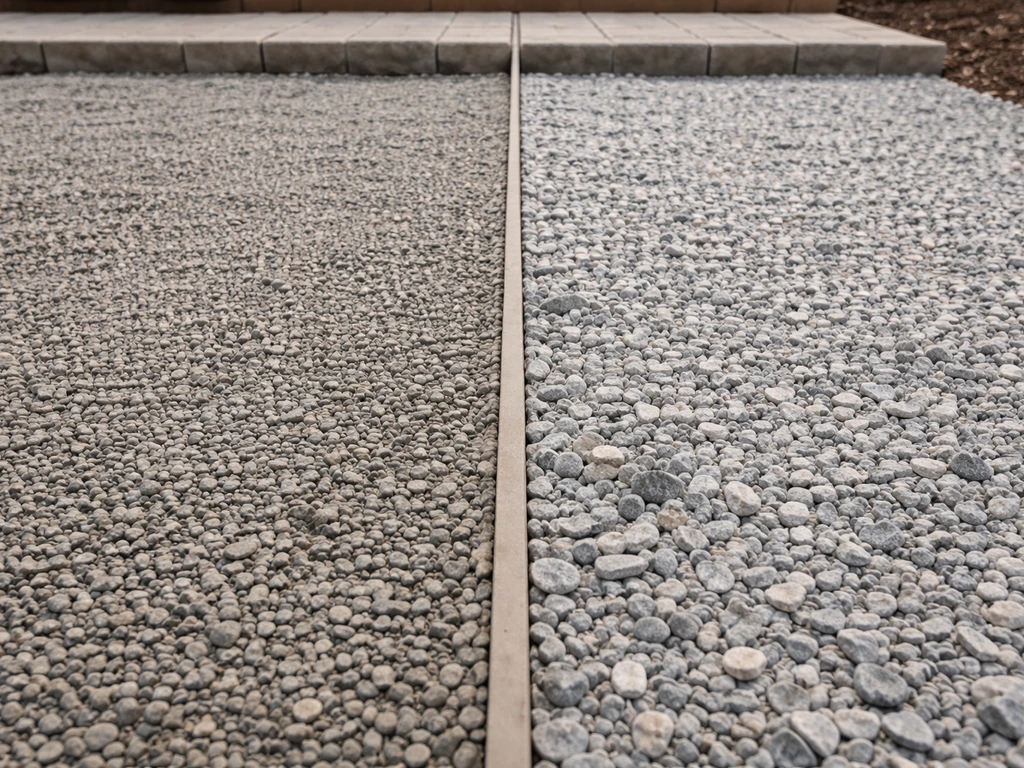
For paver patios, you want that 3/4-inch crushed stone (with some fines mixed in) compacted into a 4 to 6 inch layer, topped with about 1 inch of bedding sand. For a concrete patio, you want a clean 3/4-inch crushed stone or ASTM #57/#67 aggregate compacted to the same 4 to 6 inch depth, but skip the bedding sand layer. The key in both cases is angular stone, proper compaction, and the right thickness for your soil and climate.
Gravel type for paver base vs. concrete base
These two patio systems have different structural needs, so the gravel choice isn't one-size-fits-all. A paver patio needs a base that compacts densely but still allows water to move through the system. A concrete slab needs a stable, uniform platform that won't shift or settle unevenly as the concrete cures and takes load.
For paver patios
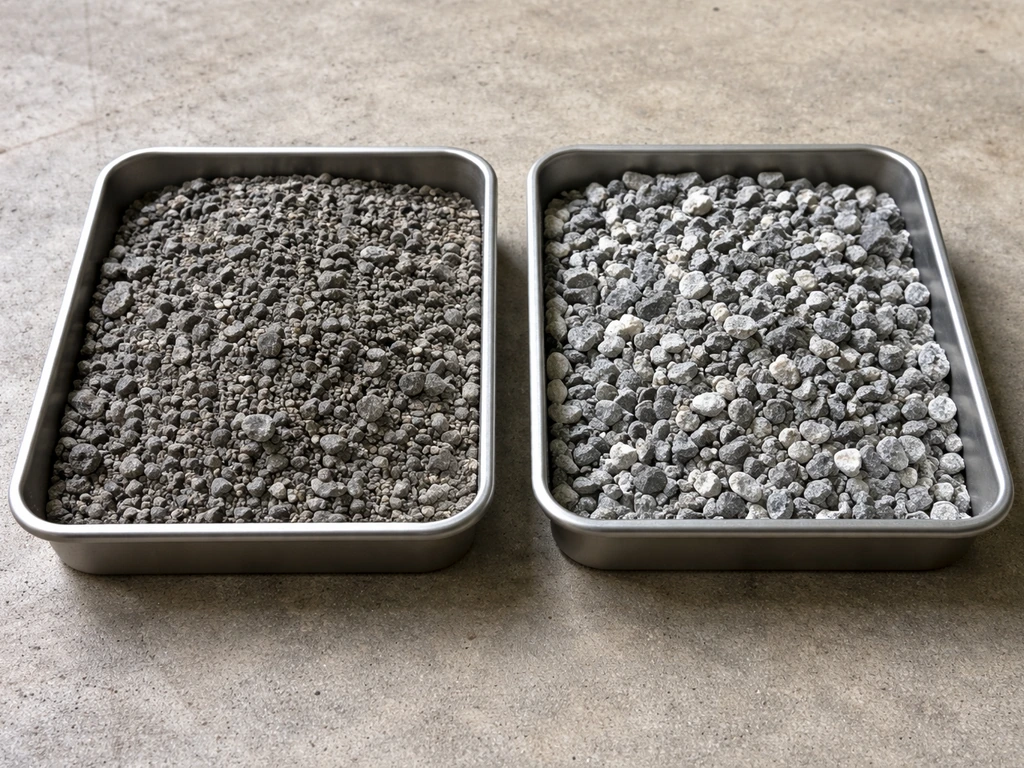
Use 3/4-inch crushed stone with fines (sometimes labeled as 3/4-inch minus or crusher run). The angular edges lock together under compaction, which is what gives the base its rigidity. The fines (small particles that come with the crush) fill the voids and help the layer bind. This is the material that most manufacturer installation guides, including those from Belgard and Nitterhouse Masonry, specify by name. Avoid rounded stone like pea gravel or river rock here: rounded particles don't interlock, they roll under load, and your pavers will shift.
For concrete patios
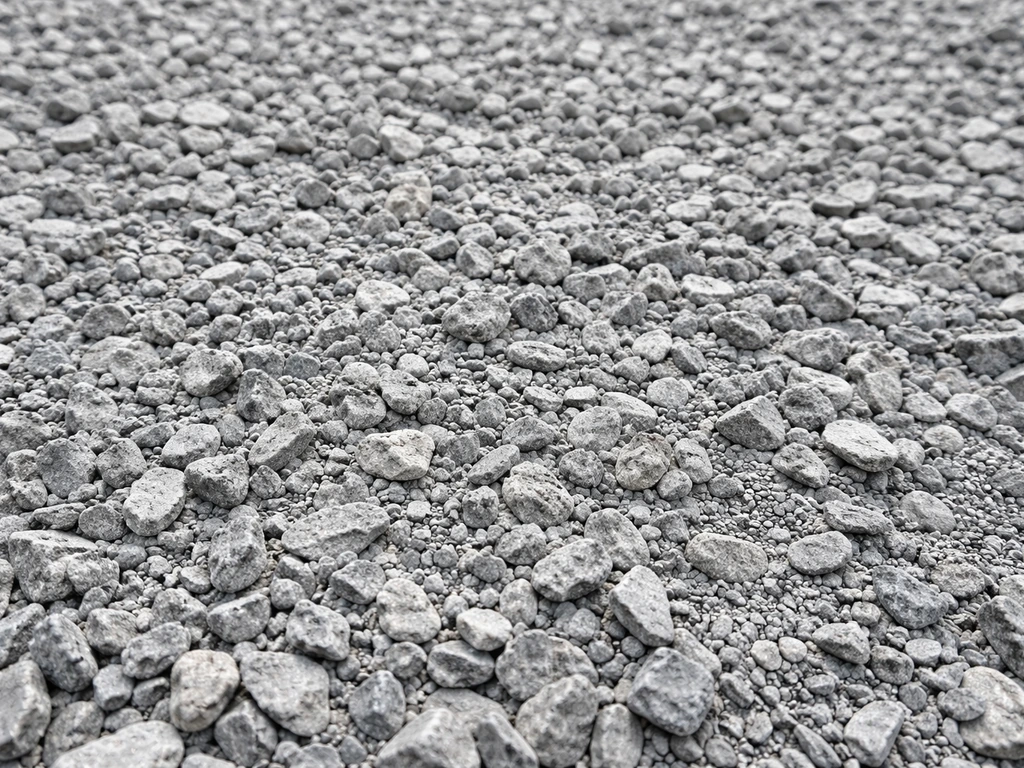
Go with a clean crushed stone, either 3/4-inch or an ASTM #57 or #67 equivalent (Michigan and other state DOTs use designations like 6AA or 17A for the same material class). Clean means minimal fines in this context: you want drainage through the base layer, not a tight-packed mix that traps water under your slab. The FHWA guidance on concrete pavement bases specifically calls out crushed stone and sand-gravels as appropriate granular materials. Rounded stone is again on the avoid list: a SlabCalc base-preparation reference lists pea gravel and river rock as problematic because they don't compact or interlock reliably under a concrete slab.
| Feature | Paver Patio Base | Concrete Patio Base |
|---|---|---|
| Best gravel type | 3/4-in crushed stone with fines (crusher run) | Clean 3/4-in crushed stone or ASTM #57/#67 |
| Fines (small particles) | Beneficial: help base bind under compaction | Minimize: can impede drainage under slab |
| Rounded stone (pea gravel) | Avoid: rolls, won't lock | Avoid: unstable, poor compaction |
| Bedding layer on top | Yes: 1 inch of coarse bedding sand | No: concrete poured directly on compacted base |
| Geotextile fabric | Recommended on clay or wet soils | Recommended on clay subgrade to prevent migration |
Gravel size and gradation: what actually matters
The 3/4-inch nominal size is the sweet spot for both patio systems. It's large enough to allow drainage and resist movement, but small enough to compact into a tight, uniform layer. Go significantly larger (say 1.5-inch or 2-inch stone) and you lose the tight interlocking. Go smaller (pea-size or fine gravel) and you lose stability under load.
Gradation refers to the spread of particle sizes in the mix. For pavers, a well-graded mix (particles ranging from the 3/4-inch top size down through fines) compacts into a stiffer, more cohesive base. For concrete, a more open-graded or clean stone is preferred because it maintains drainage pathways that prevent hydrostatic pressure from building under your slab. When you call your local quarry or landscape supplier, ask for: 3/4-inch crushed angular stone with fines for pavers, or clean 3/4-inch crushed stone (or ASTM #57) for concrete.
How to build up the layers properly
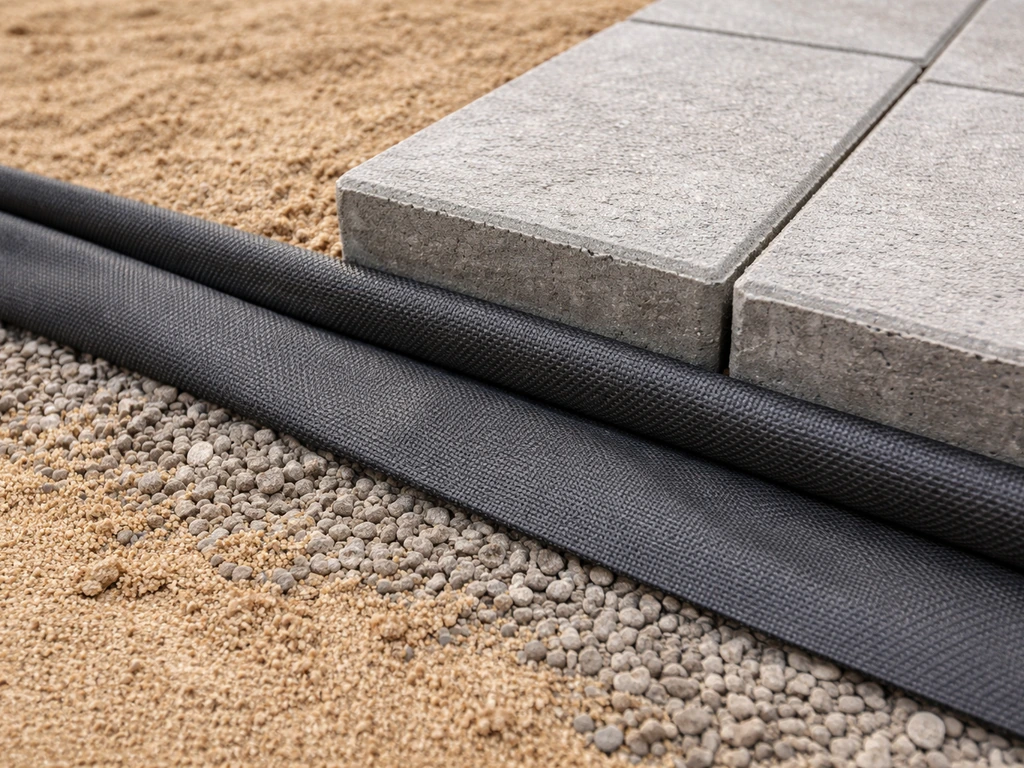
The layered structure is what separates a patio that lasts 20 years from one that starts rocking and settling after two winters. Here's how the layers work from bottom to top for each system.
Paver patio layer sequence
- Excavate to a depth that accounts for all layers plus your paver thickness. Remove all organic material, roots, and debris from the subgrade.
- Inspect the subgrade soil. If you have clay, expansive soil, or a consistently wet area, install a non-woven geotextile fabric directly on the subgrade before adding any gravel. This prevents clay fines from migrating up into your base over time.
- Add 3/4-inch crushed stone with fines in 4-inch lifts. Compact each lift thoroughly before adding more. Total compacted base depth should be 4 to 6 inches for most residential patios.
- Add approximately 1 inch of coarse bedding sand (a product like Sakrete Paver Base Sand works well). Screed it flat. Do not exceed 1.5 inches of bedding sand: too thick and you lose support, the pavers can rock, and the layer becomes unstable.
- Set pavers on the bedding sand, then compact the finished surface with a plate compactor to seat the pavers into the sand.
- Fill joints with polymeric sand for weed resistance and sweep clean.
Concrete patio layer sequence
- Excavate and remove organic material. On clay subgrade, lay a geotextile separation fabric to prevent the clay from migrating into your gravel base.
- Add clean 3/4-inch crushed stone or ASTM #57 in a single 4 to 6 inch compacted layer (you can do this in two 3-inch lifts on deeper excavations).
- Compact the base to 95% Modified Proctor density. This typically means multiple passes with a plate compactor, not just a hand tamper.
- Pour concrete directly on the compacted gravel base. No bedding sand layer needed or wanted.
The 4 to 6 inch depth range for both systems comes from FHWA guidance and is echoed across concrete and paver industry specs. In frost-prone climates, lean toward 6 inches or even deeper: the subbase thickness is often what provides the frost protection buffer that keeps your patio stable through freeze-thaw cycles. In that context, can you use gravel as a sub base for a patio depends on having the right thickness and a well-compacted base layer subbase thickness.
Drainage, compaction, and weed control
Getting the slope right
Before you place a single shovelful of gravel, make sure your excavated subgrade slopes away from the house. The standard minimum is 1/8 inch per foot (roughly 1%), and that target is referenced in both the IRC (R401. For paver systems, HowToHardscape recommends aiming for about 1/8 inch per foot (about 1%) away from structures and foundations as a common drainage slope target 1/8 inch per foot (roughly 1%). 3) and paver installation specs. For a 10-foot-deep patio, that's about 1.25 inches of drop from the house edge to the far edge. This slope carries through every layer: subgrade, base, and finished surface all need to drain outward, not toward your foundation.
Compaction: don't cut this corner
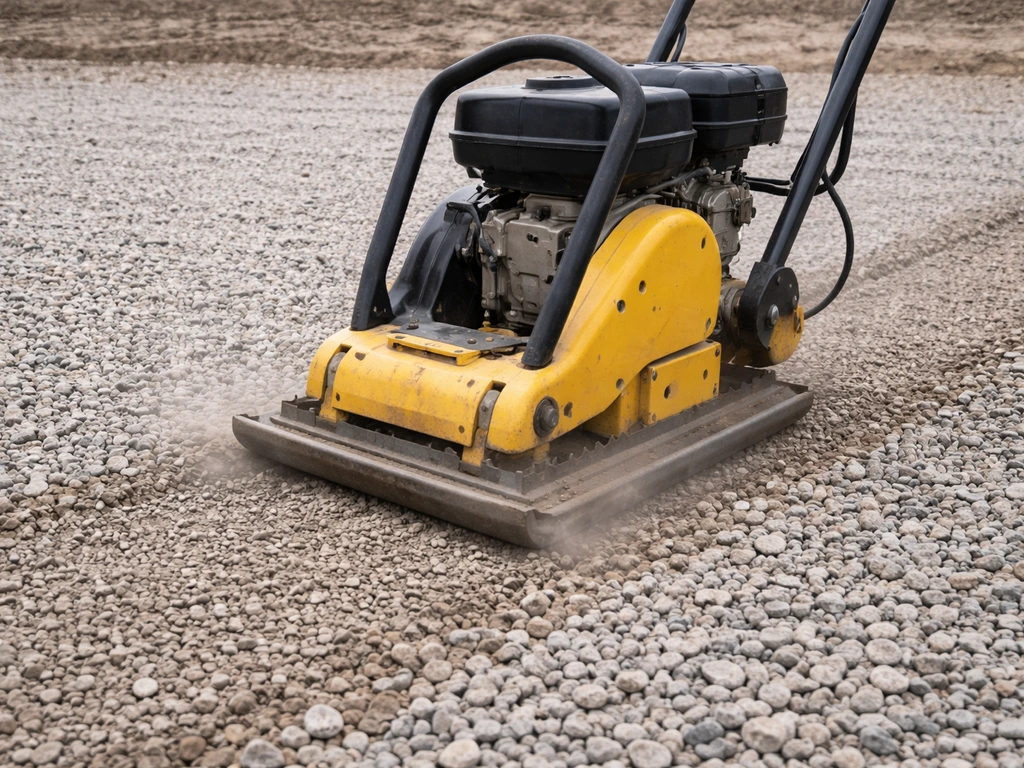
A hand tamper is not enough for anything larger than a very small patch. For paver bases, Belgard specifies a reversible plate compactor generating at least 7,000 lbf of compaction force. The Belgard commercial installation checklist also calls for at least three passes with the vibratory plate compactor per lift. The density target you're aiming for is 95% Modified Proctor, which is the industry standard cited by ICPI Tech Spec 4. In practical terms, if the surface of your gravel layer still shows footprint impressions after compaction, it's not done. Never place base material over a frozen subgrade, and never use frozen base material: frost in the aggregate will collapse when it thaws and you'll end up with voids.
Weed control: where the real work happens
Weeds in a paver patio almost always come from seeds blowing into the joints from above, not from below through the base. That said, a properly built base still helps. A non-woven geotextile on the subgrade (not woven: woven types can trap hydrostatic pressure in freeze-thaw climates) [prevents soil and organic material from contaminating your base](https://hub. countymaterials.
com/hubfs/downloads/InstallationGuidelinesInterlockingConcretePaversSlabs1138328263. pdf), which removes a key growing medium. The bigger weed-control move is using polymeric sand in the joints instead of regular jointing sand. Polymeric sand bonds when wet and makes the joint much less hospitable to germinating seeds.
Sealing pavers adds another layer of protection. If you're building a concrete patio, weeds aren't a joint issue, but you should still remove all vegetation and organic matter from the subgrade before placing gravel.
Calculating how much gravel you need
Gravel is sold by the ton or cubic yard depending on your supplier. Here's a simple way to work it out:
- Measure your patio area in square feet (length x width).
- Decide on your compacted base depth: 4 inches minimum, 6 inches for clay soil or frost-prone areas. Convert inches to feet (4 inches = 0.33 ft; 6 inches = 0.5 ft).
- Calculate cubic feet: square footage x depth in feet. Example: a 200 sq ft patio at 4 inches deep = 200 x 0.33 = 66 cubic feet.
- Convert to cubic yards: divide by 27. So 66 ÷ 27 = about 2.4 cubic yards.
- Add 10 to 15% for compaction loss and waste. In this example, order roughly 2.7 to 2.8 cubic yards.
- To convert cubic yards to tons: crushed stone typically weighs about 1.4 to 1.5 tons per cubic yard. So 2.8 cubic yards x 1.4 = approximately 3.9 tons.
For bedding sand (paver systems only), add a separate calculation for 1 inch depth over the same area. One inch of sand over 200 sq ft is about 0.62 cubic yards before accounting for waste. Always call ahead and confirm the weight-to-volume ratio with your specific supplier: material densities vary slightly by quarry and stone type.
Common mistakes, troubleshooting, and where to source
Mistakes that cause real problems
- Using the wrong gradation: clean stone under pavers (instead of crusher run with fines) compacts poorly and the base stays loose. Stone with too many fines under concrete traps water and promotes frost heave.
- Skimping on depth: 2 to 3 inches of gravel is not a base, it's a suggestion. Settlement and cracking are almost guaranteed on clay or organic soil at that depth.
- Skipping lifts during compaction: dumping 8 inches of gravel and running one pass over the top doesn't compact the bottom half. Compact in 4-inch lifts.
- Too much bedding sand on pavers: anything over 1.5 inches creates a spongy layer that causes rocking and edge displacement over time.
- Ignoring drainage slope: a level patio looks tidy but water will pool against your foundation. The 1% slope (1/8 inch per foot) is the minimum, not a suggestion.
- Placing base on frozen ground: the freeze-thaw collapse creates voids and settlement even if compaction looked good on the day of installation.
- Using rounded stone (pea gravel or river rock): under any patio system, this is a stability mistake. Angular, crushed stone only.
Troubleshooting settling or shifting after installation
If pavers are rocking or sinking in spots, the most likely culprit is insufficient base depth or bedding sand that's too thick. Lift the affected pavers, check the sand depth (it should still be close to 1 inch after compaction and use), and if the base itself feels soft or shows a hollow sound when tapped, the gravel layer needs to come out and be rebuilt with proper compaction. For a concrete slab that's cracking or settling unevenly, the base was almost certainly undercompacted or the depth was too shallow for the soil conditions. Significant concrete slab repair usually means saw-cutting, removing the slab section, rebuilding the base, and reporing, which is why getting the base right the first time matters so much.
Sourcing tips
Buy from a quarry or landscape materials yard, not a home improvement store, for bulk quantities. Quarry stone is typically fresher (hasn't sat in bags), less expensive per ton, and you can ask exactly what gradation you're getting. Key questions to ask: Is the stone angular or rounded? Does the crusher run have fines, or is it clean?
What's the nominal size? Ask for a gradation spec sheet if you're doing a large project. For concrete base material, ask specifically for ASTM #57 or your state's equivalent. For paver base, ask for 3/4-inch crusher run or 3/4-minus processed gravel.
Washed vs. unwashed: for paver base with fines, you want unwashed (the fines are part of the point). For clean concrete subbase, washed or unwashed is less critical as long as the fines content is low.
One last note: the gravel base is just one part of a well-built patio system. If you're still deciding whether gravel alone works as a patio surface (not just a base), or thinking about what to put on top of the base, those are separate but related decisions worth thinking through alongside the base spec. Whether a gravel patio is a good idea depends on the support, drainage, and how much maintenance you are willing to do.
FAQ
Can I use pea gravel or river rock if I’m short on time or budget?
Yes, but you typically need to rebuild with the correct angular, compactable material. Pea gravel and other rounded aggregates may look stable at first, but they shift under point loads and can cause pavers to rock or concrete to settle unevenly. If the existing base is only a few inches deep, you usually cannot “fix it on top” with more sand, you have to remove the failing layer and replace it with the specified crushed stone and fines, then recompact in lifts.
What’s the difference between 3/4-inch crushed stone and 3/4-minus crusher run for a patio base?
For pavers, the “minus” or crusher run terminology is important because it indicates fines are present. Those fines help fill voids and improve interlock when compacted. If the supplier only provides clean 3/4-inch crushed stone with minimal fines, you may get drainage but you can lose stiffness, which increases the chance of rocking units. Ask the quarry for the fines content or gradation range rather than relying only on the nominal size.
Should I put geotextile fabric under the gravel, and where exactly does it go?
A geotextile can be used, but it should be under the base layer, not between the base and bedding sand (for pavers) or under the concrete subbase (for slabs). Place non-woven fabric on the subgrade to reduce soil intrusion, then build your crushed stone layers over it. If you use the wrong type (woven in particular), or if fabric is placed where water cannot drain, you can create trapped moisture that worsens freeze-thaw performance.
If I increase gravel thickness, will that compensate for weaker soil or poor drainage?
Depth rules assume the material is compacted properly, in lifts, to the target density. For frost-prone or clay-prone soils, increasing base thickness without increasing compaction quality can still fail, because softened zones develop where the density is low. If you’re uncertain, you can verify compaction with a density test service (or at least confirm the surface holds firm with no ruts or hollow sounds), and then adjust thickness based on local frost conditions and drainage.
Is washed crushed stone ever acceptable for a paver patio base?
Not reliably. The article’s guidance relies on dense, angular crushed stone that interlocks and compacts. When fines are removed (for example, washed stone) the base can drain too freely and lose cohesion, which is especially noticeable under pavers as rocking. For concrete slabs, clean stone is preferred for drainage, but “clean” still means you should avoid mostly rounded aggregate or overly uniform material that will not lock up.
My pavers are rocking, can I fix it by adding more bedding sand instead of removing gravel?
If the base layer is undercompacted, topping with extra sand usually does not solve the root problem. For pavers, lift the affected units, check bedding sand depth after compaction, and then assess the gravel base by feel and sound (soft spots or a hollow sound indicate failure). Repair usually requires removing and replacing the base material in that zone, then compacting again with a plate compactor, not simply adding more sand.
Do I need to slope the subgrade too, or is it enough to slope the finished patio?
The correct slope matters, but it should not be attempted by sloping the finished pavers or slab alone. You want consistent outward drainage through the subgrade and the entire base build-up. If you slope only the surface while leaving the subgrade flat, water can still collect beneath the slab or base, increasing freeze-thaw risk and promoting settlement. Re-check grades at multiple points before and during base placement.
Can I compact gravel if the subgrade is slightly frozen or cold?
Don’t lay base material on frozen ground. Frozen soil or partially frozen aggregate can prevent proper compaction, and when everything thaws you can get voids and settlement. If work is delayed by weather, wait until both the subgrade and base materials are fully thawed and capable of being compacted to the required density before continuing.
Why is bedding sand used for pavers but usually skipped under a concrete slab?
For concrete patios, you generally avoid a bedding sand layer under the slab in the typical system described. Sand beneath a slab can act like a lubricant layer and promote settlement or cracking if it migrates or traps moisture. If you’re following a local engineer or DOT spec for a particular project, confirm whether your region calls for a sand or lean-mix transition, but the standard approach here is a stable crushed stone subbase without that intermediate sand layer.
How do I choose a stone size if the supplier offers several options like 1/2 inch, 3/4 inch, and 2 inch?
Yes, and it affects performance. A base that is too small in size (too much fine gravel) can pump or migrate under loads, while a base that is too large (around 1.5 to 2 inches) can resist compaction and create a loose, draining structure that does not interlock well. The sweet spot in the article is about 3/4-inch nominal crushed angular material, with the paver base benefit coming from having fines in the mix.