For a gravel-only patio surface, pea gravel (3/8" rounded) or angular crushed stone chips (3/8"–1/2") are the most popular choices, pea gravel for a softer, decorative look and crushed stone for better stability underfoot. If you're laying pavers or patio stones on a gravel base, you want compacted crusher run or 3/4" minus (CA6) as your structural base layer, topped with a 1" bedding layer of coarse sand. The right pick depends on whether gravel is your finished surface or just the foundation underneath.
Best Gravel for Patio: Types, Sizes, and Installation Tips
Nolan Ellison
8 May 2026
Choosing patio gravel by look and function
Before you order anything, figure out what job you're asking the gravel to do. There are really two different scenarios here, and they call for completely different materials.
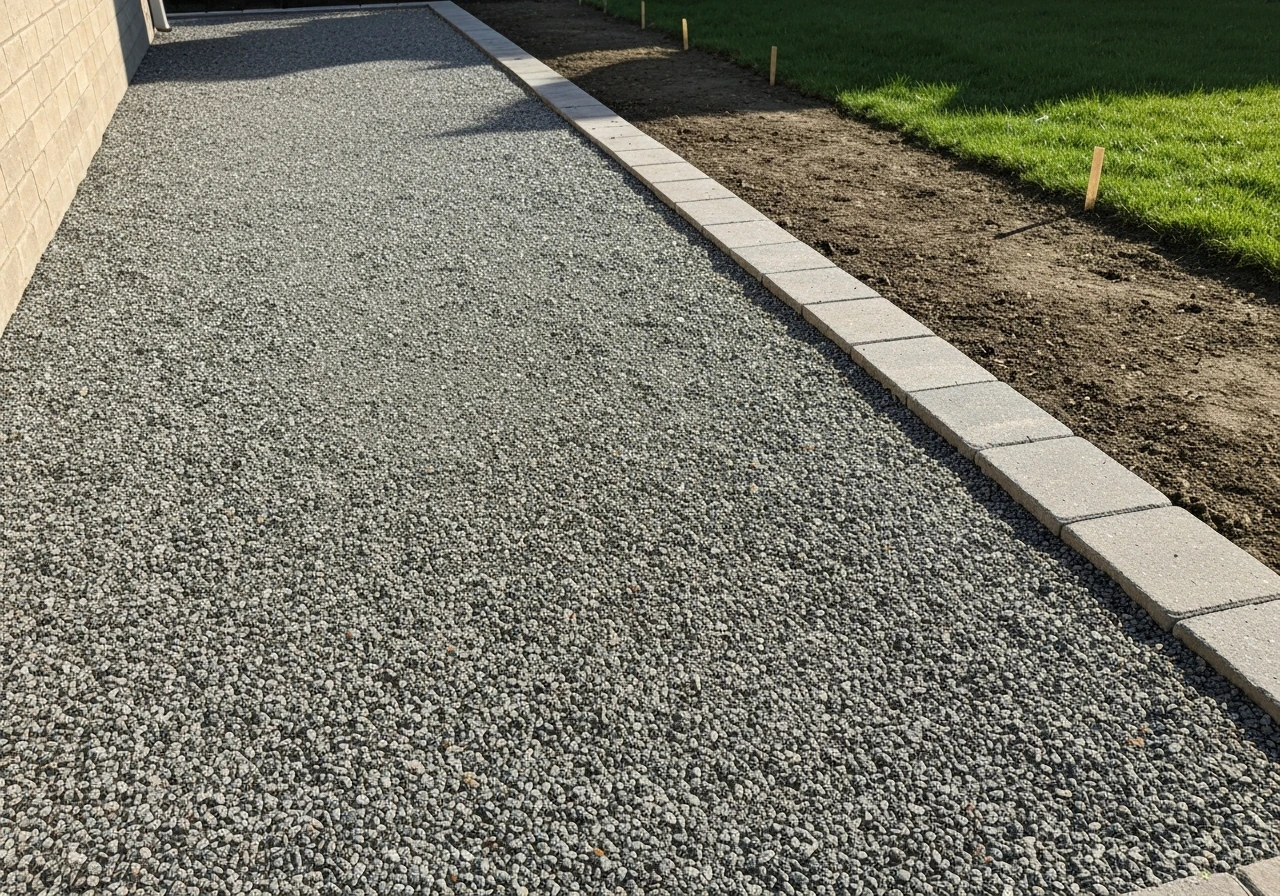
The first scenario is gravel as your finished walking surface, what most people picture when they search "gravel patio. For the best gravel for a patio base, focus on compactable materials like crusher run or 3/4 minus, then add the right bedding layer if needed gravel as your finished walking surface. " You're sitting in a chair, walking across it barefoot (maybe), and the gravel is what you see and feel. Here, appearance, particle size, comfort underfoot, and stability all matter enormously. You want something that looks intentional and stays reasonably put when you walk on it.
The second scenario is gravel as a structural base under patio stones, pavers, or flagstone. Nobody sees it. It just needs to compact tightly, drain well, and not shift under load. A pretty, rounded pea gravel would be a disaster here, it doesn't compact and will let your pavers rock and sink.
Most buyer confusion comes from mixing these two uses up. Once you know which one you're solving for, the decision gets much simpler.
Gravel types and sizes
Here's a plain-English breakdown of the most common options you'll encounter at landscape suppliers and home centers.
Pea gravel (3/8" rounded)
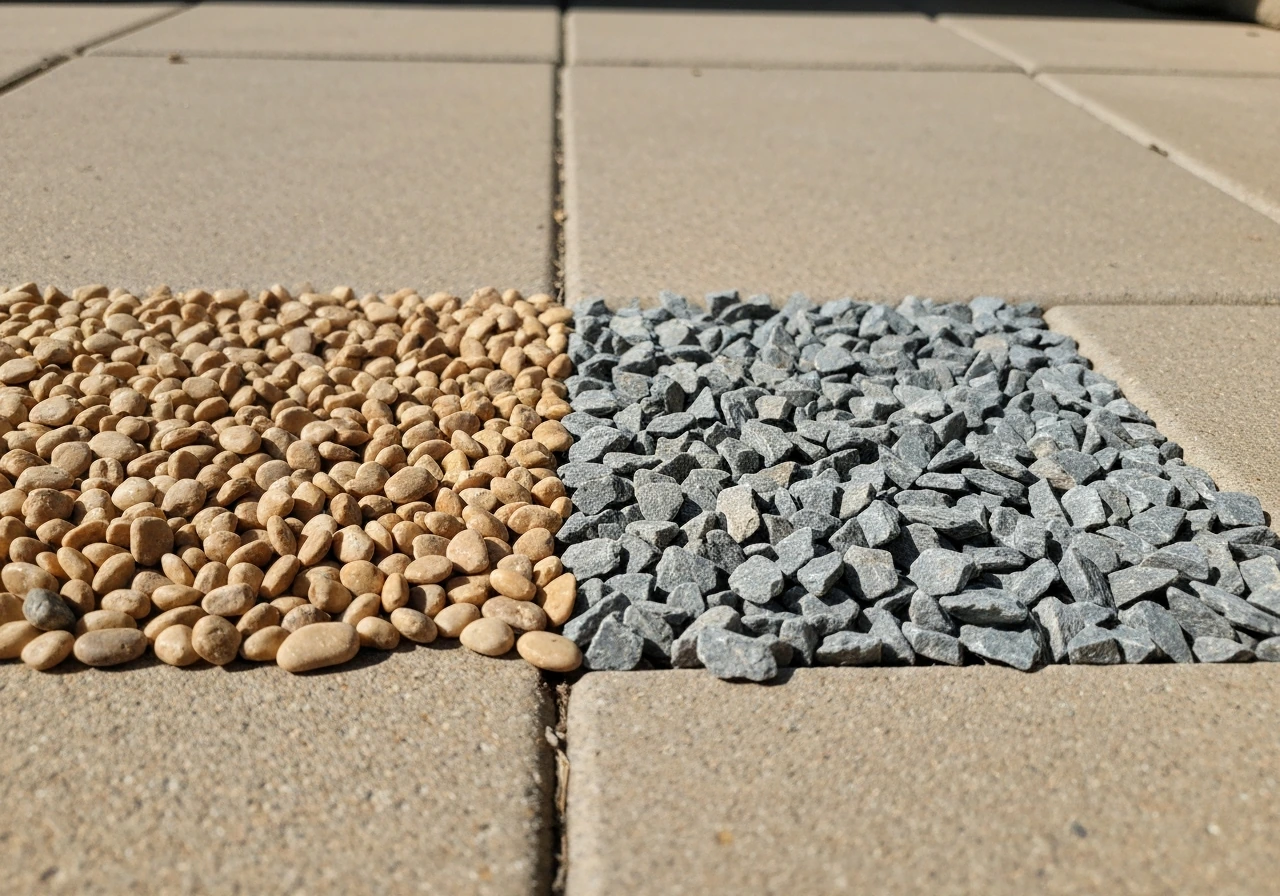
Pea gravel is the classic decorative choice. The smooth, rounded stones (typically 3/8" diameter) look clean, come in natural earth tones, and are gentle underfoot. The downside is that rounded stones don't interlock, they roll. On a flat, level patio area with solid edging, pea gravel performs reasonably well. On any slope or turn, it displaces quickly and you'll be raking it back constantly. It's also the worst possible choice for a structural base because it can't compact into a solid mass.
Crushed stone chips (3/8"–1/2" angular)
Angular crushed stone, sometimes called chip stone, crushed granite, crushed limestone chips, or decorative crushed rock, is the better-performing surface gravel for most patios. For patio furniture, that improved stability is why many homeowners choose angular crushed stone as the best gravel for a furniture-friendly surface better-performing surface gravel. The angular edges lock together when walked on, so it resists displacement much better than pea gravel. It still gives you a loose, natural look, but it's more stable. If you want a gravel surface that doesn't migrate into your lawn every week, angular chips in the 3/8"–1/2" range are the practical choice.
Crusher run / crusher fines (3/8" minus)
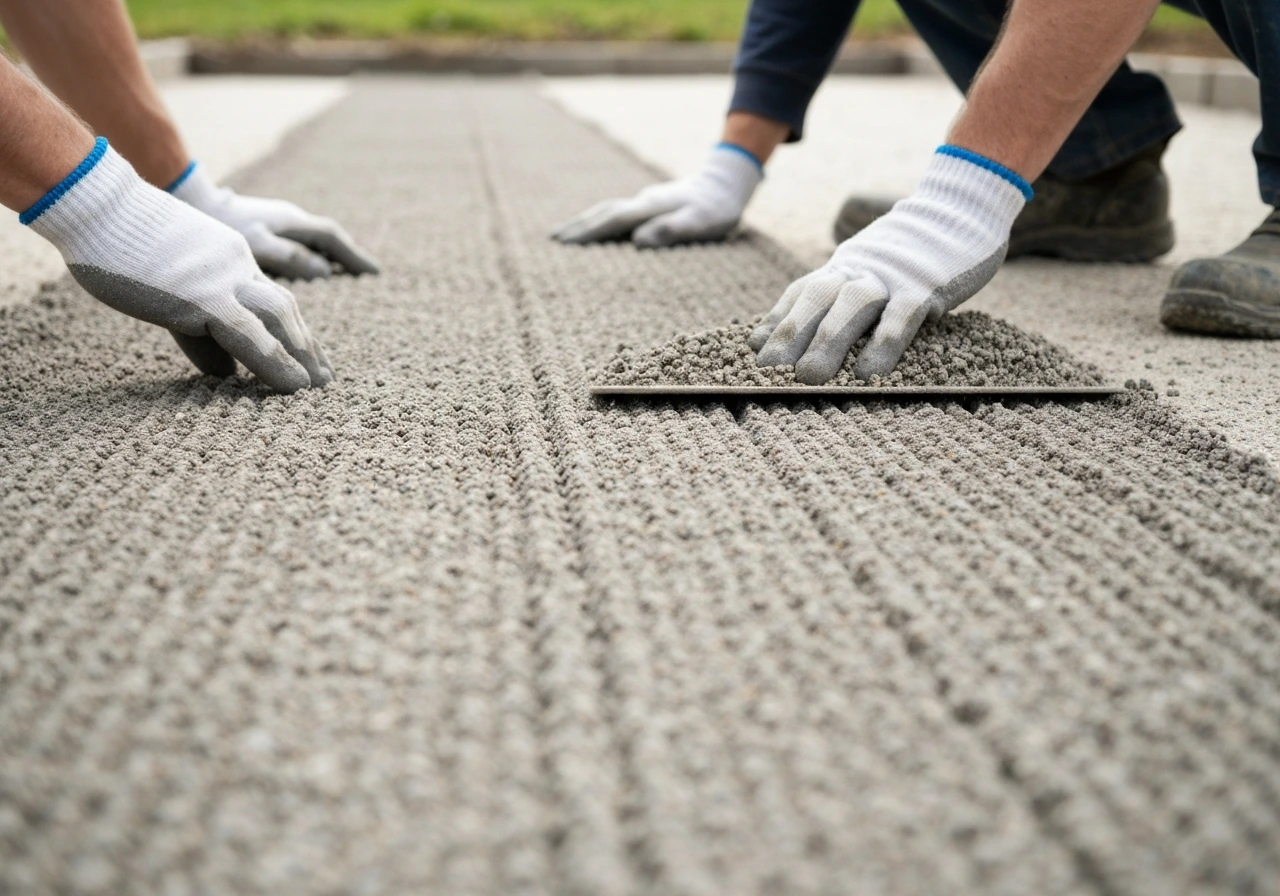
Crusher run (also called crusher fines, processed gravel, or road base) is a blend of crushed stone and fine particles, everything from 3/8" down to dust. When moistened and compacted, the fines bind the larger particles together into an almost-solid surface. This is an excellent choice for a semi-stabilized patio surface that you want to feel more like a firm path than loose gravel. It's also the right material for the base layer under pavers. The binding behavior is the key, it's what makes it structural.
3/4" minus (CA6 / road base)
This is the workhorse base material for paver and flagstone installations. It's a crushed blend (limestone, granite, or trap rock depending on your region) with a maximum particle size around 3/4" and a range of fines that make it compact into a rigid, interlocked matrix. When you see guidance recommending blank" rel="noopener noreferrer">4–6 inches of compacted crushed stone under pavers, this is the material being described.
TCC Materials describes Northrock Paver Base as a blend of about 3/4 inch rock, sand, and fines that compacts firmly to form a strong base, matching the common practice of using 4, 6 inches beneath patios/paved areas followed by compaction/tamping 4–6 inches of compacted crushed stone under pavers. It is not a good surface gravel, the fines and irregular sizing make it uncomfortable and unattractive, but for structural bases, nothing beats it for cost and performance.
#57 crushed stone (open-graded, ~3/4")
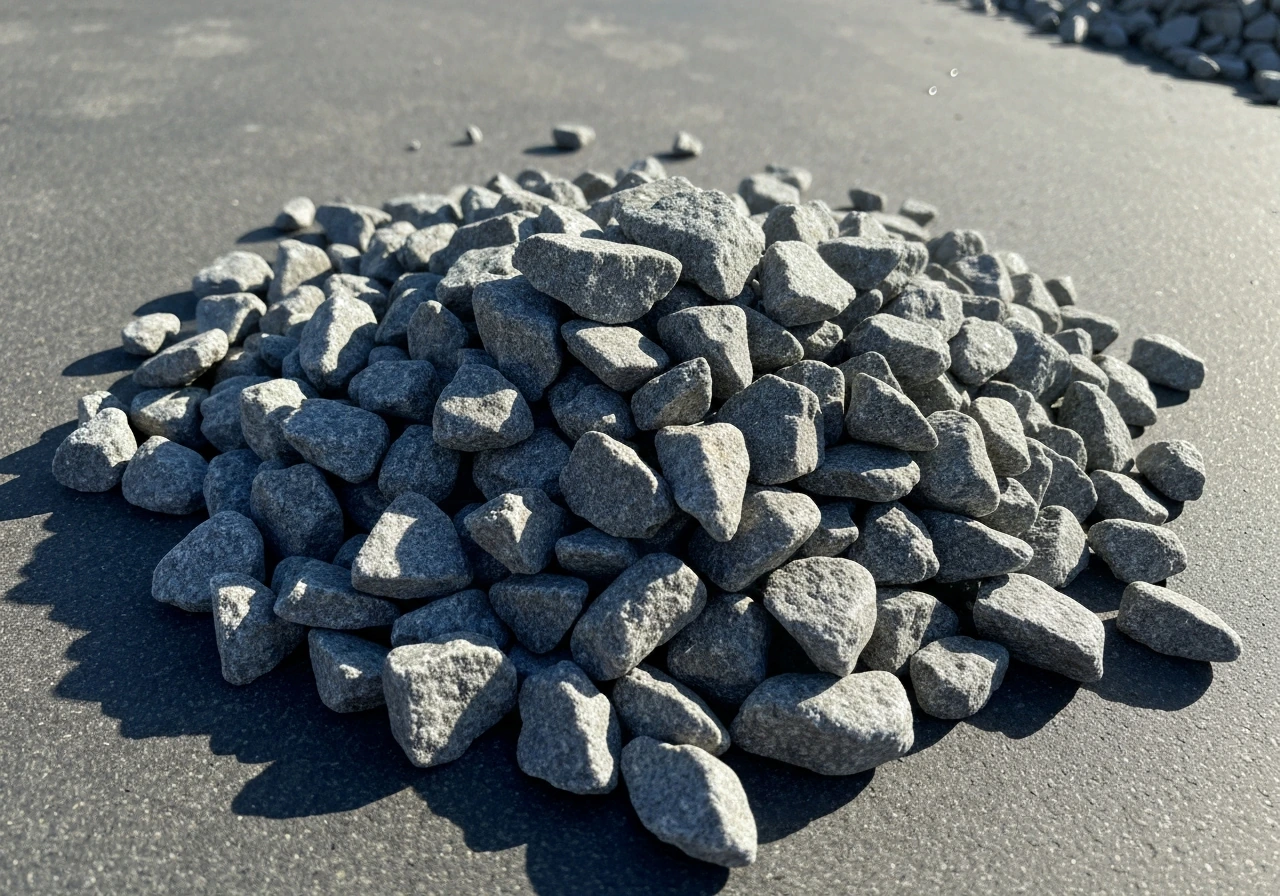
#57 stone is an open-graded, washed crushed stone with no fines. Because there are no fines to bind it, it doesn't compact into a solid mass the same way crusher run does. It's sometimes used as a drainage layer or a clean sub-base in drainage-heavy applications, but for most residential paver patios, compactable 3/4" minus is the better base choice. #57 can be useful under the base layer in areas with severe drainage issues, functioning as a free-draining sub-base.
| Gravel Type | Best Use | Compactable? | Surface Comfort | Drainage |
|---|---|---|---|---|
| Pea gravel (3/8" round) | Decorative flat surfaces | No | Soft, gentle | Good |
| Angular chips (3/8"–1/2") | Surface gravel, stable paths | Partial | Firm, walkable | Good |
| Crusher run / 3/8" minus | Stabilized surface or base | Yes | Firm, semi-bound | Moderate |
| 3/4" minus (CA6) | Structural paver base | Yes | Not a surface | Moderate |
| #57 open-graded stone | Drainage sub-base | No | Not a surface | Excellent |
Best gravel options by patio style and base setup
Here's how to match your gravel choice to the actual patio you're building.
Gravel-only relaxation patio (chairs, firepit, flat ground)
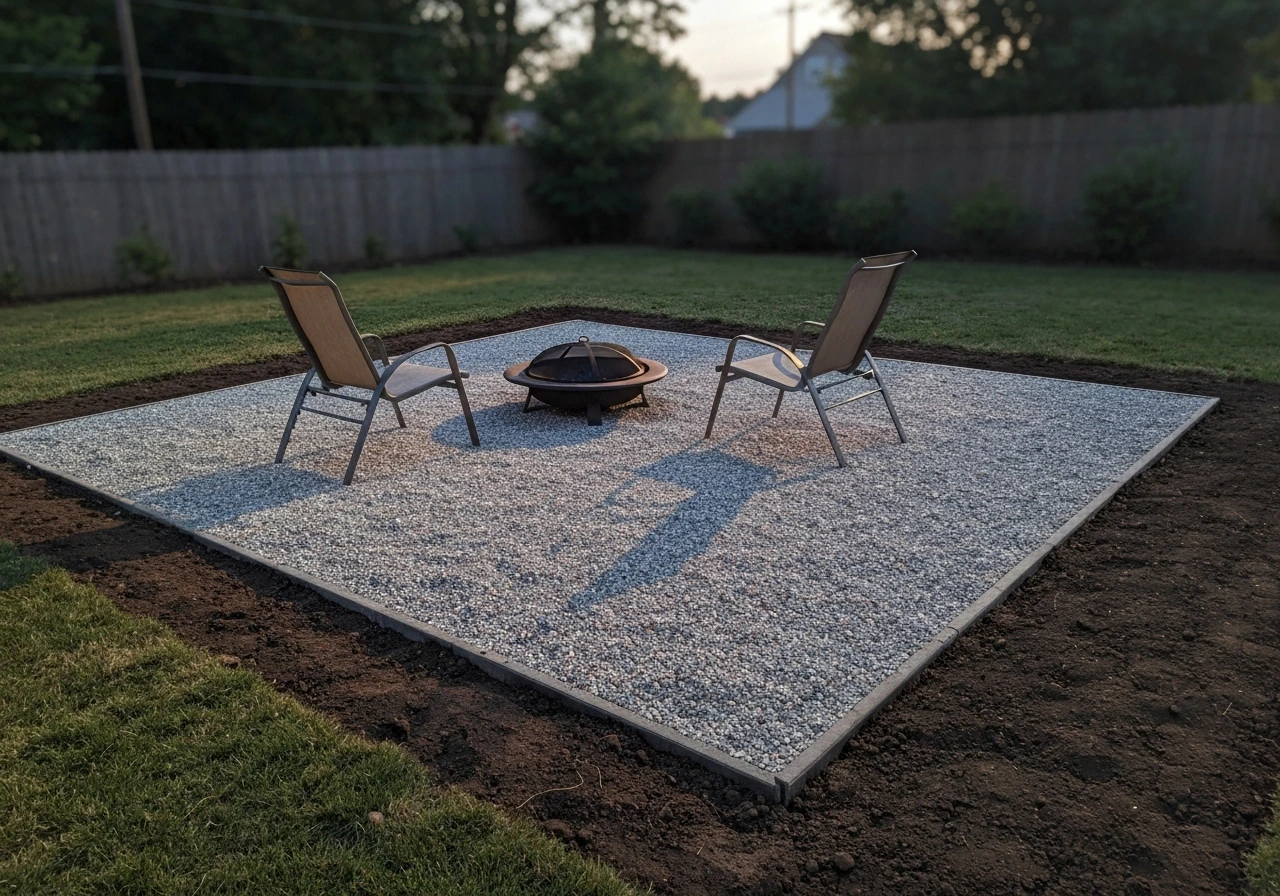
If you want a low-maintenance backyard hangout spot with no pavers, go with 3/8"–1/2" angular crushed stone as your surface layer (2"–3" deep), set over a compacted base of crusher run or 3/4" minus (3"–4" deep). The angular surface layer stays put better than pea gravel, and the compacted base underneath prevents the whole thing from sinking into soft soil. Top the base with landscape fabric (geotextile) before adding surface gravel to keep weeds down and the two layers separated. Pea gravel works in this setup too if you prioritize looks over stability, just expect to rake it back into place more often and keep edging tight to prevent spreading.
Patio with flagstone or stepping stones set in gravel
This is one of the best-looking and most DIY-friendly patio styles. You set large flat stones into a gravel field, and the gravel fills the gaps. Use 3/8"–1/2" angular stone or pea gravel for the gravel infill (depending on your aesthetic preference), but bed the flagstones themselves in a thin layer of sand or crusher fines, not in loose rounded gravel, which won't hold them steady. The surrounding gravel sits at roughly the same depth as the stone surface, giving you a cohesive look.
Paver or concrete block patio (gravel as base only)
For a proper paver patio, the gravel is invisible infrastructure. For paver and flagstone patios, gravel can work well as a sub base when you use a compactable material like crusher run or 3/4" minus instead of loose, rounded pea gravel gravel base. You need 4–6 inches of compacted 3/4" minus or crusher run as your base, then a 1" bedding layer of coarse concrete sand, then the pavers on top.
The ICPI standard targets 95% of standard Proctor density (ASTM D698) for subgrade and base compaction, in plain terms, compact it until it doesn't move. USACE guidance lists aggregate base course material for roadways and structural buildings/pads at 95% of the Maximum Standard Proctor density per ASTM D698 [95% of standard Proctor density (ASTM D698)](https://www. usace. army.
mil/Portals/46/docs/library/FM/JPA%20Matrix%20Documents/FinalCorrectiveMeasures_Aug%202008/Final%20T6%20CMIP%20Appendix%20D. pdf). The gravel base choice matters a lot here: use compactable crusher run or CA6, not rounded stone or open-graded #57.
Budget backyard patio on flat, well-draining soil
If you're working with a tight budget and good soil drainage (sandy or loamy soil, not clay), a simple 3" layer of compacted crusher fines over a minimally prepared ground can give you a semi-firm, natural-looking surface at low cost. Wet it down, compact it, let it dry, the fines bind and create a surface that resists displacement better than loose gravel. It won't be as polished as a paver patio, but it's practical and affordable.
Installation requirements: base, edging, geotextile, and compacting
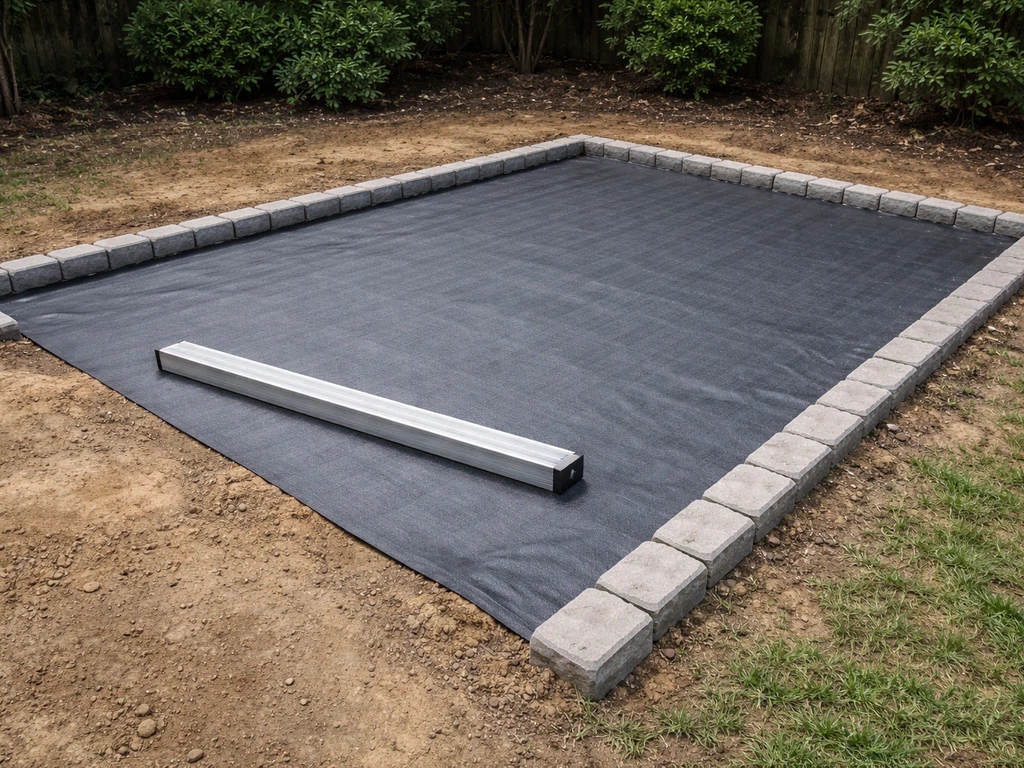
Getting the installation right is honestly where most gravel patios succeed or fail. I've seen patios where the homeowner just dumped gravel on top of the lawn, they look great for about two months, then the stones start sinking, weeds push through, and the whole thing becomes a maintenance headache. Here's how to do it properly.
- Excavate to depth: Remove 4"–8" of soil depending on your setup — shallower for a surface-gravel-only patio, deeper if you're adding a full compacted base under pavers. Remove all grass, roots, and organic material.
- Grade for drainage: Slope the base very slightly away from any structures — about 1" of drop per 8 feet is enough to ensure water doesn't pool against your house or in the center of the patio.
- Compact the subgrade: Before adding any base material, compact the native soil. For clay soils especially, this step is critical. Rent a plate compactor — hand tamping isn't sufficient for anything larger than a small garden path.
- Install geotextile fabric: Lay a nonwoven needle-punched geotextile (not woven landscape fabric) across the excavated area before adding base material. This separates the subgrade from your base gravel, prevents clay soil from migrating up into your gravel over time, and allows drainage. Nonwoven fabric is specifically preferred because it drains freely — woven geotextile is less permeable and can trap water beneath the base in freeze-thaw climates, contributing to frost heave. The ICPI specifically recommends geotextile in all clay soil applications.
- Add and compact base gravel in lifts: For paver patios, add 3/4" minus or crusher run in 2"–3" lifts and compact each lift before adding the next. Total compacted base depth should be 4"–6". Don't try to compact 6" all at once — it won't compact properly in the middle.
- Install edging before surface gravel: Edging is not optional. Steel, aluminum, or concrete edging holds the gravel in place and prevents it from creeping into surrounding beds or lawn. Set edging at the correct height before adding surface gravel, and secure it with stakes driven into the compacted base.
- Add surface gravel: Spread your surface gravel (pea gravel, angular chips, or crusher fines) at 2"–3" depth for a walking surface. Rake level and, for crusher fines, wet lightly with a fine mist and compact once more to trigger the binding action.
One thing I learned the hard way: skimping on edging with pea gravel is a mistake you'll notice by the end of the first season. The stones find every gap and migrate outward constantly. Heavy-gauge steel edging staked every 18"–24" makes a real difference.
Drainage and climate considerations
Gravel is naturally permeable, which is one of its big advantages over solid paving materials. But "permeable" doesn't mean drainage-proof, it means water moves through the gravel itself, and what happens next depends on what's underneath.
Clay soil
If your yard has clay-heavy soil, you have a real drainage challenge. Water moves through your gravel patio and then has nowhere to go because clay drains slowly. This can cause the area to stay saturated, which leads to gravel sinking and shifting over time. Solutions: install the geotextile separator religiously, consider a deeper open-graded sub-base layer of #57 stone below your compacted base, and if drainage is severe, run a perforated drain pipe to an outlet before building the patio at all.
Freeze-thaw climates
If you're in a climate with hard winters, frost heave is the main threat to any patio, gravel or paved. Frost heave happens when moisture in the soil freezes, expands, and pushes upward (ice-lens formation), lifting your base material along with it. For gravel patios, this matters less than for rigid paving because loose gravel can move and resettle. But for paver patios built on a gravel base, it can crack or tilt pavers badly.
The solutions: use freely draining base material (which means no woven geotextile trapping water), keep water from pooling under the base (proper surface grading), and consider going deeper with your base in cold regions. Some contractors in severe freeze-thaw zones go 8"–10" deep with the base for paver installations. For a surface-gravel-only patio, this is much less of a concern, just expect to rake it back level each spring.
Hot and dry climates
In arid climates, gravel patios are practically ideal, no frost heave, drainage is usually easy, and the natural stone look fits the landscape. The main maintenance issue is dust and fine particle migration during dry, windy periods. Angular stone holds better than rounded stone in these conditions. Crusher fines surfaces can develop surface cracks when they dry out, but a light wetting and tamping fixes this quickly.
High-rainfall climates
Heavy rain means your gravel surface will be tested constantly. Gravel holds up well to rain, far better than many solid surfaces, but be rigorous about grading the base to direct water away. A flat or slightly inverted base becomes a puddle-prone mess in wet regions. Edging also becomes more critical because heavy rain can wash fine particles out of crusher fines surfaces over time, gradually thinning the surface layer.
Cost, sourcing, and long-term maintenance
What you'll pay
Gravel is one of the most affordable patio materials available, which is a large part of its appeal. Road base and crusher run typically run around $18–$31 per ton or $25–$62 per cubic yard, depending on your region and supplier. Decorative surface gravels (pea gravel, angular chips) tend to cost a bit more per cubic yard, especially if you're buying bagged material from a home center rather than bulk from a landscape supplier.
For a 200 sq ft patio with a 4" compacted base and a 2" surface layer, expect to use roughly 2–3 tons of base material and 1–1. 5 tons of surface gravel. Total material cost for a basic gravel patio often runs $200–$600, which is a fraction of the cost of pavers or stone tile.
Where to source it
For small projects (under a pickup truck load), home centers carry bagged pea gravel and some crushed stone options, convenient but expensive per cubic foot. For anything larger, call local landscape material suppliers, gravel quarries, or concrete/masonry supply yards. Buying bulk by the ton or cubic yard cuts costs dramatically and gives you access to materials that home centers don't carry, like CA6 base rock or region-specific crusher run. Search for "landscape gravel supplier" or "ready mix aggregate" in your area. Many suppliers offer delivery with a dump truck for a flat fee, which is worth every penny for a patio-sized order.
Ongoing maintenance
Gravel patios are low maintenance but not zero maintenance. Here's what to plan for:
- Top up the surface gravel every 2–3 years as it compacts, displaces, or is tracked off — typically a half-inch refresh is all you need.
- Rake pea gravel back to the center of the patio once or twice a season, especially around edges and entry points.
- Pull or spray weeds that push through — a good nonwoven geotextile layer significantly reduces weeds but doesn't eliminate them entirely.
- After hard winters in freeze-thaw climates, check for any low spots or uneven areas in the surface and rake level. Paver patios on gravel bases may need individual pavers re-set if frost heave has lifted them.
- Inspect edging stakes each spring and re-drive any that have loosened.
Compared to other patio surfaces like porcelain tile or brick, gravel is genuinely forgiving, when something goes wrong, you rake it, add a bit more material, and move on. There's no cracked tile to replace, no re-pointing mortar joints, no sealing. That simplicity is the real long-term advantage of a well-built gravel patio.
If you're weighing gravel against patio stones or pavers as a surface (rather than a base), it's worth thinking through the full picture: gravel wins on cost, drainage, and installation ease, while pavers win on rigidity, formality, and furniture stability. And if you're deciding between gravel as a surface versus gravel as the base layer under your patio stones, those are actually complementary choices, the base and surface gravel work together, which is why getting the right material for each layer matters so much.
FAQ
Do I need landscape fabric under the gravel patio, and where exactly should it go?
Avoid placing a weed barrier directly under a paver gravel base. If you use fabric, it should be a separator between subgrade and base, and it must be paired with an actually compactable base (crusher run or 3/4 minus). If you trap water with the wrong barrier setup, you can promote soft spots and settlement.
How thick should the base and top layers be for the best gravel for a patio?
For a gravel-only walking surface, plan on 2 to 3 inches of 3/8 to 1/2 inch angular stone on top of a properly compacted base. For paver patios, the common approach is 4 to 6 inches of compacted 3/4 minus (or crusher run), then about 1 inch of coarse sand bedding. Using thinner layers than this usually leads to rocking pavers or migrating surface gravel.
Can I install a gravel patio directly over existing soil or sod?
Yes, but only if the ground is stable and you control drainage. On poor, clay-heavy, or high-water sites, loose gravel will pump downward and move. If you do it, compact the subgrade, keep a strong slope away from the house, and use geotextile separation so fines are not migrating into the soil.
What should I do if my gravel patio starts sinking or forming ruts?
If stones are sinking, the problem is usually insufficient compaction or a base that is too “open” or rounded. Recheck that you used crusher run or 3/4 minus as the compactable base, then remove the failing area, rebuild in lifts, and compact each lift thoroughly. You generally cannot fix sinking by simply adding more surface gravel.
How do I stop pea gravel or angular chips from spreading outward?
Edging is what keeps gravel from migrating. For pea gravel, edging becomes even more important because rounded stones roll and move through tiny gaps. Use heavy-gauge metal edging staked every 18 to 24 inches, and make sure the edge line is slightly above finished grade so runoff does not sneak under it.
What is the best way to clean a gravel patio without damaging the base?
Power-wash or hose washing can help for surface cleaning, but do not flood a gravel patio in a way that erodes the base. If you need to clean, use moderate water pressure, then top-dress missing areas and re-tamp if the surface is crusher fines or compactable base material.
Can I use pea gravel as the base under patio pavers or flagstone?
Do not use rounded pea gravel under pavers or flagstone. It does not lock together, so pavers can rock, sink, and tilt over time. For the base and bedding, use compactable 3/4 minus or crusher run for structure, then coarse concrete sand for the bedding layer.
How does frost heave affect gravel patios, and how can I reduce it?
In freeze-thaw climates, a key decision is making sure the base drains freely and water does not pool under it. Prefer freely draining compactable base materials, ensure surface grading slopes properly, and avoid trapping water with the wrong geotextile strategy. In severe zones, deeper base build-ups (often 8 to 10 inches) are sometimes used for pavers to reduce movement.
What should I choose if my yard has clay soil and standing water?
For drainage problems, the “best gravel” choice depends on why water is not leaving. If clay is holding water, a deeper open-graded sub-base like #57 can act as a free-draining layer, and a perforated drain to an outlet may be needed. Surface gravel alone does not solve a saturated subgrade.
Should I compact the surface gravel too, or only the base?
You can, but measure settlement risk first. If the base is stable and compacted, you can compact the gravel surface lightly after installation and expect only minor top movement. If you go straight onto soft or poorly compacted ground, tamping can drive the problem deeper and worsen future sinkholes.
Which gravel is best for a patio if I want furniture stability, not just looks?
Crusher run and 3/4 minus are often “best” for patios that need rigidity because their fines help bind particles when compacted. Choose angular chips for a looser, walking-surface feel, and choose pea gravel only when appearance and comfort are the priority and edging and maintenance are acceptable tradeoffs.
My gravel surface develops dust and thins out over time, what’s the fix?
If you have fine dusting, see whether the surface is crusher fines and whether water is pooling or washing fines out. Gentle re-wetting and re-tamping can help for crusher-fines surfaces, but heavy migration usually points to inadequate base compaction, weak edging, or poor grading. Address the cause before adding lots of new material.