You can buy patio stones at Home Depot, Lowe's, local masonry and landscape supply yards, stone quarries, and tile specialty stores like Floor & Decor. For same-day pickup, the big-box stores are your fastest bet. For better pricing on bulk natural stone or flagstone, a local landscape supply yard or stone wholesaler will almost always beat them on cost and selection. If you need a specific thickness, frost rating, or slip-resistance spec, calling ahead to confirm stock before you drive over saves a frustrating trip.
Where to Buy Patio Stones Near Me: Local and Online Guide
Nolan Ellison
21 May 2026
Quick local buying checklist before you search
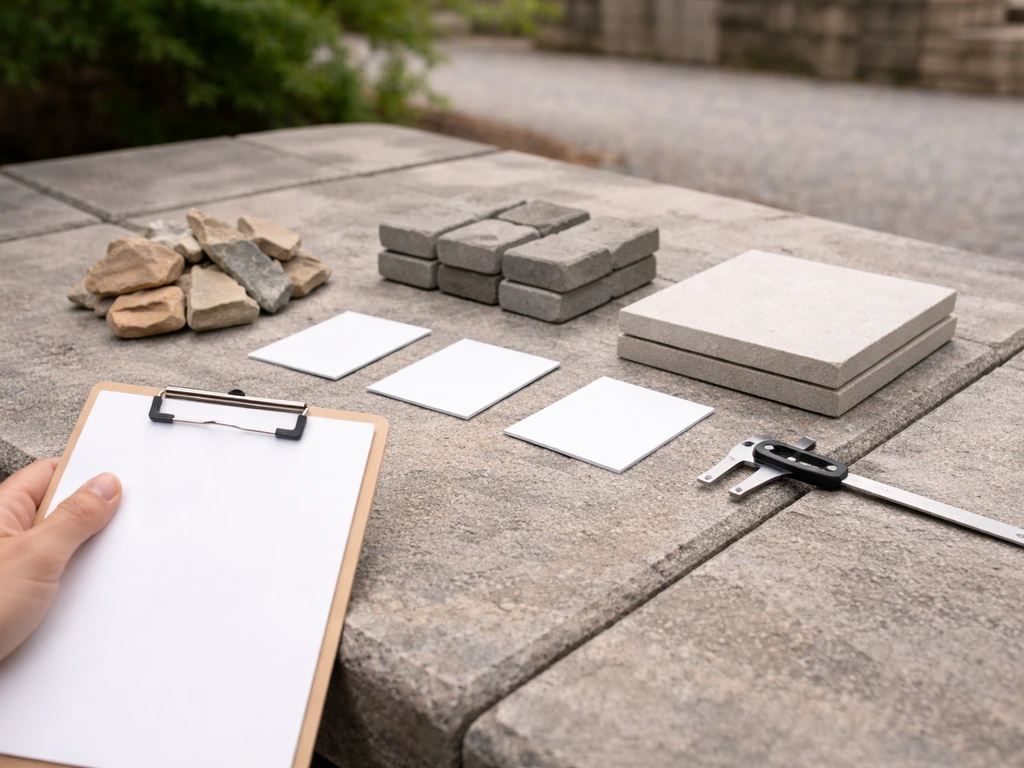
Before you type anything into Google Maps, spend five minutes nailing down these three things. Getting them wrong means returning a full pallet of stone, which is nobody's idea of a good weekend.
- Material type: Decide between natural flagstone, concrete pavers, porcelain/2CM pavers, brick, slate, or gravel. Each is sold at different retailers and in different formats. Porcelain pavers, for example, are more likely at a tile specialty store than at a landscape yard.
- Size and coverage: Measure your patio area in square feet, add 10% for cuts and breakage, and write that number down. Also note the individual stone dimensions you want (e.g., 24"x24", random flagstone, or tumbled brick format) so you can verify the store carries that SKU.
- Thickness: Standard concrete pavers run 2.375" (60mm) for pedestrian use. Porcelain pavers sold as outdoor-rated are typically 2CM (~3/4"). Natural flagstone usually ranges from 1" to 2" thick. Thinner is not always worse, but it changes your base-prep math.
- Frost rating: If you live in a climate that freezes, you need a paver or stone that is tested for freeze-thaw durability. For concrete pavers, look for ASTM C936 compliance and freeze-thaw/de-icing salt testing per ASTM C1645. For porcelain, look for water absorption at or below 0.5% per ASTM C373, which puts it in the impervious category and makes it naturally frost-resistant.
- Slip resistance: For any wet outdoor surface, target a DCOF (Dynamic Coefficient of Friction) of 0.42 or higher. For pool surrounds or stairs, aim for R12 or DCOF closer to 0.55. A matte or textured finish almost always outperforms polished stone in wet conditions.
Where to buy patio stones near you
There are five realistic buying channels for most homeowners. If you’re wondering where to buy patio stones near you, the sections below break down each option and what it’s best for five realistic buying channels. The right one depends on what material you need, how much you need, and how fast you need it.
Home improvement stores (Home Depot and Lowe's)
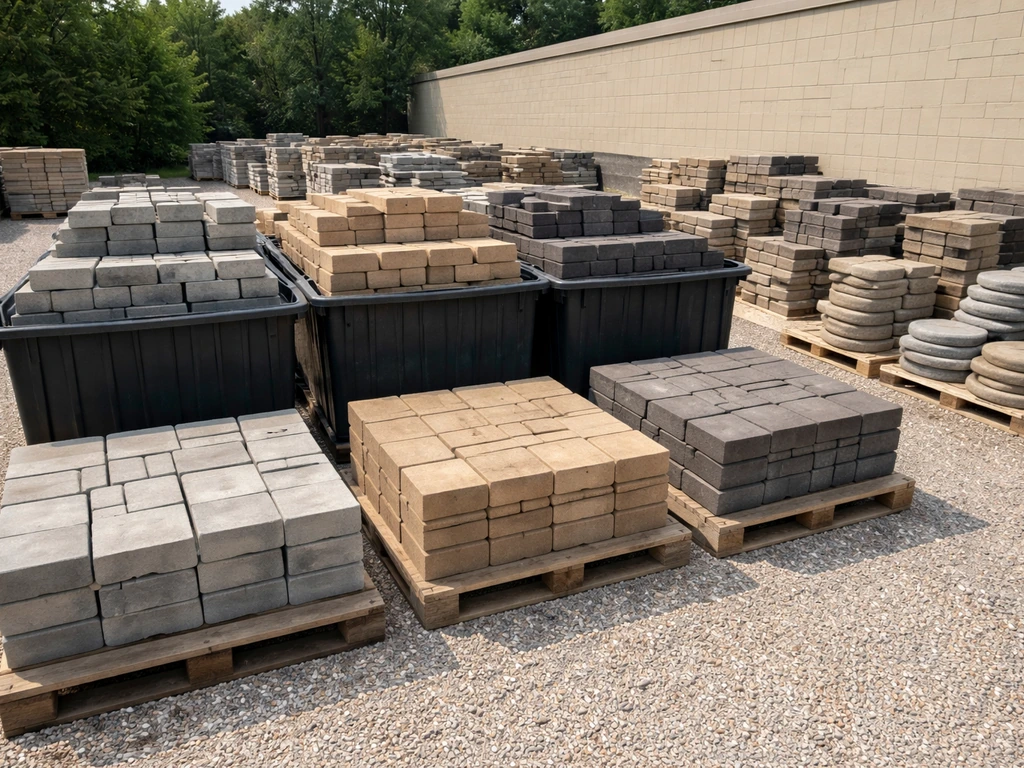
Both stores carry a solid range of concrete pavers, patio blocks, stepping stones, and a limited selection of natural stone and porcelain pavers. Lowe's product pages flag pickup availability and fast delivery by location, so you can check stock online before you go. For more options, see our guide on where to buy patio blocks near you and compare pickup, delivery, and minimum order requirements. Home Depot does the same.
The advantage here is same-day pickup and no minimum order. The downside is selection depth. If you want 24x24 porcelain in a specific finish or random-cut flagstone in a particular color, these stores may have one or two options at most. Search their websites for "patio stones," "pavers," or "patio pavers" and filter by "available today" at your local store.
Masonry and landscape supply yards
This is where serious patio projects get their materials. If you are searching for where to buy patio slabs specifically, many landscape supply yards can point you to the right concrete options or slab stone they have on hand. Landscape supply yards typically carry concrete pavers by the pallet, multiple flagstone varieties (bluestone, limestone, travertine, granite), gravel, edging, blank" rel="noopener noreferrer">bedding sand, and polymeric jointing sand all in one place.
Pricing per square foot is usually better than big-box on natural stone, especially when buying a full pallet. Search Google Maps for "masonry supply near me," "landscape supply yard," or "hardscape materials" and call ahead to ask about specific stone types, minimum order quantities, and whether they offer delivery and forklift offload.
If you’re searching for where to buy patio bricks near me, start with nearby masonry and landscape supply yards since they often stock multiple brick and paver options.
Stone quarries and wholesalers
If you want the best price on natural flagstone, bluestone, or slate and you're buying a significant quantity, going direct to a quarry or a stone wholesaler is worth the extra phone call. If you’re specifically looking where to buy slate for a patio, call around to local quarries and wholesalers to ask about slate availability, thickness options, and delivery. Some quarries sell direct to the public.
Others require you to go through a contractor, but they'll often refer you to a local dealer. Search for "stone quarry near me" or "natural stone wholesaler" plus your city. You'll typically get better color consistency and lower per-ton pricing than any retail channel. Minimum orders are usually higher, though, so this makes more sense for patios over 300 square feet.
Tile and porcelain specialty stores
For porcelain pavers (especially 2CM outdoor pavers), Floor & Decor is one of the best in-store options. They maintain a dedicated pavers category with SKU-level pricing and regularly stock outdoor-rated 20x20 and 24x24 formats. TileBar carries outdoor porcelain pavers online and in some showrooms, including 2CM options with outdoor application specs.
TileBar’s product listing for its Rushmore 2CM porcelain paver positions it for outdoor use and discusses compatible installation system requirements like tile or substrate, thinset, and grout 2CM options with outdoor application specs.
If you're comparing porcelain to natural stone for your project, this channel gives you a hands-on look at actual tile dimensions, surface texture, and color before you commit. Search "outdoor porcelain pavers" or "2CM pavers" on their websites and filter for outdoor-rated products.
Specialty patio contractors and material brokers
Some patio contractors sell materials directly to DIYers, especially if they have a regular supplier relationship and can pass on wholesale pricing. This is worth asking about if you're getting quotes for installation anyway. Material brokers exist in some markets and can source specific stone types that aren't carried locally. They're most useful for premium or unusual materials (think imported travertine or large-format custom flagstone). Ask your local masonry yard if they know of any brokers in your area.
Online options for fast delivery
Ordering patio stones online works best for porcelain pavers and smaller quantities of concrete pavers. Natural stone is heavy and fragile enough that freight shipping adds real cost and risk of breakage, so local pickup is almost always better for flagstone or slate. That said, for porcelain 2CM pavers in specific sizes or finishes, online retailers like TileBar, MSI's dealer network, and Floor & Decor's ship-to-store option can be genuinely useful.
When searching online, use specific terms like "outdoor porcelain pavers 24x24 2CM," "concrete interlocking pavers [your square footage]," or "flagstone patio stones delivery." Once you find a product you like, verify four things before ordering: the exact dimensions (nominal vs. actual can differ by up to 1/4"), whether the slip rating is listed (DCOF ≥ 0.42 for general outdoor use), whether the product is rated for outdoor freeze-thaw use, and what the return policy is for freight-shipped stone. Some retailers charge a significant restocking fee and return freight cost on heavy materials.
MSI's Arterra porcelain pavers are available through their dealer network and offer downloadable spec sheets confirming slip resistance and frost performance. Brands like these are worth checking because the specs are verifiable rather than vague marketing language. If a product page only says "slip resistant" without a DCOF number, that's a red flag worth investigating before you order.
How to choose the right patio stone type for your project
The material you choose affects not just how the patio looks, but how it installs, how it performs in your climate, and how much maintenance it needs over the years. Here's a practical breakdown.
| Material | Best For | Frost Resistant? | Slip Resistance | Maintenance | Typical Cost Range |
|---|---|---|---|---|---|
| Concrete pavers | Most DIY patios, driveways, walkways | Yes (ASTM C936/C1645) | Moderate to good (textured finish) | Low (reseal every 2-3 years optional) | $2–$6/sq ft |
| Natural flagstone (bluestone, limestone) | Rustic or natural-look patios | Varies by stone type | Moderate (rough-cut better than honed) | Medium (may need sealing, weed control) | $5–$15/sq ft |
| Porcelain 2CM pavers | Modern patios, pool surrounds, low maintenance | Yes (≤0.5% water absorption) | Good if rated R11+ or DCOF ≥0.42 | Very low (no sealing required) | $4–$12/sq ft |
| Brick pavers | Traditional look, driveways | Good if frost-rated | Good (textured surface) | Low to medium | $3–$8/sq ft |
| Slate | Accent areas, covered patios | Fair to poor in hard freeze climates | Good (natural cleft finish) | Medium (needs sealing) | $5–$14/sq ft |
| Gravel/crushed stone | Casual patios, drainage areas | Excellent | N/A | Low (occasional top-up) | $1–$3/sq ft |
If you're in a freeze-thaw climate (anything that regularly drops below 20°F), prioritize concrete pavers or porcelain 2CM pavers. Both are engineered to handle thermal cycling without cracking. Natural slate, while beautiful, can delaminate over time in hard freeze zones. If you're in a warmer, wetter climate, slip resistance matters more than frost rating, and a honed or tumbled natural stone with a rough surface texture is a better call than anything polished.
What to check before you buy
I've seen homeowners get burned by skipping this step. The stone looked great on the pallet at the store, they bought it, and only after laying half the patio did they notice inconsistent color, a finish that gets dangerously slick when wet, or a thickness mismatch that caused the whole surface to look uneven. Here's what to physically and visually check before you commit.
Surface finish and slip resistance
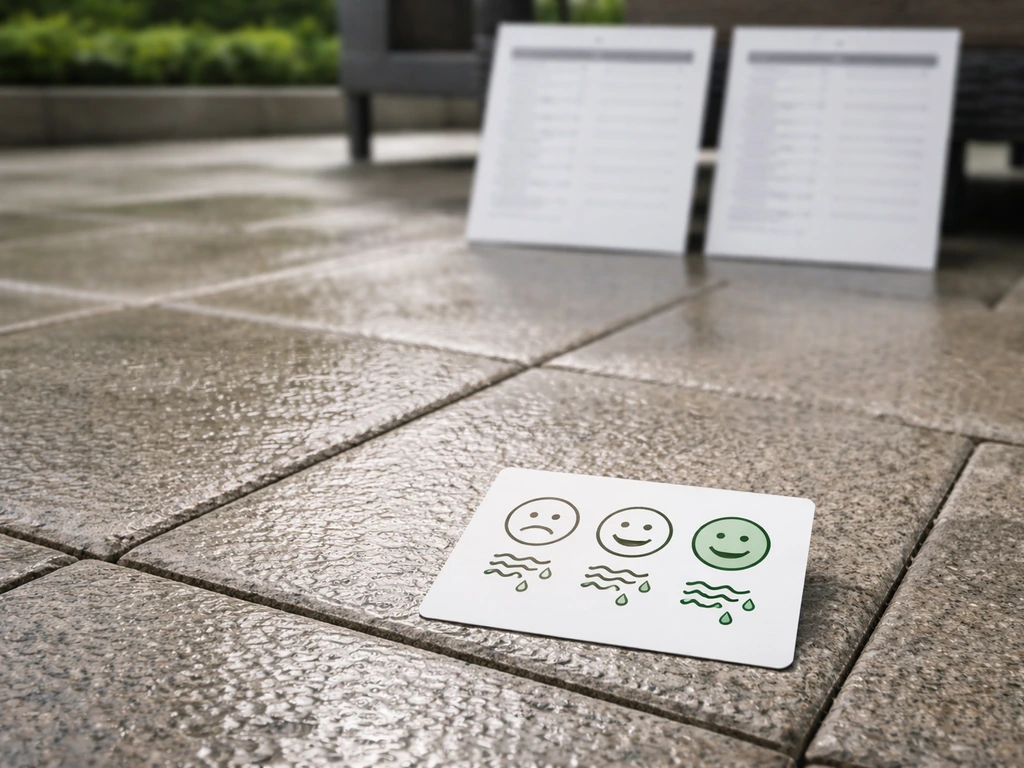
For any wet outdoor application, verify the DCOF rating in the product spec sheet. The minimum for general outdoor wet use is 0.42 DCOF. For pool surrounds or stairs, target 0.55 or higher, or look for an R12 rating. Matte and textured finishes almost always meet this threshold; polished and honed finishes often don't. If the product page doesn't list a DCOF number, ask the retailer for the spec sheet or skip that product.
Frost and freeze-thaw rating
For cold climates, check that concrete pavers are ASTM C936 compliant and that freeze-thaw durability has been tested per ASTM C1645. For porcelain, water absorption at or below 0.5% per ASTM C373 means it's impervious to moisture penetration and will handle freeze-thaw cycles reliably. Natural stones vary. Bluestone and granite generally perform well in cold climates. Limestone and some sandstones can absorb water and crack in hard freezes.
Color and texture consistency
Open multiple boxes or pull stones from different spots on the pallet before buying. Natural stone has inherent variation, which is fine and expected, but if you're seeing dramatic differences in color tone or thickness within the same batch, that's a quality control issue. With porcelain, check that the color variation rating (V1 through V4 on most spec sheets) matches your expectations. A V4 rating means high variation; a V1 means near-uniform. Neither is wrong, but knowing what you're getting prevents surprises.
Thickness consistency and cracking
Run your hand across adjacent stones and feel for significant thickness differences. For natural stone, some variation is normal, but anything more than about 3/8" makes leveling during installation much harder. For concrete pavers, look for visible cracks, chipped edges, or efflorescence (a white chalky residue that appears when salts migrate through concrete). Light efflorescence on a few pieces isn't necessarily a deal-breaker, but heavy efflorescence across a pallet suggests moisture exposure during storage.
Return policy and warranty
Ask about the return policy before you load the truck. Most big-box stores accept returns on unused, uncut stone within 30-90 days. Landscape yards and quarries often have a no-return or exchange-only policy on cut or opened pallets. Knowing this upfront lets you decide how close to cut it on quantity vs. buying a comfortable overage buffer.
Installation starter info and what else to buy while you're there
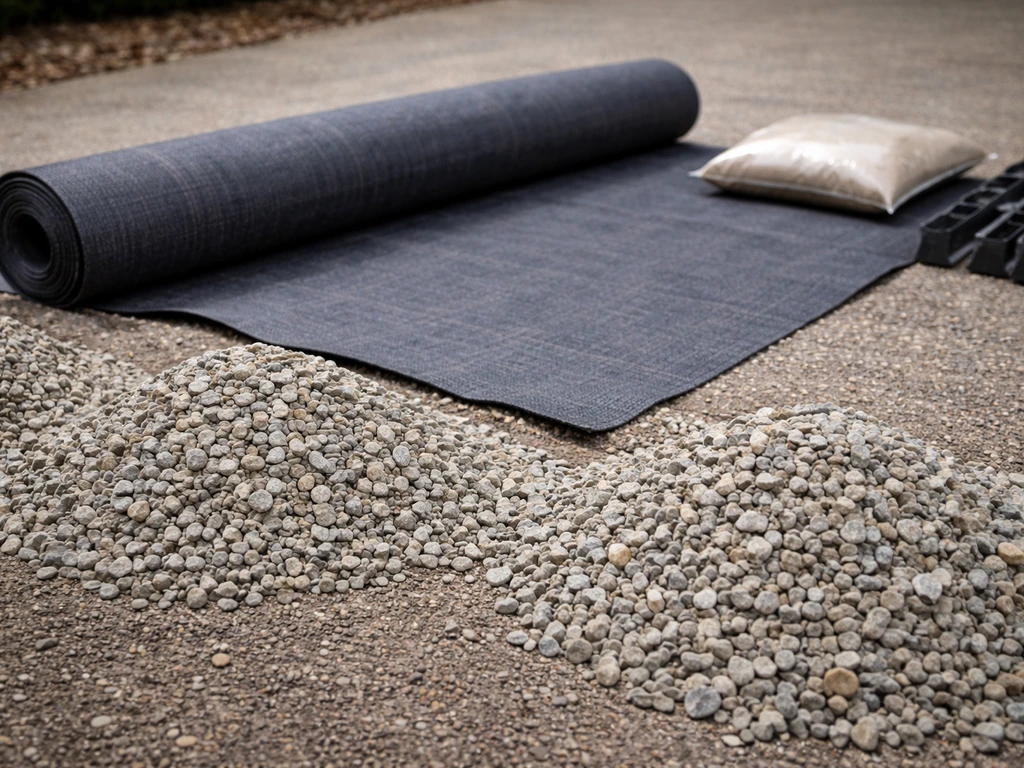
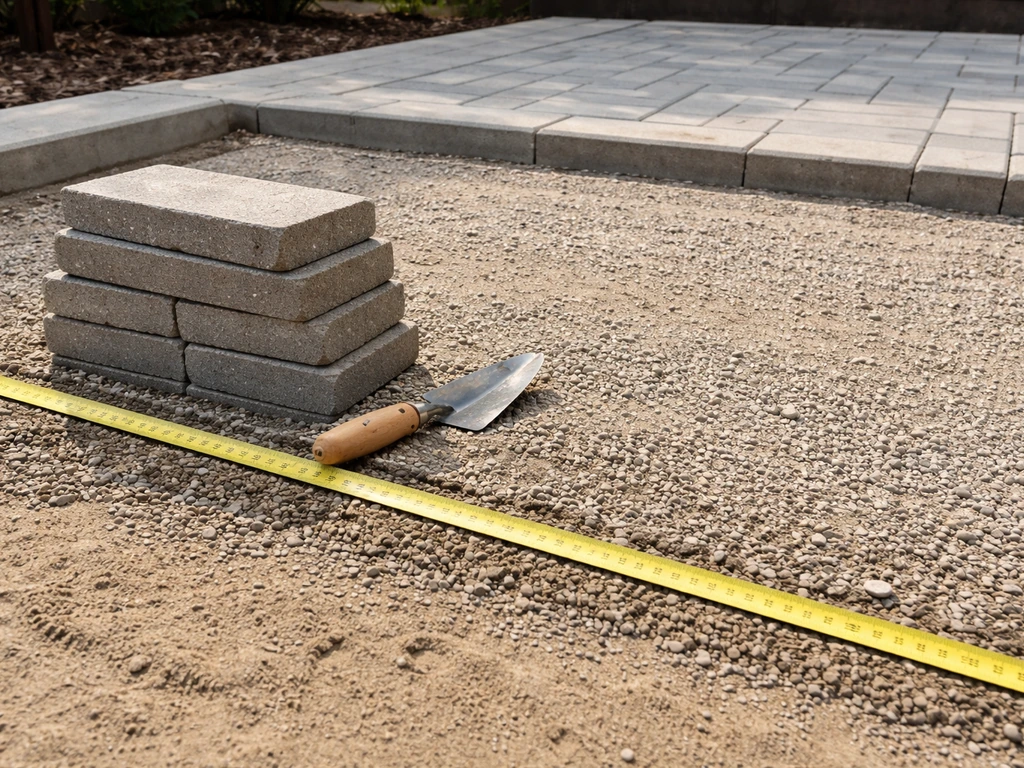
Patio stones are only one line item. A proper installation requires a base system, and buying everything in one trip or one order saves a lot of back-and-forth. The standard ICPI-style build-up for most paver patios goes: compacted aggregate base, then a 1-inch bedding sand layer (between 3/4" and 1.5" per ICPI guidelines), then your pavers, then jointing material.
- Crushed gravel base: Typically 3/4" crushed stone compacted to 4"–6" depth for residential pedestrian patios. Add 2"–4" more in freeze-thaw climates or on unstable soil.
- Bedding sand: A coarse concrete sand or manufactured sand. Plan for roughly 1 inch of depth across your patio area. Do not use play sand or very fine sand; it doesn't compact the same way.
- Polymeric jointing sand: Used to fill joints between pavers. It hardens when wet, resists weeds, and locks pavers in place. Home Depot's own install guides and Belgard's installation guidelines both recommend it over regular sand for longevity.
- Paver edging: Plastic or metal restraint edging keeps your border pavers from shifting outward over time. Buy enough to run the full perimeter of your patio plus corners.
- Landscape fabric: Optional, but useful under the gravel base in areas with heavy weed pressure.
- Adhesive or thinset: Required if you're setting porcelain pavers over a concrete slab rather than on a sand/gravel base. Ask the retailer which adhesive is compatible with your specific pavers.
- Leveling tools: A screed board, rubber mallet, and plate compactor (rent one) are the three tools that make the biggest difference in a flat, stable result.
If you're choosing between porcelain and natural stone for your build, the base system differs. Natural stone and concrete pavers typically go over a compacted gravel and sand base. Porcelain pavers can go over the same system or can be set in thinset over an existing concrete slab, which is a great option if you're renovating an old patio. Make sure the thinset or adhesive is rated for outdoor and freeze-thaw use if applicable.
Budgeting, timelines, and pickup vs. delivery
Getting your budget and logistics right upfront saves you from the two most common project headaches: running out of material mid-job or paying twice to move stone you didn't need.
How to budget realistically
Plan for the stone itself plus roughly 30-50% of the stone cost again for base materials, jointing sand, edging, and tools or rentals. A mid-range concrete paver patio at $4/sq ft for materials, for example, will realistically run $6–$7/sq ft total when you factor everything in. Natural stone and porcelain at $8–$12/sq ft for the stone can push total material costs to $12–$18/sq ft. These are material-only figures; labor is separate if you're hiring out.
Pickup vs. delivery: which makes sense
Pickup is faster and usually free, but it requires a truck or trailer with real payload capacity. A full pallet of concrete pavers weighs roughly 2,000–3,000 lbs. That's not a job for a sedan or a small SUV. If you don't have access to a suitable vehicle, rental truck plus pickup can still be cheaper than delivery for a single pallet. For two or more pallets, delivery almost always makes more economic sense. Landscape yards typically charge a flat delivery fee ($75–$200 depending on distance) and use a truck with a forklift or boom arm to offload. Ask about that offload capability before you book, because without it, you're unloading by hand.
Minimum orders and lead times
Big-box stores have no meaningful minimum and typically have same-day pickup available for in-stock items. Landscape supply yards often sell by the pallet or half-pallet minimum. Stone quarries and wholesalers typically sell by the ton or full pallet, so they make the most sense for larger projects. For online orders, delivery lead times for freight-shipped stone or pavers can range from 3 to 10 business days. If your project start date is fixed, order online at least two weeks out to avoid delays. For local delivery, most landscape yards can deliver within 2–5 business days if the material is in stock.
A few next steps to move forward today
- Measure your patio area in square feet, add 10%, and write down the stone type, size, and thickness you need before you search.
- Check Home Depot and Lowe's online for same-day pickup availability at your nearest store to see what's immediately on hand.
- Search Google Maps for 'landscape supply yard' or 'masonry supply' near you and call the top result to ask about your specific material and whether they deliver.
- If you want porcelain pavers, check Floor & Decor's pavers category online and verify the DCOF rating and outdoor frost rating in the product specs.
- Price out delivery vs. pickup based on your quantity and vehicle situation before you commit to a channel.
- Buy your base materials, jointing sand, and edging at the same time as your stone so you're ready to start without a second trip.
FAQ
How much should I buy if I’m asking “where to buy patio stones near me”? (What waste factor is typical)
Bring the project math, not just the patio size. Tell the supplier your square footage, desired pattern, and whether you’re adding a border or diagonal layout, then ask for a quote that includes 10% waste for standard layouts and up to 15% for complex cuts, plus confirm how they measure coverage (by piece, by pallet, or by square foot).
Can I set porcelain patio pavers directly over an existing concrete slab instead of rebuilding the base?
Yes, but only if the product is rated for it. If you’re installing porcelain over an existing slab, confirm the exact thickness and whether it allows thinset bonding outdoors, then ask what adhesive/mortar system they recommend for freeze-thaw areas. If it’s not designed for direct bond, you’ll likely need a different prep and base strategy.
What should I do if the slip rating is mentioned but there’s no DCOF listed for wet areas?
If your product page lists a DCOF number, use that, but also ask whether it applies to the finish you’re buying (matte, honed, tumbled) because slip rating can change with surface texture. If there’s no DCOF, request the spec sheet or skip it for wet zones, especially near pools, steps, and entry paths.
Do local deliveries require a special offload setup, and what should I ask before booking?
Call ahead and ask for offload capability in plain terms: “Do you have a forklift or boom arm for pallets?” If the delivery truck can’t lift and your driveway is tight, you may need curbside delivery plus a hand-unload plan, which can add real labor and risk of damaging edges.
How can I tell if efflorescence on concrete pavers is a deal-breaker or just surface residue?
Concrete pavers can get surface staining from trapped moisture, efflorescence, or storage exposure. Light, patchy efflorescence sometimes clears after installation, but ask whether you can receive the same SKU from a fresher batch, and inspect multiple pieces before loading to avoid bringing in material with active salt residue.
What’s the best way to prevent natural stone color and thickness surprises before I buy?
For natural stone, batch consistency matters more than color alone. Ask the seller to provide a lot or batch number, then select multiple stones from across that pallet and compare tone and thickness. If the variance is large within one batch, ask if they can exchange for a different lot instead of you trying to blend it on the patio.
What return-policy questions should I ask specifically for freight-shipped stone or pavers?
For freight-heavy stone, confirm whether they accept returns at all once shipped, and if they do, ask who pays return freight and whether there’s a restocking fee. Also ask how returns work if the pallet shows damage, since “refused freight” and “damaged on arrival” are handled differently.
How do I choose the right thickness when the listing uses nominal dimensions that might not match reality?
Match the stone thickness to your base plan and installation method, then confirm the exact nominal versus actual dimensions. For patios, thinset systems and thick pavers behave differently at transitions, so ask for a thickness recommendation tied to your substrate and whether you’re edging with paver block or a restraining system.
Is it safer or cheaper to buy locally versus online if I’m trying to avoid shipping damage and return headaches?
If you’re ordering online, you can reduce risk by buying porcelain locally when possible, since ship damage and freight cost are higher for heavy natural stone. For concrete and porcelain, also verify whether the retailer offers ship-to-store, because you can inspect the product in person and avoid full freight return hassles.
Do I need different bedding or jointing materials depending on the patio stone type (porcelain, concrete, natural stone)?
Before you pay, ask for installation requirements tied to the exact product, especially for polymeric jointing sand. Some pavers and finishes require specific jointing sand types and joint width ranges, and using the wrong jointing material can cause haze, staining, or premature joint failure.