Yes, porcelain tile is one of the best materials you can put on a patio, but only when you use the right specs and install it correctly. Use the wrong tile, skip the proper substrate, or ignore drainage, and you will have cracked, debonded, or slippery tiles within a couple of winters. Get those details right, and a porcelain patio will outlast most other surfaces, stay easy to clean, and look sharp for 20 to 30 years with almost no maintenance.
Is Porcelain Tile Good for a Patio? Pros, Cons, and Tips
Nolan Ellison
8 Jul 2026
Quick verdict: when porcelain tile is (and isn't) good for patios
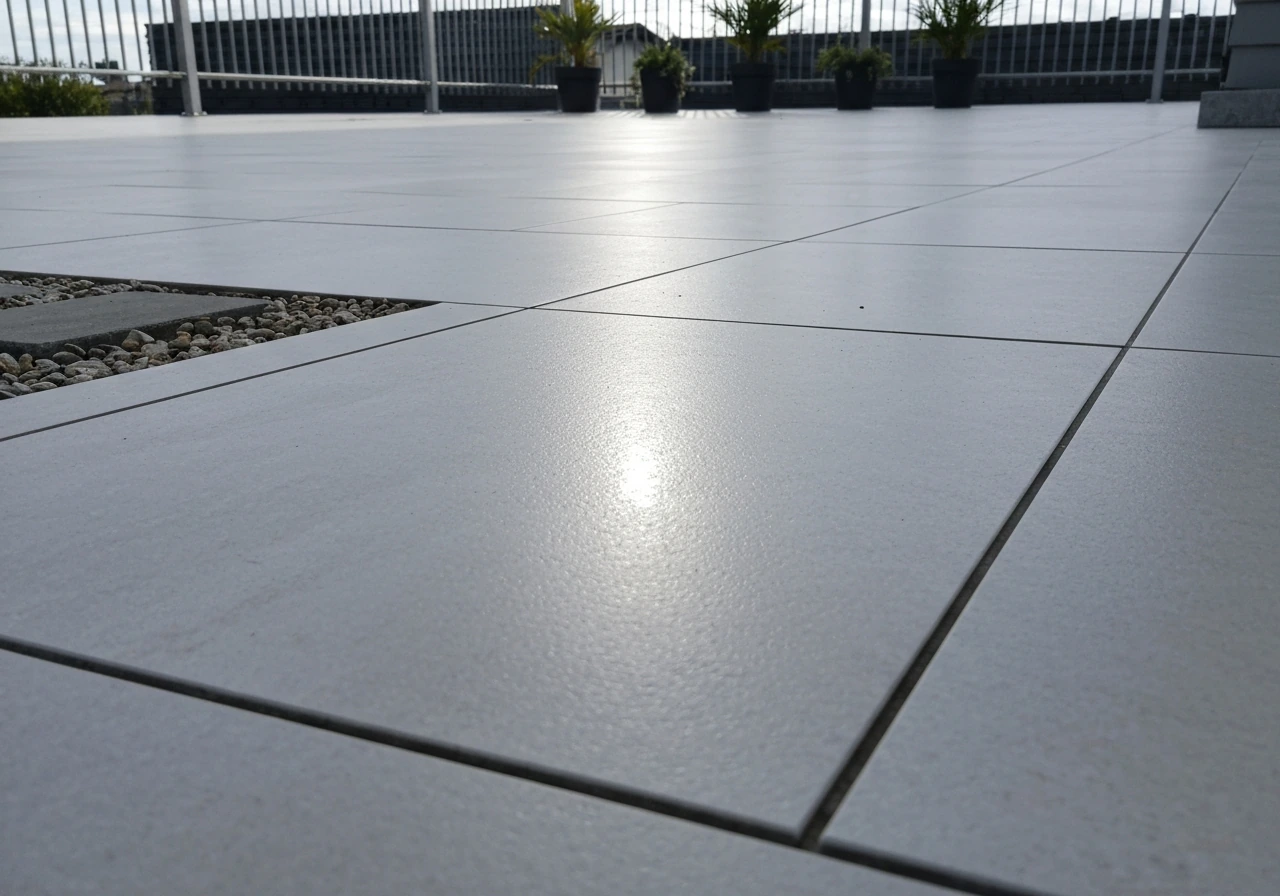
Porcelain is genuinely excellent for patios in most climates and situations. Porcelain tile can be a great option outdoors, but the result depends heavily on proper specs and installation details. It is dense, nearly impervious to water, resistant to staining, and available in sizes and textures that suit any design. Where it shines is in areas that need to look great with minimal upkeep. Where it can let you down is when homeowners buy indoor-grade tile, skip movement joints, or lay it on a poorly drained base. The material itself rarely fails. The installation fails.
Porcelain is a strong choice if you want a clean, modern surface, have a solid or newly poured concrete slab to bond to, live in a climate with moderate weather, or are willing to do the prep work correctly. It is a poor choice if you want a quick DIY weekend project on a soft or sandy base, if your budget is very tight (installation costs add up), or if you strongly prefer the irregular charm of natural flagstone. If you are wondering whether are porcelain slabs good for patio in every situation, the big limiter is the base and drainage rather than the tile itself.
- Good fit: freeze-thaw climates with frost-rated porcelain and a waterproof membrane system
- Good fit: poolside or high-moisture areas where staining and porosity are concerns
- Good fit: homeowners who want a low-maintenance, long-lasting surface and can invest in proper installation
- Poor fit: very uneven or soft ground without a proper concrete or compacted aggregate base
- Poor fit: extremely tight budgets where shortcuts in substrate prep are tempting
- Poor fit: anyone who wants the organic, handmade look of natural stone or brick without careful tile selection
Climate and exposure: freeze/thaw, heat, and standing water risks
Climate is the single biggest variable in whether a porcelain patio succeeds or fails. The core mechanism behind most outdoor tile failures is simple: water gets trapped under or inside the tile system, then freezes. Water expands about 9% when it freezes. If that expansion happens inside a porous tile or inside a poorly drained setting bed, it pops grout, cracks tiles, or delaminates the whole field from the substrate.
Frost-rated porcelain tiles have a water absorption rate of 0.5% or less by mass, tested to ISO 10545-12 and ASTM C1026. At that absorption level, there is almost no water inside the tile body to freeze and expand. This near-zero porosity is why porcelain is regularly selected for freeze-thaw environments where ceramic or natural stone would fail. Always confirm the frost-resistance rating on the spec sheet before buying for any climate that sees freezing temperatures.
In hot climates, thermal expansion is the main concern. Tiles heat up significantly under direct sun, and the slab beneath them also expands. Without movement joints to absorb that expansion, the assembly builds stress that eventually buckles or cracks tiles. This is a design and installation issue, not a porcelain flaw, and it is fully preventable. In wet climates or poolside applications, standing water and UV exposure are the exposures to manage. A well-sloped surface drains fast enough that porcelain's low absorption keeps the system essentially dry between rain events.
Choosing the right porcelain specs for outdoors
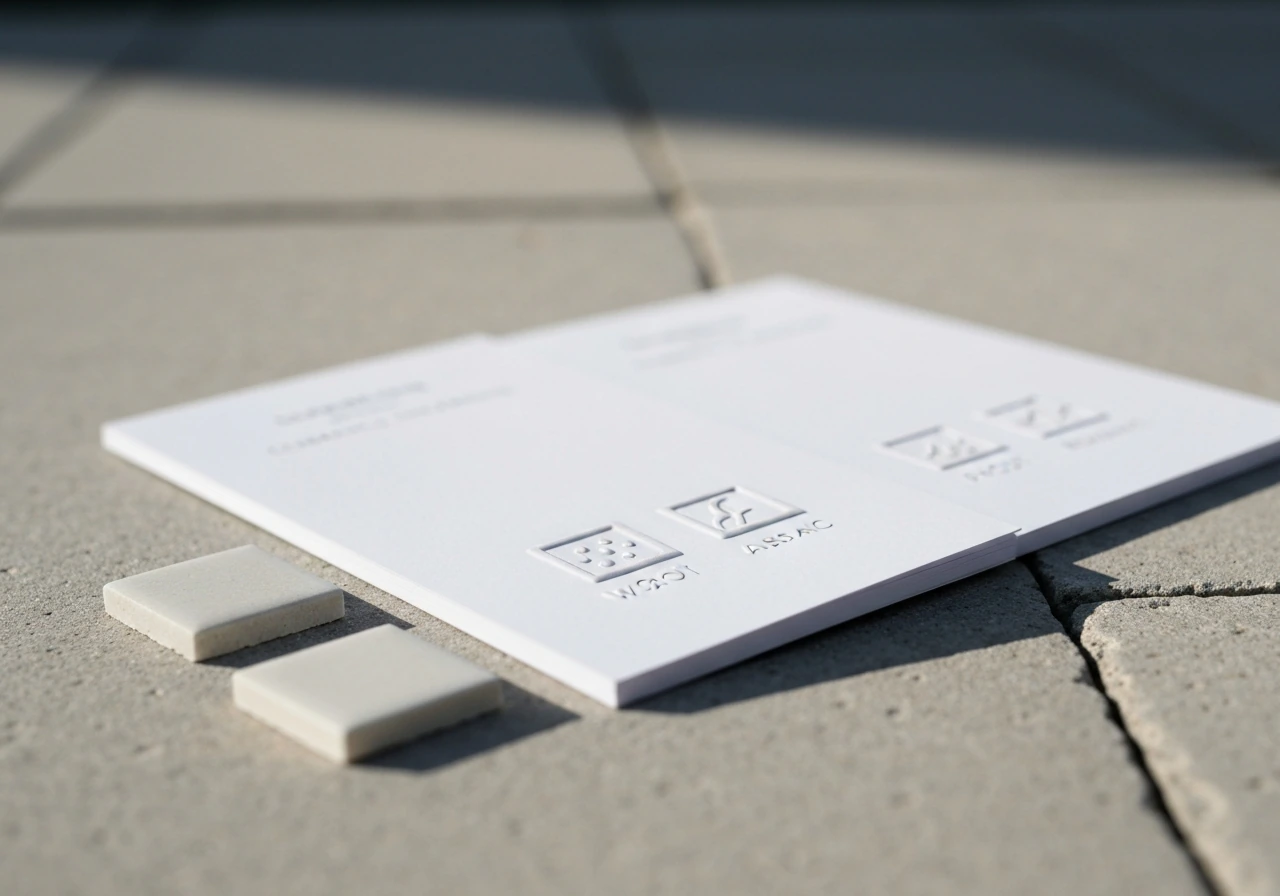
Not every tile labeled porcelain is suitable for outdoor use. Here is what to look for on the spec sheet before you buy.
Water absorption and frost resistance
Look for a water absorption rate of 0.5% or less (the ISO 10545-12 frost-resistant threshold) and an explicit frost-resistance pass rating. Laticrete's technical documentation notes that porcelain's near-negligible absorption figures are a primary reason it is specified for freeze-thaw environments. If the spec sheet does not list a frost-resistance test result, do not assume the tile is frost-rated. Ask the supplier or move on.
Thickness
For a bonded mortar-bed patio, use tiles that are at least 20mm thick for large-format slabs, or a minimum of 10 to 12mm for smaller formats over a fully supported concrete slab. Thicker tiles handle point loads from furniture legs and foot traffic better, and they are less prone to cracking during installation. Thin indoor-format tiles (6 to 8mm) are a common mistake that leads to cracking under outdoor loads.
Slip resistance (DCOF)
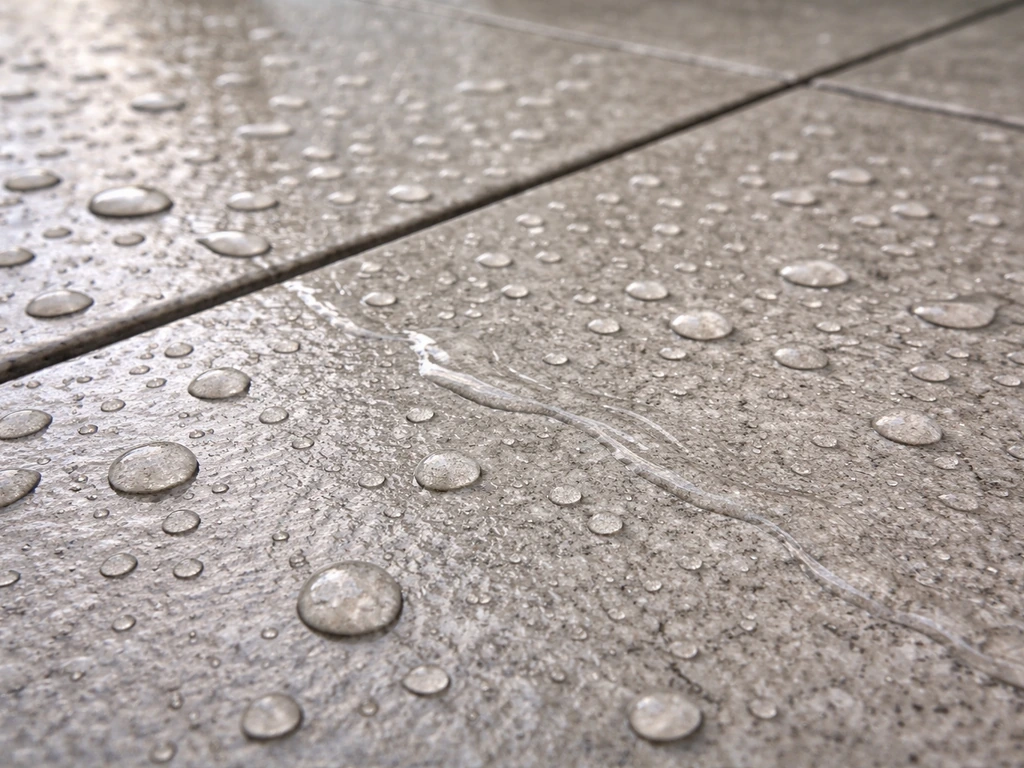
For an outdoor patio that will get wet, the minimum threshold to look for is a Dynamic Coefficient of Friction (DCOF) of 0.42 or greater, measured wet under ANSI A137.1 and ANSI A326.3 testing. ANSI A137.1 sets 0.42 as the minimum for level interior wet areas; for an outdoor patio exposed to rain, poolwater, or dew, you want to exceed that, ideally targeting 0.50 or higher. Look for tiles with a textured or matte surface rather than a polished finish. Polished porcelain is slippery when wet and should not be used on patios. There is more detail on this topic worth reading separately if slip resistance is a top concern for your household.
Through-body vs surface-only color
Through-body porcelain has consistent color and texture all the way through the tile body, so chips and edge wear are far less visible. Surface-glazed tiles show white or a different color at any chip. For outdoor use where edges and corners take more impact, through-body is worth the slight extra cost.
| Spec | Minimum for Outdoor Use | Recommended for Freeze-Thaw Climates |
|---|---|---|
| Water absorption | ≤0.5% | ≤0.1% (true vitrified porcelain) |
| Frost resistance | Pass (ISO 10545-12 / ASTM C1026) | Pass + confirmed in spec sheet |
| Thickness (mortar bed) | 10–12mm (small format) | 20mm+ (large-format slabs) |
| Wet DCOF | ≥0.42 | ≥0.50, matte/textured finish |
| Tile body type | Through-body preferred | Through-body required |
| PEI wear rating | PEI III minimum | PEI IV or V |
Installation requirements: substrate prep, slope, adhesives, and joints
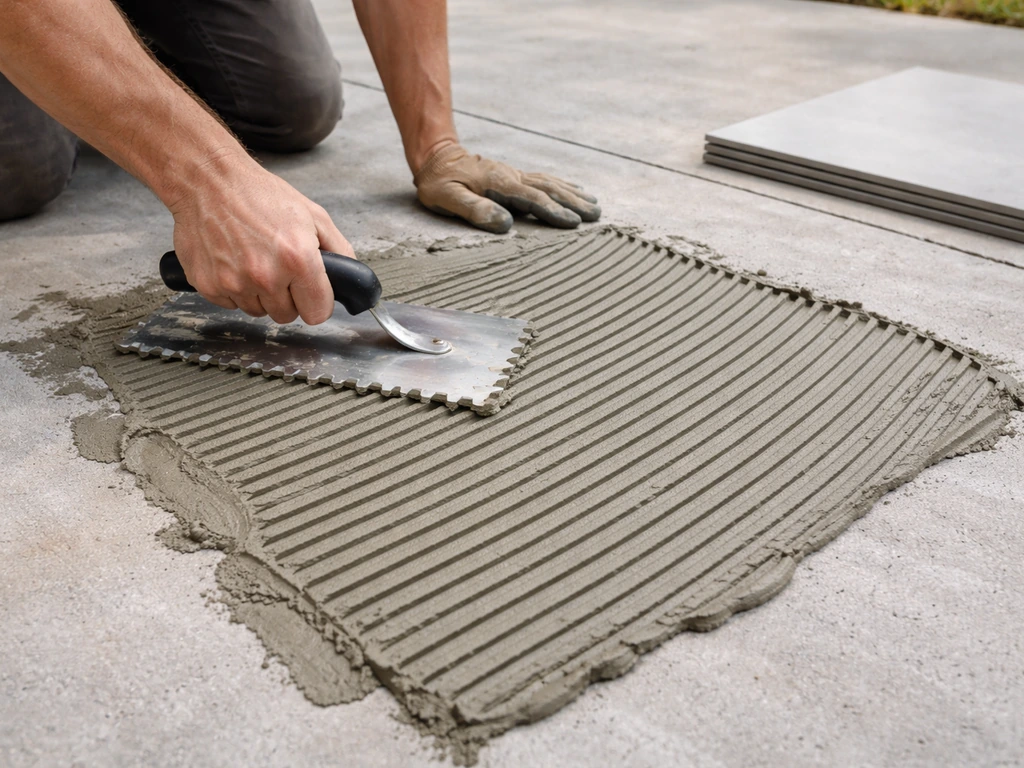
This is where most patio tile projects succeed or fail. The tile is rarely the problem. The base, the mortar choice, the slope, and the movement joints are where corners get cut and failures happen.
Substrate
The gold standard base for a bonded porcelain patio is a reinforced concrete slab at least 4 inches thick, properly cured and clean. TCNA methods F101 and F102 cover bonded mortar bed exterior tile installations over concrete, and TCNA's guidance is explicit that the substrate and drainage setup together determine how much the assembly saturates and how well it holds up over time in freeze-thaw or high-temperature environments. If you are starting from scratch, get the concrete right before worrying about tile selection. An existing slab works if it is structurally sound, free of significant cracks, and has no hydrostatic moisture pushing up from beneath.
Slope and drainage
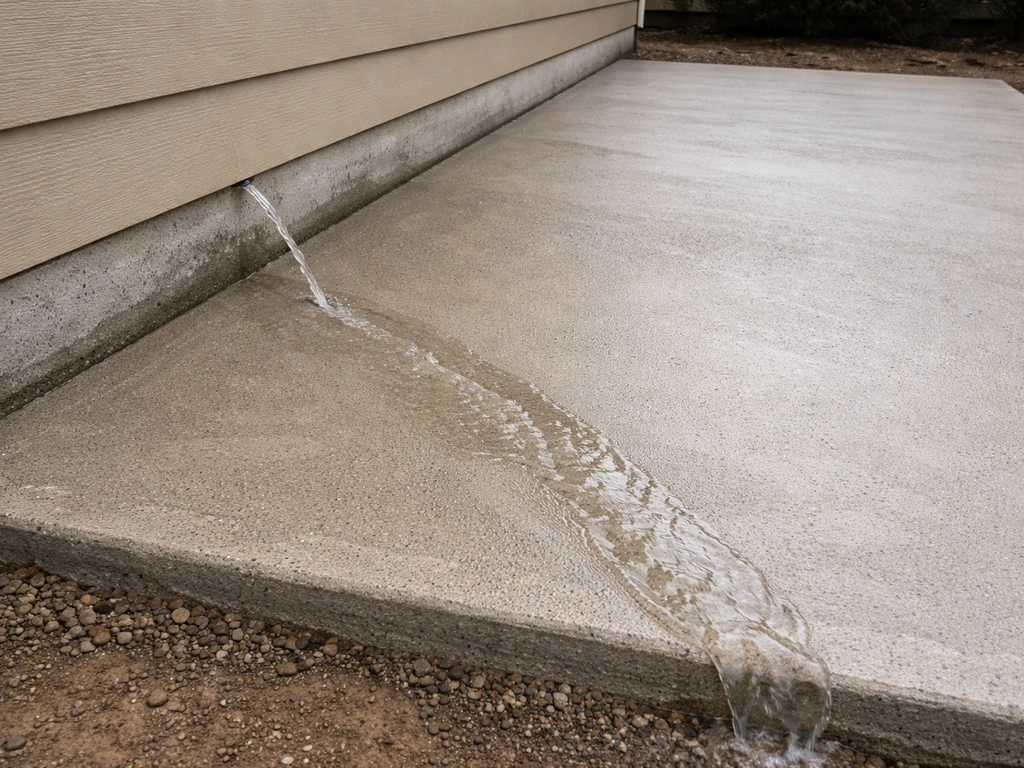
A minimum fall of 1:80 (about 1/8 inch per foot) away from any structure is needed to prevent standing water. In freeze-thaw climates, better drainage is one of the most important factors in assembly longevity. Standing water that works its way under tiles and into the setting bed is what triggers debonding and cracking when temperatures drop. Getting the slope right at the substrate stage, before you lay a single tile, is far easier than correcting it later.
Mortar and adhesive
For exterior porcelain, do not use unmodified thinset. Standard ANSI A118.1 unmodified thinsets are not acceptable for exterior freeze-thaw zones. You need a polymer-modified mortar meeting ANSI A118.4 or A118.15 at a minimum. These mortars contain latex or polymer additives that give the cured bed flexibility and better bond strength to handle thermal cycling. For freeze-thaw climates specifically, blank" rel="noopener noreferrer">a waterproof membrane system meeting ANSI A118.10 (a crack-isolation and waterproofing layer between the slab and the mortar bed) adds a critical extra layer of protection, and this is included in Daltile's and Custom Building Products' recommended assemblies for freeze-thaw exterior floors. Products like TEC PermaLastic 100 are examples of ANSI A118.4 and A118.11 compliant mortars designed for interior and exterior use.
Movement joints
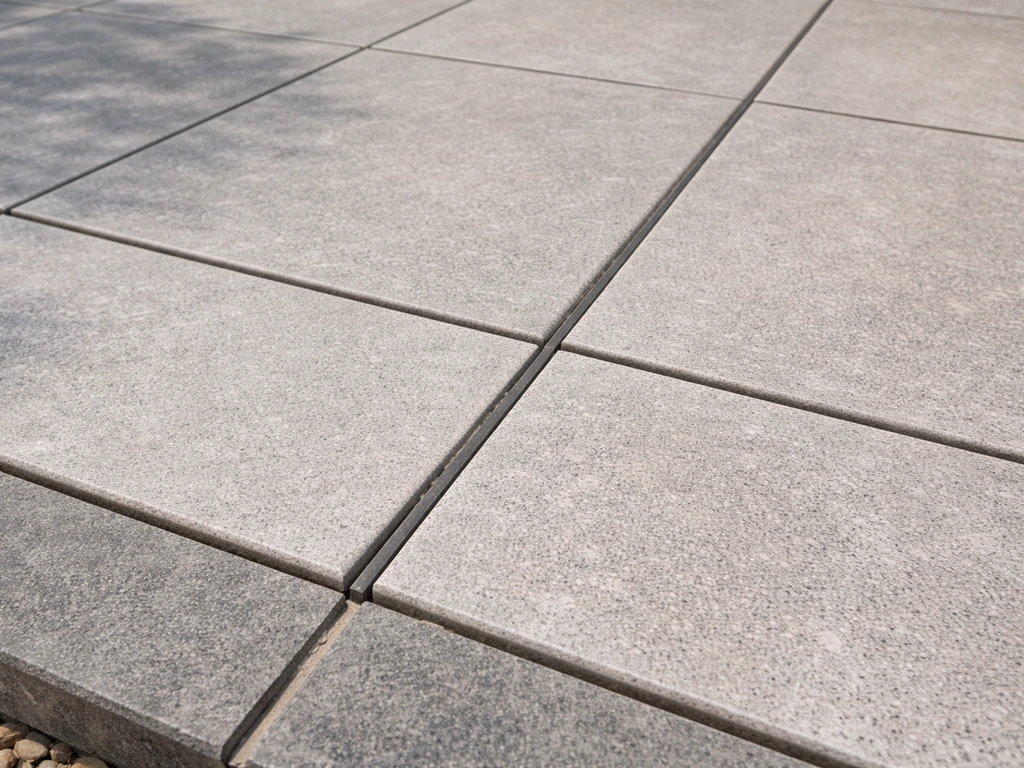
Movement joints are non-negotiable outdoors. Per TCNA EJ171 guidelines, field movement joints should be placed at maximum intervals of 8 to 12 feet in both directions in exterior applications. You also need perimeter joints wherever the tile field meets a wall, step riser, column, or any fixed structure. The same movement-joint guidance also applies to porcelain patio steps, where risers and landings need flexible detailing to prevent cracking step riser. These joints are filled with a flexible sealant, not grout. Skipping them is one of the most common reasons outdoor tile fields buckle or crack after one or two summers.
Common failure points and how to avoid them
I have seen porcelain patios that were beautifully done and looked brand new after 15 years. I have also seen ones that were a disaster by the second winter. The difference always came down to a handful of specific mistakes.
- Cracking from freeze-thaw: caused by non-frost-rated tile or water trapped in the setting bed. Fix: use ≤0.5% absorption frost-rated tile, a waterproof membrane, and a properly sloped substrate.
- Debonding (tiles hollow or popping up): caused by unmodified mortar, poor coverage (aim for 95%+ mortar contact on exterior tile), or no movement joints. Fix: use ANSI A118.4 modified mortar, back-butter large tiles, and install EJ171-compliant movement joints.
- Lippage (uneven tile edges): caused by large-format tiles on an uneven substrate, or inconsistent mortar bed thickness. Fix: level the slab properly before tiling; use a leveling clip system for large-format tiles.
- Efflorescence (white powdery deposits): caused by water moving through the setting bed and carrying mineral salts to the surface through grout joints. Fix: a waterproof membrane beneath the assembly stops most efflorescence by blocking water migration.
- Slipping: caused by choosing polished or low-DCOF tiles. Fix: specify wet DCOF ≥0.50 with a matte or textured surface finish for any patio application.
- Grout cracking: caused by using rigid cement grout in joints that need flexibility, or grout joints that are too narrow for the tile movement. Fix: use a flexible grout or sealant at perimeter and movement joints; maintain a minimum 3mm joint width for exterior use.
How porcelain compares to other patio materials
Every patio material has a sweet spot. Here is how porcelain stacks up against the main alternatives a homeowner actually considers.
| Material | Durability | Maintenance | Slip Resistance | Installation Cost | DIY Friendly? | Best For |
|---|---|---|---|---|---|---|
| Porcelain tile | Excellent (20–30 yrs) | Very low | Good (if correctly specified) | Moderate–High | Moderate (needs skill) | Modern aesthetic, low-maintenance patios |
| Natural stone (flagstone/slate) | Very good (20–30 yrs) | Low–Moderate (periodic sealing) | Good (rough finishes) | High | Moderate | Rustic/natural look, organic layouts |
| Brick | Very good (25+ yrs) | Low | Good | Moderate | Good | Traditional look, easy repairs |
| Gravel | Good (with maintenance) | Low–Moderate (raking, topping up) | Very good | Low | Very good | Budget patios, drainage-first applications |
| Composite decking | Good (15–25 yrs) | Low | Good (grooved boards) | Moderate–High | Moderate | Raised decks, wood-look preference |
| Concrete pavers | Very good (20–25 yrs) | Low | Good | Low–Moderate | Good | Budget-conscious, easy DIY repairs |
Porcelain's biggest edge over natural stone is its near-zero porosity. Natural stone like limestone or sandstone absorbs water, stains easily, and often needs annual sealing. Porcelain needs none of that. Brick is charming and easy to repair (you can replace a single brick) but it is porous and can grow moss in shady or damp conditions. Gravel is the cheapest and most permeable option but it shifts, gets tracked indoors, and is not furniture-friendly. If the comparison you are working through is specifically between porcelain slabs and other slab formats, the verdict tends to be that porcelain wins on maintenance and water resistance, while natural stone wins on character and the ability to handle imprecise installation.
Maintenance and longevity: cleaning, sealing, winter care, and repair
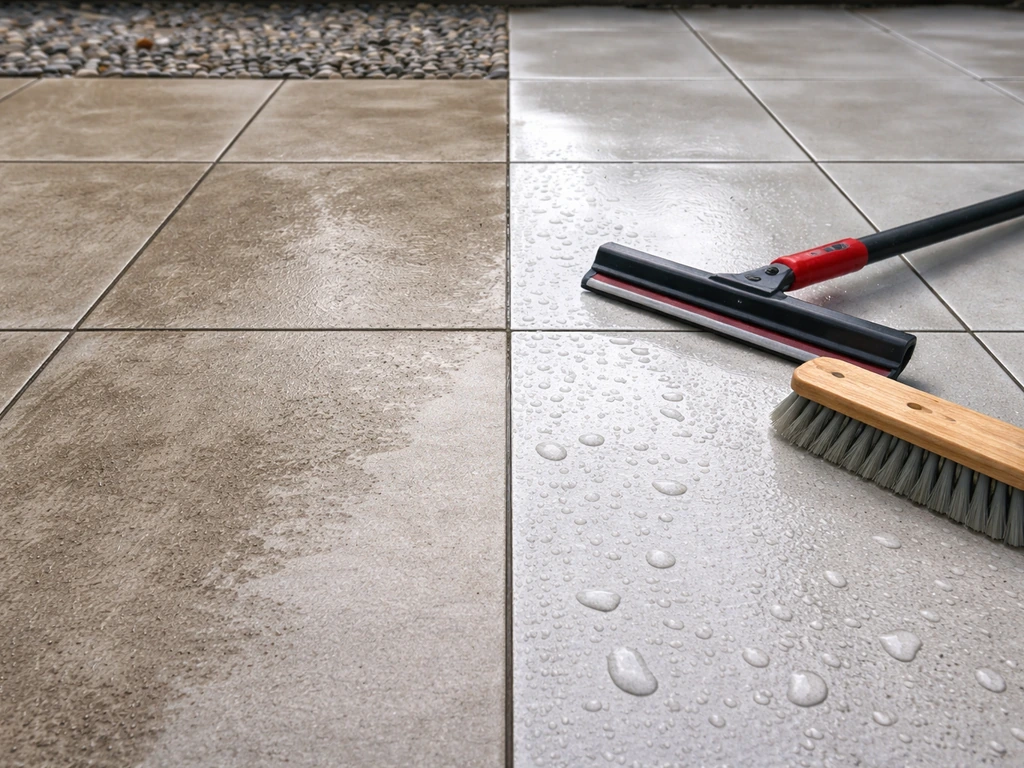
One of the genuine selling points of porcelain is how little it asks of you once it is down. Here is the realistic maintenance picture.
Cleaning
Regular sweeping and an occasional rinse with a garden hose or pressure washer handles most patio dirt. For stubborn grime, a pH-neutral tile cleaner works without risking grout or tile damage. Avoid acidic cleaners (vinegar, citrus-based products) on cement-based grout joints as they break down the grout over time. Porcelain itself is acid-resistant, but the grout is not.
Sealing
The tile itself does not need sealing. Its absorption rate is already negligible. The grout joints are a different story. Exterior cement grout should be sealed after installation and again every 2 to 3 years to prevent water ingress and staining. If you used an epoxy grout (a good choice for outdoor high-moisture applications), no sealing is needed. Sealing the grout in a freeze-thaw climate is one of the simplest things you can do to extend the life of the installation significantly.
Winter and freeze-thaw care
In climates that see regular freezing, clear standing water and leaf debris from the tile surface in autumn before freeze season. Decomposing organic matter traps moisture against grout joints and accelerates deterioration. Avoid using rock salt or sodium chloride ice melt directly on porcelain tile and grout, as salt drives moisture into grout joints and can cause spalling. Sand or calcium magnesium acetate are safer alternatives for traction in icy conditions.
Repairs
The one honest disadvantage of porcelain over brick or pavers is that individual tile replacement is more involved. You need to chisel out the damaged tile, clean the substrate, and re-bond a new tile with matching mortar. Matching the original tile can be difficult if the product line is discontinued, so it is worth buying and storing 5 to 10% extra tile as spares when you first install. A cracked tile or two is not a sign that the whole installation is compromised, but a large number of hollow-sounding tiles usually means a debonding issue that needs professional attention before more tiles fail.
Realistically, a properly installed porcelain patio on a good substrate in any climate should give you 20 to 30 years without major issues. The investment is front-loaded: the tile, mortar, membrane, and installation labor cost more upfront than gravel or basic pavers. But the ongoing cost is very close to zero, and you will not be re-sealing, re-leveling, or pressure-treating it every few years the way you would with wood or some natural stone options. If you want to compare options side by side, looking at porcelain patio reviews can help you spot patterns in real-world performance.
FAQ
Can I install porcelain tile over an existing patio slab or pavers?
Yes, but confirm you are installing the tile over an exterior-rated system. If you simply glue porcelain to old patio pavers without correct prep, you can trap moisture and create hollow spots, which leads to cracking. In most cases you should remove loose material, check for movement, and use the appropriate exterior mortar, membrane (if required for your climate), and spacing for movement joints.
Is porcelain patio tile slippery when wet, and how do I choose a safer finish?
For patios, avoid polished porcelain even if it looks beautiful. Use a matte or textured surface and verify the wet DCOF target (ideally 0.50 or higher). Also consider your footwear and typical wet conditions, such as rain, sprinklers, or pool deck splash, because marginal tiles can still feel slick when fully saturated.
What thinset or mortar should I use for porcelain tile outdoors?
In most outdoor installs, you should not rely on unmodified thinset. Use a polymer-modified exterior mortar that meets ANSI A118.4 or A118.15 at minimum, and in freeze-thaw climates follow the assembly that includes the appropriate waterproof or crack-isolation membrane (ANSI A118.10). Using the wrong mortar is a common path to debonding and grout failure even when the porcelain is correct.
Is porcelain tile still a good option if I cannot pour a reinforced concrete slab?
Yes, but your base must still meet the patio requirements. If you are not pouring a reinforced concrete slab, you need an engineered alternative that properly supports the tile and controls water. Soft or sandy bases usually move and cause cracking, especially with large-format porcelain, so if you cannot do a slab, plan for a specialized patio build-up rather than “set it over whatever is there.”
How many movement joints does an exterior porcelain patio need, and what should they be filled with?
You need expansion and movement joints that align with the TCNA EJ171 guidance, plus perimeter joints at walls, steps, and columns. Field joints are typically spaced at about 8 to 12 feet in each direction for exterior applications. Fill these joints with a flexible sealant, not grout, because grout is rigid and will crack as the slab and tile expand and contract.
What changes for a porcelain patio in freeze-thaw climates versus mild climates?
Yes, but it affects what you should select and how you maintain it. Use frost-rated porcelain (low absorption and explicit frost test results), and in freezing areas clear leaves and standing water before freeze season. Also choose grout and sealing approach carefully, since cement grout can absorb water and deteriorate faster under repeated freeze-thaw cycles.
If grout cracks or tiles start to loosen, should I just regrout or do I need to redo the patio?
If grout gets damaged, you should treat it as a water-management issue, not just an appearance issue. Repoint or repair grout, and if you see widespread debonding, hollow spots, or recurring cracks, stop patching and investigate the bond and drainage. Fixing only the surface grout while leaving water trapped under the system will usually fail again.
How many extra porcelain tiles should I order for replacements?
Plan to buy extra tile. Aim for about 5 to 10% spare when you install, because matching color and texture can be difficult later if the product line is discontinued. If you do not keep spares, replacement tiles may not blend well, and that can make future repairs more noticeable.
Does porcelain patio tile need sealing, and what about the grout?
Most exterior porcelain does not require sealing because it absorbs very little water. The grout is the part that typically needs sealing in exterior cement-grout systems (generally after installation and then again every 2 to 3 years). If you used an epoxy grout appropriate for outdoor moisture exposure, you usually do not need grout sealing.